Fishing Rod and Reel Guide for Iowa Anglers
Oh, the age-old question that stops many an eager angler dead in their tracks: "Which rod and reel do I even need?" It's a common frustration, isn't it? You walk into a tackle shop, or browse online, and you're immediately hit with a dizzying array of options – different lengths, powers, actions, reel types, gear ratios… it's enough to make your head spin before you've even made your first cast! Many folks just grab whatever looks decent or is on sale, only to find it doesn't quite match the kind of fishing they want to do here in the diverse waters of Iowa. This guide is here to untangle that confusion, helping you understand the crucial elements of fishing rods and reels so you can confidently choose the perfect setup for your next Iowa fishing adventure.
Understanding the Basics: Rod and Reel Anatomy
Before we dive deep into the nitty-gritty, let's get acquainted with the fundamental components of your fishing setup. Think of your rod and reel as a team, working in tandem to cast your line, present your bait, feel the bite, and ultimately, land that fish. Understanding each part helps you appreciate how they work together and why certain features matter for different fishing situations.
The Fishing Rod: More Than Just a Stick
A fishing rod might look like a simple stick, but it's a marvel of engineering designed to flex, transmit vibrations, and apply leverage. It's the primary tool for casting and feeling what's happening at the end of your line.
Most rods are made from fiberglass, graphite, or a composite blend, each offering different characteristics. Fiberglass rods tend to be very durable and flexible, making them great for beginners or for fishing with baits that require a slower action. Graphite rods, on the other hand, are lighter, more sensitive, and generally stiffer, which is fantastic for feeling subtle bites and making quick hooksets. Composite rods try to get the best of both worlds. The rod blank itself is the main shaft. Along the blank, you'll find line guides, which are rings that help control the line as it comes off the reel and distributes stress evenly across the rod. The number and quality of these guides are important – more guides usually mean better line flow and less stress concentration, especially on a bend.
At the bottom of the rod, you have the handle and the reel seat. The handle provides a comfortable grip and leverage for casting and fighting fish. Handles are often made of cork or EVA foam. Cork is classic, sensitive, and lightweight, while EVA foam is generally more durable and easier to clean. The reel seat is where your reel attaches securely to the rod. It's usually a locking mechanism that clamps down on the reel's foot. A well-designed reel seat ensures your reel stays put, even during the most aggressive hooksets or when battling a strong fish. All these components, from the tip to the butt, are carefully chosen and assembled to create a balanced tool for fishing.
The Fishing Reel: Your Line's Best Friend
The reel is your control center. It holds your fishing line, allows you to cast it out, and most importantly, retrieves your catch. Without a reel, your rod would just be, well, a very long stick. There are several types of reels, but the most common for general Iowa fishing are spinning and baitcasting reels. We'll delve into the specifics of each later, but for now, let's cover their shared fundamental parts.
Every reel has a spool, which is the cylinder that holds your fishing line. The capacity of the spool dictates how much line you can put on your reel, which is crucial for fighting larger fish that might make long runs. The drag system is arguably the most critical part of a reel. This adjustable mechanism applies resistance to the line as it's pulled off the spool, allowing a fish to take line when it pulls hard without breaking the line or snapping the rod. A smooth, consistent drag is essential for landing bigger fish. You'll hear many an angler grumble about a "sticky drag" – that's when it's not letting line out smoothly and can lead to broken lines and lost fish.
Then there's the retrieve handle, which you turn to wind line back onto the spool. The gear ratio, often stamped on the reel body (e.g., 6.2:1), tells you how many times the spool or rotor turns with one full rotation of the handle. A higher gear ratio means faster line retrieval, which is great for covering water quickly or reeling in slack. A lower gear ratio provides more cranking power, ideal for fighting large, stubborn fish or retrieving baits with a lot of resistance. These are the core elements that all reels share, and understanding their function is key to making an informed choice.
Matching Components for Harmony
You can have the fanciest rod and the most expensive reel, but if they aren't matched properly, your fishing experience will suffer. Think of it like a perfectly balanced sports car – all the parts need to work together seamlessly for optimal performance. The goal is to create a balanced setup that feels comfortable in your hands, casts efficiently, and gives you the sensitivity and power you need for your target species and fishing style.
The primary consideration is ensuring the rod's power rating aligns with the reel's line capacity and intended use. A light-action rod designed for panfish won't handle a heavy baitcasting reel loaded with braided line for catfishing. Conversely, a heavy-duty saltwater reel would be ridiculously oversized and unbalanced on a delicate trout rod. Manufactures typically provide recommended line weights and lure weights on the rod blank, and it's always wise to pay attention to these. A mismatch in line weight, for example, can make casting awkward, reduce your sensitivity, and even damage your gear.
Weight balance is another subtle but important factor. When you mount the reel on the rod, the whole setup should feel balanced in your hand, typically just above the reel seat. If the rod feels tip-heavy, it'll be tiring to cast all day. If it's too butt-heavy, you might lose some sensitivity. Many anglers spend time at stores like Bass Pro Shops, holding different rods with various reels attached, just to get a feel for the balance. It truly makes a difference in your comfort and overall enjoyment on the water. A harmonious rod and reel setup simply performs better, allowing you to cast farther, feel more bites, and fight fish more effectively.
Decoding Rod Specifications: Power, Action, and Length
Once you understand the basic parts, it's time to dive into the technical jargon that defines a rod's performance. "Power," "action," and "length" are not just buzzwords; they're the core characteristics that determine how a rod will behave when casting, retrieving, and fighting a fish. Getting these right is crucial for success, especially with Iowa's diverse fishing opportunities.
Rod Power: The Muscle Behind the Cast
Rod power, often referred to as "weight," describes the lifting strength or backbone of the rod. It's essentially how much force is required to bend the rod blank. This isn't about the physical weight of the rod, but rather its strength. You'll typically see categories like Ultra-Light, Light, Medium, Medium-Heavy, Heavy, and sometimes even Extra Heavy.
- Ultra-Light (UL): These rods are incredibly thin and flexible. They're perfect for small fish like bluegill and crappie, especially when using tiny lures or baits. They make even a small fish feel like a giant, which is a blast, but you wouldn't want to try to hoist a big catfish with one. They shine when fishing for panfish in Iowa's many farm ponds or smaller lakes.
- Light (L): A step up from ultra-light, light power rods are still very sensitive but can handle slightly larger panfish, small bass, or smaller trout. They're a favorite for finesse fishing presentations.
- Medium (M): This is often considered the most versatile power for many Iowa anglers. A medium power rod can handle a wide range of species, from bass and walleye to medium-sized catfish. It's a great all-around choice if you're looking for one rod to do a bit of everything. You'll often see these recommended for Iowa Walleye Season Opening Strategies.
- Medium-Heavy (MH): When you're targeting bigger bass in heavy cover, larger walleye, or getting into catfishing, a medium-heavy rod provides the necessary backbone to pull fish out of snags and control their runs. This is a workhorse power for many serious anglers.
- Heavy (H) and Extra-Heavy (XH): These are serious rods for serious fish. If you're targeting trophy catfish on the Mississippi River or big muskie on Clear Lake, you'll need this kind of power to cast heavy lures and apply maximum pressure during a fight.
Choosing the right power means matching it to the size of fish you expect to catch and the weight of the lures or baits you'll be using. Too light, and you risk breaking your rod or struggling to control a fish. Too heavy, and you'll miss subtle bites and won't enjoy the fight of smaller fish. It's a balance of power and pleasure!
Rod Action: The Feel and Flex
Rod action refers to where along the blank a rod bends when pressure is applied to the tip. This characteristic dictates how a rod casts, how quickly you can set a hook, and how well it handles a fighting fish. Actions are generally categorized as Fast, Moderate-Fast, Moderate, or Slow.
- Fast Action: A fast-action rod bends primarily in the upper third or quarter of the blank, closer to the tip. This creates a very sensitive tip, allowing you to feel even the lightest bites. It also provides a quick, powerful hookset because the rod quickly transfers force to the hook. Fast action rods are excellent for techniques where sensitivity and quick hooksets are paramount, such as jigging for walleye or fishing Texas-rigged plastics for bass. They're also great for accurate casting, but they might not cast lighter lures as far as a moderate action rod.
- Moderate-Fast Action: This is a very popular compromise. A moderate-fast rod bends in the upper half of the blank. It offers a good balance of sensitivity for feeling bites and enough flexibility to cast a wider range of lures, absorbing the shock of a fighting fish without tearing the hook out. Many all-around spinning and baitcasting rods will fall into this category, making them versatile for different presentations and species across Iowa's varied waters.
- Moderate Action: Also known as "parabolic action," a moderate action rod bends more towards the middle of the blank. These rods excel at casting lighter lures a greater distance because the deeper bend loads more smoothly during the cast. They also provide a slower, more forgiving hookset, which is ideal for treble hook lures like crankbaits or topwaters, as it prevents hooks from tearing out of a fish's mouth. When a fish strikes, the rod's deeper bend acts as a shock absorber. This can be fantastic for targeting How to Catch Crappie in Iowa with small crankbaits.
- Slow Action: A slow-action rod bends along almost its entire length, from tip to butt. These are often fiberglass rods or fly rods. They cast very smoothly, making them excellent for delicate presentations with very light line and small baits, or for specific types of fly fishing. They're generally not used for techniques requiring quick hooksets or heavy cover fishing. Think of them for ultralight panfishing or certain Trout Fishing Techniques for Iowa Streams where presentation is key.
The action you choose depends heavily on your fishing style and the lures you're using. A soft-mouthed crappie on a fast-action rod can often lead to pulled hooks, while a moderate action might miss a quick walleye bite.
Rod Length: Reach, Accuracy, and Leverage
Rod length is measured from the butt of the handle to the tip of the rod. It's not just about how long the rod is; it impacts your casting distance, accuracy, and the leverage you have over a fish. Rods typically range from 5 feet to over 9 feet for specialized applications.
- Shorter Rods (5-6 feet): These rods are great for situations where space is limited, such as fishing from a kayak, in dense brush along a creek bank, or when casting very accurately in tight spots. Their shorter length makes them easier to maneuver and allows for precise short-distance casting. However, they generally offer less casting distance and less leverage when fighting larger fish. Many kayak anglers on the Des Moines River might opt for a shorter rod.
- Medium Rods (6-7.5 feet): This range is the sweet spot for most freshwater fishing applications in Iowa. A 6'6" or 7' rod provides a good balance of casting distance, accuracy, and fish-fighting power. They're versatile for a wide array of techniques, from throwing crankbaits for bass to jigging for walleye. This is often the recommended length for an all-around Best Rod Length for Iowa River Walleye Fishing. If you're just starting and want one rod for most situations, a 6'6" to 7' medium or medium-heavy rod is a fantastic choice.
- Longer Rods (7.5-9+ feet): Longer rods excel at maximizing casting distance, which can be crucial when fishing large lakes or rivers where you need to cover a lot of water or reach distant structures. They also provide more leverage when fighting fish, allowing you to control powerful runs and turn a fish's head more effectively. Surf fishing rods or specialized muskie rods often fall into this category. However, they can be more cumbersome in tight quarters and may sacrifice some casting accuracy at very short ranges. If you're casting large baits for muskie on Spirit Lake, a longer rod is almost a necessity.
Your height, fishing location (boat, shore, kayak), and target species all play a role in determining the ideal rod length. Someone bank fishing a wide-open lake might prefer an 8-foot rod for maximum casting distance, while a competitive bass angler flipping into dense cover might use a 7'6" rod for reach and leverage.
| Rod Specification | Primary Function | Ideal Use Cases in Iowa | Trade-offs |
|---|---|---|---|
| Power | Lifting strength, backbone | UL: Panfish; L: Trout; M: Bass, Walleye; MH: Catfish, Pike | Too light: broken line/rod; Too heavy: missed bites |
| Action | Where rod bends, hookset speed | Fast: Jigging, plastics (sensitivity); Moderate: Crankbaits | Fast: can pull hooks; Moderate: slower hookset |
| Length | Casting distance, leverage | Short: Kayak, tight spots; Medium: All-around; Long: Distance | Short: less distance; Long: less accurate, cumbersome |
Exploring Reel Types: Spinning, Baitcasting, and Beyond
Just like rods, reels come in different forms, each with its own advantages and disadvantages. Understanding these differences will help you pair the right reel with your chosen rod and fishing style, ensuring you're efficient and effective on the water. For most Iowa anglers, the choice will come down to a spinning reel or a baitcasting reel, but there are a couple of other options to consider as well.
Spinning Reels: The Everyday Workhorse
Spinning reels are by far the most popular and versatile reel type, especially for beginners and casual anglers. They are designed to hang below the rod, which helps balance the setup and allows for easy casting by simply flipping open the bail. The line comes off the spool in coils during the cast, making them relatively forgiving and easy to learn.
Pros of Spinning Reels:
- Ease of Use: They are very beginner-friendly. There's minimal chance of backlashing (when the line tangles up in a bird's nest), unlike baitcasters.
- Versatility: Spinning reels handle a wide range of line sizes, from very light monofilament for panfish to heavier braid for walleye. They excel at casting lightweight lures and live baits. You'll often find these as the Best Spinning Reels for Panfish.
- Cost-Effective: You can find excellent quality spinning reels at various price points, making them accessible for any budget. Good entry-level combos are readily available at stores like Bass Pro Shops.
- Finesse Applications: They are fantastic for delicate presentations, light lines, and smaller lures, which is often key for cautious fish or in clear water conditions.
Cons of Spinning Reels:
- Less Casting Accuracy (for some): While good for general casting, baitcasters can offer more precise lure placement for experienced anglers, especially for pinpoint casting at targets.
- Line Twist: Due to the way line comes off the spool and is reeled back on, spinning reels can sometimes introduce line twist, especially with certain lines or techniques. This can be mitigated with swivels and proper line management.
- Less Power for Heavy Duty: While powerful models exist, baitcasters generally offer more cranking power and better control for fighting very large, strong fish or retrieving extremely heavy, high-resistance lures.
For many Iowa anglers, especially those targeting panfish, trout, or general bass and walleye fishing with lighter presentations, a spinning reel is an excellent and reliable choice. Its simplicity and effectiveness make it an indispensable tool.
Baitcasting Reels: Precision and Power
Baitcasting reels sit on top of the rod and feature a revolving spool that spins during the cast. This design allows for greater casting distance, accuracy, and power once you master the technique. They are generally preferred by more experienced anglers who prioritize precision and control, particularly for targeting specific species or using heavier lures.
Pros of Baitcasting Reels:
- Accuracy: With practice, baitcasters offer unparalleled casting accuracy, allowing you to hit tight spots and specific targets with consistent precision. This is a huge advantage for bass fishing around structure or pitching lures to specific snags in a river.
- Power and Control: The direct drive system and typically larger gearing give baitcasters superior cranking power, making them ideal for fighting big fish and retrieving heavy, high-resistance lures like deep-diving crankbaits or large muskie baits. They are often the choice for Best Baitcasting Reels for Bass Fishing.
- Line Capacity and Strength: Many baitcasting reels can handle heavier lines, including braided lines, better than spinning reels, which is advantageous when fishing around heavy cover or for strong, toothy species.
- Feel and Sensitivity: The direct connection to the spool can sometimes provide a more direct "feel" for what your lure is doing and what's happening underwater.
Cons of Baitcasting Reels:
- The Dreaded Backlash: This is the biggest hurdle for new baitcaster users. If not properly adjusted or if you mishandle a cast, the spool can spin faster than the line is going out, resulting in a frustrating bird's nest of tangled line. Mastering thumb control on the spool is key to preventing backlashes.
- Learning Curve: There's definitely a learning curve involved with baitcasters. It takes practice to get comfortable with casting, adjusting the brakes, and managing the spool with your thumb.
- Less Ideal for Light Lures: Baitcasters generally don't cast very light lures as effectively or as far as spinning reels. They perform best with lures above a certain weight threshold.
- Cost: While good budget options exist, high-performance baitcasting reels often come with a higher price tag compared to their spinning counterparts.
For anglers serious about bass, walleye with heavier presentations, muskie, or big catfish, the investment in time and money to master a baitcaster is often well worth it for the added control and power.
Other Reel Options: Fly Reels and Spincasters
While spinning and baitcasting reels dominate the freshwater scene, there are a couple of other reel types worth mentioning, especially in the context of Iowa fishing.
Fly Reels:
Fly reels are distinct because they don't primarily cast the lure's weight. Instead, they store the specialized fly line, and their main function is to manage line and provide drag when fighting a fish. The weight of the fly line is what carries the tiny, nearly weightless "fly" lure through the air during the cast. Fly fishing is a specialized art form, particularly popular in Iowa's coldwater trout streams in the northeast. A fly reel needs to match the weight of the fly rod and fly line, creating a balanced system. While they might seem simple, a good fly reel with a smooth drag is crucial when a spirited brown trout decides to run! Fly Fishing for Trout in Iowa Streams is a whole different world of gear.
Spincasting Reels:
Often called "push-button" reels, spincasters are typically mounted on top of the rod like a baitcaster but function more like a simplified spinning reel. To cast, you simply press and hold a button, then release it during the forward casting motion. The line is enclosed within a nose cone, which helps prevent tangles.
Pros of Spincasting Reels:
- Ultimate Simplicity: They are incredibly easy for absolute beginners, especially children, to learn and use. There's virtually no risk of backlashing.
- Affordability: Spincast combos are usually very inexpensive, making them a great entry point into fishing for kids or those on a very tight budget.
Cons of Spincasting Reels:
- Limited Performance: Spincasters generally have weak drags, lower gear ratios, and are not designed for long casts or heavy lures.
- Durability: They tend to be less durable than spinning or baitcasting reels, often made with more plastic components.
- Line Capacity: Spools are typically small, limiting the amount and type of line you can use.
While spincast reels are fantastic for introducing kids to fishing at a local pond, most adult anglers quickly graduate to spinning reels for better performance and versatility once they get the hang of casting.
Matching Your Gear to Iowa's Waters and Species
Now that you're familiar with rod specifications and reel types, let's bring it all together and talk about how to select the right gear for the specific fishing challenges and opportunities Iowa presents. Our state offers incredibly diverse waters, from vast reservoirs to meandering rivers and intimate trout streams, and each demands a slightly different approach to gear selection.
Iowa Lakes: Versatility for Walleye, Bass, and Panfish
Iowa's natural lakes, glacial lakes like the Iowa Great Lakes (Okoboji, Spirit Lake), and numerous man-made reservoirs (Rathbun, Saylorville, Red Rock) are teeming with popular sportfish. For these waters, versatility is often key, as you might encounter walleye, largemouth bass, smallmouth bass, crappie, and bluegill all in the same outing.
- For Walleye and Bass: A medium-power, moderate-fast to fast-action spinning rod in the 6'6" to 7' range is a fantastic all-around choice. Pair it with a 2500 or 3000 size spinning reel. This setup will allow you to cast jigs, crankbaits, and soft plastics effectively. If you're serious about bass fishing, especially around heavy cover or with larger lures, a medium-heavy, fast-action baitcasting rod (6'8" to 7'4") with a matching baitcasting reel would be ideal. Many anglers will even have separate rods for specific techniques, like a dedicated crankbait rod (moderate action) and a jig rod (fast action). The Best Time of Year to Fish the Iowa Great Lakes often dictates specific techniques and thus, specific gear.
- For Panfish (Crappie, Bluegill): An ultra-light or light power, moderate to fast-action spinning rod, typically 5' to 6'6" long, is perfect. A small 1000 or 2000 size spinning reel will balance perfectly and allow for casting tiny jigs, bobber setups, or small spoons. The lighter rod makes even small panfish incredibly fun to catch and helps prevent hooks from tearing out of their delicate mouths. You might also want to explore specialized Crappie Jig Fishing Techniques that benefit from a light, sensitive setup.
- Consider the "Multi-Species" Approach: For many casual lake anglers, one or two versatile setups can cover most situations. A 7' medium-power, moderate-fast spinning combo with 8-10 lb test line is a great starting point. It's robust enough for a decent walleye or bass but sensitive enough to feel a crappie bite. You can find excellent multi-species combos at most sporting goods stores, or even online through Amazon, offering good value and covering a lot of bases.
Remember, clear lake waters might call for lighter line and more finesse, while stained water can handle heavier lines and more aggressive presentations.
Iowa Rivers: Tackling Current and Catfish
Iowa's extensive river systems, including the Mississippi, Missouri, Des Moines, and Cedar Rivers, present their own unique challenges due to current, depth, and the prevalence of hard-fighting species like catfish and smallmouth bass.
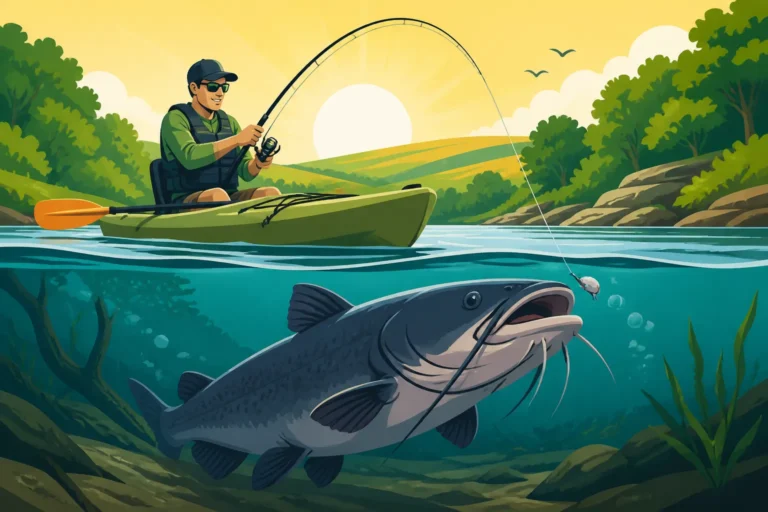
- For Catfish: If you're targeting channel cats or flatheads in the rivers, you need power and durability. A medium-heavy to heavy power, moderate-fast to fast-action rod, typically 7' to 9' long, is essential. This length provides leverage for long casts and battling strong fish in current. Pair it with a robust spinning reel (4000-6000 size) or a powerful baitcasting reel designed for heavy line (20-50 lb mono or braided line). The Best Rod for Catfish Fishing will have a strong backbone to horse fish out of snags and a solid drag system to handle their powerful runs. Many river catfishermen prefer baitcasting reels for their raw power and line capacity.
- For Smallmouth Bass and Walleye in Rivers: River smallmouth are tenacious fighters, and walleye in current are powerful. A medium-heavy, fast-action spinning or baitcasting rod (6'6" to 7'6") is generally preferred. You'll want good sensitivity to feel bites in the current and the backbone to control fish before they get into structure. Braided line is popular here for its strength and sensitivity. You might also find yourself Drift Fishing the Mississippi River, a technique that benefits from a good quality, sensitive rod.
- Current Considerations: The current is a significant factor. You'll often need heavier sinkers to hold bottom, so your rod needs to be able to cast these weights comfortably. Also, the fight from a fish in current is amplified, so a rod with sufficient power and a reel with a smooth, strong drag are non-negotiable. Don't skimp on quality when fishing rivers; your gear takes a beating.
When fishing rivers, especially larger ones like the Mississippi, it's wise to have dedicated setups that can withstand the rigors of current and robust fish.
Iowa Trout Streams: Finesse and Presentation
Northeast Iowa is home to beautiful, coldwater trout streams, offering a unique and rewarding fishing experience for rainbow, brown, and sometimes brook trout. Trout fishing is often about finesse, stealth, and precise presentation.
- Spin Fishing for Trout: For those using spinning gear, an ultra-light or light power, moderate-fast to fast-action spinning rod, typically 5' to 6'6" long, is perfect. Pair it with a small 1000 or 2000 size spinning reel spooled with 2-6 lb test monofilament or fluorocarbon line. The light action allows you to cast tiny spinners, spoons, and live bait setups (like worms or corn) with accuracy and feel the often subtle trout bites. You need a delicate touch to avoid spooking these wary fish. For these sensitive streams, less is definitely more.
- Fly Fishing for Trout: This is the classic method for Iowa's trout streams. A 3-weight to 5-weight fly rod, usually 7'6" to 9' long, is the standard. A 4-weight, 8'6" rod is a very versatile option for most stream conditions. Match this with a corresponding 3/4 or 4/5 weight fly reel, which primarily holds your fly line and provides drag. Nymphing Techniques for Iowa Trout Streams often benefit from longer rods that help with line control and mend. Investing in a good quality fly rod and line can make a huge difference in your casting and presentation.
- Stealth and Accuracy: Trout streams are often narrow, overgrown, and require careful wading and precise casting. Shorter rods can be an advantage for navigating tight quarters, while longer rods excel at line control for drifts. Whichever method you choose, remember that trout are easily spooked, so your gear needs to facilitate quiet, accurate presentations of small offerings. Don't forget that a Iowa Trout Fishing Fee and Stamp Guide explains the additional requirement for fishing these specific waters.
Trout fishing in Iowa is a true gem, and having the right delicate gear makes all the difference in appreciating the beauty and challenge of these special fisheries.
Selecting Your First Rod and Reel Combo: A Beginner's Guide
Stepping into the world of fishing can feel a little overwhelming when you're faced with so many choices. For beginners, the best approach is to start with a versatile, user-friendly setup that won't break the bank. You don't need top-of-the-line gear to catch fish and have a great time! The key is finding a balance of ease of use, durability, and enough performance to enjoy the experience.
Budget-Friendly Combos: Getting Started Without Breaking the Bank
One of the best ways for a new angler to get started is with a pre-assembled rod and reel combo. These are designed to be perfectly matched, eliminating the guesswork of pairing components, and they often offer significant savings compared to buying a rod and reel separately. You'll find a huge selection of these at local sporting goods stores or online retailers like Amazon.
When looking for a budget-friendly combo, consider a spinning outfit. As we discussed, spinning reels are much easier to learn and master, allowing you to focus on casting technique and fish identification rather than battling backlashes. Look for a combo that feels comfortable in your hands, not too heavy, and with a smooth retrieve. Many popular brands offer excellent entry-level combos that include decent quality components.
A good starting point would be a 6' to 7' medium-power, moderate-fast action spinning combo. This setup is versatile enough to handle everything from panfish and small trout to average-sized bass and walleye, making it suitable for most of Iowa's lakes and slower rivers. You can typically find a perfectly serviceable combo for a very reasonable price. Don't feel pressured to buy the most expensive gear; a well-chosen budget combo can provide years of enjoyable fishing. The most important thing is to get out on the water and start learning!
Essential First Setup for Multi-Species Angling
For an Iowa angler who wants one rod and reel that can handle a bit of everything, a "multi-species" setup is the way to go. This isn't about specialization, but rather versatility, allowing you to chase different fish in various waters without needing a whole arsenal of gear.
A 6'6" to 7' medium-power, moderate-fast action spinning rod paired with a 2500 or 3000 size spinning reel is often hailed as the ultimate all-around beginner's combo.
- Rod Power and Action: The medium power gives you enough backbone for bass and walleye while still being sensitive enough for crappie or even larger bluegill. The moderate-fast action provides a good balance for casting various lures and baits, from small jigs to medium-sized crankbaits. It also offers enough flex to absorb the shock of a fighting fish without pulling the hook.
- Reel Size: A 2500 or 3000 size spinning reel (different brands have slightly different numbering, but they're roughly equivalent) has enough line capacity for mainline strength typically between 6-12 lb test, which is suitable for many Iowa species. Its retrieve speed is usually versatile enough for various techniques.
- Line Choice: For your first setup, consider spooling it with a good quality 8 lb monofilament line. Mono is easy to cast, has some stretch (which is forgiving for new anglers), and is relatively inexpensive. Alternatively, you could start with 10 lb braided line, which offers superior sensitivity and strength for its diameter, though it takes a little getting used to compared to mono.
This "one-size-fits-most" approach allows you to experiment with different species and techniques across Iowa's waters, whether you're chasing How to Catch Walleye in Iowa at Clear Lake or exploring a local park pond for How to Catch Bass in Iowa. It's the perfect foundation upon which to build your fishing skills and, eventually, a more specialized tackle collection.
Understanding the Role of Fishing Line
While this guide focuses on rods and reels, it's impossible to talk about an essential setup without mentioning the unsung hero: fishing line. Your line is the direct connection between you and the fish, and its choice greatly impacts your success.
There are three primary types of fishing line:
- Monofilament (Mono): This is the classic fishing line, made from a single strand of nylon. It's affordable, easy to tie knots with, and has a good amount of stretch, which acts as a shock absorber. This stretch can be a benefit for new anglers as it's more forgiving if you set the hook too hard, but it also means less sensitivity. Mono floats, making it good for topwater baits or bobber fishing. It's a great all-around choice for beginners, especially on a spinning reel.
- Fluorocarbon (Fluoro): Made from a denser polymer, fluorocarbon has less stretch than mono, offering better sensitivity. Its key feature is that it's nearly invisible underwater due to its refractive index being similar to water. It also sinks, which can be advantageous for lures that need to get deep quickly. Fluoro is often used as a leader material attached to braided mainline, especially in clear water or for wary fish. It's generally more expensive and a bit stiffer than mono, making it sometimes harder to manage on a spinning reel if not spooled correctly.
- Braided Line (Braid): Made from multiple strands of synthetic fibers woven together, braid has virtually no stretch, providing incredible sensitivity and strength for its diameter. It's fantastic for feeling subtle bites and making powerful hooksets. Braid floats and is very durable, but its opaque nature means it's often paired with a fluorocarbon leader for stealth. It can be more expensive than mono and requires different knot-tying techniques due to its slick nature. For anglers wanting maximum feel, especially when fishing for walleye, braid is a popular choice.
For your first multi-species setup, 8 lb monofilament is a safe bet. It's forgiving, affordable, and effective. As you gain experience, you can experiment with fluorocarbon leaders or transition to braided line for specific techniques. The right line choice ensures your perfectly matched rod and reel can perform to their full potential.
Advanced Considerations for the Experienced Iowa Angler
Once you've mastered the basics and spent some time on Iowa's waters, you'll likely start thinking about refining your gear. Experienced anglers often seek out specialized rods, high-performance reels, and custom setups to gain an edge in specific fishing scenarios or to target trophy-sized fish. This is where your tackle collection begins to grow and truly reflect your personal fishing style and ambitions.
Specialty Rods: Crankbait, Jig, and Swimbait Rods
As you delve deeper into specific fishing techniques, you'll discover that a generic "all-around" rod, while great for starting, isn't always optimal for maximizing the performance of certain lures. This is where specialty rods come into play, each designed with unique characteristics to excel at a particular presentation.
- Crankbait Rods: These rods are typically moderate to moderate-fast action and often made of fiberglass or a fiberglass/graphite composite. The softer, more parabolic bend of a crankbait rod allows the treble hooks on crankbaits to penetrate without tearing out of a fish's mouth during the fight. It also helps with casting these often heavier, wind-resistant lures. The forgiving action absorbs the shock of a fish striking a fast-moving bait, which is critical for species like aggressive bass or walleye. You might find a dedicated crankbait rod around 7' to 7'6" in a medium to medium-heavy power.
- Jig Rods: In stark contrast, jig rods are almost always fast to extra-fast action and made of high-modulus graphite for maximum sensitivity. When fishing a jig, feeling the "thump" of a bite or the subtle difference between rock and mud on the bottom is paramount. The fast action allows for lightning-quick hooksets, essential when a fish inhales and quickly spits out a jig. These rods are often lighter in power (medium to medium-heavy) but boast incredible sensitivity in their tip. You'll use these for pitching jigs for bass, vertical jigging for walleye, or even precise presentations for How to Catch Crappie in Iowa.
- Swimbait Rods: Large swimbaits, often weighing several ounces, require dedicated tackle. Swimbait rods are typically long (7'6" to 9'+), heavy to extra-heavy power, and have a moderate-fast to fast action. They are designed to cast these heavy lures accurately and provide the backbone to handle the enormous fish (like trophy bass or muskie) that these baits attract. These are highly specialized tools that require robust baitcasting reels with heavy line.
- Flipping and Pitching Rods: These are another specialized type of bass rod, usually long (7'6" to 8'), heavy power, and fast action. They're designed for accurately presenting baits into dense cover, like lily pads or submerged timber. The extra length provides reach, and the heavy power helps you quickly extract a fish from thick vegetation.
The beauty of specialty rods is how they enhance your fishing experience by making a specific technique feel more effective and natural. You'll notice a significant improvement in lure presentation, bite detection, and fish-fighting ability once you start matching your rod to your technique.
High-Performance Reels: Gearing Up for Bigger Challenges
Just as rods become specialized, so do reels. For experienced anglers tackling bigger fish or demanding techniques, investing in high-performance reels is a natural progression. These reels offer superior components, smoother operation, and enhanced features that make a tangible difference on the water.
- Smooth Drag Systems: High-performance reels feature multi-disc drag systems with premium materials that provide incredibly smooth and consistent pressure throughout a fight. This is crucial when battling powerful fish like big catfish or muskie, where a sticky or inconsistent drag can quickly lead to snapped lines or pulled hooks. A reliable drag gives you confidence that you can let a fish run when it needs to, preserving your line and increasing your chances of landing it.
- Precision Gearing: Better reels use tighter tolerances and higher-quality gears (often brass or stainless steel) that result in a smoother retrieve, greater durability, and more cranking power. This is particularly noticeable when fighting a fish or retrieving large, heavy lures that create a lot of resistance. Gear ratios also become more refined; you might choose a reel with a low gear ratio (e.g., 5.1:1) for maximum power with crankbaits, or a high gear ratio (e.g., 7.1:1 or 8.1:1) for quickly taking up slack and moving baits with speed.
- Advanced Braking Systems (Baitcasters): High-end baitcasting reels feature sophisticated braking systems (centrifugal, magnetic, or a combination) that allow for much finer adjustment, minimizing backlashes and maximizing casting distance and control. This makes them much more user-friendly even with light lures, bridging some of the gap with spinning reels. They also often include more durable bearings and lighter, stronger frames.
- Corrosion Resistance: For anglers who frequent the Mississippi River or are generally tough on their gear, high-performance reels often incorporate advanced corrosion-resistant coatings and materials, extending their lifespan and maintaining smooth operation even in harsh conditions. This is a significant factor in the longevity of your investment.
While premium reels come with a higher price tag, the enhanced performance, durability, and sheer pleasure of using a top-tier reel often justify the investment for passionate anglers. Companies like Shimano and Daiwa, widely available at places like Bass Pro Shops or specialized online retailers, offer a range of high-performance options.
Customizing Your Setup: A Personal Touch
Beyond simply buying off-the-shelf gear, many experienced anglers enjoy customizing their setups to perfectly suit their preferences and fishing styles. This can range from minor tweaks to building a rod from scratch.
- Choosing Specific Components: Instead of buying a combo, you might select a specific rod blank, pair it with your favorite handle material (cork or EVA), choose a high-quality reel seat, and select the type and number of line guides. This allows you to fine-tune the rod's balance, sensitivity, and aesthetics. While this might sound daunting, there are many resources and custom rod builders who can help. For example, some anglers might prefer Fuji guides for their durability and smooth line flow.
- Spooling with Specialized Line: Customization extends to your line. You might experiment with different brands and types of braided line, matching specific breaking strengths and diameters to particular applications. Or, you might fine-tune your fluorocarbon leader length and test weight for ultra-finesse presentations. Understanding the subtle nuances of Best Line Weight for Muskie Fishing can be a game-changer.
- Accessorizing Your Reel: This can involve upgrading reel handles with custom knobs for better grip and comfort, or adding higher-quality bearings for smoother operation. While these modifications might seem minor, they can significantly enhance the ergonomics and feel of your reel, especially during long days on the water.
- Balancing and Weighting: Some anglers go as far as adding small counterweights to the butt of their rods to achieve a perfect balance point, reducing fatigue and increasing sensitivity. This level of detail shows the dedication many anglers have to perfecting their tools.
Customizing your gear isn't just about performance; it's about making your setup truly yours. It's about building a connection with your tools, and that personal touch can make your time on the water even more rewarding. It transforms a hobby into an art form.
Maintaining Your Rods and Reels for Longevity
You've invested time and money into selecting the perfect rods and reels for your Iowa fishing adventures. Now, it's crucial to protect that investment through proper care and maintenance. Good maintenance doesn't just prolong the life of your gear; it ensures optimal performance, preventing frustrating breakdowns when you're out on the water and a big fish is on the line.
Routine Cleaning and Inspection
After every fishing trip, especially if you've been in dirty or muddy conditions, or caught fish that leave a slime residue, a quick routine cleaning is in order. It's not just about aesthetics; it's about preventing corrosion, grit buildup, and premature wear.
- Rods: Wipe down your rod blank with a damp cloth to remove any dirt, grime, or fish slime. Pay close attention to the line guides, ensuring there's no grit lodged in them, as this can abrade your fishing line over time. Check the ceramic inserts in the guides for any cracks or chips – a damaged insert can quickly fray your line and lead to break-offs. Inspect the cork or EVA handle for any embedded dirt and clean it gently. If your rod is heavily soiled, a mild soap solution and soft brush can be used, followed by a thorough rinse and air dry. Always hang your rod vertically or store it in a way that prevents it from bending or warping.
- Reels: This is where things get a bit more critical. Use a damp cloth to wipe down the exterior of your reel, removing any dirt, salt, or fish residue. For spinning reels, pay attention to the bail arm and roller, as these are critical points where line can rub and cause friction if dirty. For baitcasting reels, clean around the level wind mechanism. Never submerge your reel in water; use a damp cloth only. If you fish the Mississippi or Missouri River borders, where the water might be harder, it's even more important to wipe them down to prevent mineral buildup.
- Lubrication: Periodically, and according to your reel's manufacturer guidelines, apply a small amount of reel oil to moving parts like the bail arm pivot points on a spinning reel, or the worm gear on a baitcasting reel's level wind. Use specialized reel grease for the main gears if you're comfortable disassembling the reel, but for most routine maintenance, external oiling is sufficient. Over-lubricating can attract dirt, so a tiny drop is usually all you need. You can find appropriate reel oils and greases at any fishing tackle shop, or from a general online retailer like Amazon.
A quick wipe-down after each trip, coupled with periodic deeper cleaning and lubrication, will keep your reels running smoothly and silently for years.
Storage Tips for Iowa's Seasons
How you store your rods and reels, especially during the long Iowa off-season, can significantly impact their condition and longevity. Proper storage protects them from damage, dust, and temperature extremes.
- Rods: Store rods either vertically, hanging from a rod rack, or horizontally in a rod case or sleeve. Never store a rod leaning against a wall where its tip might be bent for extended periods, as this can cause a permanent warp. Keep them out of direct sunlight, which can degrade rod blanks and handles over time. If storing them for the winter, ensure they are clean and dry, and consider loosening the reel seat to relieve any pressure on the cork or EVA. Many anglers use soft rod sleeves to prevent scratches and tangles when transporting or storing multiple rods together.
- Reels: Before long-term storage, ensure your reels are thoroughly cleaned, dried, and lightly lubricated. The most important tip for reel storage is to loosen the drag completely. Leaving the drag tightened for extended periods can compress the drag washers, reducing their effectiveness and smoothness over time. Store reels in a cool, dry place, ideally in a protective reel case or a dedicated tackle storage unit. Avoid storing them in places with extreme temperature fluctuations, like a shed that gets boiling hot in summer and freezing cold in winter, as this can affect lubricants and components.
- Line Removal: For long-term storage, especially for spinning reels, it's often a good idea to remove the old fishing line. Fishing line can develop "memory" from being spooled for months, leading to coils and kinks when you next go fishing. Starting fresh with new line at the beginning of the next season is always a good practice, ensuring you have maximum line strength and casting performance.
Taking the time to store your gear correctly means it will be ready and reliable when the Iowa Fishing Season Dates and Limits roll around again.
Troubleshooting Common Issues
Even with the best maintenance, sometimes things go wrong. Knowing how to quickly troubleshoot common rod and reel issues can save you a trip to the repair shop or, worse, a lost day of fishing.
- Line Twist (Spinning Reels): This is a very common issue. If your line is constantly kinking, coiling, or causing tangles, you likely have line twist. To fix it, let out all your line behind the boat (without a lure), troll for a few minutes to let the line untwist, then reel it back in under light tension. Preventative measures include using quality swivels (especially with spinning lures) and not reeling against a screaming drag or reeling slack line.
- Backlash (Baitcasting Reels): The dreaded "bird's nest" usually happens because the spool is spinning faster than the line is going out. If it's a minor tangle, try to pick it out carefully, pulling sections of line from the spool. If it's severe, you might need to cut out the tangled section and respool. To prevent backlashes, always properly adjust your reel's centrifugal and/or magnetic brakes, and importantly, use your thumb to feather the spool during the cast. Practice makes perfect!
- Sticky Drag: If your drag isn't letting line out smoothly or is surging, it's likely due to dirty or worn drag washers. For a quick fix, try loosening and re-tightening the drag multiple times to "break it free." A more thorough solution involves disassembling the spool, cleaning the drag washers, and applying a thin layer of specialized drag grease. If the washers are worn, they'll need to be replaced.
- Broken Rod Tip: This is a heartbreaking one, but often fixable. If you snap off just the tip, you can usually buy a universal rod tip repair kit. These involve gluing a new tip guide onto the rod blank after carefully trimming the broken section. It will shorten your rod slightly but save it from being completely useless.
- Reel Grinding/Roughness: If your reel feels rough or makes grinding noises, it's a sign of internal issues, likely worn or dirty gears or bearings. For minor issues, fresh lubrication might help. For persistent problems, it's best to take it to a professional reel repair shop. Attempting complex internal repairs without experience can often do more harm than good.
Being prepared with basic tools and knowledge, even a small reel repair kit, can be a lifesaver on the water. Taking care of your gear is an investment in your fishing future, ensuring every trip is as enjoyable and successful as possible.
Disclaimer
This article is for general informational purposes only and does not constitute professional advice. Laws, prices and regulations vary by location and change over time. Consult a qualified professional for guidance on your specific situation.