How to Catch Walleye in Iowa
Catching walleye in Iowa can feel like chasing ghosts sometimes, especially when you've put in the time and effort, but the fish just aren't cooperating. It’s a common frustration for many anglers who yearn for the thrill of a walleye tugging at the line. This comprehensive guide will break down everything you need to know about successfully targeting and reeling in walleye across Iowa's diverse waterways, from the best gear to proven techniques and seasonal strategies.
Understanding the Iowa Walleye: Habitat, Behavior, and Diet
Before you can consistently catch walleye, you really need to get inside their heads, so to speak. These fish are creatures of habit, driven by their environment, available food, and comfort. Understanding their preferences will give you a significant advantage, helping you pinpoint where they're likely to be and what they're willing to bite on. It's not just about casting a line; it's about making an informed approach.
Walleye Habitat Preferences
Walleye are masters of camouflage and prefer environments that offer both cover and access to food, often with an eye towards cooler, darker water. In Iowa's lakes, you'll typically find them near deeper structures like submerged humps, points, rock piles, and drop-offs. These areas provide ambush points and a quick escape to deeper, cooler water when the sun is high. Think about transition zones—where a flat suddenly drops into a channel, or where soft bottom meets hard bottom. These are prime walleye real estate.
On Iowa's rivers, like the Mississippi or Des Moines, walleye similarly gravitate towards current breaks and structure. This includes wing dams, rip-rap shorelines, bridge pilings, and scour holes. The seams where fast current meets slower water are particularly productive, as baitfish gather in the slack water while walleye can sit just outside, waiting to strike. Even subtle changes in depth or bottom composition can hold fish. They use these spots to conserve energy while letting the current deliver their meals.
Walleye Diet and Feeding Habits
Walleye are primarily piscivores, meaning they love to eat other fish. Their diet in Iowa waters mostly consists of shad, shiners, perch, and juvenile panfish like crappie and bluegill. They're opportunistic feeders, however, and won't turn down crayfish, leeches, or large insect larvae if available. This diverse diet is crucial to remember when choosing your bait and lures. Matching the hatch, or presenting something that mimics their natural forage, is often the key to success.
Their feeding habits are largely dictated by light conditions. Walleye have superior low-light vision thanks to a reflective layer in their eyes called the tapetum lucidum. This is why they are often most active during dawn, dusk, and even into the night, especially on clear days or in clear water. During bright daylight, they'll often retreat to deeper, darker water or thick cover to avoid the light, becoming less active until conditions improve. Understanding this helps you plan your fishing times.
Key Walleye Behavior Patterns
Walleye behavior is highly seasonal and influenced by water temperature. In spring, as water temperatures rise into the 40s and 50s Fahrenheit, they move to shallower spawning areas, often rocky shorelines or river sections with clean gravel bottoms. After the spawn, they disperse and move into more predictable summer patterns. For a deeper dive into these seasonal movements, check out our guide on Iowa Walleye Season Opening Day.
During summer, as surface temperatures climb, walleye seek out cooler, deeper water, often suspending over open water or congregating on deep structure. Fall sees them moving back shallower as water temperatures drop, feeding aggressively to build up fat reserves for winter. And in winter, under the ice, they'll often hold near structure or channel edges in deep basins, still feeding but often less actively. Understanding these patterns is essential for predicting their location throughout the year.
Best Times to Target Walleye in Iowa
Timing is everything when it comes to walleye fishing. You can have the best gear and the perfect technique, but if you're not on the water when the walleye are active, you're going to struggle. Iowa offers excellent walleye fishing throughout the year, but success often hinges on adapting to the seasonal changes and daily conditions.
Seasonal Peaks: Spring, Summer, Fall, Winter
Each season presents unique opportunities and challenges for walleye anglers in Iowa. Spring is often considered prime time due to the pre-spawn and post-spawn bites. As ice recedes and water temperatures climb, walleye become very active, moving into shallower areas to feed before spawning. Then, after the spawn, they can be found recovering and feeding heavily again.
Summer can be fantastic if you know how to find them. As the waters warm, walleye often move to deeper main lake structures or stay in river channels where cooler water and current provide comfort. This often means fishing deeper or focusing on low-light conditions. Fall sees a resurgence in activity as walleye gorge themselves in preparation for winter, making them aggressive and relatively easy to catch. Finally, winter offers the unique challenge and reward of ice fishing, with walleye often holding to predictable deep structures under the ice. For comprehensive details, explore our article on Iowa Fishing Seasons Explained.
Optimal Times of Day and Weather Conditions
As mentioned, walleye are low-light predators. This means the hours around dawn and dusk are often the most productive. On cloudy days or days with choppy water, their light sensitivity is reduced, and they might feed more actively throughout the day. Overcast conditions can turn an otherwise slow bite into a frenzy. Night fishing for walleye can also be incredibly productive, especially in clear lakes where they may feed shallow after dark.
Wind can be your friend when walleye fishing. A steady chop on the water breaks up light penetration, makes baitfish disoriented, and creates current that walleye love to ambush from. Always pay attention to the wind-blown side of a lake or a current seam in a river; these areas often concentrate both bait and predators. A sudden cold front, however, can often shut down the bite for a few days, making fishing tough.
Understanding the Walleye Spawn
The walleye spawn is a critical period that defines their seasonal movements and can offer some of the most exciting fishing, albeit with specific rules and ethical considerations. In Iowa, walleye typically spawn in early spring when water temperatures reach between 40 to 50 degrees Fahrenheit. They seek out shallow, rocky areas in lakes or clean gravel bottoms in rivers where they can deposit their eggs.
During the pre-spawn period, walleye will stage near these spawning grounds, feeding heavily to build energy. This is often an excellent time to catch large, aggressive fish. Once they are actively spawning, they can be less interested in feeding, and fishing can be tougher. Post-spawn, they disperse from the spawning grounds, often moving to nearby break lines or structure to recover and resume feeding. Always be aware of local regulations during this sensitive period; some areas might have specific rules or closures to protect spawning fish. For current limits and dates, consult the official Iowa Fishing Regulations Explained.
Essential Gear for Iowa Walleye Fishing
Having the right tools for the job can make a world of difference when targeting walleye. While you don't need to break the bank, investing in quality gear tailored to walleye fishing will significantly improve your success rate and overall enjoyment on the water. From your rod and reel setup to the lures you tie on, every piece plays a role.
Rods, Reels, and Line Choices
For walleye, a sensitive yet powerful rod is key. Many anglers prefer a medium-light to medium power spinning rod, typically 6'6" to 7'6" in length, with a fast action tip. This combination allows for sensitive bite detection, especially when jigging or slip bobber fishing, while still providing enough backbone to handle a fighting walleye. Brands like St. Croix, Fenwick, or Shimano offer excellent options for walleye specific rods. For those who prefer baitcasters, a medium power, fast action rod can also be effective, particularly for trolling or pitching heavier jigs.
Paired with your rod, a reliable spinning reel in the 2000-3000 size range is perfect. Look for smooth drag systems, as walleye can make powerful runs. When it comes to line, braided line in 8-15 pound test is popular for its sensitivity and strength, especially when fishing in cover or current. Many anglers will tie a fluorocarbon leader (6-10 pound test) to their braid, as it's nearly invisible underwater and provides abrasion resistance. Alternatively, a good quality monofilament line in 6-8 pound test can be a versatile choice, offering some stretch which can be beneficial with certain techniques and baits. For river walleye, a slightly heavier setup might be needed, which you can learn more about in Best Rod Length for Iowa River Walleye Fishing.
Must-Have Lures and Baits
Walleye have a varied diet, so your tackle box should reflect that. For artificial lures, crankbaits are essential, especially for trolling. Shallow-diving crankbaits work well in spring and fall, while deep-diving models are critical for summer walleye. Look for natural baitfish patterns as well as bright, aggressive colors like firetiger or perch. Rapala, Berkley Flicker Shad, and Salmo are popular brands that consistently produce. Jigs are another walleye staple. Hair jigs, bucktail jigs, and plastic-bodied jigs in various weights (from 1/16 oz to 1 oz, depending on depth and current) are crucial. Pair them with soft plastics like paddletails, grubs, or minnow imitators.
Live bait is often irresistible to walleye. Minnows (shiners, fatheads, or chubs), nightcrawlers (often fished on a crawler harness), and leeches are prime choices. You can find excellent live bait and tackle at local bait shops across Iowa or even online on platforms like Amazon if you're looking for terminal tackle or specific lure colors not available locally. Always check our guide on Can You Use Live Bait Fish? to ensure you're compliant with current regulations before hitting the water.
Electronics and Accessories
Modern fishing electronics can dramatically improve your walleye success. A quality fish finder, whether it's a simple unit for a small boat or a sophisticated side-imaging device for larger vessels, helps you locate structure, depth changes, and even the fish themselves. Brands like Humminbird and Lowrance offer excellent options. GPS functionality, often integrated into fish finders, allows you to mark productive spots and navigate effectively, especially in larger bodies of water like the Iowa Great Lakes or the Mississippi River. For more on how these tools can help, see Fish Finders and Electronics for Iowa Anglers.
Beyond electronics, don't forget essential accessories. A good landing net with a rubberized mesh is vital for safely landing walleye, reducing hook tangles, and protecting the fish if you plan to release them. Pliers or forceps are necessary for quickly and safely removing hooks. A sharp fillet knife is a must-have if you're keeping your catch, and a quality cooler will keep your fish fresh. A headlamp comes in handy for those low-light and night fishing excursions, allowing you to re-tie knots or bait hooks without fumbling in the dark.
Top Walleye Fishing Techniques for Iowa Lakes
Iowa's lakes, from the natural glacial lakes in the north to the sprawling reservoirs, offer fantastic walleye opportunities. However, the techniques often differ from river fishing, requiring a focus on covering water and targeting specific depths and structures. Mastering these methods will unlock consistent lake walleye catches.
Trolling with Crankbaits and Crawler Harnesses
Trolling is perhaps one of the most effective ways to cover large expanses of water and locate active walleye in Iowa lakes. By slowly pulling crankbaits or crawler harnesses behind your boat, you can present your lure at a consistent depth and speed, mimicking a swimming baitfish. Crankbaits are excellent for imitating baitfish and triggering aggressive strikes. The key is to match your crankbait's diving depth to the depth where you're marking fish or targeting structure. Speed is also crucial; often, a slow troll around 1.5-2.5 mph is ideal, but experiment until you find what the fish prefer.
Crawler harnesses, on the other hand, are deadly when walleye are feeding on live bait. These rigs typically consist of a weight (bottom bouncer or snap weight), a snell with multiple hooks, and a spinner blade, all tipped with a lively nightcrawler. The spinner creates flash and vibration, attracting walleye, while the nightcrawler provides natural scent and action. Trolling crawler harnesses allows you to present live bait effectively at specific depths, making them indispensable during the warmer months when walleye are often suspended or relating to subtle deep structures. If you're wondering How to Rig a Crawler Harness for Walleye, we have a full guide to help you out.
Jigging Deep Structure and Flats
Jigging is a more active, hands-on approach that can be incredibly effective when walleye are concentrated on specific pieces of structure or subtle depth changes. This technique involves dropping a jig (tipped with a soft plastic, live minnow, or piece of crawler) to the bottom or a target depth, then imparting a lifting and dropping motion. The goal is to make the jig "dance" in the water, mimicking a wounded baitfish or a foraging creature. In lakes, focus on deep points, humps, rock piles, and break lines where walleye ambush prey.
Vertical jigging directly over fish you've marked on your electronics can be extremely productive. Pay close attention to the feel of your line; walleye bites can be incredibly subtle, sometimes feeling like just a slight tap or extra weight on your line. Experiment with jig weight, color, and retrieve speed until you find what triggers bites. Sometimes a sharp snap is best, other times a slow, methodical lift. This technique is especially good during colder water periods or when fish are less active.
Slip Bobber Fishing for Suspended Walleye
When walleye are suspended in the water column, perhaps over a deep basin or around underwater cover, a slip bobber rig is often the most effective presentation. Unlike fixed bobbers, a slip bobber allows your bait to descend to any desired depth, making it ideal for targeting fish that are not on the bottom. The rig consists of a bobber stop (a small piece of string or rubber), a bead, a slip bobber, a weight (split shot or small sinker), and a hook, all threaded onto your main line. You simply adjust the bobber stop to set your bait at the depth where you're seeing fish.
Tip your hook with a lively minnow or a leech. The natural action of the live bait under a slip bobber can be irresistible to suspended walleye. This method is particularly effective around weed edges, submerged timber, or deep break lines where walleye might be cruising. It's also a fantastic technique for shore anglers or those fishing from a pier, as it allows for precise depth control without needing to be directly over the fish. Finding the right Best Bobber Style for Panfish is often similar to walleye, so that guide can be quite helpful.
Effective Walleye Fishing Techniques for Iowa Rivers
River walleye in Iowa present a different set of challenges and opportunities compared to their lake-dwelling cousins. The constant flow of current dictates their positioning and feeding behavior, making it essential to understand river dynamics to consistently find and catch them. The Mississippi River, in particular, offers fantastic but often challenging walleye fishing.
Drift Fishing and Bottom Bouncing
Drift fishing is a highly effective technique for covering water and presenting baits to river walleye, especially in deeper channels or flats with moderate current. This involves allowing your boat to drift with the current while dragging baits along the bottom. Often, this is done with a three-way swivel rig, a heavy sinker, and a snelled hook tipped with a live minnow or nightcrawler. The key is to use enough weight to maintain bottom contact without snagging excessively, allowing your bait to tumble naturally downstream.
Bottom bouncing is a variation of this technique, often used for presenting crawler harnesses or spinner rigs along the bottom. A bottom bouncer is a specialized weight designed to "bounce" and slide over structure, reducing snags. As you slowly drift or motor upstream against the current (a technique called "backtrolling"), the bouncer keeps your lure in the strike zone. This allows for precise control of depth and presentation in varying currents, making it ideal for targeting walleye holding to channel edges, submerged humps, or subtle depressions in the riverbed.
Jigging Current Seams and Wing Dams
River walleye absolutely love current seams. These are the transitional zones where fast-moving water meets slower water, creating an ideal ambush point. Jigging these seams can be incredibly productive. Position your boat upstream from the seam and cast your jig (often a heavier jig due to current, perhaps 1/4 to 1/2 oz or more) into the faster water, letting it drift back into the seam. Or, position yourself downstream and cast upstream into the seam, letting the jig fall and working it back with short hops.
Wing dams, common on the Mississippi River, are prime walleye habitat. These rock structures extending from the bank into the river divert current and create eddy pockets and scour holes that walleye frequent. Jigging the upstream and downstream sides of wing dams, particularly where the current is broken, is a classic river walleye tactic. Work your jig along the rocks, paying close attention to any slack water areas or depressions. Walleye often stack up in these spots, waiting for unsuspecting baitfish to be swept past. For specific tactics, explore How to Jig for Winter Walleye Near Dubuque or How to Fish a Wing Dam for Walleye.
Casting Shorelines and Eddies
Don't underestimate the power of casting to shorelines and eddies, especially during low-light conditions or when water levels are high. Walleye will often move into shallower, calmer water along the banks or into large eddies to feed on baitfish that have been disoriented by current or washed into these areas. Target areas with rip-rap, downed trees, or any other visible structure that provides current breaks and cover.
Crankbaits, lipless crankbaits, or even swimbaits can be very effective when cast parallel to these shorelines or across large eddies. Fan-cast to cover as much water as possible, varying your retrieve speed until you find what triggers a strike. Sometimes a steady retrieve is best, other times a stop-and-go retrieve can be more appealing. This technique is particularly accessible for bank anglers or those fishing from smaller boats, offering a fantastic way to target aggressive river walleye without needing specialized trolling gear.
Reading the Water and Locating Walleye
One of the biggest hurdles for new and experienced anglers alike is simply finding the fish. Walleye are nomadic at times, following baitfish and seeking comfort. Learning to "read the water" – understanding what makes a spot attractive to walleye – is a skill that will pay dividends over a lifetime of fishing. It's about combining observation with technology and your knowledge of walleye behavior.
Interpreting Lake and River Structure
Walleye are inherently structure-oriented fish. In lakes, this means looking for contours that create depth changes, such as points, humps, and submerged islands. Consider how wind and current (even in lakes, wind creates currents) might push baitfish against these structures, making them feeding zones. Hard bottom areas like gravel beds or rock piles are often preferred over soft, silty bottoms. Pay attention to transition zones where two types of habitat meet, for example, where a weed line ends and a deep drop-off begins.
In rivers, the structure is often more pronounced and directly influenced by current. Look for main channel edges, scour holes (created by current), and any man-made structures like bridge pilings, jetties, or wing dams. The key is to identify current breaks – areas where walleye can sit out of the main flow but still have easy access to food being carried by the current. Eddies (swirling pockets of water) downstream of obstructions are classic walleye holding spots. Learning about Walleye Identification and Habitat in Iowa can significantly boost your understanding here.
Using Sonar and GPS to Find Fish
Modern electronics have revolutionized fishing, and sonar (fish finders) and GPS are your best friends for locating walleye. Your sonar unit displays the bottom contour, depth, and any objects or fish in the water column. Learn to distinguish between baitfish schools, individual large fish (like walleye), and different types of bottom composition. Walleye often appear as distinct arches or marks near the bottom or suspended over structure. Side imaging and down imaging technologies can give you an even clearer picture of underwater terrain and fish off to the sides of your boat.
GPS, often integrated with your fish finder, allows you to mark specific waypoints where you've found fish or promising structure. This is invaluable for returning to productive spots, especially on large lakes or rivers where landmarks can be scarce. You can also use GPS to follow contour lines while trolling, ensuring your bait stays in the strike zone. Don't just motor around randomly; use your electronics to actively search for the signs of walleye, their food, and their preferred habitat.
Recognizing Walleye Sign and Behavior
Beyond electronics, keen observation skills can help you find walleye. Watch for signs of baitfish activity—nervous schools on the surface, splashes, or even birds diving into the water. Where there's bait, there are often predators. Pay attention to other anglers; if boats are concentrated in a particular area, there's likely a reason. However, don't just blindly follow; try to understand why they're there.
Sometimes, you might even see walleye surfacing or hear them "thumping" baitfish. During low-light conditions, walleye might move into very shallow water, and you might spot their distinct dark silhouettes against a lighter bottom. Remember that walleye can be spooky, so approach potential hotspots quietly, especially in shallow water. Understanding these subtle cues, combined with your knowledge of walleye patterns, will make you a much more efficient angler.
Seasonal Walleye Strategies Across Iowa
Iowa's four distinct seasons offer vastly different walleye fishing experiences. To consistently catch them, you need to adjust your approach based on water temperature, food availability, and the walleye's metabolic rate. Each season demands specific tactics and locations.
Spring Walleye Run Tactics
Spring is arguably one of the most exciting times to target walleye in Iowa. As the ice melts and water temperatures begin to rise into the 40s and 50s, walleye migrate to their spawning grounds. This pre-spawn period sees them feeding aggressively, making them vulnerable. Focus your efforts on shallower, hard-bottomed areas near rivers or lake inlets. Jigs tipped with minnows or soft plastics, fished slowly along these staging areas, are deadly. Also, shallow-running crankbaits can be very effective when cast or trolled along break lines leading to spawning grounds.
After the spawn, walleye recuperate and then enter a post-spawn feeding frenzy. They'll often disperse from the immediate spawning areas but remain relatively shallow, moving to nearby weed lines, rocky points, or flats to regain energy. Continue using jigs and minnows, but also start incorporating crawler harnesses or even slip bobbers with leeches as the water warms slightly. Keep an eye on weather patterns; a warming trend can really turn on the bite. For the exact season dates and limits, be sure to review our comprehensive Iowa Fishing Season Dates and Limits guide.
Summer Deep Water Walleye
Summer in Iowa means warmer surface temperatures, often pushing walleye into deeper, cooler water. In lakes, this means targeting main lake humps, deep points, rock piles, and thermoclines where they'll suspend. Trolling deep-diving crankbaits or bottom-bouncing crawler harnesses is incredibly effective for covering these vast deep areas. Look for schools of baitfish on your electronics, as walleye will often be nearby.
On rivers, summer walleye often relate to deeper channel bends, current seams, and the cooler, oxygenated water below dams. Drift fishing with live bait (minnows or cut bait) or vertically jigging heavier jigs can entice bites. Don't neglect night fishing during the summer, especially on clear lakes. Walleye will often move much shallower under the cover of darkness to feed on baitfish. This can be a fantastic time to cast crankbaits or minnow imitations into just a few feet of water.
Fall Feeding Frenzy Strategies
As autumn leaves change color and water temperatures begin to drop from the 60s into the 50s and 40s, walleye go on a major feeding binge to bulk up for winter. This fall turnover period can be tricky initially as fish scatter, but once the water stabilizes, the fishing can be phenomenal. Walleye will move shallower again, similar to spring, but with an aggressive attitude.
Trolling crankbaits along main lake points, vast flats, and break lines can be incredibly effective. As temperatures continue to drop, large minnows become a prime food source, making jigging with big minnows or casting large swimbaits highly productive. Focus on areas where schools of baitfish are concentrated, as walleye will often follow these schools. The fall bite can be some of the most consistent and exciting walleye fishing of the year. It's often considered the Best Month to Catch Walleye in Iowa by many seasoned anglers.
Winter Ice Fishing for Walleye
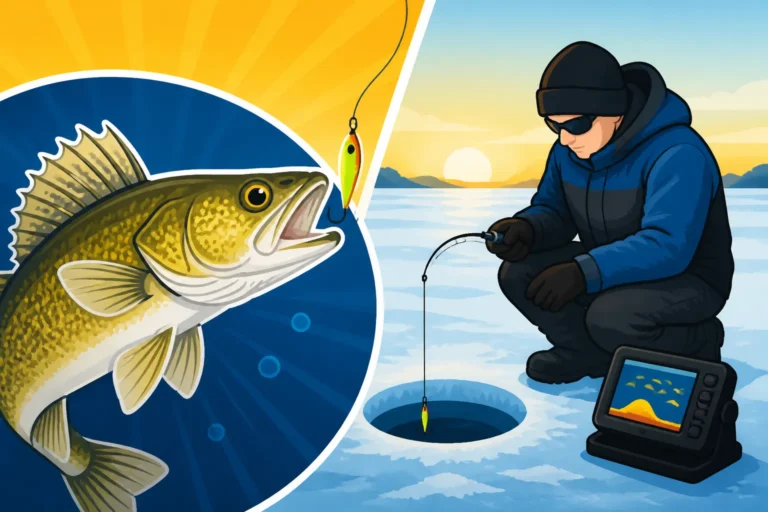
When Iowa's lakes freeze over, a whole new dimension of walleye fishing opens up: ice fishing. While challenging, the rewards can be great. Walleye often hold to specific deep structures under the ice, such as main lake points, channel edges, or submerged humps. Your portable fish finder (flasher or LCD unit) is indispensable for marking fish and your jig presentation.
Jigging spoons tipped with a minnow head or a small minnow on a plain hook under a sensitive ice rod are go-to tactics. Deadsticking a live minnow on a tip-up nearby can also be very effective, allowing you to cover multiple depths or areas. Dawn and dusk are still prime times, but walleye can bite throughout the day under the ice. Always prioritize safety on the ice, checking ice thickness regularly. For detailed information, review our guide on Ice Fishing Safety on Iowa Lakes.
Common Challenges and Troubleshooting for Walleye Anglers
Even the most seasoned walleye anglers face tough days on the water. Walleye can be notoriously finicky, and conditions can change rapidly. Knowing how to adapt and troubleshoot common problems will save you from frustration and turn slow days into successful ones.
Dealing with Finicky Bites
A "finicky bite" is perhaps the most common complaint from walleye anglers. This happens when fish are present, you're marking them on your electronics, but they simply won't commit to your lure. The first thing to consider is your presentation. Are you fishing too fast or too slow? Walleye often prefer a slower, more deliberate retrieve when they're not aggressive. Try slowing down your jigging cadence or trolling speed.
Next, consider your bait. If artificials aren't working, try switching to live bait. A lively minnow, a wiggling nightcrawler, or a leech can often entice a reluctant walleye. Experiment with different colors and sizes of lures. Sometimes a subtle, natural color will work better than a flashy one, or vice-versa. Downsizing your lure or using lighter line can also make a difference. The goal is to make your offering as irresistible and natural as possible.
Adapting to Changing Conditions
Iowa weather can be unpredictable, and rapidly changing conditions can significantly impact walleye behavior. A sudden cold front, for example, often pushes walleye deeper and makes them less active. In these situations, slow down your presentation, fish deeper, and focus on vertical jigging or slip bobber fishing with live bait. Conversely, a warm front or stable weather can make fish more aggressive, allowing for faster presentations and more active lures like crankbaits.
Wind direction and intensity also play a huge role. If the wind picks up and creates a chop, try fishing the wind-blown side of the lake or river, as this can concentrate baitfish and active walleye. If the water becomes extremely muddy after a heavy rain, switch to baits with strong vibrations or scents, and use brighter colors that stand out in murky water. Always be willing to change your location, depth, and technique until you find what the walleye are responding to.
Avoiding Common Mistakes
New walleye anglers often make a few common mistakes that can hinder their success. One of the biggest is fishing too fast. Walleye are generally not chasing fish at high speeds; they prefer to ambush. Slow down your retrieve and give them time to react. Another mistake is not staying mobile. If you're not getting bites after 20-30 minutes in a spot, especially if you're not marking fish, move on. Walleye are often found in schools, so finding one usually means finding more.
Lastly, not paying attention to detail can cost you fish. Always check your line for nicks or abrasions, tie strong knots, and keep your hooks sharp. A dull hook can lead to missed bites, and weak line can mean losing a trophy walleye. A good practice is to always have a pair of fishing pliers, readily available for quickly de-hooking fish, as they tend to swallow baits deeply, which can be an ethical issue if you plan to release them. Familiarize yourself with the Iowa Fishing License Guide and all other regulations to avoid any legal issues and ensure a responsible fishing trip.
| Season | Optimal Water Temp (F) | Preferred Habitat | Go-To Techniques | Recommended Baits/Lures |
|---|---|---|---|---|
| Spring | 40-55 | Shallow rocky areas, inlets, river bends | Jigging, shallow trolling, casting crankbaits | Minnows, jigs, shallow crankbaits |
| Summer | 60-75 | Deep humps, points, channel edges, thermoclines | Deep trolling, bottom bouncing, vertical jigging | Deep crankbaits, crawler harnesses, live minnows |
| Fall | 45-60 | Mid-depth flats, break lines, weed edges | Trolling, casting crankbaits, jigging | Minnows, large swimbaits, medium crankbaits |
| Winter | 32-38 | Deep structure, basin edges, channel breaks | Ice jigging, deadsticking | Minnow heads, small minnows, jigging spoons |
Disclaimer
Fishing regulations, license requirements, and local conditions can change. Always consult the latest official Iowa Department of Natural Resources (DNR) regulations before heading out on the water. This guide is for informational purposes only and should not replace official sources.