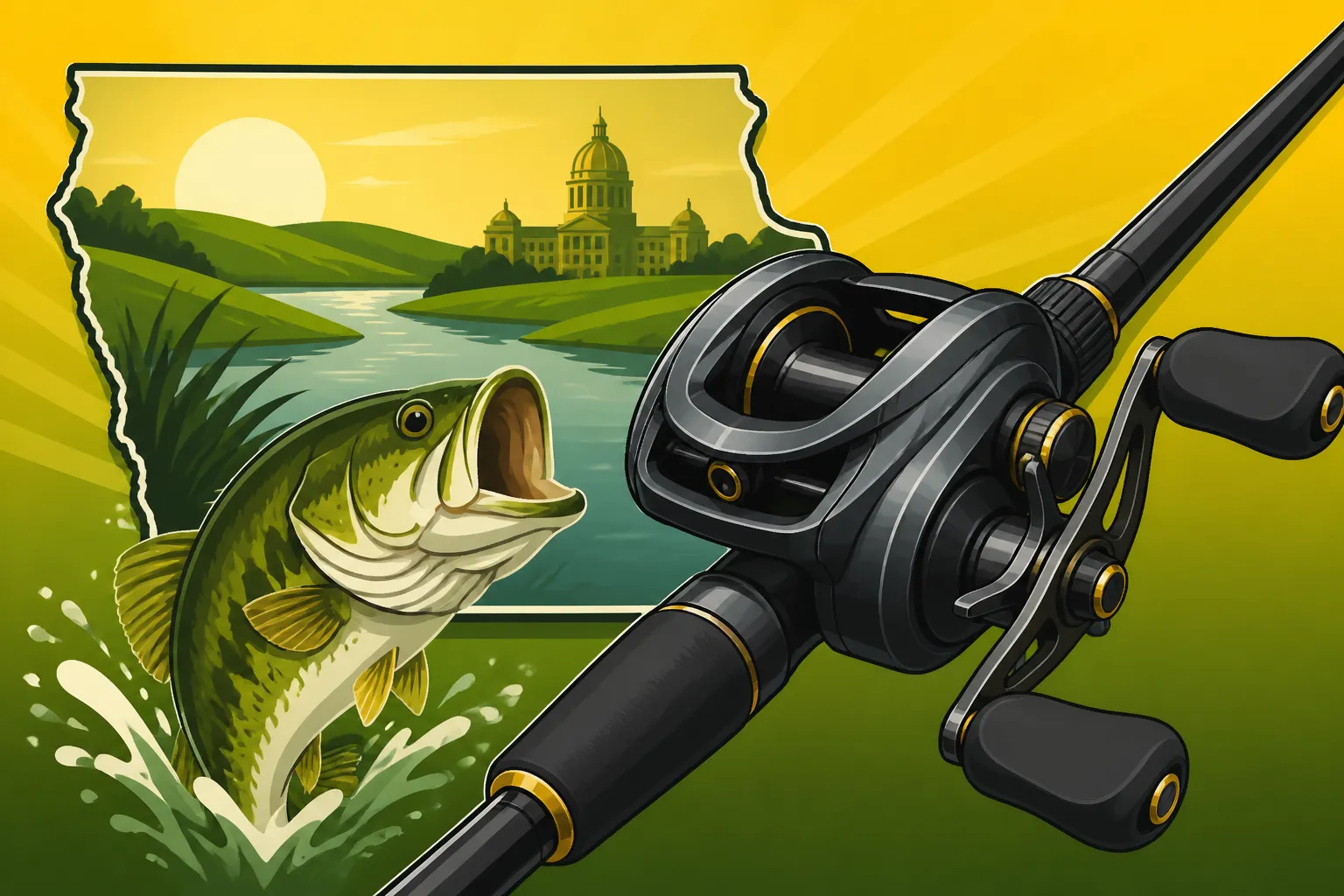
Best Baitcasting Reels for Bass Fishing
For many Iowa anglers, the frustration of trying to cast accurately or muscle a big largemouth out of heavy cover with the wrong equipment is all too real. If you've felt limited by your current setup, especially when targeting those trophy bass in our state's lakes and rivers, this comprehensive guide is for you. We're diving deep into baitcasting reels, exploring why they're a game-changer for bass fishing and how to choose and use the best one for your Iowa adventures.
Understanding the Allure of Baitcasting Reels for Iowa Bass
There’s a reason why serious bass anglers, from tournament pros to weekend warriors, gravitate towards baitcasting reels. It's not just about looking "pro"; it's about control, power, and precision – qualities that are absolutely essential when you're trying to coax a stubborn smallmouth from a swift river current or yank a bucketmouth out of dense lily pads.
Why Bass Anglers Swear by Them
When you think about bass fishing, especially for the larger, more aggressive species, you often picture heavier lures, thicker lines, and the need for pinpoint casting accuracy. This is where baitcasting reels truly shine. Unlike spinning reels, which are designed for lighter lines and lures, baitcasters excel at handling heavier lines and baits, allowing you to cast further and with greater accuracy, even into windy conditions that would make a spinning reel a nightmare. The direct line-to-spool contact gives you an incredible feel for what your lure is doing and what's happening at the other end of your line, which is crucial for detecting subtle bites.
Moreover, the power-to-weight ratio of a good baitcasting reel is unmatched. When you hook into a feisty Iowa bass, you need a reel that can quickly and efficiently bring that fish in without straining or struggling. The gearing systems in baitcasters are built for torque, giving you the leverage to pull fish out of thick weeds or strong currents, a common scenario whether you're fishing on Saylorville Reservoir or the Mississippi River. This robust construction also means they can stand up to the abuse of repeated heavy casting and hard-fighting fish, making them a durable investment for dedicated bass anglers.
When a Baitcaster Outshines a Spinning Reel
While spinning reels certainly have their place – especially for finesse techniques, lighter baits, and beginners – a baitcaster often becomes the preferred tool once an angler gets comfortable with its operation. For starters, the ability to make very precise, short pitches and flips into tight cover, like under docks or into submerged brush piles, is significantly easier and more accurate with a baitcaster. The thumb bar release allows for instant line control, letting you stop the cast exactly where you want it. This kind of accuracy is paramount when you're trying to drop a jig right onto a log in a murky farm pond.
Secondly, when you're throwing larger, heavier lures such as big spinnerbaits, deep-diving crankbaits, or substantial swimbaits, a baitcaster handles the weight much better. A spinning reel might struggle with the inertia of these baits, leading to twisty lines and awkward casts. With a baitcaster, the line peels off the spool smoothly, reducing friction and allowing those heavier lures to fly further and more predictably. This advantage is especially noticeable when targeting bass in expansive waters like the Iowa Great Lakes, where long casts can be critical to covering water and finding active fish. If you're looking to elevate your bass game beyond the basics, understanding How to Catch Bass in Iowa often starts with mastering the baitcaster.
Deciphering Key Features: What to Look For
Stepping into the world of baitcasting reels can feel a bit overwhelming with all the jargon and different specifications. But don't fret! Once you understand a few key features, you'll be able to compare models and find one that perfectly suits your bass fishing style. Think of it like buying a car; you wouldn't just pick one based on color, would you? You'd look at engine size, fuel efficiency, and safety features. Reels are no different.
Gear Ratio and Retrieve Speed
The gear ratio is one of the most crucial aspects to consider, as it dictates how fast you can retrieve your line. It's usually expressed as a ratio, like 6.4:1 or 8.1:1. The first number tells you how many times the spool rotates with one full turn of the handle.
- Low Gear Ratios (5.X:1 to 6.X:1): These are your powerhouses. They retrieve line slower but provide more torque, making them ideal for lures that create a lot of drag, like large deep-diving crankbaits, big swimbaits, or bladed jigs. When you're fishing these types of baits, you want a slower, steady retrieve to let the lure work properly and to fight those bigger fish more easily. If you're cranking for bass in a strong current on the Des Moines River, a lower gear ratio will save your arm from exhaustion.
- Medium Gear Ratios (7.X:1): These are your all-around workhorses. They offer a good balance of speed and power, making them versatile for a wide range of techniques. If you're just starting out or want one reel that can do a bit of everything – from throwing spinnerbaits to pitching jigs – a 7.X:1 ratio is a fantastic choice. This is often the go-to for Largemouth Bass Fishing in Iowa across various conditions.
- High Gear Ratios (8.X:1 and higher): These are speed demons, perfect for quickly picking up slack line, fishing topwater baits where you need to react instantly to a strike, or for techniques like flipping and pitching. When you set the hook and need to quickly pull a fish out of heavy cover before it snags, that extra speed is invaluable. For Topwater Bass Fishing Tips where immediate retrieve is key, a high-speed reel is a must-have.
Braking Systems: Magnetic vs. Centrifugal
The braking system is your best friend when it comes to preventing dreaded backlashes, especially for beginners. It controls the speed of the spool during the cast.
- Centrifugal Braking Systems: These systems use small weights that move outwards as the spool spins, rubbing against a brake collar to create friction. They are often found on the inside of the side plate and require opening the reel to adjust. The beauty of centrifugal brakes is that they apply more braking power at the beginning of the cast when the spool is spinning fastest, and less as the lure slows down. This provides a very consistent and smooth deceleration, which many experienced anglers prefer for long, accurate casts. They can be a bit more "set it and forget it" once dialed in for a specific lure weight.
- Magnetic Braking Systems: These systems use magnets that move closer to or further from the spool to create resistance. They are typically adjusted externally with a dial, making on-the-fly adjustments incredibly easy. Magnetic brakes apply consistent braking force throughout the cast. They are often considered more beginner-friendly because of their external adjustability, allowing you to quickly adapt to changing wind conditions or lure weights. You can easily tweak the settings if you switch from a light jig to a heavier crankbait without opening the reel. Many anglers find magnetic systems easier to learn with, offering great control with a quick turn of a dial.
Many modern reels actually incorporate a hybrid system, combining elements of both magnetic and centrifugal brakes to give anglers the best of both worlds in terms of adjustability and consistent performance. When browsing options at a place like Bass Pro Shops, don't hesitate to ask a knowledgeable associate to demonstrate how these systems work.
Bearings, Drag, and Spool Material
These seemingly smaller details play a huge role in the overall performance, smoothness, and longevity of your baitcasting reel.
- Bearings: Often hyped as a major selling point, the number of bearings isn't always the only indicator of quality. What matters more is the quality of the bearings. High-quality stainless steel or shielded bearings will provide smoother casting, retrieve, and longer life. A reel with fewer, high-quality bearings will often outperform one with more, lower-quality bearings. Look for bearings in key areas like the spool, handle, and worm shaft. They contribute significantly to the smooth feel you want when fighting a fish or retrieving a lure.
- Drag System: The drag system is paramount for fighting fish, especially larger bass. It allows line to peel off the spool when a fish pulls harder than your set drag, preventing your line from breaking or your hook from straightening. Look for a drag system that is smooth and consistent, without any jerking or sticking. Carbon fiber drag washers are often preferred for their smoothness and heat dissipation. A strong, reliable drag gives you the confidence to let a hard-fighting bass run when it needs to, without fear of losing it. Different reels offer different maximum drag amounts, measured in pounds. For most Iowa bass fishing, a reel with a maximum drag of 10-15 pounds is usually sufficient, but if you're targeting truly monster bass in heavy cover, more might be beneficial.
- Spool Material: Most baitcaster spools are made from aluminum or an aluminum alloy. A lightweight spool is highly desirable because it requires less energy to start and stop spinning, which translates to smoother casting and less chance of a backlash, especially with lighter lures. Perforated or drilled spools are designed to reduce weight further. The amount of line a spool can hold is also important. Ensure the reel you choose has enough line capacity for the type of fishing you plan to do, whether that's long casts across a large lake or shorter pitches into dense cover.
Selecting the Right Baitcaster for Different Bass Techniques
One of the beauties of baitcasting reels is their versatility, but "versatile" doesn't mean "one size fits all." Different bass fishing techniques benefit from specific reel characteristics. Understanding these nuances will help you build a tackle arsenal that gives you an edge, whether you're chasing Smallmouth Bass Fishing in Iowa on a rocky river or monster largemouth in a weed-choked pond.
Heavy Cover Punching and Flipping
When you're dealing with heavy cover – think dense lily pads, thick matted vegetation, submerged timber, or thick brush – you need a reel that's built like a tank and retrieves line fast. This technique, often called "punching" or "flipping," involves dropping a heavy jig or soft plastic through openings in the cover to trigger a reaction strike from bass hiding below.
For these situations, you'll want a baitcasting reel with:
- High Gear Ratio (8.X:1 or higher): The moment a bass strikes in heavy cover, you need to reel down quickly, set the hook hard, and winch that fish out before it burrows deeper into the snags. That high retrieve speed is critical for getting the fish moving towards you immediately.
- Strong Drag System: You'll likely be using heavy braided line (think 50-65 lb test) and a powerful rod. The drag needs to be robust enough to handle the immense pressure of pulling a fish out of thick vegetation without slipping or breaking down.
- Durable Construction: These reels take a beating. Look for solid frames and high-quality components that can withstand repeated impacts and heavy loads.
A sturdy reel designed for power applications will make all the difference, preventing heartbreak when that monster bass decides to dive into the nastiest part of the cover.
Crankbaiting and Reaction Baits
Crankbaits, spinnerbaits, and chatterbaits are known as "reaction baits" because they're designed to provoke an aggressive strike from bass. These lures often create significant water resistance, especially deep-diving crankbaits.
For techniques that involve constant retrieving and a lot of water resistance, consider a baitcaster with:
- Low to Medium Gear Ratio (5.X:1 to 7.X:1): A slower gear ratio provides more torque, making it easier to pull those high-resistance lures through the water all day long. This saves your arm and allows the crankbait to achieve its designed diving depth and action. If you try to reel a deep diver with a super-fast reel, you'll feel like you're fighting a brick!
- Smooth Castability: Crankbaits often require long casts to cover water effectively. A reel with a good braking system that allows for smooth, long casts is beneficial. Magnetic brakes or a well-tuned centrifugal system can help prevent backlashes when really airing out a lure.
- Ergonomic Design: Since you'll be constantly retrieving, comfort is key. Look for reels with comfortable handles and a design that feels good in your hand even after hours of casting.
When you're covering vast areas of water on lakes like Rathbun Lake or Coralville Reservoir with a crankbait, a reel that excels in these areas will make your day much more productive and enjoyable.
Finesse and Topwater Applications
While baitcasters are often associated with heavy-duty fishing, certain models are perfectly suited for finesse presentations and the exciting world of topwater fishing. Finesse techniques involve lighter lines and smaller baits, often used when bass are pressured or finicky.
For these more delicate or explosive applications, look for a baitcaster with:
- Medium to High Gear Ratio (7.X:1 to 8.X:1): For topwater, a fast retrieve is crucial to pick up slack line quickly after a blow-up and to keep the lure dancing on the surface. For finesse, it allows for quick lure repositioning or responding to a subtle bite. This is essential for effective Topwater Bass Fishing Tips.
- Excellent Braking System (especially magnetic or hybrid): When throwing lighter lures, controlling the spool speed to prevent backlashes is paramount. A finely tunable magnetic or hybrid braking system allows you to really dial in your cast for optimal distance and accuracy with lighter offerings.
- Lightweight Spool: A lighter spool requires less energy to start and stop, making it easier to cast lighter lures without backlashing. This is a critical feature for finesse presentations where you might be throwing small shaky head jigs or weightless worms.
- Good Bearing Quality: Smoothness in casting and retrieve becomes even more noticeable with lighter lures and lines. High-quality bearings will contribute to a seamless feel.
While spinning reels still dominate some finesse techniques, a well-chosen baitcaster can provide superior control and accuracy, especially when casting into tight spots or needing to quickly react to a strike. Many anglers find the "thumbing" control of a baitcaster irreplaceable when placing a topwater frog exactly where they want it near emergent vegetation.
Here’s a quick overview of how gear ratios generally align with common bass fishing techniques:
| Gear Ratio Range | Speed Level | Common Applications (Iowa Bass Fishing) | Lure Types |
|---|---|---|---|
| 5.X:1 – 6.X:1 | Slow/Powerful | Deep-diving crankbaits, large swimbaits, umbrella rigs, spinnerbaits requiring slow roll, heavy jigging | Deep Crankbaits, Large Swimbaits, Umbrella Rigs, Large Spinnerbaits |
| 7.X:1 | Medium/Versatile | All-around utility, jigs, Texas rigs, smaller crankbaits, bladed jigs, general purpose, Bass Fishing Tips for Iowa Farm Ponds | Jigs, Texas Rigs, Medium Crankbaits, Spinnerbaits, Chatterbaits, Frogs |
| 8.X:1 + | Fast/Quick | Flipping, pitching, topwater, buzzbaits, burning spinnerbaits, quickly taking up slack, How to Fish a Spinnerbait for Bass | Topwater Lures, Buzzbaits, Flipping Jigs, Pitching Baits, Frogs, Fast Jerkbaits |
Matching Your Reel to Your Rod and Line
Just like a great chef knows that the best ingredients won't shine without the right cooking technique, having the best baitcasting reel won't do you much good if it's not properly matched with your fishing rod and line. This synergy is what creates a balanced, effective fishing system that enhances your casting, presentation, and fish-fighting capabilities when you're out on the water.
Rod Power and Action Compatibility
Your rod and reel work as a team, and their characteristics need to complement each other.
- Rod Power: This refers to the rod's lifting strength or stiffness (e.g., medium, medium-heavy, heavy). A heavier power rod is designed to handle heavier lines and lures and to fight larger, stronger fish. It makes sense to pair a heavier power rod with a baitcasting reel that has a robust drag and is capable of handling heavier line. For example, if you're using a heavy power rod for punching through thick weeds, you'll want a sturdy, high-speed baitcaster with plenty of drag to match. Conversely, a medium-heavy rod for general purpose bass fishing would pair well with a versatile 7.X:1 gear ratio reel.
- Rod Action: This describes where the rod bends when pressure is applied (e.g., fast, moderate).
- Fast Action rods bend mostly in the tip, offering excellent sensitivity and quick hooksets. These pair well with baits that require precise feel, like jigs and worms, and baitcasting reels with versatile gear ratios.
- Moderate Action rods bend further down into the blank, providing a more parabolic bend that helps load up for longer casts and cushions the hookset, which is ideal for treble hook baits like crankbaits. Pairing these with a slower gear ratio baitcaster is a classic combination for crankbait fishing.
A balanced setup feels comfortable in your hand and makes casting effortless. The reel shouldn't feel too heavy or too light for the rod, as this can throw off your balance and affect casting accuracy and fatigue. You can often find a great rod to pair with your new baitcaster at stores like Bass Pro Shops, where you can feel the balance in person. Consider your fishing style – are you casting all day, or making short, precise pitches? This will influence the ideal balance.
Line Type and Capacity Considerations
The type and diameter of your fishing line will directly impact your reel choice and overall performance.
- Monofilament (Mono): This is a traditional, stretchy line that's easy to tie and relatively inexpensive. It's often used for topwater lures or crankbaits where its stretch can act as a shock absorber. A baitcaster with decent line capacity is good for mono, as it's thicker than braid or fluorocarbon for the same breaking strength.
- Fluorocarbon (Fluoro): Less stretchy than mono and virtually invisible underwater, fluorocarbon is fantastic for finesse presentations and situations where sensitivity is key, such as when fishing jigs or Texas rigs. It's denser and sinks, making it great for getting lures down. Baitcasters handle fluoro well, but remember it has memory, so proper spooling and line conditioner can help.
- Braided Line (Braid): Extremely strong for its diameter, with almost no stretch, braid offers incredible sensitivity and hook-setting power. It's perfect for heavy cover fishing, punching, or when you need to feel every little bite. Because braid is so thin, you can often fit a much higher breaking strength on a spool compared to mono or fluoro. Some anglers will use a shorter fluorocarbon leader tied to braid for invisibility while retaining the benefits of braid. If you're using heavy braid, ensure your baitcaster has a robust line guide and solid construction to handle the increased pressure. While the article Braided Line vs Monofilament for Walleye focuses on walleye, the principles of line choice translate directly to bass fishing as well.
Check the reel's specifications for its recommended line capacity. This tells you how much of a certain pound-test line the spool can comfortably hold. Make sure the reel you choose can accommodate enough line for your typical casting distances and fish-fighting scenarios. Running out of line on a long cast or a strong run from a fish is a frustrating way to end an outing.
Overcoming the Learning Curve: Tips for New Baitcaster Users
Let's be real: when you first pick up a baitcasting reel, it can feel a bit intimidating. The infamous "bird's nest" or "backlash" is a rite of passage, and it can certainly make you want to throw the reel in the lake! But don't despair. Every seasoned baitcaster user has been there, and with a bit of patience and practice, you'll be casting like a pro in no time. It's all about understanding the mechanics and making small, consistent adjustments.
Spooling Your Reel Correctly
The journey to mastering a baitcaster starts before you even make your first cast: with proper line spooling. A poorly spooled reel is a recipe for backlashes and frustration.
- Attach the Line: Thread your chosen line through the line guide on the reel and tie it securely to the spool with an arbor knot or a simple overhand knot. Make sure it's snug.
- Maintain Tension: This is the most critical step. You need to apply constant, firm tension to the line as it goes onto the spool. Have a friend hold the line spool with a pencil, or use a tension device. If doing it yourself, you can run the line through a book or a damp cloth to create friction.
- Fill Appropriately: Fill the spool so that the line is about 1/8 to 1/16 inch below the rim of the spool. Overfilling will lead to backlashes, and underfilling will reduce casting distance.
- Consider Backing (for braid): If you're using braided line, especially on a deep spool, you might want to put a layer of monofilament backing on first. Braid can slip on a bare aluminum spool, and mono backing prevents this. It also helps fill the spool without using an excessive amount of expensive braid.
Properly spooled line lays neatly and evenly, allowing it to flow smoothly off the reel during a cast. It's a small step that makes a huge difference.
Mastering the Cast and Avoiding Backlashes
This is the part that gives new baitcaster users nightmares, but it doesn't have to be. Backlashes happen when the spool spins faster than the line is peeling off due to the lure's flight. The key is control.
- Start with the Basics: Begin with a heavier practice weight (like a casting plug or a heavy jig) in an open area, away from trees and bushes. Don't start with a tiny worm!
- Adjust the Mechanical Brake (Spool Tension Knob): This knob is usually located near the handle. Tighten it so that when you press the thumb bar and the lure is hanging down, the lure slowly falls to the ground. If it free-falls quickly, it's too loose. If it doesn't fall, it's too tight. This is your primary defense against backlashes.
- Adjust the Braking System (Magnetic/Centrifugal): If you have a magnetic brake, start with it on a higher setting (more braking). For centrifugal, start with more weights engaged. As you gain confidence, you can gradually reduce these settings for longer casts.
- The Thumb is Your Best Friend: Your thumb is the ultimate braking system. As you cast, gently feather your thumb on the spool to control its speed. Start by keeping your thumb on the spool throughout the cast, applying light pressure, and then lift it slightly as the lure flies. Before the lure hits the water, press your thumb down firmly to stop the spool completely. This prevents the "overrun" that causes backlashes.
- Smooth Motion: Avoid jerky casting motions. A smooth, controlled swing from 10 o'clock to 2 o'clock (imagining a clock face) is ideal. Think of it as painting a smooth arc, not snapping a whip.
- Wind Awareness: Always be mindful of the wind. Casting into the wind is a recipe for backlashes. If you must cast into the wind, increase your braking settings and use a heavier lure.
Remember, practice makes perfect. Spend time in your yard or at a local park, and don't get discouraged by a few bird's nests. Each backlash is a learning opportunity.
Adjusting Your Reel On the Water
One of the advantages of baitcasting reels is their adjustability, allowing you to fine-tune them for different lures and conditions. This isn't just a set-it-and-forget-it deal.
- Changing Lures: When you switch from a heavy spinnerbait to a lighter jig, you'll need to re-adjust your mechanical brake (spool tension) and potentially your external braking system (magnetic/centrifugal). Always re-do the "lure drop" test with your mechanical brake.
- Wind Conditions: If the wind picks up, you'll likely need to increase your braking settings to prevent backlashes. A headwind will require more brake, while a tailwind might allow you to loosen it slightly for more distance.
- Casting Technique Improvements: As you get better at thumb control and casting, you'll find you can reduce your mechanical and external brake settings, allowing for longer, more effortless casts.
The goal is to use the least amount of braking necessary to prevent backlashes while maximizing casting distance. This sweet spot changes, so be prepared to make minor adjustments throughout your fishing day. Learning to quickly dial in your reel settings is a sign of an experienced baitcaster angler. For overall guidance on your setup, checking out Best Tackle for Iowa Fishing might also be helpful.
Maintaining Your Baitcasting Reel for Peak Performance
You wouldn't expect your car to run perfectly forever without an oil change, would you? The same goes for your baitcasting reel. These precision machines are exposed to water, dirt, fish slime, and sometimes even a little mud. Proper maintenance isn't just about making your reel last longer; it's about ensuring it performs flawlessly every time you hit the water, giving you the confidence to tackle that trophy bass when it bites.
Routine Cleaning and Lubrication
Consistent, light maintenance after each trip can prevent bigger problems down the line.
- After Each Trip:
- Wipe Down: Use a damp cloth to wipe down the exterior of the reel, removing any dirt, grime, or fish slime. Pay attention to the line guide, handle, and around the spool.
- Rinse (Carefully): If your reel got splashed with lake or river water, a very light rinse with fresh water can be beneficial, but be extremely careful not to blast water directly into the gears or bearings. A gentle spray from a hose or a quick dip in a bucket of clean water is fine, but avoid high pressure. Let it air dry thoroughly, especially in a well-ventilated area, and never in direct sunlight, which can degrade components.
- Loosen Drag: Always back off your drag completely after each trip. This prevents the drag washers from compressing over time, which can lead to sticking or inconsistent drag performance.
- Monthly/Bi-Monthly (or after heavy use):
- Light Lubrication: Apply a tiny drop of high-quality reel oil to moving parts like the worm gear (under the line guide), handle knobs, and the spool shaft. A small amount goes a long way. Use specialized reel oil, not WD-40 or general household oils, as these can attract dirt or degrade plastic components.
- Grease (Sparing): Some manufacturers recommend a tiny dab of reel grease on specific gears, but this is less frequent than oiling. Consult your reel's manual for specific lubrication points and types.
A good practice is to carry a small bottle of reel oil and a micro-fiber cloth in your Best Tackle for Iowa Fishing bag for quick touch-ups on the water or after a session. For those considering what other essential items to bring along, the Best Lures for a Starter Tackle Box article might offer some useful ideas.
Seasonal Storage and Inspection
As the seasons change, particularly when preparing for the colder Iowa winters or getting ready for the spring bite, a more thorough inspection and storage routine is smart.
- End-of-Season Deep Clean: Before storing your reel for an extended period, consider a more detailed cleaning. This might involve removing the side plates (if comfortable and familiar with your reel's disassembly) to clean out any grit or old lubricant. Use a soft brush and reel cleaning solution. Re-lubricate with fresh oil and grease as recommended by the manufacturer. If you're unsure, or if your reel feels "off," consider taking it to a professional tackle shop. Places like Bass Pro Shops often have service departments or can recommend trusted local technicians who can perform this service.
- Check Components: Inspect all parts for wear and tear. Look at the line guide for nicks or grooves, check the handle for any looseness, and ensure all screws are snug. Pay attention to the bail arm (if it’s a spinning reel part, but relevant for other components on a baitcaster). A small issue caught early can prevent a major malfunction later.
- Replace Worn Line: If your line is old, frayed, or has been heavily used, it's wise to strip it off and respool with fresh line for the next season. Old line can weaken and become a source of frustrating break-offs.
- Proper Storage: Store your reels in a dry, temperate environment, away from extreme heat or cold. Avoid garages or sheds with wide temperature fluctuations. Keep them in a tackle bag or a dedicated reel case to protect them from dust and physical damage. Loosening the drag before storage is crucial for preserving the drag washers.
By giving your baitcasting reels the care they deserve, you're not just extending their lifespan; you're ensuring that they're always ready to perform at their best when that big Iowa bass comes calling.
Disclaimer
This article is for general informational purposes only and does not constitute professional advice. Laws, prices and regulations vary by location and change over time. Consult a qualified professional for guidance on your specific situation.