Best Spinning Reels for Panfish
There's nothing quite like the excitement of a panfish bite – that subtle tap-tap-tap, then the gentle pull that signals a bluegill or crappie has found your offering. But let's be honest, trying to feel those delicate bites, especially when using gear that's too heavy or clunky, can quickly turn a relaxing day on an Iowa lake or pond into a frustrating experience. This guide is all about helping you cut through the confusion and choose the best spinning reel to truly enhance your panfishing adventures, making every nibble and fight a pure joy.
Why Spinning Reels Are Perfect for Panfish
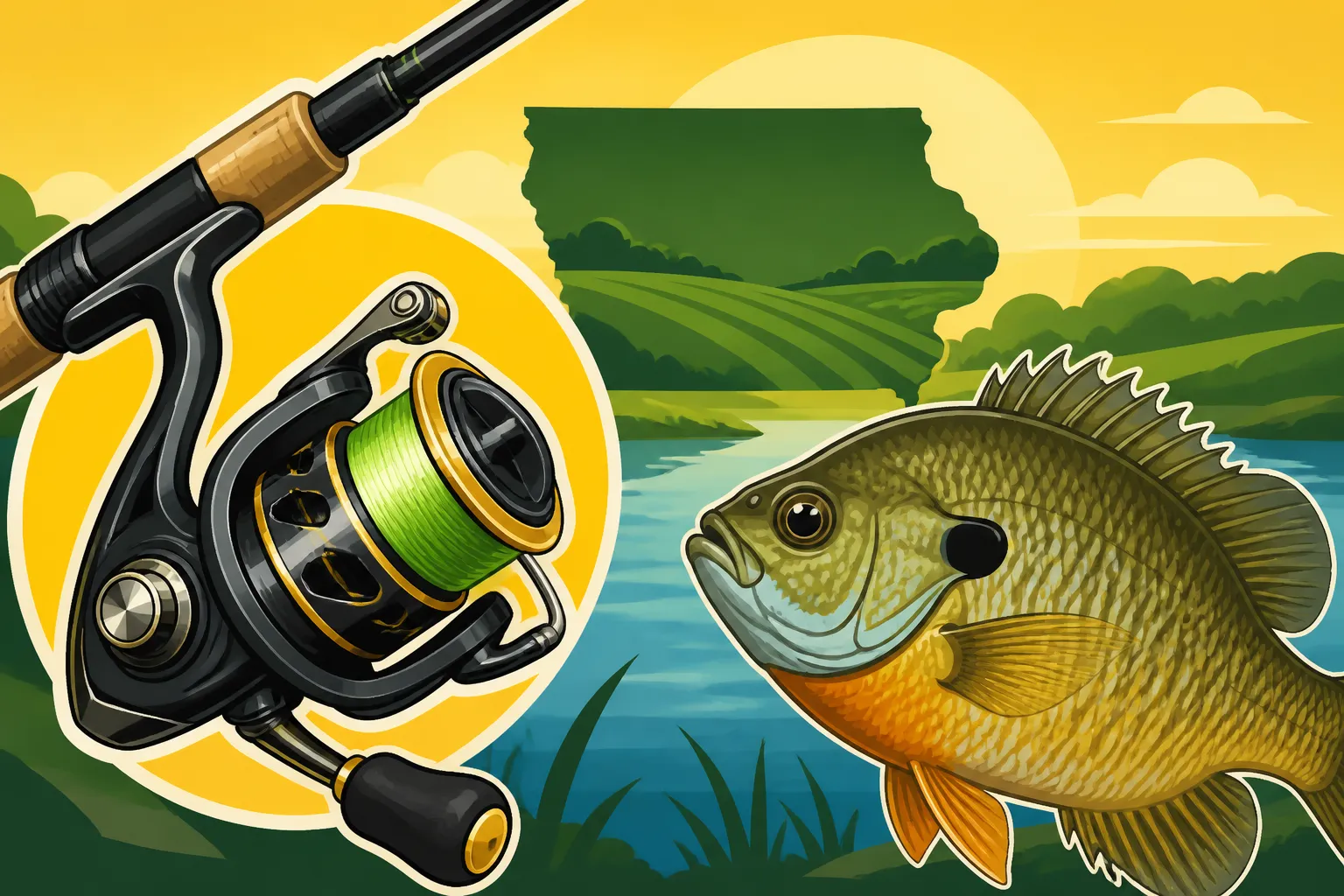
When it comes to pursuing panfish like bluegill, crappie, and perch in Iowa's abundant waters, the spinning reel isn't just a good choice; it's often the ideal choice. These reels are designed for the kind of light tackle work that panfish demand, offering a combination of sensitivity, ease of use, and versatility that other reel types simply can't match for this specific pursuit.
The Delicate Touch for Light Tackle
Panfishing is a game of finesse. Whether you're dropping a tiny jig into a brush pile on Rathbun Lake or drifting a small minnow under a bobber on Clear Lake, you need to feel everything. Spinning reels excel here because they allow you to use extremely light lines – often 2-6 pound test monofilament or fluorocarbon – without the frustrating backlashes common with baitcasting reels. This light line is crucial for presenting small baits naturally and detecting those almost imperceptible bites that panfish are famous for. A quality spinning reel, coupled with a sensitive rod, transforms those faint tugs into clear signals, letting you know exactly when to set the hook.
Imagine you're targeting crappie that are suspended just over a submerged weed bed. You're using a 1/32 oz jig, a tiny offering. If your reel can't handle whisper-thin line, that jig won't get to the right depth, and you won't feel it when a crappie gently mouths it. The open-face design of a spinning reel, where the line peels off in coils, reduces friction and allows these light baits to cast much further and more accurately than they would with a baitcaster, which relies on the spool rotating. This translates directly to more bites and more fish in the net.
Ease of Use for All Skill Levels
Let's face it, not everyone is a seasoned pro who's been fishing since they could walk. Many of us started with spinning reels, and for good reason: they are incredibly forgiving and easy to learn. There's no complex spool tension to adjust or thumb control to master like with a baitcasting reel. You simply open the bail, cast, close the bail, and reel. This simplicity makes spinning reels perfect for beginners, kids, or anyone who just wants to enjoy a relaxing day without battling equipment.
This user-friendliness isn't just for newbies, either. Even experienced anglers appreciate the hassle-free nature of spinning reels, especially when conditions are less than ideal. Think about trying to make a precise cast into a tight spot on a windy day, or when your fingers are a bit numb from the cold during early spring crappie season. A spinning reel allows for quick, accurate casts with minimal fuss, letting you focus on the fish, not on your gear. This ease of operation means more time fishing and less time untangling knots or dealing with frustrating casting issues.
Versatility for Different Panfish Species
Iowa's waters are home to a fantastic array of panfish, from chunky bluegill in farm ponds to slab crappie in reservoirs and aggressive yellow bass in the Iowa Great Lakes. A good spinning reel can handle them all. While you might opt for a slightly different rod or line weight depending on the species and conditions, the spinning reel itself remains a reliable constant.
For instance, the same small spinning reel you use for subtle Bluegill Fishing in Iowa with a piece of worm under a bobber can often be rigged up for Crappie Fishing in Iowa with a small jig or minnow. The key is its ability to manage light lines and small baits effectively, which is a common denominator across most panfish scenarios. You can easily switch between presentations – from vertical jigging over structure to casting tiny spinners along shorelines – without needing to switch out your reel. This versatility means you get more bang for your buck and don't need a dozen different setups for every subtle variation in panfish pursuit.
Key Features to Look for in a Panfish Spinning Reel
Choosing the right spinning reel for panfish isn't just about picking the smallest one on the shelf. There are specific features that can make a huge difference in your fishing experience, transforming frustration into fluid casting and successful retrieves. Let's break down what truly matters.
Size and Weight Considerations
For panfish, smaller and lighter is almost always better. You'll typically be looking at reels in the 500 to 2000 series range. These numbers often refer to the size of the spool and the overall capacity of the reel. A smaller reel means less weight, which is critical for balancing out the ultralight or light action rods you'll be using. A well-balanced setup reduces fatigue, increases sensitivity, and simply feels better in your hands, allowing for more precise casts and a better feel for those subtle panfish bites.
Think about spending hours flicking tiny jigs at a brush pile. If your reel is too heavy, your wrist will be screaming after an hour. A lightweight reel, often constructed with graphite or composite materials, makes the entire setup feel like an extension of your arm. This is particularly important for techniques that involve a lot of repetitive casting or holding the rod for extended periods, such as when How to Catch Panfish With a Bobber or working a Crappie Jig Fishing Techniques pattern. While larger sizes might hold more line, for panfish, you simply don't need that capacity, and the added weight will detract from the delicate feel necessary for success.
Smooth Drag System Matters Most
If there's one feature you absolutely cannot compromise on for a panfish spinning reel, it's the drag system. A smooth, consistent drag is paramount because you'll be using such light lines. When a feisty crappie or a big bluegill makes a sudden run, a sticky or erratic drag can snap your line in an instant, leaving you heartbroken and fishless. The drag should release line fluidly, without jerking or hesitation, even under light pressure.
Test the drag in the store by pulling line directly from the spool. It should come out smoothly and consistently, without any hitching or grinding. Many modern spinning reels, even at budget-friendly price points, offer excellent drag systems. Look for reels with multi-disc drag washers, as these tend to provide more consistent pressure. A reliable drag system not only protects your line but also allows you to play the fish effectively, wearing it down without putting excessive strain on your delicate tackle. This is especially true when a surprisingly large fish, like a bonus bass, decides to bite your panfish offering; a good drag might just save your day!
Gear Ratio and Retrieval Speed
The gear ratio of a spinning reel tells you how many times the spool rotates with one full turn of the handle. For panfish, you generally want a moderate to high gear ratio, something in the range of 5.0:1 to 6.2:1. This means that for every turn of the handle, the bail will rotate 5 to 6.2 times, bringing in line relatively quickly. A faster retrieve is beneficial for panfish because it allows you to quickly reel in slack line after a cast, keep up with fast-moving fish, and efficiently work certain lures like small spoons or spinners that require a steady retrieve.
While some anglers might prefer a slower retrieve for very delicate presentations, the ability to pick up line quickly is usually more advantageous. It allows you to respond rapidly to a bite, get your lure back for another cast if you're not in the strike zone, and maintain constant tension on a fighting fish. For example, if you're casting small Best Lures for Panfish like micro crankbaits or inline spinners, a quicker retrieve ensures they operate at their intended action. However, too fast of a retrieve can make it difficult to slow down for finicky fish, so a balanced ratio is often best.
| Feature | Ideal for Panfish | Why it Matters |
|---|---|---|
| Size | 500 to 2000 Series | Balances ultralight rods, reduces fatigue, and allows for delicate presentations with light lines (e.g., 2-6 lb test). |
| Weight | Lightweight materials (graphite, composite) | Essential for sensitivity and comfort during long fishing sessions, especially when making numerous casts. A lighter setup helps you feel even the faintest bites. |
| Drag System | Smooth, consistent, multi-disc | Crucial for preventing line breakage on light lines when a fish makes a sudden run. A jerky drag will quickly snap your line, losing the fish and your tackle. |
| Gear Ratio | 5.0:1 to 6.2:1 (Moderate to High) | Allows for quick retrieval of slack line, keeping pace with active fish, and efficiently working certain lures. Helps maintain tension on fighting fish and makes repeated casting less tedious. |
| Bearings | 4-6 quality stainless steel bearings | Contributes to smooth operation, especially in the main shaft and line roller. More quality bearings reduce friction and provide a more fluid feel, which is essential for casting light baits and reeling in delicate panfish. |
Bearings: Quantity vs. Quality
Ah, the great bearing debate! You'll often see reels advertised with a high bearing count, implying superior smoothness. While more bearings can contribute to a smoother reel, the quality of those bearings is far more important than the sheer number. A reel with 4-6 high-quality, corrosion-resistant stainless steel bearings will almost always outperform a reel with 10 cheaper, lower-quality bearings.
Good bearings reduce friction in key areas like the main shaft, gear train, and line roller. This translates to a smoother retrieve, easier cranking, and improved line lay, which in turn leads to better casting performance with those tiny panfish lures. Pay attention to reviews and brand reputation rather than just the number on the box. Reputable brands found at retailers like Bass Pro Shops or online through Amazon often detail the type and quality of bearings used. A high-quality line roller bearing, in particular, is vital for preventing line twist when using light monofilament or fluorocarbon, a common issue when panfishing.
Popular Spinning Reel Sizes for Iowa Panfishing
When you're browsing for a new spinning reel, you'll notice numbers like "500," "1000," "2000," and so on. These typically refer to the reel's size, with smaller numbers indicating smaller reels. For panfish in Iowa, you'll almost exclusively be looking at the lower end of this spectrum. Understanding these sizes helps you pick the perfect tool for your specific panfishing goals.
Ultra-Light (500-1000 Series) for the Small Stuff
If you're serious about chasing the smallest, most finicky panfish, or if you simply love the challenge of ultralight fishing, a 500 or 1000 series spinning reel is your go-to. These reels are incredibly light and compact, designed to be paired with delicate ultralight rods. They typically hold very little line (think 75-100 yards of 4-pound test), but for panfish, you rarely need more. Their small size makes them incredibly sensitive, allowing you to feel every quiver of your bait and the slightest of bites.
These reels are fantastic for targeting bluegill and smaller crappie in calmer waters, like protected coves on the Mississippi River or quiet farm ponds. They are ideal for presenting tiny jigs, micro spoons, or small bobber rigs with crickets or worms. The downside? Their small stature means they might struggle a bit if you accidentally hook into a larger species, like a decent bass or a channel catfish, but that's part of the fun (and risk!) of ultralight fishing. Just make sure your drag is dialed in! When it comes to finesse, these tiny reels are king, making every bluegill feel like a trophy.
Light (1000-2000 Series) for All-Around Action
For many Iowa panfish anglers, a 1000 or 2000 series spinning reel strikes the perfect balance. While still very light, these reels offer a bit more line capacity and often slightly more robust components than their ultralight counterparts. They pair beautifully with light to medium-light action rods and can handle a wider range of panfish techniques and situations. This size is arguably the most versatile for someone looking for a single reel to cover most of their panfishing needs, whether it's casting small crankbaits for crappie or working soft plastics for perch.
A 1000 or 2000 series reel can comfortably hold 100-120 yards of 6-pound test line, giving you a bit more cushion if a larger fish decides to crash your panfish party. This makes them a great choice for fishing on bigger waters like the Iowa Great Lakes, where you might encounter larger fish alongside your target panfish. If you're looking for one reel that can handle everything from a small creek to a large reservoir when targeting Bluegill and Sunfish Combined Limit or chasing Crappie Daily Limit in Iowa, this size range offers the best all-around performance without sacrificing the delicate touch needed for panfish.
When a Slightly Larger Reel Might Be Justified
While the focus is definitely on lighter tackle for panfish, there are a few niche situations where an angler might consider bumping up to a 2500 series reel, though this is rare for pure panfishing. Perhaps you're targeting truly jumbo crappie or perch in areas where incidental catches of walleye or bass are very common, and you want a bit more backbone in your reel. Or maybe you want a slightly heavier line, like 8-pound test, to deal with abrasive cover.
However, be mindful that going too big will quickly negate the advantages of a panfish-specific setup. The increased weight and larger spool diameter can diminish sensitivity and make casting very light lures less efficient. For the vast majority of panfish scenarios in Iowa, from the tiny ponds to the mighty Mississippi River backwaters, sticking to the 500-2000 series range will serve you best. Reserve those larger reels for bigger game fish, as they are not designed for the finesse required when chasing panfish.
Pairing Your Reel with the Right Rod and Line
A spinning reel, no matter how good, is only one piece of the puzzle. To truly unlock its potential for panfishing, you need to pair it with a complementary rod and the correct type of fishing line. Think of it like a symphony – each instrument plays a crucial role in creating the perfect harmony. Get one part wrong, and the whole experience can fall flat.
Rod Action and Power for Panfish
For panfish, you'll typically want a rod that's either "ultralight" or "light" in power, combined with a "fast" or "extra-fast" action. Let's break that down:
- Power refers to the rod's lifting strength or how stiff it is. Ultralight rods are very flexible and bend easily, which is perfect for absorbing the fight of a small fish on light line and casting tiny lures.
- Action refers to where the rod bends. A fast action rod bends mostly in the tip, providing excellent sensitivity to detect those subtle panfish bites and offering quick hook sets.
An ultralight, fast-action rod, typically between 5' to 6'6" in length, is the dream partner for your panfish spinning reel. This combination creates a feather-light setup that allows you to feel every vibration, every nibble, and makes even a 6-inch bluegill feel like a heavyweight champion. While a longer rod, like a 7-foot model, can be great for casting small jigs a long distance when Best Rod Length for Iowa River Walleye Fishing is the goal, for panfish, you often need the precision of a slightly shorter rod in tight quarters or when vertical jigging. Retailers like Bass Pro Shops have a wide selection, making it easy to find the perfect match.
Choosing the Ideal Fishing Line
With your perfect reel and rod in hand, the next crucial decision is your fishing line. For panfish, you want light line, typically in the 2 to 6-pound test range. Here are the main types you'll consider:
- Monofilament (Mono): This is the traditional choice, affordable, easy to tie knots with, and offers good stretch, which can be forgiving on light lines when a fish surges. It also floats, making it ideal for bobber fishing. Its main drawback is memory, meaning it can retain coils from the spool.
- Fluorocarbon (Fluoro): Nearly invisible underwater, fluorocarbon is a fantastic choice for clear water and finicky fish. It has less stretch than mono and sinks, which can be an advantage when you want your bait to get down quickly. It can be a bit stiffer and harder to manage on smaller spools.
- Braided Line (Braid): Braid offers incredible strength for its diameter, no stretch (meaning extreme sensitivity), and excellent casting distance. However, it's highly visible, can be difficult to cut, and may dig into the spool if not spooled tightly. Many anglers use braid as their main line and then tie on a fluorocarbon leader (3-6 feet) for invisibility at the lure.
For most panfishing, 4-pound monofilament is a fantastic all-around choice. If you're in very clear water or fishing for ultra-finicky crappie, a fluorocarbon leader tied to braid can give you the best of both worlds. Just be mindful that while braid is strong, comparing it to Best Line Weight for Muskie Fishing (which might be 50-80lb test!) highlights just how delicate panfish setups are. Finding quality line from brands available on Amazon is simple and ensures you have a reliable connection to your fish.
Balancing the Setup for Optimal Performance
The concept of a "balanced setup" might sound overly technical, but it's really about comfort and efficiency. A perfectly balanced rod and reel combo feels weightless in your hand, with the balance point typically falling just in front of where your hand grips the rod. This balance reduces strain on your wrist and forearm, allowing you to cast all day without fatigue. More importantly, it dramatically increases your sensitivity. When your setup is balanced, you can feel even the lightest taps and bumps, translating to more hook sets and more fish caught.
To achieve balance, try pairing your chosen reel with different rods in a store. Hold the rod, attach the reel, and see where the balance point lies. It should feel comfortable and natural. Don't be afraid to try a few combinations until it feels "just right." A Best Starter Rod for Beginners often pairs well with a 1000-series reel, offering a great entry point into the world of balanced panfishing setups. A well-balanced system isn't just about feeling good; it's about maximizing your ability to detect bites and present your bait with precision, which is what panfishing is all about.
Maintenance and Care for Your Panfish Spinning Reel
Investing in a good spinning reel for your panfishing adventures means you want it to last. Like any piece of precision equipment, your reel requires a little love and attention to keep it performing at its best, season after season. Neglecting maintenance can lead to sticky drags, gritty retrieves, and ultimately, a premature end to your reel's life.
Basic Cleaning and Lubrication
After every fishing trip, especially if you've been out in dusty, muddy, or sandy conditions, give your reel a quick wipe-down. Use a damp cloth to remove any dirt or grime from the exterior. Pay special attention to the line roller and the reel foot where it connects to the rod. Over time, salt, dirt, and even fish slime can build up and cause issues. For deeper cleaning, you can use a soft brush (like an old toothbrush) to gently clean around the spool and under the rotor.
Every few trips, or at least once a season depending on how often you fish, your reel will benefit from light lubrication. Use a high-quality reel grease for the gears and a light reel oil for bearings and other moving parts. A tiny drop of oil on the line roller and a small dab of grease on the main gear teeth can make a world of difference in smoothness. Be careful not to over-lubricate, as too much grease or oil can attract more dirt. If you're unsure, consult your reel's manual or look up a tutorial for your specific model. Proper care ensures those critical parts stay free of grit and spin effortlessly.
Proper Storage for Longevity
How you store your reel when it's not in use is just as important as how you clean it. Always store your reels in a cool, dry place, away from direct sunlight or extreme temperatures. Heat can degrade lubricants and line, while cold can make plastic components brittle. If possible, loosen the drag completely before storing. This relieves pressure on the drag washers, preventing them from compressing and sticking over time, which can lead to that dreaded "jerky" drag when you need it most.
Consider storing your reel in a soft reel case or a dedicated compartment within your Best Tackle Storage for a Boat or tackle bag. This protects it from bumps, scratches, and dust. If you're storing it for an extended period, like over the winter, consider removing the line from the spool, especially if it's monofilament, as line can develop memory and degrade over time. A little foresight in storage can add years to your reel's lifespan and ensure it's ready to go when the Spring Fishing in Iowa season rolls around. If you're looking for more general tips, articles like How to Store Fishing Gear Over Winter can offer broader guidance.
Troubleshooting Common Reel Issues
Even with the best care, sometimes issues pop up. Being able to identify and address common reel problems can save you a trip to the repair shop or the need for a new reel.
- Sticky Drag: If your drag isn't releasing smoothly, the drag washers might be dirty, corroded, or compressed. Loosen the drag knob completely, remove the spool, and carefully clean the drag washers. You might need to re-grease them with specific drag grease if they're made of felt, or simply clean them with a damp cloth if they're carbon fiber.
- Gritty or Rough Retrieve: This usually indicates dirt or corrosion in the main gears or bearings. This is a more involved fix that might require disassembling the reel. If you're not comfortable doing it yourself, take it to a professional. Sometimes, simply cleaning and oiling the handle knob bearings can smooth things out.
- Line Twist: This is common with spinning reels, especially when using lighter lines or working lures that spin. Avoid overfilling your spool. When spooling new line, let it uncoil from a stationary spool (not spinning on a pencil). If you notice twist, let out a lot of line with no tackle attached while drifting in your boat or walking down a shoreline, allowing the line to untwist in the water before reeling it back in.
- Bail Arm Not Engaging: Check for bent bail wires or springs. Sometimes a small piece of debris can prevent the bail from snapping shut. Gently inspect the mechanism. If the spring is broken, it's often a replaceable part you can order and install, or have a professional handle.
Addressing these small issues quickly can prevent them from becoming bigger, more expensive problems, ensuring your panfish reel stays in top working order for countless more catches.
Disclaimer
This article is for general informational purposes only and does not constitute professional advice. Laws, prices and regulations vary by location and change over time. Consult a qualified professional for guidance on your specific situation.