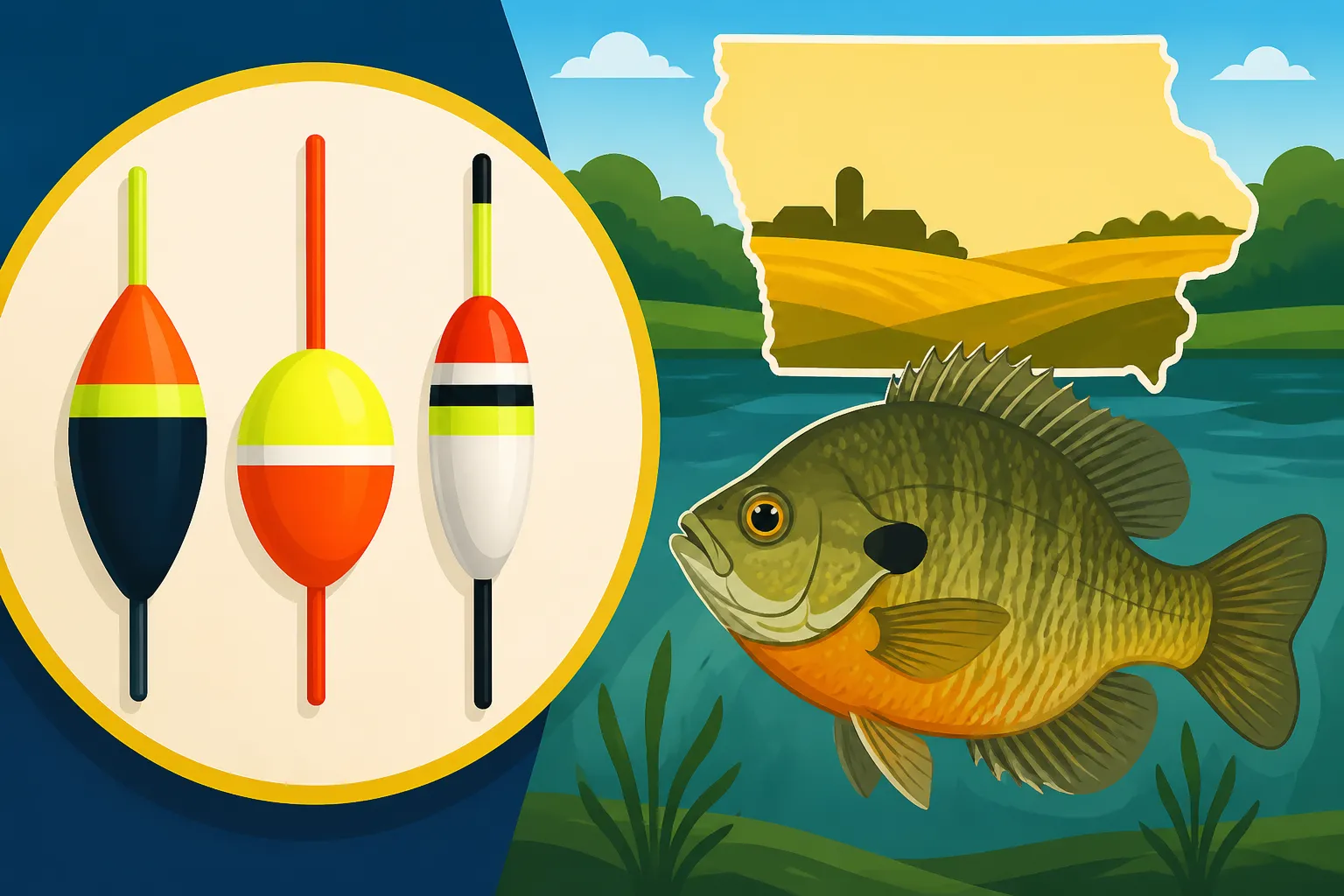
Best Bobber Style for Panfish
There’s nothing quite as frustrating as seeing your bobber sit perfectly still when you know the panfish are there, or worse, watching it dip ever so slightly only to realize you've missed the bite. Panfishing in Iowa can be incredibly rewarding, but those tiny mouths and subtle takes require a finesse that many anglers overlook, often starting with something as simple as the wrong bobber. This comprehensive guide is here to untangle the confusion, helping you understand the different bobber styles and choose the perfect one to maximize your panfish catches, whether you're targeting bluegill in a quiet farm pond or crappie suspended deep in a larger lake.
Understanding Panfish and Why Bobbers Are Your Best Friend
Panfish are truly the every-person's fish in Iowa. From the feisty bluegill to the slab crappie and the elusive perch, these species offer fantastic angling opportunities for beginners and seasoned pros alike. But their small mouths and often delicate feeding habits mean you need a precise presentation, and that's where a good bobber comes in.
Why Bobbers Are Essential for Panfish Angling
Imagine you're out on a calm lake, the sun is shining, and you know there are bluegill stacked in a weed line. Without a bobber, you're essentially guessing where your bait is and if anything is even nibbling. Bobbers act as both a depth indicator and a bite alarm. Panfish, unlike some larger, more aggressive species, often "mouth" the bait or take it very gently. A sensitive bobber will transmit even the slightest disturbance, letting you know it's time to set the hook. They also allow you to suspend your bait at a very specific depth, which is critical when panfish are holding at a particular thermocline or just above submerged structure. How to Catch Panfish With a Bobber will delve deeper into the overall technique, but the bobber choice is fundamental.
Common Panfish Species in Iowa Waters
Iowa boasts a fantastic variety of panfish that are perfect targets for bobber fishing. Our state's lakes, rivers, and even farm ponds teem with these tasty critters.
- Bluegill: These are perhaps the most common and beloved panfish. They love shallow, weedy areas, especially around docks and submerged vegetation. Their bites can range from a quick dip to a slow, steady pull. For more specific tactics, check out Bluegill Fishing in Iowa.
- Crappie: Both black and white crappie are prevalent. They tend to school up around brush piles, submerged timber, and bridge pilings, often suspending at specific depths. Their bite can be incredibly light, sometimes just a slight twitch or drift of the bobber. Learn more about targeting them in Crappie Fishing in Iowa.
- Perch: Found primarily in the cooler, deeper waters of the Iowa Great Lakes, perch offer a delicious challenge. Their bites are usually subtle, and they often prefer clearer water. If you're heading north, Perch Populations at the Iowa Great Lakes has great insights.
Each of these species might prefer slightly different habitats and feeding styles, influencing your bobber choice.
Demystifying Different Bobber Styles for Iowa Panfish
When you walk into a tackle shop or browse online at places like Bass Pro Shops or Amazon, the sheer number of bobber options can be overwhelming. But for panfish, it really boils down to two main categories: fixed and slip bobbers. Understanding the nuances of each will drastically improve your success.
Fixed Bobbers: The Classic Choice
Fixed bobbers are what most of us grew up with. They attach directly to your fishing line at a set position and don't move unless you manually slide them up or down the line.
- Spring-Style Bobbers: These are typically spherical or oval and have a small spring-loaded hook at the top and bottom that clips onto your line. They're quick and easy to attach, making them a popular choice for beginners or when you're frequently adjusting depth in shallow water. They float well and are highly visible.
- Clip-On Bobbers: Similar to the spring style, these often feature a small plastic or metal clip that pinches the line. Some anglers find them more secure, especially with lighter lines. They come in various shapes and sizes, from small pencil-style bobbers to more traditional round ones.
The main advantage of a fixed bobber is its simplicity. You can quickly change depths in shallow water, and they're very user-friendly. However, they limit how deep you can fish to the length of your rod, as the bobber will hit your rod tip when reeling in. This makes them ideal for fishing shallow coves, farm ponds, or along shorelines where panfish are holding in less than 6-8 feet of water.
Slip Bobbers: The Versatile Angler's Secret Weapon
If you're serious about panfishing, especially for crappie or deeper-holding bluegill, a slip bobber is a game-changer. Unlike fixed bobbers, a slip bobber has a hole running through its center, allowing your line to "slip" through it. You use a small bobber stop (a piece of string or rubber) on your main line to set the depth, which then slides through the bobber.
- Unrestricted Depth: The biggest advantage is that you can fish at virtually any depth, regardless of your rod length. The bobber stop hits the bobber, but the line continues to slip through, allowing your bait to fall to the desired depth. This is perfect for when fish are suspended 10, 15, or even 20 feet deep in lakes like Clear Lake or Rathbun Lake.
- Superior Bite Detection: Many slip bobbers, especially those designed for finesse fishing, are elongated and streamlined. This shape offers less resistance to the water, allowing for incredibly sensitive bite detection. When a crappie barely breathes on your jig, you'll see that bobber twitch or slowly sink.
- Easier Casting: Because the bobber slides down to your bait when you cast, you're not trying to cast a long leader with a fixed bobber awkwardly dangling. This makes for much smoother and longer casts, which is a huge plus when trying to reach schooling fish.
For a deeper dive into the mechanics and benefits, you'll want to read Slip Bobber vs Fixed Bobber. Learning how to rig and use a slip bobber effectively opens up a whole new world of panfishing opportunities.
Weighted vs. Unweighted Bobbers: Finding the Balance
Beyond fixed or slip, bobbers also come in weighted and unweighted varieties, a distinction that influences casting and presentation.
- Unweighted Bobbers: These are the most common. They require you to add split shot or other weights to your line to get your bait down to depth. This offers maximum sensitivity because the bobber itself isn't pulling your line down, and any weight you add is directly above your bait. This allows for a very natural, slow fall of the bait.
- Weighted Bobbers: Some bobbers, particularly certain slip bobber styles, have weight built into their bottom. This added weight helps with casting distance, especially in windy conditions, and helps the bobber stand up quickly in the water. However, they can be slightly less sensitive if you're not careful about balancing them with your bait's weight.
The choice often comes down to personal preference and conditions. For delicate presentations with small jigs or live bait, an unweighted bobber with just enough split shot to balance it perfectly is often preferred.
Choosing the Right Bobber for Your Iowa Panfishing Adventure
Selecting the right bobber isn't a one-size-fits-all situation. It depends on several factors, from the fish's mood to the environmental conditions. Making an informed choice can be the difference between a slow day and a banner day.
Matching Bobber Size and Sensitivity to the Bite
This is arguably the most critical aspect of bobber selection for panfish. Panfish have small mouths, and their bites can be incredibly subtle.
- Small, Sensitive Bobbers for Finicky Fish: When fish are finicky or in clear water, opt for the smallest bobber you can comfortably cast and see. A small, pencil-thin slip bobber will offer the least resistance, allowing a cautious crappie to pull it under without feeling much drag. The goal is for the fish to barely know your bait is attached to anything.
- Larger, More Visible Bobbers for Active Fish or Rough Conditions: If the panfish are aggressively biting, or if you're dealing with wind and choppy water, a slightly larger or brighter fixed bobber might be more practical. It will be easier to see at a distance and will offer more stability in the chop, preventing false alarms. However, always err on the side of smaller if conditions allow.
Finding that sweet spot where your bobber is sensitive enough to detect a bite but visible enough for you to react takes practice.
Considering Water Depth and Cover
The environment you're fishing in plays a huge role in your bobber choice. Iowa's diverse waters, from shallow farm ponds to deep lakes, present different challenges.
- Shallow Water (Under 8-10 feet): Fixed bobbers truly shine here. If you're targeting bluegill in a 4-foot deep weed bed, a fixed bobber is quick, easy to adjust, and perfectly effective. It allows you to quickly change depths as you probe different pockets in the cover. When fishing private ponds, where specific rules might apply, ease of adjustment is key. Check out License Rules for Fishing on Private Property for more.
- Deep Water (Over 8-10 feet): This is where slip bobbers become indispensable. Trying to cast a fixed bobber with 15 feet of line dangling below it is a nightmare. A slip bobber allows your bait to reach those deep suspended crappie or schooling yellow bass without any casting issues. They are perfect for probing the deep edges of submerged structure or when fish are holding off the bottom. If you're looking for Best Depth for Summer Bluegill, a slip bobber gives you the control to hit it precisely. You can also target How to Find Crappie Brush Piles in deeper water with confidence.
Environmental Factors: Wind, Current, and Light Conditions
Don't underestimate how Mother Nature impacts your bobber selection and presentation.
- Wind: A strong Iowa breeze can make a lightweight, sensitive bobber dance around like crazy, making it impossible to detect a real bite. In windy conditions, a slightly heavier or more stable bobber (often weighted) will perform better. Even a small amount of weight on a slip bobber can help it cut through the wind during the cast and stay put once in the water.
- Current: If you're fishing a slower moving river or a section of the Mississippi River with some current, you'll need a bobber that can handle the drift. Oval or round fixed bobbers with some buoyancy work well in moderate current. For more precise depth control in current, especially for bottom-hugging panfish like catfish (which also like a bobber sometimes!), you might even consider a heavier, more stable slip bobber setup to keep your bait in the strike zone.
- Light Conditions: On bright sunny days, a natural-colored or muted bobber top might be less likely to spook fish in very clear water. However, for low-light conditions, like dawn or dusk, or on overcast days, a bright, high-contrast bobber (think fluorescent orange or chartreuse) will be much easier to see at a distance. Some bobbers even come with glow-in-the-dark features or small light sticks for night fishing, which can be fantastic for targeting nocturnal crappie.
Rigging and Presentation Tips for Panfish Bobbers
Having the right bobber is only half the battle; knowing how to rig it correctly and present your bait naturally is what seals the deal. A poorly rigged bobber can negate all the advantages of a sensitive float.
Essential Rigging for Fixed Bobbers
Fixed bobbers are straightforward, making them perfect for those quick trips or teaching kids.
- Attach the Bobber: Pinch or clip your fixed bobber onto your main line at the desired depth. Ensure it's secure but not pinching the line so tightly that it damages it.
- Add Weight: Most fixed bobber setups require a small amount of weight (split shot) placed a few inches above your hook. The goal is to add just enough weight so the bobber stands upright in the water, with only its colored top showing. This maximizes sensitivity. Too much weight, and your bobber sinks; too little, and it lays on its side, making bite detection impossible.
- Tie on Your Hook: Use a small, sharp hook (size 8-12 is often good for panfish) that matches your bait size.
- Add Bait: Whether it's a piece of worm, a waxworm, a small minnow, or a tiny jig, ensure it's presented naturally.
Mastering the Slip Bobber Rig
The slip bobber rig is a bit more involved but offers superior control and versatility. You can find comprehensive slip bobber kits at outdoor retailers like Bass Pro Shops, which often include all the components you need.
- Bobber Stop: Thread a bobber stop onto your main line first. This is usually a small piece of string or a rubber stopper. You can slide this up and down your line to set your fishing depth. Best Bobber Stop Setup provides more details on various options.
- Bead: Next, thread a small bead onto your line. This bead is crucial because it prevents the bobber stop from sliding through the larger hole in your slip bobber.
- Slip Bobber: Thread your slip bobber onto the line.
- Weight: Attach a weight below the bobber. This can be a small barrel sinker, a few split shots, or a specialized slip sinker. The weight needs to be heavy enough to pull your line through the bobber and reach the bobber stop, but not so heavy it creates a violent splash or spooks fish.
- Swivel and Leader (Optional but Recommended): Tie on a small barrel swivel. This helps prevent line twist, especially if you're using live bait that spins. You can then tie a fluorocarbon or monofilament leader (often 12-24 inches) to the other end of the swivel. This leader can be a lighter test line than your main line, which is great for finicky fish in clear water.
- Hook: Finally, tie your small panfish hook to the end of your leader.
This setup allows you to cast smoothly, and once the rig hits the water, the weight pulls the bait down until the bobber stop catches the bobber, suspending your bait at the precise depth you've chosen. How to Set Up a Slip Bobber provides a step-by-step visual and textual guide.
Bait and Lure Pairing for Bobber Fishing
The bobber is just the presentation tool; the bait is what seals the deal. When fishing with bobbers for panfish, simplicity and natural offerings often outperform complex setups.
- Live Bait is King: For most panfish, live bait under a bobber is incredibly effective. Worms (redworms, nightcrawlers cut into pieces), waxworms, crickets, and small minnows are all panfish favorites. These natural baits provide scent and natural movement that panfish can't resist. For crappie, a small minnow hooked through the lip or back, suspended under a slip bobber, is a deadly combination. For general panfish bait options, explore Best Bait for Spring Crappie.
- Small Jigs and Plastics: Tiny jigs (1/32 to 1/16 ounce) tipped with a small plastic grub or tube bait can also be incredibly effective, especially for crappie and aggressive bluegill. The bobber suspends the jig at the desired depth, and any subtle twitch of the rod tip or a slight breeze can impart enticing action. You can find a huge variety of small jigs and soft plastics online at Amazon, offering endless color and size combinations. For more lure ideas, Best Lures for Panfish is a great resource.
No matter your choice, ensure your bait or lure is small enough for a panfish to inhale easily. A bobber can present a large bait, but if the fish can't get it in its mouth, you'll miss the strike every time.
Here's a quick comparison of fixed versus slip bobbers to help you decide:
| Feature | Fixed Bobber | Slip Bobber |
|---|---|---|
| Max Depth | Rod length or less | Virtually unlimited |
| Bite Detection | Good, especially for active bites | Excellent, highly sensitive for subtle bites |
| Casting | Can be awkward with long leaders | Smooth, allows for long casts |
| Ease of Setup | Very easy, quick | Slightly more complex, requires bobber stop and bead |
| Best Use Cases | Shallow water, quick depth adjustments, beginners | Deep water, suspended fish, finicky bites, long casts |
By understanding these bobber styles and adapting your choice to the specific conditions and fish behavior, you'll be well on your way to a cooler full of delicious Iowa panfish.
Disclaimer
This article is for general informational purposes only and does not constitute professional advice. Laws, prices and regulations vary by location and change over time. Consult a qualified professional for guidance on your specific situation.