Is Muskie Fishing Catch and Release Only in Iowa?
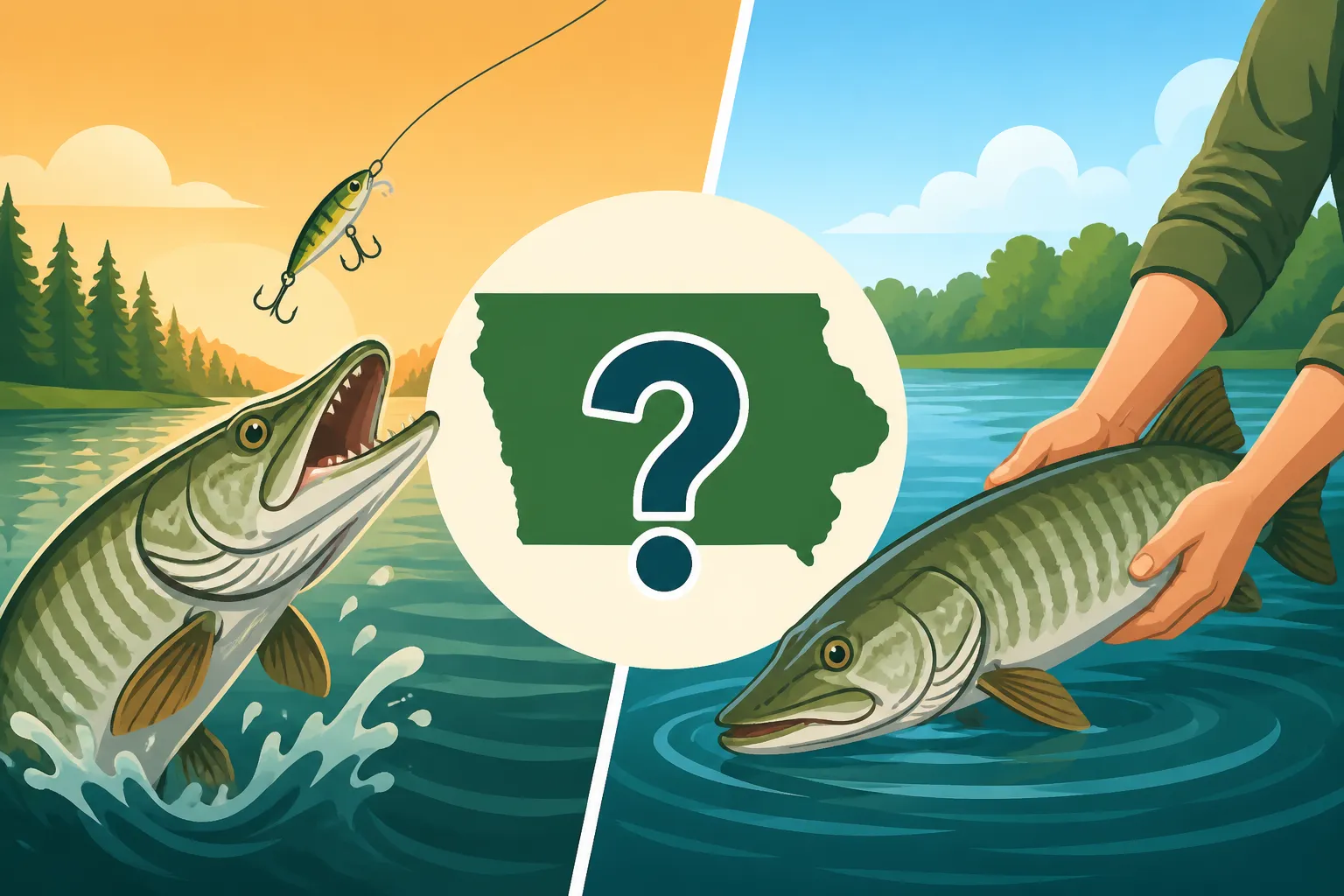
It's a common question among anglers, especially those new to pursuing Iowa's biggest freshwater predator: is muskie fishing strictly catch and release here in the Hawkeye State? Many folks assume it is, given the challenge and mystique surrounding these "fish of 10,000 casts." This guide will clear up the rules, explain why conservation is so vital for muskie, and share best practices to ensure these magnificent fish continue to thrive in our waters.
Understanding Iowa's Muskie Fishing Regulations
When you set out to chase muskie in Iowa, it's easy to get caught up in the thrill of the hunt. These are truly magnificent creatures, and the stories about their elusive nature are legendary. Because of their status as top predators and their slower growth rates, muskie are often treated differently than other fish species when it comes to regulations.
The General Rule for Muskie in Iowa
Let's get right to it: no, muskie fishing in Iowa is not strictly catch and release only. However, the regulations are designed to heavily encourage it and protect the population of these trophy fish. You are allowed to harvest a muskie if it meets specific minimum length requirements and you adhere to the daily bag limit. But here's the kicker – those minimum length limits are very generous, meaning most muskie you'll encounter and catch will fall below the legal size for harvest. This naturally leads to the practice of catch and release for the vast majority of anglers. It’s a conservation measure that allows these fish to grow to their full potential and contribute to future generations.
It's crucial to always check the most current Iowa Fishing Regulations Explained before you head out, as rules can occasionally be adjusted to reflect the health of the fishery. Understanding the specific Muskie Season and Bag Limit for the water you're fishing is paramount.
Why Muskie Are Often Targeted for Catch and Release
Muskellunge (muskie for short) are not your average panfish. They grow large, they live a long time, and they are incredibly challenging to catch. Their predatory nature keeps other fish populations in check, contributing to a balanced aquatic ecosystem. Because they take years, sometimes over a decade, to reach trophy sizes, every muskie that is successfully released back into the water is a victory for the species and for future anglers.
Think about it this way: a 40-inch muskie might be 8-10 years old, or even older. If every angler kept the first legal muskie they caught, it wouldn't take long for the population of these mature, spawning-size fish to dwindle. The catch-and-release ethic has been heavily promoted by muskie organizations and conservation groups for decades, and for good reason. It's about respecting the fish and ensuring their continued presence in our lakes and rivers for generations to come.
Minimum Length Limits and Bag Limits
The Iowa Department of Natural Resources (DNR) sets strict minimum length limits for muskie, which vary depending on the specific body of water. For example, some lakes might have a 40-inch minimum, while others could be even higher. This means that if you land a muskie that measures less than the legal length for that specific lake or river, it must be immediately and carefully released.
The daily bag limit for muskie is also very conservative, often set at one fish per person per day, or sometimes even more restrictive, like one muskie per person per season. This low bag limit, combined with the high minimum length, reinforces the catch-and-release culture. It signifies that muskie are truly a trophy species, not meant for mass harvest.
Here’s a quick look at how the limits generally shape up, though always verify for your specific location:
| Water Body Type | General Minimum Length Limit | Daily Bag Limit |
|---|---|---|
| Major Muskie Lakes | 40-50 inches or greater | 1 |
| Border Rivers (e.g., Mississippi) | Varies by pool, check local regs | 1 |
| Stocked Impoundments | Varies, often 40 inches | 1 |
These limits are set to allow muskie to reach sexual maturity and spawn multiple times, ensuring a healthy population. If you're curious about How Big Muskie Get in Iowa, you'll find that these regulations help them reach impressive sizes!
Where Muskie Thrive in Iowa and How to Find Them
Muskie are fascinating fish, and knowing their preferred hangouts is half the battle when trying to connect with one. Iowa might not be the first state that comes to mind for muskie fishing, but we actually have some fantastic opportunities, especially for those willing to put in the time.
Prime Muskie Waters in Iowa
Iowa boasts several prime locations where you have a legitimate shot at hooking into a muskie. The Iowa Great Lakes region, particularly Spirit Lake and West Okoboji Lake, are legendary for their muskie populations. These deep, clear glacial lakes provide the perfect habitat for muskie to grow large, with plenty of forage fish. You'll often find dedicated muskie anglers out there, methodically casting or trolling for these giants.
Beyond the Great Lakes, other waters like Big Creek Lake, Lake Macbride, and Rathbun Lake also have thriving muskie populations thanks to dedicated stocking programs. Even parts of the Mississippi River, particularly the backwater areas and deep channels, can hold impressive muskie, often in conjunction with pike. Each of these waters has its own character, so understanding the specific nuances of Muskie Habitat in Iowa Waters is key.
Identifying Muskie Habitat
Muskie are ambush predators, and they love structure. When you're on the water, whether it's by boat or shore, look for areas that provide cover and a good vantage point for a muskie to hide and surprise its prey. This includes:
- Weed Lines: The edges of expansive weed beds, especially coontail and cabbage, are prime muskie territory. They'll lurk just inside or along the outer edge, waiting for an unsuspecting baitfish to swim by.
- Deep Drop-Offs and Humps: In deeper lakes, muskie will often relate to underwater structure, such as humps, ledges, and steep breaks where they can move up and down the water column to feed.
- Submerged Timber and Rock Piles: Fallen trees, old stump fields, and large rock formations offer excellent cover and ambush points.
- Piers and Docks: Don't overlook man-made structures. Docks, boat lifts, and even bridge pilings can attract baitfish, and where there's bait, there are often muskie.
Electronic depth finders (fish finders) can be invaluable for identifying these underwater structures, especially in larger lakes. Products like those you can find on Amazon can help you map out the bottom and pinpoint key holding areas.
Essential Gear for Muskie Fishing
Chasing muskie isn't like chasing bluegill; you need specialized gear that can handle a truly powerful fish. Trying to land a 40-pound muskie on a bass rod is a recipe for a broken rod and a lost fish.
- Rods and Reels: You'll want heavy-duty baitcasting setups. Look for stout rods, typically 8 to 9.5 feet long, with a heavy power rating. Pair these with robust baitcasting reels capable of handling heavy lines and big baits. Many anglers search on Amazon for specific models known for their durability. If you’re unsure, check out a Best Rod for Muskie Fishing guide.
- Line: Braided line, typically 80-100 pound test, is the standard for muskie fishing due to its strength and lack of stretch. This heavy line is crucial for handling aggressive strikes and pulling big fish out of heavy cover.
- Leaders: Muskie have incredibly sharp teeth, so a heavy-duty wire or fluorocarbon leader is absolutely essential to prevent bite-offs. These leaders are usually 100-200 pound test and can be found pre-made or custom-tied.
- Lures: Muskie lures are often large and in charge. Bucktails, spinnerbaits, jerkbaits, glide baits, and large crankbaits are all popular choices. The size and action of these baits are designed to grab the attention of a big muskie. For an idea of what to start with, explore a Muskie Fishing Techniques for Iowa Waters article.
- Tools: This is where conservation and safety come in. You must have a large, rubberized landing net, long-nose pliers, and heavy-duty bolt cutters (for cutting hooks if a muskie is deeply hooked). These tools are non-negotiable for safe handling and release. Many muskie-specific tools are readily available online.
Best Practices for Catching and Releasing Muskie Successfully
Since the vast majority of muskie you'll encounter will be released, knowing how to do it properly is just as important as knowing how to catch them. Improper handling can cause significant stress or injury to the fish, undermining conservation efforts.
Proper Handling Techniques for Muskie
The goal when handling a muskie is to keep it in the water as much as possible, minimize its time out of the water, and support its body properly.
- Use a Large Net: Always use a large, knotless, rubberized landing net. This protects the fish's slime coat and fins. Get the muskie in the net quickly.
- Unhook in the Water: Try your best to unhook the fish while it's still in the net and mostly submerged. Use your long-nose pliers to carefully remove hooks. If a hook is deeply set or difficult to remove, do not hesitate to use bolt cutters to snip the hook, leaving a portion in the fish. This is far better than tearing the fish's mouth.
- Minimal Out-of-Water Time: If you must take the fish out for a quick photo, keep it horizontal and support its belly fully with one hand, while gripping the base of its tail (caudal peduncle) with the other. Never hold a large muskie vertically by the gill plates or by lip-grippers, as this can severely damage internal organs and the jaw.
- Wet Hands: Always wet your hands before touching a muskie to protect its protective slime coat. This coat is vital for preventing disease.
Remember, a quick, clean release is always the best option for the fish's survival. Even if it means skipping that perfect photo, the fish's health comes first.
Recommended Release Tools and Their Importance
Having the right tools is critical for a safe muskie release. You can often find excellent options for these on Amazon, making it easy to gear up responsibly.
- Large, Rubberized Landing Net: As mentioned, this is your first line of defense. The rubberized mesh prevents tangles and protects the fish.
- Long-Nose Pliers or Hook Removers: Essential for safely extracting hooks from a muskie's toothy mouth, keeping your fingers clear.
- Bolt Cutters: Absolutely vital for cutting hooks when they are deeply embedded or difficult to remove. This saves time and minimizes stress on the fish.
- Release Cradle (Optional but Recommended): For serious muskie anglers, a release cradle allows you to keep the fish fully submerged and calm while you work on unhooking it. It's an excellent investment for fish care.
Having these tools readily accessible on your boat or in your tackle bag will make a world of difference in the outcome of your catch-and-release efforts.
Minimizing Stress and Maximizing Survival
Every decision you make from the moment a muskie bites to when it swims away impacts its chance of survival.
- Fight the Fish Efficiently: Don't play the fish out longer than necessary. Apply steady pressure to bring it in quickly, especially in warmer water where oxygen levels are lower.
- Avoid Excessive Handling: The less you handle the fish, the better. Keep your hands wet and handling to a minimum.
- Revive the Fish: If the muskie seems sluggish upon release, hold it gently in the water by the tail, supporting its belly, and move it back and forth to push water over its gills. Only release it when it shows signs of being able to swim off strongly on its own. It's a truly rewarding feeling to watch a powerful muskie swim away, knowing you've given it the best chance at continued life. This is part of the deep satisfaction of Muskie Fishing in Iowa.
The Role of Conservation in Iowa's Muskie Fisheries
Iowa's muskie fisheries didn't happen by accident. They are the result of dedicated conservation efforts, and every angler plays a part in their future. It's a partnership between the state DNR, conservation groups, and the passionate anglers who pursue these elusive fish.
Stocking Programs and Their Impact
Many of Iowa's muskie populations are sustained through active stocking programs by the Iowa DNR. Fisheries biologists rear muskie in hatcheries and then release them into designated lakes and reservoirs once they reach a certain size. These programs are critical because natural reproduction of muskie in many Iowa waters is limited due to habitat constraints or other environmental factors.
These stockings ensure that there are enough young muskie to grow into the next generation of trophy fish. Without these efforts, the opportunities for Muskie Fishing in Iowa would be far fewer. It’s an investment in the future of the sport, and the catch-and-release ethic helps maximize the return on that investment.
The Angler's Role in Muskie Conservation
As a muskie angler, you are an essential steward of the resource. Your actions directly impact the health and sustainability of muskie populations.
- Follow Regulations: Adhering to all Iowa Fishing Regulations Explained, including size and bag limits, is the absolute baseline. These rules are in place for a reason.
- Practice Proper Catch and Release: As discussed, this is perhaps the single most important thing you can do for individual fish and the population as a whole.
- Report Violations: If you see someone breaking fishing laws, don't hesitate to report it to the DNR. This helps protect the fishery for everyone. How to Report a Fishing Violation in Iowa will give you the details on how to do this.
- Support Conservation: Join muskie fishing clubs, participate in lake cleanups, or support organizations dedicated to muskie research and habitat improvement. Your involvement, however small, can make a difference.
- Educate Others: Share your knowledge of responsible muskie fishing with fellow anglers, especially those new to the sport. By being a positive example, you help foster a culture of conservation.
How to Stay Informed About Regulations
Regulations can and do change, sometimes due to biological surveys, environmental conditions, or management goals. Staying up-to-date is your responsibility as an angler.
- Iowa DNR Website: The official Iowa DNR website is the most reliable source for the most current fishing regulations. You can often find a comprehensive guide there.
- Fishing Regulations Booklet: The DNR publishes an annual fishing regulations booklet that is available at license vendors and online. Always grab the latest one!
- Local Bait Shops and Guides: These are often fantastic local resources for current conditions and any recent regulatory changes, especially on specific bodies of water.
- Fishing Apps: Many states now offer official fishing apps that provide real-time access to regulations, stocking information, and more. Check if the GoOutdoors Iowa App has this feature, for example. You can also look up How to Buy a Fishing License on the GoOutdoors Iowa App.
By staying informed and actively participating in conservation efforts, you ensure that the thrill of catching and potentially releasing a magnificent Iowa muskie will be there for many years to come.
Disclaimer
This article is for general informational purposes only and does not constitute professional advice. Laws, prices and regulations vary by location and change over time. Consult a qualified professional for guidance on your specific situation.