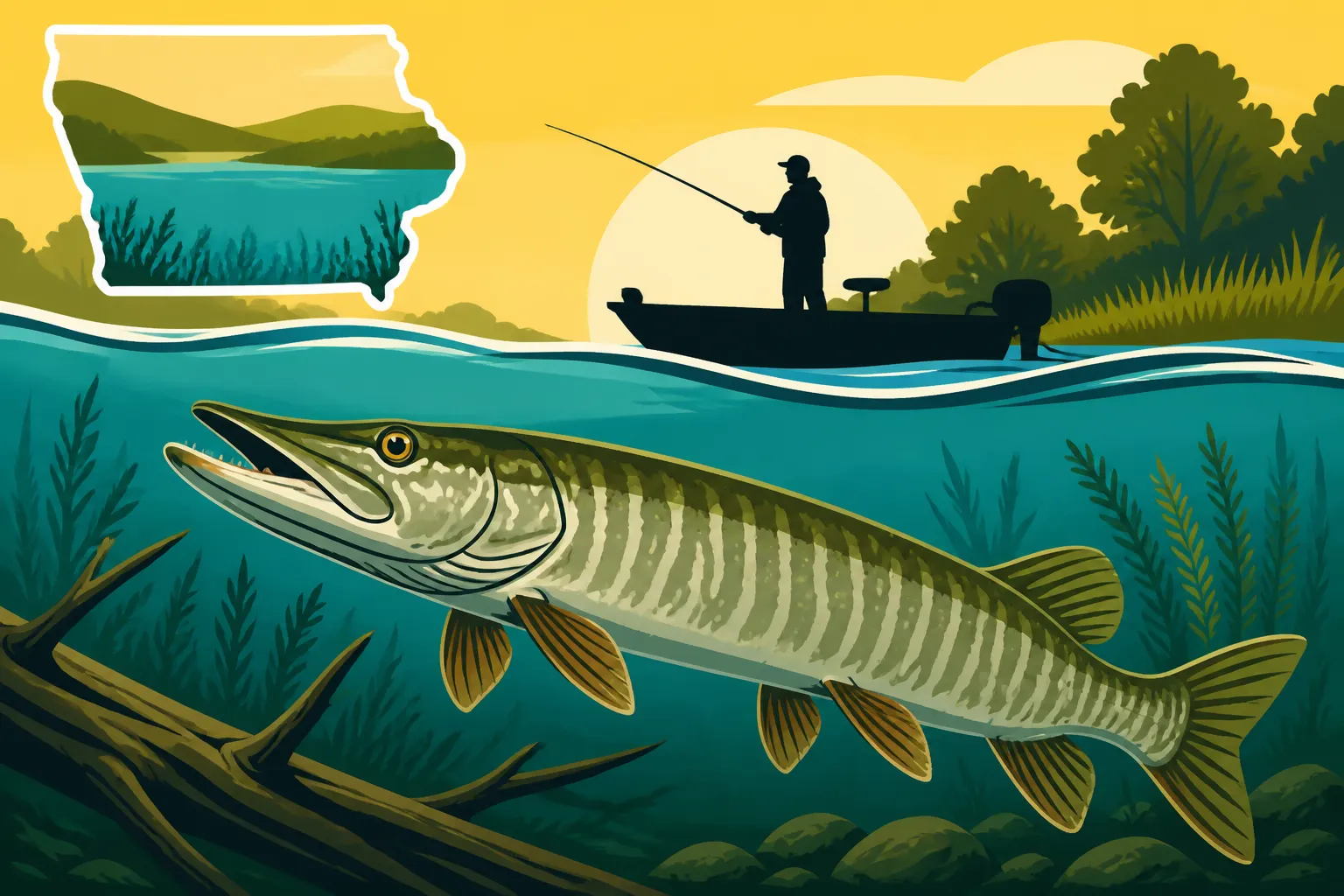
Muskie Habitat in Iowa Waters
Muskie, often called the "fish of a thousand casts," are one of Iowa's most elusive and thrilling sport fish. Many anglers find themselves frustrated, wondering where these predatory giants even live in our waters. This comprehensive guide aims to demystify muskie habitat in Iowa, helping you understand their preferred environments, seasonal movements, and the key elements that draw them in, transforming your approach to chasing these toothy titans.
Understanding Muskie's Preferred Living Conditions
To consistently find muskie in Iowa, you first need to think like one. These aren't just any fish; they are apex predators with very specific needs when it comes to their home. Understanding their requirements for water quality, food, and protective cover is the foundational step to unlocking their secrets. They're not going to be just anywhere; they're in the places that offer them the best chance to thrive and ambush prey.
Water Clarity and Temperature Preferences
Muskie generally prefer clear to moderately clear water. While they can tolerate some turbidity, extremely muddy or murky conditions tend to push them out or make them less active. They are primarily sight feeders, relying on their keen eyesight to stalk and ambush prey. In clearer water, their hunting efficiency dramatically increases, making these areas prime hunting grounds for the angler. Think about it: if you're an ambush predator, you want to see your target coming!
Temperature also plays a crucial role in muskie activity and habitat selection. They are cool to warm-water fish, performing best in water temperatures ranging from the mid-60s to low-70s Fahrenheit. In spring and fall, when water temperatures are within this optimal range, muskie activity often peaks, and they can be found in shallower areas. During the heat of summer, however, they will seek out cooler, deeper waters or areas with abundant shade and oxygen. Knowing these temperature preferences helps you narrow down where they might be holding at different times of the year.
Prey Base and Forage Fish Availability
A muskie's habitat is only as good as its pantry. These fish grow to impressive sizes, and that requires a substantial and consistent food source. They are primarily piscivorous, meaning they eat other fish. In Iowa, their diet largely consists of species like suckers, ciscos, perch, walleye, and even smaller bass. If a body of water doesn't have a robust population of these forage fish, it's highly unlikely to support a healthy muskie population.
Anglers often look for "baitfish schools" on their fish finders or by observing surface activity, as these congregations of prey are a dead giveaway that predators like muskie might be nearby. Areas where forage fish are naturally concentrated, such as around humps, points, or sudden depth changes, are excellent places to target. A muskie isn't going to expend excess energy to travel far for a meal if there's an all-you-can-eat buffet right in its living room.
Cover and Structure Requirements
Muskie are ambush predators, meaning they rely heavily on cover and structure to hide, surprise their prey, and protect themselves. This is perhaps the most critical aspect of identifying prime muskie habitat. They aren't usually found roaming in wide-open expanses of featureless water. Instead, they position themselves strategically near elements that offer concealment and a vantage point for an attack.
Think of it like a hunter in a blind. Muskie will relate to submerged weed beds, fallen timber, rock piles, ledges, and even artificial structures like old cribs or bridge pilings. The thicker the cover, the better, as it allows them to remain unseen until they strike. When fishing for muskie, focus your efforts around these distinct features that break up the uniformity of the lake or river bottom. Observing these kinds of features is a fundamental part of Muskie Fishing Techniques for Iowa Waters.
Major Iowa Muskie Lakes: The Prime Destinations
Iowa might not be the first state that comes to mind for muskie fishing, but we have some truly phenomenal waters that consistently produce these magnificent fish. These lakes have been carefully managed and stocked to foster healthy muskie populations, making them the go-to spots for anglers dedicated to chasing "the fish of 10,000 casts."
The Iowa Great Lakes: Spirit Lake, West Okoboji, East Okoboji
The crown jewels of Iowa's muskie fishery are undoubtedly the Iowa Great Lakes, particularly Spirit Lake and West Okoboji. These natural lakes offer vast, diverse habitats that muskie absolutely love.
Spirit Lake, being the largest natural lake in Iowa, boasts a complex bottom structure with varying depths, extensive weed lines, and rocky points. Muskie here frequently relate to the expansive weed beds, especially coontail and northern milfoil, which provide excellent ambush points. Anglers often find success working the edges of these weed lines or focusing on isolated clumps. Spirit Lake also has numerous bays and points that offer protection and deeper water access, which are crucial during colder or warmer periods. For a deeper dive into one of these, check out Spirit Lake Fishing Guide.
West Okoboji Lake, famous for its incredible depth and crystal-clear waters, presents a different challenge. The muskie in West Okoboji often utilize its steep drop-offs, rock reefs, and clear water weed beds. Because the water is so clear, these muskie can be incredibly wary. Anglers often target structures that offer both deep-water access and adjacent shallower feeding grounds. The clear water also means that muskie might hold a bit deeper than in other lakes, especially during bright sunny conditions. Its unique glacial formation provides a wealth of structural diversity that muskie exploit year-round.
East Okoboji Lake, while shallower than West Okoboji, still offers excellent muskie opportunities. Its extensive weed beds and connections to the other lakes make it a vital part of the muskie ecosystem in the region. Muskie here will often move between the different lakes, following forage or seeking optimal conditions. Focus on the transitions between open water and heavy cover, as well as areas with submerged timber.
Clear Lake's Unique Features
Clear Lake, located in north-central Iowa, is another fantastic muskie destination with its own distinct charm. Unlike the deep, clear Great Lakes, Clear Lake is shallower and bowl-shaped, characterized by vast shallow flats and expansive weed growth. This lake's muskie population is robust and well-known for producing some true giants.
The key to Clear Lake muskie habitat lies in its extensive weed beds. These green expanses provide dense cover and act as major highways and hunting grounds for muskie. Anglers targeting Clear Lake often focus on working over the tops of these weed beds, along their edges, or in the pockets and lanes within them. The main basin of Clear Lake also features a few subtle changes in depth and some scattered rock piles that can hold muskie, especially when the weeds become too dense or too sparse. Clear Lake is also well-known for its yellow bass population, which provides a rich forage base for the muskie. You can learn more about this fishery in Clear Lake Fishing in Iowa.
Rathbun Lake's Muskie Hotspots
Rathbun Lake, nestled in south-central Iowa, is a large reservoir that has become a premier muskie fishery. It offers a different type of habitat compared to the natural lakes, with its flooded timber, creek channels, and expansive open water. Rathbun's muskie population is strong, and anglers often report impressive catches from this body of water.
The habitat at Rathbun is largely defined by its reservoir characteristics. Submerged timber, particularly standing timber in old creek channels, is a major draw for muskie. These vertical structures provide excellent ambush points and deep-water access. Additionally, Rathbun features numerous points, coves, and main lake areas with gradual or steep drop-offs that muskie frequent. Look for areas where the old creek beds meet main lake points or where significant timber fields are present. During warmer months, these fish will often retreat to the cooler, deeper sections of the lake, relating to suspended baitfish or deep-water structure. Exploring the nuances of this reservoir can be found in Fishing Rathbun Lake in Iowa.
River Systems: Where Muskie Lurk in Currents
While Iowa's lakes get a lot of attention for their muskie populations, don't overlook our river systems. Rivers present a unique set of challenges and opportunities for muskie anglers, as the dynamic environment of flowing water dictates where these fish will hold and hunt. Muskie in rivers are often incredibly strong and aggressive, making for exhilarating fights.
Mississippi River Backwaters and Sloughs
The Mississippi River, forming Iowa's eastern border, is a powerhouse of diverse aquatic life, including a healthy population of muskie, particularly in its extensive backwater areas and sloughs. These areas are often characterized by slower currents, abundant vegetation, and complex underwater structure, making them ideal muskie habitat.
Backwaters off the main channel provide a refuge from the stronger currents, offering calmer, warmer water that supports a rich forage base. Muskie will patrol the edges of these backwaters, especially where they meet the main channel or where submerged timber and dense weed beds provide cover. Sloughs, which are often shallow and rich in aquatic plants, are especially productive in the spring and fall. These areas offer countless ambush points and areas where baitfish congregate. Remember, while the muskie might be in the backwaters, they often aren't far from deeper water or the main channel, providing them with an escape route or an avenue to find cooler water if needed. Fishing the Mississippi River in Iowa covers more details on this expansive system.
Inland Rivers with Muskie Populations
Beyond the mighty Mississippi, several inland rivers in Iowa also support muskie populations. These rivers, such as sections of the Cedar, Iowa, and Des Moines rivers, are often stocked and managed for muskie. The habitat in these rivers is different from lakes, as constant flow creates unique holding patterns for the fish.
Inland river muskie tend to relate to current breaks and areas that offer a reprieve from the main flow. This could be behind a large rock, a fallen tree, or in the calmer water on the inside bend of a river. They'll also use deeper scour holes created by current, especially during periods of high flow or extreme temperatures. These fish are often very lean and muscular due to constantly battling the current, making them particularly strong fighters. It's not uncommon to find them tucked right into dense cover, waiting for an unsuspecting meal to drift by.
Current Breaks and Deep Pockets
In any river system, understanding current breaks and deep pockets is paramount to finding muskie. Current breaks are essentially areas where the flow of the water is disrupted, creating a calmer zone. This can be caused by wing dams, bridge pilings, fallen trees, large boulders, or even subtle changes in the riverbed contour. Muskie will position themselves in these calmer waters, expending less energy while waiting for prey to be swept past them in the main current.
Deep pockets and scour holes are also critical habitat features. These are depressions in the riverbed, often formed by strong currents, that provide deeper, cooler water and additional cover. Muskie will use these spots as resting areas or as thermal refuges during hot summer days or cold winter periods. When targeting river muskie, focus on identifying these current breaks and deep pockets, systematically working them with appropriate baits. An electronic fish finder purchased from a retailer like Amazon can be incredibly helpful in locating these subtle underwater features.
| Habitat Feature | Lake Muskie Tendencies | River Muskie Tendencies |
|---|---|---|
| Primary Cover | Extensive weed beds (coontail, milfoil), submerged timber, rock piles, deep breaks, transition zones. | Fallen trees, log jams, wing dams, bridge pilings, rocky outcroppings, sharp bends, current seams, deeper scour holes. |
| Current Preference | Primarily still water, but utilize wind-driven currents on points and shoals to position for feeding. | Seek out current breaks and calmer water, positioned to ambush prey in the main flow. Use eddies and slack water. |
| Depth Preference | Variable; shallower in spring/fall, deeper (structure, thermocline) in summer. | Utilizes varying depths, often near deep pockets or drops, but close to shallower feeding areas along banks/current breaks. |
| Forage Reliance | Schools of yellow perch, ciscos, suckers, shad, panfish. Often suspended or relating to deep structure. | Riverine baitfish like suckers, carp, shad, various minnows. Often found relating directly to current breaks. |
| Seasonal Movement | More pronounced movements from shallow spawning areas to deeper summer haunts, then back to shallower fall feeding grounds. | More localized movements, often shifting within a relatively smaller section of river based on water level and temperature. |
Subtle Habitat Elements: Beyond the Obvious
Sometimes, finding muskie isn't about the grand, expansive features, but rather the subtle, often overlooked elements that concentrate fish. These are the nuances that seasoned muskie anglers learn to identify, giving them an edge when the more obvious spots aren't producing. Thinking beyond the clear cut weed lines and obvious timber is what truly makes a successful muskie hunter.
Weed Beds and Lily Pads
We've talked about weed beds generally, but it's worth diving deeper. Not all weed beds are created equal. Muskie prefer certain types of weeds, like coontail, northern milfoil, and cabbage, which grow tall and dense, offering ample vertical cover. They're less likely to hold in sparse, short grass. Pay attention to the quality and density of the weeds. Look for pockets within large weed flats, lanes, or distinct edges where the weeds meet open water or a depth change. These are often high-traffic areas for both muskie and their prey.
Lily pad fields, especially those near deeper water, are classic muskie haunts. The pads provide shade, concealment from above, and a labyrinth of stems for muskie to hide within. Anglers often cast into the pockets and edges of these pads, or even skip baits far back into the densest areas where a muskie might be lurking. The key is to present your lure in a way that allows the muskie to see it without you spooking them.
Submerged Timber and Rock Piles
Fallen trees, brush piles, and even entire submerged forests (common in reservoirs like Rathbun Lake) are muskie magnets. These provide multi-dimensional cover, offering vertical and horizontal elements that fish can relate to at various depths. Muskie will often position themselves on the deeper side of a large log or within the branches of a submerged tree, waiting to ambush. The complexity of timber offers endless nooks and crannies for a muskie to hide.
Rock piles and rocky reefs, particularly those with sharp transitions to deeper water, are also prime muskie habitat. These hard structures attract baitfish, which in turn attract muskie. The irregular surfaces of rocks create current breaks in rivers and offer hiding spots in lakes. Anglers often find success by tracing the contours of these rock piles, casting over the top, and working lures down their faces. Sometimes, even a single large boulder in an otherwise featureless area can hold a trophy muskie.
Transition Zones
Perhaps one of the most consistently productive muskie habitats is a "transition zone." These are areas where one type of structure or cover abruptly changes to another. Think of it as a seam in the underwater landscape. Examples include:
- The edge where a weed line meets a rocky drop-off.
- Where a shallow flat drops into a deep channel.
- The point where flooded timber gives way to open water.
- A muddy bottom transitioning to sand or gravel.
Muskie often patrol these transition zones because they offer the best of both worlds: access to different depths, varied cover, and pathways for both predator and prey. These are like major highways or intersections in the muskie world. Focusing your efforts on these subtle changes in habitat can dramatically increase your chances of encountering a muskie. These zones often hold a diverse range of forage, creating a natural feeding lane for larger predators. When casting, try to ensure your lure crosses these transition lines. An extensive array of muskie lures can be found on Amazon, allowing you to stock up for various scenarios.
Seasonal Shifts in Muskie Habitat: They Don't Stay Put
Muskie are not static creatures; their preferred habitat changes significantly throughout the year, largely driven by water temperature, spawning cycles, and the movement of their prey. Understanding these seasonal shifts is crucial for any muskie angler hoping to consistently find success. What works in spring might be completely ineffective in summer or fall. This dynamic behavior keeps us on our toes! This knowledge is integral to grasping Iowa Fishing Seasons Explained.
Spring Spawning and Post-Spawn Locations
As the ice recedes and water temperatures climb into the 40s and 50s Fahrenheit, muskie begin to think about spawning. This usually happens in late April or May in Iowa. During this time, they migrate to shallow, vegetated bays, sloughs, or marshy areas with soft bottoms. These areas warm up quickly and provide protection for their eggs. After spawning, which can be quite taxing on the fish, they enter a post-spawn recovery phase.
During post-spawn, muskie will often remain in or near these shallow spawning areas, but they become much more active as they begin to feed heavily to regain energy. They'll typically relate to the thicker cover in these bays, such as dense weed beds or fallen timber, as they recuperate. This period can offer some excellent opportunities for active muskie, though respecting their need to recover is paramount. You can find more detail on this period in Spring Fishing in Iowa.
Summer Deep Water and Shade Seeking
As Iowa heats up and water temperatures rise into the 70s and beyond, muskie will seek out cooler, more oxygenated water. This often means moving to deeper sections of lakes and rivers. In lakes, they'll frequent deep-water humps, offshore rock piles, thermocline edges, or even suspend over deep basins if there's a strong baitfish presence. They might also utilize areas with consistent shade, like dense lily pad fields or overhanging trees along riverbanks, to escape the direct sun.
During summer, muskie become more structure-oriented. They'll hug tight to submerged timber, deep weed edges, or sharp drop-offs. The key is to look for whatever offers them thermal comfort and ambush points in these warmer conditions. Early mornings, late evenings, and overcast days can bring them shallower to feed, but during the bright midday sun, expect them to be holding tight to cover in deeper water.
Fall Feeding Frenzy Areas
Fall is often considered the peak season for trophy muskie in Iowa, and for good reason. As water temperatures begin to cool, muskie enter a pre-winter feeding frenzy, trying to pack on as much weight as possible. Their metabolism is high, and they become incredibly aggressive. During this period, muskie will often move back to shallower or mid-depth areas, following large schools of baitfish.
Look for them relating to major points, expansive weed beds that are still healthy, offshore humps, or channel edges where forage fish are concentrated. They will also be found cruising transition zones and patrolling areas with abundant dying vegetation, which often holds baitfish seeking refuge. This is the time to throw big baits, fish aggressively, and be patient, as the rewards can be truly spectacular. This is a critical time for targeting large fish, often discussed in Fall Fishing in Iowa. Remember that Iowa Muskie Season Dates are important to check before heading out.
Conservation and Habitat Preservation: Protecting Iowa's Muskie
Muskie fishing in Iowa is a unique and challenging pursuit that relies heavily on healthy fish populations and robust habitats. As anglers, we have a responsibility to contribute to the conservation efforts that ensure these magnificent fish continue to thrive for generations to come. It’s not just about catching them, it’s about protecting their future.
Stocking Programs and Their Impact
Iowa's muskie fishery is largely sustained by dedicated stocking programs implemented by the state's natural resource agencies. Unlike some other fish species, muskie often have limited natural reproduction in many of our waters, making stocking essential. Young muskie fingerlings are raised in hatcheries and then released into designated lakes and rivers to bolster populations.
These programs are vital because they directly address the sustainability of the fishery. They help ensure a consistent supply of muskie, allowing populations to remain healthy despite fishing pressure and natural mortality. The success of these stocking efforts also directly informs habitat management strategies, as agencies often choose stocking locations based on the quality and availability of suitable muskie habitat. Without these programs, the thrill of chasing a trophy muskie in Iowa would be a far rarer experience. You can even find specific information on Tiger Muskie Stocking in Iowa if you're interested in that hybrid species.
Catch and Release Practices
Given the effort involved in raising and stocking muskie, and their relatively slow growth rates and longevity, catch and release is not just a suggestion, it's often an unspoken rule and a widely accepted ethic among muskie anglers. Releasing these fish ensures that they can continue to grow, spawn, and provide future angling opportunities. Iowa's muskie fishing regulations reflect this, with strict size limits designed to protect larger, spawning-age fish.
Practicing proper catch and release techniques is critical. This includes using appropriate heavy tackle to land fish quickly, minimizing their time out of water, using large, rubberized landing nets to protect their slime coat, and employing long-nosed pliers or jaw spreaders to safely remove hooks. Educating yourself on how to properly handle a muskie before you even hook one is a crucial step for any responsible angler. If you're wondering about specific rules, refer to Is Muskie Fishing Catch and Release Only in Iowa?.
Habitat Improvement Projects
Beyond stocking and responsible angling, active habitat improvement projects play a significant role in supporting Iowa's muskie populations. These projects can take many forms, from installing artificial fish cribs and brush piles to managing aquatic vegetation and controlling shoreline erosion.
For example, constructing large brush piles in lakes provides additional complex cover for muskie and their forage, especially in areas with limited natural structure. Efforts to control invasive aquatic species can also indirectly benefit muskie by preserving native plant communities that are essential to their habitat. These projects are often a collaborative effort between state agencies, local conservation groups, and passionate anglers, all working together to enhance the quality of muskie habitat in our waters. Protecting these vital habitats ensures that muskie have the diverse environments they need to grow to impressive sizes, sometimes achieving the How Big Muskie Get in Iowa state record. Also keep in mind that on border waters like the Mississippi River, you need to be aware of the Muskie Daily Bag Limit on Border Waters.
Disclaimer
This article is for general informational purposes only and does not constitute professional advice. Laws, prices and regulations vary by location and change over time. Consult a qualified professional for guidance on your specific situation.