How Big Muskie Get in Iowa
Let's talk about the elusive muskie here in Iowa! Many anglers dream of encountering one of these toothy predators, but often wonder just how big they truly get in our waters. It's a common frustration to hear tales without a real sense of what's possible. This guide will dive deep into the growth potential of muskie in Iowa, exploring what influences their size and where you might find your next legendary catch.
Understanding Muskie Growth in Iowa Waters
Muskellunge, affectionately known as muskie, are often called "the fish of 10,000 casts" for a reason. They're not only challenging to catch, but also take a long time to reach their impressive sizes. Iowa's unique blend of lakes and rivers offers various habitats, each influencing how these magnificent fish grow.
Factors Influencing Muskie Size
Several critical factors play a huge role in how large a muskie can ultimately become in Iowa. It's not just about luck; it's a complex interplay of environment, genetics, and food availability.
First off, forage base is paramount. Muskie are apex predators, and their growth is directly tied to the abundance of their prey. Lakes and rivers with healthy populations of large baitfish like suckers, ciscoes, large shiners, and even smaller game fish provide the fuel muskie need to pack on length and girth. If food is scarce, muskie will grow slower and may not reach their full genetic potential. Think of it like trying to build a house without enough lumber – it just won't happen.
Secondly, habitat quality and quantity are crucial. Muskie thrive in waters with ample cover, such as weed beds, submerged timber, rock piles, and distinct depth changes. These structures offer ambush points for hunting and safe havens for resting. A larger, more diverse habitat often means less competition for food and space, allowing individual fish to grow bigger. Water temperature also plays a role; while muskie can tolerate a range, consistent, favorable temperatures can lead to better growth rates over time. You might find different growth rates in, say, the Iowa Great Lakes compared to a river system.
Finally, genetics and age are undeniable factors. Some muskie are simply genetically predisposed to grow larger than others. But even with good genes, it takes time – a lot of time. Muskie are long-lived fish, and their growth, while initially faster, slows down as they age. A truly massive muskie has likely lived for many years, successfully navigating predators, harsh winters, and anglers. Iowa's stocking programs often introduce specific strains of muskie, including the pure strain and sometimes tiger muskie (a sterile hybrid), each with its own growth characteristics. Tiger Muskie Stocking in Iowa plays a role in what you might encounter.
Average Size Expectations for Iowa Muskie
While the dream is always a monster, it's important to have realistic expectations for the average muskie you might encounter in Iowa. These fish are big, but "trophy" status is certainly earned.
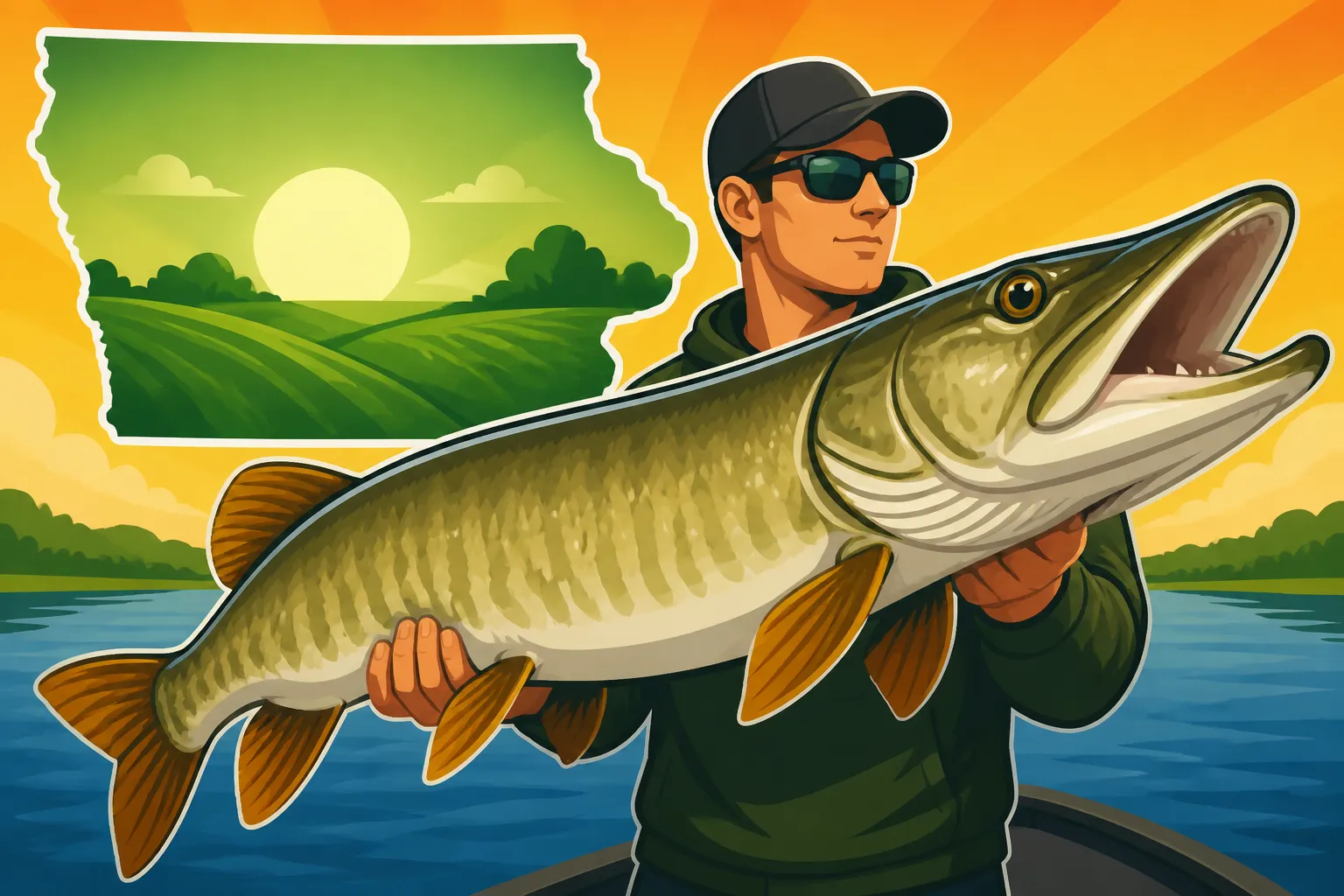
Most muskie caught by anglers in Iowa typically fall within the 30 to 45-inch range. A fish in this size class is already a formidable opponent, offering an incredible fight and a memorable experience. Anglers who consistently target muskie and put in the time often report seeing more fish in the mid-to-high 30s. These are healthy, robust fish that have been in the system for several years. Catching a muskie of any size is a triumph, especially when you consider how challenging they can be!
Pushing into the upper 40s is where things start to get truly exciting, and these fish are often considered legitimate trophy-class fish by many anglers. A muskie measuring 48 inches or more is a truly impressive specimen and represents a significant achievement for any angler. These fish are usually older, more experienced, and have survived many seasons. It’s these larger individuals that often hold the memories that last a lifetime, regardless of whether they're the state record. Remember, Muskie Fishing in Iowa requires patience and persistence to land these beauties.
The Allure of Iowa's Trophy Muskie
For many, the ultimate goal isn't just a muskie, but the muskie – a true trophy that pushes the limits of what these fish can achieve. Iowa has a storied history of producing some absolute giants, even if they aren't as common as in some northern states.
Iowa's State Record Muskie
Every angler in Iowa who chases muskie knows the legend of the state record. While the specific length and weight can vary over the years as new records are set, the essence remains the same: it's a fish of truly monumental proportions. These record-breaking muskie are not just big; they are enormous, often stretching well over 50 inches and weighing in at jaw-dropping figures. They represent the absolute pinnacle of muskie growth in Iowa's waters, a testament to exceptional genetics, abundant food, and a long, successful life.
Catching a fish of state record caliber is an extremely rare event, often a once-in-a-lifetime occurrence that requires immense dedication, perfect timing, and a healthy dose of luck. These fish are ancient titans, wise to the ways of anglers, and incredibly powerful. When you're out on the water, even if you're not explicitly chasing the record, simply knowing that fish of that magnitude exist adds an extra layer of excitement to every cast. It's a reminder of the wild potential lurking beneath the surface. For more details on the reigning champion, check out Iowa State Record Muskie.
Identifying a True Trophy Muskie
What truly qualifies as a "trophy" muskie can be subjective, but generally, it refers to a fish that is significantly larger than the average. In Iowa, most seasoned muskie anglers would consider anything over 45 inches a true trophy. Once you start getting into the 48-inch range and beyond, you're looking at truly exceptional fish.
A trophy muskie isn't just about length; it's also about girth. A long, skinny fish might be impressive, but a muskie that is both long and incredibly thick through the body is what truly stands out. These fish are often deep-bodied, powerful, and have a commanding presence. They’ve managed to eat well and avoid trouble for many years. When you hook one, you'll feel the difference immediately – the sheer power, the head shakes, the runs. It's an experience that tests your gear and your resolve. For the sake of these magnificent fish, remember to always practice proper catch-and-release, especially with trophies, as they are the prime spawners in the population.
Muskie Hotspots and Management for Larger Fish
Iowa isn't traditionally known as a muskie mecca like some of the northern states, but we do have some fantastic fisheries that are specifically managed to produce large muskie. Knowing where to go and understanding the management efforts can significantly increase your chances of finding bigger fish.
Key Iowa Lakes and Rivers for Muskie
When it comes to big muskie in Iowa, certain bodies of water consistently rise to the top of every serious angler's list. These are the places where conditions align to allow these fish to reach impressive sizes.
The Iowa Great Lakes region, particularly Spirit Lake and Big Spirit Lake, are renowned for their muskie populations. These large, deep, clear lakes offer diverse forage and ample cover, providing an ideal environment for muskie to thrive and grow. Many of Iowa's largest muskie have come from these waters, and they continue to be a top destination for anglers specifically targeting these giants. The sheer size and depth of these lakes mean there's plenty of room for muskie to roam and grow. Fishing the Iowa Great Lakes has more information on these prime spots.
Beyond the Great Lakes, other notable waters include Clear Lake and Lake Rathbun. Clear Lake, another large natural lake, has a well-established muskie program and regularly produces fish in the trophy class. Lake Rathbun, a large reservoir in southern Iowa, also holds a healthy muskie population that can grow to impressive sizes, offering a different type of fishing experience compared to the northern lakes. While less talked about, portions of the Mississippi River can also hold muskie, particularly in backwater areas with good current breaks and structure, though these are often less predictable. Understanding Muskie Habitat in Iowa Waters can help you scout these areas.
How Iowa Manages for Large Muskie
Iowa's natural resources department plays a vital role in fostering muskie populations and encouraging the growth of larger fish. Their management strategies are specifically designed to create and sustain trophy fisheries.
One of the primary tools is stocking programs. Since muskie reproduction is often limited or non-existent in many Iowa waters, the department regularly stocks fingerlings and juvenile muskie into designated lakes. They select specific strains known for their growth potential. This ensures a consistent supply of young fish entering the system. Without these stocking efforts, many of our muskie fisheries simply wouldn't exist.
Another crucial aspect of management is strict size limits and regulations. Iowa has some of the most protective muskie regulations in the country, often with minimum length limits designed to allow fish to reach sexual maturity and spawn at least once, and more importantly, to grow to larger sizes before they can be legally harvested. This means that many muskie caught are released, giving them a chance to continue growing. For example, the minimum length limit is often quite high, encouraging catch-and-release of even respectable-sized fish. These rules are vital for maintaining a healthy population of larger, older fish. Iowa Fishing Regulations Explained will give you more context on these rules.
Finally, habitat improvement projects are also undertaken. This might include adding submerged structure, controlling invasive species, or managing water levels to improve overall ecosystem health, all of which indirectly benefit muskie by enhancing their living and hunting environments. These efforts, combined with responsible angler practices, are what allow Iowa to boast about the potential for true trophy muskie.
Practical Tips for Targeting Big Muskie
Chasing big muskie isn't just fishing; it's a dedicated pursuit. It requires specific gear, techniques, and a mindset focused on conservation. If you're serious about landing one of Iowa's giants, these tips are crucial.
Gear Considerations for Heavyweights
You simply cannot show up to a muskie fight with light tackle. These fish are pure muscle, and they will exploit any weakness in your setup. Thinking about a trip? Make sure your gear is up to snuff!
First, your rod and reel combo needs to be heavy-duty. We're talking about stout, fast-action baitcasting rods, typically 7 to 9 feet long, capable of handling large lures and powerful fish. Your reel should be a baitcaster with a strong drag system and high line capacity. This isn't the time for your bass fishing setup; you need a dedicated muskie combo that can withstand the abuse. Many anglers invest in specialized equipment, and you can find a wide selection of suitable rods and reels on platforms like Amazon, if you know what specs you're looking for. For more details on what you need, check out Best Line Weight for Muskie Fishing.
Next, line and leader are critical. Most muskie anglers opt for heavy braided line, often 80-100 pound test, for its strength and lack of stretch, which helps with hook sets. Crucially, you must use a heavy-duty leader – either thick fluorocarbon (around 100-150 lb test) or a steel leader – to prevent the muskie's razor-sharp teeth from cutting your main line. Without a strong leader, you're almost guaranteed to lose any hooked muskie, and potentially leave a lure in its mouth.
Finally, lures and essential accessories are paramount. Muskie lures are notoriously large, ranging from massive bucktails and crankbaits to gliders and jerkbaits. They are designed to trigger aggressive strikes from big fish. Beyond lures, a large, rubberized landing net is non-negotiable. It protects the fish's slime coat and gills while allowing for safe handling. Pliers, hook cutters, and a measuring tape are also essential. If you need a starting point for your tackle box, you might find some useful ideas in Best Lures for a Starter Tackle Box, though you'll need to size up significantly for muskie. Remember to research specific muskie lures that are effective in Iowa, many of which can be ordered online through retailers like Amazon.
Catch-and-Release Practices for Muskie Conservation
The vast majority of muskie fishing in Iowa is catch-and-release, and for good reason. These are slow-growing, long-lived fish, and releasing them ensures the health and future of our trophy fisheries. Proper handling is paramount to their survival.
When you land a muskie, the first priority is to minimize its time out of water. Keep the fish in the net, in the water, as much as possible. Use your hook cutters to quickly remove hooks, or if necessary, a long-nosed pliers. If a hook is deeply embedded, it's often better to cut the line and leave the hook in rather than cause excessive damage trying to extract it. This is where a big, knotless rubber net helps tremendously. It supports the fish's body and reduces stress.
Secondly, handle the fish gently and support its body. Never hold a muskie vertically by the jaw or gill plates alone; this can cause serious internal damage. Instead, cradle the fish horizontally, supporting its belly and tail, or use a cradle if you have one. If you want a photo, get it quickly, keeping the fish as low to the water as possible, and then immediately return it to the water. Some anglers even prefer to take pictures of the muskie still in the net, partly submerged.
Finally, ensure a proper release. Once hooks are removed, hold the muskie gently in the water, supporting its belly, until it regains its strength and swims away on its own. You might need to hold it facing into a gentle current or gently move it back and forth to help oxygenated water flow over its gills. Don't just toss it back! The survival of these magnificent creatures depends on our responsible actions. For more on this critical topic, review Is Muskie Fishing Catch and Release Only in Iowa?.
| Muskie Size Category | Typical Length Range (Iowa) | Characteristics | Importance for Fishery |
|---|---|---|---|
| Juvenile/Small | Up to 25 inches | Younger, faster growing, often recently stocked | Future of the fishery |
| Average Angler Catch | 30-45 inches | Healthy, strong fighters, common for dedicated anglers | Sustains the fishing experience |
| Trophy Muskie | 45-50+ inches | Older, deep-bodied, powerful, less common | Key breeders, provide excitement and challenge |
| State Record Potential | 50+ inches, exceptional girth | Extremely rare, very old, legendary fish | Pinnacle of muskie genetics and habitat |
Disclaimer
This article is for general informational purposes only and does not constitute professional advice. Laws, prices and regulations vary by location and change over time. Consult a qualified professional for guidance on your specific situation.