Reporting a Fishing Violation in Iowa
It's incredibly frustrating when you're out enjoying a peaceful day on the water, only to witness someone blatantly disregarding the rules, whether it's keeping undersized fish, going over the limit, or fishing without a license. It feels like a punch to the gut for those of us who respect our natural resources and follow the law. This guide is here to walk you through exactly how to report a fishing violation in Iowa, ensuring your concerns are heard and our precious fisheries are protected.
Why Reporting Fishing Violations Matters to All Anglers
Let's be honest, nobody likes being a "snitch." There's a natural reluctance to get involved, to confront someone, or even just to make a phone call. But when it comes to fishing violations, it's not about being a busybody; it's about being a responsible steward of Iowa's natural beauty and fish populations. These aren't just arbitrary rules; they're in place to ensure we all have fish to catch for generations to come.
Protecting Iowa's Natural Resources
Think about it: every fish taken illegally, whether it's an extra walleye over the daily limit or a bass caught out of season, is a fish that won't contribute to the spawning population or be there for another angler to enjoy. Our lakes and rivers are delicate ecosystems, and the Iowa DNR works tirelessly to manage them sustainably. Poaching and other illegal fishing activities can severely impact fish populations, especially for species that are already sensitive or take a long time to mature, like muskie or lake sturgeon. By reporting these violations, you're directly contributing to the health and longevity of Iowa's aquatic environments. It's a way of standing up for the fish that can't speak for themselves and ensuring our children and grandchildren can experience the same joy of fishing that we do. It’s also about maintaining the integrity of our Iowa Fishing Season Dates and Limits and overall fish populations.
When someone deliberately breaks the law, they're stealing from all of us – from the public trust, from the fish, and from the future of fishing in Iowa. These resources belong to everyone, and responsible anglers play a crucial role in safeguarding them. Without active participation from the public in reporting violations, conservation officers are spread thin, and many illegal activities could go unchecked, leading to a slow but steady decline in the quality of our fisheries. Your report helps the Iowa DNR focus their efforts where they're most needed, ensuring that enforcement is effective and that those who try to exploit our resources are held accountable.
Ensuring Fair Play for Everyone
Beyond the environmental impact, there's a strong sense of fairness involved. We all pay for our licenses, we all abide by the Iowa Fishing Daily Bag Limits Guide, and we all put in the effort to learn the Iowa Fishing Regulations Explained. When someone else disregards those rules, they're not just breaking the law; they're gaining an unfair advantage. They're taking more than their share, and it diminishes the experience for everyone else who plays by the rules. It's disheartening to see someone brazenly flouting regulations while you're meticulously measuring your catch and releasing anything that doesn't meet the legal requirements.
This isn't just about envy; it's about principle. If violations become commonplace and go unreported, it erodes the collective effort to manage our fisheries. It can even tempt others to think, "Well, if they're doing it, why shouldn't I?" We need to uphold the standards of ethical angling. By reporting, you're helping to maintain a level playing field, ensuring that everyone respects the resource and that the spirit of fair chase remains intact. It's a statement that our angling community values integrity and conservation above personal gain, and that we're committed to preserving the quality of fishing for all law-abiding enthusiasts.
What Constitutes a Fishing Violation in Iowa?
Sometimes, folks aren't entirely sure if what they're seeing is actually a violation, or if it's just someone bending a rule they might not fully understand. It's important to know the difference, as frivolous reports can tie up valuable conservation officer time. However, if you suspect something is truly amiss, it's always better to report it and let the professionals investigate. Don't feel like you need to be a legal expert, just a good observer.
Common Infractions You Might Encounter
There's a wide range of activities that fall under the umbrella of fishing violations in Iowa, from simple mistakes to deliberate poaching. One of the most common issues is unlicensed fishing. If you see someone fishing and you have reason to believe they haven't purchased an Iowa Fishing License Guide, that's a reportable offense. It's not always obvious, especially if they're a nonresident or appear to be outside the typical age ranges that might have exemptions, but it’s a foundational rule. Another frequent violation involves exceeding daily bag limits or possessing undersized (or oversized) fish. For example, if you see someone proudly displaying a stringer of 10 walleye when the limit is clearly five, or keeping a bass that's obviously shorter than the minimum length, that's a problem.
Fishing out of season is another big one, especially for species with specific spawning closures or limited windows. Trout streams in northeast Iowa have very particular rules, and fishing them when they're closed can be detrimental. Using illegal fishing methods or gear also counts, such as trotlines in prohibited waters, using an excessive number of fishing poles beyond what's allowed (check out How Many Fishing Poles You Can Use in Iowa), or using certain types of live bait where it's restricted. Even seemingly minor things like improperly transporting live fish can be a violation, especially if it risks introducing invasive species into new waters. All these actions, whether intentional or not, can harm our fisheries and warrant attention from the DNR.
Understanding Different Levels of Violations
Fishing violations in Iowa aren't all created equal. They can range from minor infractions, which might result in a warning or a relatively small fine, to serious wildlife crimes that carry significant penalties, including large fines, loss of fishing privileges, and even jail time. Understanding this spectrum helps you grasp the severity of what you might be witnessing and why your report is so critical. For instance, a first-time offense of not having a fishing license, while serious, might be handled differently than someone caught repeatedly poaching dozens of fish over the limit.
More egregious violations, often categorized as poaching, typically involve deliberate, calculated attempts to illegally harvest fish for personal gain or simply out of disregard for the law. This could include large-scale commercial poaching operations, using illegal nets or shocking devices, or targeting protected species. These types of violations can have a devastating impact on local fish populations and the broader ecosystem. When you report, you don't need to categorize the violation yourself; just provide the facts. The conservation officers are trained to assess the situation and determine the appropriate legal response, which can range from minor citations as outlined in Fine Amount for Fishing Without a License in Iowa to severe consequences described in Penalties for Exceeding the Daily Bag Limit.
How to Report a Fishing Violation in Iowa
When you witness a fishing violation, it can feel overwhelming. You might be unsure of who to call, what to say, or if your report will even make a difference. But rest assured, the Iowa DNR takes these reports seriously, and they rely heavily on vigilant citizens like you. The key is to act quickly and provide as much detail as possible, while always prioritizing your own safety.
The Immediate Action: Contacting a Conservation Officer Directly
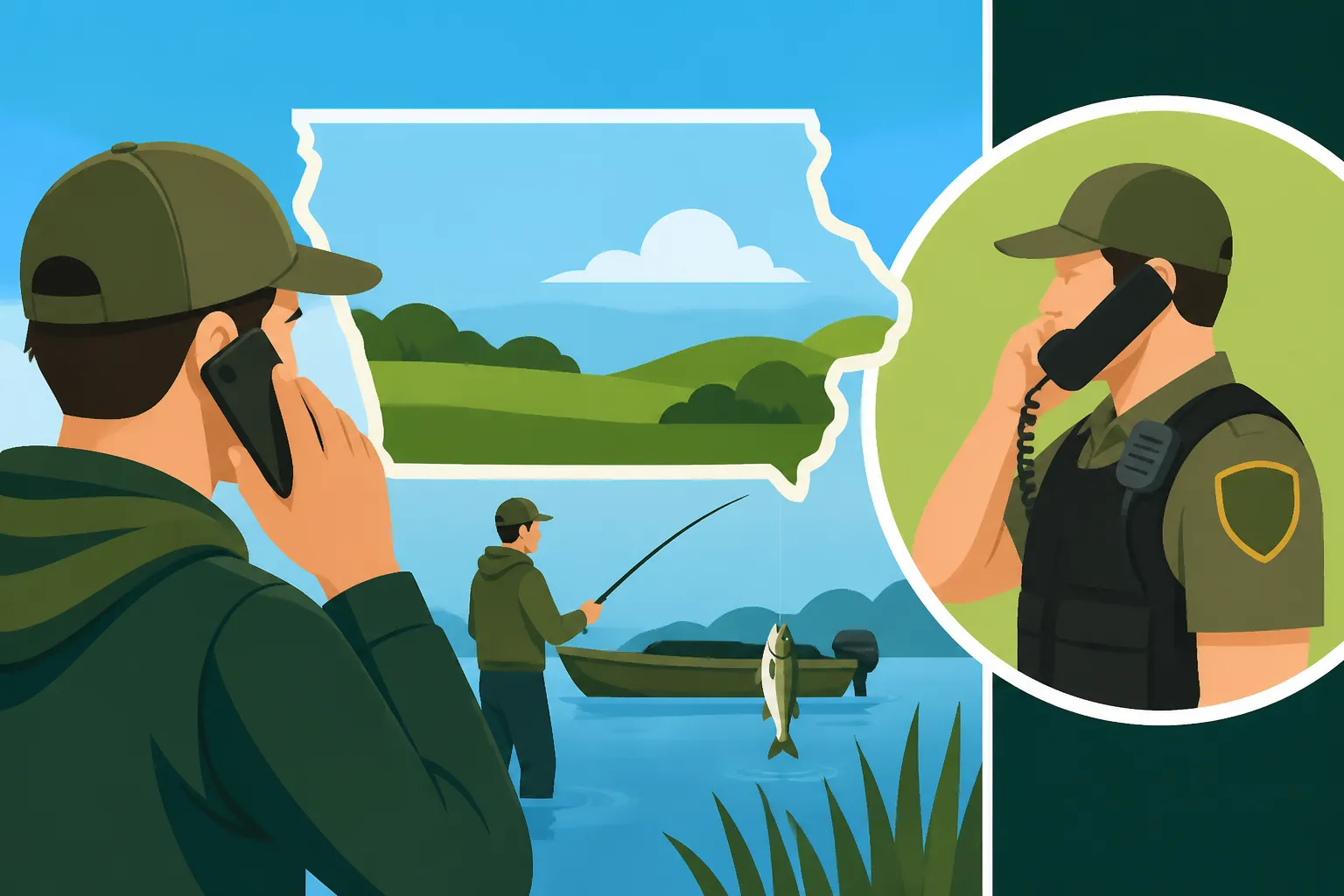
The most direct and often most effective way to report a fishing violation in progress is to contact a local Iowa DNR conservation officer. These officers are specifically trained in fish and game laws and are equipped to respond to such incidents. If you know the direct phone number for the conservation officer in the county where you're fishing, that's ideal. However, since most of us don't carry a directory of every officer's cell number, the best course of action is to call the Iowa State Patrol's communications center.
You can reach them by calling 911 for emergencies (if the violation poses an immediate danger or involves other crimes) or, for non-emergency but still timely violations, you can call their non-emergency dispatch number, which is 1-800-TIPS-DNR (1-800-847-7367). This number will connect you to the nearest DNR field office or state patrol dispatch, who can then relay the information to the appropriate conservation officer. Be ready to provide clear, concise details about what you observed, where it happened, when it happened, and any descriptions of the individuals or vehicles involved. The quicker you call, the higher the chance that an officer can intervene while the activity is still ongoing.
Using the Turn In Poachers (TIP) Program
For those who prefer to remain anonymous, or if the violation is not currently in progress but you have credible information, Iowa has an excellent program called Turn In Poachers (TIP). This program is specifically designed to allow citizens to report wildlife crimes, including fishing violations, with complete confidentiality. The TIP program is super important because it encourages people to come forward without fear of retribution. It's a non-profit organization that works hand-in-hand with the Iowa DNR.
You can report through the TIP program by calling their dedicated hotline at 1-800-532-2020. This number is staffed 24 hours a day, 7 days a week. Alternatively, you can submit an online report through the Iowa DNR website. The online form allows you to provide detailed information and can also be done anonymously. When using TIP, be prepared to share everything you know. Even if you think a detail is insignificant, it could be the piece of the puzzle a conservation officer needs to build a case. The TIP program has been instrumental in catching numerous poachers and protecting Iowa's wildlife and fisheries.
Gathering Key Information Before Reporting
Before you make that call or fill out that online form, take a moment – if it's safe to do so – to gather as much pertinent information as possible. The more details you can provide, the more effective your report will be. Imagine you're painting a picture for someone who wasn't there; what would they need to know?
Here's a checklist of vital information to try and collect:
- Who:
- Number of individuals involved.
- Descriptions of the individuals (gender, age, hair color, height, clothing, distinguishing features like tattoos, glasses, etc.).
- Any names or identifying information you might have heard or seen.
- What:
- Specific violation observed (e.g., keeping undersized fish, over the bag limit, using too many lines, Rules for Transporting Live Fish violation).
- Species and approximate number/size of fish involved.
- Type of gear being used (if unusual or illegal).
- Where:
- Exact location: body of water, nearest town, specific landmarks (e.g., "south side of the bridge on Highway 34 over the Des Moines River," "near the third fishing pier at Lake Macbride"). GPS coordinates from your phone can be incredibly helpful if you have them.
- When:
- Date and time the violation occurred or is occurring.
- How long you observed the activity.
- How:
- Method of travel (vehicle, boat, ATV, on foot).
- Vehicle description: make, model, color, license plate number (crucial!), any distinguishing dents, stickers, or features.
- Boat description: type, color, name, registration numbers (IA numbers on the bow).
- Any other relevant details, such as if weapons were present or if alcohol seemed to be involved.
Remember, clarity and accuracy are paramount. If you're carrying a waterproof notebook (you can easily find one on Amazon) and a pencil, quickly jotting down these details can make a huge difference in the quality of your report.
What Happens After You Report a Violation?
You've made the call, you've provided the details – now what? It's natural to wonder about the outcome of your report. Will anything actually happen? Will the culprits be caught? While the DNR can't always provide detailed updates due to ongoing investigations and privacy concerns, understanding the general process can give you peace of mind that your effort was worthwhile.
The Role of Iowa DNR Conservation Officers
Once a report is filed, especially through the direct non-emergency line or 911, the information is relayed to the nearest available Iowa DNR conservation officer. These officers are highly trained professionals with law enforcement powers, specifically focused on protecting Iowa's natural resources. They investigate violations of fish and game laws, state parks rules, and other environmental regulations.
Upon receiving a report, a conservation officer will assess the urgency and credibility of the information. If it's a real-time violation with clear details, they will likely respond to the location as quickly as possible. Their goal is to observe the violation themselves, gather evidence, and, if appropriate, confront the individuals involved. This might involve issuing a warning, a citation, or in more severe cases, making an arrest. If the violation occurred in the past, they will use the information you provided to conduct an investigation, which might include interviewing witnesses, examining the area, or tracking down vehicle or boat registration information. The officers are dedicated to their work, and your report provides the crucial tip-off they often need to act. They rely on the public to be their "eyes and ears" in the field, as they simply can't be everywhere at once.
Anonymity and Follow-Up Considerations
Many people hesitate to report because they fear retaliation from the individuals they're reporting. This is a completely valid concern, and thankfully, both the Iowa DNR and the TIP program take anonymity very seriously. When you report through the TIP hotline or online form, you can choose to remain completely anonymous. Your identity will not be shared with the violators, and you will not be required to testify in court. Even if you call the regular DNR dispatch, you can request that your identity be kept confidential.
While you might not receive a detailed play-by-play of the investigation or its outcome due to privacy laws and the need to protect ongoing operations, your report is never ignored. In some cases, if you provide your contact information and it's permissible, an officer might follow up with you for additional details or to inform you that action was taken. However, often, the only feedback you might get is the satisfaction of knowing you did your part to protect Iowa's cherished fishing spots and wildlife. Trust that your contribution is vital, and even if you don't see the immediate results, your information helps to build cases, deter future violations, and keep our natural spaces healthy.
Preparing Yourself to Be a Good Witness
Witnessing a fishing violation can be a stressful experience, and your immediate reaction might be to get angry or even confrontational. However, for your safety and to ensure your report is as effective as possible, it's crucial to approach the situation with a calm and strategic mindset. Your role is to be an observer, not an enforcer.
Documenting Evidence Safely and Legally
In today's world, almost everyone has a smartphone, and it can be a powerful tool for documenting evidence. If it is safe to do so and does not put you in harm's way, discreetly taking photos or short video clips of the violation can significantly strengthen your report. Clear images of the individuals, their boat or vehicle (especially license plates or registration numbers), the illegal catch, or the method being used can be invaluable to conservation officers.
However, safety is always paramount. Do not escalate the situation by making it obvious you are recording, especially if the individuals seem hostile or are consuming alcohol. If you can only get a blurry photo, that's still better than nothing. Just remember to describe what you saw to the best of your ability. Keep your phone or camera handy but out of sight until you have an opportune moment. After capturing evidence, make a mental note or quickly jot down the time and location. Even a simple voice memo describing what you see can be incredibly helpful later. Many anglers keep a small, waterproof case or bag to protect their electronics, which can be purchased from retailers like Amazon, ensuring your phone is ready if needed.
Avoiding Direct Confrontation with Suspects
This is perhaps the most important safety rule: never directly confront someone you suspect of a fishing violation. It’s just not worth it. You don't know who you're dealing with, and engaging them could escalate the situation quickly and dangerously. Conservation officers are trained law enforcement professionals who know how to handle these situations safely. Your job as a concerned citizen is to observe, collect information if possible, and report.
If someone notices you observing them, try to remain calm and non-committal. Make eye contact, nod politely, and then simply return to your own fishing or activity. Don't make accusations, don't lecture, and don't try to enforce the law yourself. Your safety, and the safety of anyone with you, should always be your top priority. Remember that the goal is to get the information to the authorities, not to be a hero. By avoiding confrontation, you increase the likelihood that the officers can arrive on scene and handle the situation professionally, based on your reliable and untainted report.
Frequently Asked Questions About Reporting Violations
It's common to have a lot of questions pop up when you're considering reporting a fishing violation. You might worry about specific details, or whether your report is even valid. Let's tackle some of those common concerns to give you more confidence when acting as a steward of Iowa's waters.
Do I Need to Know the Specific Regulation Number?
Absolutely not! While it’s helpful for a conservation officer if you can accurately describe the violation in legal terms, you are definitely not expected to be an expert on the Iowa Fishing Regulations Explained or know the precise chapter and verse of the Iowa Administrative Code. Your role is to describe what you observed in plain language.
For example, instead of saying, "They were in violation of 571 Iowa Administrative Code 106.1(2) by exceeding the daily possession limit for Walleye," simply state, "I saw two individuals on a boat with a stringer of at least 8 walleye, which looks like more than the legal daily limit." Or, instead of "They were operating without a valid Iowa Resident Annual Fishing License," you can say, "I overheard them bragging about not buying an Iowa Resident Annual Fishing License this year, but they were actively fishing." The conservation officer will know exactly which regulations apply based on your description. Focus on clear, factual observations, and let the DNR interpret the legal specifics.
What if I Only Saw Part of the Violation?
It’s perfectly fine if you only witnessed a portion of what you suspect is a violation. You don't need to have a complete, airtight case with every piece of evidence to make a report. Sometimes, even a fragment of information can be the missing piece a conservation officer needs to connect the dots on a larger pattern of illegal activity. Perhaps you only saw someone handling a fish that looked undersized before they quickly put it back, or you saw a boat with suspicious gear.
Even if you're not 100% sure, it's better to report your suspicions and let the DNR investigate. They have the resources and expertise to follow up on partial information. Just be honest about what you saw and what you infer. For instance, you could say, "I saw a group of anglers cleaning fish, and it looked like they had a lot of crappie fillets, possibly more than the limit, but I couldn't count them all. I just wanted to report it in case." Your good faith observation is valuable, and it contributes to the overall effort to enforce our fish and game laws. Don't let the fear of not having "enough" information prevent you from reporting; every bit helps our conservation officers protect our precious Iowa fisheries.
Disclaimer
The information provided in this guide is for general informational purposes only and does not constitute legal advice. While we strive to provide accurate and up-to-date information, fishing regulations and laws can change. Always refer to the official Iowa Department of Natural Resources (DNR) regulations and publications for the most current and authoritative information. If you witness a suspected violation, report it to the Iowa DNR or law enforcement, and never attempt to enforce regulations yourself. Your safety is paramount.