Muskie Fishing in Iowa
For many anglers, the thought of pursuing muskie in Iowa can feel like chasing a ghost. These apex predators are notoriously elusive, demanding immense patience, specialized gear, and a deep understanding of their habits. If you've spent countless hours casting without a single follow, or you're just starting to dream of landing one of Iowa's freshwater giants, this comprehensive guide is here to equip you with the knowledge, strategies, and local insights to increase your chances of success and truly enjoy the hunt for the fish of 10,000 casts.
Understanding Iowa's Muskie: The Fish of 10,000 Casts
The muskie, or muskellunge, is an apex predator that commands respect in any body of water it inhabits. In Iowa, these fish are a coveted prize, known for their powerful strikes, acrobatic fights, and sheer size. Before you even think about casting a line, understanding the muskie itself is crucial to developing an effective strategy.
Muskie Identification and Characteristics
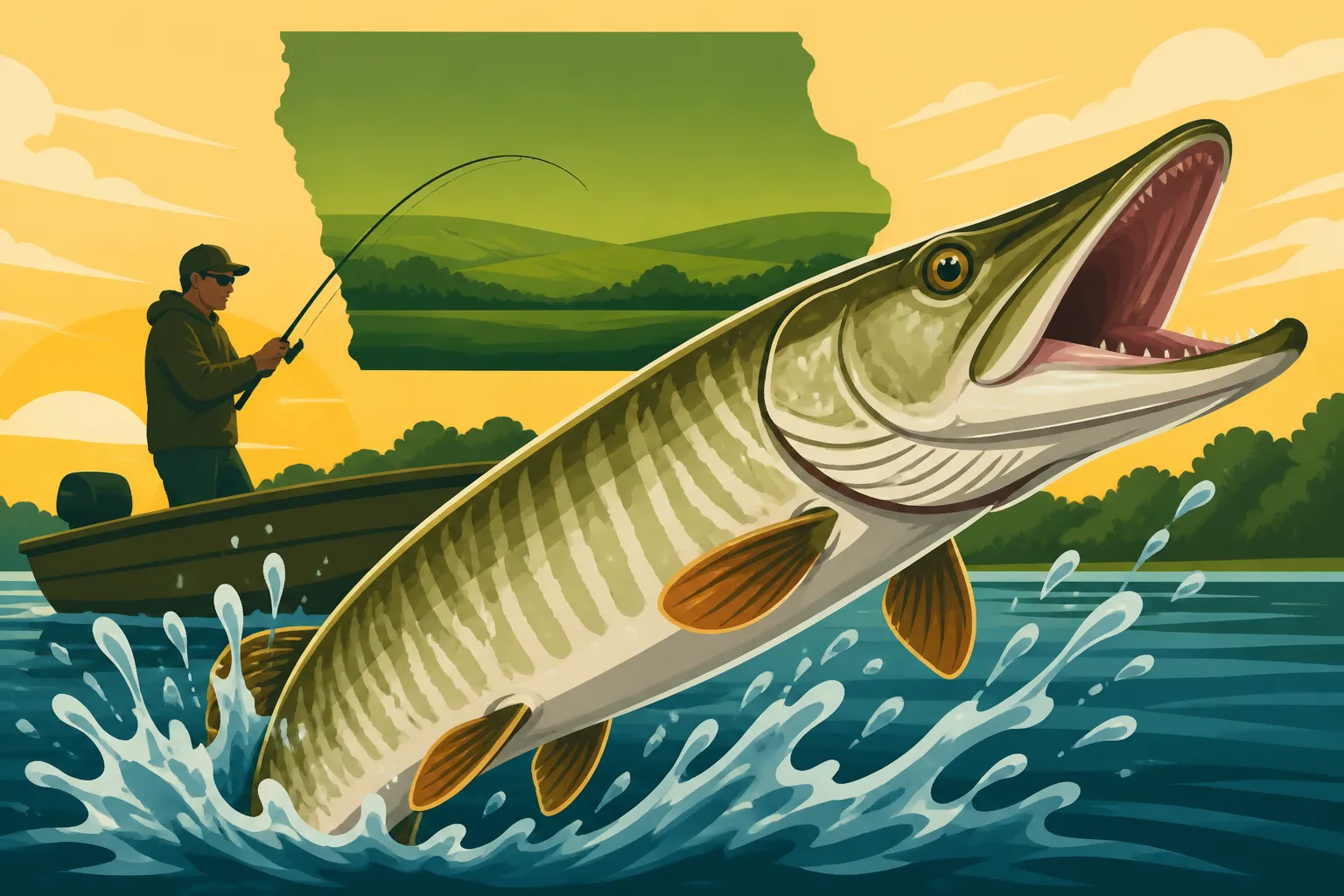
When you picture a muskie, think long, lean, and mean. These fish possess a distinctive torpedo-shaped body, perfectly adapted for explosive bursts of speed to ambush prey. Their coloration can vary, often displaying dark bars or spots on a lighter background, ranging from silvery-green to a more golden hue, depending on the water clarity and environment. What truly sets them apart from their close relatives, the northern pike, are a few key features. Muskies typically have less than six pores on the underside of each jaw, and their tail fins are more pointed. More tellingly, the scales on a muskie’s cheek and gill cover are usually only on the upper half, whereas pike tend to have full coverage. This distinction is vital, especially when legal size limits differ between the two species.
Their mouths are an impressive array of sharp, backward-pointing teeth designed to hold onto struggling prey. This makes proper handling not just a matter of technique, but also safety. These teeth can inflict serious wounds, so caution and specialized tools are always necessary when landing and releasing a muskie. They are a testament to nature's design for a top-tier hunter, and encountering one, even just seeing it follow your lure, is an experience in itself.
Preferred Habitat and Behavior in Iowa Waters
Muskies are structure-oriented fish, but their preferred "structure" can be incredibly varied. In Iowa's lakes and larger reservoirs, you'll often find them lurking around weed lines, especially those with sharp breaks or access to deeper water. Submerged timber, rock piles, drop-offs, and points are also prime real estate for a muskie to set up an ambush. They are true ambush predators, patiently waiting for an unsuspecting baitfish or smaller game fish to swim by before exploding from cover.
Their behavior is heavily influenced by water temperature and seasonal changes. In spring and early summer, they might be found in shallower bays and flats, often associated with spawning efforts or feeding on recently spawned baitfish. As summer progresses and water temperatures rise, they tend to move deeper, seeking cooler, more oxygenated water, often relating to main lake points or deep weed edges. Fall is perhaps the most famous season for muskie fishing, as these fish enter a "feeding frenzy" mode, bulking up for winter. During this time, they can be found in a variety of depths, often aggressively chasing larger baits. Understanding these seasonal movements and preferred structures is like deciphering a secret map, guiding your efforts to where these elusive giants are likely to be.
Muskie vs. Tiger Muskie: What's the Difference?
While both are thrilling to catch, it's important to understand the distinction between a true muskellunge and a tiger muskie, especially in Iowa. A true muskie is a purebred species, naturally reproducing in some waters, though many Iowa populations are sustained through stocking programs. They are typically identified by the aforementioned barring or spotting patterns.
Tiger muskies, on the other hand, are a sterile hybrid, a cross between a northern pike and a muskellunge. They get their name from their distinctive, often more pronounced, dark vertical stripes or blotches on a lighter background, resembling tiger stripes. The Iowa Department of Natural Resources (DNR) occasionally stocks tiger muskies in certain waters, particularly those where true muskie might not thrive as readily. Because they are sterile, their populations are entirely dependent on these stocking efforts. Anglers often find tiger muskies to be slightly more aggressive and perhaps a bit easier to catch than their purebred cousins, though they still offer a formidable fight. Recognizing which species you're targeting or have hooked can influence your expectations and adherence to specific regulations. You'll find that state records are kept for both species, recognizing their unique characteristics.
Where to Hunt for Muskie in the Hawkeye State
Iowa might not be the first state that comes to mind for muskie fishing, but the Hawkeye State boasts some truly exceptional waters for pursuing these incredible fish. Knowing where to focus your efforts is half the battle when it comes to the "fish of 10,000 casts." The Iowa Department of Natural Resources has done a fantastic job of establishing and maintaining muskie populations in select lakes and rivers.
Top Iowa Lakes Known for Muskie Populations
When it comes to pure muskie fishing opportunities, Iowa's natural lakes and larger reservoirs are often your best bet. These waters offer the expansive habitat, abundant forage, and necessary structure that muskies thrive in.
The Iowa Great Lakes region, specifically Spirit Lake Fishing Guide, West Okoboji Lake, and East Okoboji Lake, are legendary for their muskie populations. West Okoboji, with its incredible depth and diverse structure, holds some of the largest muskies in the state. Anglers often target its deep weed lines, rock reefs, and sharp breaks. Spirit Lake also offers fantastic opportunities, particularly around its numerous points and submerged humps. East Okoboji, being shallower and weedier, can be a great early-season or late-fall spot, especially where it connects to the other lakes. These lakes are actively managed for muskie, and the potential for a true trophy fish is very real.
Clear Lake in north-central Iowa is another premier muskie destination. It's a shallower, bowl-shaped lake, but it holds a healthy population of muskies that relate heavily to its expansive weed beds and structural changes. Clear Lake Walleye Fishing is popular, but many dedicated anglers exclusively target muskie here. The key to Clear Lake is often understanding its extensive vegetation patterns and finding those ambush points within them. This lake consistently produces large fish, making it a favorite among muskie enthusiasts.
Further south, Big Creek Lake, near Des Moines, has developed into a fantastic muskie fishery. This lake, though smaller than the Great Lakes, is intensively managed for muskie and has a reputation for producing good numbers of active fish. Its coves, submerged timber, and deep channels provide excellent muskie habitat. While it might not hold the sheer volume of trophy fish found in the Okobojis, it offers a more accessible and often more consistent bite for those newer to muskie fishing or looking for a convenient day trip. Additionally, Lake Macbride in eastern Iowa and Brushy Creek Lake in central Iowa are also good options that are regularly stocked and hold respectable muskie numbers, providing diverse locations for anglers across the state.
River Systems with Muskie Potential
While lakes are generally the primary focus for muskie, Iowa also offers some intriguing river fishing opportunities, particularly on its eastern border.
The Mississippi River is a vast and complex system, and its backwaters, sloughs, and main channel borders can hold impressive muskies. Targeting these fish on a large river requires a different approach than lake fishing. Look for areas with current breaks, submerged timber, wing dams, and deep holes, especially near tributaries. The muskie here often relate to current seams and slack water adjacent to faster flows, using these areas as ambush points. Pools 9, 10, and 12, common for Mississippi River Pool 9 Fishing and Mississippi River Pool 10 Fishing for other species, also hold muskie. It's a challenging but highly rewarding fishery, with the added benefit of a diverse ecosystem.
Certain stretches of the Des Moines River also have a surprising, albeit more elusive, muskie presence. While not a primary muskie destination like the Great Lakes, the river can occasionally yield a surprise muskie, especially in its larger pools or slower stretches downstream from dams. These river muskies are often wilder, more opportunistic, and incredibly powerful due to living in current. Fishing for them here typically involves covering a lot of water and focusing on deep scour holes, current eddies, and areas with fallen timber or rock structures. While less predictable than lake fishing, the thrill of a river muskie is unmatched.
Stocking Programs and Their Impact
The health and viability of muskie populations in Iowa are largely thanks to the proactive efforts of the Iowa Department of Natural Resources (DNR). Without robust stocking programs, many of these fisheries would simply not exist or would decline significantly due to the muskie's relatively low natural reproductive success compared to other game fish. The DNR raises muskie fingerlings in hatcheries and then carefully releases them into designated lakes, often when they are larger and have a better chance of survival against natural predators.
These stocking efforts are meticulously planned, taking into account forage availability, habitat suitability, and overall ecosystem health. The goal is not just to maintain a population, but to foster a healthy, self-sustaining (or at least consistently productive) fishery that can support trophy-sized fish. Anglers play a critical role in supporting these programs through their license fees and by practicing responsible catch-and-release, ensuring that these incredible fish can grow to their full potential and continue to thrill future generations of anglers. Keeping track of where and when the DNR conducts its Iowa Trout Stocking Strategy might give you an idea of the scientific approach applied to other species like muskie.
Prime Time for Muskie: Seasons and Conditions
Understanding when to target muskie is just as crucial as knowing where to find them. While muskie can theoretically be caught year-round, certain seasons and conditions offer significantly better odds for success in Iowa waters. Timing your trips wisely can make all the difference between a frustrating day of casting and an exhilarating encounter with a true freshwater giant.
Understanding Iowa's Muskie Season Dates
Iowa's fishing regulations are designed to protect fish populations and ensure sustainable angling opportunities. For muskie, there are specific season dates that anglers must adhere to, which vary slightly from year to year but generally aim to protect the fish during sensitive periods like spawning. Typically, the muskie season in Iowa is open for most of the year, usually closing for a short period during early spring to allow for successful spawning. However, specific dates, as well as size and bag limits, are always subject to change. It's absolutely imperative to check the most current Iowa Fishing Regulations Explained or the Iowa DNR's official guide before planning your trip. For example, you'll want to confirm the Iowa Muskie Season Dates and the precise Muskie Season and Bag Limit for the current year to avoid any violations.
Many dedicated muskie anglers view the closed season as a time for preparation, rigging new lures, repairing gear, and studying maps. When the season reopens, it's often met with great anticipation, especially in prime muskie waters where the fish are just starting to become active after the colder months. Always have your Iowa Fishing License Guide in order, as regulations are strictly enforced.
Best Times of Year to Target Muskie
While the season might be open for many months, certain periods shine brighter for muskie fishing. Many experienced anglers agree that the late spring and early summer can be excellent. Following the spawn, muskies are often recuperating and feeding heavily, making them more receptive to lures. They can often be found relating to shallower weed beds and structural elements near their spawning grounds.
As summer progresses, the bite can become more challenging, often referred to as the "summer doldrums." However, dedicated anglers still find success by targeting cooler periods, dawn and dusk, or by focusing on deeper, more oxygenated water during the heat of the day.
Without a doubt, fall is often considered the prime time for trophy muskie fishing in Iowa. As water temperatures begin to drop, muskies enter an intense "feeding window" or "fall bite." They know winter is coming and need to bulk up, so they become incredibly aggressive, chasing larger baits with fierce determination. This is when many of the biggest muskies of the year are caught. The cooler temperatures also make for a more comfortable day on the water for anglers. If you're planning your trip to maximize your chances, aiming for late September through November for Best Time of Year for Muskie Fishing in Iowa is a strong strategy.
Weather and Water Conditions that Influence the Bite
Muskie anglers are notorious for being obsessed with weather. And for good reason! These fish are highly sensitive to changes in their environment.
Barometric pressure is a key factor. A stable or slowly falling barometer, often associated with approaching low-pressure systems and cloud cover, can trigger aggressive feeding. Conversely, a rapidly rising barometer after a front, often bringing clear skies and high pressure, can shut down the bite almost completely. Many anglers won't even launch their boat if the barometer isn't "right."
Water temperature dictates muskie metabolism and behavior. They are cold-blooded, so their activity levels are directly tied to the water temp. In spring, warmer water signals feeding, while in fall, cooling water triggers the pre-winter feast. Knowing the ideal temperature ranges for different seasons in your target lake is invaluable.
Wind and cloud cover can also be your friends. Overcast days and choppy water (known as a "muskie chop") can provide cover for muskies, making them feel more secure to hunt in shallower water. The chop also breaks up light penetration, reducing their ability to see line or boats, and making your lure look more natural. Calm, sunny days, especially after a cold front, are often the toughest conditions for muskie fishing. While you can't control the weather, you can certainly choose when you go, and savvy muskie anglers pay close attention to the forecast.
Essential Gear for Iowa Muskie Anglers
Muskie fishing isn't just about big lures; it's about having a dedicated, robust gear setup that can withstand the incredible power of these fish and the demanding nature of the pursuit. Trying to catch a muskie with inadequate equipment is a recipe for broken gear and heartbreak. Investing in the right tools is paramount for both success and safety.
Rods, Reels, and Line: Power Up Your Setup
This isn't your average panfish setup. Muskie fishing demands heavy-duty gear built to handle massive lures, powerful casts, and the violent strikes of an angry muskie.
- Rods: Look for heavy or extra-heavy power baitcasting rods, typically ranging from 7 feet 6 inches to 9 feet 6 inches in length. Longer rods aid in casting heavy lures a greater distance and provide better leverage when fighting a large fish or performing the crucial "figure-eight" maneuver at the boat. The action should be fast, giving you the sensitivity to feel strikes and the backbone to drive large hooks home. Many popular muskie rods are purpose-built for specific lure types (e.g., bucktail rods, jerkbait rods). While a Best Rod for Catfish Fishing might be heavy, muskie rods are often even more specialized for casting heavy baits.
- Reels: You'll need a robust baitcasting reel with a strong drag system and a high line capacity. Low-profile baitcasters designed for heavy use or traditional round baitcasters are common choices. Gear ratios can vary; some prefer faster retrieves for bucktails, while others like slower reels for large crankbaits and jerkbaits. Smoothness and durability are key, as these reels will be put through immense stress. Brands like Shimano, Daiwa, and Abu Garcia offer excellent options, many of which you can find readily available on Amazon.
- Line: Braided line is almost universally preferred for muskie fishing. Its zero-stretch quality provides excellent sensitivity for feeling strikes and helps with powerful hooksets over long distances. Common strengths range from 65-pound to 100-pound test. Do You Need Braided Line for Muskie Fishing? For muskie, the answer is a resounding yes! Always pair your braid with a heavy fluorocarbon or wire leader, typically 80 to 150-pound test, to prevent bite-offs from their razor-sharp teeth. This leader also helps with abrasion resistance around structure. Understanding the Best Line Weight for Muskie Fishing is critical for both casting performance and fighting power.
Lures and Baits: The Arsenal of a Muskie Hunter
Muskie lures are as impressive as the fish themselves—often large, flashy, and designed to grab attention. Building a diverse tackle box is essential, as muskie can be incredibly finicky, and what works one day might be ignored the next.
- Bucktails: These are probably the most iconic muskie lures. Consisting of a spinner blade, a weighted body, and a dressed treble hook (often with deer hair or synthetic materials), bucktails are designed for fast retrieves and create a lot of flash and vibration. Sizes range from smaller #5 blades to massive #10 and even #12 blades, sometimes tandem. Experiment with different colors and blade configurations (e.g., willow, Colorado) to match the conditions. How to Retrieve a Bucktail for Muskie is a technique every muskie angler needs to master.
- Crankbaits: Large, deep-diving crankbaits are excellent for covering water and reaching fish suspended at various depths. These lures mimic baitfish and produce a tight wobble or wide thumping action. Sizes can easily exceed 8-10 inches. Trolling with crankbaits is also a highly effective method, particularly in larger lakes.
- Jerkbaits and Glide Baits: These lures require an active retrieve, with the angler "jerking" or "gliding" the bait to impart an erratic, wounded-baitfish action. They can be incredibly effective when muskies are sluggish or when precise presentations are needed around structure. They are often heavier and require practice to master their unique retrieve styles.
- Soft Plastics and Swimbaits: Large soft plastics, often rigged with heavy jig heads or internal harnesses, offer a more subtle presentation. Their lifelike action can entice follows and strikes from wary fish. Massive paddle-tail swimbaits are also popular, particularly for slow-rolling over deep cover.
- Topwater Lures: For the ultimate thrill, topwater lures like walk-the-dog baits, prop baits, and noisy ploppers can create explosive surface strikes. These are best used in low-light conditions or over shallow, weedy areas. Seeing a muskie erupt on a topwater lure is an unforgettable experience.
Many of these specialized lures can be found at local tackle shops or ordered through online retailers like Amazon, which offers a vast selection for every muskie technique imaginable.
Essential Accessories for Muskie Safety and Handling
Muskie fishing isn't just about catching; it's also about conservation and safety. These are big, powerful fish with sharp teeth, and proper handling is crucial for both the angler and the fish.
- Long-Handled Net: A large, rubber-coated landing net with a long handle is non-negotiable. The rubber coating protects the fish's slime coat, and the long handle allows you to net the fish without reaching over the side of the boat, minimizing stress on both you and the fish. Nets should have a hoop size large enough to encompass the entire muskie.
- Long-Nose Pliers and Hook Cutters: You will encounter deeply hooked fish or lures with multiple treble hooks. Long-nose pliers are essential for safely removing hooks. However, for those instances where a hook is too deeply embedded or a fish is thrashing, heavy-duty bolt cutters are vital for quickly cutting the hook, allowing for a faster release and minimizing harm to the fish. Many anglers consider a pair of these a mandatory item in their boat. You can find excellent options for both on Amazon.
- Measuring Device: A bump board or measuring tape that can accurately measure fish up to 60 inches is necessary to ensure you are adhering to Is There a Size Limit for Muskie? and other regulations. Quick measurements are key to minimizing the fish's time out of the water.
- Release Tools: While not always necessary, a jaw spreader can be helpful for safely accessing hooks in a muskie's mouth without risking your fingers. Glove use for handling muskie is a debated topic, but if you choose to use them, ensure they are specifically designed for fish handling to protect both you and the fish.
- Camera and Photo Strategy: If you plan on taking photos, have your camera ready to go. Minimize the time the fish is out of the water. Support the fish horizontally with both hands, one under the head and one under the tail, and hold it over the water or a padded surface. Quick photos, then get that muskie back in the water. Remember, Is Muskie Fishing Catch and Release Only in Iowa? is often the ethos of dedicated muskie anglers.
Mastering Muskie Techniques for Iowa Waters
Catching a muskie is rarely a matter of luck; it's a testament to patience, persistence, and employing the right techniques. These fish are intelligent and challenging, making the victory all the sweeter. Developing a diverse set of skills and being adaptable on the water are hallmarks of successful muskie anglers in Iowa.
Casting and Retrieval Strategies
The most common and active form of muskie fishing involves casting and retrieving large lures. This isn't just about throwing a bait out; it's about making a presentation that triggers a strike.
- Fan Casting and Covering Water: Muskies are scattered, so you need to cover a lot of water. Systematically "fan cast" an area, making casts at different angles to cover a wide swath of water. Don't be afraid to cast right into heavy cover where a muskie might be hiding. The goal is to get your lure in front of as many potential muskie ambush points as possible. Keep moving your boat or position after thoroughly working an area.
- Varied Retrieval Speeds and Pauses: While bucktails are often burned back to the boat at high speed, most other muskie lures benefit from varied retrieves. Experiment with slow, steady retrieves, sudden accelerations, and enticing pauses. A muskie might follow a lure for a long time, and a change in speed or a sudden stop can often be the trigger that causes them to strike. Watching the lure's action and feeling the water resistance will help you understand how best to work each bait.
- The Figure-Eight Technique: This is perhaps the most critical muskie technique, and one that separates casual anglers from dedicated muskie hunters. Many times, a muskie will follow your lure right to the boat, but won't strike. Instead of reeling in, immediately plunge your rod tip into the water and perform a wide "figure-eight" motion with your lure right at the side of the boat. Figure-Eight Technique for Muskie at the Boat describes this in detail, but the goal is to keep the lure moving, imitating a confused or wounded baitfish, often triggering a strike just feet from your rod tip. This technique alone accounts for a significant percentage of muskie catches. You'll want to perfect this move, as it's often your last chance to convert a follow into a catch. Similarly, mastering How to Retrieve a Bucktail for Muskie ensures your lure is always presented enticingly, even at the boat.
Trolling for Elusive Muskie
Trolling can be a highly effective method for muskie, especially in larger bodies of water like the Iowa Great Lakes or the Mississippi River. It allows you to cover vast areas efficiently and present lures at precise depths for extended periods.
- When and Where to Troll: Trolling is particularly effective during the warmer summer months when muskies might be suspended over deeper water or relating to expansive offshore structures that are difficult to target with casting alone. It's also a great way to locate active fish in a new area. Focus on trolling along weed lines, over submerged humps, along contour breaks, or through known muskie haunts. In the Mississippi River, trolling the edges of current seams or through large backwater areas can be productive.
- Lure Selection for Trolling: Deep-diving crankbaits are the workhorses of muskie trolling. Choose lures that dive to the depth you want to target and have a consistent action. Large lipped crankbaits, often 8 to 12 inches or even larger, are common. Experiment with different colors, but natural baitfish patterns and bright, contrasting colors (like firetiger or chartreuse) are always good starting points.
- Speed and Electronics: Trolling speed is critical and can vary depending on the lure and the fish's mood. Start with a moderate speed (2-4 mph) and adjust up or down until you find what triggers bites. Using a good fish finder and GPS is invaluable for trolling. Your fish finder will help you identify structure, baitfish schools, and even suspended muskie. GPS allows you to follow precise contours, mark waypoints where you get strikes, and replicate productive trolling passes. Remember to always be aware of your surroundings, especially boat traffic and obstacles in the water.
The Art of the Follow-Up and Presentation
Muskies are notorious followers. It's not uncommon to have a muskie trail your lure all the way to the boat, only to turn away at the last second. This requires a specific mindset and proactive approach.
- Always Be Ready for a Follow: Treat every cast as if a muskie is following. Don't let your guard down until your lure is completely out of the water or you've completed a figure-eight. Wear polarized sunglasses to help spot followers in the water. That dark shape lurking behind your lure could be the fish of a lifetime.
- Multiple Casts to the Same Spot: If you get a follow but no strike, don't immediately abandon the area. A muskie that follows is often an interested muskie. Make multiple casts back to the same spot or around it. Try different lures, different retrieve speeds, or a different angle of approach. Sometimes a subtle change is all it takes to trigger that strike.
- Varying Angles and Approaches: If a muskie follows your lure from one direction, try casting past it and retrieving from a different angle on your next cast. Approach the same cover from the opposite side. Presenting the lure from a fresh perspective can often convince a hesitant muskie to commit. This level of persistence and strategic thinking is what makes muskie fishing such a dedicated pursuit. It's about outsmarting the fish, not just reeling it in.
Iowa Muskie Regulations and Ethical Angling
Muskie fishing in Iowa isn't just about the thrill of the catch; it's also about responsible stewardship of these magnificent fish. Because muskie populations in many Iowa waters are maintained through stocking and intensive management, adhering to regulations and practicing ethical angling is paramount to ensuring these fisheries remain healthy for generations to come.
Understanding Size and Bag Limits
Iowa has very specific regulations designed to protect its muskie populations, particularly to allow fish to reach a mature, spawning size. The minimum length limit for muskie in Iowa is typically quite high, often 40 inches or more. This means that if you catch a muskie smaller than this legal size, it must be immediately and carefully released. This "trophy" length limit encourages growth to large sizes and allows fish multiple opportunities to spawn before potentially being harvested.
The bag limit for muskie is almost universally one fish per day, and often even one fish per year. For many dedicated muskie anglers, the pursuit is almost entirely catch-and-release, regardless of the legal limit. The focus is on the experience of the chase and the fight, with the fish being a cherished trophy not for the wall, but for the memory and the photograph. You'll need to check the current Iowa Fishing Regulations Explained for the most up-to-date and specific numbers, as these can change. Questions like Muskie Season and Bag Limit and Is Muskie Fishing Catch and Release Only in Iowa? are central to responsible angling.
Safe Handling and Release Practices
Because muskie are often catch-and-release, mastering safe handling techniques is crucial for the fish's survival. A muskie's size, power, and sharp teeth demand respect and a systematic approach to handling.
- Minimize Time Out of Water: The absolute golden rule of muskie release is to keep the fish in the water as much as possible. Oxygen deprivation is one of the biggest killers of released fish. Have your net, hook cutters, and pliers ready before the fish is landed.
- Proper Netting: Use your large, rubber-coated net to safely scoop the muskie. Once in the net, keep the net in the water, allowing the fish to remain submerged and calm.
- In-Net Hook Removal: With the fish secured in the net and still in the water, carefully use your long-nose pliers or hook cutters to remove the hooks. If a hook is deeply embedded or the fish is thrashing, do not hesitate to use bolt cutters to snip the hook. It’s far better to sacrifice a hook than to unduly stress or injure the fish struggling with a difficult removal.
- Quick Measurements and Photos: If you plan to measure or photograph the fish, do so quickly. Support the muskie horizontally with two hands, one under the head/gill plate (avoiding the actual gills) and one under the tail. Keep the fish low to the water or over a padded surface in the boat. Snap a few quick photos, then immediately return the fish to the water. Avoid holding it vertically by the head or gills, as this can severely damage its internal organs.
- Revive, Don't Just Release: Once back in the water, don't just toss the fish out. Hold it gently upright, facing into any current or moving the boat slowly forward to push water through its gills. Support it until it regains its strength and can swim away under its own power. This revival process is critical, especially after a long fight or in warmer water.
Reporting Catches and the Conservation Effort
Dedicated muskie anglers in Iowa often go beyond just observing regulations; they actively participate in conservation. Reporting your muskie catches, especially large or unique fish, to the Iowa DNR can provide invaluable data for their fisheries management programs. This information helps them understand population dynamics, growth rates, and the success of stocking efforts.
Many muskie clubs and organizations also maintain their own catch-and-release records, often providing awards for members who land trophy fish and encouraging responsible angling. The entire muskie community generally shares a strong ethos of conservation, understanding that the health of the fishery depends on everyone doing their part. Your angling dollar, through the purchase of an Iowa Resident Annual Fishing License or Iowa Nonresident Annual Fishing License, also directly contributes to these vital conservation and stocking programs. By celebrating the catch but prioritizing the fish's well-being, we ensure that the thrill of muskie fishing continues for future generations.
The Thrill and Challenge of Muskie Fishing in Iowa
Muskie fishing is a journey, not just a destination. It's a sport that builds character, demands immense patience, and offers some of the most exhilarating moments an angler can experience. The pursuit of the muskie in Iowa is a unique challenge that draws a dedicated community of passionate individuals.
The "Fish of 10,000 Casts" Reality
The moniker "fish of 10,000 casts" isn't just a catchy phrase; it's a stark reality for muskie anglers. These fish are notoriously difficult to catch. They are apex predators, intelligent and wary, with an uncanny ability to follow a lure right to the boat, eyeball the angler, and then simply vanish. This can be incredibly frustrating. Imagine casting a heavy lure for hours, even days, without a single strike or even a follow. It tests your resolve, your arm strength, and your mental fortitude.
The low catch rates are part of the allure. When you finally do connect with a muskie, that singular moment of intense action makes all the effort worthwhile. It's why muskie anglers are often the most persistent and dedicated people you'll meet. They understand that success comes from consistency, attention to detail, and an unwavering belief that the next cast could be "the one." This relentless pursuit is what defines the muskie fishing experience.
The Reward of Landing an Iowa Giant
Despite the difficulty, the reward of landing an Iowa muskie is immense and unforgettable. When a muskie finally commits, it’s often an explosive, heart-stopping strike that can nearly rip the rod from your hands. The ensuing fight is pure adrenaline—powerful runs, head shakes, and often acrobatic jumps that showcase the fish's raw power.
Bringing a large muskie to the net, seeing its immense size and fierce beauty up close, is a profound moment. There's a deep satisfaction in knowing you've outsmarted one of freshwater's toughest predators. For many, it's not about the fish as much as it is about the journey, the challenge, and the connection to the wild. The photograph of a trophy Iowa muskie, carefully released to fight another day, becomes a cherished memory and a testament to perseverance. This is why anglers dedicate so much time and effort, driving miles and investing in specialized gear from places like Amazon to pursue this singular passion.
Building Community: Joining the Muskie Brotherhood
Muskie fishing is more than just an individual pursuit; it's a vibrant and welcoming community. There's a unique camaraderie among muskie anglers, often referred to as the "muskie brotherhood" (or sisterhood!). Because the fish are so challenging, anglers are often eager to share knowledge, tips, and even their secret spots (to a degree!). You'll find muskie clubs and organizations in Iowa that host tournaments, educational seminars, and social gatherings.
These groups are fantastic resources for beginners and experienced anglers alike. They offer opportunities to learn from seasoned veterans, discuss the latest techniques and lures, and build lasting friendships with like-minded individuals who understand the unique obsession of muskie fishing. Being part of this community means having a support system for those tough days on the water and a group to celebrate with when you finally land that Iowa giant. It’s a shared passion that transcends the mere act of fishing, fostering a sense of belonging and mutual respect for these magnificent creatures.
| Muskie Hot Spot | Primary Feature | Best Season(s) | Key Species | Notes |
|---|---|---|---|---|
| West Okoboji Lake | Deep, clear water; abundant structure | Summer, Fall | Muskie, Walleye | Holds largest fish; requires heavy tackle. |
| Spirit Lake | Large, diverse habitat; rock reefs, weed lines | Spring, Fall | Muskie, Walleye | Consistent producer; great for casting & trolling. |
| Clear Lake | Extensive weed beds; shallower basin | Spring, Fall | Muskie, Walleye | Focus on vegetation; good numbers. |
| Big Creek Lake | Submerged timber, coves; intensive stocking | Spring, Summer, Fall | Muskie, Bass | Accessible; good for active fish. |
| Mississippi River (Pools) | Current breaks, backwaters, wing dams | Summer, Fall | Muskie, Catfish | Challenging river fishing; unique habitat. |
| Lake Macbride | Stocked; good structure; near Iowa City | Spring, Fall | Muskie, Bass | Regional option; steadily growing population. |
Disclaimer
This article is for general informational purposes only and does not constitute professional advice. Laws, prices and regulations vary by location and change over time. Consult a qualified professional for guidance on your specific situation.