What a Longnose Gar Is
You're out on the water, maybe on a quiet backwater slough of the Mississippi, or perhaps a slow-moving stretch of the Des Moines River, and suddenly, you feel a strong pull. You reel it in, and what emerges is unlike anything you've seen before – a fish with an incredibly long, toothy snout and a body covered in hard, bony scales. If you've ever found yourself wondering, "What in the world was that?" chances are you've just encountered a Longnose Gar. These fascinating, ancient fish are a unique part of Iowa's aquatic ecosystem, often sparking curiosity and sometimes a little confusion among anglers. This guide is here to shed light on exactly what a Longnose Gar is, where they call home in Iowa, and how you might even try to catch one.
Understanding the Longnose Gar: An Ancient Iowa Resident
The Longnose Gar (Lepisosteus osseus) is one of Iowa's most distinctive native fish species, and truly, they look like they've swum right out of the prehistoric past. Many anglers who aren't familiar with them are genuinely surprised by their unique appearance, often mistaking them for something almost mythical. But rest assured, they are very real, very much alive, and thriving in many of our waterways.
Physical Characteristics and Identification
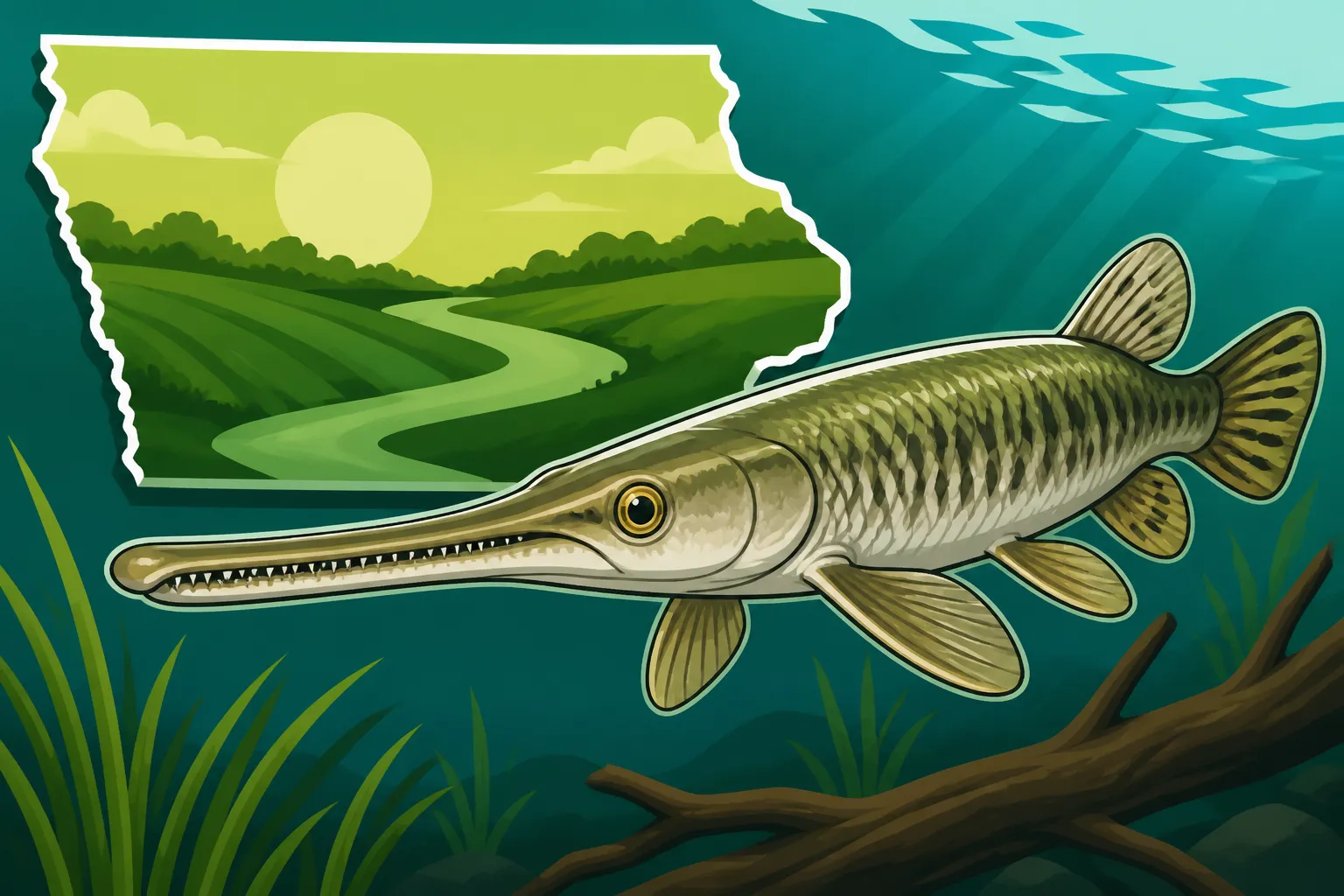
When you first see a Longnose Gar, its most striking feature is, predictably, its long, slender snout, which is filled with an impressive array of needle-sharp teeth. This isn't a small fish we're talking about; they can grow quite substantial, often reaching lengths of three to four feet, with some individuals pushing even longer. Their bodies are torpedo-shaped, covered in tough, diamond-shaped ganoid scales that are incredibly hard and interlocking, almost like armor. This ancient scale type is a testament to their long evolutionary history.
The coloration of a Longnose Gar typically ranges from olive-green or brownish on their backs, fading into silvery sides and a white belly. You'll also notice distinct dark spots on their fins and sometimes along their bodies, which helps them blend into their surroundings among submerged vegetation or logs. Unlike many other fish, their dorsal and anal fins are located far back on their bodies, close to their caudal (tail) fin, which gives them a powerful burst of speed when ambushing prey. If you're looking to learn more about the diverse aquatic life here, our Iowa Fish Species Guide is a great resource.
"Living Fossils" with Unique Adaptations
One of the coolest things about Longnose Gar is their status as "living fossils." Their lineage dates back millions of years, and their physical form hasn't changed drastically over eons. This isn't just a fun fact; it points to their incredible adaptability. They possess a unique, highly vascularized swim bladder that functions almost like a lung, allowing them to gulp air directly from the surface. This means they can survive in water with very low oxygen levels, conditions that would be lethal for most other fish.
Imagine a sweltering Iowa summer day, the water is warm, still, and the oxygen is depleted. While other fish might be struggling, the Longnose Gar can simply rise to the surface, take a gulp of air, and continue about its day. This adaptation makes them incredibly resilient and allows them to thrive in habitats where few other large predators can. It's a key reason why you might spot them slowly cruising near the surface in quiet backwaters, almost looking like a floating stick or log.
Longnose Gar Habitat and Distribution in Iowa
While you might not encounter a Longnose Gar on every fishing trip, they are surprisingly widespread in Iowa, particularly in specific types of water bodies. Their preference for certain conditions dictates where you're most likely to find these ancient predators.
Preferred Iowa Waterways
Longnose Gar are primarily found in slow-moving rivers, river backwaters, oxbow lakes, and the quieter, vegetated bays of larger reservoirs and natural lakes. They love areas with plenty of submerged vegetation, fallen trees, or other structures that provide cover for ambushing prey and camouflaging themselves. These areas often have softer bottoms and less current, which suits their hunting style.
You'll find strong populations of Longnose Gar throughout the Mississippi River and its various backwater lakes and sloughs that border Iowa. From the serene waters of Mississippi River Pool 9 Fishing in the north to the more southern stretches, these areas provide ideal conditions for gar. Additionally, major interior rivers like the Des Moines River, Cedar River, and Iowa River also hold good numbers of Longnose Gar, especially in their lower, slower-moving sections. For instance, if you're exploring Fishing the Des Moines River in Iowa, keep an eye out for them in the calmer pools.
Spotting Gar in Their Natural Environment
Spotting a Longnose Gar can be an experience in itself. Because of their air-breathing ability, you'll often see them break the surface to gulp air, especially during warmer months. They'll typically rise slowly, take a distinct "gulp," and then slowly submerge again. They can also be seen basking just below the surface in sunny, calm conditions, often holding perfectly still, looking like a piece of driftwood.
If you're fishing in a likely gar habitat, scanning the water for these subtle movements or stationary forms can be a fun challenge. They are incredibly patient predators, often waiting for an unsuspecting smaller fish to swim by before launching a lightning-fast strike. This unique behavior makes them a fascinating study for anyone interested in the wild side of Iowa's waters.
Fishing for Longnose Gar: A Unique Challenge
Catching a Longnose Gar isn't your everyday angling experience. It's a specialized pursuit that requires a different approach due to their unique anatomy and fighting style. Many anglers who specifically target gar do so for the thrill of the challenge and the chance to land a truly unique fish, rather than for table fare.
Gear and Techniques for Gar Anglers
The most significant challenge when fishing for Longnose Gar is their incredibly bony, hard mouths, which make traditional hooksets extremely difficult. A common technique to overcome this is using "rope lures" or "frayed nylon lures." These are essentially bundles of frayed nylon rope tied to a fishing line, often without a hook. The idea is that the gar's numerous, sharp teeth get tangled in the nylon fibers, allowing you to reel them in. Once landed, the gar can often be untangled and released unharmed. You can find various rope lure kits or materials to make your own on platforms like Amazon.
If you prefer using hooks, you'll need heavy-duty gear. Think strong, sharp trebles or large single hooks. Many anglers opt for live bait, like shiners or chubs, suspended under a bobber or fished on the bottom in slow-moving water. A steel leader is highly recommended, as their sharp teeth can easily cut through monofilament or fluorocarbon line. When one bites, a solid, sweeping hookset is critical, and even then, many hookups are missed.
The Fight and Handling
Once hooked, Longnose Gar are surprisingly powerful fighters, often making strong runs and spectacular aerial leaps. They are truly an exciting sport fish! However, landing and handling them requires caution. Their long, toothy snouts and armored bodies can be intimidating. A sturdy landing net, similar to what you might use for Best Landing Net for Catfish, can be helpful. A pair of long-nose pliers or a de-hooking tool is essential for safely removing hooks or untangling rope lures.
It's also a good idea to wear heavy-duty gloves if you plan on handling them directly. Their scales, while not sharp, are very abrasive. Many gar anglers practice catch and release, as their flesh, while edible, is often described as challenging to clean due to the hard scales, and the dark meat can have a stronger flavor. Remember to check Iowa Fishing Regulations Explained for any specific rules regarding gar.
Rod and Reel Choices
For targeting Longnose Gar, you'd want a medium-heavy to heavy action rod, usually around 7 feet long, paired with a reliable spinning or baitcasting reel spooled with strong, abrasion-resistant line. Braided line in the 20-50 pound test range is a popular choice for its sensitivity and strength, but as mentioned, always use a steel leader. A setup similar to what you'd use for larger species like Best Rod for Catfish Fishing would be a good starting point. You want something with enough backbone to handle a powerful fish and absorb those sudden, strong runs.
| Feature | Longnose Gar Characteristics | Angling Considerations |
|---|---|---|
| Appearance | Long, narrow, toothed snout; armored, elongated body; dark spots on fins; olive/brown back, silver sides. | Easy to identify; handle with care due to teeth. |
| Size | Typically 3-4 feet, can exceed; slender build. | Requires heavy-duty gear and a sturdy landing net. |
| Habitat | Slow-moving rivers, backwaters, oxbow lakes, vegetated bays. | Target calm, structured areas; often near surface. |
| Diet | Primarily smaller fish, sometimes crustaceans and insects. | Live bait (shiners, chubs) effective. |
| Key Adaptation | Air-breathing swim bladder; tolerates low-oxygen water. | Often seen gulping air at the surface, especially in warm weather. |
| Fight | Strong runs, acrobatic leaps. | Exciting sport fish; strong rod and reel recommended. |
| Mouth Anatomy | Bony, hard mouth; many small, sharp teeth. | Challenging hooksets; rope lures or strong, sharp hooks with steel leaders are key. |
The Ecological Role and Common Misconceptions of Longnose Gar
Longnose Gar are often misunderstood fish, sometimes unfairly labeled as "trash fish" or "nuisance species." However, they play a vital and beneficial role in Iowa's aquatic ecosystems. Understanding their place helps to appreciate these unique creatures.
Natural Predators and Ecosystem Balance
Longnose Gar are apex predators in their specific niches within Iowa's waterways. They primarily feed on smaller fish, often targeting slower, weaker, or less healthy individuals. By preying on these fish, gar help to control populations of forage fish, preventing overpopulation and promoting a healthier, more robust ecosystem. They are a natural part of the food web, maintaining balance and contributing to the overall health of the fish community.
Think of them as nature's clean-up crew, trimming down the less fit and ensuring that the stronger, faster fish have better resources. This isn't just theory; scientific studies consistently show that gar contribute to healthy fish populations rather than depleting them. When you consider the full Iowa Fishing Techniques Guide, you'll find that all species, including gar, have a role to play.
Dispelling Common Myths
One of the most common misconceptions about gar is that they decimate game fish populations. This belief often stems from seeing them in areas with abundant panfish or young game fish. However, research indicates that their diet is quite varied, and they are opportunistic feeders. They are much more likely to target readily available, slower-moving fish than healthy, fast-swimming game fish. Furthermore, their presence often indicates a healthy ecosystem with a diverse fish population.
Another myth is that they are dangerous to humans. While their teeth are sharp, gar are not aggressive towards people. Any injury would almost certainly be accidental, occurring during handling, not from an attack in the water. Respecting their wild nature and handling them carefully with appropriate tools, as you would any large, toothy fish, is always the best approach. If you're looking for information on specific protections for other species, like Lake Sturgeon Protection in Iowa, that's a whole different conversation.
Conservation and Future of Gar in Iowa
Currently, Longnose Gar populations in Iowa are generally stable and healthy. They are not typically subject to the same strict regulations or conservation efforts as some other species, simply because their numbers are robust and their habitats are widespread. However, like all fish, they benefit from clean water, healthy aquatic vegetation, and responsible angling practices.
Learning about fish like the Longnose Gar encourages a deeper appreciation for the rich biodiversity found in Iowa's waters. The next time you spot one gulping air or feel that distinctive tug on your line, remember you're interacting with a truly ancient and vital part of our natural heritage. For those interested in understanding the full spectrum of Iowa's aquatic life, our Iowa Fish Species Guide offers even more insights into what swims beneath the surface.
Disclaimer
This article is for general informational purposes only and does not constitute professional advice. Laws, prices and regulations vary by location and change over time. Consult a qualified professional for guidance on your specific situation.