Iowa Fish Species Guide
Ever stared out at a beautiful Iowa lake or river, rod in hand, and wondered what exactly might be biting beneath the surface? It's a common feeling. Iowa's waters hold a surprising diversity of fish, and knowing what species you're likely to encounter, and how to tell them apart, can make all the difference in your fishing success and enjoyment. This comprehensive guide will break down the rich tapestry of fish species found across the Hawkeye State, helping you become a more informed and successful angler.
The Abundant World of Iowa Fish Species
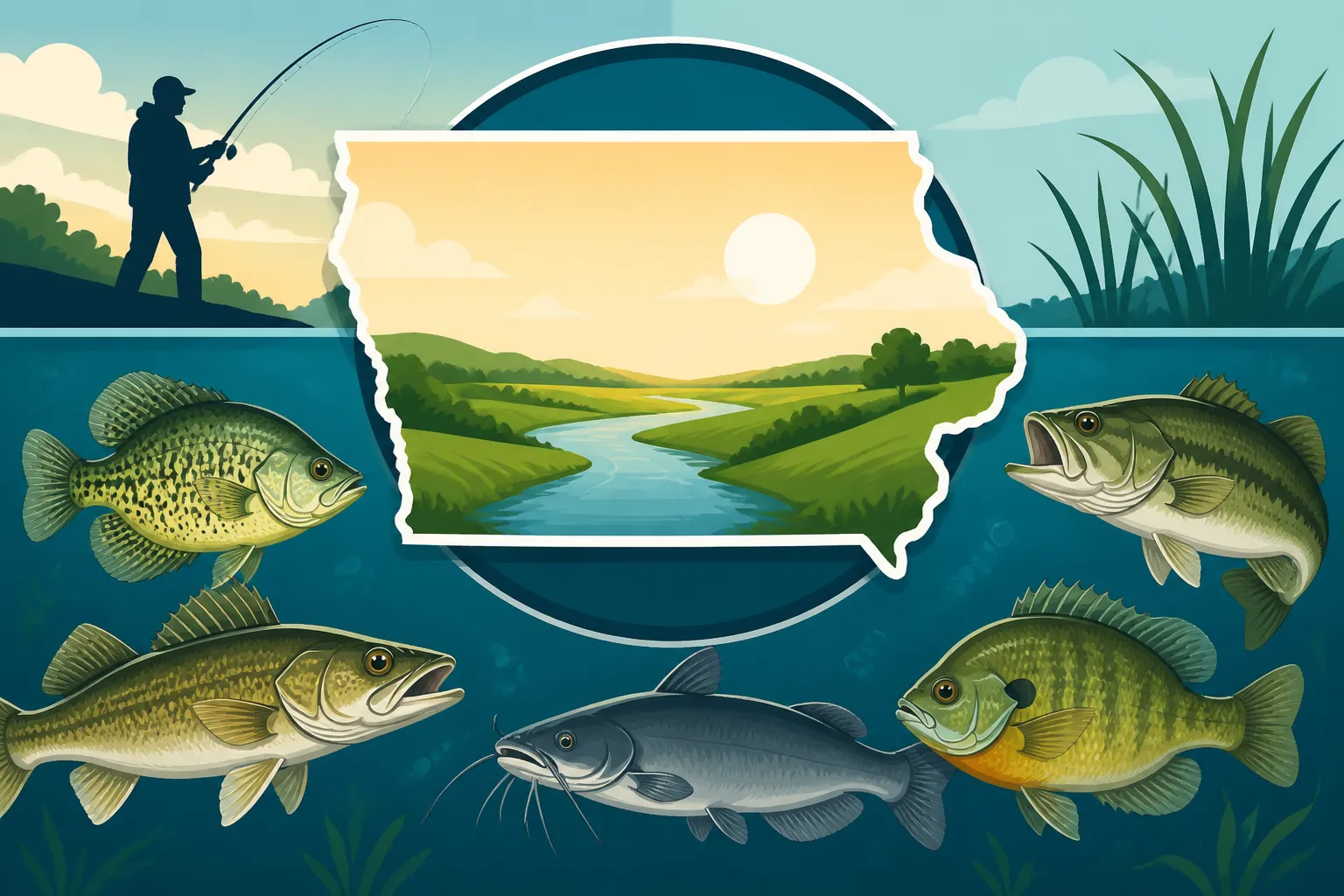
Iowa might be known for its cornfields, but beneath the agricultural landscape lies a vibrant network of rivers, lakes, and streams teeming with aquatic life. From the mighty Mississippi to serene farm ponds and spring-fed trout streams, each unique habitat supports a specific community of fish. Understanding these ecosystems and the species they host is the first step toward a more rewarding fishing experience. It's not just about casting a line; it's about connecting with the natural world around you.
Why Understanding Species Matters
You might think, "A fish is a fish, right?" But seasoned anglers know better. Different fish species behave in vastly different ways, have distinct diets, prefer certain water temperatures, and inhabit specific types of cover or structure. If you're targeting walleye but fishing techniques best suited for catfish, you're likely to end up frustrated. Knowing your target species allows you to select the right bait, tackle, and technique, dramatically increasing your chances of a successful outing. It also helps you understand Iowa Fishing Regulations Explained better, as limits and seasons vary widely by species.
Furthermore, being able to identify your catch is crucial for adhering to Iowa's fishing regulations, which often include specific length limits and daily bag limits for various species. Misidentifying a fish could lead to unintentional violations. For example, telling the difference between a sauger and a walleye can be tricky for newcomers, but the regulations for each can be very different. Developing this knowledge also deepens your appreciation for the local ecology and fosters a sense of responsibility toward conservation. When you understand the life cycle and habitat needs of a particular fish, you're more likely to engage in practices that ensure its populations thrive for future generations.
A Quick Look at Iowa's Aquatic Ecosystems
Iowa's diverse geography contributes directly to its variety of fish species. The state boasts three primary aquatic environments, each with its own characteristic fish populations. First, you have the large border rivers like the Mississippi and Missouri Rivers, which are essentially large, flowing ecosystems with a mix of current-loving species and those that prefer quieter backwaters. These rivers are home to robust populations of catfish, various rough fish, and migratory species. Then there are Iowa’s natural and man-made lakes, ranging from the deep, clear waters of the Iowa Great Lakes to sprawling flood control reservoirs like Rathbun Lake or Saylorville. These lakes often hold significant populations of walleye, bass, crappie, and northern pike.
Finally, there are the coldwater trout streams primarily found in the northeastern part of the state. These unique, spring-fed streams maintain the cool, oxygen-rich water that trout require to survive and thrive. Beyond these main categories, countless smaller rivers, creeks, and private ponds dot the landscape, offering more intimate fishing opportunities. Private ponds, especially, are often stocked with largemouth bass and bluegill, providing excellent fishing closer to home. Each of these environments presents different challenges and rewards for the angler, making Iowa a truly versatile fishing destination.
Iowa's Most Popular Game Fish
When Iowans talk about fishing, a few species almost always come up in conversation. These are the "glamour fish," the ones that draw crowds and inspire countless fishing tales. They're popular for a reason: they're fun to catch, often put up a good fight, and many are absolutely delicious on the dinner table. If you're new to fishing in Iowa, these are the species you'll likely hear about most often and perhaps want to target first.
Walleye: The Golden Catch of Iowa
Ah, the walleye. This fish is practically royalty in Iowa fishing circles, especially in lakes like Clear Lake and the Iowa Great Lakes, and certainly on the major rivers. Known for their delicious white, flaky meat and their elusive, nocturnal habits, walleye are a prized catch. They are easily identified by their large, glassy eyes (adapted for low light conditions), sharp teeth, and a dark spot on the dorsal fin. Walleye typically prefer cooler, deeper water, especially during the day, often relating to structure like rock piles, humps, or submerged timber.
Successful Walleye Fishing in Iowa often involves fishing during twilight hours, using techniques like trolling with crankbaits, drifting with live bait rigs (like a crawler harness with nightcrawlers), or jigging spoons and plastics near the bottom. They can be finicky eaters, which only adds to their allure. Many anglers spend years honing their skills to consistently catch these wary predators. If you're after a challenging and rewarding fishing experience, targeting walleye is a quintessential Iowa pursuit. Remember to check Walleye Season and Size Limits before heading out!
Largemouth and Smallmouth Bass: Iowa's Top Fighters
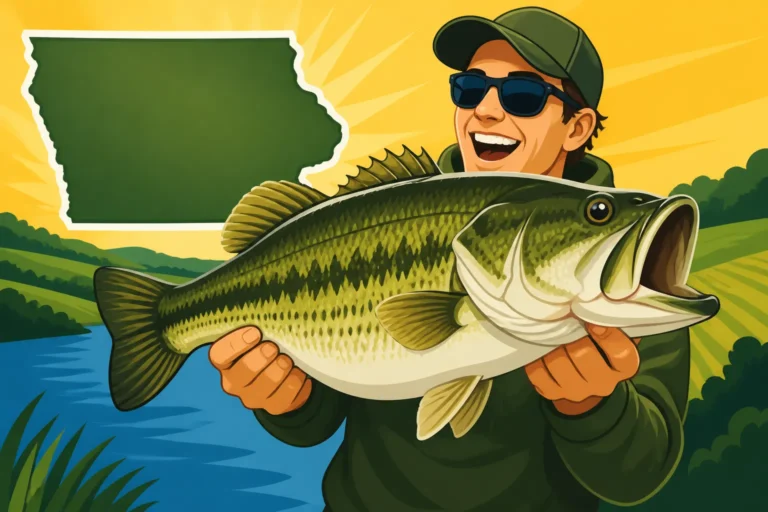
When it comes to sheer fighting spirit and aggressive strikes, the largemouth and smallmouth bass take center stage. These two species, while both "bass," have distinct preferences and characteristics. Largemouth bass are the classic pond and lake dwellers, easily recognized by the jaw that extends past the eye. They love heavy cover: lily pads, submerged timber, weed lines, and docks. They ambush their prey, and nothing beats the thrill of a topwater strike from a big largemouth on a calm summer evening. For more specific techniques, check out our guide on Largemouth Bass Fishing in Iowa.
Smallmouth bass, on the other hand, are streamlined athletes, favoring cooler, clearer water with rocky bottoms and current. You'll find them predominantly in Iowa's larger rivers, like the Mississippi, Des Moines, and Cedar Rivers, as well as some of the deeper, rockier natural lakes. Their jaw doesn't extend past the eye, and they have vertical bars along their sides, giving them a distinct "bronze back" appearance. Smallmouth fight hard, often jumping clear of the water, making them a favorite among river anglers. Both bass species respond well to a variety of lures, from soft plastics and jigs to crankbaits and spinnerbaits, often found on Amazon or your local tackle shop. Getting to know the Largemouth vs Smallmouth Bass Differences can significantly improve your targeted efforts.
Channel Catfish: The River Bottom Brawler
If you're looking for a fish that's plentiful, relatively easy to catch, and puts up a surprisingly strong fight, look no further than the channel catfish. These whiskered beauties are found in virtually every river, lake, and even many farm ponds across Iowa. They're omnivores, known for their keen sense of smell, which they use to sniff out food along the bottom. Channel cats are characterized by their smooth, scaleless skin, deeply forked tail, and barbels (whiskers) around their mouth. For a deep dive into catching them, see our Channel Catfish Fishing in Iowa guide.
Catfish fishing is often a relaxed affair, perfect for family outings or a peaceful evening by the river. Common baits include cut bait, chicken livers, stink baits, and even corn or hot dogs. They're particularly active during warmer months and often bite well into the night. While large channel cats can be a challenge to land, even smaller ones provide plenty of action. Beyond the fight, channel catfish are incredibly popular table fare, especially when filleted and fried. It’s a great feeling to catch your own dinner, and channel cats rarely disappoint in that department.
Panfish Perfection: Crappie, Bluegill, and Perch
Sometimes, the best fishing isn't about landing a monster, but about consistent action and a plentiful harvest of delicious, smaller fish. That's where panfish shine! These accessible species are perfect for anglers of all ages and skill levels, providing hours of entertainment and often filling the cooler. Iowa is blessed with excellent panfish populations, making them a staple for many anglers.
Crappie: The Delicious Slab-Sides
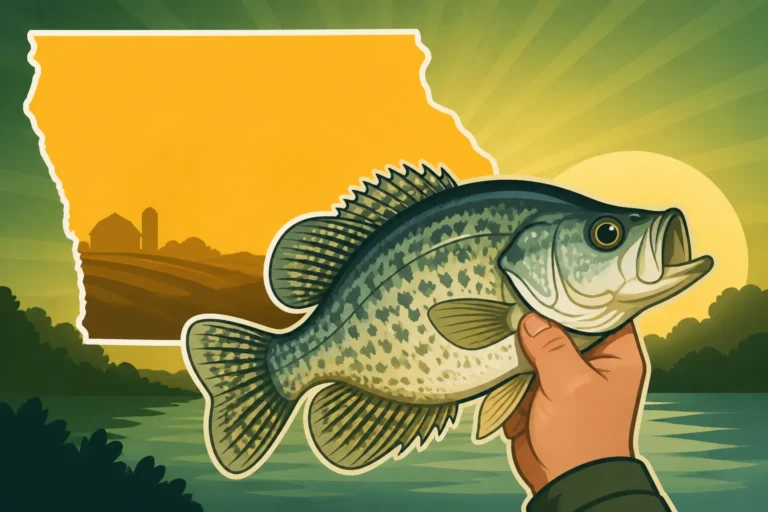
Crappie are arguably the most sought-after panfish in Iowa, and for good reason. They are plentiful, relatively easy to catch, and, as their nickname "slab-sides" suggests, they have a lot of tasty meat for their size. Iowa is home to both black crappie and white crappie, though they are often found together and behave similarly. Black crappie tend to have more irregular, speckled patterns, while white crappie have distinct vertical bars. Both are schooling fish, meaning if you find one, you've likely found a whole school! Read more about Crappie Fishing in Iowa for best practices.
Crappie love structure, congregating around submerged brush piles, fallen trees, dock pilings, and bridge abutments. They are particularly active during their spring spawn when they move into shallower water, making them easier to target. Common techniques include jigging small jigs (often tipped with a minnow or soft plastic body), using slip bobbers with live minnows, or even slow trolling small crankbaits. Finding a good crappie hole can lead to a banner day, and the excitement of pulling in fish after fish is incredibly addictive. Many anglers use affordable ultralight rods and reels, easily found on Amazon, for maximum fun when crappie fishing.
Bluegill and Other Sunfish: Family Favorites
Bluegill are the quintessential beginner's fish, the first species many of us caught as kids. They're abundant, eager biters, and found in almost every body of water in Iowa, from large lakes to small farm ponds. They're easily identifiable by their small mouth, deep body, and the distinct black "ear flap" on their gill cover. Bluegill are part of a larger family of sunfish, which also includes species like green sunfish, pumpkinseed, and hybrid sunfish (a cross between two sunfish species, often stocked for their aggressive growth). They are often mentioned alongside crappie as excellent panfish targets; to understand their differences, check out Crappie vs Bluegill Identification.
Fishing for bluegill is simple and incredibly fun. A small hook, a bit of bobber, a worm or a piece of corn, and you're in business. They're often found around weed beds, submerged logs, and shoreline cover, especially in relatively shallow water. Like crappie, bluegill are schooling fish, so if you catch one, keep fishing that spot. Beyond their accessibility, bluegill are a fantastic eating fish, particularly when filleted. They offer continuous action, making them perfect for introducing children to the joys of fishing and creating lasting family memories.
Yellow Bass and Perch: Schooling Fun
While not as widespread as crappie or bluegill, yellow bass and perch offer exciting schooling action, particularly in specific Iowa lakes. Yellow bass are primarily found in Clear Lake, where they are incredibly abundant. They are smaller than white bass and have distinct unbroken lateral stripes along their sides. They are notorious for schooling tightly and aggressively hitting anything that moves when they're feeding. When you find a school of yellow bass, the action can be non-stop, with anglers often catching them two at a time on multiple-hook rigs.
Perch, specifically yellow perch, are a popular target in the Iowa Great Lakes, especially during the ice fishing season. They have a distinctive striped pattern with dark vertical bars on a yellowish-green body. Perch are known for their delicate, delicious fillets and can be quite numerous in their preferred habitats. Like yellow bass, they are schooling fish, and a hot perch bite can be incredibly fast-paced. Small jigs tipped with waxworms or minnows are typically the go-to baits. Both yellow bass and perch offer a fantastic opportunity for anglers to fill a cooler with tasty fish, making them a regional delight for those in the know.
Northern Predators: Pike and Muskie
For anglers seeking a true challenge and the thrill of battling a large, toothy predator, Iowa's northern pike and muskie offer an adrenaline rush like no other. These fish are less about filling a cooler and more about the hunt, the explosive strike, and the sheer power they bring to the fight. They are apex predators in their respective habitats and demand respect and specialized tackle.
Northern Pike: The Water Wolf
Northern pike are aptly named "water wolves" for their voracious appetites and predatory nature. They are easily recognized by their long, slender bodies, duckbill-shaped mouth filled with razor-sharp teeth, and a distinctive pattern of light spots on a dark green body. In Iowa, you'll find pike predominantly in the natural lakes of northern Iowa, such as the Iowa Great Lakes, and in some of the larger river systems. They prefer cooler water and often lurk in dense weed beds, around fallen timber, or along sharp drop-offs, waiting to ambush unsuspecting prey. Our guide on Northern Pike Fishing in Iowa provides more details.
Catching a northern pike can be an exhilarating experience. They hit hard and fight dirty, often making powerful runs and violent head shakes. Due to their sharp teeth, heavy monofilament or fluorocarbon leaders, or even wire leaders, are essential to prevent bite-offs. Large spoons, spinnerbaits, crankbaits, and even large dead baits fished under a bobber are effective presentations. While some anglers keep pike for their firm, white meat (which can be tricky to fillet due to Y-bones), many prefer to release these magnificent predators to grow even larger and fight another day.
Muskie: The Fish of 10,000 Casts
The muskie, or muskellunge, truly earns its nickname: "the fish of 10,000 casts." This elusive giant is the ultimate freshwater challenge for many anglers. Muskies are a larger, more powerful relative of the northern pike, distinguished by their fully scaled cheeks and gill covers (pike have scales only on the upper half of their gill covers). They are primarily found in a few specific Iowa lakes, including some of the Iowa Great Lakes and Clear Lake, as well as segments of the Mississippi River. Targeting muskie is not for the faint of heart; it requires dedication, heavy-duty tackle, and immense patience. Learn more about Muskie Fishing in Iowa for serious pursuit.
Muskie anglers use massive lures – huge bucktails, crankbaits, glide baits, and soft plastics – often casting for hours on end without a single bite. When a muskie does strike, it's usually violent and unforgettable. These fish grow to impressive sizes, with trophy specimens often exceeding 40 inches and weighing many pounds. The fight is legendary, characterized by powerful runs, acrobatic jumps, and stubborn resistance. Most muskie fishing in Iowa is catch-and-release, emphasizing conservation of these magnificent, slow-growing fish. A large landing net and long-nosed pliers (like those available on Amazon) are absolutely essential for safe handling and release.
Iowa's Unique Trout Program
While Iowa isn't typically thought of as a trout fishing destination, the state manages a fantastic and often overlooked trout program, primarily in the scenic, rugged terrain of northeast Iowa. This unique opportunity allows anglers to experience coldwater stream fishing right here in the heartland.
Rainbow and Brown Trout: Coldwater Gems
Iowa's trout streams are predominantly stocked with rainbow trout, known for their vibrant iridescent stripe and their acrobatic fights when hooked. Rainbows are a popular species for stocking programs worldwide due to their hardiness and willingness to strike a variety of baits and lures. You'll also find brown trout in some Iowa streams. Brown trout are generally more elusive and wary than rainbows, often preferring to hide under undercut banks or around heavy cover. They are known for their beautiful spotted patterns and often grow to larger sizes, making them a prized catch for experienced trout anglers. For detailed techniques, refer to Trout Fishing Techniques for Iowa Streams.
These coldwater gems thrive in the cool, clear, oxygen-rich waters of spring-fed streams, which are abundant in the "driftless area" of northeast Iowa. Fishing in these picturesque valleys, often surrounded by towering bluffs and dense forests, offers a completely different experience than lake or river fishing. The challenge lies in stealthy approaches, precise casting, and understanding how trout react to current and cover. The thrill of seeing a trout rise to a fly or dart out from behind a rock to hit a spinner is truly special.
The Stocking Program and How It Works
The presence of a vibrant trout fishery in Iowa is largely thanks to an extensive stocking program. Because most Iowa streams don't naturally support wild trout populations (due to water temperature fluctuations and habitat limitations), the Iowa Department of Natural Resources (DNR) regularly stocks these designated trout streams. This means that year-round, anglers have opportunities to catch freshly stocked fish. Fish are raised in state hatcheries and then transported and released into public access points along numerous streams. This system ensures a consistent and accessible trout fishing experience for Iowans and visitors alike.
Anglers targeting trout in these streams typically need a standard Iowa fishing license, plus an additional trout fee. This fee directly supports the stocking program and habitat improvement efforts. You can find more details in our Iowa Trout Fishing Fee and Stamp Guide. The DNR provides a detailed schedule of trout stockings, which can be a valuable tool for planning a trip. Whether you prefer fly fishing with delicate nymphs and dry flies, or spin fishing with small inline spinners, jigs, or even corn and worms, Iowa's trout streams offer a unique and beautiful angling adventure.
Unsung Heroes and Bottom Dwellers
Beyond the most popular game fish, Iowa's waters are home to a fascinating array of other species. Some are incredibly important ecologically, others provide a different kind of angling challenge, and a few are even ancient relics from a bygone era. These fish contribute to the rich biodiversity of Iowa's aquatic environments.
Flathead Catfish and Bullheads: More Whiskered Wonders
While channel catfish get most of the attention, Iowa's rivers also harbor the formidable flathead catfish. These aren't your typical channel cats; flatheads are true river monsters, known for their enormous size, broad, flattened heads, and shovel-like lower jaw. Unlike channel cats, flatheads are strict predators, preferring live bait like bluegills, sunfish, or large shiners. They typically reside in deep holes, logjams, and heavy cover in larger rivers like the Mississippi, Missouri, and Des Moines. Landing a trophy flathead is a grueling battle, often requiring heavy gear and immense patience, usually at night. They are a species that will test any angler's strength and endurance.
Then there are bullheads – the smaller, chunkier cousins of the channel catfish. Iowa has black, brown, and yellow bullheads, and they are incredibly widespread and abundant, especially in ponds and slow-moving streams. They are easily caught on worms, corn, or just about anything edible, making them fantastic for kids or anyone looking for constant action. While smaller than other catfish, bullheads are delicious, with firm, flaky meat. Many anglers dismiss them as "trash fish," but a mess of fried bullheads is a true Iowa delicacy. They’re a reliable option when other species are finicky.
Sturgeon, Paddlefish, and Freshwater Drum: Riverine Relics
Some of Iowa's river inhabitants seem to have swum straight out of prehistory. Sturgeon, particularly the shovelnose sturgeon, are found in Iowa's larger rivers. These ancient fish have a distinctive shark-like tail, bony plates (scutes) instead of scales, and a long, pointed snout. While lake sturgeon are a protected species and must be immediately released, shovelnose sturgeon can be legally harvested in certain areas with specific regulations. They are bottom feeders, often caught incidentally by anglers targeting catfish, though some specifically target them using specialized rigs.
The paddlefish, another truly unique species, gets its name from its enormous, paddle-shaped snout, which it uses to filter plankton from the water. These prehistoric giants can grow to impressive sizes and are found in the Mississippi and Missouri Rivers. Paddlefish are typically harvested by snagging, a specialized technique permitted only during certain seasons and in specific areas. They are a truly remarkable fish, representing a living link to the distant past. Finally, the freshwater drum, also known as sheepshead, is a common inhabitant of Iowa's large rivers and lakes. They are powerful fighters, often striking aggressively, and are identifiable by their tall dorsal fin and silvery, deep bodies. While not as prized as walleye, they offer great sport and can be good eating when cleaned properly.
| Species | Primary Habitat | Key Identification | Typical Behavior | Notes |
|---|---|---|---|---|
| Walleye | Lakes, Major Rivers | Large, glassy eyes; dark spot on dorsal fin | Low-light feeders; school | Prized table fare, challenging |
| Largemouth Bass | Ponds, Lakes, Slow Rivers | Jaw extends past eye; dark lateral stripe | Ambush predator; loves heavy cover | Aggressive fighter |
| Smallmouth Bass | Clear Rivers, Rocky Lakes | Jaw does not extend past eye; vertical bars | Current dweller; strong fighter, jumps | Known as "bronze backs" |
| Channel Catfish | Rivers, Lakes, Ponds | Forked tail; smooth skin; barbels (whiskers) | Bottom feeder; excellent sense of smell | Abundant, great eating |
| Crappie (Black/White) | Lakes, Rivers | Deep body, thin profile; speckled (black) or barred (white) | Schooling fish; loves structure | Delicious, popular panfish |
| Bluegill | Ponds, Lakes, Slow Rivers | Small mouth; black "ear flap" | Abundant, eager biters; schooling | Perfect for kids, good eating |
| Northern Pike | Northern Lakes, Rivers | Long body, duckbill mouth; light spots | Ambush predator; sharp teeth | Requires strong leaders, good fight |
| Muskie | Select Lakes, Mississippi | Large, elongated body; fully scaled cheeks | Top predator; elusive, powerful | "Fish of 10,000 casts," mostly C&R |
| Rainbow Trout | Northeast Trout Streams | Iridescent stripe; small spots | Coldwater fish, stocked frequently | Beautiful, acrobatic |
| Brown Trout | Northeast Trout Streams | Dark spots with red halos; more wary | Coldwater fish, more elusive | Often larger than rainbows |
| Flathead Catfish | Large Rivers | Flat head; non-forked tail; broad mouth | Strict predator; nocturnal | Trophy fish, powerful |
| Bullhead | Ponds, Rivers | Rounded tail; stout body; small size | Bottom feeder; very hardy | Abundant, good eating, easy to catch |
| Shovelnose Sturgeon | Major Rivers | Shark-like tail; bony scutes; pointed snout | Bottom feeder; ancient | Unique, protected species in some areas |
| Paddlefish | Mississippi, Missouri Rivers | Huge, paddle-shaped snout; filter feeder | Ancient, plankton feeder; snagged | Unique, prehistoric, specialized season |
| Freshwater Drum | Lakes, Major Rivers | Deep, silvery body; tall dorsal fin | Bottom feeder; strong fighter | Often called Sheepshead, good sport |
Carp and Invasive Species: Understanding the Ecosystem
Iowa's waters also contain various carp species, including common carp, grass carp, and several species of Asian carp (silver, bighead, and grass carp). Common carp are widely distributed and can grow to very large sizes, offering a powerful fight for those who target them. While often overlooked by sport anglers, carp fishing has a dedicated following, and they are excellent table fare for many cultures. They are adaptable bottom feeders, often found in shallow, muddy areas.
However, the Asian carp species pose a significant ecological threat. Silver carp and bighead carp are filter feeders that can outcompete native species for food resources, while grass carp consume vast amounts of aquatic vegetation. Silver carp are also known for their startling habit of leaping high out of the water when startled by boat motors, posing a physical danger to boaters. The Iowa DNR actively monitors and manages populations of these invasive species. It's important for anglers to be able to identify these fish and understand the regulations regarding their harvest and transport, as control efforts often encourage their removal. Responsible fishing means being aware of these environmental challenges.
Identifying Your Catch and Conservation
Becoming a knowledgeable angler in Iowa involves more than just knowing what fish are out there; it's about confidently identifying your catch and understanding your role in maintaining healthy fish populations for the future. This includes knowing when to keep a fish and when to release it, and how to do both responsibly.
Key Identification Tips
Accurate fish identification is a skill that comes with practice, but a few key features can help you distinguish between similar-looking species. First, pay attention to the mouth: Does the jaw extend past the eye (like a largemouth bass) or not (like a smallmouth)? Does it have barbels (catfish)? Next, look at the fins: Is the tail deeply forked (channel catfish) or rounded (bullhead)? Are there any distinct spots or patterns on the dorsal fin (walleye)? Consider the body shape: Is it long and slender (pike) or deep and thin (crappie)? Many anglers find it helpful to carry a pocket-sized fish identification guide or use a fishing app on their phone for quick reference. Even a quick search on Amazon for "Iowa fish identification guide" can yield excellent resources to keep in your tackle box.
When distinguishing between closely related species like walleye and sauger, pay attention to specific details: walleye typically have a white tip on the lower lobe of their tail fin and a dark spot on their dorsal fin, which sauger lack. Sauger, on the other hand, often have distinct dark spots or blotches on their sides and uniformly spotted dorsal fins. For bass, the key is the jawline relative to the eye and the presence or absence of a lateral line stripe. Knowing these subtle differences is not just for bragging rights; it’s essential for complying with Iowa Fishing Daily Bag Limits Guide and size restrictions that vary by species.
Catch and Release vs. Keeping Your Limit
Iowa's fishing regulations are designed to ensure sustainable fish populations. For many species, especially popular game fish like walleye, bass, and trout, there are specific daily bag limits and length restrictions. These limits ensure that enough fish remain in the population to reproduce and maintain healthy numbers. Anglers have a personal responsibility to know and abide by these rules.
Deciding whether to keep a fish or release it is often a personal choice within these regulations. If you plan to keep fish for consumption, only take what you will eat and process it properly to avoid waste. For larger, older fish, particularly trophy specimens of muskie, bass, or walleye, many anglers opt for catch and release. These larger fish are important breeders and contribute significantly to the genetic health of the fishery. When practicing catch and release, handle the fish carefully, minimize its time out of water, and use proper de-hooking tools to reduce stress and increase its chances of survival. Knowing Iowa Fishing Season Dates and Limits is crucial for both keeping and releasing fish legally.
Protecting Iowa's Aquatic Future
As anglers, we are stewards of Iowa's aquatic resources. Our actions today directly impact the fishing opportunities of tomorrow. Beyond understanding fish species and regulations, responsible angling means practicing good conservation habits. This includes properly disposing of all trash, never introducing non-native species into a body of water, and cleaning your boat and gear thoroughly between waterways to prevent the spread of aquatic invasive species.
Participating in local conservation efforts, supporting organizations dedicated to habitat improvement, or even just sharing your knowledge with new anglers, all contribute to a healthier environment. When you truly understand the fish you're pursuing – their habits, their needs, and their role in the ecosystem – you develop a deeper connection to the sport and a stronger commitment to protecting it. So, grab your gear, head to your favorite Iowa waterway, and enjoy the incredible diversity of fish species that call our state home.
Disclaimer
This article is for general informational purposes only and does not constitute professional advice. Laws, prices and regulations vary by location and change over time. Consult a qualified professional for guidance on your specific situation.