Crappie Fishing in Iowa
Oh, the elusive crappie! Many anglers in Iowa know the unique thrill and challenge of chasing these panfish, only to find them frustratingly shy some days or absolutely stacked up the next. It can feel like a puzzle trying to pinpoint their location and what they're biting on, especially with Iowa's diverse waters. This comprehensive guide is here to unravel that mystery, providing you with everything you need to know to become a crappie master in the Hawkeye State, from understanding their behavior to mastering the best techniques and gear.
Understanding Iowa's Crappie Species and Habitats
Crappie are among the most popular panfish in Iowa, and for good reason! They offer a fantastic fight on light tackle and are absolutely delicious on the dinner plate. But before you can start reeling them in, it helps to understand a bit about the different types of crappie you might encounter and where they prefer to hang out. It's not just about tossing a line in the water; it's about knowing your quarry.
Black Crappie vs. White Crappie: Key Differences
While both black crappie and white crappie are widely distributed throughout Iowa, they do have some distinct differences that can influence how and where you target them. Many anglers don't realize there's a difference until they look closely, but these variations can be key to unlocking better success. For a deeper dive into their characteristics, check out our guide on Crappie Species Found in Iowa.
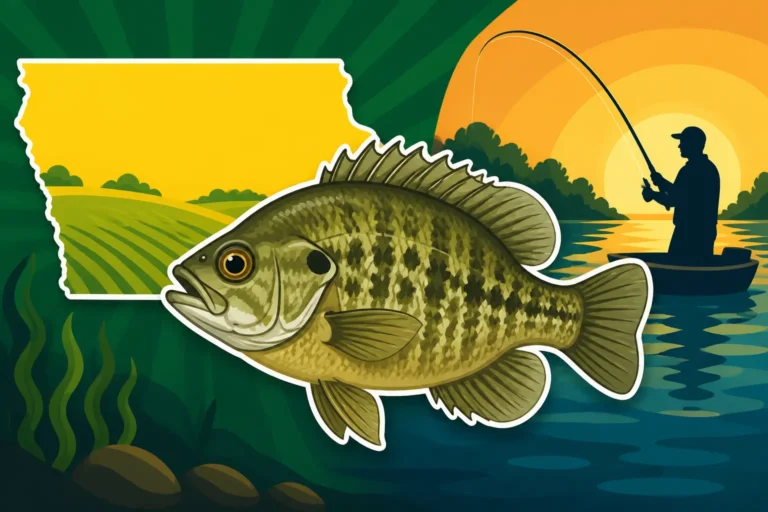
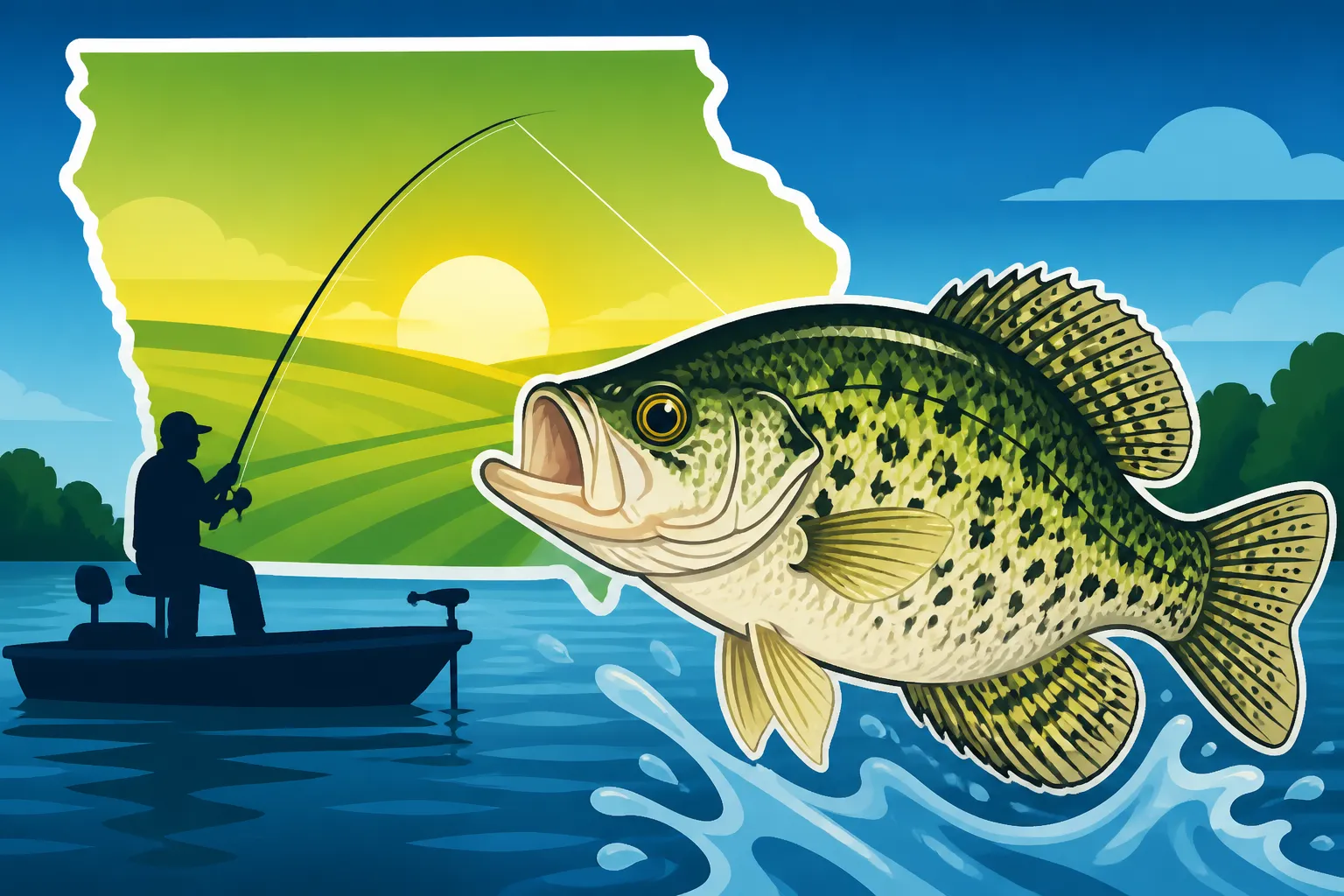
Black crappie, scientifically known as Pomoxis nigromaculatus, typically have a darker, more mottled appearance with irregular black spots scattered across their silvery-green bodies. A key identifier is the number of dorsal spines: black crappie usually have 7 or 8. They tend to prefer clearer, cooler waters with more vegetation and submerged cover, often found in natural lakes, oxbows, and less turbid reservoirs. These fish are generally a bit more "chunky" for their length compared to their white crappie cousins.
White crappie, or Pomoxis annularis, often have a lighter, more silvery body with distinct vertical bars or stripes along their sides, although these can fade depending on water clarity and the fish's mood. They usually have 5 or 6 dorsal spines. White crappie are more tolerant of turbid, warmer waters and are frequently found in larger rivers, shallower impoundments, and areas with more current. They tend to grow a bit longer than black crappie, though they might appear more slender. Understanding these subtle differences, as detailed in Black Crappie vs White Crappie in Iowa, can help you select the right waters to fish.
| Feature | Black Crappie | White Crappie |
|---|---|---|
| Appearance | Darker, mottled pattern, irregular black spots | Lighter, silvery, 6-9 distinct vertical bars |
| Dorsal Spines | 7-8 spines | 5-6 spines |
| Preferred Water | Clearer, cooler, vegetated, less turbid | More tolerant of turbidity, warmer, some current |
| Body Shape | Generally deeper, more "chunky" for length | Often more elongated, "slender" for length |
| Habitat | Natural lakes, oxbows, clearer reservoirs | Large rivers, shallower impoundments |
Preferred Habitats and Structure
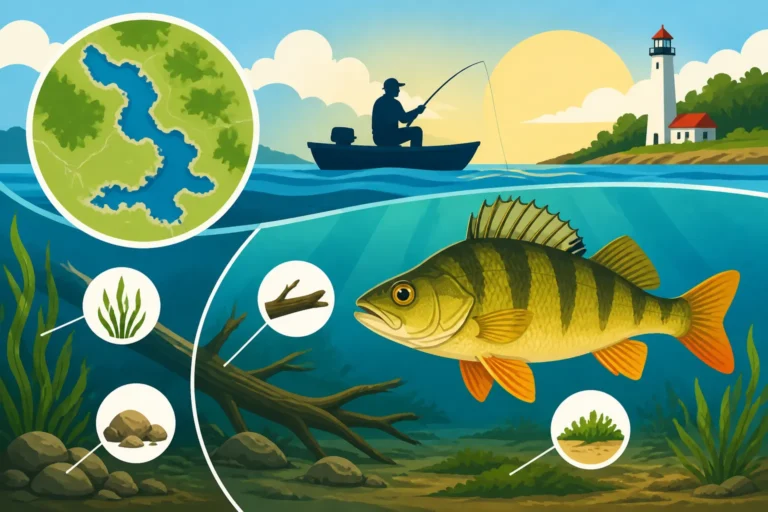
Both species of crappie are highly associated with structure, which is a fancy way of saying they love to hide around things in the water. This could be anything from fallen trees and submerged brush piles to docks, bridge pilings, and even weed beds. Crappie are ambush predators, and these structures provide both cover from larger predators and prime real estate for ambushing smaller baitfish. The type of structure can vary greatly depending on the body of water.
In natural lakes and larger reservoirs, you'll often find crappie congregating around significant submerged features. Think about old creek channels, drop-offs, humps, and artificial fish habitats that have been placed by the Iowa Department of Natural Resources (DNR). These deep-water structures offer thermal refuge in summer and stable environments in winter. In shallower sections, look for standing timber, brush piles near points, or the shady side of docks and pontoon boats, especially during the warmer months and spring.
River systems, like the mighty Mississippi, present a different challenge. Here, crappie often relate to slower current areas, eddies, wing dams, and barge tie-offs. Submerged log jams and brushy shorelines can be crappie magnets. In the smaller rivers and streams across Iowa, look for deeper holes, undercut banks, and fallen trees that create current breaks. These areas provide the perfect sanctuary from strong currents while offering feeding opportunities. Recognizing these patterns is key to consistently finding fish.
Crappie Life Cycle and Spawning Behavior
Understanding the crappie's life cycle, particularly their spawning habits, is incredibly helpful for timing your fishing trips. Crappie are prolific spawners, and their drive to reproduce creates some of the most exciting fishing opportunities of the year. It's often during the pre-spawn and spawn that they become most accessible to anglers, moving into shallower waters.
As spring arrives and water temperatures begin to climb, typically into the high 50s and low 60s Fahrenheit (around 12-17°C), crappie move from their deeper wintering grounds to shallower, protected areas to spawn. This pre-spawn migration sees them staging in slightly deeper water adjacent to their eventual spawning grounds, gorging themselves on baitfish to build energy. This period is a prime time for anglers, as they are actively feeding and predictable in their movements.
Once water temperatures are consistently in the mid-60s (around 18-20°C), crappie begin to spawn. Both black and white crappie build circular nests in relatively shallow water (1-8 feet deep), often near brush, submerged vegetation, or other cover that protects their eggs. The males guard the nests and eggs until they hatch. During this time, crappie can be very aggressive, making them easier to catch. After the spawn, they gradually retreat back to deeper water, resuming their normal feeding patterns, though often more scattered until cooler fall temperatures bring them back to schooling behavior. For more on seasonal patterns, check out Post-Spawn Crappie Patterns in Iowa.
Best Lakes and Rivers for Crappie Fishing in Iowa
Iowa might be known as a corn and hog state, but it's also a fantastic destination for crappie fishing! From massive flood control reservoirs to the border rivers and smaller community ponds, there's a crappie hotspot waiting for every angler. Knowing where to start is half the battle, and some waters just consistently produce better than others.
Premier Crappie Lakes: Rathbun, Clear Lake, and the Iowa Great Lakes
When it comes to top-tier crappie fishing in Iowa, certain lakes stand out as true champions, drawing anglers from all corners of the state and beyond. These waters are managed carefully and consistently deliver quality crappie populations. You'll find yourself making repeat trips once you experience the action they offer.
Rathbun Lake, located in south-central Iowa, is often hailed as the "Crappie Capital of Iowa" and for very good reason. This massive reservoir consistently produces both high numbers and trophy-sized crappie. Its abundance of standing timber, brush piles, and submerged creek channels provides ideal habitat for both black and white crappie. Anglers here often target crappie around the standing timber in the lake's upper reaches, as well as the numerous artificial brush piles scattered throughout. If you're looking for Rathbun Lake Crappie Hotspots, you'll want to explore the many arms and coves, especially in spring and fall.
Clear Lake, in north-central Iowa, is another fantastic crappie destination, particularly known for its large black crappie. While it doesn't have the vast standing timber of Rathbun, Clear Lake offers extensive weed beds, rock reefs, and numerous docks that attract crappie. Anglers often find success working jigs and minnows around the weed lines and beneath docks, especially during the spring and early summer. Its natural beauty combined with excellent fishing makes it a popular spot for Clear Lake Panfish and Crappie Spots.
The Iowa Great Lakes region, including West Okoboji, East Okoboji, and Spirit Lake, offers diverse crappie fishing opportunities. Spirit Lake and East Okoboji tend to be more productive for crappie, with Spirit Lake offering excellent black crappie fishing around its extensive weed beds, submerged timber, and deep points. West Okoboji, being a deep, clear lake, holds crappie but they can be more challenging to locate, often suspending over deep structure. These lakes are beautiful and provide an incredible backdrop for a fishing trip, with plenty of public access.
River Systems: Mississippi and Des Moines River Opportunities
Don't overlook Iowa's major river systems for incredible crappie action. Rivers present a different challenge than lakes but can be incredibly rewarding, often holding large populations of white crappie due to their tolerance for more turbid, flowing water. Patience and understanding river currents are key here.
The Mississippi River, forming Iowa's entire eastern border, is an absolute crappie powerhouse. Its vast network of backwaters, sloughs, wing dams, and current breaks provides an endless array of crappie habitat. Anglers targeting crappie on the Mississippi often focus on quiet backwaters with submerged timber, lily pads, or brush piles, especially during periods of stable water levels. During higher water, crappie will move into flooded vegetation along the banks. Identifying these slack water areas adjacent to main river currents is crucial. The river's diverse structure allows for various techniques, from vertical jigging around wood to slow trolling through backwater channels.
The Des Moines River, as it winds its way through the state, also offers good crappie fishing, particularly in its slower sections and oxbow lakes. Below dams and in deeper holes, crappie will congregate, especially when baitfish are pushed into these areas. Look for fallen trees and brushy banks that provide current breaks and cover. While not as famous for crappie as the Mississippi or Rathbun, the Des Moines River can be a fantastic local option, offering good numbers of crappie for those willing to explore its meandering course. Often, these spots require a bit of local knowledge or keen observation to find.
Hidden Gems: Community Ponds and Smaller Reservoirs
Beyond the big names, Iowa is dotted with countless smaller community ponds, county lakes, and smaller reservoirs that can be crappie goldmines, especially for a quick fishing trip or for introducing new anglers to the sport. These waters might not produce state records, but they often hold healthy populations of crappie that are eager to bite.
Many local parks and conservation areas manage smaller impoundments specifically for panfish. These ponds are often stocked regularly and provide easily accessible shore fishing opportunities. Crappie in these waters will relate heavily to any available cover: docks, fallen trees, brush piles, and sometimes even aeration systems. They are excellent places to practice your skills with light tackle and often provide consistent action, especially in spring and fall. Always check local regulations, as some community ponds have special length or bag limits.
Smaller, less-pressured reservoirs can also be fantastic. These might be flood control structures, water supply lakes, or even private ponds (with permission, of course, as License Rules for Fishing on Private Property vary). Because they see less fishing pressure, the crappie populations can thrive, leading to both good numbers and sometimes surprisingly large fish. The key here is exploration. Use satellite maps to identify potential structure like submerged roadbeds, old foundations, or standing timber, and then go out and explore with a fish finder. You might just stumble upon your new favorite crappie hole!
Essential Crappie Fishing Gear for Iowa Anglers
Having the right tools for the job can make a world of difference when chasing crappie in Iowa. You don't need to break the bank, but investing in a few key pieces of gear tailored for crappie fishing will significantly increase your success and enjoyment. It's about finesse, not brute force, when it comes to these papermouths.
Rods, Reels, and Line for Crappie
Crappie fishing is best done with light tackle, allowing you to feel the subtle bites and get the most fight out of these panfish. A proper rod and reel setup is foundational to a successful day on the water.
For rods, think light to ultralight action with a fast or moderate-fast tip. This sensitivity is crucial for detecting the often very light bite of a crappie. A rod length between 5'6" and 7'6" is generally ideal, depending on whether you're fishing from shore, a boat, or even tight quarters in brush. Longer rods can be great for casting lighter jigs or reaching around cover from a boat, while shorter rods offer more control in tight spots. Brands like Ugly Stik or St. Croix offer great options that can be found easily on Amazon or at your local tackle shop.
Pair your sensitive rod with a small spinning reel, typically in the 1000 or 2000 series size. These reels are lightweight and designed to handle light lines smoothly. Spooling it up with 4-6 pound test monofilament or fluorocarbon line is usually perfect. Monofilament offers good stretch and knot strength, while fluorocarbon is nearly invisible underwater and has less stretch, providing more sensitivity. Many anglers also opt for thin, light braided line (6-10 lb test) for ultimate sensitivity and casting distance, often using a short fluorocarbon leader for stealth. Just be mindful of its visibility in clear water.
Must-Have Baits and Lures
Crappie can be a bit finicky, but they are generally not overly selective when it comes to what they eat, as long as it's presented correctly. Having a diverse selection of baits and lures in your tackle box will cover most situations you'll encounter.
Live bait is often unbeatable for crappie, with small minnows being the absolute king. A lively minnow, hooked lightly through the lip or back, suspended under a bobber or slowly retrieved, is a crappie irresistible. Wax worms, maggots, and small redworms can also be very effective, especially when tipped onto a small jig. Having a good bait bucket with an aerator is crucial for keeping your live bait fresh throughout the day.
When it comes to artificial lures, small jigs are the go-to choice for crappie anglers. Think 1/32 to 1/16 ounce jigs, sometimes even smaller (1/64 oz) for super-light presentations. Jig bodies can vary widely:
- Plastic grubs and tubes: These come in a myriad of colors and sizes. Bright colors like chartreuse, pink, and orange often work well in stained water, while more natural colors like smoke or motor oil are effective in clear water.
- Feather jigs and hair jigs: These classic lures have a subtle, lifelike action that crappie can't resist.
- Marabou jigs: The marabou feathers pulsate and breathe in the water, creating an incredibly alluring action.
For techniques on using these, check out Crappie Jig Fishing Techniques. Beyond jigs, small crankbaits and spinnerbaits designed for panfish can be deadly, especially when crappie are aggressive or scattered, and can be easily found on sites like Amazon.
Electronics and Accessories to Boost Your Success
While not strictly "essential" in the same way a rod and reel are, modern electronics and a few key accessories can dramatically improve your crappie fishing success, especially on larger, unfamiliar waters. They help you find fish faster and understand the underwater world.
A good fish finder is a game-changer. Whether it's a basic model for a kayak or a more advanced unit on a bass boat, a fish finder allows you to identify submerged structure (brush piles, timber, drop-offs) and, more importantly, see schools of crappie. Side imaging and down imaging technologies can help you pinpoint exactly where crappie are holding, even allowing you to see individual fish around cover. Learning to interpret what your fish finder is telling you about the water column and bottom structure takes practice but pays huge dividends.
Other useful accessories include a quality landing net (crappie have delicate mouths and can tear off hooks easily), a cooler with ice to keep your catch fresh, and polarized sunglasses to help you see into the water and spot submerged cover. A set of precision small tools, such as needle-nose pliers for hook removal and line clippers, are also invaluable. For boat anglers, a good trolling motor for precise boat control is almost a necessity for effectively working brush piles and other structure.
Top Techniques for Catching Crappie Year-Round
The beauty of crappie fishing in Iowa is that it's a year-round pursuit, offering different challenges and rewards with each season. What works in spring won't necessarily be the best approach in winter, so having a versatile playbook of techniques is key to consistent success.
Spring and Pre-Spawn Strategies
Spring is arguably the most anticipated season for crappie anglers in Iowa. As ice recedes and water temperatures begin to rise, crappie become increasingly active and move into more accessible areas. This period, from ice-out to the full spawn, offers some of the fastest action.
During the early spring, immediately after ice-out, crappie will often be found suspended in deeper water near the mouths of creeks, channels, or points adjacent to shallow spawning flats. They're still somewhat lethargic, so slow presentations are critical. Vertically jigging small jigs or slow-trolling minnows on light line can be very effective as they begin to stage. As water temperatures creep into the upper 40s and low 50s, crappie will move shallower, often found around the warmest water available, such as north-facing banks or shallow coves that absorb sunlight.
As the pre-spawn progresses and water temperatures reach the mid-50s, crappie will start to really stack up in transition areas. Look for them around submerged brush piles, standing timber, and weed lines in 8-15 feet of water, adjacent to their eventual spawning grounds. This is a fantastic time for jigging with plastics or minnows. Many anglers use a tactic called "spider rigging," which involves deploying multiple long rods with jigs or minnows at various depths, effectively covering a wide swath of water while slowly trolling. The fish are actively feeding, preparing for the rigors of spawning, making them very catchable.
Summer Patterns and Deep Water Tactics
Once the spawn is over and water temperatures rise, crappie typically retreat from the shallows and move to deeper, cooler water. This can make them a bit more challenging to locate, as they often suspend over open water or relate to deep structure.
During the heat of summer, crappie will often be found associated with deep-water structure such as submerged brush piles, rock piles, old creek channels, and humps. They might suspend at specific depths where the water temperature and oxygen levels are most comfortable, often near a thermocline if one exists. A good fish finder is invaluable during this time to pinpoint these deep-water hangouts. Once located, vertical jigging with small plastics or live minnows directly over the school is highly effective. You might need to experiment with depth until you find their preferred feeding zone.
Another productive summer technique, especially on larger lakes and reservoirs, is slow trolling. This can involve trolling small crankbaits or multiple jigs (often using a "double-jig" rig) at slow speeds, often following contour lines or old creek channels. This allows you to cover a lot of water and find scattered schools of crappie. For more specific advice, our article on Trolling for Crappie in Iowa can offer some excellent strategies. Night fishing can also be incredibly productive in summer, as crappie are drawn to lights over the water that attract baitfish, making them easier to target.
Fall Transition and Schooling Behavior
As autumn approaches and water temperatures begin to cool, crappie undergo a significant transition. They become highly active again, often grouping up in large schools and feeding aggressively in preparation for winter. This makes fall another prime crappie fishing season in Iowa.
In early fall, crappie will often move shallower, mirroring their spring movements, to feed on baitfish that are also moving to the banks. Look for them around brush piles, weed lines that haven't died off yet, and standing timber in 5-15 feet of water. This is a great time for casting small jigs or slow trolling. As the season progresses and temperatures drop further, crappie will start to congregate in deeper main lake basins, often suspended over open water or relating to pronounced bottom structure.
The key to fall crappie fishing is finding these large schools. Once you locate a school, the action can be fast and furious. Pay attention to fish movements on your electronics, as crappie in fall are often more mobile than in summer. They'll follow baitfish schools, so if you find bait, crappie are likely not far behind. Vertical jigging or dropping minnows into these schools usually results in quick bites. This aggressive feeding behavior makes fall a favorite for many Iowa crappie anglers.
Ice Fishing for Crappie in Winter
Even when Iowa's lakes and reservoirs freeze over, the crappie bite doesn't stop. Ice fishing for crappie is a popular winter pastime, offering a unique challenge and the opportunity to fill a bucket with delicious fish. For more general information, check out our guide to Ice Fishing in Iowa.
During early ice, crappie will often be found in shallower water, much like fall, relating to the edges of weed beds, brush piles, and shallow points. As ice thickens and winter progresses, they tend to move to deeper basin areas, often suspending over the deepest parts of the lake or relating to deep-water structure like submerged humps, ledges, or old creek channels. They will often hold just above the bottom or suspend at various depths in the water column.
The most effective techniques for ice fishing crappie involve very small jigs, often tipped with a single wax worm, a piece of plastic, or a minnow head. Tiny tungsten jigs, spoon lures, or small swimming lures are popular choices. Presentation is key: use subtle jigging motions, often just barely twitching the rod tip. A flasher or sonar unit is incredibly helpful for ice fishing crappie, allowing you to see your lure and the fish's reaction, helping you dial in the retrieve. Fishing inside an ice shelter helps keep you warm and allows you to see your line more clearly for those super-light bites.
Navigating Iowa's Crappie Fishing Regulations
Understanding and adhering to Iowa's fishing regulations is not just about avoiding a fine; it's about ensuring sustainable fisheries for future generations. The Iowa Department of Natural Resources (DNR) sets specific rules for crappie to manage populations effectively, and these can vary depending on the body of water. Our comprehensive Iowa Fishing Regulations Explained provides a great overview.
Daily Bag and Possession Limits
The most common regulations you'll encounter for crappie are daily bag limits and possession limits. These rules are in place to prevent overharvest and ensure a healthy population of crappie across Iowa's waters. Ignorance of the law is never an excuse, so it's vital to know before you go.
A "daily bag limit" is the maximum number of crappie you can keep in one day. This limit applies from midnight to midnight. So, if you catch your limit, you can't go back out the same day and catch more to keep. The statewide daily bag limit for crappie in Iowa is generally quite generous, reflecting their widespread abundance. For specific, up-to-date numbers, always consult the current Iowa Fishing Regulations booklet or the DNR website, as these can be subject to change. Our guide to Crappie Daily Limit in Iowa can offer more direct information.
A "possession limit" refers to the maximum number of crappie you can have in your possession at any given time, whether they are fresh, frozen, or otherwise preserved. This limit is typically two or three times the daily bag limit and is designed to prevent anglers from stockpiling large quantities of fish over multiple fishing trips without consuming them. If you're planning a multi-day trip, especially to a cabin or campsite, being aware of the possession limit is crucial to stay within legal bounds.
Size Restrictions and Special Regulations
Beyond bag and possession limits, certain lakes and rivers in Iowa may have specific length limits or other special regulations for crappie. These special rules are often implemented to address unique conditions in a particular waterbody, such as protecting a growing trophy fishery or addressing population imbalances.
A "minimum length limit" means that any crappie you catch below a certain length must be immediately released unharmed. This allows smaller fish to grow to a larger size, contributing to a healthier and more robust fishery. Conversely, a "maximum length limit" (often referred to as a slot limit) might mean that you can keep fish under a certain size and over another size, but fish within a specific "slot" must be released. These are less common for crappie but can exist.
It's paramount to check for any special regulations specific to the lake or river you plan to fish. Many of Iowa's premier crappie waters, like certain popular reservoirs or the Iowa Great Lakes, may have unique rules that differ from the statewide standard. These special regulations are always clearly marked in the fishing regulations booklet and on signs at public access points for that specific body of water. Ignoring these specific rules can lead to penalties, so always double-check before casting your line. You can find comprehensive details in our Iowa Fishing Daily Bag Limits Guide.
Understanding Statewide vs. Special Waterbody Rules
Navigating the nuances between statewide regulations and specific waterbody rules can sometimes feel a bit confusing, but it's a critical aspect of responsible angling in Iowa. The general rules provide a baseline, but the specific rules can override or add to them for particular locations.
Statewide regulations are the default rules that apply to most public waters across Iowa. These cover general licensing requirements, standard daily bag and possession limits for various species, and overall legal fishing methods. For instance, the basic requirements of an Iowa Fishing License Guide apply to almost everyone over a certain age who wishes to fish in public waters. These are designed to broadly manage fish populations across the state.
However, many specific lakes, reservoirs, or stretches of river are managed more intensely, leading to "special regulations." These might include different length limits, reduced bag limits, or even unique seasonal restrictions tailored to the specific ecological needs or management goals for that particular waterbody. For example, a lake known for trophy crappie might have a lower daily bag limit or a slot limit to protect larger spawning fish. Always assume special regulations might exist for popular or heavily managed waters and make a point to look them up. The Iowa DNR's fishing regulations pamphlet, available online and at license vendors, is your best friend for clarifying these distinctions.
Crappie Fishing Tips for Success and Conservation
Beyond the gear and the rules, a truly successful crappie angler develops an instinct for the fish and a commitment to preserving the resource. It's about combining learned techniques with careful observation and a mindset of stewardship.
Reading the Water and Finding Crappie Schools
One of the biggest keys to consistent crappie fishing success is learning to "read the water" – understanding what subtle signs indicate where crappie might be holding. This skill comes with practice but can be accelerated by knowing what to look for.
Crappie are highly communal fish, meaning they typically hang out in schools. Finding one crappie often means finding many. Look for clues above the surface: diving birds feeding on baitfish, ripples or swirls on the water, or even other anglers who are consistently catching fish. Submerged structure is a huge indicator; crappie love to orient themselves around brush piles, weed lines, docks, and submerged timber. Pay attention to how the wind and current are affecting these areas, as crappie will often position themselves on the leeward side or in current breaks where baitfish are concentrated.
Using electronics is the fastest way to "read" the underwater world. Your fish finder isn't just for depth; it helps you identify contour changes, bottom composition, and most importantly, schools of fish. Look for "clouds" or "arcs" suspended in the water column, often near structure. Don't be afraid to move around until you find them. Once you locate a school, mark that spot on your GPS so you can return to it. Crappie can be very depth-specific, so if you catch one at 10 feet, assume the rest of the school is at that same depth.
Adjusting to Weather and Water Conditions
Crappie, like most fish, are highly influenced by environmental factors. Mastering the art of adjusting your approach based on weather and water conditions can turn a slow day into a productive one. It's about being flexible and observant.
Water temperature is perhaps the most critical factor. As discussed earlier, crappie movements and activity levels are directly tied to temperature changes, especially during spring and fall. Keep an eye on water clarity too. In clear water, fish might be spookier and prefer more natural lure colors and lighter lines. In stained or muddy water, bolder, brighter colors (like chartreuse or orange) and lures with more vibration can be more effective. After heavy rains, high, muddy water can push crappie into slack water areas or tighter to cover, and often they'll bite better as the water starts to clear and stabilize.
Weather patterns, such as cold fronts, high-pressure systems, or even approaching storms, can dramatically impact the crappie bite. A sudden cold front often shuts down the bite, making fish lethargic and less willing to chase. During these tough conditions, slow down your presentation, downsize your lures, and fish deeper. On overcast days or during stable, warm weather, crappie might be more active and willing to chase faster-moving baits. Pay attention to wind direction and speed; wind can stack baitfish against a shoreline, creating a feeding frenzy, or it can make boat control and casting difficult. Being aware of these elements helps you decide where to fish and what techniques to employ.
Handling Your Catch and Practicing Conservation
Responsible angling includes not just following regulations but also practicing good fish handling and conservation techniques. This ensures healthy crappie populations and a sustainable fishing future for everyone in Iowa.
When you catch a crappie you intend to keep, handle it carefully. Crappie have delicate mouths, often referred to as "papermouths," which can tear easily. Use a soft landing net to bring them into the boat, and avoid grabbing them by the lower jaw like you might a bass. If you're going to release a fish, minimize its time out of the water, handle it gently with wet hands to protect its slime coat, and release it quickly. Barbless hooks can also make release easier and less traumatic for the fish.
Practicing selective harvest is another excellent conservation technique. While crappie bag limits are often generous, consider keeping only what you'll eat and releasing the rest, especially larger breeding-sized fish. Releasing the biggest crappie allows them to continue reproducing and pass on their strong genes, contributing to better fishing in the long run. Also, avoid discarding old fishing line or trash into the water, as it can harm wildlife and degrade habitat. A clean waterway is a healthy waterway, and healthy waterways lead to better fishing for all.
Advanced Crappie Tactics and Troubleshooting
Once you've mastered the basics, there's always room to refine your crappie fishing game. Sometimes, the fish are just plain tough to catch, and that's when a few advanced tactics and troubleshooting strategies come in handy. It's about pushing past the frustration and figuring out what the fish really want.
Mastering Jigging and Trolling
Jigging and trolling are the two most fundamental and effective crappie techniques, but there's a world of nuance within each that can elevate your success from casual catches to consistent hauls. These aren't just techniques; they're art forms.
Jigging for crappie comes in many forms. Vertical jigging is often done directly over a school of fish located on sonar. The key here is subtle rod movements – often just a slight quiver or a lift-and-drop of a few inches. Pay attention to how the fish react on your graph; sometimes they want a fast, aggressive jig, other times a barely moving bait. Experiment with different jig sizes, colors, and retrieve speeds. Cast-and-retrieve jigging involves casting a small jig to cover (like a brush pile or dock) and slowly retrieving it with a lift-fall action. Let the jig fall on a semi-slack line to give it a natural flutter. The bite often comes on the fall, so watch your line intently for any twitch or stop.
Trolling for crappie, sometimes called "spider rigging" or "long lining," is perfect for covering large areas and finding scattered schools. Spider rigging involves using multiple rods (often 4-8) with long, limber crappie rods extended from the front of the boat, each rigged with a jig, minnow, or small crankbait at a different depth or distance. The boat moves slowly, often under a precise trolling motor, dragging the baits through potential crappie holding areas. For more details on this, our Trolling for Crappie in Iowa guide is an excellent resource. Long lining is a simpler form of trolling where fewer rods are used, typically casting baits a longer distance behind the boat and slowly retrieving. This method is effective for covering open water or following contour lines.
Dealing with Tough Bites and Finicky Fish
We all have those days when the crappie just aren't biting, even though your fish finder shows them stacked up. This is when you need to become a detective and troubleshoot. Finicky crappie are often a test of patience and adaptability.
When the bite is tough, start by downsizing everything. Go to a smaller jig (1/64 or 1/80 oz), thinner line (2-4 lb test), and even smaller live bait like a single wax worm instead of a minnow. Crappie in cold water or after a front often want a very slow, subtle presentation. They might not chase a fast-moving bait but will gently mouth a tiny offering that drifts past their nose.
Experiment with color and depth. Crappie can be incredibly picky about color, and what worked yesterday might not work today. Carry a wide range of colors from natural shades (smoke, clear, brown) to bright attractors (chartreuse, pink, orange, yellow). Also, even a foot of depth can make a difference. If you're seeing fish at 15 feet, try presenting your bait at 14, 15, and 16 feet until you find their comfort zone. Sometimes, suspending your bait above the fish can trigger a reaction strike, as it looks like something falling into their feeding zone. Don't be afraid to try different bait actions too, like a tiny plastic with a paddle tail versus a straight tail.
Targeting Trophy Crappie
While catching a lot of crappie is fun, many anglers dream of landing that true trophy-sized slab. Targeting these larger crappie often requires a slightly different approach than simply catching numbers.
Trophy crappie typically means fish over 12-14 inches, and in Iowa, they can exceed 15 inches or even approach state record sizes. These larger fish are often older and wiser, and they tend to be more solitary or hang out in smaller schools with other big fish. They also require more substantial food sources. To target them, focus on lakes known for producing bigger crappie, like Rathbun or Spirit Lake.
Big crappie often relate to slightly different structures or depths than smaller fish. Look for isolated, larger brush piles, deeper timber, or pronounced creek channels that offer ample cover and access to larger baitfish. While you can still use jigs, consider upsizing your bait slightly – a larger minnow or a 2-3 inch plastic swimbait might entice a bigger bite. Fishing during low-light periods (dawn, dusk, or even at night) can also increase your chances of hooking into a monster, as larger fish often feed more aggressively when light conditions provide them an advantage. Patience is key; you might get fewer bites, but the ones you do get could be the fish of a lifetime.
Disclaimer
This article is for general informational purposes only and does not constitute professional advice. Laws, prices and regulations vary by location and change over time. Consult a qualified professional for guidance on your specific situation.