Walleye Season and Size Limits
It can feel like you need a law degree to understand all the nuances of fishing regulations here in Iowa, especially when it comes to popular species like walleye. Missing a detail could mean a hefty fine or, worse, impacting the fish populations we all love to chase. This guide is dedicated to untangling the complexities of Iowa's walleye season and size limits, ensuring you're well-informed, compliant, and ready to enjoy your time on the water without worry.
Understanding Iowa's Walleye Seasons and Why They Matter
When you're out on the water, whether it's the serene expanse of Clear Lake or the flowing currents of the Mississippi, knowing the rules for walleye isn't just about avoiding a ticket—it's about protecting the very fishery you're enjoying. The Iowa Department of Natural Resources (IDNR) works tirelessly to balance angler opportunities with the long-term health of our aquatic ecosystems, and understanding the "why" behind their decisions can make all the difference.
The Purpose Behind Season Regulations
The existence of fishing seasons, particularly for a highly sought-after species like walleye, isn't arbitrary. These regulations are meticulously crafted based on scientific data, primarily focusing on the species' reproductive cycle. Walleye are spring spawners, typically laying their eggs over rocky bottoms in shallow water as ice recedes and water temperatures climb. This period is incredibly vulnerable for the fish, as they congregate in predictable areas and are often preoccupied with spawning, making them easier targets for anglers.
Closing a season during this critical time, or implementing special rules, ensures that a sufficient number of adult walleye can successfully reproduce, contributing to the next generation of fish. Without these protections, overfishing during the spawn could lead to sharp declines in walleye populations, ultimately ruining fishing opportunities for everyone in the long run. It's a testament to sustainable angling practices, recognizing that responsible harvesting now means vibrant fisheries for years to come. Think of it as a long-term investment in our shared natural resources.
General Walleye Season Overview in Iowa
For much of Iowa, anglers can breathe a sigh of relief when it comes to a statewide closed season for walleye. Unlike some states or specific bodies of water within Iowa, there isn't a blanket closure across the entire state for walleye fishing. This means that if you're fishing most public lakes and rivers, you can target walleye year-round, which is fantastic news for dedicated anglers who love chasing these toothy critters through all four seasons.
However, this general rule comes with crucial exceptions that often trip up even seasoned anglers. Certain lakes, particularly those with highly managed or sensitive walleye populations, do have specific closed seasons during the spawning period. This is where the complexities truly begin, and why a quick check of the local regulations is always a smart move. Understanding the nuances of Iowa Fishing Regulations Explained can save a lot of headaches, as a small detail can have a big impact depending on where you cast your line.
Navigating Walleye Size Limits Across Iowa Waters
Beyond just when you can fish, knowing what size walleye you can keep is equally critical. Size limits are another cornerstone of fisheries management, designed to protect immature fish and allow mature fish to reproduce before being harvested. It's about giving the walleye a chance to grow and contribute to the population.
Statewide Minimum Length Requirements
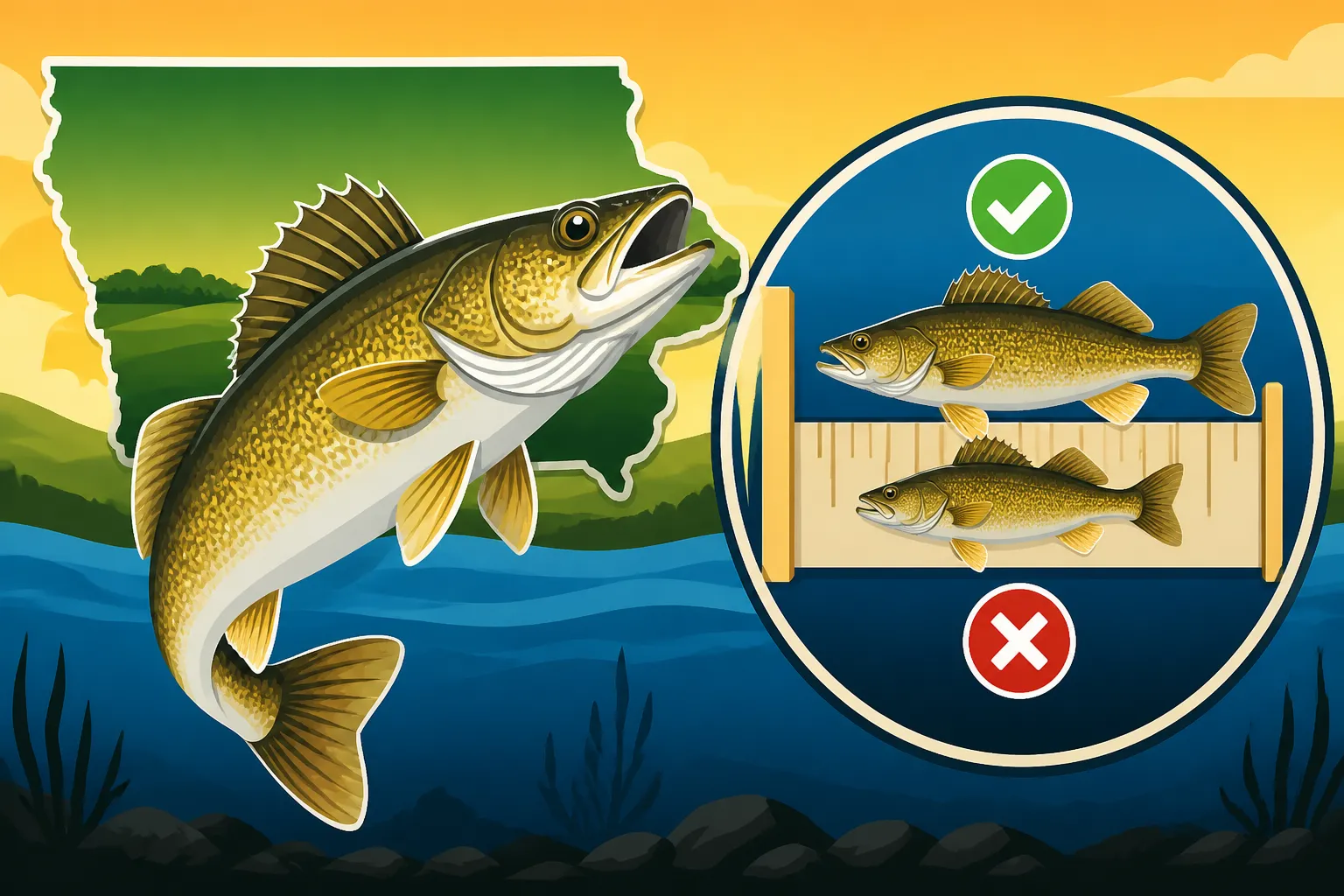
Across the vast majority of Iowa's public waters—lakes, rivers, and impoundments—the standard minimum length limit for walleye is 15 inches. This means any walleye you catch that measures less than 15 inches from the tip of its snout to the tip of its tail must be immediately released back into the water. This 15-inch benchmark isn't random; it's carefully chosen because it generally allows walleye to reach sexual maturity and spawn at least once, if not multiple times, before they become legal keepers.
Imagine catching a beautiful 14-inch walleye. While it might look tempting for the frying pan, releasing it ensures that fish has a chance to spawn and grow even larger. Next year, that same fish could be a legal 16-incher, having contributed to the population's health in the interim. Always carry a reliable measuring device on your boat or in your tackle box. Using a bump board or a soft measuring tape is far more accurate than trying to eyeball it, and it ensures you're complying with the rules.
Special Size Regulations for Key Lakes and Rivers
Now, here's where things get interesting, and why it's so important to know the specific body of water you're fishing. While 15 inches is the general rule, many of Iowa's most popular and productive walleye fisheries have special length regulations. These exceptions are put in place to address unique population dynamics or management goals for that particular water body.
For example, the renowned Fishing the Iowa Great Lakes—Spirit Lake, West Okoboji, and East Okoboji—often have more restrictive slot limits or higher minimums. You might encounter a rule like "no walleye between 17-22 inches may be kept," or a minimum length of 17 inches with only one fish over 22 inches allowed. These slot limits are designed to protect the highly successful spawning classes, allowing them to grow into large, trophy-sized fish and contribute significantly to the gene pool. Conversely, they might allow anglers to keep smaller fish outside the slot, effectively thinning out less desirable size classes and promoting faster growth for the remaining fish.
The Mississippi River is another prime example where rules can differ. Given its immense size and shared borders with other states, the walleye regulations on the Mississippi often have reciprocal agreements or slightly different rules than inland Iowa waters. For specific stretches, like Mississippi River Pool 9 Fishing, you'll need to consult the specific regulations for that pool, as they can vary slightly from general Iowa rules. It's not uncommon to find a more lenient 13-inch minimum or different daily bag limits due to the unique characteristics of a large river system and multi-state management agreements. Always double-check the IDNR fishing proclamation for the most up-to-date information before heading out to these dynamic waterways.
Daily Bag and Possession Limits for Walleye
Beyond size, knowing how many walleye you can take home each day, and how many you can have in your possession at any given time, is crucial. These limits are directly tied to sustaining healthy fish populations and ensuring fair distribution of the resource among all anglers.
Understanding Daily Bag Limits
The daily bag limit for walleye in Iowa is generally five fish. This means that, within a 24-hour period, you are legally allowed to harvest and keep up to five walleye that meet the minimum size requirements for the water you're fishing. Once you've reached your daily limit, you must cease fishing for walleye for the remainder of that calendar day. It's a strict rule that aims to prevent overharvesting and distribute the opportunity to catch fish among a larger number of anglers.
It's important to understand that "daily" means from midnight to midnight. If you go out fishing early in the morning and catch your limit by noon, you can't go back out that same evening and catch another limit. Any walleye that is caught and does not meet the legal length or pushes you over your daily bag limit must be immediately released, and handled with care to maximize its survival chances. Tools like a quality rubber landing net, easily found on Amazon, can help you safely manage your catch before release. The quicker you can release a short or over-limit fish, the better its chances are of surviving to fight another day.
Possession Limits and Storage Rules
The possession limit refers to the maximum number of fish you can have in your immediate control or stored at home, in your vehicle, or at a temporary lodging like a cabin or hotel. For walleye in Iowa, the possession limit is typically double the daily bag limit, meaning you can generally have up to ten walleye in your possession. This allows anglers to fish for two consecutive days and keep their limits without needing to immediately consume or process all their catch.
However, once you've cleaned or filleted your fish, there's a very specific regulation to keep in mind: you must leave a patch of skin, at least one inch square, attached to the fillet. This skin patch is vital for law enforcement to identify the species and, in some cases, measure the fish's original length if there's a dispute. For walleye, this typically means leaving a piece of skin with scales on one side of the fillet. Failing to do so can lead to citations, as it makes it impossible for conservation officers to verify compliance with size and species limits. Make sure to review the Iowa Fishing Daily Bag Limits Guide for more detailed information on these specific rules. Proper storage is also key; keep your fish on ice in a cooler to maintain freshness and comply with safe food handling practices.
Notable Exceptions and Water-Specific Regulations
While the general rules for walleye seasons and limits are a good starting point, Iowa has some crucial exceptions that every angler needs to be aware of. These specific rules are often designed to protect vulnerable spawning populations or manage unique inter-state waterways.
Walleye Closed Season Dates at the Iowa Great Lakes
This is perhaps one of the most significant exceptions to the year-round walleye fishing rule in Iowa. The famous Iowa Great Lakes – Spirit Lake, West Okoboji Lake, and East Okoboji Lake – implement a specific closed season for walleye each year. This closure is critical for protecting the lakes' crucial walleye spawning populations, ensuring they can reproduce undisturbed. While the exact dates can shift slightly year-to-year based on environmental factors, the closed period typically runs from mid-February through early May. For instance, you might find the season closed from February 16th to May 1st.
During this time, it is strictly illegal to target or possess walleye from these lakes. Anglers accustomed to year-round walleye opportunities in other parts of Iowa can easily get caught off guard here. Always make sure to check the latest IDNR regulations for Walleye Closed Season Dates at the Iowa Great Lakes before planning your spring fishing trip to these popular destinations. Violations during a closed season are taken very seriously, often resulting in significant fines and potential loss of fishing privileges. It's a small price to pay to ensure these iconic lakes continue to produce legendary walleye fishing for generations to come.
Walleye Rules on Border Rivers (Mississippi, Missouri, Big Sioux)
Fishing Iowa's border rivers introduces another layer of complexity, as regulations can vary not only from inland Iowa waters but also between the states sharing these waterways. The Mississippi River, for example, is managed under reciprocal agreements with Wisconsin, Illinois, and Missouri. This means that if you possess a valid Iowa fishing license, you can often fish in the border waters of these adjacent states, and vice-versa, without needing a separate license from the other state. However, while the license might be reciprocal, the fishing regulations themselves can sometimes differ depending on which side of the river you're on, or which state's regulations are being enforced.
For walleye on the Mississippi River, you might find different length and bag limits compared to Iowa's inland lakes. For instance, the minimum length for walleye on the Mississippi might be 13 inches, with a daily bag limit of 6, which is more liberal than the standard Iowa inland rules. This is largely due to the vastness of the river system and its different ecosystem dynamics. It's crucial to consult the specific border river regulations within the Iowa Fishing Regulations booklet or online. The same applies to the Missouri River border with Nebraska and the Big Sioux River Fishing Spots bordering South Dakota. Always check the specifics of Iowa Fishing Regulations on the Mississippi River Border and Reciprocal Fishing Rules on the Mississippi River Border to avoid any misunderstandings. It's not just about which state you're fishing from, but often the specific rules that apply to the shared waterway itself.
Here's a handy table summarizing some key walleye regulations in Iowa. Remember, these are general guidelines, and always consult the current Iowa DNR Fishing Regulations for the most up-to-date and specific rules for your chosen fishing spot, especially for the Great Lakes and border rivers.
| Water Body Type | Minimum Length (inches) | Daily Bag Limit | Possession Limit | Special Season Notes |
|---|---|---|---|---|
| General Inland Lakes/Rivers | 15 | 5 | 10 | Generally open year-round |
| Iowa Great Lakes | Varies (e.g., 17-22" slot) | Varies | Varies | Closed season (approx. Feb 16 – May 1, consult DNR) |
| Mississippi River Border | Varies (e.g., 13-15") | Varies (e.g., 6) | Varies | Reciprocal agreements with border states, check specifics |
| Special Regulation Lakes | Varies (e.g., 18") | Varies | Varies | Consult specific lake regulations for details |
Best Practices for Sustainable Walleye Fishing
Being a responsible angler goes beyond just following the rules; it's about adopting practices that contribute to the health and abundance of the walleye populations we cherish. Sustainable fishing ensures that future generations will have the same opportunities we do today.
Catch and Release Strategies for Walleye
When you're dealing with specific size limits or if you simply choose to practice catch and release for larger, spawning fish, proper handling is paramount. A walleye's survival after release largely depends on how it's treated from the moment it bites to the moment it swims away. Here are some key tips:
First, use appropriate tackle. Heavier line and a properly set drag can help you land the fish quicker, reducing its fight time and subsequent exhaustion. This is especially important for When Iowa Walleye Season Opens and fish are still cold. Second, consider using barbless hooks, or simply crimping down the barbs on your hooks. This makes hook removal much faster and causes less damage to the fish's mouth. Third, minimize air exposure. Walleye are highly susceptible to stress when out of water. Keep them in the net, in the water, as much as possible while you remove the hook, measure, and snap a quick photo. A soft, knotless rubber net, like many available on Amazon, is ideal for cradling the fish and protecting its slime coat and fins.
When handling the fish, avoid touching its gills or eyes. If possible, use a de-hooking tool to remove the hook while the fish is still in the water. If you must hold it, support its body horizontally with one hand under the belly and the other gently gripping the base of its tail. Avoid holding it vertically by the jaw if it's a large fish, as this can damage its internal organs. Finally, release the fish gently, allowing it to swim away on its own power. If it needs a moment to recover, hold it upright in the water until it regains its strength and kicks off.
Staying Informed and Respecting the Resource
The world of fishing regulations isn't static. Rules can and do change from year to year, sometimes even mid-season, based on new scientific data, population assessments, or environmental factors. It's the angler's responsibility to stay informed about the current rules for the specific waters they intend to fish. Relying on last year's regulations or hearsay from a friend is a recipe for trouble.
The absolute best resource for current information is the official Iowa Department of Natural Resources (IDNR) website. They publish a comprehensive fishing regulations booklet annually, which is available online and at most license vendors. This booklet details all species-specific rules, length limits, bag limits, special water-specific regulations, and even defines terms like "possession limit." For quickly verifying details, you can often find specific questions answered by searching the IDNR site or using their GoOutdoors Iowa mobile app. For example, knowing How to Check Current Iowa Fishing Regulations Online can save you a lot of guesswork.
Beyond just knowing the rules, respecting the resource means being a good steward of our environment. This includes packing out all your trash, not leaving behind fishing line or lures, and being mindful of other anglers and wildlife. If you witness a fishing violation, such as someone keeping undersized fish or exceeding their bag limit, don't hesitate to report it to the IDNR. Understanding Reporting a Fishing Violation in Iowa helps protect our fisheries from unethical practices. Together, by following regulations and practicing ethical angling, we can ensure Iowa's walleye fishing remains a fantastic experience for everyone.
Disclaimer
Please note that fishing regulations can change. While this guide provides a comprehensive overview of Iowa's walleye season and size limits, it is essential to consult the official Iowa Department of Natural Resources (IDNR) website or the current year's Iowa Fishing Regulations booklet for the most up-to-date and accurate information before you go fishing. This content is for informational purposes only and should not be considered legal advice.