How to Identify a Green Sunfish
You’ve cast your line into countless Iowa ponds and rivers, hoping for a bite, and often enough, you pull in a feisty little fish. But sometimes, identifying exactly what you’ve caught can be a bit of a head-scratcher, especially when it comes to the diverse world of sunfish. This guide will help you understand the distinctive characteristics of the Green Sunfish, a common and often underestimated species in Iowa waters, so you can confidently tell it apart from its many look-alikes.
Understanding the Green Sunfish: An Iowa Angler's Primer
The Green Sunfish (Lepomis cyanellus) is a truly widespread and resilient fish throughout Iowa, and honestly, a surprisingly tough little customer for its size. If you've ever hooked into one, you know they pull with an unexpected vigor, often making you think you've got something bigger on the end of your line! They might not get as much glory as a trophy walleye or a massive bass, but these panfish are a staple in our local ecosystems and offer a fantastic opportunity for anglers of all ages, especially those just starting out. They're often the first fish a kid catches, providing that crucial spark for a lifelong love of fishing.
What makes them so ubiquitous? Well, they're not particularly picky. Green Sunfish can thrive in a wide range of habitats, from crystal-clear streams to murky farm ponds, tolerating conditions that might send other fish packing. This adaptability means you'll encounter them frequently, whether you're fishing in a quiet backwater slough along the Mississippi or a small pond in the middle of the state. While they don't typically grow to a massive size – most are in the 4 to 7-inch range, with larger ones reaching 8 to 10 inches – their abundance and willingness to bite make them a fun target. Don't let their small stature fool you; they're predators, and they're always on the hunt for insects, small crustaceans, or even tiny fish.
Spotting the Difference: Key Physical Traits of Green Sunfish
When you pull a Green Sunfish out of the water, there are several key features that, once you know them, make identification much easier. You won't be left wondering, "Is this a bluegill, a crappie, or something else entirely?" Having a good visual guide, perhaps a waterproof one you picked up on Amazon, can be incredibly helpful in the field.
Mouth Size and Shape
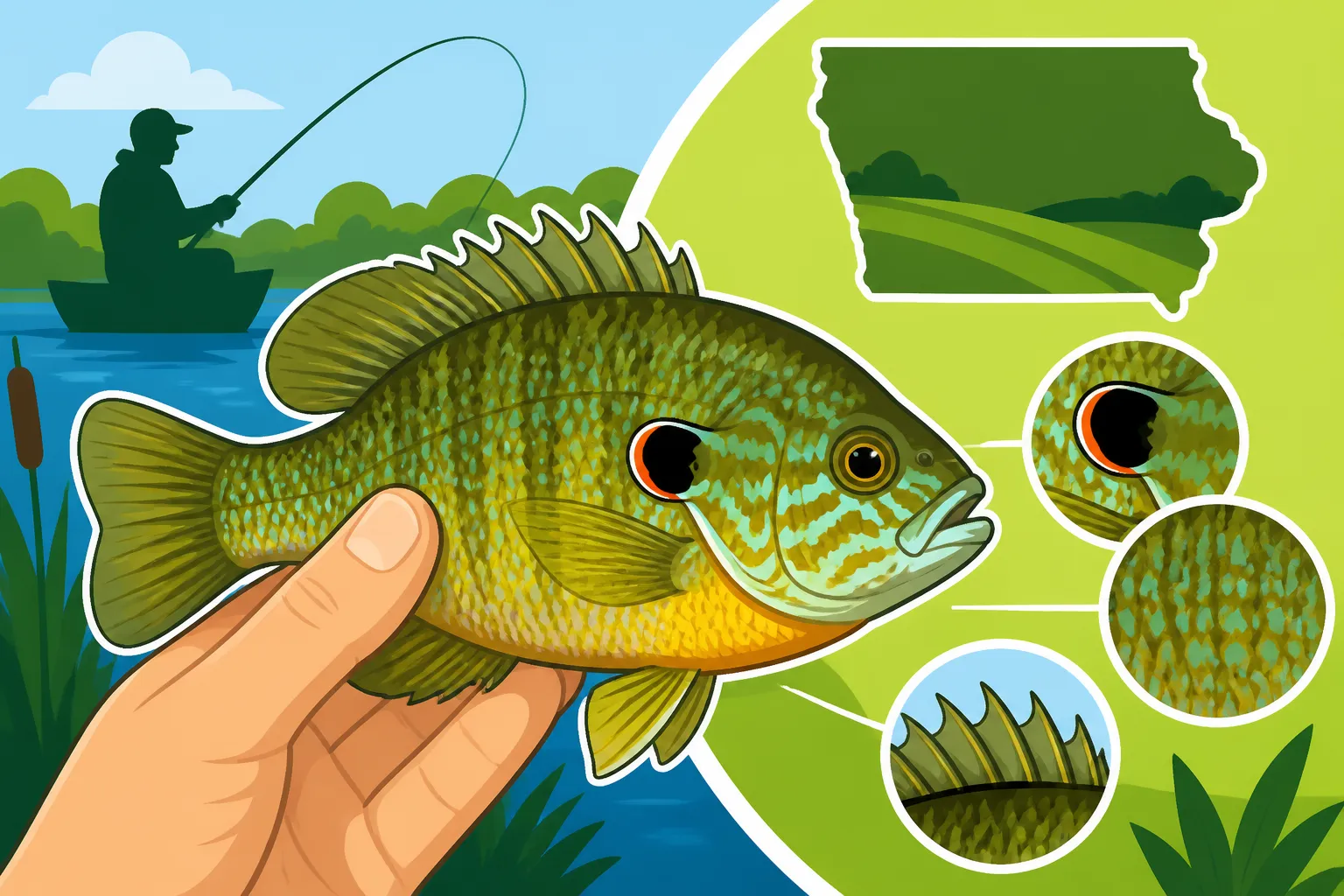
One of the most immediate giveaways for a Green Sunfish is its mouth. Unlike the small, almost dainty mouths of a bluegill or even a crappie, the Green Sunfish has a noticeably large mouth. It extends back significantly, often reaching directly under the middle of its eye, or even slightly past it. This large mouth hints at its predatory nature and broader diet compared to some of its more insect-munching cousins. If you can fit your pinky finger comfortably into the mouth of a 6-inch sunfish, you're likely looking at a Green Sunfish. This feature alone is often enough to rule out many other panfish.
Gill Cover (Operculum) Spot
Another critical identification mark is found on the gill cover. The Green Sunfish typically has a dark, prominent spot on the rear edge of its operculum (gill flap). What makes this spot unique is its distinct orange or reddish margin. It's not just a plain black spot like you might see on a bluegill; it's edged with a splash of color that really makes it stand out. Think of it as a subtle but vibrant halo around the dark spot. This colored margin can vary in intensity depending on the individual fish, its age, and even the water clarity, but it's almost always present in some form. You can check out our Iowa Fish Species Guide for more on various fish identification marks.
Body Coloration and Markings
As their name suggests, Green Sunfish often exhibit a greenish hue on their backs and sides, sometimes with bronze or yellowish tints on their undersides. However, color can be notoriously tricky with fish, as it changes with habitat, water quality, and even stress levels. What’s more reliable are the distinctive iridescent blue-green spots and streaks you'll often find on their cheeks and gill covers. These almost neon-like markings are quite beautiful and are a strong indicator.
Beyond the blue spots, look for vertical bars that might be present on their sides. These bars are usually faint, often appearing as subtle, dusky bands rather than pronounced stripes. They can be more noticeable on younger fish or fish from clearer waters. Their fins, particularly the pectoral fins, are usually clear to yellowish, and they often have a dark spot at the base of the last rays of the dorsal fin, though this can sometimes be less distinct than the gill cover spot.
Avoiding Mix-Ups: Green Sunfish vs. Common Iowa Panfish
It's easy to confuse Green Sunfish with other panfish, especially when they're small. Iowa is home to a fantastic array of sunfish and other small, tasty species, many of which share similar body shapes and sizes. Knowing the subtle differences can make all the difference in positive identification. If you're interested in specific species, our Bluegill Fishing in Iowa guide provides more details on those popular catches.
Differentiating from Bluegill
Bluegill are perhaps the most common look-alike for Green Sunfish. Both are sunfish, after all! However, there are some clear distinctions. The most obvious is the mouth. A bluegill has a much smaller, more delicate mouth that rarely extends past the front edge of its eye. Its gill cover spot is typically solid black, lacking the orange or red margin characteristic of the Green Sunfish. Bluegill also tend to have a more prominent, distinct black spot on their dorsal fin, and their bodies are often flatter and rounder, with more pronounced vertical barring, especially on adult males during spawning season.
Comparing with Pumpkinseed Sunfish
Pumpkinseed sunfish are beautiful fish, but also a common source of confusion. They share some similar color patterns with Green Sunfish. The key difference lies in their face and gill cover. Pumpkinseeds have distinct, wavy, iridescent blue or green lines radiating across their cheeks and gill covers, almost like hieroglyphs. Their gill cover spot is typically black but always accented with a vibrant red or orange spot on the rear edge of the gill cover, not just a margin around the black spot like the Green Sunfish. Their overall body shape is also usually rounder and flatter than a Green Sunfish.
Distinguishing from Rock Bass
Rock Bass are another common Iowa species that can sometimes be mistaken for a Green Sunfish, especially by less experienced anglers. While both are members of the sunfish family, Rock Bass are built a bit sturdier. Their most distinguishing feature is their red eyes – a dead giveaway! They also have a very large mouth, even larger than a Green Sunfish, and their bodies are usually mottled brown or bronze with dark spots, rather than the green and iridescent blue found on Green Sunfish. Rock Bass also have more prominent anal fin spines. Understanding Crappie vs Bluegill Identification might help you further categorize similar panfish.
Here's a quick comparison table to help you keep things straight:
| Feature | Green Sunfish | Bluegill | Pumpkinseed Sunfish | Rock Bass |
|---|---|---|---|---|
| Mouth Size | Large, extends to or past middle of eye | Small, rarely past front of eye | Medium, doesn't reach past front of eye | Very large, past middle of eye |
| Gill Cover Spot | Dark spot with orange/red margin | Solid black spot, no colored margin | Black spot with distinct red/orange spot on edge | Dark spot, no distinct colored margin |
| Facial Markings | Iridescent blue-green spots/streaks | Often plain, sometimes faint mottling | Wavy, iridescent blue/green lines | Plain, sometimes faint mottling |
| Eye Color | Normal, dark | Normal, dark | Normal, dark | Red |
| Body Shape | Moderately deep, slightly elongated | Rounder, flatter, deeper body | Rounder, flatter, deeper body | Robust, blockier, mottled |
| Vertical Bars | Faint, dusky bars often present | More distinct vertical barring (especially males) | Generally absent or very faint | Mottled brown/bronze, dark spots |
Where to Find These Feisty Fighters in Iowa
One of the great things about Green Sunfish is how accessible they are. They're not particular about pristine, cold water or specific structures, making them a fantastic target for casual anglers and families. You can often find decent fishing gear and even beginner fishing kits specifically for panfish readily available on Amazon, making it easy to get started.
Preferred Habitats
Green Sunfish are extremely tolerant and adaptable, which means you'll find them in a wide variety of freshwater environments across Iowa. They prefer slow-moving or still waters, making them common inhabitants of ponds, small lakes, slow stretches of rivers, and backwater areas. They aren't afraid of slightly turbid or even somewhat degraded water quality, which means they can thrive in places where other, more sensitive species might struggle. This resilience is why they are often one of the most common fish caught in smaller, less-managed bodies of water. You'll find them abundant in our vast network of farm ponds, many city park ponds, and the calm bays of larger reservoirs. Best Fishing Spots in Iowa will give you a broader overview of prime locations statewide.
Structure and Cover Preferences
Like most panfish, Green Sunfish are ambush predators and love to hang out around cover. This means anywhere they can hide and dart out to grab an unsuspecting insect or baitfish. Look for them around fallen trees, submerged brush piles, weed beds, docks, bridge pilings, and rocky shorelines. Any kind of structure that breaks up the current or provides shade and protection is likely to hold Green Sunfish. They're often found in shallower water, especially during warmer months or early morning and late evening, making them prime targets for shore anglers. Even on the mighty Mississippi River, you'll find them lurking in quiet backwaters and around snags, often alongside Panfish Limit on the Mississippi River species.
Seasonal Movement and Feeding
While Green Sunfish don't undergo dramatic migrations, their activity levels and locations can shift with the seasons. In spring and early summer, they're often found in shallower water as they prepare to spawn and feed actively after the long winter. As summer progresses and water temperatures rise, they might retreat to slightly deeper, cooler areas during the hottest parts of the day, moving back to shallow cover during dawn and dusk. In the fall, they'll feed heavily to bulk up for winter, and even during ice fishing season, they can be caught in decent numbers, often near the edges of weed lines or drop-offs. Learning about Spring Fishing in Iowa can help you understand their patterns during that crucial time. They are not usually fussy eaters, responding well to small worms, crickets, corn, or tiny artificial lures like jigs and spinners. A simple Best Lures for Panfish setup can be incredibly effective for these aggressive eaters.
Disclaimer
This article is for general informational purposes only and does not constitute professional advice. Laws, prices and regulations vary by location and change over time. Consult a qualified professional for guidance on your specific situation.