What a Longear Sunfish Is
If you've spent any time casting a line in Iowa, you know the frustration of trying to tell one sunfish from another. They're all beautiful, feisty little fish, but sometimes you pull one up and think, "Is this a bluegill? A green sunfish? What is this?" Today, we're diving deep into one often-misunderstood member of the sunfish family: the longear sunfish. This guide will help you identify this vibrant fish, understand where it calls home in Iowa, and appreciate its unique place in our waters.
Decoding the Longear Sunfish: What Makes It Unique?
The longear sunfish (scientifically known as Lepomis megalotis) is a true gem in Iowa's diverse aquatic ecosystems. While it might sometimes be confused with its more common cousins like the bluegill or green sunfish, a closer look reveals a fish bursting with character and distinct features. Understanding these nuances not only satisfies your curiosity but also makes you a more informed angler, ready to appreciate every fish you encounter.
Physical Characteristics and Key Identifiers
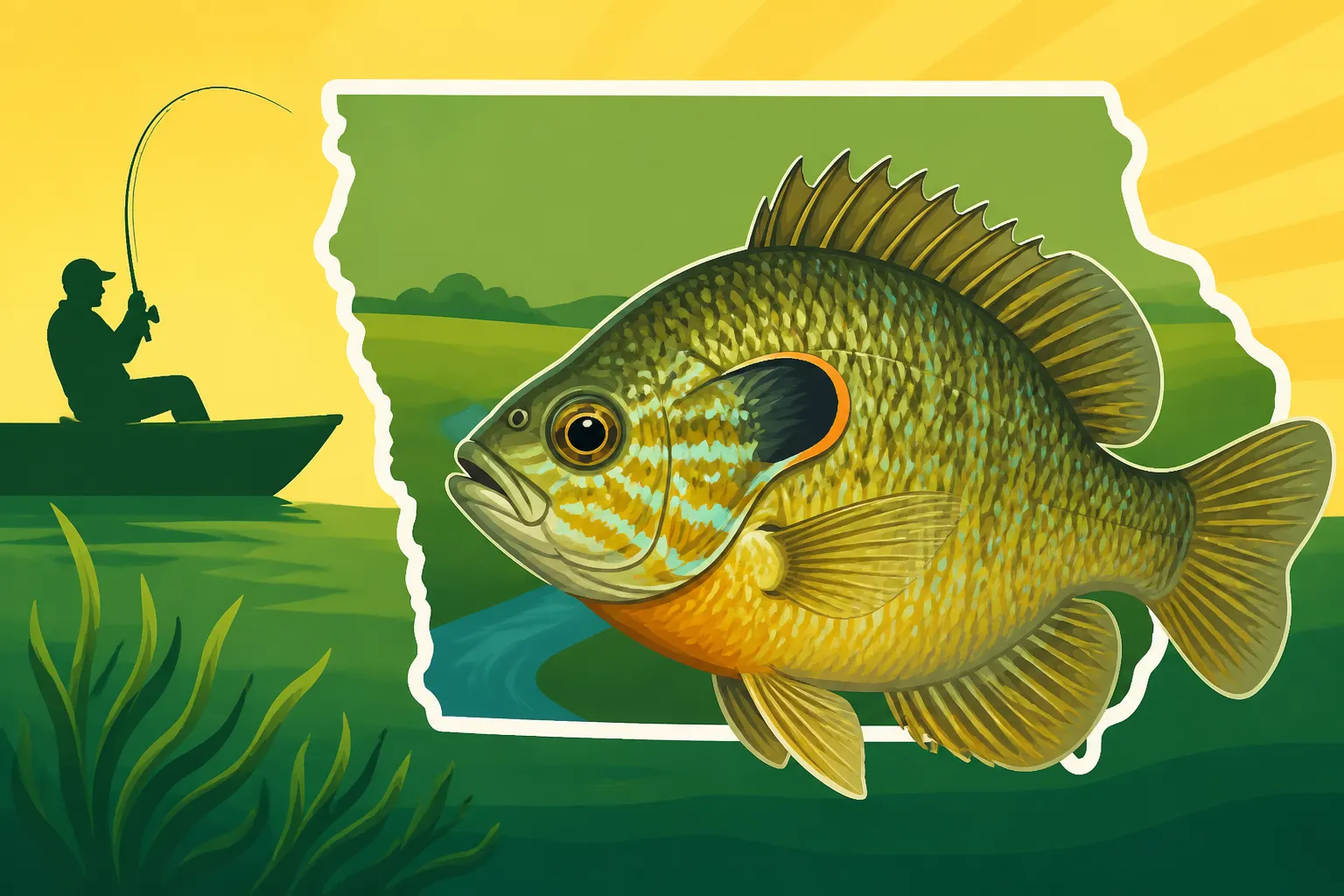
When you first hold a longear sunfish, its vibrant colors are usually the first thing that catches your eye. These fish are often a riot of orange, blue, and green, especially the males during spawning season. Their bodies are typically deep and compressed, giving them that classic "panfish" profile, but it's the head that truly sets them apart.
The most defining feature, and the one that gives the longear its name, is its incredibly long opercular flap. This is the stiff, fleshy extension on the gill cover, and on a longear, it can be remarkably prominent, often extending back well past the edge of the gill cover itself. Unlike the plain black spot you might see on a bluegill's opercular flap, the longear's flap is often edged with a brilliant red or orange, adding to its striking appearance. You'll also notice bright, wavy blue or turquoise lines on their cheeks and gill covers, a characteristic often more pronounced in males. Their mouths are generally small to medium-sized, similar to a bluegill, and they have an overall speckling of red-orange spots across their flanks. The dorsal, anal, and caudal fins can also show hues of orange and red, making for a truly beautiful catch. The intensity of these colors can vary greatly depending on the fish's age, sex, and the clarity and vegetation of the water it inhabits.
Size and Growth Patterns
Longear sunfish in Iowa aren't typically giants, but what they lack in size, they more than make up for in spirit! Most longears you'll encounter will be in the 4 to 6-inch range, fitting perfectly into the "panfish" category. However, in optimal conditions with abundant food and less competition, they can occasionally reach lengths of 7 or even 8 inches, though anything larger than that is quite a trophy for this species.
Their growth rate, like most fish, is influenced by several factors. A rich food supply, clean water, and a balanced population in a given body of water allow them to grow faster and reach larger sizes. In crowded ponds or streams with limited food, they may mature at smaller sizes. They are relatively slow-growing compared to some other panfish, meaning a 6-inch longear might be a few years old. While they might not provide the heft of a trophy bass, their vibrant colors and feisty fight make them a fantastic target for light tackle, especially when fishing with younger anglers. They're a perfect example of how much fun can be had with smaller species.
Where to Find Longear Sunfish in Iowa's Waters
Iowa's diverse landscape, from meandering rivers to tranquil ponds, offers a variety of homes for its many fish species. The longear sunfish, while not always as universally present as the ubiquitous bluegill, has its preferred niches where it truly thrives. Knowing these preferences can significantly increase your chances of finding and catching these colorful panfish.
Preferred Habitats and Water Conditions
Longear sunfish have a particular fondness for clear, warm, and vegetated waters. Unlike some of their sunfish cousins who tolerate murkier conditions, longears tend to prefer a bit more clarity, which allows them to better spot their prey and show off their stunning colors. You'll often find them lurking around aquatic vegetation beds – think lily pads, submerged grasses, or cattails along the shoreline. This vegetation provides crucial cover from predators and serves as a hunting ground for the insects and small invertebrates that make up their diet.
They also appreciate structural elements in the water. This could be submerged logs, brush piles, rock formations, or even the roots of trees overhanging the bank. These structures offer shade, ambush points, and protection. While they can be found in a variety of water bodies, they seem to show a particular affinity for smaller streams, creeks, and the backwater areas of larger rivers where the current is gentler. They are less common in the vast, open waters of Iowa's larger reservoirs, preferring the more intimate settings. In many ways, they are a good indicator of healthy, clean water.
Distribution Across the State
While bluegills are practically everywhere in Iowa, longear sunfish have a more concentrated distribution, though they can still be found throughout much of the state. They are most commonly encountered in the streams and smaller rivers of eastern and southern Iowa. Waterways like the Skunk River, Iowa River, and even some of the smaller tributaries flowing into the Mississippi River can be prime locations. They also populate numerous farm ponds and smaller public lakes, especially those that maintain good water quality and ample shoreline vegetation.
It's less likely you'll target them specifically in places like the Iowa Great Lakes or the main channel of the Mississippi River, although they might occasionally show up. Instead, focus your efforts on those quieter, clearer waters. When you're exploring new fishing spots, particularly smaller, less-pressured streams or community ponds with good cover, keep an eye out for these vibrant fish. A quick check of local fishing reports or talking to bait shop owners in those regions can often point you to known longear hotspots. Always remember to check Iowa Fishing Regulations Explained for any specific rules for the waters you plan to visit.
The Longear's Role in the Ecosystem and Your Catch
Every fish species plays a vital role in its ecosystem, and the longear sunfish is no exception. Beyond their beauty and fun-to-catch nature, these fish contribute significantly to the health and balance of Iowa's aquatic environments. Understanding their biology not only deepens your appreciation but also helps you become a more effective and ethical angler.
Diet and Feeding Habits
Longear sunfish are opportunistic carnivores, meaning they'll pretty much eat whatever small critters they can find and fit into their mouths. Their diet primarily consists of aquatic insects and their larvae, small crustaceans like scuds and ostracods, and even tiny snails. They'll also readily snap up terrestrial insects that fall into the water, such as ants, grasshoppers, or beetles. Occasionally, larger longears might prey on the eggs or fry of other fish, including their own species.
They are active foragers, constantly patrolling their preferred habitats, often darting out from cover to ambush unsuspecting prey. You'll typically find them feeding during daylight hours, especially in the morning and late afternoon when insect activity is high. This makes them a fantastic target for sight-fishing in clear water, where you can watch them aggressively strike your bait or lure. Their willingness to bite makes them an excellent target for Iowa Fishing Techniques Guide, particularly for those new to angling.
Spawning Behavior and Life Cycle
The spawning ritual of the longear sunfish is one of the most fascinating aspects of their life cycle and a truly beautiful sight to behold. In Iowa, spawning typically occurs from late spring through early summer, when water temperatures reach the upper 60s to low 70s Fahrenheit. The males become incredibly vibrant during this time, with their colors intensifying to attract females.
They construct shallow, saucer-shaped nests by fanning out depressions in sandy or gravelly bottoms, usually in shallow, protected areas near shore. It's common for multiple longear nests to be grouped together, forming a "colony" or "spawning bed," sometimes even alongside bluegill nests. A single male will guard his nest fiercely, fanning the eggs to keep them oxygenated and chasing away any potential predators. Females will lay their eggs in multiple nests, and a male may attract several females to his nest. After the eggs hatch, the male continues to guard the fry for a period until they are old enough to fend for themselves. This strong parental care helps ensure the survival of the next generation. These spawning beds are critical habitats, and it's always good practice to avoid disturbing them if you happen upon one.
Fishing for Longear Sunfish: Tips and Techniques
Fishing for longear sunfish is pure, unadulterated fun, especially for beginners or when you just want to relax and catch some fish. They are not picky eaters and fight surprisingly hard for their size.
Here’s how to hook into some:
- Light Tackle is Key: An ultralight spinning rod and reel combo with 2-4 pound test line is absolutely perfect. It allows you to feel every little nibble and makes even a small longear feel like a giant!
- Baits: Live bait is usually irresistible. Small pieces of nightcrawlers or redworms, wax worms, crickets, or even small grasshoppers work wonders. Suspend your bait under a small bobber, or simply tight-line it to the bottom. For artificials, tiny jigs (1/32 to 1/16 ounce) tipped with a small plastic grub or tube bait can be very effective. Micro-spoons and tiny spinners are also good choices. Check out Best Lures for Panfish for more ideas.
- Location: As mentioned, focus on clear, vegetated areas in smaller streams, quiet river backwaters, and farm ponds. Look for submerged logs, brush piles, or dense weed beds where they might be hiding. Shore fishing is often highly productive for longears.
- Time of Day: Longears are active throughout the day, but early mornings and late afternoons/evenings can be particularly fruitful, especially in warmer weather.
- Ethical Angling: While many anglers release sunfish, longears are also excellent table fare, similar to bluegill. If you plan to keep some, be mindful of Crappie and Sunfish Combined Limit for your specific water body. Always keep fish fresh in a cooler with ice if you intend to eat them. Many fishing essentials, from small hooks to ultralight rods, can be found readily on Amazon.
Longear Sunfish vs. Their Sunny Relatives
One of the biggest challenges for Iowa anglers, especially those new to panfishing, is telling the various sunfish apart. While they all share that characteristic "panfish" shape and a feisty attitude, there are subtle yet crucial differences that distinguish species like the longear, bluegill, and green sunfish. Knowing these differences can enhance your fishing experience and your understanding of Iowa's aquatic life.
Distinguishing Longears from Bluegill
The bluegill is arguably the most common and recognizable sunfish in Iowa. They are widespread and often form the backbone of panfish populations. While both are beautiful, here's how to tell them apart, sometimes with just a quick glance:
| Feature | Longear Sunfish | Bluegill |
|---|---|---|
| Opercular Flap | Very long, often extends well past the gill cover; typically edged in red/orange. | Shorter, stiff flap; usually solid black without a colored margin. |
| Facial Markings | Prominent, wavy blue or turquoise lines on cheeks and gill cover. | Less distinct or absent blue lines on the face; often a dark spot on the chin. |
| Body Coloration | More varied with orange, blue, green; often speckled with red/orange spots on flanks. | Typically olive-green to dark blue on top, lighter yellow/orange belly; vertical bars sometimes visible. |
| Mouth Size | Relatively small, similar to bluegill. | Small mouth. |
| Pectoral Fin | Shorter and rounded. | Longer and more pointed. |
The key takeaway here is that opercular flap! If it's noticeably long and has a vibrant red or orange rim, you've likely got a longear. If it's short and solid black, it's a bluegill. For more on bluegills, check out our guide on Bluegill Fishing in Iowa.
Longears vs. Green Sunfish and Pumpkinseed
Beyond the bluegill, two other sunfish often get mixed up with longears: the green sunfish and, less commonly, the pumpkinseed.
Green Sunfish: The green sunfish is another common species in Iowa, often found in less pristine, more turbid waters than the longear. While they share some similarities, they also have clear distinctions:
- Opercular Flap: The green sunfish also has an opercular flap, but it's shorter than the longear's and typically has a pale, often white or yellow, margin, not a red or orange one.
- Mouth: This is a big differentiator! Green sunfish have a much larger mouth than a longear or bluegill, extending back at least to the middle of the eye, sometimes past it. The longear's mouth is comparatively small.
- Body: Green sunfish are often a drabber olive-green or yellowish-green, with distinct dark spots at the base of the dorsal and anal fins. Their bodies are typically stouter and less deep than a longear's. They also have those wavy blue lines on their face, similar to the longear, but their mouth size is the real giveaway.
Pumpkinseed: Pumpkinseed sunfish are less common in many parts of Iowa compared to bluegill or green sunfish, but they can be found. They are known for their incredibly vibrant colors, which can sometimes lead to confusion with the longear.
- Opercular Flap: Pumpkinseeds have a distinct opercular flap that is also usually edged in red or orange, much like the longear. However, the pumpkinseed's flap is generally shorter and rounder than the longear's pronounced extension.
- Facial Markings: Pumpkinseeds are famous for their intricate, labyrinthine patterns of bright blue and green lines on their face, which are often more complex and detailed than those on a longear. They also frequently have a bright red spot directly on the back edge of the opercular flap, almost like a dot of paint.
- Body: Their bodies are typically very deep, almost disc-shaped, and often adorned with iridescent spots of blue, green, and orange.
By paying close attention to these key features – especially the length and coloration of the opercular flap, the size of the mouth, and the distinct facial patterns – you'll become a pro at identifying these delightful panfish species on your next Iowa fishing adventure. Consider picking up a good fish identification guide, many of which are available on Amazon, to keep in your tackle box. It can be a fun way to learn more about Iowa Fish Species Guide you encounter.
Disclaimer
This article is for general informational purposes only and does not constitute professional advice. Laws, prices and regulations vary by location and change over time. Consult a qualified professional for guidance on your specific situation.