Where Perch Live at the Iowa Great Lakes
It's a common lament among anglers venturing out onto the vast, beautiful waters of the Iowa Great Lakes: "Where in the world are the perch hiding today?" These feisty little panfish can seem like ghosts, sometimes appearing in abundance, other times leaving you scratching your head with an empty stringer. The truth is, perch are constantly on the move, driven by factors like food, water temperature, and spawning instincts, making them a delightful challenge to locate consistently. This guide is here to unravel the mystery, helping you understand the prime locations and seasonal patterns that dictate where perch live across the incredible Iowa Great Lakes system, giving you a much better chance at filling your bucket.
Understanding Perch Behavior in Large Lakes
Perch aren't just random swimmers; their movements are quite predictable once you understand their basic needs. In large, complex ecosystems like the Iowa Great Lakes, their survival hinges on finding food, safety from predators, and suitable conditions for reproduction. Thinking like a perch—or at least understanding what drives them—is the first step to figuring out their whereabouts.
Perch as Foragers and Prey
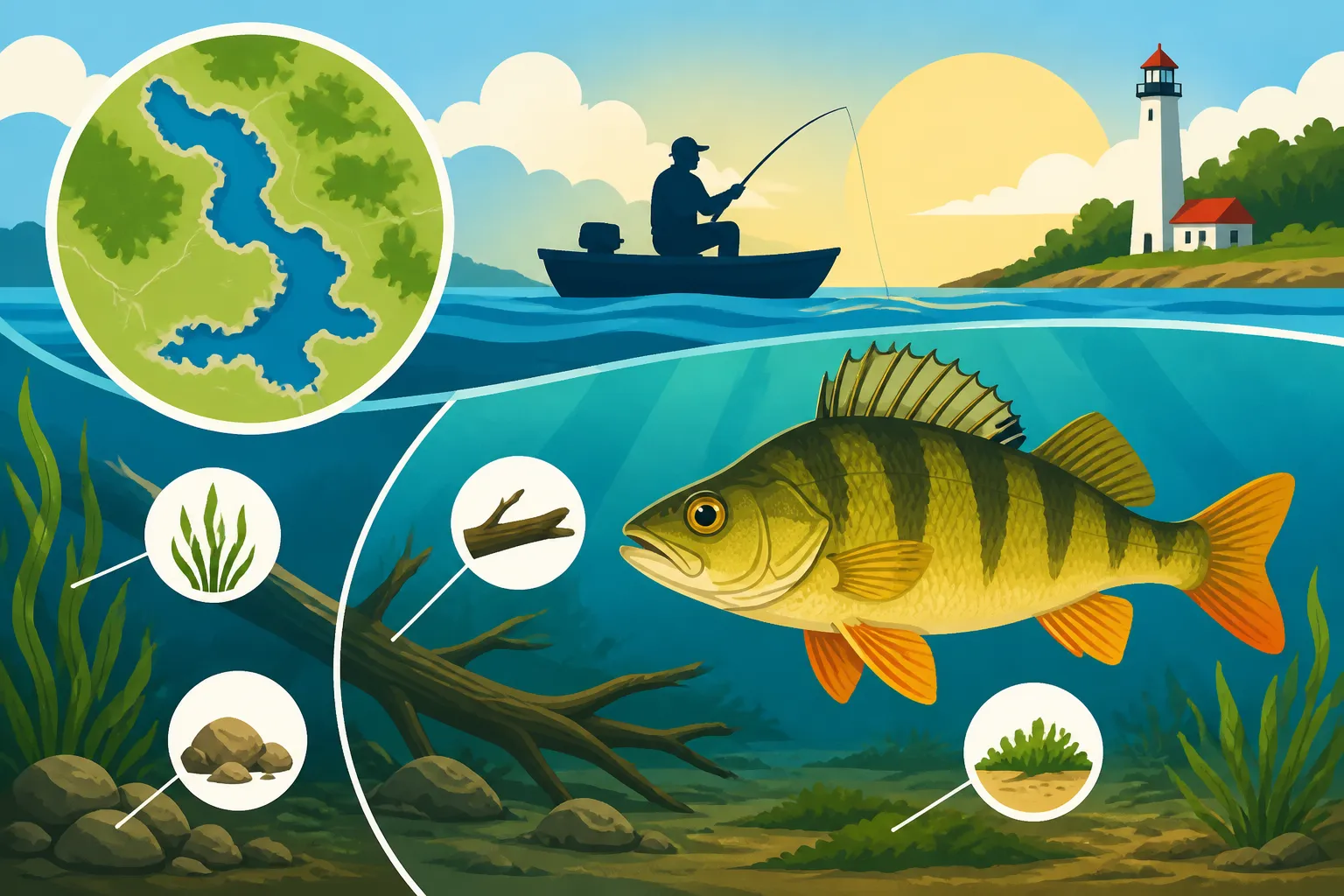
Perch are opportunistic feeders, meaning they'll munch on just about anything small enough to fit in their mouths, from aquatic insects and small crustaceans to minnows and the eggs of other fish. This diverse diet means they'll often be found near areas rich in these food sources. However, perch themselves are a major food source for larger predators like walleye and northern pike, which means they're always looking for cover. They prefer habitats where they can quickly dart into weeds, around submerged timber, or into deeper water to escape danger. This constant balance between feeding and avoiding being eaten dictates a lot of their daily and seasonal movements.
When you're out on a lake like East Okoboji, imagine yourself as a hungry perch. Where would you go to find a quick meal of insect larvae? Probably a nice, thick weed bed or a sandy flat near some vegetation. But then, if a hungry walleye comes cruising by, where would you hide? Maybe deeper into that weed bed, or perhaps dive down to a steep drop-off. These instincts are powerful drivers for perch, and understanding them helps narrow down your search area. It's not just about "where the fish are" but "why they are there."
Schooling Tendencies and Size Segregation
One of the most defining characteristics of perch is their schooling behavior. They tend to stick together in groups, which offers some protection in numbers and helps them forage more efficiently. When you find one perch, you often find a whole school. However, it's also common to find that these schools can be somewhat segregated by size. You might hit a patch of smaller "dink" perch, and then a little deeper or shallower, or around a different type of structure, suddenly start pulling in larger, respectable "jumbo" perch. This can be a bit frustrating when you're specifically targeting the bigger ones, but it's part of the game.
This size segregation means that even if you're catching perch, if they're not the size you're after, it's worth making subtle adjustments to your location or presentation. A school of smaller perch might hold tighter to dense vegetation, while larger ones might patrol the edges of deeper breaks or roam more open water, still seeking those schooling benefits but with a bit more confidence due to their size. Keep this in mind when you're moving around Fishing the Iowa Great Lakes—a small shift can sometimes make a big difference in the quality of your catch.
Key Habitats for Perch in the Iowa Great Lakes
The Iowa Great Lakes—Spirit Lake, West Okoboji, East Okoboji, Upper Gar, Lower Gar, and Minnewashta—offer a diverse range of habitats. Perch utilize many of these, but some spots consistently hold more fish than others. Knowing what to look for, both above and below the surface, is crucial.
Weed Beds and Submerged Vegetation
Thick weed beds and areas of submerged vegetation are absolute magnets for perch, especially during the warmer months. These underwater jungles provide a trifecta of benefits: cover from predators, a rich buffet of insects and small fish, and oxygenated water. Perch will cruise through these lanes, pick off unfortunate insects, and quickly disappear into the green maze if danger approaches.
You'll find expansive weed beds in many of the Iowa Great Lakes. On Spirit Lake, for instance, the shallower bays and areas like Big Spirit Bay or the north end can have lush growth. In West Okoboji, even though it's incredibly deep, the shallower shelves and distinct bays often boast significant vegetation. These aren't just random patches; they form intricate ecosystems. Look for the edges of these weed lines where the plants meet open water or a sharp drop-off. This "edge" is often where perch feel most comfortable feeding, having quick access to both food and safety. Fishing these areas with small jigs, live bait like minnows or worms, or even tiny crankbaits can be incredibly effective.
Structural Elements like Rock Piles and Drop-offs
Beyond the green stuff, perch are huge fans of hard structure. This includes natural rock piles, gravel bars, sudden drop-offs, and even man-made structures like submerged cribs or old docks. These features create eddies and current breaks, attract baitfish, and provide excellent ambush points and hiding spots for perch. The transition from a shallow flat to a deep basin, known as a "breakline" or "drop-off," is a classic perch highway.
On a lake like West Okoboji Lake Fishing Guide, with its impressive depths and varied bottom contour, these structural elements are paramount. Think about the many points, humps, and sudden deep breaks that characterize its unique underwater topography. Perch will often orient themselves along these breaks, particularly where a hard bottom transitions to soft, or where rock gives way to sand. Using a good fish finder is invaluable here to mark these contours and identify potential schools of fish holding tight to the structure. Places where a point extends out into deeper water, creating a sharp underwater ridge, are often prime candidates.
Transition Zones and Main Lake Basins
While perch love their cover and structure, they don't always stay glued to it. Sometimes, especially larger schools of jumbos, they will suspend or roam in transition zones between different habitats, or even in the deeper, open main lake basins, particularly when targeting schools of baitfish. These are often the hardest fish to locate because they aren't tied to a specific piece of bottom structure, but they can offer some of the most exciting action once found.
These open-water perch often relate to the thermocline in summer, which is the layer where water temperature changes rapidly. They might suspend just above or within this layer, feeding on zooplankton or schools of small baitfish. In the Iowa Great Lakes, especially the deeper ones, paying attention to your electronics for suspended schools of fish in these deeper zones is key. It's less about a specific "spot" and more about finding the depth at which the bait and the perch are holding. Remember, even in open water, they are still seeking some form of structure, even if it's just a subtle change in depth or water temperature.
Seasonal Movements and Their Impact on Perch Location
Perch don't stay in one place all year. Their patterns shift dramatically with the seasons, making it essential to adapt your strategy. What works in spring won't necessarily work in winter.
Spring Spawning Areas
As ice recedes and water temperatures climb into the 40s and 50s Fahrenheit, perch begin their pre-spawn and spawning rituals. They typically spawn in shallow water, often over submerged vegetation, brush, or debris in bays and channels. During this time, they gather in large numbers, making them somewhat easier to target, though conservation and responsible angling are always important.
Look for perch in the shallower, warmer bays and protected inlets of the Iowa Great Lakes system, especially those with plenty of weeds or fallen timber. These areas warm up faster, signaling to the perch that it's time to reproduce. After spawning, they might linger for a bit, recovering and feeding aggressively, before dispersing to deeper summer haunts. Early spring can be a fantastic time to find good numbers of perch in these accessible, shallower spots.
Summer Deep Water and Thermocline
Once the Iowa heat really kicks in and surface waters warm up, perch in the deeper lakes like West Okoboji Lake Fishing Guide or Spirit Lake Fishing Guide will often move to deeper, cooler waters. They'll relate strongly to the thermocline—the layer of water where the temperature changes drastically—as this layer often holds the highest concentration of oxygen and baitfish. Perch will usually suspend just above, within, or just below this layer.
During summer, your fish finder becomes your best friend. Look for baitfish schools and arcs representing perch suspending in the water column. They might also be found congregating around deep structure: submerged humps, deep rock piles, and the steepest drop-offs that lead into the main lake basin. This is when vertical jigging or slowly drifting with live bait can be very effective. Don't be afraid to fish waters that seem "empty" on the surface; the action could be happening 20, 30, or even 40 feet down.
Fall Schooling and Feeding Frenzies
As autumn arrives and water temperatures begin to cool, perch often become much more active and aggressive. They sense the coming winter and go on a major feeding binge, bulking up for the lean months ahead. This is often when you'll find large schools of perch moving into shallower to mid-depth areas, especially around healthy green weeds that haven't died off yet, or along prominent breaklines and points.
Fall can be one of the best times to target jumbo perch. They form massive schools and aggressively chase baitfish. Look for them moving up onto flats adjacent to deep water, feeding on emerging insects and minnows. The bite can be fast and furious once you locate a school. This is also when perch might start to migrate towards areas they'll use for wintering, consolidating into larger groups. Fishing the same areas you found them in spring, but perhaps slightly deeper, can often be productive.
Winter Ice Fishing Hotspots
When the Iowa Great Lakes freeze over, perch become a prime target for ice anglers. Their winter patterns are largely focused on conserving energy and finding reliable food sources. They tend to congregate in deeper basins but will make foraging runs up onto shallower flats or along deep weed lines.
During early ice, perch can often be found in relatively shallower water (10-20 feet) around the last remaining green weeds or subtle points. As winter progresses and oxygen levels drop in some areas, they'll often move to deeper holes or along extensive breaklines that offer access to both deep water and potential food sources. Popular spots for Ice Fishing in Iowa on the Great Lakes often include the main lake basins, deep humps, and structural elements that rise up from the bottom. Small jigs, tiny spoons, and live bait are the go-to presentations. Your portable fish finder is critical for finding these schools under the ice, and once you mark them, be prepared for some fast action!
Tools and Techniques for Locating Perch
Finding perch, especially the bigger ones, is often a game of hide-and-seek. Having the right tools and knowing how to interpret what you see (or don't see) can dramatically improve your success rate.
Using Electronics to Pinpoint Perch
In an age of advanced fishing technology, your fish finder is arguably your most important tool for locating perch, especially on large, complex lakes like the Iowa Great Lakes. Whether you have a high-definition unit on your boat or a portable flasher for ice fishing, learning to read the screen is paramount. Look for schools of baitfish, which appear as clouds or masses of small dots, often accompanied by larger arcs or distinct marks representing individual perch or perch schools.
When you see a large school of baitfish on your screen, don't just pass it by. Slow down, hover over the area, and carefully work your lure through it. Perch are often lurking nearby, ready to ambush. Pay attention to the bottom contour as well. Your fish finder will show you those subtle (or not-so-subtle) drop-offs, humps, and transitions from soft to hard bottom that perch love. Some of the best Fish Finders and Electronics for Iowa Anglers are available on platforms like Amazon, offering features like side-imaging or down-imaging that can reveal structure and fish far beyond the cone of your traditional sonar. Remember, knowing the depth and exact position of the fish means you can present your bait right in their strike zone.
Reading the Water and Observing Clues
While electronics are fantastic, don't underestimate the power of your own two eyes and intuition. "Reading the water" involves paying attention to subtle clues that can indicate where fish might be. This includes things like observing where other successful anglers are concentrating their efforts (without crowding them, of course!), looking for bird activity (diving birds often indicate baitfish pushed to the surface), and noticing weed growth patterns or current breaks.
On the Iowa Great Lakes, observing boat traffic and where people are anchored or drifting can provide valuable insights. If you see a cluster of boats in a particular area, especially if they're consistently pulling up fish, it's a good bet that perch are in that vicinity. However, remember that perch can be very sensitive to boat noise and pressure, so sometimes finding an unpressured school just a little ways off the main crowd can yield better results. Also, pay attention to the wind – it often concentrates baitfish and, consequently, predator fish like perch, on wind-blown points or shorelines.
Trial and Error: The Angler's Best Friend
Even with all the knowledge and technology in the world, fishing for perch ultimately comes down to trial and error. Perch can be fickle, and what worked yesterday might not work today. Be willing to move, change baits, adjust depths, and experiment with different presentations until you crack the code. Don't be afraid to stray from the "popular" spots if they aren't producing.
Keep a mental log (or even a physical one!) of what worked, when, and where. Did you find them on a deep rock pile with a small jig? Or suspended over open water with a minnow? Did they prefer a certain color? This information is invaluable for future trips. The beauty of the Iowa Great Lakes is their sheer size and diversity, offering endless opportunities for exploration. Remember, even the most seasoned anglers have days where they struggle, but persistence and adaptability are key. Sometimes, an adjustment as simple as changing the size of your jig or the type of bait can make all the difference, turning a slow day into a memorable one.
Here’s a quick overview of perch habitat by season in the Iowa Great Lakes:
| Season | Typical Depth Range | Primary Habitats | Key Considerations |
|---|---|---|---|
| Spring | 5-15 feet | Shallow bays, weed beds, submerged brush, channels | Post-spawn recovery, actively feeding, shallow bite |
| Summer | 15-40+ feet | Deep weed edges, rock piles, drop-offs, thermocline | Relate to cooler water and oxygen, often suspended |
| Fall | 10-30 feet | Mid-depth flats, active green weeds, breaklines, points | Major feeding frenzies, consolidating into large schools |
| Winter | 15-50+ feet | Deep basins, humps, structural elements, deep weed lines | Ice fishing, slower bite, concentrated schools |
Choosing the Right Bait and Lures
Once you've located a likely area, the right presentation can make all the difference. Perch are not overly picky, but they do have preferences. Live bait like small minnows, wax worms, or redworms are almost always effective. For artificials, tiny jigs tipped with plastics or a small piece of live bait, small spoons, and even micro crankbaits can entice a bite. The key is often to match the size of the bait to what the perch are naturally feeding on. You can find a wide array of Best Lures for Panfish on platforms like Amazon, allowing you to experiment with different colors and styles.
When fishing vertical, whether from a boat or through the ice, a sensitive rod is essential to detect those subtle perch bites. Often, they just "peck" at the bait, or it might feel like your lure simply got heavier. Keep your line tight and be ready to set the hook at the slightest indication. For deeper water, a slightly heavier jig or spoon might be necessary to get down to the fish quickly, especially if you're fishing in current or a strong wind. Remember, presentation often trumps color; make sure your bait looks natural and appealing.
Respecting Regulations and Conservation
As you enjoy the abundant perch fishing on the Iowa Great Lakes, it's incredibly important to be mindful of Iowa Fishing Regulations Explained and daily bag limits. Perch populations, while generally strong, are a valuable resource that we all need to protect. Know the Crappie and Sunfish Limits in Iowa and adhere to them strictly. Only keep what you plan to eat, and handle any released fish carefully to ensure their survival. Practicing catch-and-release, especially for the larger "jumbo" perch that are important spawners, helps maintain healthy populations for future generations of anglers.
By understanding where perch live, how their behavior changes with the seasons, and utilizing the tools and techniques available, you'll be well on your way to more successful and enjoyable fishing trips on the Iowa Great Lakes. These beautiful waters offer some fantastic opportunities, and with a bit of persistence, you'll soon be reeling in those delicious, striped beauties.
Disclaimer
This article is for general informational purposes only and does not constitute professional advice. Laws, prices and regulations vary by location and change over time. Consult a qualified professional for guidance on your specific situation.