Crappie Species Found in Iowa
It's a scenario many Iowa anglers know well: you've just reeled in a beautiful crappie, a fish that always puts up a fun fight and makes for a delicious meal. But then you pause, looking at its speckled sides and trying to remember – was this a black crappie or a white crappie? It can be surprisingly tricky to tell them apart, even for seasoned pros! This guide is here to clear up that confusion, diving deep into the characteristics, habitats, and behaviors of the crappie species that grace Iowa's waters, so you'll confidently identify your next catch.
Understanding the Crappie Family in Iowa
Crappie are truly one of Iowa's most beloved panfish, known for their aggressive bites and schooling behavior that can lead to incredible fishing days. They're also fantastic table fare, making them a top target for many anglers throughout the year. But what exactly is a crappie, from a biological standpoint, and how did these two distinct species come to dominate our lakes and rivers?
A Brief Crappie Introduction
The word "crappie" comes from the French-Canadian word "crapet," which refers to several species of sunfish. In Iowa, we're primarily talking about two distinct species: the black crappie (Pomoxis nigromaculatus) and the white crappie (Pomoxis annularis). Both belong to the sunfish family, Centrarchidae, which also includes bass and bluegill. They are native to much of North America, and Iowa's diverse waterways provide ideal habitats for both. Their widespread presence and popularity make them a staple of the Iowa fishing scene.
These fish are highly adaptable and thrive in a variety of conditions, from clear, deep lakes to murky, slow-moving rivers. Their ability to reproduce quickly and grow to a respectable size in a relatively short amount of time makes them a sustainable and exciting target for recreational fishing. Whether you're a beginner or a veteran angler, catching a mess of crappie is always a rewarding experience, and knowing the nuances between the species only adds to the enjoyment. You can learn more about targeting these popular fish in our Crappie Fishing in Iowa guide.
Why Differentiating Matters for Anglers
You might think, "A crappie is a crappie, right?" And while both species are delightful to catch and eat, understanding the differences between black and white crappie can actually make you a more successful angler. Their preferred habitats, feeding behaviors, and even their responses to water conditions can vary, meaning a technique that works for one might not be as effective for the other. Knowing what you've caught, and what you're likely to catch, helps you refine your strategy.
Beyond tactics, understanding the species helps with adhering to regulations. While Iowa often has a combined daily limit for crappie, some specific bodies of water might have unique rules or limits that could, theoretically, distinguish between the two. Always double-check the current Iowa Fishing Daily Bag Limits Guide for your specific fishing location. Identifying your catch correctly also simply adds to your knowledge and appreciation of Iowa's aquatic ecosystems, turning every trip into a learning opportunity.
Meet the Black Crappie
Often considered the "prettier" of the two crappie species by some, the black crappie is a beautiful fish with distinct characteristics. They are popular targets across Iowa, particularly in clearer lakes and reservoirs where they can thrive in vegetated areas.
Distinctive Markings and Body Shape
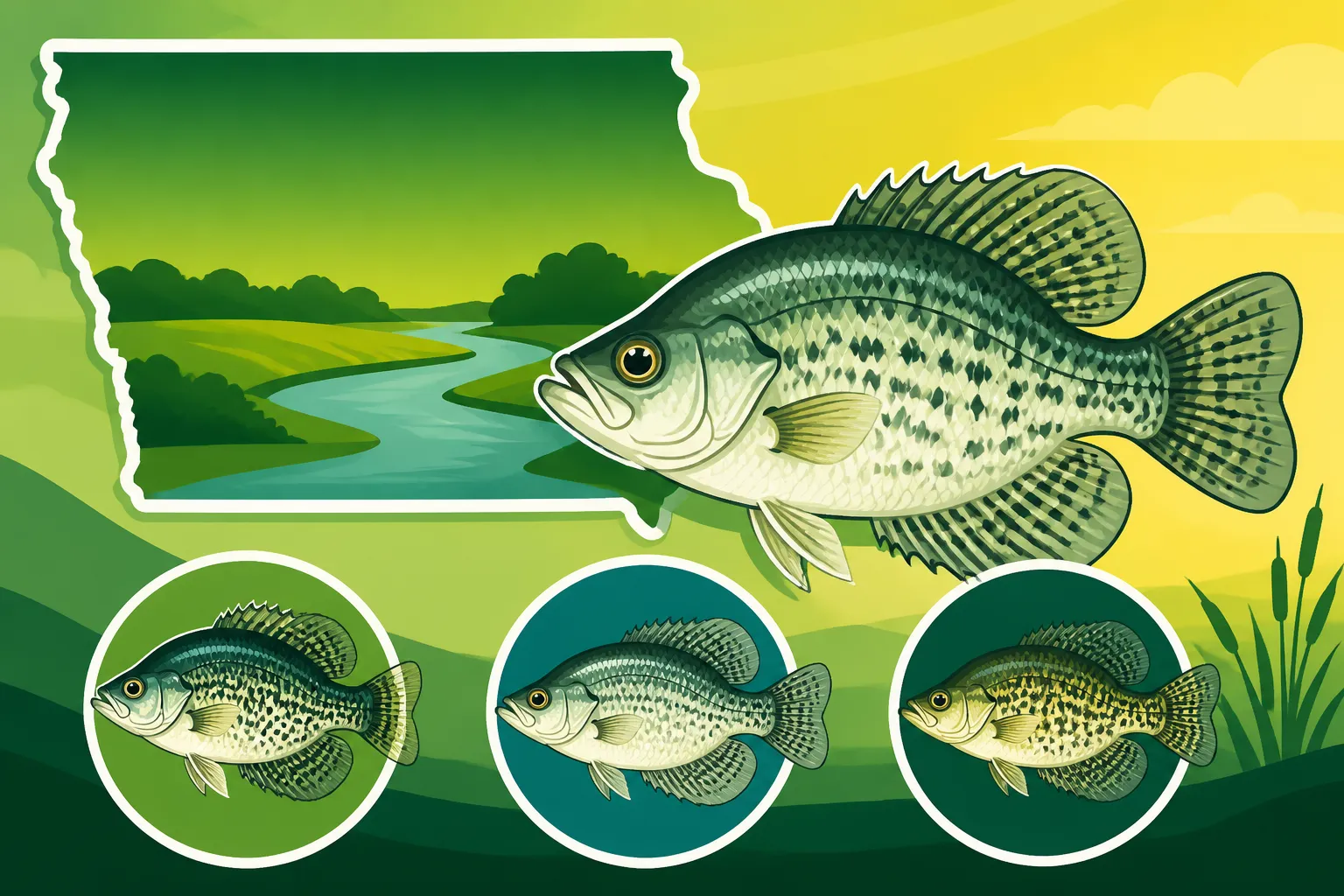
The most striking feature of the black crappie is its irregular, speckle-like dark spots scattered randomly over a silvery-gold to olive-green body. These spots don't form vertical bands like you might see on its cousin. Their body shape tends to be deeper and more compressed, almost circular, giving them a "slab" like appearance. If you hold one up, you'll often notice a slightly dished profile from the top of its head to its dorsal fin.
A key identifier, and one of the most reliable ways to tell them apart, is counting the spines on their dorsal fin. Black crappie typically have 7 or 8 dorsal spines. This isn't always easy to count accurately in a squirming fish, but it’s a definitive characteristic. Many anglers, myself included, have found an inexpensive fish identification guide, perhaps one picked up at a local tackle shop or ordered online through platforms like Amazon, to be an invaluable tool for quickly confirming these features on the water.
Preferred Habitat and Behavior
Black crappie generally prefer clearer, cooler waters with abundant aquatic vegetation or submerged structure. Think about those beautiful Iowa lakes with lily pads, weed beds, or sunken timber – that's prime black crappie territory. They often hang out around these features, using them as ambush points for prey and as cover from predators. They're also quite comfortable in slightly deeper water than white crappie, especially during the warmer months, often suspending over brush piles or deep rock formations.
Their feeding habits are largely visual. They are highly attuned to their surroundings and will readily strike at small jigs or minnows presented near their cover. During the spring spawn, black crappie will move into shallower areas, building nests and guarding their eggs. After the spawn, they typically retreat back to deeper cover, making them a bit more challenging, but still very rewarding, to locate. Learning about Iowa Fishing Techniques Guide can help you adapt your approach.
Getting to Know the White Crappie
The white crappie is another fantastic game fish found abundantly throughout Iowa. While often confused with its black crappie counterpart, it has its own unique features and preferences that make it equally exciting to pursue.
Unique Stripes and Body Structure
Unlike the random speckles of the black crappie, the white crappie sports more organized, darker vertical bars or stripes along its sides. These bars can be quite pronounced or faint, depending on water clarity and the individual fish's mood, but they are generally there. Their overall body color tends to be lighter, often silvery with a greenish tint on their back.
Their body shape is typically more elongated than the black crappie, making them look a bit "taller" rather than "rounder." When you compare the two side-by-side, the white crappie often appears more streamlined. Similar to the black crappie, counting the dorsal spines is a surefire way to identify them: white crappie will consistently have 6 dorsal spines. It's a subtle but crucial detail that confirms your identification.
Favorite Environments and Habits
White crappie are often more tolerant of turbid (murky) waters and prefer slower-moving rivers, larger reservoirs with some siltation, and impoundments. They thrive in environments where there's plenty of open water and often associate with vertical structure like bridge pilings, standing timber, or old river channels. They are generally less dependent on dense aquatic vegetation than black crappie.
These fish are opportunistic feeders, often schooling in open water and moving to follow baitfish. During the spawn, they also move shallow, often earlier than black crappie, and will build nests near logs, rocks, or other submerged objects. They tend to be more nomadic than black crappie, often moving in larger schools, which can lead to incredible "hot streaks" if you find them. Check out our Crappie and Sunfish Combined Limit article for more details on panfish regulations.
Key Differences and How to Tell Them Apart
Alright, let's get down to the nitty-gritty of distinguishing these two similar but distinct species. It's not just about bragging rights; knowing the difference can genuinely improve your fishing success by helping you understand where to look and what techniques to use.
Spotting the Visual Cues
The easiest way to differentiate crappie species without having to handle the fish too much (especially if you're planning catch and release) is by looking at their markings and body shape.
- Spots vs. Stripes: Black crappie have irregular, scattered dark spots, giving them a "peppery" look. White crappie, on the other hand, usually display distinct vertical bars or stripes along their sides. This is often the first visual cue anglers use.
- Body Shape: Black crappie are typically deeper-bodied and more rounded or "slab-sided," while white crappie tend to be more elongated or "football-shaped."
- Mouth Size: While subtle, black crappie generally have a slightly smaller mouth compared to their white crappie cousins.
It takes a little practice, but once you've seen a few of each, these visual cues become second nature.
The Dorsal Fin Count: The Definitive ID
When visual cues are ambiguous (and they can be, especially in different lighting or water conditions), the most reliable method for identification is counting the spines in the dorsal fin.
- Black Crappie: Almost always have 7 or 8 spines in their dorsal fin.
- White Crappie: Consistently have 6 spines in their dorsal fin.
This is a biological fact that holds true across their range. Gently hold the fish and carefully count the stiff, sharp rays in the front part of the dorsal fin. This is the "gold standard" for differentiating them. If you're still unsure, don't fret! Most anglers consider a crappie a crappie, and regulations generally don't distinguish between the two for daily limits.
Here’s a quick reference table to help you compare:
| Feature | Black Crappie | White Crappie |
|---|---|---|
| Body Markings | Irregular dark speckles/spots | 5-7 distinct vertical bars or stripes |
| Dorsal Spines | 7 or 8 (usually 7) | 6 |
| Body Shape | Deeper, more rounded/compressed (slab-sided) | More elongated, taller body |
| Preferred Water | Clearer, cooler water, heavy vegetation/cover | Murkier, warmer water, open water/vertical structure |
| Mouth Size | Slightly smaller mouth | Slightly larger mouth |
Habitat and Feeding Pattern Distinctions
Knowing where each species prefers to live can also guide your identification even before you cast. If you're fishing a clear lake with lots of submerged timber and thick weed lines, the crappie you catch there are more likely to be black crappie. If you're on a larger, slightly turbid river system, targeting bridge pilings or deep river bends, you'll probably encounter more white crappie.
Black crappie are often more structure-oriented and will suspend directly in or around cover, waiting for prey to come to them. White crappie tend to be more nomadic, often schooling in open water and actively pursuing baitfish. This difference influences not only where you find them, but also the best Crappie Jig Fishing Techniques to employ. For example, vertical jigging close to timber might be better for black crappie, while trolling small crankbaits could be more effective for white crappie in open water.
Where to Find Crappie in Iowa
Iowa offers a fantastic variety of fishing opportunities for both black and white crappie. From sprawling reservoirs to quiet farm ponds, these panfish are accessible to anglers all over the state. Understanding their general preferences will help you narrow down the best spots.
General Crappie Hotspots Across the State
Crappie are incredibly widespread in Iowa, which is great news for anglers! You'll find them in most natural lakes, reservoirs, flood control impoundments, and even many of the larger rivers, especially in backwater areas and oxbow lakes. Major systems like the Mississippi River, particularly its backwater sloughs and calmer pools, are prime locations for both species. Big reservoirs such as Saylorville, Rathbun, and Coralville are also renowned for their crappie populations.
Smaller lakes and community ponds, especially those with good habitat management, can also hold surprising numbers of crappie. The key is usually finding areas with submerged structure – brush piles, fallen trees, old roadbeds, or man-made fish attractors. If you're looking for specific spots, exploring the Iowa Fishing Atlas Access Points can reveal some fantastic hidden gems and public fishing opportunities.
Specific Habitats for Each Species
While there's overlap, knowing the typical preferences for each crappie species can help you fine-tune your search.
For Black Crappie:
- Clear Lakes: Look for clearer water bodies like those in the Iowa Great Lakes region, especially areas with good visibility.
- Vegetation and Timber: Dense aquatic vegetation (like pondweed or coontail), lily pads, and submerged timber are black crappie magnets. They love to hide and ambush prey here.
- Deeper Structures: Rock piles, brush piles, and channel edges in deeper sections of lakes can hold black crappie, especially outside of the spawn.
- Overhanging Cover: Tree limbs hanging over the water, boat docks, and bridge pilings can also attract them, offering shade and shelter.
For White Crappie:
- Turbid Waters and Rivers: White crappie often dominate in slightly murkier water, making them common in many of Iowa's rivers and large, sometimes silty, reservoirs.
- Vertical Structure: Bridge pilings, standing timber, main river channels, and deep creek beds are all excellent places to find white crappie.
- Open Water Schools: They frequently suspend in open water, often following schools of baitfish, so look for them on your fish finder.
- Man-Made Structures: Areas around dams, riprap banks, and even old submerged foundations can be excellent white crappie territory.
- Rathbun Lake and Saylorville Reservoir are particularly known for their white crappie fisheries. If you are specifically targeting these fish, our guide to Rathbun Lake Crappie Hotspots might be a good place to start.
Tips for Catching Both Species
No matter which crappie you're after, the general principles of crappie fishing remain largely the same: find the fish, use appropriate bait and tackle, and present it effectively. However, a few tweaks can make a big difference in your success rate for each species.
Best Baits and Lures
Crappie, both black and white, are not particularly finicky eaters, but certain baits and lures definitely outperform others.
- Live Minnows: These are hands-down one of the best baits for crappie. Hooked lightly through the back or lips, a lively minnow suspended under a bobber or fished vertically near structure is hard for a crappie to resist. You can find quality live minnows at most local bait shops.
- Jigs: Small jigs, typically 1/32 to 1/8 ounce, are incredibly effective. Soft plastic bodies in various shapes (tube jigs, grub tails, paddletails) and colors (chartreuse, white, black, pink) are staples. Tipping a jig with a minnow or a small piece of worm can increase its appeal. For more specific advice, our article on Best Bait for Spring Crappie has some excellent recommendations.
- Small Crankbaits: Especially effective for white crappie in open water or when trolling. Look for small, shallow-diving models that imitate baitfish.
- Spinnerbaits: Tiny inline spinnerbaits can also entice crappie, especially when they are actively feeding or in slightly stained water.
Experimentation is key! What works one day or in one lake might not work the next. Keep a variety of options in your tackle box, readily available from retailers like Amazon or your local fishing store.
Essential Gear for Crappie Anglers
Having the right gear makes a huge difference in your crappie fishing experience. You don't need to break the bank, but a few key items will serve you well.
- Rod and Reel: A light to ultralight spinning rod (5-7 feet in length) paired with a small spinning reel spooled with 4-6 pound test monofilament or fluorocarbon line is ideal. This setup allows for delicate presentations and maximizes the fun of the fight.
- Bobbers: A good selection of bobbers, including fixed and slip bobbers, is crucial for presenting baits at various depths. Slip bobbers are particularly useful when fishing deeper water or around heavy cover.
- Terminal Tackle: A variety of small hooks (Aberdeen or Kahle hooks in sizes #4 to #8), small split shot weights, and swivels are essential.
- Net: A small, fine-mesh landing net is helpful for safely landing crappie, especially if you're trying to quickly identify and release them.
- Fish Finder: While not strictly essential, a good fish finder can be a game-changer, helping you locate submerged structure and schools of crappie, particularly in larger bodies of water. You'd be surprised at the affordable yet effective models available on sites like Amazon these days.
You can learn more about various fishing equipment in our comprehensive Iowa Fishing Gear Guide.
Adapting Techniques to the Species
Once you've got your gear, it's about how you use it.
For Black Crappie:
- Target Cover: Focus your efforts directly on heavy cover like submerged brush piles, weed lines, or standing timber.
- Vertical Presentation: Often, a vertical presentation is best. Drop a minnow or a small jig straight down into the cover, working it slowly and gently.
- Stealth: Black crappie can be a bit more wary, especially in clear water. Approach quietly and make accurate casts to avoid spooking them.
- Still Fishing: Using a slip bobber to suspend a minnow at the exact depth of the cover can be incredibly effective.
For White Crappie:
- Scan Open Water: If you have a fish finder, spend time scanning open water areas, especially over channel breaks or around vertical structures like bridge pilings.
- Trolling/Drifting: For active, schooling white crappie, trolling small jigs or crankbaits at slow speeds can be very productive. Drifting with the wind over known crappie haunts can also yield results.
- Active Retrieval: White crappie often respond well to a more active retrieve – a slow, steady reel with occasional pauses, or a subtle jigging motion.
- Night Fishing: White crappie are often very active at night, especially around lights that attract baitfish. This can be a fantastic way to fill your cooler.
Remember that crappie behavior changes with the seasons. What works in spring during the Iowa Spring Trout Stocking Strategy or other species' spawn might be completely different in summer or fall. Always consider the time of year and water temperature when planning your crappie adventure.
Disclaimer
This article is for general informational purposes only and does not constitute professional advice. Laws, prices and regulations vary by location and change over time. Consult a qualified professional for guidance on your specific situation.