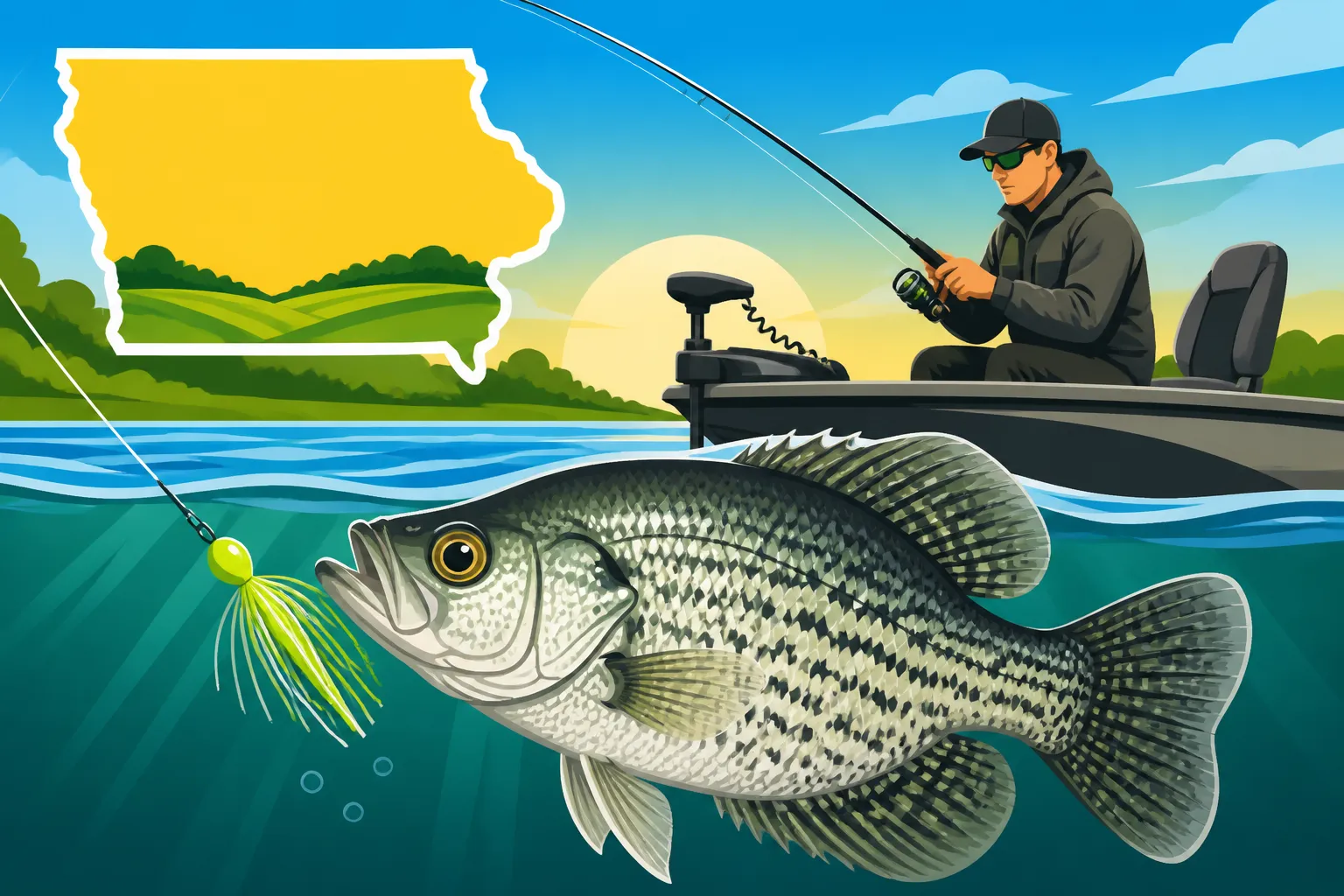
Trolling for Crappie in Iowa
One of the trickiest parts of crappie fishing in Iowa is when those finicky fish decide to scatter, suspend in open water, or simply hold in depths where traditional casting or bobber fishing just isn't cutting it. It can be incredibly frustrating to see them on your electronics but not be able to get a bite! This comprehensive guide is here to walk you through the ins and outs of trolling for crappie, a highly effective technique that allows you to cover vast amounts of water and present your baits precisely where those slab crappies are hiding, ensuring you maximize your time on the water.
Understanding Crappie Behavior for Trolling Success
Before you even think about dropping a line, understanding why crappie are where they are is the first step to successful trolling. These fish are creatures of habit, but their habits shift dramatically with the seasons and environmental conditions. Trolling allows you to adapt to these changes by systematically searching different depths and areas.
Seasonal Movements and Depths
Crappie, both black and white, are masters of adaptation, and their movements dictate where you should be trolling. Knowing these patterns helps you predict their location and present your baits appropriately.
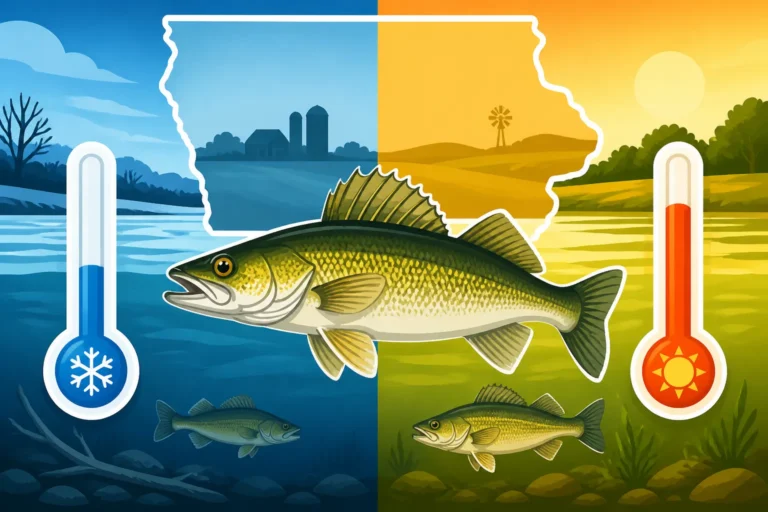
In the spring, as water temperatures nudge into the upper 40s and 50s Fahrenheit, crappie begin their migration from deeper winter haunts to shallower staging areas. During the pre-spawn, you'll often find them congregating along the first significant drop-offs or around submerged structure adjacent to spawning flats. Trolling during this period often means working closer to the banks, perhaps in 5-15 feet of water, slowly tracing contours or the edges of weed beds. As the spawn kicks into full gear (typically when water hits the low to mid-60s), they move even shallower, sometimes just a few feet deep, seeking out brush, submerged timber, or weed stalks to lay their eggs. Trolling can still be effective, but you'll need to slow down considerably and navigate carefully to avoid snags, perhaps pulling small jigs right over the tops of submerged cover.
Summer is arguably when trolling truly shines for crappie. Once the spawn is over and the water warms significantly, crappie often vacate the shallows and move to deeper, cooler water. They'll frequently suspend in the water column, sometimes over vast, open areas, or relate to deep structures like old creek channels, river bends, or submerged humps. Imagine trying to cast to individual fish suspended 20 feet down over 40 feet of water – nearly impossible! Trolling allows you to cover these expansive zones, presenting multiple baits at various depths until you find that sweet spot. This is also when you'll find them schooling more tightly, making a successful troll incredibly rewarding when you hit a hot school. In the fall, as temperatures begin to drop again, crappie undertake another significant migration. They often move shallower again, similar to spring, to feed aggressively in preparation for winter. Look for them around remaining green vegetation, wood structure, or along main lake points where baitfish are congregating. Trolling can be very productive as they gorge themselves, offering another excellent window for this technique before ice forms.
Reading the Water and Structure
Successfully trolling for crappie isn't just about pulling baits; it's about understanding the underwater landscape and how crappie relate to it. Your electronics are your best friend here, but knowing what to look for visually can also make a huge difference, especially in shallower waters.
Crappie are notoriously structure-oriented fish. They love cover – submerged timber, brush piles, rock piles, ledges, and even artificial fish habitats that the Iowa DNR places in many lakes. When you're trolling, you're not just moving randomly; you're systematically working these areas. On a lake like Rathbun Lake, famous for its crappie, understanding where the old timber stands or brush piles are located is key. Your fish finder (sonar) becomes your eyes underwater. Use it to identify changes in depth (ledges, creek channels), hard bottom transitions, and most importantly, any suspended fish or baitfish schools. If you see a cluster of arches or blobs at 15 feet over a 30-foot bottom, that's your target depth, and you need to adjust your trolling rig to put baits right in front of them. It's an active process of search and discovery.
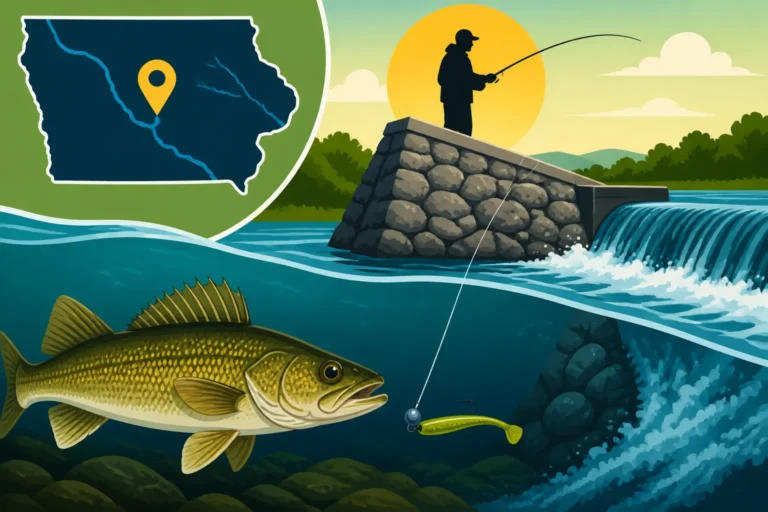
In river systems, like segments of the Des Moines River or the Mississippi River, current also plays a significant role. Crappie will often tuck behind current breaks, such as wing dams, submerged logs, or eddies, to conserve energy while still being close to passing food. Trolling along the edges of these current breaks, or through the calmer water of backwater areas and oxbow lakes, can be incredibly fruitful. Look for subtle current seams where slower water meets faster water. Even a slight current can position crappie in predictable ways, making your trolling pass more efficient. For more detailed information on specific river locations, check out our guide on Mississippi River Pool 12 Fishing.
Essential Gear for Trolling Crappie in Iowa
Trolling for crappie might seem simple, but having the right equipment makes a world of difference in your success and enjoyment. From the bend of your rod to the color of your jig, every piece plays a crucial role in presenting your bait effectively and feeling those often-subtle crappie bites.
Rods, Reels, and Line Choices
Your rod, reel, and line are the direct connection between you and the fish, so choosing wisely is paramount. Trolling for crappie often involves light tackle to maximize sensitivity and sport.
For rods, think light to medium-light action. A rod in the 6- to 8-foot range is a great all-around choice. The longer length helps spread lines if you're using multiple rods and provides a bit more shock absorption for light lines. The most critical feature is a sensitive tip. Crappie bites, especially when trolling slowly, can be incredibly subtle – sometimes just a slight "thump" or a barely perceptible bow in the rod tip. A soft, sensitive tip will telegraph these bites much better than a stiff rod. Many crappie anglers, particularly those "spider rigging," will use upwards of four to eight rods, fanned out from the bow of the boat. These specialized spider rigging rods can be even longer, sometimes 10-16 feet, to cover a wider swath of water and keep lines from tangling. You can find excellent multi-rod holders and rods perfect for this technique on platforms like Amazon.
When it comes to reels, small spinning reels (typically in the 1000 or 2000 size class) are the go-to for crappie trolling. They're lightweight, easy to cast if you need to, and provide smooth drag for fighting these delicate-mouthed fish. Pair these with a light line. Monofilament line in the 4-8 pound test range is a classic choice. It offers a good balance of strength, manageability, and most importantly, stretch. That stretch acts like a shock absorber, preventing hooks from tearing out of a crappie's paper-thin mouth when they make a sudden dash. However, if you're fishing in very clear water or dealing with particularly finicky fish, you might consider a fluorocarbon leader. Fluorocarbon is nearly invisible underwater and has less stretch than mono, offering a bit more sensitivity. Some anglers opt for braided line as their main line for its incredible sensitivity and strength, but they almost always tie on a 2-4 foot fluorocarbon leader to maintain stealth and provide some stretch to prevent hook pulls. Six-pound test is a fantastic all-around option for most crappie trolling scenarios in Iowa.
Lures and Baits for Trolling
The variety of lures and baits available for crappie is vast, but when trolling, certain types consistently outperform others by offering the right action and depth control. Experimentation is key to discovering what the crappie prefer on any given day.
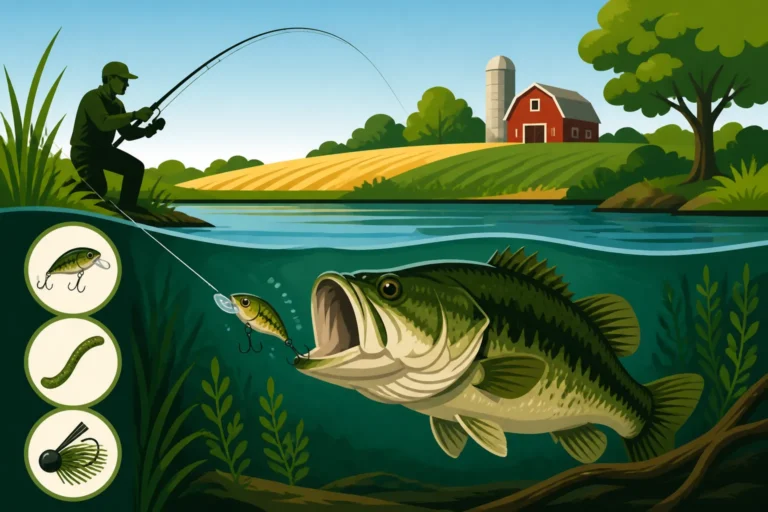
Jigs are the undisputed king of crappie lures, and they translate beautifully to trolling. Small jig heads, ranging from 1/32 oz to 1/8 oz, are typically used. Pair these with soft plastic bodies like tiny tube jigs, curly-tail grubs, or miniature swimbaits. The key here is profile and action. When trolled, these plastics provide a subtle swimming or wiggling motion that mimics small baitfish or invertebrates. Popular colors often include chartreuse, white, pink, black/chartreuse, or pearl. Don't be afraid to mix and match colors on your multiple rods if you're spider rigging – one color might suddenly become the hot ticket. You can also tip these jigs with a small piece of live bait, like a minnow, for added scent and appeal. For a deeper dive into jigging, check out our article on Crappie Jig Fishing Techniques.
Crankbaits are another excellent option, especially when crappie are suspended deeper or when you want to cover water more aggressively. Look for small, shallow to medium-diving crankbaits. Brands like Bandit, Rapala, and Berkley offer a wide array of crappie-specific models. The bill length on these lures dictates their diving depth, so having a selection that covers different depth ranges (e.g., 5-8 feet, 8-12 feet) is helpful. Trolling crankbaits allows you to achieve consistent depth without adding extra weight, and their built-in action is often irresistible to hungry crappie. Just like jigs, don't shy away from experimenting with colors, especially those that mimic local baitfish. For even more options, you can explore a wide variety of crankbaits on Amazon.
Of course, we can't forget live bait. Minnows are a time-honored crappie killer, and they can be incredibly effective when trolled. You can fish them on a single hook, often a small #2 or #4 Aberdeen hook, sometimes with a split shot a foot or two above to get them down. Alternatively, thread a minnow onto a small jig head. The natural movement and scent of a live minnow can entice even the most reluctant crappie. When trolling with minnows, remember to keep your speed very slow, allowing the minnow to swim naturally. Sometimes the subtle action of a minnow on a slow troll is exactly what's needed to trigger a strike when plastics aren't producing. For more bait ideas, consider reading our guide on the Best Lures for Panfish.
Mastering Trolling Techniques for Iowa Crappie
Trolling for crappie isn't just one technique; it's a versatile approach with several distinct methods, each suited to different conditions and angler preferences. The goal remains the same: present your baits effectively and efficiently over crappie-holding water.
"Spider Rigging" and Multi-Rod Setups
If you've ever been to a popular crappie lake in Iowa, you've probably seen a boat with a dozen or more rods fanned out like a spider's legs – that's "spider rigging," and it's an incredibly effective way to troll for crappie. This technique is designed to maximize your coverage and bait presentation, especially when fish are scattered or suspended.
Spider rigging involves positioning multiple rods, often 4 to 8 (or even more, depending on local regulations), in specialized rod holders around the front or sides of your boat. These rods are usually longer than standard fishing rods, often 10-16 feet, to spread the lines out and prevent tangles. The setup allows you to present a wide array of baits – different colors, different lure types (jigs, minnows, or both), and at different depths – all at once. This "spread" enables you to quickly identify what the crappie are biting on and at what depth. Imagine slowly drifting or using your trolling motor to move at a snail's pace, dragging baits through a school of crappie. When one rod goes down, you know you've found the depth and presentation that works, and you can quickly replicate that success on your other rods. This method is particularly deadly when crappie are suspended over deep open water or scattered along subtle depth contours.
One of the main benefits of spider rigging is its efficiency. Instead of guessing, you're actively searching. It's like having a dozen feelers in the water at once. However, there are legal considerations to keep in mind. In Iowa, generally, an angler can fish with no more than two lines at a time, but check the specific regulations in the Iowa Fishing Regulations Explained booklet, as some special waters or boundary waters may have different rules. Make sure you're always compliant with the number of lines per angler. To control your speed precisely, especially on windy days, a drift sock or two deployed off the bow can be incredibly helpful. This slows your drift and keeps your boat tracking straight, ensuring consistent bait presentation.
Single-Line Trolling and "Long-Lining"
While spider rigging is popular, sometimes a more streamlined approach is all you need, especially if you're fishing solo, from a smaller boat, or in areas with heavy cover. This is where single-line trolling and "long-lining" come into play.
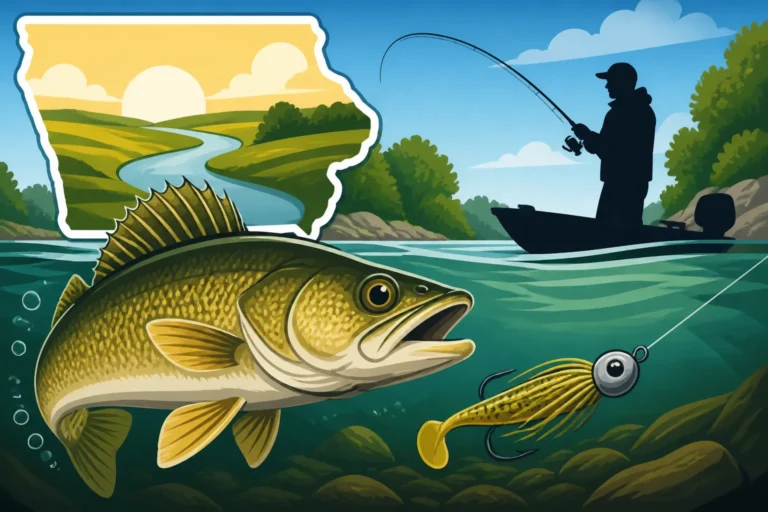
Long-lining is a simple yet potent technique where you let out a significant length of line, often 75 to 150 feet or more, behind your boat with a small jig or crankbait. The extended line length allows the lure to achieve its maximum running depth with minimal weight, making for a very natural presentation. This method is exceptionally effective in clear water environments or when crappie are particularly skittish and pressured, as the boat passes far ahead of the lure. The fish are less likely to be spooked by your presence. You can use your main outboard to troll slowly, or an electric trolling motor for more precise speed control and quieter operation.
Controlling the depth with long-lining relies on a few key factors: your line diameter (thinner line sinks deeper), the lure's weight and design (crankbaits have built-in diving capabilities), and your trolling speed. Slower speeds allow lures to sink deeper, while faster speeds lift them. If you're using jigs, a small split shot or two added to the line 18-24 inches above the jig can help it get down to the desired depth. The beauty of long-lining is its simplicity, making it a great choice for anglers who prefer a less elaborate setup while still wanting to cover water efficiently. It's an active way to search for schools of crappie, especially after the Post-Spawn Crappie Patterns in Iowa have settled into their summer patterns.
Controlling Speed and Depth
Regardless of whether you're spider rigging or long-lining, precise control over your trolling speed and bait depth is absolutely critical. Even a slight change can mean the difference between an empty livewell and a boat full of crappie.
Your trolling speed is perhaps the most influential factor. Crappie typically prefer baits presented at very slow speeds, often ranging from 0.5 to 1.5 miles per hour. This "creeping" pace allows your jigs and minnows to exhibit their most natural action and gives crappie ample time to react and strike. Using a GPS-enabled fish finder or your phone's GPS app is essential for monitoring and maintaining a consistent speed. Your electric trolling motor is your best friend here, offering silent, precise speed adjustments. On windy days, even with a trolling motor, you might find yourself drifting too quickly. This is where those drift socks mentioned earlier become invaluable; they act as underwater parachutes to slow your boat down to that perfect crappie-catching pace.
Mastering depth control is equally important. Crappie can be incredibly depth-sensitive, often holding in a very narrow band in the water column. There are several ways to control your bait's depth:
- Weight: For jigs, the weight of the jig head itself, augmented by split shots or small trolling weights (like a Lindy Trolling Sinker), will get your bait down. More weight, deeper depth.
- Line Length: As a general rule, letting out more line will allow your bait to sink deeper. This is the core principle of long-lining.
- Trolling Speed: Slower speeds allow baits to sink deeper; faster speeds cause them to rise in the water column. This interaction between speed and line length is constantly being adjusted by experienced trollers.
- Lure Design: Crankbaits are designed to dive to specific depths based on their lip angle and size. Choosing the right crankbait for the desired depth is key.
Your fish finder is indispensable for verifying your bait's depth. Many modern units have "2D sonar" or "down imaging" that can show your lure as a faint return, allowing you to see if it's running at the same depth as the crappie you're marking. It takes practice, but once you learn to fine-tune your speed and weight to consistently place your baits in the strike zone, your crappie catch rates will soar. This meticulous approach is detailed in various resources, including the broader Iowa Fishing Techniques Guide.
Top Iowa Lakes and Rivers for Trolling Crappie
Iowa is blessed with fantastic fishing opportunities, and many of its lakes and rivers hold impressive crappie populations. Trolling can be a game-changer in these waters, allowing you to effectively target crappie in their preferred habitats.
Lake Rathbun and Saylorville Reservoir
When it comes to crappie fishing in Iowa, a couple of names consistently rise to the top, and Lake Rathbun is often at the very pinnacle. Known as "Iowa's Crappie Capital," this sprawling reservoir in south-central Iowa offers incredible opportunities for trollers.
Lake Rathbun: This massive body of water, covering over 11,000 acres, is a crappie angler's paradise. Its extensive submerged timber, brush piles, and old creek channels provide countless ambush points for crappie. Trolling here is highly effective, particularly during the summer and fall months when crappie can be found suspended over deeper areas or congregating around structure. Anglers often troll small jigs or crankbaits along the edges of the submerged timber, working various depths until they pinpoint active schools. The sheer size of the lake makes trolling an ideal method to cover water and locate fish. If you're looking for specific hotspots, our guide on Rathbun Lake Crappie Hotspots can give you a head start. The crappie here are numerous, and while not always giants, there's always a chance at a real slab.
Saylorville Reservoir: Located just north of Des Moines, Saylorville is another large flood control reservoir that consistently produces good numbers of crappie. Similar to Rathbun, Saylorville features old river channels, submerged timber, and deep creek beds that crappie utilize. Trolling is an excellent strategy here, especially when crappie are relating to those deeper channels or suspended over open water. You'll want to use your electronics to identify submerged trees and brush piles, then troll around and through them with jigs or small crankbaits. The upper reaches of the reservoir, where the Des Moines River feeds in, can also hold crappie in current breaks and shallower backwaters, depending on water levels. Our resource on Saylorville Reservoir Crappie Spots offers more targeted advice for this popular lake.
Clear Lake and the Iowa Great Lakes
The natural lakes of northern Iowa also provide fantastic crappie trolling opportunities, each with its unique characteristics and prime locations.
Clear Lake: This beautiful natural lake in north-central Iowa is not just famous for walleye; it also boasts a healthy population of crappie and other panfish. Trolling for crappie on Clear Lake can be particularly effective along the edges of its extensive weed lines, over submerged rock piles, or near the many docks and boat lifts that provide cover. During the summer, crappie might suspend over deeper basins, making slow trolling with small jigs or minnows a productive technique. Anglers often find success by tracing contours where the weeds meet deeper water, especially in the mornings and evenings. Our guide, Clear Lake Panfish and Crappie Spots, provides excellent details on where to start your crappie search here.
Iowa Great Lakes (Spirit Lake, West Okoboji, East Okoboji): While these iconic lakes are often celebrated for their incredible walleye and muskie fishing, they also hold strong populations of crappie. The sheer size and complex structure of these glacial lakes make trolling an invaluable tool. Look for crappie in the shallower bays and channels of East Okoboji, or along the deeper weed edges and breaklines of West Okoboji and Spirit Lake. During late spring and early summer, trolling small jigs or crappie crankbaits just outside spawning areas can be very productive. In mid-summer, focus your trolling efforts on suspended fish over deeper basins or around significant submerged structures. The key here is patience and thoroughly working areas where baitfish are concentrated, as crappie will not be far behind. These lakes offer a diverse fishing experience, with crappie adding to the excitement.
Mississippi River Backwaters and Pools
The mighty Mississippi River, forming Iowa's eastern border, is a powerhouse for crappie fishing, and trolling is an indispensable technique for navigating its vast and varied waters. The river's unique ecosystem of backwaters, sloughs, and main channel provides endless opportunities.
The Mississippi River's backwater areas are classic crappie habitats. These calmer, often shallower sections, protected from the main current, are filled with submerged timber, lily pads, and brush, creating ideal conditions for crappie to thrive. Trolling slowly through these backwaters, especially along the edges of cover or through the deeper cuts, can yield impressive results. The challenge is navigating the numerous snags, so using weedless jigs or lighter lines that allow you to break off easily might be necessary. Focus on areas that have some connection to the main channel but offer respite from the stronger current.
Specific pools along the Iowa stretch of the Mississippi are particularly renowned for their crappie. Pool 9, Pool 10, and Pool 12 are often mentioned by avid crappie anglers. For instance, Mississippi River Pool 12 Fishing near Bellevue is famous for its diverse fishing, including excellent crappie. Trolling here might involve working current seams where calmer water meets the flow, or exploring the deeper holes and sloughs within the backwaters. The crappie in the Mississippi are often aggressive, making for exciting strikes. Keep an eye on water levels and clarity, as these can drastically affect crappie location and biting patterns on the river. Many of the techniques discussed in our general guide, Iowa Fishing Techniques Guide, can be adapted for river crappie.
Here's a quick comparison of trolling setups for different crappie fishing scenarios:
| Trolling Setup | Ideal Conditions | Rods/Lines | Speed (MPH) | Depth Control | Advantages | Disadvantages |
|---|---|---|---|---|---|---|
| Spider Rigging | Scattered or suspended crappie over open water/deep structure; searching large areas | 4-8+ long rods | 0.5 – 1.0 | Jig weight, split shots, trolling weights, line length | Maximum coverage, multiple presentations, find fish fast | Requires more gear, can be cumbersome, tangle risk |
| Long-Lining Jigs | Clear water, pressured fish, shallower depths (5-15ft) | 1-2 standard rods | 0.8 – 1.5 | Jig weight, line length (long!), speed | Stealthy, simple, natural presentation | Slower to react to depth changes, limited depth range |
| Long-Lining Cranks | Aggressive crappie, deeper suspended fish (8-20ft), covering water faster | 1-2 standard rods | 1.0 – 2.0 | Lure's diving lip, line length, speed | Covers water quickly, consistent depth, strong action | Less sensitive to subtle bites, specific depth range |
| Controlled Drifting | Windy conditions, light current, reluctant biters | 1-4 standard rods | 0.3 – 0.8 | Jig weight, drift socks, boat positioning | Very natural presentation, less boat noise | Dependent on wind/current, less directional control |
Remember to always consult the current Iowa Fishing Regulations Explained for daily bag limits and length restrictions, especially for crappie, which can vary by water body. Keeping an eye on the Crappie Daily Limit in Iowa is crucial for responsible angling.
Common Trolling Mistakes and How to Avoid Them
Even with the right gear and knowledge of crappie behavior, trolling can still be challenging. Many common mistakes can lead to frustration and empty nets. By understanding these pitfalls and learning how to circumvent them, you can significantly improve your crappie trolling success.
Incorrect Speed and Depth
One of the most frequent culprits behind a slow bite when trolling for crappie is simply presenting your bait at the wrong speed or, even worse, at the wrong depth. It's a classic scenario: you see fish on your sonar, but they just aren't biting. This often means your lure isn't quite where they are, or it's moving too fast or too slow to entice a strike.
The problem often lies in overestimating how quickly crappie will chase a bait or underestimating how precise they can be about their preferred depth. Trolling too fast makes it difficult for crappie, especially lethargic ones, to catch up to and strike your lure. It also makes your baits ride higher in the water column than intended. Conversely, trolling too slowly might not give your lure enough action or lift, causing it to drag bottom or simply not look appealing. Similarly, being even a few feet above or below a suspended school of crappie can be like fishing in a barren desert. If they are holding at 12 feet, and your bait is at 10 or 15 feet, they might not even notice it.
The solution is continuous monitoring and adjustment. Always use a reliable GPS unit to maintain a consistent trolling speed, typically between 0.5 to 1.5 mph for crappie. If you're not getting bites, try subtle changes: bump it up by 0.1 or 0.2 mph, or slow it down. For depth, your fish finder is paramount. Learn to read your sonar screen to not only locate fish but also to estimate the depth of your lure. If you're marking fish at 15 feet, adjust your line length, add a small split shot, or change to a heavier jig head to ensure your bait is running precisely at 15 feet. Don't be afraid to pull a lure up to the boat periodically to see how much weight you have on and verify its diving depth in practice. Sometimes, what you think your lure is doing might be different from reality.
Overlooking Subtle Bites and Presentation
Crappie are often described as having a "light bite," and when you're trolling, this can be even harder to detect. Many anglers miss fish because they're not attuned to the subtle signals a crappie provides, or their presentation isn't quite right.
The problem with overlooking subtle bites is that you're essentially letting fish steal your bait or spit the hook without even knowing it. When trolling, a crappie often won't deliver a jarring strike like a bass or a walleye. Instead, it might feel like a slight "tick," a momentary increase in weight, or simply a slackening of your line as the fish moves towards the boat after taking the bait. If you're using a stiff rod or not paying close attention, these subtle cues can go unnoticed until it's too late. Another presentation mistake is using dull hooks. Crappie have soft mouths, and a dull hook will often just scratch the surface instead of penetrating properly, leading to missed fish.
To avoid this, invest in sensitive rods, as discussed earlier. A rod with a soft tip will visibly twitch or load up under the slightest pressure. Keep your eyes on those rod tips constantly! Even a tiny flicker can signal a crappie. If you suspect a bite, don't hesitate to reel in and check. Sometimes, the fish are just "nipping" at the tail of your lure, requiring a slower speed or a slightly smaller bait to entice a full commitment. Always ensure your hooks are razor-sharp. A quick check with your thumbnail should confirm their sharpness; if they slide, sharpen them or replace the jig. Regularly check your baits too – sometimes a crappie might rip off the tail of a soft plastic, leaving you trolling an ineffective stub. Maintaining fresh bait and sharp hooks, along with constant vigilance, will dramatically increase your hook-up ratio.
Ignoring Regulation and Conservation
Perhaps the most critical mistake, and one that extends beyond just crappie trolling, is neglecting local regulations and the principles of conservation. It's not just about getting bites; it's about fishing responsibly and ensuring healthy fish populations for the future.
The problem here isn't just about potential fines; it's about negatively impacting the very resource we love to enjoy. Every lake and river in Iowa can have specific rules regarding daily bag limits, length limits, or even special protected zones. Forgetting to check the current Iowa Fishing Regulations Explained means you could inadvertently be breaking the law. For crappie, limits vary significantly from lake to lake. For example, some lakes might have a 10-inch minimum length, while others might allow a higher daily bag limit. Fishing without a current license is also a common oversight that carries hefty penalties.
The solution is simple: always, always, always check the latest Iowa fishing regulations before you head out. The Iowa DNR publishes a comprehensive booklet annually, and it's also available online. Keep a copy on your boat or downloaded to your phone. Pay close attention to the specific rules for the body of water you're fishing, particularly the Crappie Daily Limit in Iowa. Practice ethical angling by handling fish gently, especially those you intend to release. If you're catching a lot of smaller crappie that don't meet the legal size, consider modifying your lure size to target larger fish. Proper conservation ensures that future generations of anglers can also enjoy the thrill of trolling for crappie in Iowa's beautiful waters.
Disclaimer
The information provided in this guide is for general informational purposes only and is subject to change. Always consult the official Iowa Department of Natural Resources (DNR) regulations and guidelines before engaging in any fishing activities to ensure compliance with all current laws and safety protocols. Fishing conditions, regulations, and fish populations can vary, so local knowledge and up-to-date resources are essential.