Best Tackle Storage for a Boat
There’s nothing quite like being out on the water in Iowa, the sun shining, the birds singing… until you need that one specific crankbait, and your tackle box has exploded into a chaotic mess of hooks, weights, and tangled lines. It’s a frustration every angler knows – a cluttered boat not only wastes precious fishing time but can also be a safety hazard. This guide is here to help you get your boat's tackle situation under control, offering practical, real-world solutions for keeping your gear organized, protected, and easily accessible, so you can focus on catching fish.
Why Smart Tackle Storage is a Game-Changer on Your Boat
You might think tackle storage is just about putting things away, but on a boat, it's so much more. It's about efficiency, safety, and protecting your investment. When you're dealing with limited space, changing weather, and the unpredictable motion of the water, a haphazard approach to your gear simply won't cut it.
Maximizing Efficiency and Time on the Water
Imagine the scene: the walleye are biting, but you’re fumbling through a jumbled bin, trying to find that specific jig. Every minute spent searching is a minute not spent fishing. Good tackle storage puts what you need, exactly when you need it, right at your fingertips. This means less frustration and more productive time with your line in the water. For anglers targeting How to Catch Walleye in Iowa or trying to make the most of a Spring Fishing in Iowa run, having quick access to your go-to lures can make all the difference between a good day and a great one.
Think about how often you switch baits or rigs. If your gear is organized by species, depth, or even color, you can grab what you need in seconds. This is especially crucial when fishing different depths or structures, like moving from casting shorelines for bass to jigging open water for crappie. An organized system allows for fluid transitions, keeping your momentum and focus on the fish.
Protecting Your Valuable Investment
Fishing tackle isn't cheap, and the marine environment can be tough on it. Hooks rust, lines get frayed, and plastics melt if left exposed to the sun. Effective tackle storage safeguards your rods, reels, lures, and other accessories from the elements, accidental damage, and even loss overboard.
Waterproof or highly water-resistant storage is a must for protecting expensive electronics, spare reels, and delicate baits from splashes and rain. UV-resistant materials also prevent your soft plastics from degrading and your hard baits from fading or cracking. Investing in quality storage is an investment in the longevity of your fishing gear, saving you money in the long run by preventing premature wear and tear.
Enhancing Safety and Reducing Clutter
A cluttered boat is a dangerous boat. Loose hooks, scattered lures, and tripping hazards are accidents waiting to happen, especially when the boat is rocking or you're moving around quickly to net a fish. Good storage keeps everything contained and secure, minimizing these risks.
Beyond just preventing accidents, a tidy boat makes for a more enjoyable experience for everyone on board. No one wants to share a small space with scattered gear. Whether you're fishing solo or bringing the family along for a day on the lake, an organized vessel contributes to a more relaxing and safe environment. This becomes even more critical when teaching younger anglers, as they can more easily find their gear and avoid accidental hook pricks.
Exploring Different Tackle Storage Solutions for Your Boat
Just like there's a specific lure for every fish, there's a specific storage solution for every boat and every angler's needs. From portable boxes to built-in systems, understanding your options is the first step to a well-organized craft.
Traditional Tackle Boxes and Utility Bins
These are the workhorses of fishing storage, and for good reason. Traditional hard-sided tackle boxes, often with multiple trays, have been around forever. They offer rigid protection and are great for organizing smaller items like hooks, swivels, and weights into dedicated compartments. Modern versions are often made from durable, impact-resistant plastic and feature secure latches.
Utility boxes, often clear plastic containers, are fantastic for sorting lures by type, size, or species. They fit neatly into larger bags or boat compartments and allow you to see what’s inside at a glance, eliminating guesswork. You can find these in various sizes, perfect for everything from your Crappie Jig Fishing Techniques setup to larger muskie baits. Many anglers buy a variety of sizes, dedicating specific boxes to specific techniques or fish, which can be invaluable when you're targeting multiple species during a single outing. Bass Pro Shops and Amazon offer a wide range of these versatile boxes.
| Storage Type | Pros | Cons | Best For |
|---|---|---|---|
| Hard-Sided Box | Durable, impact-resistant, often waterproof | Bulky, can be heavy, less flexible organization | Small components, jigs, protecting delicate items |
| Soft-Sided Bag | Flexible, portable, often customizable | Less rigid protection, can get wet inside if not sealed | Multiple utility boxes, quick grab-and-go, easy transport |
| Built-In Compartments | Out of the way, secure, maximizes boat space | Fixed location, less flexible for gear changes | Rods, nets, larger items, rarely used gear |
| Specialized Organizers | Tailored for specific gear (e.g., worm binders) | Limited use, may not fit all boat setups | Soft plastics, specific lure types, leader materials |
Soft-Sided Tackle Bags and Backpacks
For anglers who value portability and flexibility, soft-sided tackle bags are a fantastic choice. These often come with multiple external pockets and a main compartment designed to hold several utility boxes. They’re much easier to carry than traditional hard boxes, especially when you’re walking from the parking lot to the dock, or transferring gear between boats.
Many soft bags are made from water-resistant materials, and some even have waterproof bases to keep contents dry when placed on a wet deck. They allow you to consolidate several utility boxes into one grab-and-go unit. This is perfect for fishing trips where you might only need specific gear for Trout Fishing Streams in Northeast Iowa or for quickly switching between different types of fishing. Look for bags with heavy-duty zippers and comfortable shoulder straps if you plan on carrying them any distance.
Integrated and Built-In Boat Storage
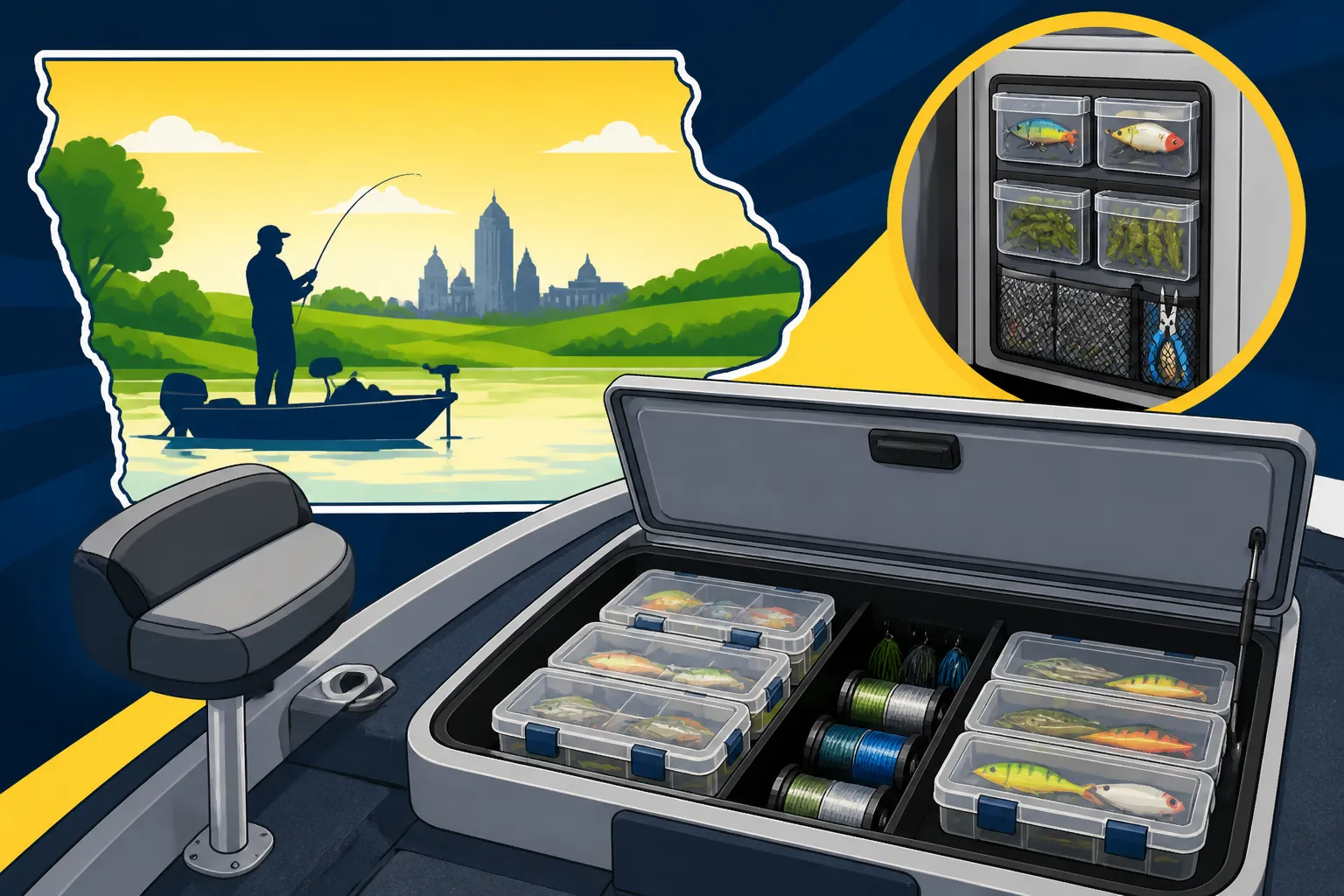
Many modern fishing boats come with built-in storage solutions, such as rod lockers, dry compartments under seats, and dedicated tackle centers. These are incredibly convenient because they maximize space and keep gear out of the way, making for a cleaner deck. Utilizing these spaces effectively is key to maintaining a clutter-free boat.
Built-in rod lockers keep your rods secure and prevent them from getting stepped on or tangled. Dry compartments are ideal for items that absolutely cannot get wet, like extra clothing, first-aid kits, or your camera. Some boats even have innovative tackle storage systems integrated into the console or seat bases, providing quick access to frequently used baits and tools. If your boat lacks these, consider adding aftermarket options like marine-grade storage boxes that can be mounted permanently.
Specialized Storage Solutions
Beyond the basics, there are many specialized storage options designed for specific types of tackle. These can be incredibly helpful for keeping particular items in top condition and easily accessible.
- Worm Binders: These zippered binders with clear plastic sleeves are perfect for storing soft plastics. They keep different colors and styles separated, prevent them from melting together in the heat, and make it easy to flip through your collection.
- Leader Wallets: For those who use a variety of leader materials or pre-tied leaders, a leader wallet keeps them organized and tangle-free. This is essential for delicate fluorocarbon or monofilament lines used for finesse fishing.
- Rod Holders: While not strictly "tackle" storage, proper rod holders are crucial. Whether they're vertical holders on the console, horizontal racks in a locker, or temporary holders for trolling, they keep your rods safe and ready. For boats without sufficient holders, portable ones that clamp to railings or pedestals can be a great addition. Best Rod Holders for Boat Fishing delves deeper into these options.
- Magnetized Trays: Small magnetic trays are fantastic for holding hooks, swivels, and small weights while you're tying knots. They prevent tiny components from rolling away and disappearing into the abyss of your boat.
Key Considerations for Choosing Your Boat Tackle Storage
Selecting the right tackle storage isn't a one-size-fits-all endeavor. What works for a small jon boat might not work for a large bass boat. You need to consider your boat's size, the type of fishing you do, and the Iowa weather conditions you often encounter.
Boat Size and Available Space
The amount of space you have on your boat is probably the biggest factor. A small kayak or canoe will require compact, highly portable solutions, perhaps a single soft-sided bag that can be secured. For those out on a bigger craft like one suited for Fishing the Iowa Great Lakes, you might have the luxury of larger, more integrated systems.
- Small Boats (Kayaks, Canoes, Jon Boats): Prioritize compact, secure, and often waterproof bags or small boxes. Everything needs to be easily accessible but also out of the way to maintain clear paddling or casting space. Consider tackle bags designed to fit into milk crates or behind seats. Kayak Fishing Gear Guide for Iowa Rivers offers excellent insights here.
- Medium Boats (Bass Boats, Multi-Species Boats): These often have dedicated compartments. Focus on filling these with utility boxes organized by species or technique. Soft bags can still be useful for carrying specific setups for a particular outing.
- Large Boats (Pontoon, Cabin Cruisers with Fishing Focus): You might have room for multiple large tackle boxes, dedicated storage bins, and even custom-built organizational systems. The challenge here is not space, but making sure everything is still easy to access without becoming overwhelming.
Water Resistance and Durability
Iowa weather can change on a dime, and a sudden downpour can quickly soak unprotected gear. Investing in water-resistant or even fully waterproof storage is a smart move. Look for boxes with O-ring seals and strong, positive-locking latches. Many soft-sided bags now feature waterproof bottoms or storm flaps over zippers.
Durability is also paramount. Your tackle storage will take a beating from being jostled around in the boat, dragged across docks, and exposed to sun and spray. Heavy-duty plastics, reinforced stitching on bags, and corrosion-resistant hardware will ensure your storage solutions last for many seasons. Products from reputable brands often stand up better to the rigors of frequent use.
Accessibility and Organization System
The best storage system is one you can actually use quickly. If you have to dig through three layers of gear to find one specific lure, it defeats the purpose. Think about how you fish and what you need most often.
- Frequent Access: Keep your most-used baits, tools (like pliers and line cutters), and terminal tackle in an easily reachable spot. A smaller "day box" or utility tray that sits on the deck, or a dedicated compartment right by your fishing station, works well.
- Less Frequent Access: Reserve deeper compartments or under-seat storage for backup gear, spare spools of line, first-aid kits, or baits you only use occasionally.
- Categorization: Develop a system. Organize by:
- Fish Species: One box for How to Catch Bass in Iowa, another for How to Catch Catfish in Iowa.
- Lure Type: All crankbaits together, all soft plastics, all jigs.
- Depth/Technique: Shallow baits, deep water presentations, topwater lures.
- Color: Especially helpful for soft plastics or specific jig colors.
Consistency is key, so everyone on the boat, even a guest, can quickly understand your system.
Optimizing Your Boat's Layout for Tackle
Once you have your chosen storage solutions, the next step is to integrate them seamlessly into your boat's layout. This isn't just about stowing things; it's about creating a functional workspace that enhances your fishing experience.
Leveraging Vertical Space and Mounting Solutions
Boats, especially smaller ones, have limited horizontal surface area. Don't forget about vertical space! Many ingenious products allow you to mount tackle storage on walls, inside compartment lids, or even on pedestal seats.
- Wall-Mounted Organizers: These can hold pliers, scissors, or even small utility boxes, keeping them off the deck but within easy reach. Some even have slots for knives or small flashlights.
- Net and Gaff Holders: Keeping your landing net and gaffs out of the way but ready for action is essential. Many boats have built-in clips or straps, but if not, aftermarket options can be easily installed.
- Rod Racks: Vertical or horizontal rod racks can be mounted to consoles, gunwales, or even inside cabin ceilings. This protects your rods and keeps them from cluttering the deck. Ensure they are secure enough to handle rough water.
For those with limited built-in options, consider aftermarket accessories. Amazon offers a variety of marine-grade mounting brackets and customizable storage grids that can be adapted to your specific boat layout. Always ensure any mounted accessories are secure and won't interfere with boat operation or movement.
Customizing for Your Fishing Style and Species
Every angler is unique, and your tackle storage should reflect your primary fishing interests. If you primarily chase Muskie Fishing in Iowa, your storage needs will be vastly different from someone focused on Bluegill Fishing in Iowa in farm ponds.
- Muskie/Pike Anglers: You'll need substantial storage for large bucktails, crankbaits, and heavy leaders. Often, dedicated storage for these oversized lures, perhaps in large utility boxes or even specialized tubes, is required. Your rods will also be longer and heavier, demanding robust rod storage.
- Walleye/Crappie Anglers: These typically use smaller jigs, live bait rigs, and medium-sized crankbaits. Utility boxes filled with jig heads, plastics, and minnow buckets (with aerators!) will be central. Easy access to these smaller items is paramount.
- Bass Anglers: Soft plastics, spinnerbaits, crankbaits, and topwater lures require versatile storage. Worm binders are excellent for plastics, while specialized spinnerbait boxes prevent tangles. A dedicated section for finesse baits versus power fishing baits can save a lot of time.
Don't be afraid to experiment and adjust your system over time. What works one season might need tweaking the next. The goal is to create a dynamic system that supports your evolving fishing adventures. Sometimes, even simple clear plastic bags can be effective for organizing soft plastics within a larger tackle bag, especially if you get a good deal on a bulk pack from Bass Pro Shops.
Maintaining and Refreshing Your Storage System
Even the best storage system needs regular maintenance. After each trip, take a few minutes to put things back in their proper place. This prevents small messes from turning into big ones. Regularly inspect your tackle for rust or damage and replace items as needed.
At the end of the season, or periodically throughout, do a deeper dive. Remove all tackle, clean out your boxes and bags, and check for any moisture, debris, or pests. This is also a great time to reassess your setup. Did something not work well? Was there a bait you constantly searched for? Did you acquire new gear that needs a home? Taking the time to refresh your storage ensures it remains functional and ready for your next Iowa fishing adventure. Iowa Fishing Gear Guide offers more advice on maintaining your valuable equipment.
When it comes to tackle storage on your boat, organization isn't just about being neat; it's about enhancing your entire fishing experience. By choosing the right solutions for your boat, protecting your gear, and setting up an accessible system, you'll spend less time fumbling and more time reeling in those Hawkeye State lunkers. Happy fishing!
Disclaimer
This article is for general informational purposes only and does not constitute professional advice. Laws, prices and regulations vary by location and change over time. Consult a qualified professional for guidance on your specific situation.