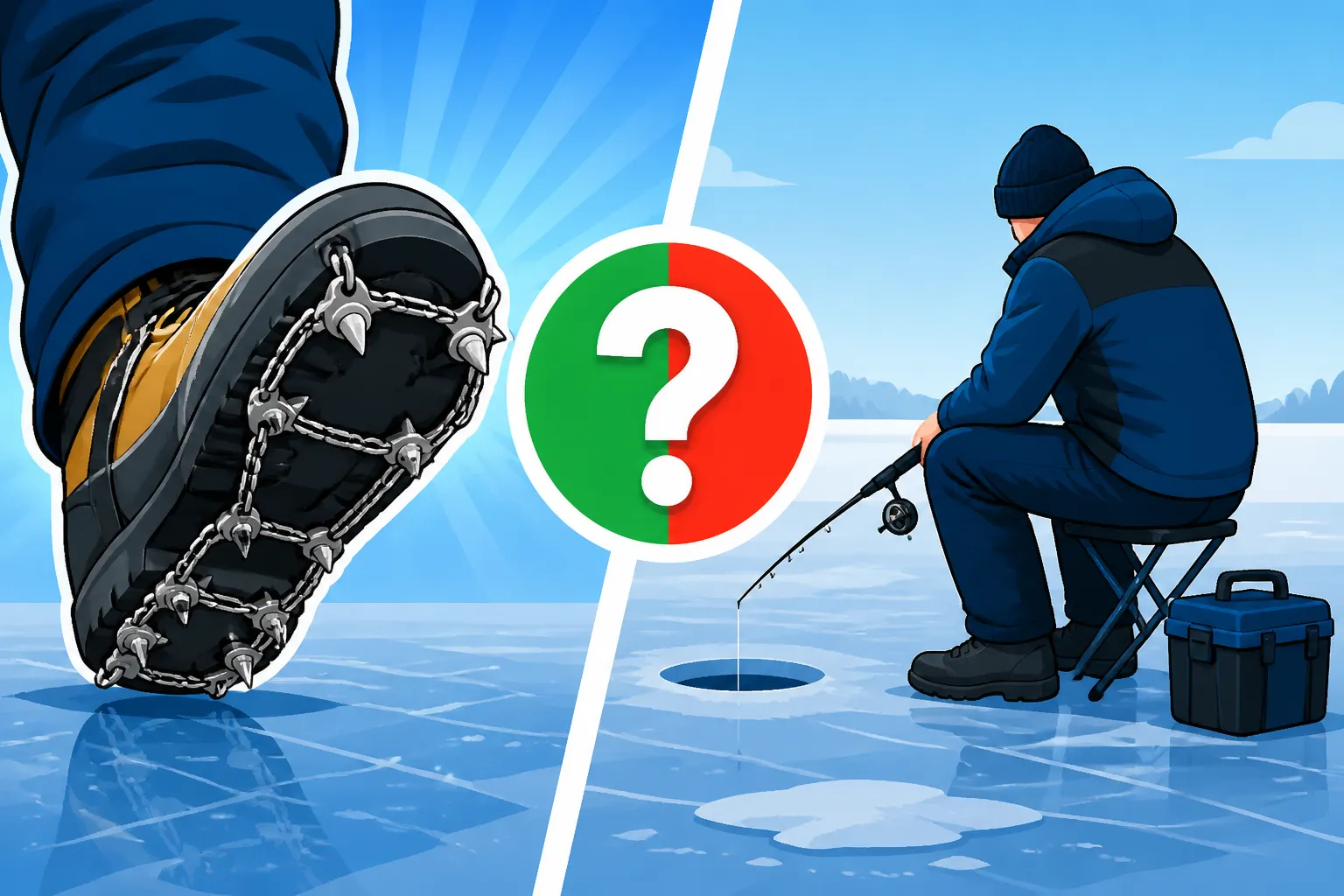
Do You Need Ice Cleats for Ice Fishing?
Stepping out onto a frozen Iowa lake or pond for a day of ice fishing is one of winter's great joys, but it also comes with its unique set of challenges. One of the biggest, and often overlooked, concerns is simply staying on your feet. The ice isn't always a smooth, pristine surface; you'll encounter everything from slick glare ice to slushy patches that refreeze into treacherous bumps, all waiting to send you sprawling. This guide will walk you through why ice cleats are not just a good idea, but often a crucial piece of gear for anyone venturing out onto Iowa's hard water.
The Slippery Truth About Ice Fishing: Why Cleats are Non-Negotiable
When you're out on the ice, your mind is often focused on the fish below, the temperature, or maybe even that perfect hot cocoa. But a single slip can change everything, turning a relaxing day into a painful, or even dangerous, ordeal. Iowa winters can be unpredictable, offering a mix of thaws and deep freezes that create wildly varied ice conditions, sometimes all within the same day.
Navigating Treacherous Ice Conditions
Imagine this: you drilled a hole earlier, and now a bit of slush has seeped up and refrozen into a slick, invisible patch right next to your bucket. Or maybe a light snow fell, only to melt slightly in the midday sun and then freeze solid again as evening approaches, creating a sheet of black ice under a thin dusting of white. These are the realities of ice fishing. Without proper traction, even the most sure-footed angler is at risk. Think about carrying an auger, a full bucket of fish, or simply trying to get to your next hot spot – all these tasks become exponentially riskier when your feet can't find purchase. A fall can lead to anything from a bruised ego and a spilled thermos to a serious injury like a sprained ankle, a broken wrist, or even a head injury if you hit your head on the hard ice or a piece of gear. When you're miles from the access point, or even just a hundred yards, such an injury could mean a long, painful crawl back to safety.
Enhancing Safety and Confidence on the Ice
Beyond preventing outright falls and injuries, ice cleats contribute immensely to your overall safety and confidence. There's a subtle yet significant psychological shift that happens when you know your footing is secure. You move more freely, you're less hesitant to carry gear, and you can focus more on the fishing itself rather than constantly looking down at your feet. This isn't just about comfort; it's about being effective and safe. If you're constantly worried about slipping, you might hesitate to help a buddy, retrieve a runaway tip-up, or even respond quickly in an emergency. Cleats give you that extra bit of grip that can make all the difference, allowing you to move with purpose and stability. They essentially act as an extension of your boots, digging into the ice and slush to create a reliable contact point, turning potentially dangerous surfaces into walkable terrain. This peace of mind is invaluable, especially when ice conditions are less than ideal, which, let's be honest, is often the case during an Iowa winter. For more on staying safe, check out Ice Fishing Safety on Iowa Lakes.
Understanding Different Types of Ice Cleats for Iowa Anglers
Just like there are different types of fishing, there are different types of ice cleats, each with its own advantages and ideal uses. Choosing the right pair depends on the conditions you typically encounter and your personal preference for comfort and security. You can find a wide range of options at dedicated outdoor retailers like Bass Pro Shops or through online platforms such as Amazon, allowing you to compare features and read reviews before making a choice.
Coil-Style Cleats vs. Spike-Style Cleats
When you start looking at ice cleats, you'll generally find two main categories: coil-style and spike-style.
Coil-style cleats, often resembling a spring-like mesh under your foot, are fantastic for everyday general ice fishing conditions. They provide hundreds of small contact points with the ice, offering excellent all-around traction on varied surfaces. They're great for situations where you might encounter mixed conditions—a bit of slick ice, some patchy snow, a frozen puddle. The coils bite into the surface without being overly aggressive. They tend to be lighter, more flexible, and often more comfortable for extended wear. They're also usually easier to put on and take off your boots. However, on pure, hard, glare ice, where absolutely maximum penetration is needed, they might not offer the same level of grip as a dedicated spike system. They're a solid, versatile choice for most Iowa ice anglers, especially if you're not planning to scale a glacier but just want to avoid an embarrassing (and painful) tumble on the lake.
Spike-style cleats, on the other hand, feature more aggressive studs or spikes, usually made of hardened steel, that protrude from a rubber harness. These are the heavy-duty option, designed to dig deep into the iciest surfaces. If you're fishing on super slick, refrozen ice, or if you're dealing with a steep approach to your fishing spot that's covered in solid ice, these are your best friends. The distinct points offer superior penetration and grip, giving you maximum confidence on truly treacherous spots. The downside can be that they might feel a bit more "clunky" or less flexible for long walks, and the aggressive spikes can sometimes be a bit much for softer snow patches. They also tend to be a bit heavier. If your ice fishing adventures frequently involve challenging, hard-ice conditions, these might be the ones you lean towards.
Important Features to Consider
Beyond the type of traction, several other features can impact your experience with ice cleats.
Firstly, the attachment system is crucial. Most cleats use a flexible rubber or silicone harness that stretches over your boot. You want something that fits snugly and securely without being so tight it's difficult to put on or causes discomfort. Look for models with reinforced eyelets or straps that won't tear easily. Some designs might have additional straps or buckles for an even more secure fit, which can be beneficial if you're very active on the ice.
Secondly, consider the durability of the materials. The traction elements themselves (coils or spikes) should be made of durable, rust-resistant materials like stainless steel or heat-treated carbon steel. The rubber or silicone harness needs to withstand freezing temperatures without cracking or becoming brittle. Remember, these will be exposed to extreme cold, water, and abrasion, so quality matters.
Lastly, think about ease of use. Can you easily put them on and take them off with cold, gloved hands? Are they compact enough to stash in your bucket or tackle bag when not needed? These small details can make a big difference when you're out in the elements. For additional gear considerations, you might find our guide on Ice Fishing Gear Basics for Beginners helpful.
Here's a quick comparison of common ice cleat types:
| Feature | Coil-Style Ice Cleats | Spike-Style Ice Cleats |
|---|---|---|
| Traction Type | Hundreds of small, spring-like coils | Aggressive, hardened steel studs/spikes |
| Ideal Use | General ice fishing, mixed ice/snow/slush conditions | Extremely slick, hard glare ice, challenging inclines |
| Grip Level | Good all-around, stable | Excellent, maximum penetration |
| Comfort | More flexible, often better for long walks | Can feel stiffer, more prominent underfoot |
| Durability | Coils can sometimes bend or wear, but generally good | Spikes are very durable, harness can be a wear point |
| Ease of Use | Generally easy to put on/take off | Can be a bit more effort to stretch over boots |
| Weight | Lighter | Heavier due to robust spikes and materials |
Beyond Cleats: A Holistic Approach to Ice Fishing Safety
While ice cleats are a game-changer for traction, they're just one piece of the larger puzzle when it comes to staying safe and comfortable on the ice. A truly prepared Iowa angler considers the entire environment and equips themselves accordingly.
Essential Ice Fishing Safety Gear
Beyond the slip factor, there are other crucial elements to consider. The most important, of course, is the ice itself. Always know Best Ice Thickness for Safe Ice Fishing before venturing out. But even on seemingly safe ice, accidents can happen. Ice picks are small, handheld tools that you wear around your neck. If you happen to break through the ice, these allow you to get a grip on the edge of the ice and pull yourself out. They are simple, inexpensive, and literally life-saving.
Another highly recommended piece of gear is a flotation suit or a personal flotation device (PFD). Modern ice fishing suits often have built-in flotation, offering warmth and the added security of buoyancy if you fall in. If a full suit isn't in your budget, wearing a traditional PFD over your layers is a smart move, especially early or late in the season when ice conditions are more variable. Think of it as insurance you hope you never need, but are eternally grateful for if you do.
Don't forget proper layering to combat Iowa's often brutal winter temperatures. Warm, waterproof boots are essential, and a good base layer followed by insulating layers and a windproof, waterproof outer shell will keep you comfortable. Our guide on What to Wear Ice Fishing in Iowa offers more detailed advice on dressing for success (and warmth!).
The Importance of Situational Awareness
No amount of gear can replace common sense and good judgment. Always fish with a buddy, especially if you're exploring new waters or conditions are questionable. Inform someone on shore of your plans – where you're going and when you expect to return. Carry a fully charged cell phone in a waterproof case, but don't rely solely on it, as cold can drain batteries quickly.
Pay attention to your surroundings. Notice changes in ice color or texture. Areas around inlets, outlets, bridges, or aerators can have significantly thinner ice due to currents or warmer water. Never assume that just because one spot is safe, the entire body of water is. Always check the ice as you go, particularly with a spud bar, especially at the beginning of the season or if you're unsure. The Iowa DNR often provides ice condition reports for popular fishing spots, so make it a habit to check those resources before heading out. Being prepared means not just having the right tools, but also having the right mindset and knowledge.
Making the Decision: Do YOU Need Ice Cleats?
So, after all this, you might still be asking: are ice cleats truly necessary for me? The short answer is, for the vast majority of Iowa ice anglers, yes, they are. But let's dive into some specific factors that can help you make an informed decision for your personal ice fishing style.
Considering Your Fishing Habits and Local Conditions
Think about where and how often you go ice fishing. Are you someone who only ventures out on perfectly clear, sunny days when the ice is thick and stable? Or do you brave all sorts of conditions, from early-season marginal ice to late-season slushy thaws and refreezes? If you're a fair-weather angler who sticks to well-traveled paths on ideal days, you might think you can get by without them. But even then, an unexpected patch of slick ice, especially if you're carrying heavy gear like your Best Ice Fishing Auger Types, could catch you off guard.
If you fish frequently, or if you regularly visit lakes known for variable conditions (like the Iowa Great Lakes, where winds can sweep away snow, leaving slick ice), then cleats really become a non-negotiable safety item. Consider the types of fish you target; if you're constantly moving to find aggressive panfish or active walleye, you're covering more ground and increasing your exposure to varied ice conditions. Even if you drive an ATV or snowmobile onto the ice, you'll eventually step off onto potentially slippery surfaces. The cost of a good pair of cleats is minimal compared to the cost of an emergency room visit or replacing broken gear.
Personal Mobility and Confidence
Your personal mobility also plays a big role. If you're younger, agile, and have excellent balance, you might feel less vulnerable. However, even the most athletic individuals can slip on unpredictable ice. For those of us who might be a bit older, or who have any issues with balance or joint stability, ice cleats move from being "highly recommended" to "absolutely essential." They provide an extra layer of security that allows you to enjoy your time on the ice without constant anxiety about falling.
Beyond physical ability, think about your confidence level. If you're constantly shuffling your feet, taking tiny steps, or gripping your gear extra tight out of fear of slipping, you're not fully enjoying your experience. Cleats can liberate you from that worry, allowing you to walk naturally, carry gear with ease, and focus on the joy of fishing. Many anglers report a huge boost in confidence after using cleats for the first time, realizing how much easier and safer their ice fishing trips become.
In short, for anyone who walks on ice, regardless of conditions or personal agility, ice cleats are a prudent and highly valuable investment. They enhance safety, reduce the risk of injury, and allow you to fully enjoy the unique thrill of ice fishing in Iowa.
Disclaimer
This article is for general informational purposes only and does not constitute professional advice. Laws, prices and regulations vary by location and change over time. Consult a qualified professional for guidance on your specific situation.