Kayak Fishing Gear Guide for Iowa Rivers
There's nothing quite like the feeling of paddling silently along one of Iowa's beautiful rivers, the sun on your face, the current pulling you gently, and the anticipation of a tug on your line. However, if you've ever tried to fish from a standard canoe or a bulky bass boat on these often-narrow, sometimes shallow, and always dynamic waterways, you know it can be a frustrating experience. This comprehensive guide is here to help you cut through the confusion and equip you with the essential kayak fishing gear specifically designed to conquer Iowa's diverse river systems, turning those struggles into successful, serene angling adventures.
Why Kayak Fishing on Iowa Rivers is So Appealing (and Challenging!)
Iowa's rivers offer an incredible tapestry of fishing opportunities, from the mighty Mississippi and Missouri borders to smaller, winding tributaries like the Cedar, Iowa, or Des Moines rivers. But these aren't your typical calm lakes. They have currents, snags, varying depths, and often require a stealthy approach. Kayak fishing is uniquely suited to these environments, but it comes with its own set of gear considerations.
The Unique Advantages of Kayak Fishing on Rivers
Imagine slipping into a quiet backwater slough on the Mississippi, inaccessible to larger boats, or navigating a shallow riffle on the Skunk River where even jon boats struggle. That's the magic of kayak fishing in Iowa. Kayaks offer unparalleled access to prime fishing spots that bigger boats simply can't reach, allowing you to explore hidden pockets, fish tight cover, and sneak up on unsuspecting fish. Their shallow draft means you can glide over submerged logs and rocks with ease, and their maneuverability is a game-changer when you're trying to hold position against a gentle current or navigate around bends.
Beyond access, there's an immersive quality to kayak fishing. You're closer to the water, more connected to nature, and the exercise of paddling adds another layer of satisfaction to your outing. It’s a peaceful, low-impact way to enjoy the outdoors and pursue your passion for fishing. The ability to launch from almost anywhere, from a public ramp to a roadside pull-off, also grants a level of freedom that other boating options simply don't provide. This versatility makes them perfect for exploring those lesser-known stretches of river that hold incredible fish.
Common Hurdles and How Gear Helps Overcome Them
While the advantages are clear, Iowa's rivers present unique challenges for kayak anglers. Currents can be tricky, especially on larger rivers or after heavy rains, making it hard to hold your position or safely navigate. Then there's the issue of stability when fighting a big fish or trying to stand up to sight fish. Space is also at a premium in a kayak, so efficient organization of rods, tackle, and safety gear is paramount to avoid a cluttered mess that can lead to frustration or even lost equipment.
The right gear, however, is your secret weapon. A stable fishing kayak with a proper seating system can alleviate back pain and provide a solid platform for casting and landing fish. Specialized anchoring systems help you stay put in the current, while well-placed rod holders keep your expensive rods safe and easily accessible. Waterproof storage solutions protect your electronics and personal items, and reliable safety gear is absolutely non-negotiable, especially when you're miles from the nearest access point. Investing in the right equipment transforms these hurdles into manageable parts of the adventure. Is Kayak Fishing Good on Iowa Rivers? delves deeper into why this style of angling is so popular here.
The Kayak Itself: Choosing Your River Companion
Your kayak is the foundation of your river fishing setup. It's more than just a vessel; it's your mobile fishing platform, your transport, and often, your personal retreat on the water. Choosing the right one for Iowa's diverse rivers is crucial for comfort, safety, and fishing success.
Sit-on-Top vs. Sit-in Kayaks for River Anglers
When it comes to kayak fishing, the primary choice is usually between a sit-on-top (SOT) and a sit-in (SINK) kayak. For river fishing in Iowa, SOTs are generally the preferred choice, and for good reason. They are inherently more stable, making them less prone to tipping, which is a huge benefit when you're battling a stubborn catfish or trying to land a feisty smallmouth in moving water. If you do happen to flip a SOT, it's much easier to right it and re-enter, as the open deck drains quickly and doesn't fill with water. This can be a lifesaver on a river where current can make re-entry difficult.
SOTs also offer more open deck space, which is fantastic for mounting accessories like fish finders, rod holders, and tackle storage. You can move around more freely, access gear easily, and some even allow you to stand up and cast, which is a massive advantage for sight fishing or getting a better vantage point. While sit-in kayaks offer more protection from the elements and often track a bit better in a straight line, their enclosed cockpit can be a hindrance for fishing, making it harder to access gear or recover from a capsize on a moving river. For most Iowa river anglers, the stability, accessibility, and ease of re-entry of a sit-on-top kayak make it the clear winner. If you're looking for more specific recommendations, our guide on Best Kayak for Iowa River Fishing offers excellent insights.
Here's a quick comparison:
| Feature | Sit-on-Top Kayak | Sit-in Kayak |
|---|---|---|
| Stability | Generally higher, easier to stand/move | Generally lower, but design varies |
| Re-entry | Very easy after capsize, self-draining | Can be difficult after capsize, fills with water |
| Gear Access | Excellent, open deck for mounting and storage | Limited, gear often stowed inside hull |
| Comfort | Often feature elevated, adjustable seating | Lower seating, sometimes less adjustable |
| Weather/Water | More exposed to elements, wet ride possible | More protection from splash/wind |
| Maneuverability | Good, especially shorter models | Can track better, but less agile |
| River Suitability | Excellent, especially for fishing, safer on rivers | Better for flat water, less ideal for dynamic rivers |
Essential Kayak Features for Iowa River Fishing
When you're browsing kayaks, keep an eye out for specific features that will elevate your river fishing game. Stability is key, so look for wider kayaks (often 32 inches or more) with a flat or pontoon-style hull design. A comfortable, adjustable seat is paramount; you'll be spending hours in it, and a sore back can ruin a trip. Many modern fishing kayaks come with elevated, frame-style seats that provide better visibility and drier seating.
Ample storage, both open and sealed, is also crucial. You'll want easily accessible tank wells for coolers or tackle crates, as well as waterproof hatches for your phone, keys, and wallet. Integrated rod holders (flush mounts or adjustable ones) are a huge bonus, keeping your rods secure while paddling or when not in use. Finally, consider features like skid plates for dragging over rocky banks, comfortable carrying handles for portages, and a paddle park or keeper to secure your paddle while you're actively fishing. Even simple features like scupper plugs to prevent water from coming in through the drain holes can make a big difference in comfort.
Propulsion: Paddles, Pedals, and Trolling Motors
How you move your kayak on the river directly impacts your fishing experience. The traditional paddle is a reliable, silent, and effective way to get around. Look for a lightweight, durable paddle that's appropriately sized for your kayak width and your height. Carbon fiber or fiberglass paddles reduce fatigue, a major consideration on longer river floats.
For hands-free fishing, pedal-drive kayaks are a game-changer. Systems from brands like Hobie (with their MirageDrive) or Native Watercraft (with their Propel Drive) allow you to propel yourself forward or backward using your legs, leaving your hands free to cast, reel, or manage tackle. This is incredibly advantageous when you're trying to hold position against a current or slowly troll a lure. While they typically come with a higher price tag, the efficiency and hands-free operation are invaluable on rivers.
Finally, electric trolling motors, often mounted on the stern or as a bow-mounted system, are becoming increasingly popular for kayak fishing, especially on larger Iowa rivers. They provide effortless propulsion and precise control, allowing you to cover more water, fight currents, and maintain exact boat control for presenting lures. Remember that even a small electric trolling motor will require a battery and may necessitate boat registration depending on horsepower and state regulations. While paddling is still often required in shallow areas, a motor can extend your range and greatly reduce fatigue.
Safety First: Non-Negotiable Gear for River Kayakers
When you're out on an Iowa river, whether it's the vast Mississippi or a smaller, more intimate stream, safety should always be your top priority. Moving water, submerged obstacles, and unpredictable conditions mean that having the right safety gear isn't just a good idea – it's absolutely essential.
Personal Flotation Devices (PFDs): More Than Just a Vest
Every time you get in your kayak, your PFD (Personal Flotation Device), or life jacket, should be on your body and properly fitted. This isn't a suggestion; it's a critical piece of safety equipment that can literally save your life. While the law often requires you to simply have one on board, wearing it is what counts in an emergency. A PFD designed specifically for kayaking or fishing will offer better comfort and utility. Look for features like large armholes for unrestricted paddling, multiple pockets for essential items (like a whistle, knife, or small first aid kit), and adjustable straps to ensure a snug, secure fit.
There are different types of PFDs, but for river fishing, a Type III or Type V PFD is usually recommended. Type III PFDs are suitable for general recreational use and offer good mobility. Type V PFDs are specialized and include things like inflatable vests, which offer a less bulky option but require regular maintenance and often manual activation. Whichever type you choose, make sure it's U.S. Coast Guard approved and fits you properly. It should be snug but not restrictive, and it shouldn't ride up around your ears when you're in the water. For more details on what to look for, check out Best Life Jackets for Iowa Boaters.
Essential Safety Accessories and Emergency Preparedness
Beyond your PFD, several other items are crucial for river safety. A loud whistle is a must-have for signaling in emergencies, easily attaching to your PFD. A sharp, easily accessible rescue knife, often specifically designed for cutting line or ropes, can be invaluable if you get tangled or need to quickly free yourself from an obstacle. Speaking of obstacles, a strong anchor with plenty of rope (and a quick-release system!) is vital for holding position or for emergency situations where you need to stop your drift. Our guide on Best Kayak Anchor System gives you the lowdown.
Always carry a waterproof dry bag containing essential items like a first-aid kit, a fully charged cell phone in a waterproof case, a small flashlight or headlamp (even for daytime trips, just in case), and a spare paddle. If you're going to be out for an extended period or on a larger river like the Mississippi, consider a signal mirror or a signaling flare. Finally, always let someone know your float plan – where you're launching, where you expect to take out, and when you anticipate being back. This simple act of communication is one of the most effective safety precautions you can take. Remember, it's always better to be over-prepared than caught off guard, especially on moving water. The article on Required Safety Equipment for Iowa Boats provides a comprehensive list that applies to kayaks too.
Rods, Reels, and Lines: Tailoring Your Tackle for River Success
The unique challenges and opportunities of Iowa's rivers mean that your rod, reel, and line choices deserve careful consideration. You need setups that can handle current, tight casting quarters, and the diverse species you'll encounter, from feisty smallmouth bass to hard-fighting catfish and elusive walleye.
Rod and Reel Setups for Common Iowa River Species
For all-around river fishing in Iowa, a medium-light to medium power spinning rod between 6'6" and 7'0" is a fantastic starting point. This length offers a good balance of casting distance, accuracy in tight spaces, and leverage for fighting fish from a seated position. Pair it with a 2000 or 2500 series spinning reel, which provides enough line capacity and a smooth drag system for most river encounters. This setup is versatile enough for throwing small crankbaits for walleye, pitching jigs for crappie, or working soft plastics for bass.
If you're specifically targeting bigger game like hefty channel catfish or flatheads in the deeper holes of the Cedar or Des Moines rivers, you'll want to step up your gear. A medium-heavy to heavy power baitcasting rod, around 7'0" to 7'6", paired with a sturdy baitcasting reel capable of handling heavier lines and larger baits, will be ideal. This gives you the backbone to turn strong fish away from snags and pull them out of heavy current. For finesse applications, especially for spooky smallmouth in clear streams, a longer, lighter spinning rod (e.g., 7'0" medium-light fast action) can provide delicate presentations and better line control. Our Iowa Fishing Techniques Guide explores specific strategies where these setups come in handy.
Line Choices: Braided, Mono, and Fluorocarbon for Rivers
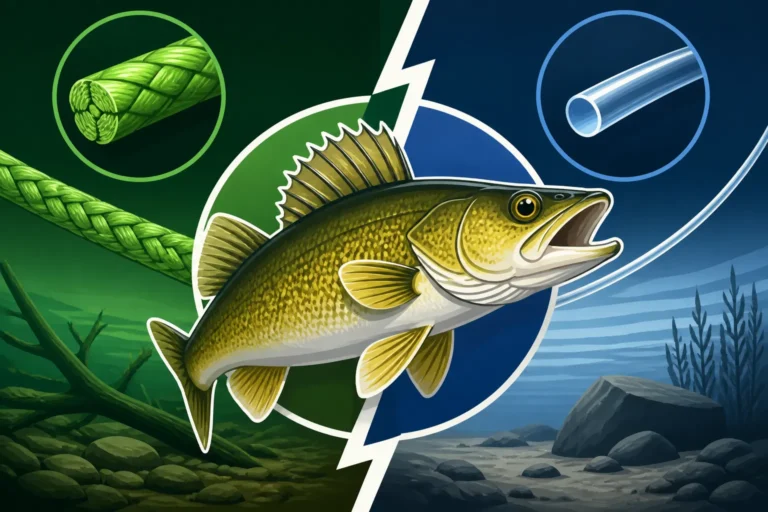
Each type of fishing line has its place on Iowa rivers. Braided line is often favored by kayak anglers due to its incredible strength-to-diameter ratio, zero stretch, and excellent sensitivity. You can feel every bump and bite, which is crucial when fishing current or deep water. Its strength also helps immensely when snagged; you can often bend hooks or straighten trebles without breaking your line. I recommend 10-20 lb test braided line for most general river applications, especially if you're targeting bass or walleye.
Monofilament line (mono) is a great choice for topwater baits or crankbaits where a little stretch can be beneficial, acting as a shock absorber. It's also more forgiving when fighting fish, reducing the chance of hooks pulling out. Many anglers use mono for catfish setups due to its abrasion resistance against rocks and logs. Fluorocarbon line (fluoro) is nearly invisible underwater, making it ideal as a leader material, especially in clear water conditions or for pressured fish. It also has less stretch than mono and good abrasion resistance. A common river setup might involve a main line of braided line, with a short (2-4 foot) fluorocarbon leader tied to it for stealth.
Terminal Tackle Essentials: Hooks, Weights, and Swivels
Your terminal tackle needs to be robust and adaptable for river fishing. When it comes to hooks, a variety of sizes and styles will serve you well. Octopus hooks and circle hooks in sizes from 1/0 to 5/0 are great for live bait and catfish rigs. For bass and walleye, jig heads in various weights (1/8 oz to 1/2 oz) and hook sizes (1/0 to 3/0) are indispensable. Offset worm hooks are perfect for Texas rigging soft plastics to be weedless around submerged timber.
Weights are crucial for getting your bait down to the strike zone in current. Bullet weights for Texas rigs, split shots for light presentations, and bell or pyramid sinkers for stationary bottom fishing (especially for catfish) are all necessary. Having a selection of 1/8 oz to 1 oz weights will cover most river scenarios. Finally, don't forget swivels. Barrel swivels help prevent line twist, especially when using spinning gear or fishing with live bait. Snap swivels make it easy to change lures quickly, which is a huge convenience when you're drifting a river and need to adapt to changing conditions. For targeted techniques like How to Catch Catfish in Iowa, having the right terminal tackle is paramount.
Tackle Management and Storage: Staying Organized on the Water
The limited space in a kayak means that efficient and waterproof tackle management isn't just a nicety – it's an absolute necessity. A cluttered kayak can lead to lost gear, missed bites, and a frustrating day on the water. Strategic storage solutions keep everything accessible, organized, and protected.
Tackle Boxes and Bags for Kayak Anglers
Forget those bulky traditional tackle boxes; kayak fishing demands a more streamlined approach. Waterproof utility boxes, often from brands like Plano or Bass Pro Shops, are your best friends. These clear, plastic boxes come in various sizes and allow you to see your tackle at a glance, minimizing rummaging. Opt for several smaller boxes organized by lure type (e.g., one for jigs, one for crankbaits, one for soft plastics) rather than one large, heavy box. This makes it easier to grab just what you need without exposing all your tackle to the elements.
These utility boxes can then be stored in a soft-sided tackle bag or a specialized kayak fishing crate. A fishing crate, often a milk crate-style box with added rod holders and bungee systems, fits perfectly in the tank well behind your seat. It keeps your tackle upright, secure, and easily accessible. Soft-sided bags, made from durable, waterproof materials, are also excellent, often featuring internal compartments for your utility boxes and external pockets for tools. Look for bags with sturdy zippers and comfortable carrying handles, as you'll likely be hauling them to and from your launch spot. Amazon offers a wide variety of these essential tackle organization solutions.
Rod Holders and Mounting Systems
Protecting your rods and having them ready for action is crucial in a kayak. Rod holders are indispensable for securing your rods while paddling, fishing with multiple lines, or simply keeping them out of the way when you're landing a fish. There are several types: flush-mount holders that are permanently installed into the kayak hull (great for trolling or general storage), and adjustable, deck-mounted holders (like those from RAM Mounts or Scotty) that clamp onto rails or specific mounting points. These adjustable holders allow you to position your rod precisely for trolling or holding it while you attend to other tasks.
Many modern fishing kayaks come with built-in gear tracks that allow you to easily slide and secure various accessories, including rod holders, without drilling into your hull. If your kayak doesn't have these, rail-mounted options or even simple bungee cord setups can work in a pinch for securing rods during transport. Always ensure your rod holders are robust enough to withstand the tug of a big fish, especially if you plan on trolling or drift fishing with them. Securing your rods, whether in flush mounts or adjustable holders, prevents them from getting tangled, broken, or worse, going overboard.
Electronics and Navigation: Seeing What's Beneath and Ahead
While traditional knowledge of the river is invaluable, modern electronics can drastically improve your kayak fishing success on Iowa's waterways. Being able to see structure, fish, and navigate effectively makes your time on the water more productive and safer.
Kayak-Specific Fish Finders and Transducer Mounting
Gone are the days when fish finders were only for big boats. Today, compact, powerful fish finders are specifically designed for kayak use. These units, often featuring CHIRP sonar, Down Imaging, or Side Imaging, allow you to visualize the bottom contour, identify submerged structure like rock piles or log jams, and, of course, mark fish. For river fishing, understanding the bottom composition and current breaks is critical, and a fish finder helps you pinpoint those sweet spots. Look for models with bright, easy-to-read screens, even in direct sunlight.
Mounting your fish finder and its transducer in a kayak requires a bit of thought. Many kayak anglers use a "dry" bag or box to house the battery and wiring, keeping it safe from splashes. Transducer mounting options range from scupper-hole mounts (which use an existing drain hole), suction cup mounts (for temporary use), or more permanent in-hull or through-hull installations. For optimal performance, especially with side-imaging, a clean, unobstructed view of the water is essential, often achieved with external mounts. Portable fish finders that clamp onto the side of the kayak are also an option for those who want maximum flexibility or fish in multiple kayaks.
GPS and Mapping for River Navigation
Navigating Iowa's rivers, especially longer stretches or unfamiliar waters, benefits greatly from GPS capabilities. Many modern fish finders integrate GPS with detailed mapping, showing river channels, depth contours, submerged features, and even navigation markers. This allows you to mark waypoints for productive fishing spots, record your tracks, and confidently navigate back to your launch point, even in low light or fog. This can be particularly important on larger rivers where getting disoriented can be a genuine concern.
Beyond dedicated fish finders, even your smartphone can serve as a capable GPS device, provided it's in a robust, waterproof case and loaded with appropriate mapping apps. Apps that allow for offline map downloads are ideal, as cell service can be spotty on some remote river stretches. However, relying solely on a phone can drain its battery quickly, so a portable power bank is a wise accessory. For serious river explorers, a dedicated handheld GPS unit offers superior battery life and ruggedness. Knowing your precise location, where the channels run, and potential hazards like wing dams on the Mississippi or shallow riffles on smaller streams, contributes significantly to both safety and fishing efficiency.
Comfort and Convenience: Making Your Day on the River Enjoyable
Fishing from a kayak on a river can be an incredibly rewarding experience, but it also demands a bit of planning to ensure comfort and convenience throughout your trip. Being prepared for varying conditions and having essential items close at hand makes all the difference between a good day and a great day.
Apparel and Weather Protection
Iowa weather can be famously unpredictable, so dressing in layers is almost always the best strategy for river kayak fishing. Start with a moisture-wicking base layer, add insulating layers as needed, and top it off with waterproof and windproof outerwear. Even on a sunny day, having a lightweight rain jacket and pants stowed away is a smart move. Long sleeves and pants, along with a wide-brimmed hat, are crucial for sun protection, especially when you're exposed on the water for hours. Polarized sunglasses are also a game-changer, reducing glare and allowing you to see into the water to spot structure or even fish.
Footwear should be quick-drying and offer good grip. Water shoes, sandals with toe protection, or even old sneakers are better than open-toed flip-flops. In colder weather or early spring, neoprene socks or wading boots can keep your feet warm and comfortable. Don't forget bug spray, especially when launching or landing in wooded areas along Iowa's rivers, as mosquitoes and gnats can quickly turn a peaceful outing into an annoying one.
Anchoring Systems and Drift Control
Controlling your position on a moving river is one of the biggest challenges for kayak anglers. An effective anchoring system is vital. A small, lightweight anchor (like a grapnel or mushroom anchor) between 1.5 to 3 pounds is usually sufficient for kayaks, depending on the current. The key is having enough anchor rope – usually 50-75 feet – to accommodate varying depths and allow for a good scope (the ratio of rope length to water depth) to hold properly.
More importantly, your anchoring setup needs a quick-release system. If your anchor gets snagged in heavy current, you need to be able to disconnect from it immediately to avoid being pulled under or capsizing. Many anglers use a simple carabiner clipped to a painter line, with the main anchor rope running through a ring at the bow or stern. A trolley system, which allows you to move your anchor attachment point from bow to stern and anywhere in between, offers the most versatility for drift control and holding position. This lets you orient your kayak for casting or against the current as needed. For detailed advice, consult How to Anchor a Kayak in Current.
The Little Things: Pliers, Nets, and Coolers
It's often the small, easily overlooked items that make your kayak fishing trip more enjoyable and efficient. A good pair of fishing pliers, preferably multi-tool style with cutters, is indispensable for removing hooks, crimping weights, or cutting line. Keep them tethered to your kayak or PFD so they don't go overboard. A landing net is also a critical piece of gear, especially when you're trying to land a larger fish from a seated position. Look for a net with a rubberized mesh to protect the fish and prevent hooks from tangling, and a handle that's long enough to reach from your seat but not so long it becomes unwieldy.
Finally, a small cooler or insulated bag is essential for keeping drinks, snacks, and any legal-sized fish you plan to keep fresh. Position it securely in your tank well or another easily accessible spot. Don't forget essentials like drinking water, sunscreen, and a small dry bag for your keys, wallet, and phone. These seemingly minor items contribute significantly to your comfort, safety, and overall enjoyment of kayak fishing on Iowa's beautiful rivers. For even more helpful tips on various fishing techniques, check out Kayak Fishing Techniques in Iowa.
Disclaimer
This article is for general informational purposes only and does not constitute professional advice. Laws, prices and regulations vary by location and change over time. Consult a qualified professional for guidance on your specific situation.