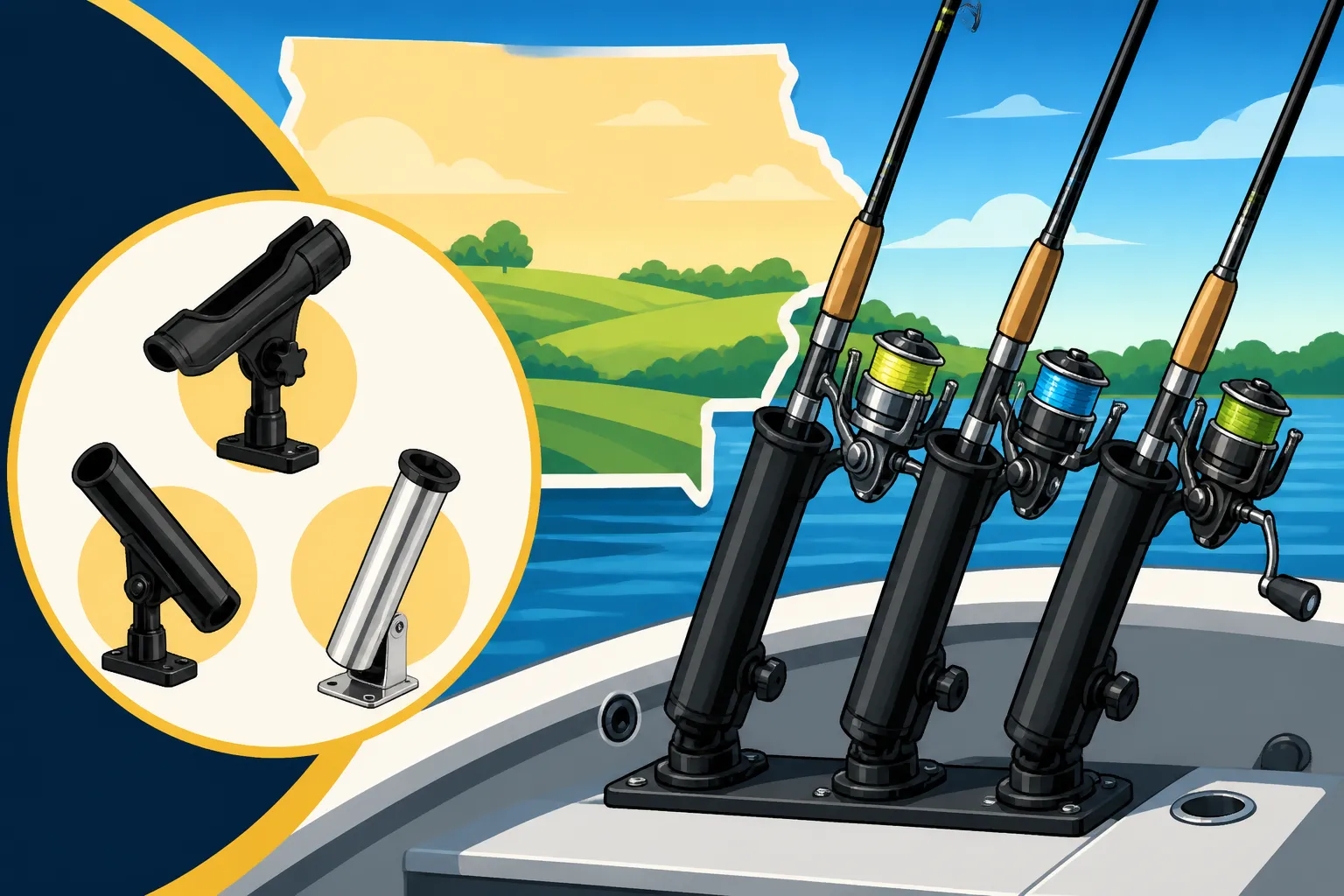
Best Rod Holders for Boat Fishing
Let's be honest, trying to juggle a rod, steer your boat, handle a net, or even just grab a cold drink when you've got a bite can feel like you need about three extra hands. It's a common struggle on Iowa's beautiful lakes and rivers – whether you're trolling for walleye on Clear Lake or patiently waiting for a big channel cat on the Mississippi. This comprehensive guide is here to untangle that multi-tasking nightmare by diving deep into the world of boat rod holders, helping you understand their immense value, the different types available, and how to choose and install the perfect ones for your angling adventures.
Why Rod Holders Are Truly Essential for Boat Anglers
You might think rod holders are just a luxury, a "nice to have" item. But for any serious boat angler, or even someone who just enjoys a peaceful day on the water, they are an absolute game-changer. They transform your fishing experience from a constant juggling act into something far more relaxed, efficient, and ultimately, more successful. Think of them as your silent fishing partners, always ready to lend a hand (or, well, a sturdy grip).
Enhancing Efficiency and Multi-Tasking Capabilities
Imagine this: you're out on Saylorville Reservoir, meticulously working a crankbait for bass, but you also want to set out a live bait rig for catfish. Without rod holders, you'd be constantly swapping rods, laying one down precariously, or worse, leaving an active line unattended. Rod holders solve this by providing dedicated, secure spots for multiple rods. This means you can troll several lines simultaneously, covering more water and increasing your chances of finding actively feeding fish. For instance, while you're focused on working a jig, another rod can be soaking a juicy worm or minnow, patiently waiting for that tell-tale tug. This capability isn't just about catching more fish; it's about making your time on the water more productive and less stressful.
Beyond just fishing, having your rods securely in holders frees up your hands for other crucial boat operations. You can safely adjust your Best Trolling Motor for Small Iowa Lakes, consult your Best Fish Finder for Iowa River Fishing for structure, or even just grab a snack without fearing your rod will go overboard the moment you look away. It’s about creating a more organized and effective fishing station, allowing you to maximize every minute spent on the water.
Protecting Your Valuable Gear
Let's face it, fishing rods and reels are an investment. A good quality setup, especially for specific species like muskie or heavier catfish, can run you a pretty penny. Tossing them haphazardly into the bottom of the boat or leaning them against a gunwale is just asking for trouble. Tips get broken, guides get bent, and reels can get scratched or filled with grime. I've seen it happen to countless anglers, and it's a gut-wrenching feeling to pull out a favorite rod only to find it's been damaged.
Rod holders provide a safe, elevated, and secure place for your rods when they're not in your hand. This protection extends beyond just avoiding accidental damage. When you hit a wake, encounter choppy conditions, or even just make a sharp turn, a rod in a holder is far less likely to fly out of the boat. They keep your lines from getting tangled with each other or with other gear, and they prevent your reels from coming into contact with the wet, dirty boat floor. It's a simple, effective way to extend the life of your rod and reel and keep them in prime fishing condition. Investing in good rod holders is really investing in the longevity of all your other fishing gear.
Types of Rod Holders: A Deep Dive
The world of rod holders is surprisingly diverse, designed to meet the needs of different fishing styles, boat types, and angler preferences. From simple, single-purpose holders to robust, multi-directional options, understanding the distinctions is key to making the right choice for your Iowa fishing adventures.
Flush Mount Rod Holders
Flush mount rod holders are often seen as the sleekest and most integrated option. They're designed to be installed into your boat's gunwale, creating a clean, low-profile look that doesn't obstruct walking space or snag lines when not in use. The holder itself typically consists of a tube that's angled (often 15, 30, or 90 degrees) to position your rod tip effectively, whether you're trolling or simply storing a rod.
The major benefit here is aesthetics and minimal footprint. When your rod isn't in it, the boat surface remains relatively smooth, which is great for smaller boats or those where space is at a premium. However, installation requires drilling a large hole into your boat's gunwale, which can be daunting for some and isn't easily reversible. You'll need to be sure of your placement. Once installed, the angle is fixed, so you can't adjust the rod's position horizontally or vertically. They're very strong and secure, often favored by saltwater anglers, but perfectly suitable for heavy-duty applications on the Mississippi River when targeting large flatheads.
Clamp-On Rod Holders
Clamp-on rod holders are the go-to choice for anglers who prefer a less permanent solution or who have specific boat features they want to utilize, like rails or transom edges. As the name suggests, they clamp directly onto a rail, transom, or even a bench seat, making them incredibly versatile. These holders come in a wide array of designs, from simple fixed-angle options to highly adjustable models that allow for full 360-degree rotation and multiple tilt positions.
Their main advantage is ease of installation and removal. No drilling is required, meaning you can reposition them as needed or take them off entirely when not fishing. This makes them popular for rental boats, kayaks (though for kayaks, we generally look at specialized Kayak Fishing Gear Guide for Iowa Rivers), or smaller craft where permanent modifications are undesirable. However, you need to ensure the clamping mechanism is robust and suitable for the rail or surface it's attaching to. A cheap clamp can slip, causing your rod to end up in the water. Look for models with strong, non-marring grips, especially if you're clamping onto delicate boat finishes.
Track System Rod Holders
Track systems represent a modular and highly adaptable approach to rod holder placement. These systems involve installing a track (usually an aluminum rail) along your boat's gunwale or transom. Once the track is in place, various accessories, including rod holders, can be slid into the track and secured. This means you can quickly move rod holders, add more, or swap them out for other tools like cup holders or electronics mounts.
This system offers unparalleled flexibility. You can adjust the spacing of your rod holders to accommodate different fishing techniques, such as running multiple lines while trolling for walleye at the Iowa Great Lakes. If you change your mind about placement, it's a simple slide and lock operation, not a re-drill. Installation of the track itself does require drilling, but once that's done, the system is incredibly versatile. Many anglers find the initial investment in a track system pays off in customization and adaptability over time. Brands like Cannon and Scotty make popular track systems, and you can often find compatible rod holders from various manufacturers, including options readily available from Bass Pro Shops or online at Amazon.
Choosing the Right Mounting Style for Your Boat
Selecting the right rod holder isn't just about the holder itself; it's crucially about how it integrates with your boat. Different boats present different mounting opportunities and limitations, and a thoughtful approach here can save you headaches and ensure your setup is both secure and practical.
Considering Boat Material and Construction
The material your boat is made from will heavily influence your mounting options. Fiberglass boats often allow for flush mount installations, but you need to ensure the gunwale is thick enough to support the holder and that you apply proper sealant to prevent water intrusion. Aluminum boats, especially those with thin gunwales, might be better suited for clamp-on or track systems, as drilling large holes can compromise structural integrity or be more challenging to seal effectively. Many modern aluminum boats come with built-in track systems or reinforced areas specifically designed for accessories.
Wood boats present their own considerations; you'll want to ensure any drilling is done carefully to avoid splitting the wood and that all holes are properly sealed against rot. Plastic or rotomolded kayaks and smaller fishing boats also often lean towards clamp-on or surface-mount options, as the material isn't always robust enough for heavy-duty flush mounts. Always consider the thickness and strength of the mounting surface. A small, lightweight plastic boat won't handle the same forces as a heavy fiberglass fishing vessel, especially when a big fish hits a trolled line.
Maximizing Space and Accessibility
Every boat has unique space constraints. On smaller jon boats or inflatables, a permanent flush mount might take up valuable real estate, whereas a clamp-on rail mount could be more practical. Consider where you typically move around the boat, where your tackle boxes sit, and where you need clear access. You don't want a rod holder to constantly be in the way or create a tripping hazard.
Accessibility is also key. Can you easily reach the rod holder to grab a rod when a fish strikes? Is it positioned so the rod tip is clear of obstacles and other lines? For trolling, you might want holders further out from the boat to spread your lines. For still fishing, closer to your seating position might be preferable. Track systems shine here, allowing you to fine-tune placement based on the day's fishing plan. Think about your most common Iowa Fishing Techniques Guide and how they'll interact with your chosen rod holder locations.
Here's a quick comparison of common mounting types:
| Mounting Type | Pros | Cons | Ideal For |
|---|---|---|---|
| Flush Mount | Clean, low-profile, very secure, aesthetically pleasing | Permanent installation, fixed angle, requires drilling a large hole | Larger fiberglass boats, dedicated trolling setups, when aesthetics are critical |
| Clamp-On | No drilling, easily removable/repositionable, versatile | Can slip if not secured properly, might mar surfaces, less stable for heavy loads | Rental boats, boats with rails, smaller craft, temporary setups |
| Surface Mount | Easy installation, fixed but sturdy, often compact | Fixed position (unless on track), requires drilling small holes | Any boat where permanent, non-adjustable placement is desired (e.g., vertical storage) |
| Track System | Highly flexible, easily adjustable, modular | Initial track installation requires drilling, higher upfront cost | Versatile anglers, multiple fishing techniques, future expandability |
Note: Surface mount refers to holders that bolt directly onto a flat surface, not flush into it. They typically have a base plate that screws down.
Key Features to Look for in a Quality Rod Holder
Once you’ve got a handle on the mounting style that works best for your boat, it’s time to scrutinize the features of the rod holders themselves. Not all rod holders are created equal, and a few key elements can make a world of difference in performance, durability, and ease of use, especially when you're battling a feisty walleye or a powerful catfish.
Material and Durability
The material of your rod holder is paramount. You want something that can withstand the harsh realities of the marine environment: sun, salt (if you ever venture beyond Iowa's freshwater, or even just hard water spray), humidity, and the constant stress of a biting fish.
- Stainless Steel: Offers excellent corrosion resistance and strength. It's a premium option, often found in high-end flush mounts, providing superior durability for the long haul.
- Anodized Aluminum: Lightweight, strong, and corrosion-resistant. Aluminum is very common for track systems and clamp-on styles. It's a great balance of strength and weight, making it a popular choice for many Iowa anglers.
- High-Impact Nylon/Plastic: While not as strong as metal, modern plastics are incredibly durable, UV-resistant, and cost-effective. They're often used for lighter-duty holders, particularly in models available at retailers like Amazon or Bass Pro Shops, but can still offer plenty of strength for panfish or smaller bass. Just ensure it's "high-impact" or "glass-filled nylon" for added rigidity.
Always check for robust construction. Thin plastics or flimsy metal won't stand up to a strong bite from a big fish or the vibrations of a long boat ride. The mechanisms for adjustment (if present) should also feel solid, not wobbly or prone to slipping.
Adjustability and Angle Options
The ability to adjust your rod holder is often a critical feature, allowing you to fine-tune your presentation to match conditions and target species.
- Fixed vs. Adjustable: Fixed-angle holders (like many flush mounts) are great for dedicated trolling or simple storage where you know the angle you need. However, adjustable holders offer much more versatility. Look for models that allow both vertical and horizontal (360-degree rotation) adjustments.
- Tilt and Swivel: Good adjustable rod holders will feature a strong tilt mechanism, often with a large, easy-to-grip knob or lever, allowing you to change the rod's angle from vertical to nearly horizontal. The swivel function lets you rotate the rod to point in any direction around the boat, which is invaluable for spreading lines, following fish, or adapting to currents in a river like the Des Moines River.
- Quick Release: Some holders incorporate a quick-release or quick-draw feature, which allows you to lift the rod out of the holder with minimal fuss, often with a simple upward tug or a press of a button. This can be crucial for fast hooksets, especially when a fish surprises you with a subtle bite. For slower-paced fishing like How to Catch Catfish in Iowa, a more secure, less "quick" release might be perfectly fine, but for aggressive species like walleye, speed can matter.
The ideal rod holder will strike a balance between adjustability for diverse fishing situations and rock-solid stability once locked into position.
Installation Tips and Best Practices
Installing your boat rod holders correctly is just as important as choosing the right ones. A poorly installed holder is a liability, not an asset, risking lost rods, damaged gear, or even personal injury. Taking your time and following best practices will ensure your holders are secure and perform optimally.
Planning Your Layout and Placement
Before you drill a single hole or clamp anything down, take a moment to carefully plan your rod holder layout. This isn't a "measure once, cut once" situation; it's a "measure five times, visualize ten times, then cut."
- Mock-Up is Key: Use painter's tape or even just hold the rod holders in position to visualize how they'll sit. Place your rods in them to ensure they clear any obstructions like cleats, navigation lights, or other equipment.
- Consider Fishing Techniques: Will you be trolling for walleye? Then you'll want holders spread out to cover a wider path and prevent lines from tangling. Are you still fishing for catfish? Then maybe positions closer to your seating area are better. Think about how many lines you typically run, keeping in mind Iowa Fishing Daily Bag Limits Guide and the legal limit on how many rods you can actively fish with.
- Ergonomics and Access: Can you easily reach the rod when a fish hits? Will the rod tip be clear of your outboard motor or other structures? Consider your casting space, especially if you plan to cast while other rods are in holders. If you use a Best Anchor Type for Iowa River Fishing, ensure the rod holder placement doesn't interfere with anchor deployment or retrieval.
- Reinforcement: If installing flush mounts or surface mounts in areas of thin fiberglass or aluminum, consider adding backing plates from underneath. These plates, often made of marine plywood, aluminum, or sturdy plastic, distribute the stress over a larger area, preventing cracks and providing a much more secure attachment point.
A thoughtful layout ensures your rod holders enhance, rather than hinder, your fishing experience.
Secure Mounting and Sealing Techniques
Once you've finalized your placement, the actual mounting process requires precision and attention to detail.
- Pre-Drilling: For any screw-in or bolt-through installation, always pre-drill pilot holes. Use a drill bit slightly smaller than the screw shank to prevent splitting wood or cracking fiberglass. For larger holes required by flush mounts, a hole saw is essential. Start with a small pilot hole first, then use the appropriate size hole saw.
- Stainless Steel Fasteners: Always use marine-grade stainless steel screws, bolts, and washers. Anything less will corrode quickly in a marine environment, leading to rust stains and structural failure. This is especially important for securing heavy-duty rod holders that will hold larger fish.
- Sealant: This is critical for any through-hull or through-deck penetration. Apply a marine-grade sealant (like 3M 4200 or 5200, or a silicone sealant) around the edges of any drilled holes and under the base of surface-mounted holders or flush mount flanges before tightening them down. This prevents water from seeping into your boat's core, which can lead to rot, structural damage, and electrical issues. Be generous, but also be prepared to clean up excess sealant for a tidy finish.
- Tightening: Hand-tighten fasteners first, then use a wrench or screwdriver to snug them down securely. Avoid over-tightening, especially on fiberglass or plastic, as this can strip threads or crack the material. Periodically check fasteners throughout the season, as vibration can sometimes loosen them. For track systems, ensure all bolts securing the track are tight and that the individual rod holder bases are properly locked into the track before use.
Maintaining Your Rod Holders for Longevity
You've invested time and effort into choosing and installing the perfect rod holders for your boat. Now, let's make sure they last. Just like any other piece of Iowa Fishing Gear Guide, a little routine maintenance goes a long way in ensuring your rod holders perform reliably for years to come, season after season.
Routine Cleaning and Inspection
After every few trips, or at least at the end of each major fishing outing, give your rod holders some attention.
- Rinse with Fresh Water: If you've been out on the water, especially in choppy conditions where spray is common, rinse your rod holders with fresh water. This helps remove dirt, grime, and any mineral deposits that can accumulate and cause corrosion or stiff mechanisms. Pay particular attention to any moving parts or clamping mechanisms.
- Wipe Down: Use a clean cloth to wipe down the exterior of the holders. For plastic holders, this is usually sufficient. For metal holders (aluminum or stainless steel), a mild soap solution can help remove stubborn grime.
- Inspect for Wear and Tear: While cleaning, take a moment to inspect all parts of the rod holder.
- Fasteners: Are all screws and bolts tight? Do you see any signs of rust or corrosion around the heads? Replace any corroded fasteners immediately.
- Cracks or Stress Marks: Check plastic components for any cracks, especially around mounting points or adjustment knobs. For metal components, look for signs of bending or fatigue.
- Moving Parts: Test the adjustability of your holders. Do they tilt and swivel smoothly? Do they lock securely in place? If they feel stiff, a little lubrication might be in order.
- Clean Out Debris: Sometimes, small pieces of fishing line, bait remnants, or even insect debris can fall into the holder tubes. Use a small brush or a blast of compressed air to clear these out. A build-up of debris can scratch your rod or prevent it from seating properly.
Regular inspections help you catch minor issues before they turn into major problems, saving you from a potentially lost rod or a frustrating fishing trip.
Lubrication and Corrosion Prevention
Metal components on rod holders, especially adjustable ones, benefit from occasional lubrication and proactive corrosion prevention.
- Lubricate Moving Parts: For adjustable rod holders with gears, hinges, or swivel mechanisms, a light application of marine-grade grease or silicone spray can keep them operating smoothly. A thin film is all you need; avoid over-lubricating, which can attract dirt. Focus on the pivot points and locking mechanisms that bear the most stress. This is particularly important for holders that see a lot of use or are frequently adjusted.
- Corrosion Inhibitors: Even stainless steel can develop surface rust (tea staining) over time, especially if exposed to harsh conditions. For aluminum parts, anodization helps, but scratches can expose bare metal. Applying a marine corrosion inhibitor spray or wax to metal surfaces can add an extra layer of protection. Products like Boeshield T-9 or various marine waxes can be wiped onto the metal components, creating a barrier against moisture and oxidation. This is a small step that can significantly prolong the life and appearance of your metal rod holders.
- Storage: When not in use, especially during the off-season, consider removing clamp-on or track-mounted rod holders and storing them indoors. This protects them from prolonged exposure to harsh winter weather, temperature fluctuations, and UV degradation. If they remain on the boat, ensure they are clean, dry, and perhaps covered to shield them from the elements. Proper storage practices for your entire Best Boats for Iowa Fishing will also contribute to the longevity of your rod holders and other onboard gear.
By making cleaning, inspection, and occasional lubrication a part of your routine, you'll ensure your rod holders are always ready for action, helping you land more fish and enjoy your time on Iowa's beautiful waters.
Disclaimer
This article is for general informational purposes only and does not constitute professional advice. Laws, prices and regulations vary by location and change over time. Consult a qualified professional for guidance on your specific situation.