Best Spoon Lures for Northern Pike
Anyone who's ever tangled with a Northern Pike knows they're aggressive, toothy predators that put up a fantastic fight. But sometimes, convincing these ambush hunters to strike can feel like a puzzle, especially when you're staring at a tackle box full of options. If you've been struggling to find that one lure that consistently gets a pike's attention, you're in the right place. This guide will dive deep into why spoon lures are so effective for Northern Pike in Iowa and help you pick the best ones for your next fishing adventure.
Why Spoon Lures Are So Effective for Northern Pike
Northern Pike are visually driven hunters, and their predatory instincts are highly tuned to detecting movement and flash. That's precisely why spoon lures have been a staple in pike anglers' tackle boxes for generations – they just work. They mimic what pike want to eat, and they do it in a way that's hard to ignore.
The Irresistible Flash and Wobble
Think about a small, injured baitfish struggling in the water. It darts, it wobbles, it flashes its sides – all signals to a hungry pike that an easy meal is nearby. Spoon lures are masters at replicating this distressed prey. As you retrieve a spoon, its curved metal body catches the light and shimmers, creating an intense flash that can be seen from a distance, even in stained water. This flash is a huge visual attractant, drawing pike in from their hiding spots.
Beyond the flash, the unique wobbling action of a spoon is critical. Each cast and retrieve makes the spoon swim with an erratic, wounded motion. This isn't a straight, predictable retrieve; it's a tantalizing dance that screams "easy target!" to a pike. This combination of visual appeal and erratic movement triggers their natural hunting response, often resulting in explosive strikes that will get your heart pounding. Whether you're fishing a quiet backwater slough or casting along a weed line, that flash and wobble are pike magnets.
Versatility in Retrieve and Depth
One of the greatest advantages of spoon lures is their incredible versatility. You're not stuck with just one way to fish them. Pike can be found in various environments across Iowa, from shallow weed beds in lakes to deeper river channels, and spoons can be adapted to almost all of them.
You can cast a spoon out and retrieve it steadily, allowing its natural wobble to do the work. Or, you can add pauses, erratic twitches, and sudden jerks to create an even more wounded baitfish presentation. Want to fish deeper? Let the spoon sink for a longer count before starting your retrieve. For anglers targeting pike holding near the bottom or in deeper pockets, jigging spoons offer a vertical presentation that's hard to beat. You can drop them down, lift your rod tip sharply, and let them flutter back down on a semi-slack line, mimicking a dying baitfish. This adaptability means you can use the same type of lure to explore different depths and cover types, adjusting your technique until you find what the pike are responding to that day. This makes them a go-to choice whether you're boat fishing or Shore Fishing Techniques for Beginners along the bank.
Durability and Weed-Less Options
Let's be real: Northern Pike have mouths full of razor-sharp teeth, and they tend to hit lures hard. Flimsy lures don't stand a chance. Spoon lures, typically made from solid metal, are incredibly durable and can withstand repeated abuse from pike. You'll get more fish-catching mileage out of a good spoon than many other lure types.
Moreover, many pike in Iowa, especially in our shallower lakes and backwaters, love to hang out in dense vegetation – think lily pads, cattails, and submerged hydrilla. This can be a nightmare for traditional treble-hooked lures, which constantly snag. Thankfully, there are excellent weedless spoon designs specifically made for this kind of heavy cover. These spoons often feature a single, upright hook protected by a weed guard, allowing them to slide through vegetation without snagging. This means you can confidently cast into those pike-holding pockets that other anglers avoid, significantly increasing your chances of success. When considering your Iowa Fishing Gear Guide, a few weedless spoons are an absolute must.
Top Spoon Lure Styles for Iowa Northern Pike
When you walk into a tackle shop or browse online at places like Bass Pro Shops or Amazon, you'll see a dizzying array of spoons. Don't worry, we'll break down the most effective styles for tackling Iowa's Northern Pike. Each type has its niche, and understanding them will help you choose wisely.
Classic Casting Spoons
These are probably what most anglers picture when they hear "spoon lure." Classic casting spoons, often tear-drop or oval-shaped, are designed to be cast long distances and retrieved. Their shape provides that signature wobbling action and brilliant flash. Brands like Johnson Silver Minnow and Daredevle (often just called "red and white" spoons) are iconic for a reason.
In Iowa, these spoons are fantastic for covering water in larger lakes, casting along expansive weed edges, or working across points. They sink at a moderate rate, allowing you to count them down to different depths before starting your retrieve. For shallower areas, a quicker retrieve keeps them higher in the water column. For deeper spots, a slower retrieve after a longer sink time will get them down to where the pike are lurking. They're particularly effective in waters like Clear Lake or West Okoboji Lake, where pike will cruise the edges of significant weed beds. Experiment with different retrieve speeds; sometimes a steady, slow wobble is key, while other times a fast burn with sudden stops will trigger a strike.
Jigging Spoons for Vertical Presentation
When pike are holding deep, perhaps near drop-offs, submerged humps, or under the ice, a casting spoon might not be the most efficient tool. That's where jigging spoons shine. These are typically heavier, more compact spoons designed to be fished vertically. They fall quickly, and with a sharp lift of the rod, they dart and shimmer, then flutter back down, mimicking a dying baitfish.
Jigging spoons are incredibly effective when you've located pike on your fish finder or when you're targeting specific structures. Imagine you're ice fishing on Spirit Lake, peering down your auger hole. Dropping a jigging spoon and working it with sharp lifts and controlled falls can provoke strikes from even lethargic pike. During open water, they're excellent for fishing bridge pilings, deep river bends on the Mississippi River, or over deep rock piles. The key is to pay attention to the fall; many strikes occur as the spoon flutters down, so maintaining control and feeling for subtle taps is crucial. For anyone looking into Ice Fishing Gear Basics for Beginners, a few good jigging spoons are a must.
Weedless Spoons for Heavy Cover
As we touched on earlier, pike love cover. They're ambush predators, and thick weeds, lily pads, or brush piles are their perfect hunting grounds. Trying to fish these areas with exposed treble hooks is an exercise in frustration. Weedless spoons are the answer. These specialized spoons feature a single, upright hook that is often shielded by a wire or plastic weed guard, allowing them to glide over and through vegetation without snagging.
The classic example is the Johnson Silver Minnow, which has been a staple for pike anglers in weedy environments for decades. The weed guard deflects weeds and snags, letting the spoon's body wobble and flash unimpeded. These are invaluable for targeting pike in heavy slop, thick lily pad fields, or even around submerged timber. You can literally drag them over the thickest cover, and when they hit an open pocket, give a twitch or pause, and a pike might explode on it. If you're fishing a shallow, weedy backwater or pond in Iowa, having a selection of weedless spoons is non-negotiable.
Trolling Spoons for Covering Water
Sometimes, pike are spread out, cruising large areas, and the best way to find them is to cover a lot of water. This is where trolling spoons come into their own. These spoons are often longer and thinner than casting spoons, designed to run with a specific action at trolling speeds. Their narrower profile creates a different wobble and flash that can be very attractive to actively searching pike.
When you're out on larger Iowa reservoirs like Rathbun Lake or Saylorville Reservoir, trolling allows you to systematically explore vast expanses. You can set up multiple rods with different trolling spoons, varying the depth with lead core line, downriggers, or even just adding weight to your line. This helps you identify the depth and presentation that pike prefer on any given day. Trolling spoons are particularly effective when targeting pike suspended over deeper water or along vast contours, helping you locate schools of baitfish and, by extension, the pike that are feeding on them. Trolling for Crappie in Iowa shares similar principles, but for pike, you'll need larger, more robust spoons.
Choosing the Right Spoon Lure: Factors to Consider
Picking out a spoon isn't just about grabbing the first shiny one you see. A few key factors will help you make the best choice for the specific conditions you're facing in Iowa's diverse waters. Thinking through these details can make a real difference in your success rate.
Size and Weight Matching Baitfish
One of the most crucial aspects of lure selection is "matching the hatch" – or in this case, matching the bait. Pike are opportunistic, but they often key in on the size of the forage available. If the pike in your fishing spot are primarily feeding on smaller shad or perch, a huge, heavy spoon might be ignored. Conversely, if there are larger suckers or white bass around, a tiny spoon might not offer enough of a meal to tempt a trophy pike.
For general pike fishing in Iowa, spoons ranging from 3 to 6 inches are a good starting point. In waters with smaller baitfish or when targeting smaller pike, leaning towards the 3-4 inch range is smart. If you're after those truly massive northern pike in places like the Iowa Great Lakes, don't be afraid to go up to 5 or even 6 inches. The weight of the spoon also dictates its sink rate and castability. Heavier spoons cast further and sink faster, ideal for deeper water or windy conditions. Lighter spoons are better for shallower areas or a slower, more deliberate presentation. Pay attention to the local forage in the waters you're fishing.
Color and Finish for Water Conditions
The color and finish of your spoon can dramatically affect its effectiveness, especially given the varying water clarity across Iowa. Pike rely heavily on their vision, so presenting the right visual cue is paramount.
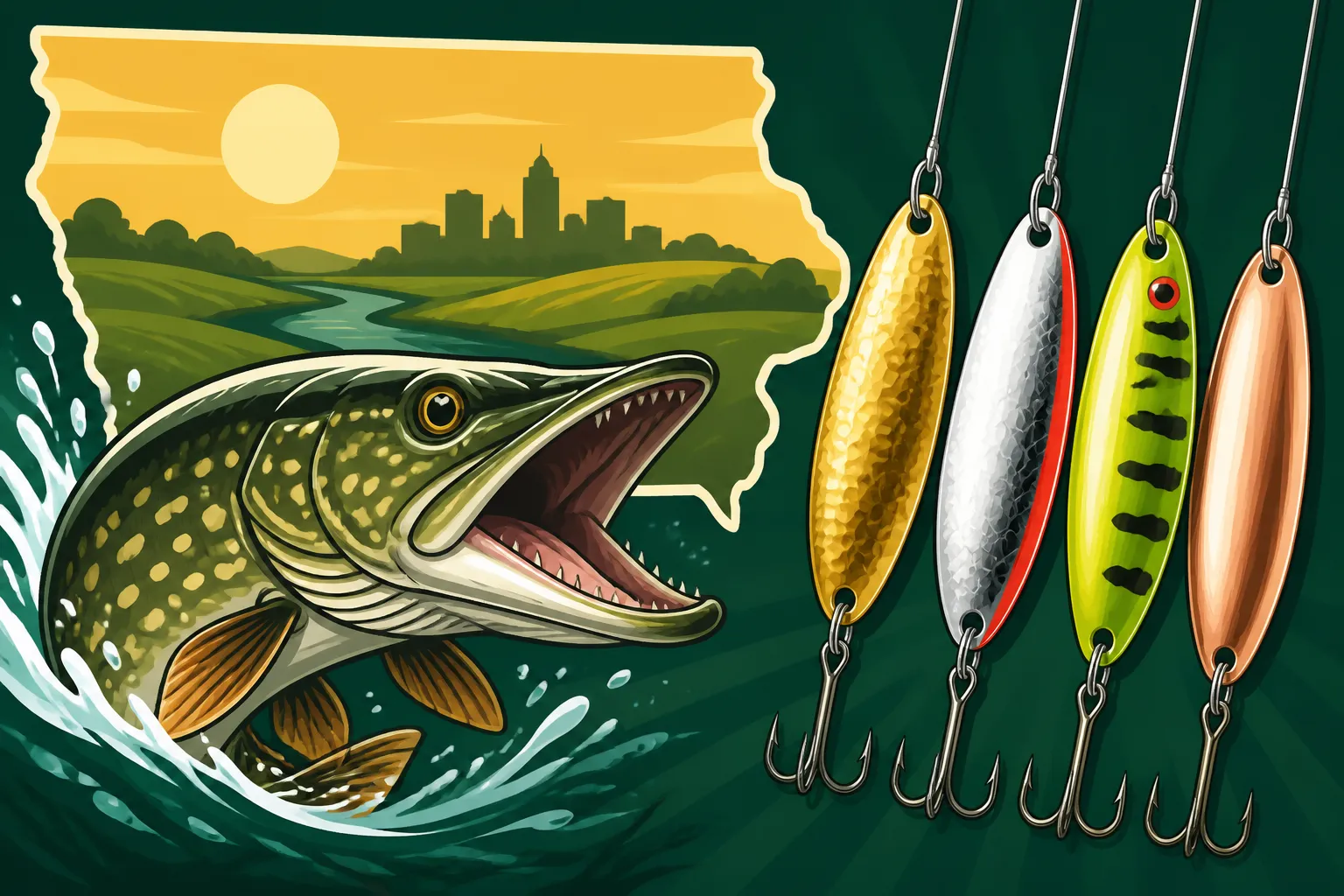
- Clear Water: In exceptionally clear lakes and rivers, natural finishes like silver, gold, or brass often work best, mimicking shiners, ciscoes, or other common baitfish. Holographic or realistic baitfish patterns can also be highly effective. The key is subtlety – you don't want to spook the fish with something too flashy or unnatural.
- Stained or Murky Water: When the water is a bit cloudy or stained (which is common in many Iowa rivers after rain), you need something that stands out. Brighter, more aggressive colors like chartreuse, orange, firetiger, or a classic red and white pattern (like the iconic Dardevle) can be fantastic. The contrast helps pike locate the lure even in low visibility. Gold finishes can also produce a good silhouette. For understanding how color plays a role, check out Best Lure Color for Muddy Water.
- Overcast Days/Low Light: On dark, cloudy days or during dawn and dusk, brighter, more reflective colors like silver or chrome can still be good, as they catch what little light is available. Fluorescent colors also tend to perform well in low light.
- Sunny Days: Under bright sun, silver, chrome, or highly reflective finishes create intense flashes that can draw pike in from a distance. However, sometimes too much flash can be overwhelming, and a duller finish might be needed.
It's always a good idea to have a range of colors and finishes in your tackle box. Don't be afraid to experiment throughout the day!
Hook Quality and Line Strength
Northern Pike are not to be trifled with. Their mouths are tough, bony, and full of teeth, and they put a serious bend in your rod. Because of this, skimping on hook quality and line strength is a recipe for heartbreak.
- Hook Quality: Many spoons come with decent hooks, but it's often a good idea to upgrade to sharper, stronger trebles or single hooks, especially for pike. Look for hooks made from high-carbon steel that are chemically sharpened. These will penetrate the pike's tough jaw more easily and hold strong during the fight. A dull or weak hook will either not set properly or straighten out under the pressure of a battling pike. Don't forget to check your hooks regularly for sharpness and damage – a quick sharpen with a hook file can save a lost fish.
- Line Strength: For Northern Pike, you'll want to use a strong line. Braided line in the 20-50 pound test range is a popular choice due to its sensitivity and abrasion resistance. A fluorocarbon or heavy monofilament leader (often 40-80 pound test) is absolutely essential to prevent those sharp pike teeth from severing your main line. Wire leaders are also an option, especially if you're frequently breaking off fish. If you're debating between line types, comparing options like Braided Line vs Monofilament for Walleye can give you insights, but for pike, prioritize strength and abrasion resistance. When it comes to matching your tackle, selecting the Best Pound Test Line for Catfish Fishing on Iowa Rivers might give you an idea for strength, but remember pike have teeth!
Spoon Lure Techniques for Success in Iowa
Having the right spoon is only half the battle; knowing how to work it effectively is where the real magic happens. Different situations call for different presentations. Mastering these techniques will make you a more successful pike angler in Iowa.
The Cast-and-Retrieve Approach
This is the most common way to fish casting spoons, and while it sounds simple, there's an art to it. The goal is to make your spoon look like an easy meal – a struggling, injured baitfish.
- Vary Your Retrieve Speed: Don't just reel it in at one steady pace. Experiment! A fast retrieve will make the spoon dart quickly, while a slow retrieve will give it a wide, lazy wobble. Pike can be picky, so try different speeds until you find what they react to.
- Add Pauses and Twitches: This is critical. After a few cranks of the reel, pause for a second or two, letting the spoon flutter or sink slightly. Then, give your rod tip a sharp twitch or two before resuming your retrieve. These erratic movements mimic a truly injured fish and often trigger strikes on the pause or just as you start reeling again.
- Count Down: If pike are holding deeper, use a "count down" technique. After casting, let the spoon sink for a few seconds (e.g., "one-thousand-one, one-thousand-two…"). This allows you to present the lure at specific depths. Once you find the right depth where pike are hitting, you can consistently reproduce it.
- Fan Casting: When searching for pike, don't just cast in one direction. Fan cast, meaning you cast to your left, then gradually move your casting angle to the right, covering a wide area. This ensures you present the lure to as many potential pike as possible.
This technique is great for covering open water, shorelines, and the edges of weed beds in lakes like Big Creek Lake or Coralville Reservoir.
Effective Jigging and Vertical Presentation
When pike are concentrated in deeper areas, around specific structures, or during the colder months when they're less active, a vertical presentation with a jigging spoon can be incredibly effective.
- Drop to the Bottom: Lower your jigging spoon until it hits the bottom. Give a gentle lift and drop to kick up some sediment, which can attract curious fish.
- Sharp Lifts and Controlled Falls: The key is the "lift-fall" action. Lift your rod tip sharply, perhaps 1-3 feet, making the spoon dart upward. Then, lower your rod tip, allowing the spoon to flutter back down on a semi-slack line. Watch your line carefully as it falls; many strikes occur on the drop as the spoon is falling "uncontrolled."
- Vary the Height and Speed: Don't always lift the same height or let it fall at the same speed. Sometimes a short, quick twitch is best, while other times a long, slow flutter is the ticket. Experiment with how far off the bottom you're working the spoon. Pike might be suspended a few feet up, or right on the deck.
- Winter Ice Fishing: This technique is a powerhouse for ice fishing. Drill your hole, drop your jigging spoon, and work it up and down. Pair it with a fish finder to watch for pike approaching your lure. If you're looking for more tips on How to Jig for Winter Walleye Near Dubuque, many of those principles apply to pike as well, just with a larger, more robust spoon.
This method excels in situations like fishing river channels on the Des Moines River, deeper pockets in lakes, or, as mentioned, through the ice.
Trolling Patterns for Covering Water
Trolling spoons is an excellent strategy for locating active pike over large areas, especially in bigger lakes and reservoirs. It allows you to present your lure at a consistent depth and speed, drawing fish out from their hiding spots.
- Vary Speed and Direction: Don't just troll in a straight line at one speed. Make subtle S-turns or slight course changes; this causes your spoon to speed up and slow down, creating an erratic action that can trigger strikes. Vary your speed between 1.5 to 3 mph, sometimes faster for aggressive pike, slower for lethargic ones.
- Target Structure and Contours: Use your electronics and lake maps to troll along contours, over submerged humps, or around points. These are common ambush points for pike. Don't just troll open water aimlessly.
- Depth Control: This is crucial. Use lead core line, diving planers, or downriggers to get your spoons to the desired depth. Pay attention to your electronics to see where the baitfish are, as pike will likely be nearby. If you're trying to figure out How Deep to Fish for Walleye in Spring, similar logic applies to pike.
- Multiple Lines: If legal in your area, deploy multiple rods with different spoons or at different depths. This helps you quickly figure out what the pike prefer on that particular day. Just be mindful of tangles, especially when making turns.
Trolling is fantastic for the expansive waters of the Iowa Great Lakes, Rathbun Lake, or other large bodies of water where pike can roam widely.
Here’s a quick overview of some popular spoon types and their best applications for Iowa Northern Pike:
| Spoon Type | Key Features | Best Conditions for Iowa Pike | Notable Characteristics |
|---|---|---|---|
| Casting Spoons | Classic wobble, intense flash | General purpose, open water, weed edges | Versatile retrieve, good casting distance |
| Jigging Spoons | Heavy, compact, rapid fall | Deep water, structure, ice fishing | Vertical presentation, flutter on the drop |
| Weedless Spoons | Single hook, weed guard | Heavy cover (lily pads, dense weeds) | Slides through snags, ideal for ambush points |
| Trolling Spoons | Long, thin profile, specific action | Covering large areas, suspended fish | Consistent depth at speed, covers water quickly |
Get Out There and Spoon!
There you have it, fellow angler – a deep dive into why spoon lures are undeniably effective for Northern Pike fishing here in Iowa. From their irresistible flash and wobble to their incredible versatility across different fishing scenarios and depths, spoons are a reliable tool that every pike enthusiast should have in their arsenal.
Remember to consider the size and weight of your spoon to match the local forage, and always adjust your color choices based on water clarity. Don't forget those robust hooks and strong line – Iowa pike will test your gear! Whether you're making long casts with a classic casting spoon, vertically jigging deep structure, slipping a weedless spoon through heavy cover, or covering miles with a trolling spoon, the techniques we've discussed will put you in a prime position to feel that thrilling yank of a fighting Northern Pike.
So, head over to your favorite local tackle shop, Bass Pro Shops, or check out the extensive selection on Amazon to stock up. Then, get out on the water and start experimenting. Your next trophy pike might just be waiting for that perfect spoon presentation! Good luck and tight lines!
Disclaimer
This article is for general informational purposes only and does not constitute professional advice. Laws, prices and regulations vary by location and change over time. Consult a qualified professional for guidance on your specific situation.