How Much Anchor Rope You Need
One of the most common headaches for any Iowa angler heading out onto the water, whether it's a quiet lake or a flowing river, is getting their boat to stay put. You cast out, the boat drifts, and suddenly your perfect fishing spot is gone. Often, the culprit isn't a bad anchor, but simply not having enough anchor rope, also known as rode. This comprehensive guide will walk you through exactly how much anchor rope you need to confidently hold your position, no matter where your Iowa fishing adventures take you.
Understanding the Basics of Anchor Rode
Before we dive into specific calculations, it's crucial to understand what anchor rode is and why certain components are so important. It's more than just a piece of rope; it's a system designed to keep your vessel securely in place against wind, current, and waves. Many anglers, especially those new to boating, often underestimate the critical role that a properly deployed rode plays.
What is "Rode" Anyway?
In boating terms, "rode" refers to the line or chain, or a combination of both, that connects your anchor to your boat. For most recreational anglers in Iowa, this is typically a nylon rope with a short length of chain attached to the anchor itself. The chain component is vital, even if it's just a few feet long. It provides weight at the anchor, helping the anchor lie horizontally on the bottom, which is essential for it to dig in and set properly. Without chain, the pull from your boat would likely lift the anchor's shank, causing it to skip along the bottom instead of burying itself.
Beyond the weight, the chain offers excellent abrasion resistance against rocks, shells, and other bottom debris that would quickly fray and weaken rope. Imagine anchoring in a rocky section of the Mississippi River Pool 10 Fishing; a short section of chain can save your primary rode from severe damage. The choice of rope material also matters, with nylon being a popular choice due to its elasticity, which helps absorb shock from waves and boat movement, reducing sudden jerks on the anchor and your boat.
The Golden Rule: Anchor Scope
Anchor scope is the ratio of the length of your anchor rode (rope + chain) to the vertical depth from your boat's bow to the seabed. This isn't just about water depth; it includes the distance from the waterline to where your anchor attaches on your boat (known as freeboard). Why is this ratio so important? Because it dictates the angle at which your anchor rode pulls on the anchor. A low angle helps the anchor dig in horizontally and hold firmly, while a steep angle tends to lift the anchor out of the bottom.
The generally accepted "golden rule" for anchor scope is a minimum of 7:1 for calm conditions, meaning for every 1 foot of vertical depth, you should deploy 7 feet of rode. For rougher conditions, like a strong wind blowing across a large lake such as Spirit Lake Fishing Guide or a swift current in a river, you should increase this to at least 10:1. If you're using a lighter anchor or have an aggressive current, even more scope might be needed. Failing to use enough scope is the most common reason anchors drag, leading to frustration and potentially dangerous situations if you drift into hazards.
Factors Affecting Your Anchor Rode Length
Calculating the perfect anchor rode length isn't just a simple formula; it involves several real-world factors that every Iowa angler should consider. Ignoring these can lead to a lot of re-anchoring, or worse, losing your prime fishing spot.
Table: Anchor Scope Recommendations by Condition
| Condition | Recommended Scope Ratio | Notes |
|---|---|---|
| Calm Lakes/Ponds | 5:1 to 7:1 | Minimal wind/current, good holding bottom. |
| Moderate Conditions | 7:1 | Typical day with some breeze, good general purpose. |
| Windy/Choppy Waters | 8:1 to 10:1 | Strong winds, bigger waves, increased strain on anchor. |
| Strong River Current | 10:1 to 15:1 | Rivers like the Mississippi or Des Moines, heavier anchor/rode needed. |
| Overnight Anchoring | 10:1 or more | Prioritize maximum holding power for safety and peace of mind. |
- Water Depth: This is the most obvious factor. A 10-foot depth requires less rode than a 30-foot depth. But remember, it's the total vertical distance from your boat's attachment point to the bottom.
- Freeboard: This is the vertical distance from the waterline to the bow of your boat where the anchor line attaches. Even a small boat might have a couple of feet of freeboard, which adds to the total "depth" you need to account for.
- Wind and Current: These are huge factors in Iowa. A blustery day on Clear Lake Fishing in Iowa or a strong flow on the Des Moines River Fishing in Iowa will exert significant force on your boat. More force means more scope is needed to help your anchor hold. A 7:1 ratio might be fine on a calm day, but you'll want more like 10:1 or even 12:1 if the wind is howling or the river is running high.
- Bottom Type: The type of bottom greatly influences how well your anchor will hold. Mud and sand generally offer good holding with proper scope, while rock can be tricky (prone to snagging, but also good holding if the anchor sets). A soft, silty bottom might require even more scope than usual to ensure the anchor truly digs in.
- Boat Length and Weight: Larger, heavier boats have more surface area for wind and current to push against, and simply require more force to hold. Consequently, they need more substantial anchors and often benefit from a longer rode, even at the same depth, to handle the increased strain.
- Time at Anchor: Are you just stopping for a quick cast, or are you planning to spend the whole afternoon, or even overnight? For longer stays or when you really can't afford to drift, always err on the side of more rode.
Calculating Your Anchor Rope Needs for Iowa Waters
Now that we understand the principles, let's put it into practice. Calculating your anchor rode needs doesn't have to be intimidating. It's a simple process that gives you a solid baseline for safe and effective anchoring in Iowa's diverse fishing environments.
Standard Calculation for Lakes and Rivers
The basic formula for calculating your minimum anchor rode length is straightforward:
(Water Depth + Freeboard) x Desired Scope Ratio = Minimum Rode Length
Let's break it down with a few examples relevant to Iowa fishing:
Scenario 1: Shallow Lake Fishing (e.g., small pond, calm bay)
Imagine you're fishing a quiet cove on a small Iowa lake, perhaps targeting panfish.
- Water Depth: 8 feet
- Freeboard (from waterline to bow): 2 feet
- Desired Scope Ratio (calm conditions): 7:1
Calculation: (8 feet + 2 feet) x 7 = 10 feet x 7 = 70 feet of anchor rode.
So, you'd want at least 70 feet of rope on your anchor for this spot. Even if you only deploy 50 feet to start, having that extra 20 feet gives you a crucial margin of safety if conditions change or your anchor drags.
Scenario 2: Deeper Reservoir Fishing (e.g., Rathbun Lake, Saylorville Reservoir)
Now let's say you're out on a larger reservoir, like Rathbun Lake Walleye Fishing, where the wind can pick up, and you're targeting walleye in a bit deeper water.
- Water Depth: 25 feet
- Freeboard: 3 feet (for a larger fishing boat)
- Desired Scope Ratio (moderate wind/current): 8:1
Calculation: (25 feet + 3 feet) x 8 = 28 feet x 8 = 224 feet of anchor rode.
This shows you quickly need a significant amount of rope. Having a couple hundred feet or more is not uncommon for serious reservoir anglers, especially if you plan to Best Anchor Type for Iowa River Fishing on a windy day.
Scenario 3: River Fishing with Current (e.g., Mississippi River, Des Moines River)
Finally, consider fishing a river with a notable current. The Fishing the Mississippi River in Iowa can have strong flows, and you'll want to be extra cautious.
- Water Depth: 15 feet
- Freeboard: 2.5 feet
- Desired Scope Ratio (strong current/wind): 10:1
Calculation: (15 feet + 2.5 feet) x 10 = 17.5 feet x 10 = 175 feet of anchor rode.
Even in shallower river sections, current dramatically increases the need for more scope. Many river anglers on major waterways might opt for even more, like 12:1 or 15:1, especially if they are anchoring overnight or in a heavily trafficked area. Remember that current not only pushes your boat but also creates a "lift" on the anchor line itself, potentially reducing its effective scope.
Special Considerations for Different Iowa Fishing Scenarios
Iowa offers a variety of fishing environments, and each presents unique anchoring challenges that influence your rode length.
-
Shallow Lakes and Ponds: In very shallow water (less than 10 feet), you might be tempted to just drop a short rope. However, the scope principle still applies. While the absolute length might be less, maintaining a 7:1 ratio is still wise. For example, in 5 feet of water with 2 feet of freeboard, you still need (5+2)x7 = 49 feet of rope. Having slightly more than this ensures the anchor has room to set properly and hold, even in a light breeze. For truly small, calm farm ponds, some anglers might get away with less, but it's always best to be prepared.
-
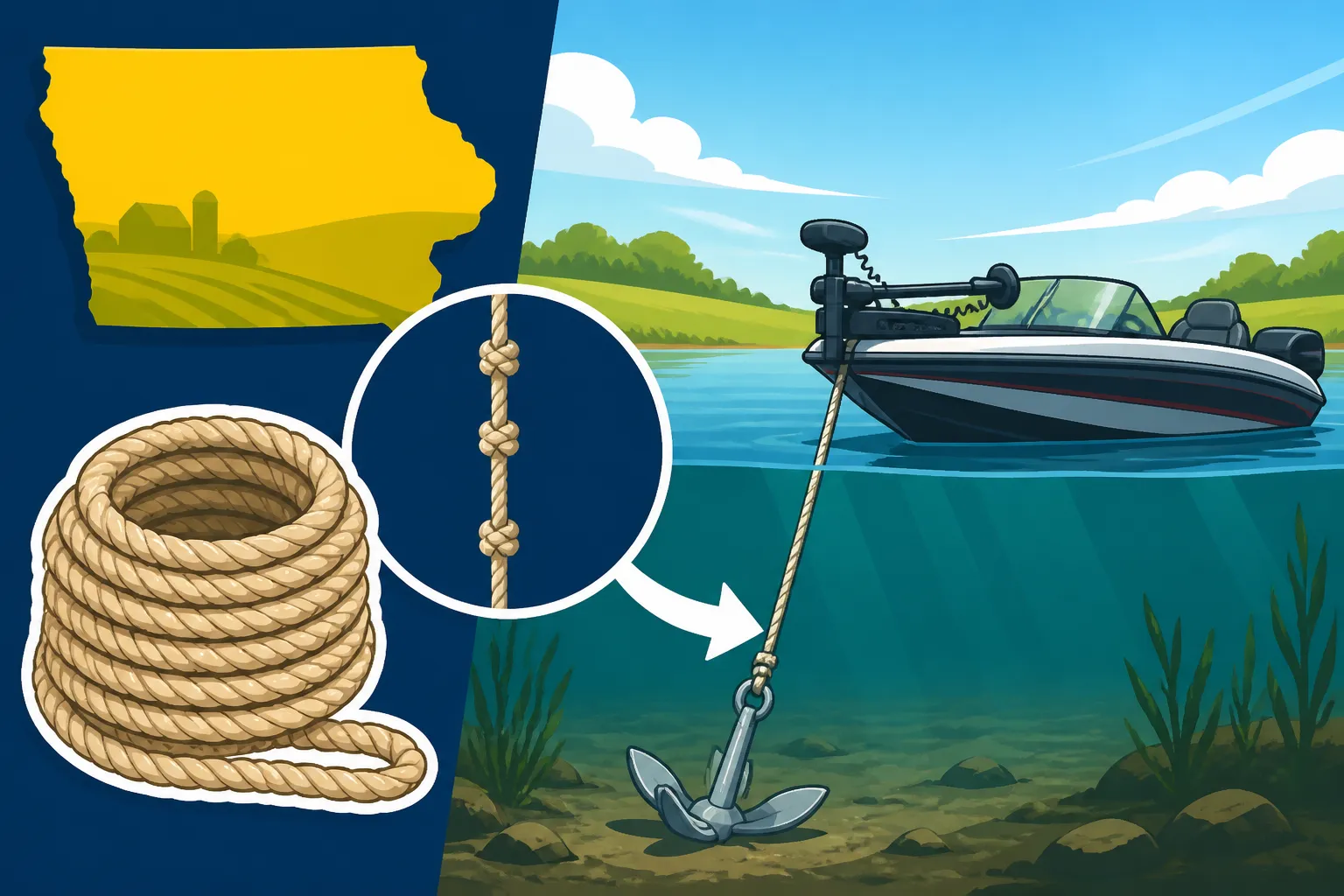
Deep Reservoirs: When fishing the deeper sections of lakes like Rathbun, Saylorville, or Coralville, you're going to need a lot of rode. If you're dropping anchor in 30, 40, or even 50 feet of water, your required rode length could easily exceed 300-400 feet. This is where having plenty of high-quality nylon rope, possibly purchased from a trusted supplier like Bass Pro Shops or found on Amazon, becomes essential. Consider adding markers to your anchor line every 25 or 50 feet so you can quickly gauge how much you've deployed.
-
Rivers (Mississippi, Des Moines, etc.): Anchoring in a river like the Missouri River Border Fishing Spots requires special attention to current. The force of the moving water can be immense, and it not only pushes your boat but also creates drag on your anchor line, trying to lift your anchor. For river fishing, many seasoned anglers carry extra heavy anchors and prioritize a 10:1 or even higher scope ratio. You might also want to position your boat slightly upstream from your target fishing spot, letting the current (and your deployed rode) naturally pull you back into position. This is a key part of effective Iowa Fishing Techniques Guide for river environments.
Choosing the Right Anchor Rode Materials and Gear
Having the correct length of anchor rode is critical, but so is choosing the right materials and complementary gear. It’s all part of a robust anchoring system that will keep you secure.
Rope Type and Strength
The type of rope you use for your anchor rode makes a significant difference in its performance and longevity.
- Nylon: This is overwhelmingly the most popular choice for anchor rope. Why? Because nylon has excellent elasticity and stretch, which acts as a shock absorber. When waves or wind push your boat, the nylon stretches and then gently pulls back, rather than transmitting a harsh jerk directly to the anchor and boat. This not only keeps your anchor set more firmly but also provides a more comfortable ride. Nylon is also strong and resistant to UV degradation.
- Polyester: While also strong, polyester has less stretch than nylon. This might be desirable in some specific mooring situations, but for general recreational anchoring, nylon's shock-absorbing qualities are usually preferred.
- Polypropylene: This type of rope floats, which can be a double-edged sword. While it might prevent snags on the bottom, it also means the rope isn't sinking to contribute to the horizontal pull needed to set the anchor. It's generally not recommended for primary anchor rode.
Regardless of type, ensure the rope's breaking strength is appropriate for your boat's size and weight. A general rule is to have a breaking strength of at least eight times the maximum pull your boat might exert. Most reputable marine ropes from stores like Bass Pro Shops will list their recommended boat size ranges, making selection easier. Many anchor rodes also come pre-spliced with a short length of chain, which is a convenient way to get a ready-to-use setup.
The Role of Anchor Chain
We've mentioned it before, but the importance of anchor chain cannot be overstated. It's the unsung hero of your anchoring system.
- Weight for Setting: The weight of the chain helps the anchor's shank lay flat on the bottom, promoting a strong initial set. Without it, the pull from the rope would angle the shank upwards, causing the anchor to drag or pull free. Think of it like trying to pull a tent stake straight up versus pulling it out at an angle—the latter is much easier.
- Abrasion Resistance: As your boat moves with wind and current, your rode can rub against the bottom. Rope will quickly fray and weaken on rocks, shells, or other abrasive surfaces. A few feet of chain acts as a sacrificial buffer, protecting your valuable nylon rope from damage.
- Improved Scope: The chain's weight also helps maintain a lower angle of pull, effectively increasing your scope near the anchor itself. Even if your rope is pulled taut, the chain can still be lying flat on the bottom, maximizing the anchor's holding power.
For most boats up to about 25 feet, a 6 to 10-foot length of galvanized or stainless steel chain is typically sufficient. The chain should be connected to your anchor with a sturdy shackle, and the chain to the rope with a thimble and splice, or another strong shackle. Never skimp on the chain; it's a small investment that provides huge returns in security and peace of mind.
Essential Anchor Accessories
Beyond the rope and chain, a few other items will make your anchoring experience safer and more efficient:
- Shackles and Thimbles: Use marine-grade stainless steel or galvanized shackles to connect your anchor to the chain and the chain to the rope. Thimbles protect the rope where it's looped around a shackle, preventing chafing.
- Anchor Markers: As mentioned, adding brightly colored markers (like zip ties or colored tape) to your anchor rope at regular intervals (e.g., every 25 feet) allows you to quickly see how much rode you've deployed. This is especially helpful if you're dropping anchor from the bow and can't easily see the line going out. You can find these accessories and more on Amazon or at local marine supply sections of Bass Pro Shops.
- Rode Storage: Keep your anchor rode neatly coiled or flaked in a dedicated anchor locker or bucket. This prevents tangles and ensures quick, smooth deployment when you need it most.
- Anchor Type: While not strictly a "rode" accessory, your choice of anchor plays a huge role. Different anchors are designed for different bottom types. For instance, a fluke (Danforth) anchor is great for mud and sand, while a plow or scoop anchor is more versatile across various bottoms. A heavy river anchor or grappling hook style might be more suited for some of Iowa's rocky riverbeds. The effectiveness of your anchor directly impacts how much scope you need to ensure it holds. If you're using a less efficient anchor, you might compensate with a slightly higher scope ratio. To learn more about selecting the right anchor, check out Best Anchor Type for Iowa River Fishing.
Practical Tips for Anchoring Safely and Effectively in Iowa
Knowing the calculations and gear is one thing, but mastering the art of anchoring safely and effectively in real-world Iowa fishing conditions is another.
Deploying and Retrieving Your Anchor
There's a right way and a wrong way to drop and retrieve an anchor. Doing it correctly ensures safety and prevents frustration.
Deploying:
- Approach Slowly: Motor slowly upstream (in a river) or upwind (in a lake) past your desired fishing spot.
- Drop, Don't Throw: When you're ready, gently lower your anchor over the bow. Never just heave it out, especially in busy areas, as it can tangle your line or hit other boats.
- Pay Out Rode: As your boat drifts back with the current or wind, slowly feed out your anchor rode. Use your pre-marked sections to monitor the length. Aim to deploy at least your calculated minimum scope.
- Set the Anchor: Once you've deployed sufficient rode, give a gentle tug on the line or put your boat in reverse slowly for a short moment (with the engine running at idle) to help the anchor dig in and "set." You should feel a solid resistance.
- Confirm Hold: Look for landmarks on shore or use your Best Fish Finder for Iowa River Fishing to confirm you're not dragging. If you're drifting, let out more rode, or even consider re-anchoring.
Retrieving:
- Motor Up: Slowly motor directly towards your anchor, taking up slack on the rode as you go. This reduces the strain on the anchor and makes it easier to pull free.
- Pull Vertically: Once you're directly over the anchor, pull the rode vertically. This is usually the easiest way to break the anchor free from the bottom.
- Clean and Stow: Once the anchor is free, bring it aboard, clean off any mud or debris, and coil or flake your rode neatly into its storage spot. Avoid just leaving it in a tangled mess, as this will lead to headaches on your next trip.
Monitoring Your Anchor
Even with the perfect amount of rode and a well-set anchor, conditions can change. Always monitor your anchor, especially if you plan to stay in one spot for an extended period or if the weather shifts.
- Visual Checks: Look for fixed landmarks on shore. If your boat's position relative to these landmarks changes, you might be dragging.
- Electronics: Your fish finder or GPS can be invaluable. Many GPS units have an "anchor alarm" feature that will alert you if your boat moves outside a pre-set radius. This is a fantastic safety feature, especially if you're distracted by a hot bite. A How to Read a Fish Finder for Walleye guide can help you understand how to use your electronics for this purpose.
- Feeling the Rode: Occasionally, you can feel if your anchor is dragging by placing your hand on the anchor rode. A steady tension indicates it's holding; a series of jerks or a light, inconsistent pull might mean it's skipping along the bottom.
If your anchor is dragging, don't panic. Quickly deploy more rode to increase your scope. If that doesn't work, you'll need to retrieve it and re-anchor in a slightly different spot, perhaps with more scope, a different angle, or by ensuring it sets more firmly. Sometimes, moving just a few yards can make all the difference in finding better holding ground.
Anchor Rope Storage and Maintenance
Your anchor rode is an investment in your safety and fishing enjoyment, so proper storage and maintenance are key to its longevity.
- Rinse After Use: After each trip, especially in silty or muddy waters, rinse your anchor rope thoroughly with fresh water. This removes abrasive particles that can wear down the fibers and salt (if you've been in brackish waters, though less common in Iowa).
- Dry Completely: Always ensure your anchor rope is completely dry before storing it. Storing a wet rope in a dark, confined space is an invitation for mold and mildew, which can significantly weaken the rope over time. Air it out in the sun if possible.
- Inspect Regularly: Before each outing, and especially after heavy use, inspect your entire anchor rode—both the rope and the chain—for any signs of wear and tear. Look for frayed strands, cuts, kinks, or damaged splices on the rope. Check the chain for bent links, rust, or weak shackles. Replace any damaged components immediately.
- Coil Neatly: Store your anchor rope in a neat coil or by flaking it down into a bucket or anchor locker. This prevents tangles and kinks, which can make deployment difficult and reduce the rope's effective strength. A tangle during a critical anchoring situation can be incredibly frustrating. Required Safety Equipment for Iowa Boats often includes having a functional anchoring system, so keeping it in top shape is not just convenient, it's part of being a responsible boater.
By understanding these principles and preparing appropriately, you'll be well-equipped to anchor securely and focus on what you love most: enjoying the fantastic Iowa Fishing opportunities.
Disclaimer
This article is for general informational purposes only and does not constitute professional advice. Laws, prices and regulations vary by location and change over time. Consult a qualified professional for guidance on your specific situation.