Best Hook Size for Channel Catfish
One of the most common frustrations for Iowa anglers targeting channel catfish is figuring out the right hook size. You’ve got your favorite stink bait or a fresh cut bait, you know the cats are biting, but you’re either missing strikes or, worse, deep-hooking fish, making for difficult releases. It’s a delicate balance, and getting it wrong can turn a promising fishing trip into a series of head-scratching moments. This comprehensive guide will untangle the mystery of hook sizing, helping you choose the perfect hook for healthy hook-ups and successful channel catfish adventures across Iowa.
Understanding Hook Sizing for Channel Catfish
Before we dive into specific recommendations, let's get a handle on what hook sizing actually means. It's not as intuitive as it sounds, and many anglers, especially those new to the sport, can find themselves confused by the numbers. But once you understand the system, it becomes second nature to pick out the right hardware.
The Basics of Hook Numbers and Gap Size
Hook sizes are generally divided into two main categories: those with a simple number (like 1, 2, 4, 6) and those with a "aught" or "O" designation (like 1/0, 2/0, 3/0, 4/0, and so on). For the numerically designated hooks (sizes 1 through 16, typically), the smaller the number, the larger the hook. So, a size 1 hook is larger than a size 6 hook, which is larger than a tiny size 12 hook. These are typically used for smaller panfish or trout, though sometimes a size 1 or 2 might come in handy for very small channel catfish or specific bait presentations.
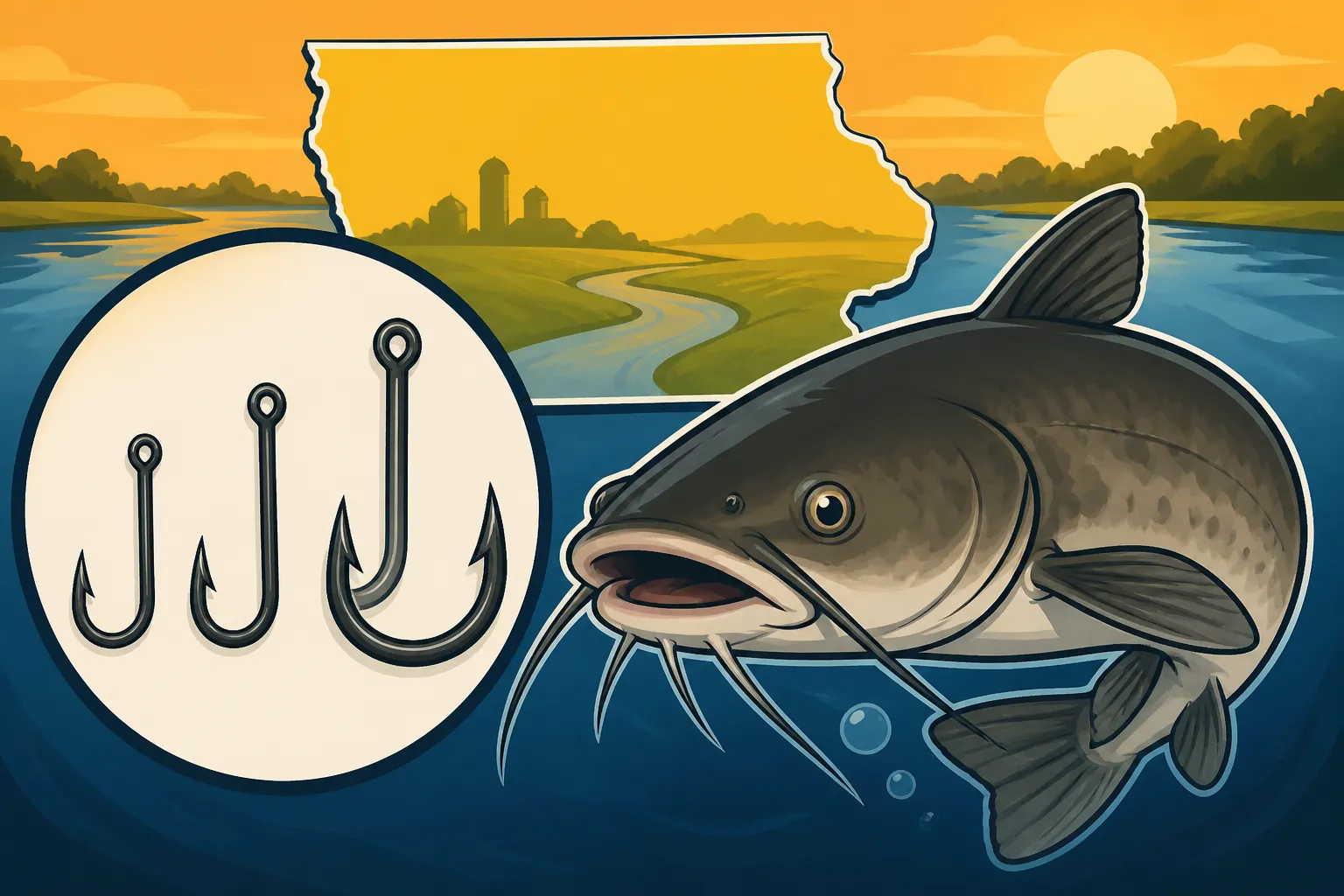
For channel catfish, however, you'll most often be looking at the "aught" sizes. Here, the opposite rule applies: the larger the number before the "/0," the larger the hook. So, a 5/0 hook is significantly larger than a 1/0 hook. This is where channel cat anglers live, ranging from 1/0 up to 8/0 or even larger, depending on the fish and bait. The "gap" of the hook – the distance between the hook point and the shank – is the crucial measurement that determines how well the hook will fit around your bait and ultimately penetrate the fish's mouth.
Why Size Matters for Catfish
Choosing the correct hook size is paramount for a few critical reasons when targeting channel catfish. First and foremost, it directly impacts your hook-up ratio. A hook that's too small for your bait will often be swallowed completely, leading to gut-hooked fish that are difficult to release and have a lower chance of survival. On the other hand, a hook that's too large for your bait might expose too much metal, making the bait look unnatural, or prevent the fish from getting the hook fully into its mouth, resulting in missed bites.
Secondly, the right hook size helps with responsible angling. Channel catfish, especially those destined for release, benefit greatly from hooks that are designed to catch them in the corner of the mouth or the lip. This is particularly true for circle hooks, which we'll discuss in more detail shortly. Using a hook that is proportionate to the fish's mouth size and the bait allows for clean, ethical hook-sets, reducing injury and stress on the fish. You want that fish to swim away strong, ready to fight another day in an Iowa river or lake.
Lastly, an appropriately sized hook is more effective. When a catfish takes your bait, the hook needs to be able to bite into flesh without being masked by the bait itself. Too much bait on too small a hook, and the fish might just strip the bait off. Too little bait on too large a hook, and the fish might be suspicious or simply unable to get the hook properly positioned in its mouth. It's about presenting your offering in the most enticing and effective way possible.
Matching Hook Size to Bait and Fishing Style
The type of bait you're using is probably the single most important factor in determining your hook size for channel catfish. Different baits require different hook presentations, and getting this right is key to success on the water.
Smaller Hooks for Cut Bait and Prepared Baits
When you're using baits like small pieces of cut shad, bluegill, or other baitfish, or perhaps a more compact prepared bait like a chunk of punch bait or a dip bait worm, you'll generally lean towards the smaller end of the aught hook spectrum. A 1/0 to 3/0 hook is often ideal for these situations.
For instance, if you're fishing with a small, 1-inch square of cut bait, a 2/0 or 3/0 circle hook allows the bait to drape naturally while ensuring the hook point is exposed. The goal is to embed the hook firmly in the bait so it doesn't fly off during a cast or light bite, but still leaves plenty of the hook gap clear for a good hook-set. If you go too large, say a 6/0 hook, for a small piece of cut bait, the bait can look dwarfed, or worse, the catfish might mouth the bait without ever getting the point of that massive hook into its jaws. Many anglers enjoy using commercially prepared baits, and for these, a good 2/0 treble hook or a wide-gap single hook (again, 1/0 to 3/0) can work wonders. You can find a great selection of these at places like Bass Pro Shops, making it easy to experiment.
| Hook Size Range | Common Bait Types | Target Fish Size | Notes |
|---|---|---|---|
| 1/0 – 3/0 | Small cut bait, punch bait, worms, dough | Smaller channel cats (1-5 lbs) | Good for natural presentation; less likely to gut-hook smaller fish |
| 4/0 – 6/0 | Medium cut bait, chicken liver, large worms | Medium channel cats (5-15 lbs) | Versatile range, covers most common scenarios |
| 7/0 – 8/0+ | Large cut bait, whole shad, live perch | Trophy channel cats (15+ lbs) | Maximizes hook gap for big baits and big fish |
Larger Hooks for Live Bait and Big Chunks
If you're going after bigger channel catfish, perhaps those elusive trophy cats that cruise the depths of Rathbun Lake or the vast stretches of the Mississippi River, you'll likely be using larger baits. This could mean a whole shad, a substantial chunk of carp, or a live bluegill. For these substantial offerings, you need a hook that can not only hold the bait securely but also has enough gap to ensure a solid hook-set in a large fish's mouth.
Here, you'll want to reach for hooks in the 4/0 to 8/0 range. A 5/0 or 6/0 circle hook is a fantastic all-around choice for medium to large cut bait, like a 3-inch piece of oily shad or a substantial chunk of bluegill. The larger gap allows the fish to easily take the entire bait into its mouth, and the hook's design does the work of rotating into the corner of the jaw as the line tightens. When you're using a whole live baitfish, like a 4-6 inch bluegill, an even larger hook, such as a 7/0 or 8/0, is necessary to ensure the hook point is clear of the bait and can properly embed in the catfish's mouth. Remember, the goal isn't to stab the fish, but to let the hook pivot into place for a secure, ethical catch. If you’re looking to stock up, sites like Amazon offer multi-packs of various aught-sized hooks, perfect for trying out different options. For more general guidance on baits, check out our Catfish Bait Guide for Iowa Anglers.
Hook Shapes: Circle Hooks vs. J-Hooks for Catfish
Beyond just size, the shape of your hook plays a monumental role in how effectively you catch channel catfish and how well you can release them. The two main contenders are the traditional J-hook and the increasingly popular circle hook.
J-Hooks: These are what most people picture when they think of a fishing hook – a "J" shape with a straight shank and a sharp point. J-hooks are excellent for a strong, quick hook-set. When using a J-hook, you typically need to actively set the hook as soon as you feel a bite. The downside for channel catfish, particularly if they are aggressively striking, is that they can often swallow the hook deeply, leading to gut-hooking. This is especially true if you're not paying close attention to your rod tip or using a slack line. While effective, J-hooks require more vigilance and can sometimes be less forgiving for catch-and-release.
Circle Hooks: Circle hooks have a distinct shape where the point is turned inward, almost parallel to the shank. The magic of a circle hook is that it's designed to set itself. When a fish takes the bait and swims away, the hook doesn't set until it pulls out of the fish's throat or stomach, catches on the corner of the mouth, and then pivots into place. This significantly reduces the chances of gut-hooking, making them the preferred choice for many conservation-minded anglers and for regulations in some areas. For channel catfish, circle hooks in the 3/0 to 7/0 range are incredibly effective. You don't "set the hook" with a circle hook; instead, you just tighten the line slowly and steadily as the fish moves off. For more details on catching methods, see our guide on How to Catch Catfish in Iowa.
When considering hook shapes and sizes, think about the kind of fishing you're doing. If you're actively holding the rod and can react instantly, a J-hook might be fine. But for passive fishing, like setting out multiple rods and waiting, or if you prioritize fish health and easy release, circle hooks are almost always the superior choice for channel catfish.
Factors Influencing Your Hook Choice
It's not just about the bait; several other variables come into play when selecting the best hook size for channel catfish. Understanding these can help you fine-tune your tackle to the specific conditions you're facing on your Iowa fishing trip.
Targeting Different Sizes of Channel Catfish
Iowa's waters are home to channel catfish of all sizes, from pan-sized "frys" to whiskered giants that can test the limits of your gear. Naturally, the size of the catfish you're hoping to catch should heavily influence your hook selection.
If you're out for a mess of smaller "eating-size" channel cats, perhaps 1 to 5 pounds, you might opt for the lower end of the aught sizes – say, a 1/0 or 2/0 circle hook. These smaller hooks are perfect for catching more modest fish without overwhelming their mouths or the smaller baits often used for them. They're also less intimidating, which can sometimes lead to more bites from less aggressive fish.
However, if your ambition is to land a true Iowa monster, one of those double-digit channel cats that can give you a real workout, you'll need to scale up your hooks considerably. For these trophy fish, hooks in the 6/0 to 8/0 range are more appropriate. These larger hooks accommodate bigger baits, which in turn attract bigger fish. A massive channel catfish isn't going to fuss with a tiny morsel on a small hook; it wants a substantial meal. Using a robust hook like an 8/0 ensures that once that big cat chomps down, you've got enough steel to hold it securely without the hook straightening out or failing under the immense pressure. Remember, a bigger fish means a bigger mouth, and a bigger mouth needs a bigger hook to properly grab hold. You'll also want to make sure your rod can handle such powerful fish; for advice, check out Best Rod for Catfish Fishing.
Water Conditions and Snags
The environment you're fishing in, specifically the presence of snags and the clarity of the water, can also subtly guide your hook choice.
Snags and Obstructions: Fishing in snaggy environments – think submerged timber, rock piles, or dense aquatic vegetation common in many Iowa rivers and reservoirs – can be a real headache. In these situations, losing tackle is a constant concern. While hook size doesn't directly prevent snags, a larger, heavier-gauge hook might be more robust and less likely to bend or break if it does get momentarily hung up, giving you a better chance to free it. Sometimes, however, in extremely snaggy areas, some anglers opt for slightly lighter wire hooks of the same size, knowing they might bend and release from a snag, saving the rest of their rig. It’s a trade-off between strength and the ability to retrieve. Consider pairing these with the right terminal tackle, like what's discussed in Egg Sinker vs Bank Sinker for Catfish.
Water Clarity: Believe it or not, water clarity can sometimes play a small role. In very clear water, some anglers believe that smaller, less conspicuous hooks might be more effective, as a large, shiny hook could potentially deter a cautious catfish. However, channel catfish are notorious for their excellent sense of smell and their tendency to feed in lower visibility conditions, so this factor is generally less critical than bait size and fish size. Most of the time, the scent and presentation of your bait will override any visual cues from the hook itself. Nonetheless, if you're fishing in unusually clear water and the bite is tough, a slightly smaller, dark-colored hook might be worth a try.
Practical Tips and Where to Find Your Hooks
Now that we've covered the theoretical aspects of hook sizing, let's talk about putting it into practice and ensuring you're well-equipped for your next channel catfish expedition.
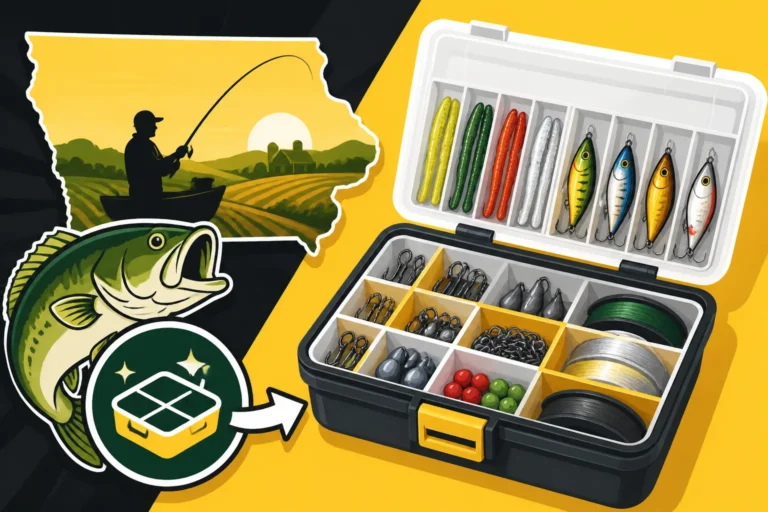
Building Your Catfish Tackle Box
A well-stocked tackle box is an angler's best friend. For channel catfish, this means having a variety of hook sizes and styles ready for any situation. Don't limit yourself to just one size; instead, build a selection that covers the range discussed above.
A good starting point for a channel catfish tackle box would include:
- Circle Hooks: A mix of 2/0, 4/0, and 6/0 sizes. These are versatile and perfect for everything from medium cut bait to larger chunks. They promote responsible catch-and-release, which is a big plus for Iowa's fisheries.
- J-Hooks (Optional): Perhaps a pack of 3/0 and 5/0 for situations where you prefer an aggressive hook-set or are targeting smaller eaters and want to ensure a solid strike.
- Treble Hooks: If you enjoy using prepared dough or punch baits, a pack of strong, sharp 2/0 treble hooks can be incredibly effective.
When you're shopping for hooks, look for strong, sharp, chemically sharpened hooks. A dull hook is a missed fish. Brands like Gamakatsu, Owner, and Mustad are popular choices known for their quality. You can easily find these assortments at local tackle shops, larger retailers like Bass Pro Shops, or through online vendors like Amazon. It's smart to buy hooks in bulk packs when you find a size and brand you like, as losing hooks to snags is just part of catfishing. Keep your hooks organized in small tackle trays within your main box, so you can quickly grab the right size for the bait you're using.
Essential Considerations Beyond Size
While hook size is crucial, it's just one piece of the puzzle. Other aspects of your terminal tackle and technique will work in conjunction with your hook choice to ensure successful channel catfishing.
Line Strength: Your hook needs to be matched by the strength of your fishing line. A strong, large hook on a flimsy line is a recipe for disaster. For channel catfish, especially in rivers with current or near structure, you'll want a strong monofilament or braided line. This is particularly important when you're going after those bigger fish. Check out Best Pound Test Line for Catfish Fishing on Iowa Rivers for more in-depth advice.
Weight and Rigging: The type and weight of your sinker, along with your overall rig (e.g., slip sinker rig, three-way rig), will affect how your bait is presented and how well your hook performs. Ensure your weight is sufficient to hold your bait in place, especially in current, without obscuring the hook.
Timely Hook Sets (for J-Hooks): If you're using J-hooks, patience and timing are vital. Wait for the fish to commit to the bait and then set the hook with a firm, sweeping motion. With circle hooks, as mentioned, simply allow the fish to take the bait and swim off, then slowly apply pressure until the rod loads up.
Proper Landing Gear: Once you’ve hooked that channel cat, having the right landing gear, like a sturdy net, makes all the difference in getting it to shore or into the boat without losing it at the last minute. Our Best Landing Net for Catfish guide offers some great tips on selecting the right one.
By paying attention to these details, and understanding the nuances of hook sizing, you'll be well on your way to more enjoyable and successful channel catfish outings across Iowa. From the serene farm ponds to the mighty Mississippi, those whiskered beauties will be no match for your well-chosen tackle.
Disclaimer
This article is for general informational purposes only and does not constitute professional advice. Laws, prices and regulations vary by location and change over time. Consult a qualified professional for guidance on your specific situation.