Best Depth for Summer Bluegill
Trying to find bluegill in Iowa during the dog days of summer can feel like an impossible puzzle. One day they're shallow, the next they've vanished, leaving you wondering if they've packed up their bags and moved to another state! This guide is here to unravel that mystery, helping you understand exactly where these feisty panfish retreat when the sun beats down and how you can consistently find them hiding in deeper, cooler waters.
Understanding Bluegill Behavior in Summer
Summer fishing for bluegill often means a complete shift from their springtime haunts. Those shallow bays and spawning beds that were buzzing with activity in May? They're often ghost towns by July. This isn't because the bluegill aren't there, but because their priorities change drastically with the rising water temperatures. Understanding why they move deeper is the first step to consistently finding them.
Why Bluegill Go Deeper When it's Hot
When the scorching Iowa summer arrives, pushing air temperatures into the 80s and 90s, the shallow waters in our lakes and ponds heat up rapidly. Bluegill, like most fish, are cold-blooded creatures, meaning their body temperature is the same as the water they're in. While they can tolerate a wide range, extreme heat stresses them, slows their metabolism, and significantly reduces the dissolved oxygen in the water. Warmer water holds less oxygen, which is a critical factor for fish survival.
So, as the shallows become uncomfortably warm and oxygen-depleted, bluegill instinctively seek refuge in cooler, deeper waters. These areas offer thermal comfort and, crucially, higher concentrations of dissolved oxygen. This drive for comfort and survival pushes them away from the sun-baked banks and into the shadows and depths where they can conserve energy and breathe easier. It's a natural migration that happens every year, and knowing this gives you a huge advantage.
The Thermocline and Bluegill
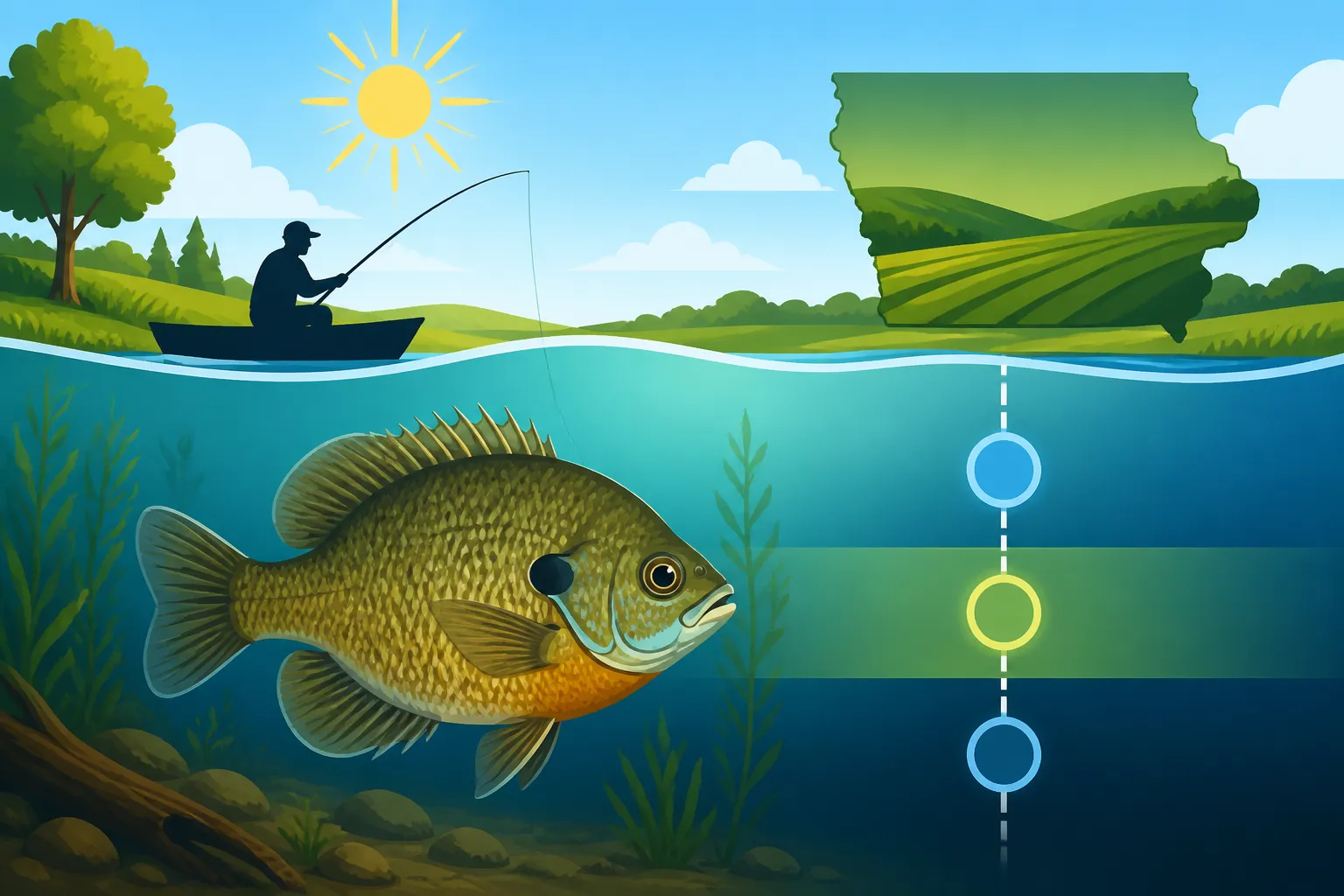
One of the most important concepts when fishing for deep summer bluegill, especially in larger Iowa lakes, is the thermocline. Imagine a lake in summer as having different layers of water. The top layer, called the epilimnion, is warm and exposed to the sun and wind. Below that is a transition layer called the thermocline, where the water temperature drops rapidly. And below that is the hypolimnion, which is the coldest, deepest water.
The thermocline is like a sweet spot for many fish, including bluegill. Above it, the water might be too warm and have lower oxygen. Below it, the water might be too cold and, in some lakes, completely devoid of oxygen. The thermocline often creates a perfect balance of cooler temperatures and sufficient oxygen, making it an ideal hangout for bluegill. They'll often suspend directly within this layer or just above it, especially if there's structure present. Using a good fish finder can help you identify this critical depth, giving you a precise target zone to focus your efforts. Many anglers find great success targeting this specific depth.
Prime Depths for Summer Bluegill in Iowa
So, now that we know why bluegill go deeper, the next question is how deep? The exact depth can vary wildly depending on the water body, the specific conditions, and even the time of day. There's no single magic number, but we can talk about general ranges and indicators that will get you in the ballpark for those beautiful Iowa bluegill.
General Depth Ranges in Different Water Bodies
For most Iowa lakes and larger ponds, expect bluegill to settle into depths ranging from 8 to 25 feet during the peak of summer. In shallower ponds that might only be 10-15 feet deep at their maximum, bluegill might just gravitate to the deepest sections, hugging the bottom where the water is coolest. For bigger, deeper bodies of water like Clear Lake or Rathbun Lake, they could be found anywhere in that 8-25 foot range, often suspending.
Rivers, like the Des Moines River, are a bit different. While current plays a huge role, bluegill will still seek out deeper, calmer pools, eddies, and areas with submerged cover, often congregating in depths of 5-15 feet, especially near slower current breaks. In Iowa farm ponds, which are often smaller and shallower, bluegill might simply move to the deepest part of the pond, perhaps 6-12 feet down, especially if there's any underwater structure like old Christmas trees or rock piles. Keep in mind that on exceptionally cloudy days or during early morning and late evening, they might briefly venture shallower to feed.
Structure and Cover as Depth Indicators
Even when bluegill move deep, they don't just float aimlessly in open water. They are still structure-oriented fish, always looking for cover, food, and protection. This means even at 15 feet deep, they'll be relating to something. Look for:
- Submerged brush piles and trees: These are bluegill magnets, offering shade, protection from predators, and a home for the insects they love to eat. If you know of any crappie brush piles, bluegill will often be right alongside them.
- Weed lines: While the main weed beds might be shallower, look for the deep edge of aquatic vegetation. This transition zone where weeds meet open water can hold huge schools of bluegill.
- Docks and piers: Especially those with deep water access or submerged legs, can offer excellent shade and cover for bluegill during sunny days. Don't be afraid to cast right up against the pilings.
- Rock piles and humps: Underwater topographical features provide excellent ambush points and shelter. These can be especially productive on larger lakes where natural rock bottom exists.
- Ledges and drop-offs: Any sudden change in depth is a potential holding spot. Bluegill will often position themselves along these breaks, ready to dart out for a meal.
Knowing about these types of structure will greatly enhance your success. Even if you don't have a fish finder, knowing where these structures exist from past experience or lake maps can help you target the right depths.
Techniques for Locating and Catching Deep Summer Bluegill
Finding those deep bluegill is one thing, but getting them to bite is another. It often requires a slightly different approach than the bobber-and-worm setup you might use in spring. Precision and presentation become key when you're targeting fish in deeper water.
Using Electronics to Pinpoint Bluegill Depths
If you're serious about consistently finding deep summer bluegill, a fish finder is your best friend. Modern electronics, even budget-friendly ones, can show you not just depth, but also water temperature (which helps locate the thermocline) and even individual fish arches or schools of baitfish. Brands like Humminbird and Garmin offer excellent portable units that can be mounted on kayaks or small boats. You can often find great deals on these on Amazon.
When cruising around, look for:
- Dense schools: Bluegill often school up tightly in summer. If you see a blob on your sonar screen, especially near structure or at a consistent depth, it's likely a school of bluegill or baitfish they are feeding on.
- The thermocline: Many units will show a distinct line or area where the temperature changes rapidly. This is a prime zone to target.
- Submerged structure: Fish finders excel at showing brush piles, old trees, rock reefs, and even subtle changes in bottom contour. Mark these spots on your GPS if your unit has one.
Once you identify a promising depth or piece of structure, make multiple passes over it, noting the exact depth where you see fish. This information is invaluable for setting your bait at the perfect level.
Effective Baits and Rigs for Deeper Water
Fishing deeper water means getting your bait down quickly and efficiently. Light line and smaller baits are usually the ticket.
Here are some go-to setups:
- Small Jigs: Tiny jigs (1/32 oz to 1/16 oz) tipped with a small plastic grub, tube, or even a piece of live bait like a wax worm or piece of nightcrawler are deadly. Colors like chartreuse, white, and black are often very effective. The key is a slow, controlled descent.
- Slip Bobber Rigs: This is an excellent method for controlling your depth precisely. A slip bobber allows you to set your bait at any depth you desire, even 20 feet down, while still casting easily. Tie on a small hook (size 8-12), add a split shot or two just above it, and tip it with a wax worm, cricket, or red worm. This setup is great for fishing around vertical structure like submerged trees. Learning how to fish a slip bobber is a fundamental skill for summer panfish.
- Drop Shot Rigs: While often associated with bass, a finesse drop shot rig with tiny hooks and micro plastics or small pieces of natural bait can be incredibly effective for suspended bluegill. The weight keeps your bait at a precise depth, and the bluegill can peck at the bait without feeling much resistance.
- Carolina Rig (Finesse Version): A scaled-down Carolina rig with a small egg sinker, a swivel, a light leader (4-6 lb fluorocarbon), and a small hook tipped with bait can also work well, especially for bluegill hugging the bottom near deep structure.
Experiment with different baits and presentations. Sometimes a subtle twitch is all it takes, while other times a slow, steady retrieve can entice a bite. Remember, the goal is to present a small, irresistible meal right in front of their faces at the exact depth they're holding.
Timing Your Deep Bluegill Pursuit
While bluegill are deeper during summer, certain times of day can be even more productive. Don't limit yourself to midday fishing, which can be the toughest.
- Early Morning: As the sun rises, the water is still at its coolest. Bluegill might be slightly shallower than their midday deep-water haunts, and they're often more actively feeding after a night of lower metabolism. This is a great time to target the deep edges of weed lines or submerged brush.
- Late Evening/Dusk: Similar to early morning, as the sun begins to set, the water temperature might drop slightly, and bluegill can become more aggressive. The fading light also offers them more cover, making them bolder in their feeding forays.
- Cloudy Days: A heavily overcast day acts like a natural dimmer switch. The reduced sunlight penetration keeps the water cooler for longer and can make bluegill more comfortable venturing slightly shallower or being more active at their preferred deep spots throughout the day.
- Post-Front Conditions: After a strong cold front, fish can become lethargic and less willing to chase. This is when deep, precise presentations really shine. Slow everything down and offer them an easy meal.
By timing your trips to coincide with these optimal periods, you'll increase your chances of finding actively feeding bluegill in their deeper summer hideouts.
Common Challenges and Troubleshooting
Even with the best plan, fishing for deep summer bluegill can present its own set of challenges. Sometimes the fish just aren't biting, or you're getting short strikes. Don't get discouraged! A little troubleshooting can often turn a tough day into a successful one.
Dealing with Finicky Bites
It's common for deep-water bluegill to be a bit more subtle in their takes, especially if they're not in an aggressive feeding mood. You might feel a slight tap, a spongy sensation, or just notice your line moving sideways slightly. This often means you need to adjust your approach.
- Downsize your bait: If they're hitting short, try a smaller jig head, a tinier piece of plastic, or just a small nibble of a worm instead of a whole one. Sometimes the difference between success and failure is literally a half-inch of bait.
- Lighter line: Drop down to 2 or 4-pound test fluorocarbon or monofilament. Lighter line is less visible and allows your bait to fall more naturally. It also gives you more sensitivity to detect those light bites. You can find excellent quality light line on Amazon from brands like Berkley or P-Line.
- Slower retrieve/pause: If you're jigging, try slowing your retrieve to an almost imperceptible crawl, or add longer pauses. Let the bait sit for 5-10 seconds before moving it again. When using a slip bobber, ensure your bait is perfectly still or moving with just the gentlest current.
- Sharpen your hooks: Dull hooks can lead to missed hooksets, especially with the tough mouths of bluegill. Always make sure your hooks are needle-sharp.
Remember, bluegill have small mouths, so a presentation that's too large or too fast might be ignored or result in missed bites. Patience and subtle adjustments are key.
Adjusting to Changing Conditions
Lakes and ponds are dynamic environments, and conditions can change rapidly in Iowa. What worked yesterday might not work today. Being able to adapt is crucial.
- Post-storm activity: After a heavy rain, especially one that cools the surface water, bluegill might temporarily move shallower as new food washes in and oxygen levels potentially rise in the upper water column. However, if the storm muddies the water significantly, they might stay deep where the water is clearer. Check the clarity and adjust.
- Clear vs. murky water: In very clear water, bluegill can be more wary and sensitive to line and lure visibility. Go with natural colors and lighter lines. In murky water, brighter colors (like chartreuse or orange) and baits that create vibration (like small spinnerbaits) can be more effective as they rely more on scent and lateral line detection.
- Wind: Wind can push surface water and nutrients around, sometimes concentrating baitfish and bluegill on wind-blown points or deep breaks. However, too much wind can make boat control and feeling bites difficult. On windy days, try fishing the sheltered side of a lake or large cove.
- Barometric pressure: Fish often become less active when the barometric pressure is falling or very low (often before a storm). During these times, focus on precise presentations at their deepest holding areas, and be prepared for a slower bite. When pressure is stable or rising, they tend to be more active.
Being a successful angler means being a keen observer. Pay attention to the weather, water conditions, and how the fish are reacting to your presentations. The more information you gather, the better you'll be at putting those summer bluegill in the livewell.
Here’s a quick summary table for common summer bluegill depths and conditions:
| Water Body Type | Typical Summer Depth Range | Key Depth Factors | Ideal Conditions | Tips for Success |
|---|---|---|---|---|
| Iowa Lakes | 8 – 25 feet | Thermocline, Structure | Early/Late Day, Cloudy, Stable Pressure | Use fish finder for thermocline, target deep weed lines, brush piles, humps. |
| Smaller Ponds | 6 – 15 feet | Deepest basin, Submerged cover | Overcast, Post-rain (if water clears) | Focus on deepest holes, submerged timber, or aeration devices. |
| Iowa Rivers | 5 – 15 feet | Deep pools, Current breaks, Eddies | Calm current, After water levels stabilize | Look for slow-moving water near main channel, submerged logs, rock piles. |
| Farm Ponds | 6 – 12 feet | Bottom, Submerged trees/structure | Morning/Evening, Overcast | Cast to the center, target any visible or known underwater structure. |
Remember, these are general guidelines. Every body of water is unique, and conditions can change quickly. The most important thing is to be observant and willing to adapt.
Disclaimer
Fishing regulations, including daily bag limits and size restrictions, can change. Always consult the latest official Iowa Department of Natural Resources (DNR) fishing regulations booklet or their website before heading out on the water. This guide is for informational purposes only and does not supersede state or local laws.