How to Find Crappie Brush Piles
There's nothing quite as frustrating as showing up at your favorite Iowa lake, ready for a fantastic crappie bite, only to find the fish have vanished. You know they're there somewhere, but pinpointing their exact location can feel like searching for a needle in a haystack. Crappie, those feisty panfish we all love to catch and eat, are notorious for seeking out cover, and nothing screams "home" to a crappie quite like a well-structured brush pile. This guide is dedicated to helping you unlock the secrets of finding these crappie magnets, turning your frustrating searches into successful catches.
Why Crappie are Obsessed with Brush Piles
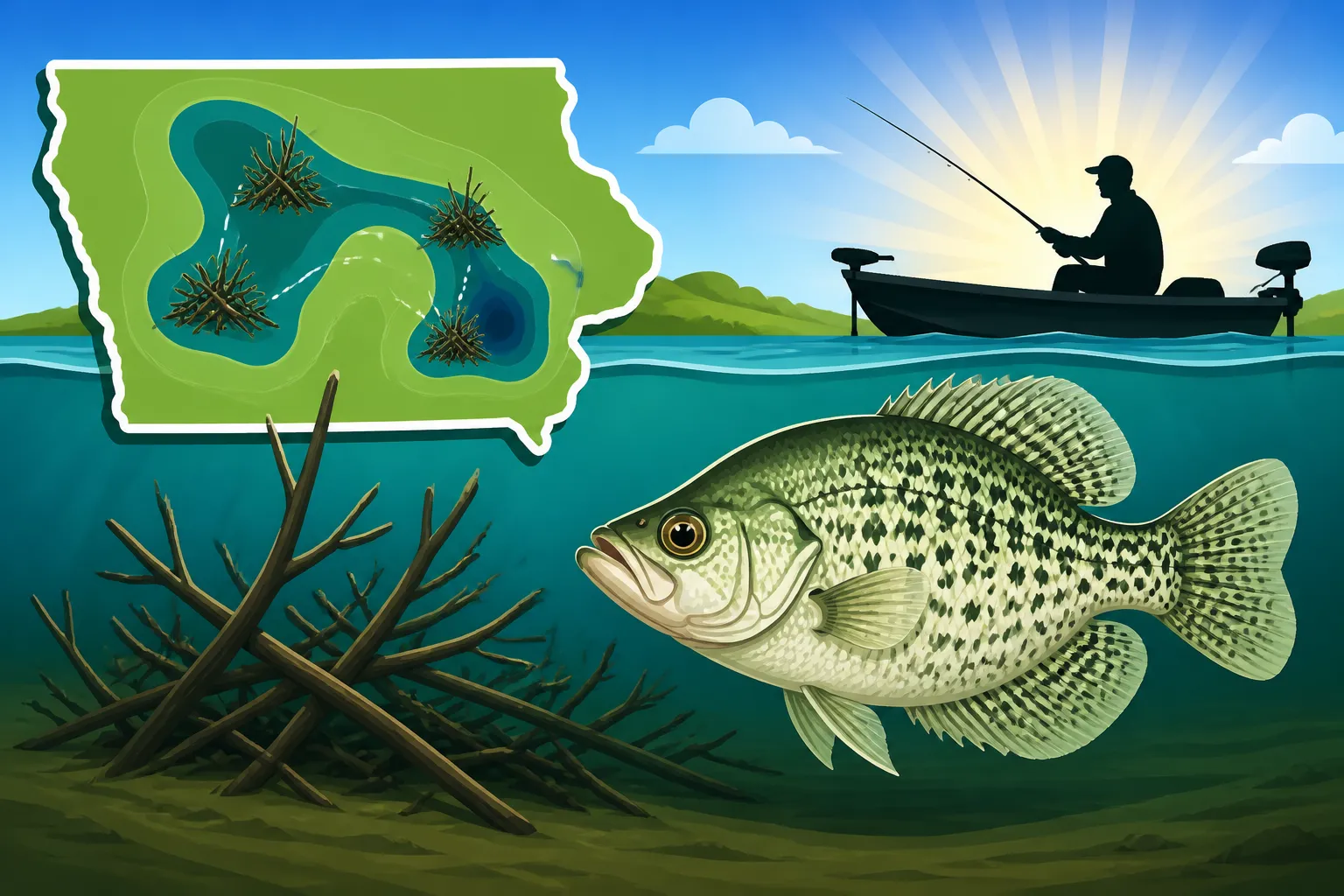
Understanding why crappie gravitate towards brush piles is the first step in learning how to find them. It's not just a random preference; it's deeply rooted in their survival instincts and their lifestyle. Crappie are essentially ambush predators and highly social creatures, and brush piles offer the perfect blend of protection, hunting grounds, and community space.
Shelter from Predators and the Elements
Think about it from a crappie's perspective. In open water, they're exposed. Larger predators like northern pike, walleye, or even big bass are always on the prowl. A dense brush pile, whether it's submerged trees, sunken stumps, or an artificial structure, provides immediate refuge. It's a maze of branches and limbs that bigger fish struggle to navigate, offering safety in numbers for a school of crappie. On a bright, sunny day, these piles also offer crucial shade, allowing crappie to escape the direct sunlight and regulate their body temperature, especially in shallower waters. This makes them active and comfortable, often holding tight within the structure.
Imagine a group of young crappie, darting in and out of the submerged branches of a willow tree that fell into Lake Macbride. They're safe from the lurking muskie and enjoying the cooler, shaded water. This instinct for shelter means that if you can find the cover, you'll often find the fish.
Prime Ambush Points and Foraging Areas
Brush piles aren't just for hiding; they're also fantastic hunting grounds. Smaller baitfish, like shad or minnows, are naturally attracted to the microscopic organisms and algae that grow on submerged wood. These baitfish then become a buffet for hungry crappie. The intricate structure of a brush pile allows crappie to lie in wait, perfectly camouflaged, ready to dart out and ambush any unsuspecting prey that swims by. It's like a natural drive-thru for them.
In addition to baitfish, crayfish and aquatic insects also find refuge in these structures, further diversifying the crappie's menu. A thriving brush pile is a miniature ecosystem, constantly attracting food sources, making it an irresistible hangout for crappie looking for their next meal. Understanding these feeding patterns can help you decide on the best bait for spring crappie or even specific lures.
Your Essential Gear for Uncovering Crappie Cover
Finding brush piles isn't just about luck; it's about having the right tools and knowing how to use them. Modern technology has made it significantly easier for anglers to locate these underwater havens, but there's also an art to it, combining tech with traditional observation.
Sonar and Fish Finders: Your Underwater Eyes
If you're serious about finding crappie brush piles, a good quality fish finder with side imaging and down imaging capabilities is an absolute game-changer. Brands like Humminbird, Lowrance, and Garmin offer excellent units that can paint a detailed picture of the underwater world beneath and to the sides of your boat.
- Down Imaging (DI): This technology sends a high-frequency beam straight down, providing a photographic-like view of what's directly below your transducer. You'll see distinct images of trees, stumps, and even individual fish suspended within the branches. It's incredibly precise for showing the vertical structure.
- Side Imaging (SI): This is where the magic truly happens for brush pile hunting. Side imaging sends beams out to the sides of your boat, scanning a wide swath of water (often 100-200 feet on each side). This allows you to cover a lot of ground quickly. You'll literally see "shadows" of brush piles on the screen, indicating their size, shape, and even how tall they are off the bottom. It helps you identify submerged creek channels or old roadbeds where these piles might be located. Many anglers will find these units on Amazon, comparing features and prices to get the best fit for their boat and budget.
- 2D Sonar: The traditional sonar is still valuable for marking fish arches and understanding depth contours, but it's less effective than DI/SI for resolving the fine details of a brush pile.
Learning to interpret your fish finder screen takes practice. Look for distinct shapes that rise off the bottom. Brush piles often appear as irregular, dense masses, sometimes with individual "speckles" indicating crappie holding within or just above them. Don't be discouraged if your first few outings involve more learning than catching; it’s a skill that builds over time.
GPS and Mapping: Marking Your Hotspots
Once you find a promising brush pile, you absolutely need to mark it. This is where your GPS comes in. Most modern fish finders have integrated GPS mapping, allowing you to save waypoints directly on the unit. Alternatively, you can use a separate handheld GPS device or a smartphone app with mapping capabilities.
Saving waypoints is crucial for several reasons:
- Return Trips: You can easily navigate back to your hotspot on subsequent trips.
- Pattern Recognition: Over time, you'll build a personal map of productive brush piles, helping you understand patterns related to depth, type of structure, and proximity to other features like drop-offs or points.
- Precision: Marking a precise waypoint lets you position your boat perfectly for casting or vertical jigging, increasing your chances of getting your lure right into the strike zone.
- Community Piles: Many Iowa lakes have community brush piles placed by the DNR or local angling clubs. These are often marked on lake maps or can be found with a little searching. Having these marked on your GPS is a great starting point for Crappie Fishing in Iowa.
When marking, try to drop your waypoint directly over the top of the pile. This gives you the most accurate reference point. You might also mark other interesting features nearby, like a subtle depth change or a transition in bottom composition.
Old-School Tools and Techniques
While electronics are powerful, don't underestimate the value of some tried-and-true methods:
- Weighted Marker Buoys: These are simple, inexpensive, and effective. Once you identify a potential pile with your electronics, toss a marker buoy near it. This gives you a visual reference point, especially helpful if you're drifting or fishing with multiple lines. Keep a few handy, perhaps from Amazon, as they can sometimes get snagged or drift.
- Probing Sticks/Drags: For shallower water, a long, rigid stick or a weighted grappling hook can be used to literally "feel" for submerged structure. This is particularly useful in areas with heavy vegetation or when you suspect a brush pile but your electronics are less clear due to interference.
- Visual Cues: Sometimes, the simplest method is the best. Look for subtle changes on the water's surface that might indicate submerged structure, especially in calm conditions. A slight ripple, a difference in water color, or even a few branches poking out of the water are dead giveaways. Pay attention to shorelines where trees have fallen in, or areas where old docks or boat lifts might have been. These are often forgotten treasures.
Reading the Water and Interpreting Your Electronics
Finding crappie brush piles is an art that blends keen observation with technological prowess. It’s about understanding what you’re seeing both on your screen and around your boat.
Understanding Habitat and Structure Location
Crappie don’t just hang out in any brush pile; they prefer certain locations based on the season, water temperature, and available food. Knowing where to look significantly narrows down your search.
- Transition Areas: Look for brush piles along channel edges, points, submerged roadbeds, or where hard bottom transitions to soft bottom. These "edges" are natural travel routes for baitfish, and crappie will set up shop in cover nearby to intercept them. For example, if you're fishing Rathbun Lake, focusing your search around creek channels or old timber lines in bays can be incredibly productive.
- Depth is Key: In spring, crappie might be shallower, preparing for the spawn, so look for piles in 5-15 feet of water, often near spawning flats. As summer progresses, they'll retreat to deeper, cooler water, often 15-30 feet, especially if those brush piles are adjacent to deeper channels. In fall, they might move back shallower to feed aggressively before winter. Even in winter, during ice fishing, knowing the deeper brush piles can lead to excellent Ice Fishing in Iowa opportunities.
- Wind-Blown Banks: A consistent wind can push baitfish into certain areas. Brush piles on wind-blown banks or points can be excellent as they concentrate the bait, and therefore the crappie. However, fishing these spots can be challenging due to boat control.
- Proximity to Docks and Other Man-Made Structures: Many anglers place artificial brush piles near their docks. Don't be afraid to scan around these areas, respecting private property of course. Old bridge pilings, rip-rap, or even forgotten boat ramps can also hold timber that attracts crappie.
Interpreting Sonar and Mapping Data
Once you’re out on the water, actively searching, your sonar unit becomes your best friend. Here’s a deeper dive into what to look for:
- Distinct Shapes: On your down imaging, a brush pile will look like a clump of branches or a small tree. You should be able to make out individual limbs. On side imaging, it will appear as a bright return (the object itself) with a corresponding shadow behind it. The longer the shadow, the taller the object. A dense cluster of these bright returns and shadows usually indicates a significant brush pile.
- Fish Arches/Speckles: Once you identify a brush pile, zoom in. You’re looking for white or colored specks, or small arches, within or just above the structure. These are the crappie! The density of these marks will tell you if it's a single fish or an entire school. If they're tightly packed, you've hit the jackpot. This is where How to Catch Crappie in Iowa becomes about precision.
- Contour Lines and Depth Shading: Your mapping software, like those often found on Humminbird or Lowrance units (or downloaded via apps bought on Amazon), will show contour lines. Look for areas where these lines converge, indicating a steep drop-off, or where they form distinct features like humps or saddles. Brush piles are frequently placed on or near these contour changes. Use depth shading to quickly identify areas of desired depth.
- "Ghost" Piles: Sometimes, you might see a "ghost" image or a faint return on your side imaging that looks like a brush pile, but when you pass over it with down imaging, it's less distinct. This could be older, more broken-down cover, or it could be a pile of smaller debris. Still worth investigating if crappie are present.
Pro Tip: When you locate a promising pile, don't just mark it and move on. Circle it a few times from different angles to get a complete picture of its size, shape, and depth profile. This also helps you confirm the crappie are truly holding there.
Putting It All Together: Tactics for Finding and Fishing Piles
You've got your gear, you understand the crappie's habits, and you know what to look for on your screen. Now, let's talk about the practical application—how to systematically find these brush piles and effectively fish them.
Systematic Search Patterns
You don't want to just wander aimlessly. Employing a systematic search pattern will save you time and greatly increase your chances of success.
- Grid Search: On larger areas, particularly open bays or flats with subtle features, perform a grid search. Drive your boat in straight lines, spaced appropriately for your side imaging range (e.g., 100 feet apart if your SI range is 100 feet on each side). This ensures you cover the entire area.
- Contour Following: A highly effective method is to follow contour lines. Crappie often relate to specific depths, especially at different times of the year. Pick a productive depth range (e.g., 10-15 feet in spring, 20-25 feet in summer) and slowly idle your boat along that contour, constantly scanning your side imaging. This is particularly useful in lakes like Saylorville Reservoir or Coralville Reservoir, which have distinct channel systems.
- Focus on Key Structures: Start your search by targeting known crappie areas or high-probability spots like points, bends in old creek channels, humps, or near old bridge foundations. Once you find one pile, there are often others nearby. Crappie often have multiple preferred spots in a localized area.
- Winter Considerations: Even when ice fishing, locating brush piles is crucial. While you can't use traditional sonar from a boat, many ice anglers use portable fish finders (flasher or LCD units) to scan under the ice. You can drill multiple holes in a grid pattern and drop your transducer down each one, marking any structure you find. Knowing the general areas from your open water trips will give you a massive advantage.
Fishing the Piles Effectively
Finding the pile is only half the battle; the other half is getting the crappie to bite. Precision and presentation are paramount when fishing tight to cover.
- Vertical Jigging: This is often the most effective method for fishing brush piles. Position your boat directly over the pile (using your GPS waypoint) and slowly drop a small jig or minnow rig straight down into the structure. You can use lighter lines for this approach, typically 4-6 lb test monofilament or fluorocarbon, and small jigs, often 1/16 oz to 1/8 oz. Keep an eye on your down imaging screen; you should be able to see your lure descending towards the fish. This is a common technique when targeting Post-Spawn Crappie Patterns in Iowa.
- Casting Parallel to the Structure: If crappie are holding slightly off the edges of the pile, or if the pile is very dense and snag-prone, try casting a small jig or crankbait parallel to the structure, allowing it to fall naturally along the edges. This can entice fish that are reluctant to come out from the very center.
- "Feathering" Your Bait: Crappie in brush piles can be finicky. Sometimes, a very subtle presentation is needed. Gently "feather" your jig or minnow, letting it slowly descend, pausing, and then allowing it to fall again. The goal is to make it look as natural as possible, mimicking a wounded baitfish.
- Lure Selection: Small jigs (like Bobby Garland's or Crappie Magnet jigs, widely available from retailers or on Amazon) in various colors (chartreuse, white, black/chartreuse, pink) are staples. Tipping them with a small minnow or a crappie nibble can increase effectiveness. When crappie are aggressive, sometimes a small crankbait or a tiny spinnerbait can also trigger bites. For more detailed advice, check out our guide on Crappie Jig Fishing Techniques.
- Managing Snags: Expect to get snagged. It's part of brush pile fishing. Use a lure retriever (a weighted device that slides down your line to free snags) to save your lures. If you're consistently snagging in one area, try a slightly different angle or adjust your depth.
- Mind the Daily Limits: Remember to always adhere to the Crappie Daily Limit in Iowa and Crappie and Sunfish Limits in Iowa to ensure sustainable fishing for everyone.
Crafting Your Own Crappie Hotspots
Sometimes, the best brush piles are the ones you create yourself. This is a rewarding way to enhance your local fishery and guarantee some productive spots. Just remember to always check with the Iowa Department of Natural Resources (DNR) or local lake authorities regarding regulations for placing artificial structures. Some lakes have specific rules or require permits.
Types of Artificial Structures
- Christmas Trees: Old Christmas trees are classic crappie attractors. They're free, decompose naturally, and offer a lot of hiding spots. Sink them with concrete blocks.
- PVC Trees: These are popular because they are durable, won't rot, and are environmentally friendly. You can create a "tree" by drilling holes in a 5-gallon bucket, inserting PVC pipes of various lengths, and filling the bucket with concrete. The pipes provide excellent cover and reduce snagging compared to natural wood.
- Stake Beds: Bundles of hardwood stakes (oak or hickory work well) can be driven into the lake bed or anchored with concrete. They offer a more vertical profile and can be very effective in shallower areas.
- Discarded Pallets or Crates: Old wooden pallets or plastic crates can be anchored together and sunk. They create excellent habitat, especially when combined with other materials.
Placement and Considerations
- Strategic Location: Don't just drop a pile anywhere. Think like a crappie. Place your artificial structures near existing natural contours like creek channels, humps, or points. Placing them near a sharp drop-off can be highly effective.
- Depth: Consider the typical crappie depths for your chosen lake and season. It’s often good to have structures at varying depths to cover different conditions.
- Anchoring: Secure your brush piles firmly to the bottom. Use concrete blocks, rebar, or heavy rocks. You don't want your carefully crafted habitat floating away!
- Marking (for your eyes only): Once placed, covertly mark your brush pile on your GPS. You might not want everyone to know about your secret spot, but you definitely want to find it again.
- Group Effort: Consider partnering with friends or a local fishing club. It's often easier and more fun to build and deploy structures as a team. The DNR often has programs where volunteers can assist with habitat improvement.
Finding crappie brush piles is an ongoing adventure, a blend of science and intuition. It requires patience, persistence, and a willingness to learn from every outing. But the reward – a cooler full of delicious crappie and the satisfaction of cracking the code – is absolutely worth the effort.
Disclaimer
Fishing conditions and regulations in Iowa can change. Always consult the latest Iowa Department of Natural Resources (DNR) fishing regulations before heading out on the water. This guide is for informational purposes only and does not constitute legal advice regarding fishing or boating regulations.