Best Bait for Spring Crappie
Spring crappie fishing in Iowa can be both incredibly rewarding and utterly maddening. One day you're hauling in slabs, the next you can't buy a bite, and often the biggest frustration comes down to whether you're using the right bait. This comprehensive guide will strip away the guesswork, helping you understand crappie behavior in Iowa's spring waters and arming you with the best bait choices and techniques to fill your livewell.
Understanding Spring Crappie Behavior in Iowa
Before you can pick the "best" bait, you've got to understand what the crappie are doing, and where they're doing it. Spring in Iowa isn't a single event; it's a dynamic period with distinct phases that dictate crappie location, mood, and ultimately, their preferred meal. Ignoring these changes is like trying to catch a muskie with a tiny panfish jig – it's just not going to happen.
The crappie's year revolves heavily around their spawning cycle, and spring is prime time for this. As ice melts and water temperatures slowly climb, these fish transition from deep winter holding patterns to shallower spawning grounds. This transition influences everything from their metabolism and activity levels to what they're willing to strike. Knowing these phases is your first step to consistent success.
Early Spring and Pre-Spawn Tactics
As soon as the ice leaves Iowa's lakes and reservoirs, usually in late March or early April, crappie are still pretty sluggish. The water is cold, often in the low 40s to low 50s Fahrenheit, and their metabolism hasn't fully kicked into gear. During this early pre-spawn period, crappie will often be found in deeper water, staging near the mouths of creeks, channels, or around significant submerged structure like old roadbeds or brush piles that offer quick access to shallow areas once the water warms.
Their feeding during this time is more about efficiency than aggression. They aren't going to chase a fast-moving bait very far, if at all. Think slow, subtle presentations. The fish are conserving energy, so a bait that practically sits in front of their face and mimics a slow, easy meal is often the ticket. Look for subtle bites, sometimes just a slight "mushy" feeling on the line or a twitch of your bobber. Patience is your best friend right now.
Finding these staging areas is crucial. Look at contour maps for those deeper breaks and structure adjacent to shallower flats or coves. These fish are just biding their time, waiting for that perfect temperature window to push up shallow. Places like Rathbun Lake or Clear Lake will see crappie holding in deeper channels before making their move into warmer bays and weed lines.
The Spawn Period: Crappie on the Beds
This is arguably the most anticipated time for many crappie anglers. When water temperatures reach the mid-50s to low 60s (typically late April through May in Iowa, depending on the year), crappie move into the shallows to spawn. They'll seek out protected areas with brush, submerged timber, docks, lily pad stems, or even rocky banks. Male crappie prepare nests, guarding them aggressively, while females deposit their eggs.
During the spawn, crappie can be incredibly aggressive, especially the males defending their territory. They're focused on reproduction, but they'll still strike at anything that invades their space or looks like an easy meal. This is often when anglers experience some of the fastest action, sometimes catching multiple fish from a single brush pile or dock pilings. It's a fantastic time for shore anglers, too, as the fish are easily accessible.
However, even during the spawn, presentation matters. While they might be aggressive, they're still in relatively shallow, sometimes clear water. Heavy lines or clunky presentations can spook them. The key is to present your bait naturally right into their personal space. Understanding the specific location of these spawning beds, often in just 1-5 feet of water, is more important than ever.
Post-Spawn Transition
Once the spawning ritual is complete (usually late May into June), crappie will begin to transition out of the very shallow spawning grounds. Females, especially, need to recover from the strenuous spawning process. They'll often move to slightly deeper water, often holding along the first available drop-off or suspending over brush piles just outside the spawning flats. Males might linger a bit longer, protecting the fry, but they too will eventually disperse.
During post-spawn, crappie are still active, but they might be a bit more scattered than during the concentrated spawn. They're replenishing their energy stores, so they're looking for food. This can be a great time to cover water, trolling or casting to find active schools. They won't be as tightly bunched as on the beds, but when you find a school, the action can still be fast and furious.
Water temperatures continue to rise, and crappie will start to feed more consistently. They're less predictable in exact location than during the spawn, but understanding that they're likely near those deeper transition areas connected to their former spawning sites is a solid starting point. Think about those areas on the edge of the shallow bays or along main lake points where deeper water is nearby.
Top Baits for Spring Crappie Success
Now that we understand what the crappie are doing, let's talk about what they're eating – or what you can trick them into eating! There's no single "magic" bait, but certain types consistently outperform others during the spring season in Iowa. It's often a blend of live bait and artificial presentations that cracks the code.
The selection of bait often comes down to matching the natural forage available and the crappie's current mood. Are they aggressive and chasing? Or are they lethargic and requiring a slower, more enticing offer? Having a versatile tackle box with both live and artificial options will put you in the best position to adapt to whatever the crappie throw at you.
Soft Plastics: Versatility in Action
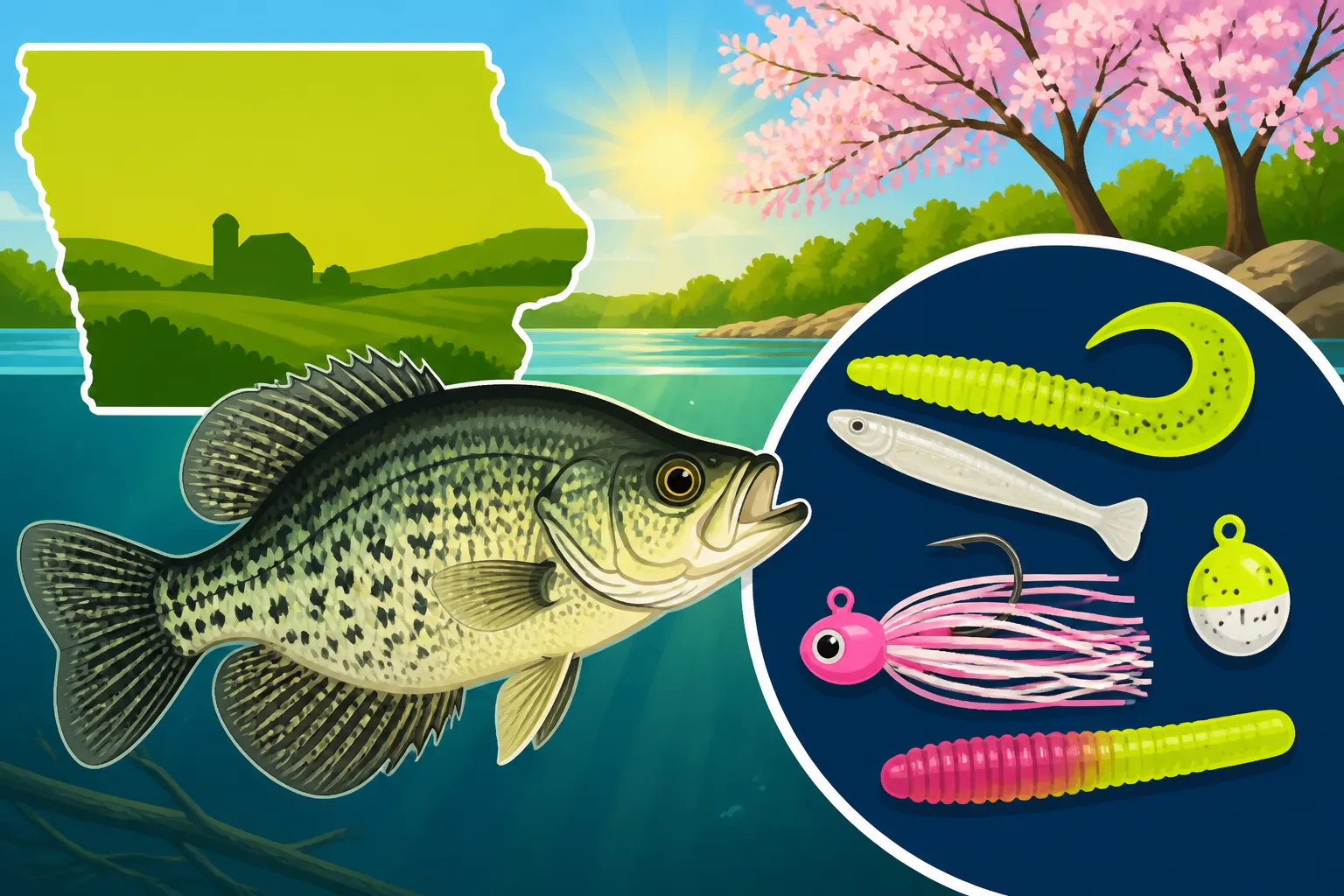
Soft plastics are absolute workhorses for spring crappie. They come in an endless array of shapes, sizes, and colors, allowing you to mimic almost any forage. The beauty of plastics is their versatility; you can fish them fast or slow, deep or shallow, and they hold up well to multiple fish. For Iowa crappie, some standouts include tube jigs, grubs, and small swimbaits.
Tube jigs, often 1 to 2 inches long, have a hollow body with tentacles that undulate enticingly in the water. They are excellent for a slow fall and can be tipped with crappie nibblers or scent for added attraction. Grubs, with their curly tails, provide more action with less movement, making them perfect for slow retrieves or vertical jigging. Tiny swimbaits mimic minnows with a paddle tail that creates a subtle thumping action. Brands like Bobby Garland's or Strike King's small plastics are readily available on Amazon and are staples in many crappie anglers' boxes.
When it comes to color, versatility is key. In clear water or bright conditions, natural colors like white, smoke, or light green often work best. In stained or muddy water, or on overcast days, brighter colors like chartreuse, pink, or orange can be more visible and provoke strikes. Don't be afraid to experiment, especially when the bite is tough. A slight color change can sometimes make all the difference, waking up a school of otherwise finicky crappie.
Live Bait: The Irresistible Minnow
Let's be real, nothing beats a live minnow for finicky crappie, especially in colder early spring water. Minnows are natural forage, and crappie simply can't resist their wiggling, struggling action. They are particularly effective when fish are less aggressive, requiring a more tempting, real-deal offering. Small shiners or fathead minnows are the go-to choices for Iowa crappie.
Hooking a minnow properly is important for both its survival and natural presentation. You can hook them lightly through the lips (top lip up, bottom lip down) for a horizontal presentation, which is great for slow retrieves or casting under a bobber. Alternatively, hooking them just behind the dorsal fin allows them to swim more freely and keeps them alive longer, ideal for vertical jigging or slow trolling (spider rigging). Keep them lively with a good aerated bait bucket.
The size of your minnow should generally match the size of the crappie you're targeting. For smaller pan-sized crappie, a 1-inch minnow is perfect. For those Iowa slab crappie, don't be afraid to go up to a 2 or even 2.5-inch minnow. Often, bigger bait means bigger fish! Combine a minnow with a small jig head or just a plain hook under a slip bobber, and you've got one of the most deadly crappie rigs imaginable. You can find quality minnow buckets and aerators on Amazon, too, which are essential for keeping your bait fresh.
Jigging for Success
Jigging is a fundamental technique for crappie fishing, and the jig itself is paramount. Jig heads typically range from 1/32 to 1/8 ounce for crappie, with the lighter sizes preferred for shallower water or very light bites. The weight influences how fast your bait falls and how easily you can maintain depth. Always match your jig head weight to the depth you're fishing and the action you want to impart.
Color is as important with jig heads as it is with soft plastics. Often, crappie will key in on a specific color combination. Chartreuse, pink, orange, or even black jig heads can provide a contrasting "hot spot" that triggers a strike, especially when paired with a natural-colored plastic body. Experiment with different colors until you find what the crappie are looking for on any given day.
Some anglers swear by hair jigs, made from marabou or squirrel hair, for their natural pulsing action in the water. These are particularly effective in colder water when a super subtle presentation is required. Whether you choose hair or a lead jig head paired with plastic, the key is the action you impart. A slight quiver, a slow lift and fall, or a gentle twitch can make all the difference.
Here's a quick look at common spring crappie baits and conditions:
| Bait Type | Best Spring Phase | Water Temperature | Water Clarity | Presentation Style | Notes |
|---|---|---|---|---|---|
| Live Minnow | Early Spring, Pre-Spawn | 40-55°F | Clear to Stained | Slow, subtle, vertical jigging, bobber | Irresistible natural action, often triggers finicky bites |
| Small Tube Jig | Pre-Spawn, Spawn | 50-65°F | Clear to Stained | Slow fall, vertical jigging, slow retrieve | Versatile, good for slow presentations, can be scented |
| Grub Jig | Pre-Spawn, Spawn, Post-Spawn | 50-70°F | Clear to Stained | Slow retrieve, jigging, trolling | Curly tail adds action, good for covering water |
| Tiny Swimbait Jig | Spawn, Post-Spawn | 55-70°F | Clear to Stained | Steady retrieve, cast & retrieve, light jigging | Mimics small baitfish, good for active fish |
| Marabou Jig | Early Spring, Pre-Spawn | 40-55°F | Clear to Stained | Very slow retrieve, subtle twitch, vertical jigging | Natural pulsing action, excellent for lethargic crappie |
| Crappie Spinner | Post-Spawn | 60-70°F | Stained | Fast retrieve, trolling | Adds flash and vibration, good for aggressive, scattered fish |
Presentation is Key: Making Your Bait Irresistible
Having the best bait in your tackle box is only half the battle. If you're not presenting it correctly, even the hungriest crappie will ignore it. Presentation involves everything from how you rig your bait to the speed of your retrieve and where in the water column you're fishing. Mastering these elements will elevate your spring crappie game significantly.
Spring crappie can be incredibly sensitive to how a bait moves and at what depth. A few inches difference in depth or a slightly faster retrieve can be the difference between a loaded livewell and an empty one. Pay close attention to subtle cues from the fish and be willing to change tactics often.
Essential Rigging Techniques
The way you rig your bait directly impacts its action and effectiveness. One of the most common and versatile rigs for spring crappie is the slip bobber rig. This allows you to fish at precise depths, suspending your bait right in the crappie's strike zone, which is crucial when they're holding tight to structure or suspended in open water. It’s also excellent for presenting live minnows or small jigs naturally. If you're looking for gear, you can find various slip bobber setups on Amazon.
Another effective technique, especially for vertical fishing over brush piles or around docks, is tight-lining. This involves simply tying a jig or hook with a minnow directly to your line, using just enough weight to get it down. The key here is to feel for those subtle bites, as there's no bobber to indicate a strike. This method gives you direct contact with your bait and allows for very precise depth control, which is vital when crappie are stacked on a specific piece of cover.
For covering more water, particularly during post-spawn when crappie are more scattered, spider rigging or slow trolling can be very productive. This involves using multiple rods (where legal, check local regulations like the Iowa Fishing Regulations Explained) extended from the boat, each with a different bait or at a slightly different depth. This allows you to present a variety of options and quickly locate active schools of fish.
Matching the Hatch and Water Conditions
"Matching the hatch" isn't just for fly fishermen. It means presenting a bait that closely resembles what the crappie are naturally feeding on in that particular body of water. In Iowa lakes and rivers, this often means small baitfish like minnows or tiny insects. Observing what's around the water, or even checking the stomach contents of your first few catches, can give you valuable clues.
Water clarity also plays a huge role. In very clear water, crappie can be spooky, and lighter lines (4-6 lb test fluorocarbon or monofilament) and more natural bait colors (smoke, white, light green) are often necessary. In stained or muddy water, bolder colors (chartreuse, pink, orange) and perhaps slightly heavier jigs might be needed to increase visibility. The fish rely more on lateral line vibrations in murky water, so baits with more thumping action (like a paddle tail swimbait) can be effective.
Don't forget about weather conditions. On bright, sunny days, crappie might push deeper or hold tighter to dense cover to avoid direct sunlight. On cloudy days, they might be more apt to roam shallower or suspend higher in the water column. Adjust your depth and presentation speed accordingly. A slow, methodical approach is often best after a cold front, while a more aggressive retrieve might work when fish are actively feeding during stable weather.
Location, Location, Location: Where to Find Them
Even the best bait won't help if you're not putting it where the fish are. Spring crappie are highly structure-oriented, meaning they relate to specific features in the water. In the early spring, focus on creek channels, main lake points, and deeper brush piles in 10-20 feet of water. As temperatures rise, transition areas leading to spawning flats become hot zones.
During the spawn, your focus should shift to shallow cover in protected bays and coves. Look for submerged brush, fallen trees, docks, bridge pilings, and even thick aquatic vegetation in 1-5 feet of water. These areas provide protection for their nests. For instance, finding brush piles at Rathbun Lake Crappie Hotspots is key during this period. After the spawn, crappie often retreat to the edges of these shallow areas, suspending over slightly deeper brush or along the first drop-off near the spawning grounds.
Utilize your boat's electronics (more on that next) to find these submerged structures and baitfish schools. Don't be afraid to move around until you locate active fish. Crappie tend to school, so once you find one, there are often more to be caught. Always remember to check the Iowa Fishing Regulations Explained for specific waters, as some areas may have unique rules regarding fishing certain structures or depths.
Additional Tips for Spring Crappie Anglers
Beyond just bait and presentation, there are other factors that can significantly impact your spring crappie success. From your gear setup to using modern technology, a holistic approach will always yield better results. Don't overlook the details, as often it's the small adjustments that lead to big catches.
Remember that patience and persistence are key, especially in early spring when the bite can be finicky. The fish are there, you just have to figure out their mood and what they want.
Gear Considerations for Optimal Bites
Light tackle is paramount for spring crappie fishing. A 5 to 7-foot light or ultralight action spinning rod paired with a small spinning reel (500-1000 size) spooled with 4-6 pound test monofilament or fluorocarbon line is ideal. This setup provides the sensitivity needed to detect those incredibly subtle crappie bites, especially in cold water when they just "mouth" the bait. A sensitive rod tip will show even the slightest tap or weight increase.
For lines, monofilament is forgiving with its stretch, which can be helpful when crappie are tearing out of brush. Fluorocarbon offers less stretch and more sensitivity, excellent for feeling those light bites, and it's nearly invisible in water. Braid can be great for strength and sensitivity, but it has no stretch and can easily pull hooks from a crappie's papery mouth; if you use braid, consider a fluorocarbon leader. When looking for gear, check out Amazon for a wide selection of ultralight rods and reels that fit this profile. Having a variety of small jig heads and hooks is also critical for adjusting to different depths and bait sizes.
The Importance of Electronics
Modern fish finders and sonar units are indispensable tools for serious crappie anglers. During spring, especially in the pre-spawn and post-spawn periods, crappie are often suspended or holding to submerged structure that you simply can't see with the naked eye. A good side imaging or down imaging unit can reveal brush piles, standing timber, rock piles, and even individual crappie holding near them.
Spend time idling over potential crappie spots, meticulously scanning with your electronics. Look for baitfish schools, as crappie are usually not far behind. Mark waypoints on your GPS for any promising structure or fish schools you find. This allows you to return to productive spots with precision. Learning how to read your fish finder for Walleye and crappie structure can significantly cut down on unproductive fishing time, especially when fish are suspended in open water or scattered along ledges.
The Best Time to Go
Timing is everything in spring crappie fishing. While the specific "best" time varies daily, generally, early morning and late afternoon are prime feeding windows. Crappie, like many fish, often become more active during periods of lower light. On cloudy or overcast days, this feeding window can extend throughout the day.
However, during the spawn, when crappie are locked onto beds in shallow water, they can be caught throughout the day, particularly if the sun is warming the shallow water and making them more active. Pay attention to sudden weather changes; a stable weather pattern usually means more predictable fishing, while a sudden cold front can shut the bite down hard, requiring an even slower, more patient approach. Always remember to check the Iowa Fishing Season Dates and Limits before you head out, as regulations can change.
Disclaimer
Fishing regulations and conditions in Iowa can change frequently. Always consult the latest Iowa Department of Natural Resources (DNR) fishing regulations booklet or their official website before heading out on the water. This article is intended for informational purposes only and should not be considered a substitute for official DNR guidelines. Remember to fish responsibly and safely.