Egg Sinker vs Bank Sinker for Catfish
One of the most common questions I get from fellow anglers, especially those new to chasing Iowa's magnificent catfish, is about what seems like the simplest piece of tackle: the sinker. But let me tell you, if you've ever felt like you're missing bites, or your bait is just getting swept away, then you know the struggle is real. Choosing between an egg sinker and a bank sinker isn't just about weight; it's about understanding how your bait behaves underwater and how that helps you catch more fish. This guide is all about helping you decode that choice for your next catfish adventure on Iowa's waters.
Understanding the Basics: What Are Sinkers and Why Do They Matter?
Before we dive into the nitty-gritty of egg versus bank sinkers, let's take a moment to appreciate the humble sinker itself. It might seem like a small, insignificant piece of lead (or other material), but its role in your fishing success is absolutely paramount, especially when you're targeting those hard-fighting Iowa catfish. Without the right sinker, your carefully selected bait and perfectly tied rig might as well be floating aimlessly, never reaching the strike zone.
The Core Purpose of a Sinker
At its heart, a sinker has a few fundamental jobs. First and foremost, it gets your bait down to where the fish are. Catfish, whether they're channel cats in a muddy river or big flatheads lurking in deep holes, often prefer to feed on or near the bottom. Your sinker ensures your bait reaches that depth efficiently. Imagine trying to present a juicy cut bait in a deep river channel without any weight – it'd just tumble downstream with the current, or sit suspended where no self-respecting catfish would bother to look. The sinker also helps keep your bait in the strike zone, especially in moving water. It anchors your rig, preventing it from being swept away by currents or drifted by wind, which means your bait stays where you want it, increasing your chances of a bite. Furthermore, sinkers play a crucial role in casting. The weight of the sinker allows you to accurately and effectively cast your rig a significant distance, reaching those prime fishing spots that are out of reach from the bank or boat. It's the engine that propels your entire presentation out into the water.
Factors Influencing Sinker Choice
Okay, so sinkers are important. But why so many different kinds? Well, the "best" sinker isn't a one-size-fits-all answer. It largely depends on the specific conditions you're fishing in and the type of catfish behavior you're trying to leverage. Think about the variety of fishing spots we have here in Iowa: from the swift currents of the Mississippi River to the calm, sprawling waters of Rathbun Lake, or even a quiet farm pond. Each of these environments presents unique challenges and opportunities. Key factors influencing your sinker choice include the strength of the current, the type of bottom structure you're fishing over, and how you want your bait to behave once it's in the water. Are you trying to hold steady in a strong flow, or do you want your bait to drift naturally? Do you need to feel every subtle nibble, or are you expecting aggressive takes? All these questions lead to different sinker solutions.
The Egg Sinker: Smooth Operator for Sensitive Bites
The egg sinker is a real favorite for many catfish anglers, and for good reason. Its unique design offers distinct advantages, particularly when you're dealing with finicky fish or certain fishing conditions. If you're looking to feel every tap and nudge, or you need your bait to move a bit more naturally, the egg sinker might just be your best friend.
Design and Functionality
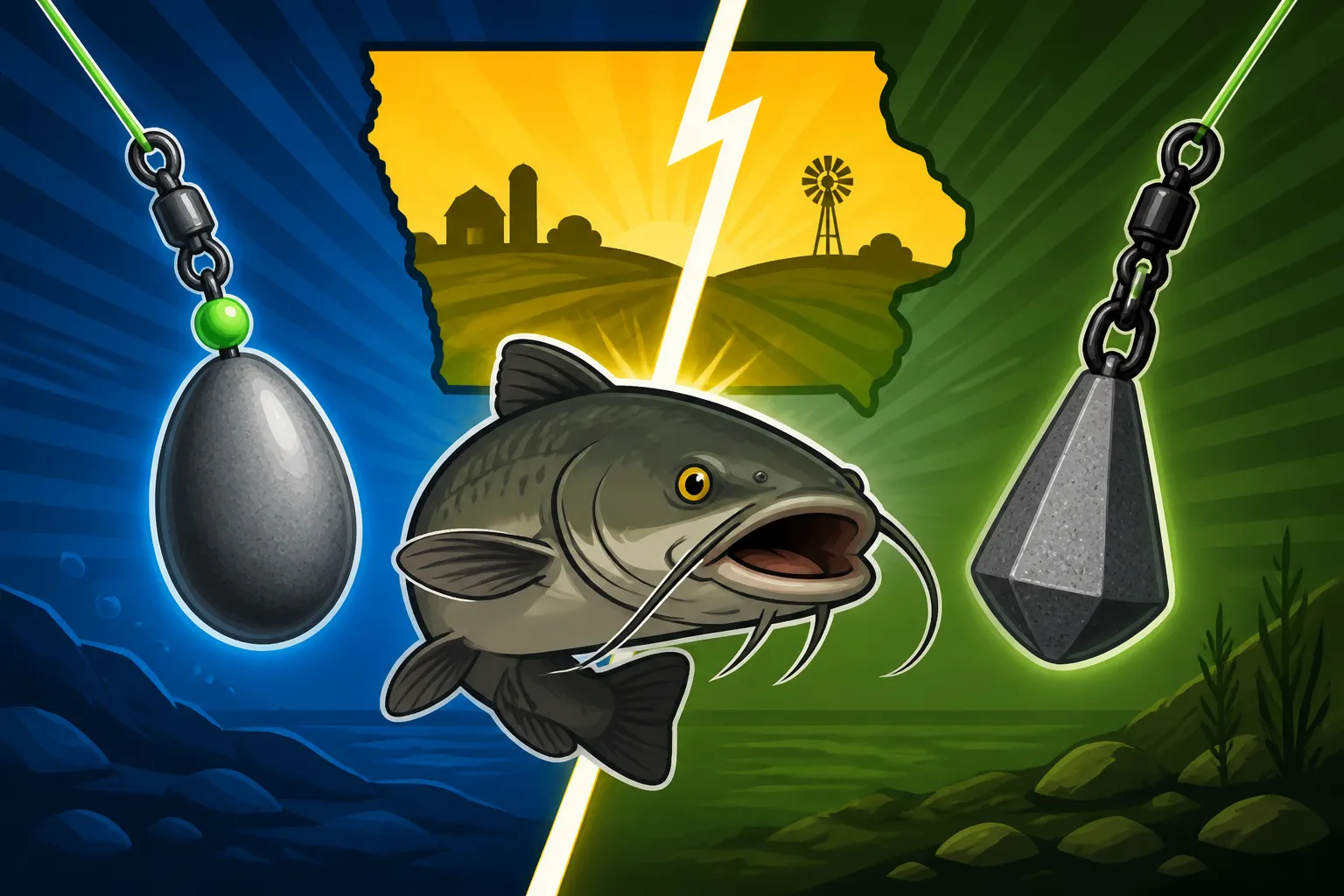
An egg sinker, as its name suggests, is shaped like an egg or an elongated oval. The defining characteristic is a hole running straight through its center. This design is crucial because it allows your main fishing line to pass through the sinker. When rigged, the sinker slides freely up and down your line above your swivel and leader, which connects to your hook. This "slip" action is what gives the egg sinker its major advantage. When a catfish takes your bait, it can pull the line without immediately feeling the full weight of the sinker. This means less resistance for the fish, leading to more confident and often deeper bites. It's a game-changer for those times when the fish are just "mouthing" the bait rather than swallowing it aggressively. The smooth, rounded shape also helps it roll over snags on the bottom more easily than other sinker types, reducing frustrating hang-ups.
When to Use an Egg Sinker for Catfish
You'll find an egg sinker shines in several scenarios when you're chasing catfish around Iowa. They are absolutely fantastic for fishing in relatively still or slow-moving water, such as large lakes like Saylorville Reservoir, calmer sections of wider rivers, or your favorite private pond. In these environments, strong currents aren't an issue, so the free-sliding nature of the egg sinker truly helps with bite detection. Imagine fishing for channel catfish in a quiet cove: a cautious bite is much more likely to register on your rod tip with an egg sinker rig because the line moves freely without dragging the weight.
They are also excellent for drift fishing from a boat or even a kayak, where you want your bait to slowly tumble along the bottom with a gentle current. The smooth shape minimizes snagging as it bumps along, and the free-sliding line ensures that any subtle bump from a fish isn't immediately met with resistance from a stationary weight. This makes it a prime choice for anglers seeking a more natural presentation. Consider browsing through options at Bass Pro Shops or searching for bulk packs on Amazon to stock up on various sizes for these versatile situations. For more on catching these whiskered wonders, check out How to Catch Catfish in Iowa.
Pros and Cons of Egg Sinkers
Let's break down why you'd grab an egg sinker versus opting for something else.
Pros:
- Superior Bite Detection: Hands down, this is the biggest advantage. Because the line slides through, a biting fish feels less resistance, often leading to a more solid hookup. You feel the actual tug of the fish, not just the sinker moving.
- Natural Bait Presentation: In light currents or still water, your bait can move and settle more naturally, mimicking a free-floating meal, which can be irresistible to a hungry catfish.
- Fewer Snags (in some conditions): The rounded, smooth shape tends to roll over logs, rocks, and other bottom debris better than angular sinkers, potentially saving you a lot of re-tying time.
- Versatility: Works well with various riggings, most notably the Carolina rig, a staple for many catfish anglers.
Cons:
- Poor in Strong Currents: This is its Achilles' heel. In strong river currents, an egg sinker will simply roll and tumble along the bottom, making it impossible to keep your bait in one place. Your bait will be swept out of the strike zone almost immediately.
- Less Anchoring Power: If you need your bait to stay absolutely stationary, an egg sinker isn't the best choice. Its rolling nature is a detriment here.
- Potential for Line Abrasion: While rare with quality components, the constant sliding of the line through the sinker's hole could theoretically cause some abrasion over very long periods, especially if the hole isn't perfectly smooth. Always check your line.
The Bank Sinker: The Steadfast Anchor
Now, let's talk about the bank sinker. If the egg sinker is the subtle, sensitive artist, the bank sinker is the reliable, steadfast workhorse. It's designed for stability and staying power, especially when fishing gets tough and the water starts moving.
Design and Functionality
A bank sinker is typically a pear-shaped or bell-shaped lead weight with a swivel or an eyelet molded into its top. Unlike the egg sinker, your main line usually ties directly to this eyelet, or a leader from your main line is tied to it. This means the sinker is a fixed part of your rig, acting as an anchor. The more angular, often slightly flattened sides (or distinct "points" on a pyramid sinker, which is a close cousin and often used interchangeably in discussion with bank sinkers for their anchoring properties) help it dig into the bottom. This design is specifically engineered to resist current. When it hits the bottom, it tends to settle and hold its ground, preventing your bait from drifting away. The weight of the sinker, combined with its shape, makes it an incredibly stable choice when you absolutely need your bait to stay put in a specific spot.
When to Use a Bank Sinker for Catfish
This is where the bank sinker truly shines – when you're battling strong currents or need precise bait placement. Think about fishing the mighty Mississippi River in Iowa, or the fast flows of the Des Moines River after a good rain. If you're trying to fish a deep hole behind a log jam, or near the scour of a wing dam, you need your bait to stay put. This is a job for the bank sinker. Its ability to dig in and resist being rolled downstream is invaluable. It’s also excellent for fishing off docks, piers, or from the bank where you need to cast out and let your bait sit patiently. Anglers often pair bank sinkers with heavy-duty Catfish Gear Guide for Iowa Rivers rigs, ensuring their bait remains in the strike zone, patiently awaiting a big flathead or channel cat. When you're fishing areas with a lot of debris or strong currents, a bank sinker helps you get down and stay down, minimizing the chance of your bait being washed into unproductive water.
Pros and Cons of Bank Sinkers
Let's weigh the good and the not-so-good when it comes to bank sinkers.
Pros:
- Excellent Holding Power: This is the main event. Bank sinkers (and pyramid sinkers) are designed to grip the bottom, making them ideal for strong currents, deep channels, and windy conditions where you need your bait to stay stationary.
- Precise Bait Placement: Because it doesn't roll, you can more accurately place your bait exactly where you want it and have confidence it will stay there. This is crucial when targeting specific structure or depth contours.
- Durability: Generally robust and less prone to breaking off than lighter, more delicate sinkers in rough conditions.
Cons:
- Reduced Bite Sensitivity: Since the sinker is a fixed part of the rig, a biting fish will immediately feel the full weight of the sinker. This resistance can cause finicky catfish to drop the bait before you can set the hook.
- More Prone to Snags: While its shape helps it hold, those same angles can also make it more likely to wedge into rocky bottoms or get hung up on submerged timber.
- Less Natural Presentation: The bait is essentially anchored in one spot, which can sometimes look less appealing to fish than a bait that's allowed to move a bit more naturally.
- Requires Heavier Tackle: To effectively cast and retrieve heavier bank sinkers, you often need a more robust rod and reel setup, which might not be ideal for lighter presentations. To see what kind of tackle you might need, check out Best Rod Setup for Catfish on the Mississippi River.
Making the Choice: Egg Sinker vs. Bank Sinker for Your Catfish Scenario
Alright, you've got the lowdown on both types. Now comes the moment of truth: which one do you reach for when you're out on the water? It's not about one being inherently "better" than the other, but rather about matching the tool to the task at hand. Understanding the conditions and your desired presentation is key to optimizing your catfish catching potential.
River Current vs. Still Water Considerations
The most critical factor in your sinker decision will almost always be the water movement. If you're fishing the mighty Mississippi, the Missouri River border waters, or even a local river like the Cedar or Skunk after a rain, you're going to encounter current. In these situations, especially when targeting those big channel cats or flatheads that hug the bottom in deeper holes, a bank sinker (or a pyramid sinker, which is even better at digging into sand and gravel) is almost always the way to go. You need that bait to stay put, directly in the path of cruising fish. The angles of the bank sinker are designed to resist being rolled downstream, giving you peace of mind that your offering isn't being swept away into oblivion. How Deep to Fish for Walleye in Spring is a different species, but illustrates how critical depth and position can be.
Conversely, if you're hitting up one of Iowa's beautiful calm lakes like Clear Lake or West Okoboji, or perhaps a tranquil section of a slow-moving river, an egg sinker will shine. Here, the lack of strong current means you don't need significant anchoring power. Instead, you prioritize bite detection and a natural presentation. The free-sliding nature of the egg sinker means a cautious catfish can pick up your bait and move off with it without feeling the heavy resistance of the sinker, leading to more confident bites and better hookups. This is also ideal for fishing smaller community ponds or farm ponds where subtle bites are more common.
Bottom Type and Structure
Beyond current, what's on the bottom can also heavily influence your sinker choice. Iowa waters offer a diverse range of bottom structures, from silty, muddy flats to rocky ledges and submerged timber.
- Muddy/Silty Bottoms: On soft, muddy, or silty bottoms, both sinker types can work, but egg sinkers often perform better in terms of avoiding snags. Their rounded shape glides over the soft bottom, reducing the chance of digging in and getting stuck. Bank sinkers, with their more angular design, can sometimes bury themselves too deeply in very soft mud, making them harder to retrieve. However, if the current is strong even on a muddy bottom, you might still need the holding power of a bank sinker.
- Rocky/Rough Bottoms: This is a tricky one. In areas with a lot of rocks, gravel, or submerged timber, both sinker types have their challenges. Egg sinkers, with their smooth profile, can sometimes roll into crevices and get wedged. Bank sinkers, with their angles, can snag directly onto rocks or logs. If you're fishing really snaggy areas, a slightly lighter egg sinker or even a specialized "snagless" sinker (like a pencil sinker, though less common for general catfish fishing) might be considered. However, for most rocky bottoms with moderate current, a bank sinker often wins out due to its ability to hold steady and the fact that its fixed nature might give you a slightly better chance to pull it free with a direct tug, rather than having a sliding sinker get stuck and your line simply pull through it. Understanding the specific How to Find Deep Holes for Catfish often involves navigating these tricky bottom structures.
Bait Presentation and Bite Detection
Finally, consider how you want your bait to look and feel to the fish, and how you want to detect those precious bites.
- Natural Drift/Suspension: If you're aiming for a very natural presentation where your bait drifts or moves gently with the current, an egg sinker on a Carolina rig is superb. The bait can move a foot or two away from the sinker, presenting a more "alive" appearance. This is fantastic for targeting wary catfish or in conditions where a stationary bait looks unnatural. The free-sliding line ensures that when a fish picks it up, they don't feel the full weight of the sinker immediately, leading to better bite detection and deeper hooksets.
- Fixed/Stationary Presentation: When you want your bait to stay absolutely still, perhaps directly on a prime feeding lane or right next to a piece of cover where a monster flathead is lurking, the bank sinker is your champion. Its anchoring ability means your bait won't budge, ensuring it remains in that high-percentage zone. While bite detection might be slightly dulled compared to an egg sinker, a strong catfish bite will still be unmistakable, especially on a sensitive rod. For these setups, a robust Best Bait for Channel Catfish is often employed.
Here’s a quick overview to help you decide on the fly:
| Feature | Egg Sinker | Bank Sinker |
|---|---|---|
| Shape | Oval/Egg-shaped, hole through center | Pear/Bell-shaped, eyelet at top (or pyramid shape) |
| Line Attachment | Line slides freely through center | Line ties directly to eyelet |
| Primary Advantage | Superior bite detection, natural bait movement | Excellent holding power in current |
| Ideal Conditions | Still water, slow current, light wind, Carolina rigs | Strong currents, heavy wind, precise bait placement |
| Bottom Type | Silt, mud (rolls over some snags) | Gravel, rocky (digs in to hold), sand |
| Bite Resistance | Low (fish feels less weight initially) | High (fish feels full sinker weight) |
| Snagging Tendency | Can roll into crevices, less prone to direct snags | Can wedge into rocks/crevices, more prone to direct snags |
| Typical Rigs | Carolina Rig | Bottom Rig, Three-Way Swivel Rig |
| Best For | Finicky bites, natural presentation | Anchoring in fast water, strong currents |
| Where to Find | Bass Pro Shops, Amazon, local tackle shops | Bass Pro Shops, Amazon, local tackle shops |
Ultimately, having a selection of both egg sinkers and bank sinkers (including pyramid styles) in various weights is going to make you a much more versatile and successful catfish angler here in Iowa. Don't be afraid to experiment! What works perfectly one day or in one spot might not be ideal for the next. Pay attention to the conditions, observe how your bait is behaving, and adjust your sinker choice accordingly. That’s the real secret to mastering the art of catfish fishing.
Disclaimer
This article is for general informational purposes only and does not constitute professional advice. Laws, prices and regulations vary by location and change over time. Consult a qualified professional for guidance on your specific situation.