Do You Need a Boat to Catch Walleye?
It’s a common thought for many Iowa anglers, especially when you start dreaming of those elusive walleye: "Do I really need a boat to catch these fish?" You see all the pros on TV or the seasoned local anglers out on the big lakes and rivers in their fancy rigs, and it’s easy to feel like you’re missing out if you’re stuck on shore. But here’s the good news: while a boat certainly opens up some fantastic opportunities, it is absolutely not a prerequisite for landing a beautiful Iowa walleye. This guide will walk you through how to successfully target walleye from the bank, what gear you’ll need, and when a boat truly enhances the experience.
The Truth About Walleye and Shore Fishing in Iowa
Let's cut right to it: yes, you can catch walleye from shore in Iowa. Many anglers consistently do, and some of the best fishing can be found within casting distance of the bank if you know where to look and what to do. Walleye are predators, and like all predators, they need food, cover, and favorable conditions. These elements are often available in abundance in areas accessible to shore anglers.
Understanding Walleye Behavior from Shore
Walleye aren't just deep-water dwellers. While they appreciate cooler, deeper water during the bright daylight hours, they are creatures of low light. This means dawn, dusk, and nighttime are often prime times for them to move shallower, closer to the banks, to feed. During these periods, they become much more accessible to anglers casting from shore.
Think about it: smaller baitfish, insects, and crustaceans often hug the shoreline for food and cover. Where the bait goes, the predators follow. Walleye will move into these shallower zones, especially where there's structure like rock piles, current seams, weed lines, or even submerged timber. These areas provide ambush points for them to surprise their prey. The key is understanding these patterns and being there when they are. You might not be able to reach every single walleye in the middle of a sprawling lake, but you can certainly intercept those that venture closer to the edges, and trust me, there are plenty of them.
Prime Shore Fishing Locations for Walleye in Iowa
Iowa offers a fantastic variety of waters, and many of them have excellent shore access that can put you on walleye. You just need to know what features to look for.
Rivers and Tailwaters: Some of the best shore fishing for walleye in Iowa can be found on its rivers, especially below dams or in areas with strong current. These "tailwater" areas concentrate baitfish and oxygen, making them magnets for walleye. Look for eddies, current seams where fast water meets slow, and washouts near public access points. Wing dams, if you can reach them from shore or by wading safely, are also legendary walleye magnets. The Mississippi River, for example, has numerous access points where you can cast to prime current breaks or rocky stretches that hold walleye. Iowa Walleye Season Opening Day can be an exciting time to hit these spots, as walleye are often concentrated in specific areas after the spawn.
Lakes and Reservoirs: Don't discount lakes and reservoirs for shore-bound walleye. Focus on prominent points, rocky shorelines, rip-rap (rocky banks used for erosion control), causeways, and areas around dam faces or public boat ramps that offer deeper water access. Submerged humps or channels that come close to shore can also be fantastic. In some of Iowa's larger reservoirs, like Saylorville or Rathbun, dam areas often have excellent shore access that put you right over deep water where walleye might hold. During spring and fall, walleye will often move into shallower areas to spawn or feed aggressively, bringing them well within casting range.
Other Access Points: Always check public fishing maps or local DNR resources. Many parks, especially state parks and county parks, have designated fishing piers or improved shore access designed to get anglers out over productive water. These piers can sometimes extend out to deeper water or provide access to structure that might be otherwise unreachable from a flat bank. Even smaller community lakes that are regularly stocked might hold transient walleye that pass by easily accessible points.
Essential Gear and Techniques for Shore-Bound Walleye Anglers
Okay, so you’re convinced you don’t need a boat, but you still need the right tools for the job! Shore fishing for walleye isn't just about throwing out any old line. It requires a bit more thought and sometimes specialized gear to overcome the limitations of a fixed position.
Rods, Reels, and Line for Shore Fishing Success
When you're shore fishing, casting distance and sensitivity become paramount. You're not moving your boat over the fish; you're bringing your bait to them.
Longer Rods are Your Friend: Forget those short, stubby rods if you're serious about walleye from shore. A longer spinning rod, typically in the 7 to 9-foot range, is ideal. The extra length allows for much greater casting distance, helping you reach those deeper breaks or current seams that might be just out of reach with a shorter rod. It also gives you better line control, especially when fighting a fish in current or around obstacles, and can help with lifting fish over bank obstructions. Think of it as extending your reach! Best Rod Length for Iowa River Walleye Fishing goes into more detail about how rod length impacts your fishing.
Sensitive Reels and Lines: Pair that longer rod with a quality spinning reel in a 2500-4000 series size. A smooth drag system is critical for fighting bigger walleye. For line, many shore anglers opt for braided line as their main line. It has zero stretch, offering incredible sensitivity to detect those subtle walleye bites, and its thinner diameter allows for longer casts. A 10-20 lb test braided line is a good starting point. You’ll typically tie on a 6-10 lb fluorocarbon leader (3-5 feet long) to the end of your braid. Fluorocarbon is nearly invisible underwater, which can be crucial for finicky walleye, and it offers some abrasion resistance against rocks or submerged timber. Best Reel Size for Walleye Fishing can help you choose the right spinning reel.
Baits and Lures That Shine from Shore
The beauty of shore fishing for walleye is that many classic walleye baits and lures are perfectly suited for it.
Live Bait Dominates, Especially Under a Bobber: Nothing beats live bait for walleye in many situations, and it’s incredibly effective from shore. Minnows (shiners, fatheads), nightcrawlers, and leeches are all walleye favorites. A slip bobber rig is your best friend here. It allows you to cast a significant distance and then have your bait suspend at a precise depth, which is often crucial for walleye. You can drift it with the current in rivers or allow it to sit still in lakes near structure. You can often find these baits at local bait shops or even larger retailers like Bass Pro Shops. Best Live Bait for Iowa Walleye offers great tips on choosing and using live bait.
Artificial Lures for Aggressive Bites: When walleye are aggressive, artificial lures can be incredibly productive.
- Jigs: Jigs tipped with soft plastics (grubs, paddle tails, minnow imitations) or even live bait are phenomenal. Vary the jig weight depending on current or depth. A slow, steady retrieve or a lift-and-drop presentation can trigger bites.
- Crankbaits and Stickbaits: Shallow-diving crankbaits and suspending jerkbaits are excellent, especially during low light conditions or when walleye are pushing baitfish to the surface. Cast them out, retrieve them with a steady reel or a twitch-and-pause, imitating a wounded baitfish. Brands like Rapala and Berkley offer a wide range of effective crankbaits.
- Blade Baits and Spoons: These can be worked vertically or cast and retrieved. Blade baits vibrate intensely on the retrieve, mimicking fleeing baitfish, while spoons have a fluttering action that can be irresistible. They are great for covering water and triggering reaction strikes.
When it comes to picking colors, remember the conditions. Best Lure Color for Muddy Water would suggest brighter, more contrasting colors, while natural baitfish patterns often work best in clear water. You can find a vast selection of these lures on Amazon, making it easy to experiment.
Strategic Shore Fishing Techniques
Being successful from shore means being strategic and observant.
Fan Casting: Since you're stationary, fan casting is essential. Cast to different angles and depths, systematically covering as much water as possible. Start by casting straight out, then move your casts in a fan pattern to the left, then to the right. This ensures you're presenting your bait to any walleye that might be in the vicinity.
Working Current Breaks: In rivers, identify current breaks – areas where fast water meets slow water, or behind rocks, bridge pilings, or wing dams. Walleye will often sit in the slower water, waiting for baitfish to be swept past them in the current. Cast your lure or live bait up-current and let it drift naturally into or through these breaks. Walleye Fishing Techniques for Iowa Rivers provides more in-depth strategies.
Night Fishing (Where Permitted): As mentioned, walleye are very active after dark. If allowed in your chosen spot, night fishing can be incredibly productive from shore. Walleye will often move into very shallow water to feed under the cover of darkness. Use dark-colored lures or glow-in-the-dark options, and be extra mindful of safety. Always check Night Fishing Rules for Anglers for your specific location.
Seasonal Considerations: Walleye behavior changes with the seasons. In spring, they're often concentrated in shallower river sections for spawning, or near dam faces. In summer, they might retreat to deeper, cooler water, but will still venture shallow during low light. Fall can offer another fantastic bite as they bulk up for winter, often becoming more aggressive and moving into shallower feeding grounds. Iowa Fishing Seasons Explained offers a great overview of these patterns.
When a Boat Does Give You an Edge (But Isn't Always Required)
Let's be real: there are times when a boat is undeniably an advantage for walleye fishing, but it's important to differentiate between an advantage and a necessity.
Accessing Deeper Structures and Open Water
This is arguably the biggest benefit of having a boat. While shore anglers can reach certain shallow structures, a boat allows you to easily access offshore humps, deep weed lines, vast open-water flats, and submerged river channels that are miles from any public bank access. These areas often hold large schools of walleye, especially during the middle of the day or in warmer months when they prefer deeper, cooler water.
From a boat, you can employ techniques like vertical jigging, trolling with crankbaits or crawler harnesses, or bottom bouncing, which are much harder, if not impossible, to do effectively from shore. Walleye Fishing Techniques for Iowa Lakes often relies heavily on these deep-water, boat-centric tactics. Plus, with a fish finder on board, you can actively search for schools of fish or specific underwater structures that hold them. This is where the question of Do You Need a Fish Finder to Catch Walleye? becomes more relevant; on a boat, a good fish finder is a game-changer.
Covering More Water and Mobility
A boat grants unparalleled mobility. If the bite isn't on a particular spot, you can quickly move to another, covering vast stretches of a lake or river in a fraction of the time it would take to walk or drive between shore access points. This ability to "run and gun" can be crucial for finding active walleye, especially on large bodies of water where schools might be spread out.
Imagine a large reservoir where walleye are chasing baitfish across a mile-long flat. A boat allows you to follow that action, staying on top of the moving fish. From shore, you’re limited to waiting for them to come to you. This is why many experienced anglers who chase walleye consider a boat a serious tool for maximizing their time on the water.
Safety and Comfort Considerations
Let's not overlook comfort and safety. A boat allows you to bring more gear – extra rods, tackle boxes, coolers with snacks and drinks, and even shelter from sudden rain. It also provides a stable, elevated platform for casting and fighting fish. When fishing remote areas, a boat offers a level of safety and emergency preparedness that shore fishing simply can't match, especially if you're venturing into areas with tricky terrain or limited cell service.
Making the Most of Limited Access: Other Options
So, you don't own a fancy bass boat, but you still want to explore beyond the bank? Don't despair! There are excellent options that bridge the gap between pure shore fishing and full-blown boat ownership.
Kayaks and Canoes: A Hybrid Approach
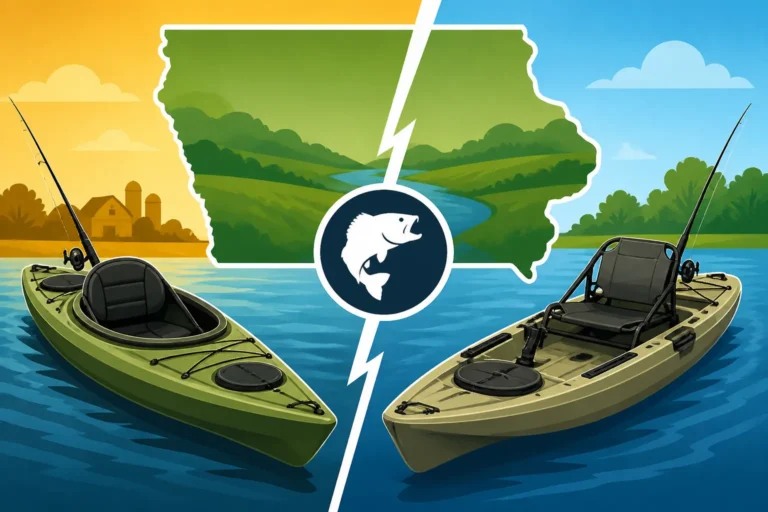
Kayaks and canoes have revolutionized fishing access for many anglers. These smaller, often more affordable craft allow you to silently navigate shallow waters, explore secluded coves, and reach less-pressured areas that are inaccessible to larger boats or unreachable from shore. You can effectively fish many of Iowa's smaller lakes and even larger rivers from a kayak or canoe, getting into spots where walleye feel safe.
While they don't offer the speed or stability of a large fishing boat, a fishing kayak can still get you out to those deeper points, submerged weed lines, or quiet backwaters where walleye might be hiding. They’re also great for Kayak Fishing Gear Guide for Iowa Rivers, as you can outfit them with rod holders, small fish finders, and even electric trolling motors. Just remember to prioritize safety, always wear a life jacket, and be mindful of weather conditions and currents.
Guided Trips and Charter Services
If you're eager to experience boat fishing for walleye without the investment of owning a boat, consider booking a guided fishing trip or a charter service. Many experienced guides in Iowa specialize in walleye and operate on the major lakes and rivers. This is a fantastic way to learn from a pro, experience different techniques, and fish areas that are only accessible by boat.
A guided trip often includes all the necessary gear, bait, and expert knowledge of local waters and walleye patterns. It’s a great way to "try before you buy" if you're contemplating a boat purchase, or simply to enjoy a hassle-free day of fishing with a high likelihood of success. You'll gain invaluable insights into Iowa Fishing Techniques Guide and potentially discover new hot spots.
Conclusion: It's About Opportunity, Not Necessity
Ultimately, whether you "need" a boat to catch walleye in Iowa depends on your definition of success and the kind of fishing experience you're looking for. You can absolutely enjoy fantastic walleye fishing from shore, especially if you focus on accessible areas known for walleye activity, pay attention to low-light periods, and use the right gear and techniques.
A boat provides more access, allows you to cover more water, and opens up different fishing techniques. It certainly expands your opportunities, particularly for deep-water walleye. But for many, the simple joy of casting from a riverbank as the sun rises, or working a jig along a rocky shoreline at dusk, is more than enough to hook into some beautiful Iowa walleye. So don't let the lack of a boat stop you; grab your longest rod, a handful of jigs or some live bait, and hit those accessible spots! Best Fishing Spots in Iowa often includes fantastic shore access locations.
| Feature | Shore Fishing for Walleye | Boat Fishing for Walleye |
|---|---|---|
| Accessibility | Limited to public banks, piers, bridges; easily accessible. | Unlimited access to entire lake/river; can reach remote areas. |
| Cost | Very low initial investment (rod, reel, tackle, license). | High initial investment (boat, motor, trailer, electronics, maintenance, fuel, insurance). |
| Mobility | Limited; requires walking or driving to different spots. | High; can quickly move between spots and cover vast areas. |
| Techniques | Best for casting jigs, crankbaits, slip bobbers; focused on accessible structure. | Versatile; excellent for trolling, vertical jigging, deep-water presentations, structure fishing. |
| Fish Finder Use | Generally not applicable, relies on map study and local knowledge. | Essential for locating fish, structure, and depth changes. |
| Comfort/Convenience | Variable; exposed to elements, limited gear carrying. | More comfortable, can carry extensive gear, provides shelter from elements. |
| Safety | Generally safer due to proximity to land, but beware of currents/slippery banks. | Requires more safety gear (life jackets, flares) and awareness of water conditions/boating traffic. |
| Best For | Targeting walleye during low light, spring/fall runs, concentrated areas below dams. | Targeting walleye in open water, deep structures, covering large water bodies, year-round. |
Disclaimer
This article is for general informational purposes only and does not constitute professional advice. Laws, prices and regulations vary by location and change over time. Consult a qualified professional for guidance on your specific situation.