Do You Need a Fish Finder to Catch Walleye?
It's a question that echoes across many a quiet Iowa lake or bustling river: do you really need one of those fancy fish finders to catch walleye? For many of us, the idea of adding more gear, especially something electronic, to our simple fishing trips can feel a bit overwhelming, and honestly, a little intimidating. You just want to catch some fish, not become a tech wizard! This guide will cut through the noise and help you understand when a fish finder is a genuine asset for Iowa walleye fishing, when you can absolutely succeed without one, and how to decide what's right for your angling style.
The Basics: What a Fish Finder Does for Walleye Anglers
Let's start with the fundamental question: what exactly is a fish finder doing out there, buzzing away on your boat or ice shanty? At its heart, it's a sonar device that sends out sound waves, listens for their echoes, and then paints a picture of what's beneath your boat on a screen. For walleye anglers in Iowa, understanding this technology isn't just about cool gadgets; it's about seeing the world through the fish's eyes, or rather, feeling it through sound waves.
Understanding Sonar and Walleye Habits
Imagine trying to navigate a dark room just by tapping your foot and listening to the echoes. That's essentially what a fish finder does. It sends out sound pulses, and when those pulses hit something – the lake bottom, a submerged tree, or a school of minnows – they bounce back. The time it takes for the echo to return tells the unit how far away that object is. The strength of the echo tells it something about the object's density and size. This information is then translated into images on your screen, revealing depths, contours, and potential fish targets.
For walleye, this is critical because these fish are notorious for relating to specific structures and changes in depth. They are often light-sensitive, preferring deeper, darker water during the day or using cover to ambush prey. Knowing where the bottom drops off, where a gravel bar rises, or where a clump of weeds ends is like having a secret map to their hideouts. Without a fish finder, you're guessing. With one, you're exploring the underwater landscape in real-time, greatly increasing your chances of finding those elusive marble eyes. It's a key part of any comprehensive Iowa Fishing Techniques Guide, especially when targeting a species as particular as the walleye.
Identifying Structure and Cover
Walleye are rarely found just swimming aimlessly in open water, especially in the larger lakes and reservoirs across Iowa. They are structure-oriented fish, meaning they'll relate to anything that provides cover, current breaks, or ambush points. Think about it: a submerged rock pile, a sharp drop-off into a river channel, or the edge of a dense weed bed – these are all prime walleye real estate. Finding these features blindly can be a monumental task, especially on a new body of water or in vast lakes.
A fish finder becomes your eyes underwater. It lets you "see" the contours of the lake bottom, highlighting those subtle humps, saddles, and ledges that might hold a school of fish. You can differentiate between hard bottoms (like rock or gravel, often preferred by walleye) and soft, mucky bottoms. It can show you schools of baitfish, which are essentially neon signs pointing to where predators like walleye might be lurking. Moreover, it allows you to stay on that structure once you find it. You can mark waypoints, troll along a contour line, or precisely drop your bait to a specific depth where fish are holding. This precision is invaluable, especially when you're trying to perfect your How to Catch Walleye in Iowa game.
Fishing for Walleye Without a Fish Finder: The Traditional Approach
Now, let's be realistic. Generations of successful walleye anglers caught fish long before electronics ever touched the water. The idea that you must have a fish finder to succeed is simply not true. Many of us still prefer a more traditional, intuitive approach, and there's a lot of wisdom in it. It's about developing a deep connection with the water itself, rather than just relying on a screen.
Reading the Water and Topography
This is where the art of fishing truly shines. "Reading the water" means paying close attention to everything you can observe above and at the surface, and then making educated guesses about what's happening below. Are there subtle current breaks around a point? Is there a noticeable color change in the water that might indicate a depth change or a transition in bottom composition? Are baitfish flickering on the surface, or birds diving, indicating feeding activity? These are all clues.
Experienced anglers learn to feel the bottom with their lures. By slowly dragging a jig or a bottom-bouncer, you can discern different textures – the subtle tick of gravel, the soft resistance of mud, the sharp bump of a rock. This tactile feedback, combined with visual observations, helps build a mental map of the underwater terrain. In rivers, understanding current flow is paramount. Walleye will position themselves in eddies or behind structures where they can rest out of the main current but still ambush food. Observing how the current moves around visible points or wing dams can tell you a lot about where to cast. This hands-on approach is often incredibly rewarding and fosters a deeper understanding of the fish and their environment.
Relying on Local Knowledge and Public Resources
One of the most valuable "tools" in an angler's arsenal, especially in Iowa, isn't electronic at all: it's people and readily available information. Local bait shops are goldmines of current conditions, recent patterns, and hot spots. The folks working there often live and breathe fishing, and they hear reports from countless anglers every day. A quick chat can save you hours of searching. Similarly, don't underestimate the power of other anglers on the water. A friendly wave and a polite question can sometimes yield valuable insights, though remember to be respectful of others' secret spots!
Beyond anecdotal evidence, the Iowa Department of Natural Resources (DNR) provides a wealth of information. Their website often features detailed contour maps of many lakes and reservoirs. These maps are fantastic for identifying structure, depth changes, and potential walleye hangouts before you even launch your boat. Many also publish regular fishing reports, letting you know what species are biting, where, and on what tackle. Understanding things like Iowa Walleye Season Opening Day and Iowa Walleye Season Closing Date are fundamental, and this information is always readily available through the DNR. Combining these public resources with a good old-fashioned paper map can be incredibly effective, proving that sometimes, the best technology is simply good information.
When a Fish Finder Becomes a Game Changer (and When It's Less Critical)
While it's true you can catch walleye without a fish finder, there are definitely situations where having one dramatically tips the scales in your favor. It's about recognizing the conditions and environments where its capabilities truly shine.
Deep Water and Large Lake Scenarios
Iowa boasts some fantastic large lakes and reservoirs, places like Fishing Clear Lake in Iowa, Fishing Rathbun Lake in Iowa, or Saylorville Reservoir. These are vast expanses of water, often with considerable depth variations and complex underwater topography. In such environments, walleye can be scattered across huge areas, or they might hold to very subtle contours that are nearly impossible to find from the surface.
This is where a fish finder goes from a nice-to-have to a near-essential piece of gear. Imagine trying to find a specific rock hump that rises from 30 feet of water to 15 feet in a lake that's miles long – a fish finder makes this possible. It allows you to quickly cover water, identify key features, and then meticulously pick apart those areas where walleye are most likely to be holding. Without it, you're essentially just casting into a huge, unknown abyss, relying on luck. With a fish finder, you can identify isolated bait balls, mark individual fish, and troll or cast precisely to their location. This efficiency is a massive advantage when battling the sheer scale of Iowa's larger fisheries. For serious anglers targeting walleye on these big waters, a fish finder really is a game-changer, especially when mastering Walleye Fishing Techniques for Iowa Lakes.
River Systems and Ice Fishing
River systems, like the mighty Mississippi River along Iowa's eastern border or the Des Moines River, present a unique set of challenges and opportunities for walleye fishing. The constant current, ever-changing bottom structure due to erosion and deposition, and the sheer complexity of channels, wing dams, and eddies can make walleye difficult to pinpoint. A fish finder can be incredibly useful here for identifying those deeper holes where walleye might stack up, or the subtle current seams where they ambush bait. It helps you navigate safely by showing depth, and it lets you see if your presentation is reaching the correct depth in varying currents. However, strong current can sometimes make interpreting the screen a bit trickier, and local knowledge about Walleye Fishing Techniques for Iowa Rivers is still paramount.
Then there's ice fishing. Oh, the joy of a crisp Iowa winter day on the hard water! For Ice Fishing in Iowa, a portable fish finder (often called a flasher) is incredibly effective. When you're drilling holes in the ice, you want to know if there's anything beneath you before you set up shop. A flasher gives you instantaneous feedback: is there structure? Are there fish? Are they reacting to your jig? This real-time display of your lure and fish activity directly beneath your hole is invaluable. It takes so much guesswork out of ice fishing, allowing you to quickly move and find active schools, which is particularly useful when trying to master techniques like How to Jig for Winter Walleye Near Dubuque.
The Learning Curve and Cost Consideration
Let's not sugarcoat it: fish finders, especially the more advanced units, come with a price tag and a learning curve. You can find basic, entry-level units that are relatively affordable, but high-end models with detailed mapping, side-scanning, and live sonar capabilities can be a significant investment. This isn't just the unit itself; you'll also need batteries, chargers, and mounting hardware, especially for boat installations. When considering where to buy, many anglers look to specialty retailers like Bass Pro Shops, which offer a wide range of models and staff who can help with selection, or online marketplaces like Amazon for competitive pricing and customer reviews.
Beyond the financial outlay, there's the time commitment to learn how to use it effectively. Interpreting the sonar readings, understanding what different arches or lines mean, and learning to navigate the menus takes practice. It's not as simple as turning it on and instantly seeing all the walleye. However, with modern units becoming increasingly user-friendly, and a wealth of online tutorials available, the learning curve is often shorter than people expect. Just remember, a fish finder is a tool to aid your fishing, not replace your angling instincts or fundamental knowledge of fish behavior. Think of it as enhancing your ability to understand the water, rather than being a substitute for it. If you're looking for guidance, articles like Best Fish Finder for Iowa River Fishing or Best Budget Fish Finder for Beginners might offer good starting points.
Making the Decision: Do YOU Need One?
So, after all this, are you still wondering if a fish finder is for you? The answer really depends on your individual fishing style, the waters you typically fish, and your overall goals as an angler. There's no single right or wrong answer, just what works best for your journey on the water.
Assessing Your Fishing Style and Goals
First, consider the type of angler you are. Are you someone who enjoys a casual afternoon spent casting from the bank of a local pond, happy with whatever bites? If so, a fish finder is probably an unnecessary complication. Your enjoyment comes from the simple act of fishing, not necessarily from maximizing your walleye catch rate through advanced technology. You might be perfectly content with understanding a few key License Rules for Fishing on Private Property and enjoying the peace and quiet.
However, if you're a passionate boat angler who frequently ventures onto large, complex lakes, especially those with diverse underwater structure, and your goal is to consistently target and catch walleye, then a fish finder becomes a powerful ally. If you're always exploring new bodies of water or trying to break down unfamiliar territory quickly, it will accelerate your learning curve dramatically. Similarly, if ice fishing for walleye is your winter passion, a portable flasher is almost indispensable for efficiently finding and staying on fish. It's about how serious you are about targeting a specific species in specific environments.
The Benefits vs. The Investment
To help you weigh your options, let's break down the core trade-offs:
| Factor | Fishing WITHOUT a Fish Finder | Fishing WITH a Fish Finder |
|---|---|---|
| Primary Skill | Reading water, intuition, feeling bottom, local knowledge | Interpreting sonar, mapping, electronics management |
| Time Efficiency | Can be slower, more trial and error, relies on covering water | Faster for locating fish and structure, especially in new areas |
| Cost | Low initial investment (just fishing gear and license) | Significant initial investment (unit, battery, mounting, accessories) |
| Portability | Minimal gear, highly portable, easy to move spots | Varies (portable ice units vs. mounted boat units), can be cumbersome to move |
| Learning Curve | Develops over time with experience, relies on observation | Initial learning curve for electronics, ongoing interpretation and calibration |
| Best For | Familiar waters, smaller lakes/rivers, bank fishing, simpler trips | Large, unknown waters, deep water, boat fishing, ice fishing, competitive angling |
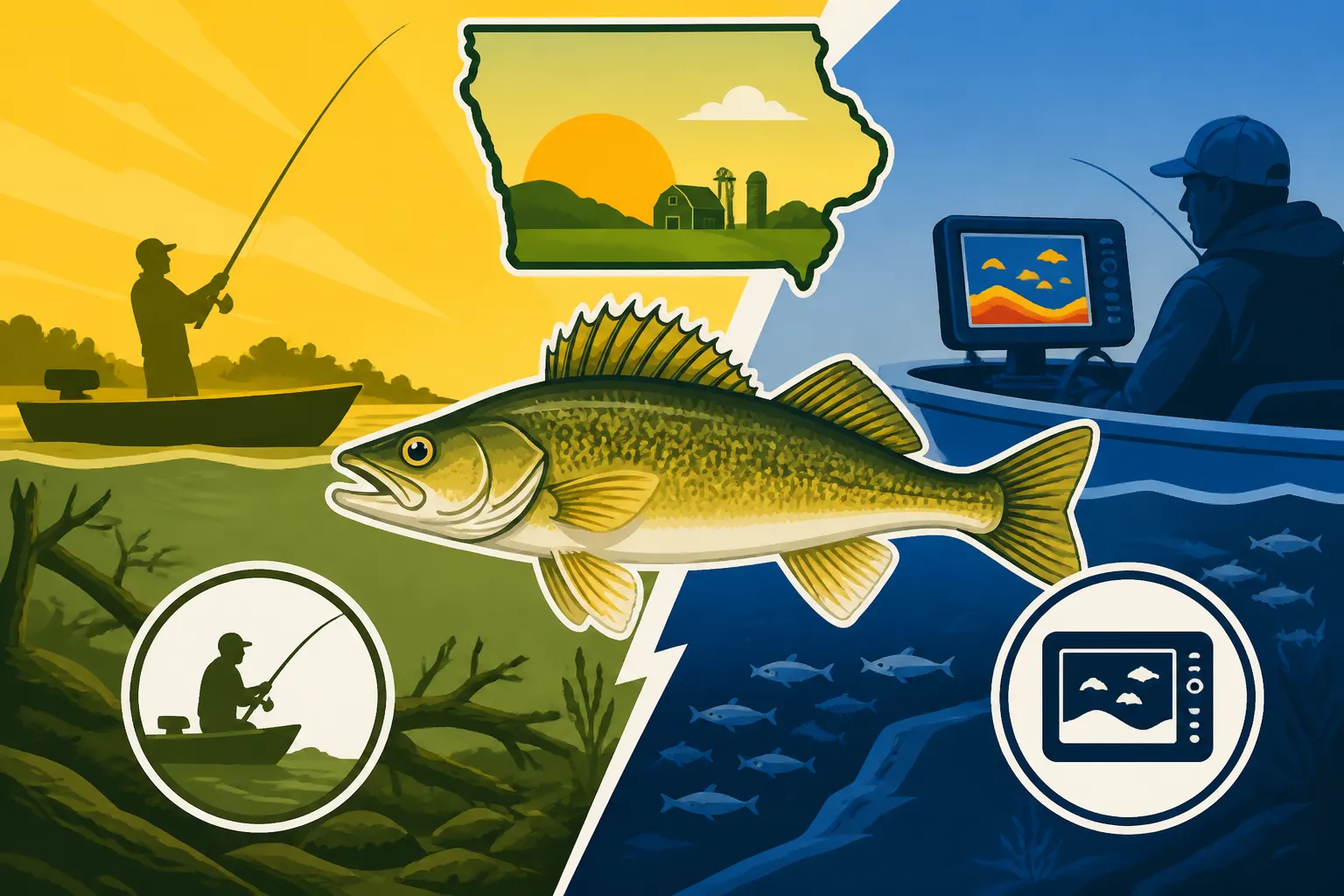
Ultimately, a fish finder doesn't guarantee you'll catch walleye, but it provides you with an incredible amount of information that can significantly increase your chances, especially in challenging environments. It allows you to understand the underwater world in a way that simply isn't possible through traditional methods alone. If the investment of money and time feels right for your angling aspirations, then yes, a fish finder can absolutely enhance your walleye fishing adventures across Iowa. If not, don't worry – there are still plenty of walleye to be caught with good old-fashioned skill and knowledge!
Disclaimer
This article is for general informational purposes only and does not constitute professional advice. Laws, prices and regulations vary by location and change over time. Consult a qualified professional for guidance on your specific situation.