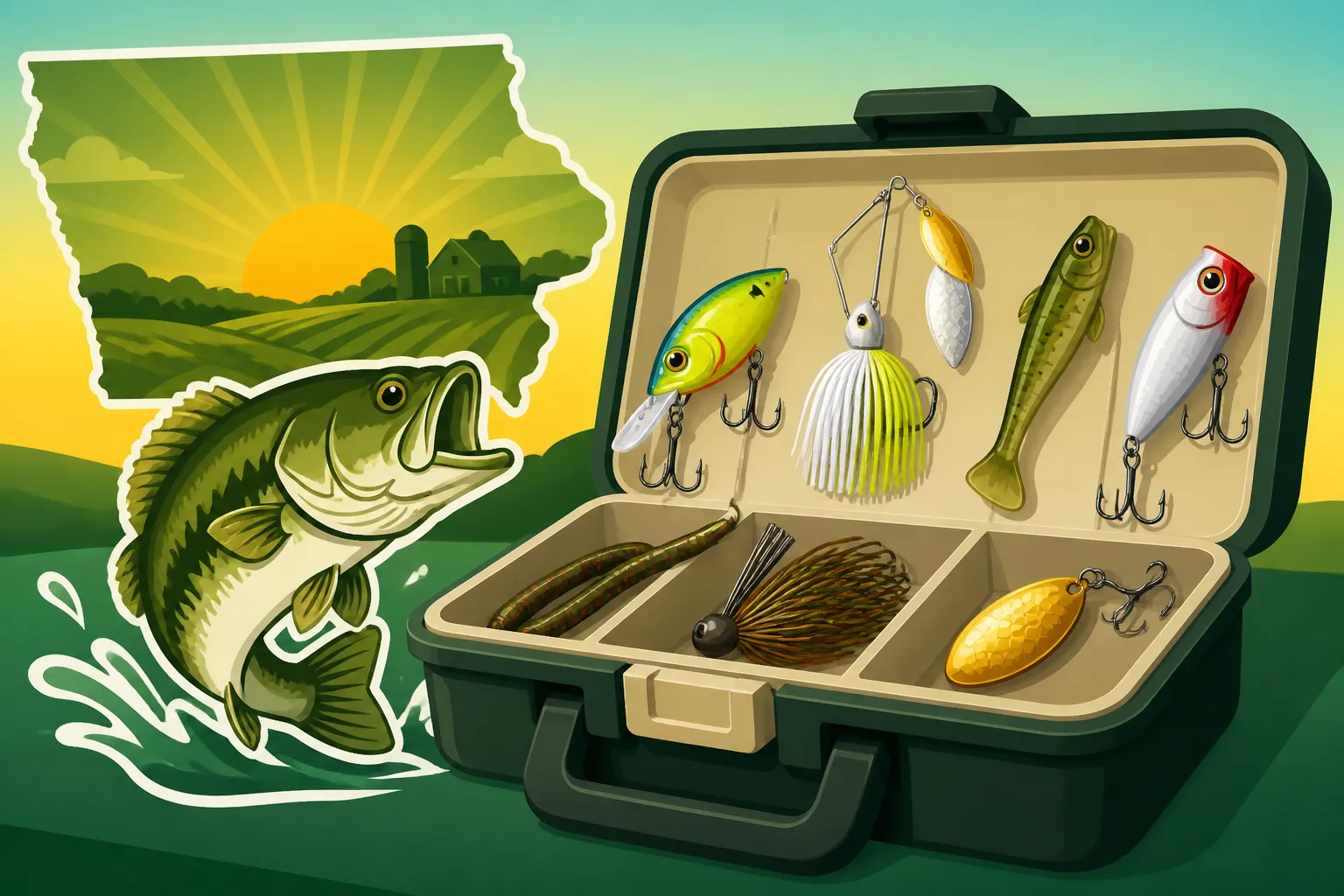
Best Lures for a Starter Tackle Box
Stepping into the world of Iowa fishing can feel a little like walking into an enormous candy store when you're trying to pick out just a few essentials. The sheer volume of lures available is dizzying, and it's easy to get overwhelmed trying to figure out what you really need for a starter tackle box without breaking the bank or ending up with a bunch of gear that just sits there. This guide is here to cut through the noise, offering a realistic, budget-friendly approach to stocking your first tackle box with tried-and-true lures that consistently catch fish across Iowa's incredible waterways.
Building Your Foundation: Essential Lure Categories
When you're first starting out, the goal isn't to have every single lure ever invented. Instead, it's about having a versatile selection that can effectively target different species and handle various conditions you'll encounter while Iowa Fishing. Think of it as your core arsenal – the workhorses that will consistently put fish in the boat or on the bank. We're going to focus on a few key categories that offer maximum bang for your buck and cover a wide range of fishing situations here in the Hawkeye State.
Crankbaits: The Versatile Search Baits
Crankbaits are fantastic lures for covering water quickly and attracting aggressive fish. They mimic baitfish, and their diving lips give them a distinct wobbling action that predatory fish find irresistible. From small ponds to large reservoirs like Saylorville, these lures are incredibly effective for a variety of Iowa's popular game fish.
Why Crankbaits Belong in a Beginner's Box
For newcomers, crankbaits are a dream. You simply cast them out and reel them in, and the lure does most of the work for you. There's no complex jigging or twitching required to get the desired action. This simplicity makes them ideal for building confidence and understanding how a lure moves through the water. Plus, they come in a wide range of sizes and diving depths, meaning you can fish shallow weed lines or target deeper structure without needing a completely different type of lure.
They're particularly effective for species like walleye, bass (both largemouth and smallmouth), and even aggressive northern pike. In Iowa, you'll often find anglers trolling crankbaits on large lakes for walleye, or casting them along shorelines and over submerged cover for bass. A few different sizes and colors can really broaden your fishing horizons, allowing you to adapt to whatever fish are biting on a given day. You can find excellent starter kits or individual budget-friendly options at places like Bass Pro Shops or online at Amazon, making it easy to get started.
Key Crankbait Types for Iowa Anglers
When building your initial collection, focus on a few distinct styles. Shallow-diving crankbaits (sometimes called square bills) are perfect for fishing in shallower waters, around submerged weeds, or bouncing off rocky bottoms without getting constantly snagged. These are dynamite for largemouth bass in farm ponds or along the banks of rivers like the Des Moines.
Medium-diving crankbaits are your all-around performers, capable of reaching depths of 5-10 feet, making them versatile for many lake and river situations. They're excellent for targeting walleye holding on breaks or smallmouth bass along rocky points. For deeper presentations, a lipless crankbait can be a fantastic choice, especially when fish are suspended or when you need to cast a long distance. These lures create a lot of vibration, alerting fish to their presence even in murky water. Having one or two in a chrome or firetiger pattern can be a game-changer.
Soft Plastics: The Subtle and Mimicking Masters
Soft plastics are an absolute must-have for any angler, regardless of experience level. They are incredibly versatile, mimicking everything from worms and baitfish to crawfish and leeches. Their realistic feel and action can fool even the most finicky fish, making them indispensable for bass and walleye fishing throughout Iowa.
The Versatility of Soft Plastics for Beginners
What makes soft plastics so great for a beginner? Their adaptability, hands down. They can be rigged in countless ways – Texas rigged, Carolina rigged, wacky rigged, on a jig head – each offering a slightly different presentation. This allows you to experiment and find what works best without investing in a ton of different lure types. Need to fish through heavy cover for largemouth bass in a lily pad field? Texas rig a worm. Want to slowly drag something along the bottom for walleye on a flat? A grub on a jig head is your friend.
Soft plastics are also relatively inexpensive, allowing you to stock up on various shapes, sizes, and colors without a huge upfront cost. They're perfect for finessing bites when fish are less active, or for working specific structures slowly and thoroughly. For someone just learning How to Catch Bass in Iowa or exploring Walleye Fishing in Iowa, soft plastics offer an amazing classroom in how fish react to different movements and presentations.
Essential Soft Plastic Shapes and Colors
When you're building your starter kit, think about a few key shapes. The classic plastic worm is a no-brainer. Six to ten-inch worms in green pumpkin, black, or junebug colors are incredibly effective for largemouth bass. You'll also want some creature baits or beaver-style baits, which are fantastic for mimicking crawfish – a favorite meal for Iowa bass. Again, natural colors like green pumpkin or brown are usually best.
For walleye, crappie, and even smallmouth, curly-tail grubs and paddle-tail swimbaits in sizes from two to four inches are excellent. White, chartreuse, and pearl colors are reliable choices for grubs, especially when paired with a jig head. These soft plastics are great for casting and retrieving, or for vertical jigging, making them versatile for many Iowa fishing spots, including the Iowa Great Lakes or parts of the Mississippi River. Don't forget a few tubes, which are fantastic for smallmouth bass around rocky areas and drop-offs.
The Action Lures: Spinnerbaits, Buzzbaits, and Jigs
Sometimes, you need to create a little commotion to get a fish's attention, or present a more direct, vertical offering. This is where spinnerbaits, buzzbaits, and jigs really shine. These lures are designed to create flash, vibration, or a tempting fall, making them incredibly effective for active fish or when you need to probe specific depths.
Spinnerbaits and Buzzbaits: Flash and Fury
Spinnerbaits and buzzbaits are often lumped together as "reaction strike" lures. They move quickly, create a lot of disturbance, and are fantastic for covering water and pulling fish out of cover. If you want to fish faster and entice aggressive strikes, these are your go-to options.
When to Throw Spinnerbaits and Buzzbaits in Iowa
Spinnerbaits are incredibly versatile, especially for bass fishing in Iowa. Their unique design, featuring one or more spinning blades and a skirted hook, creates flash and vibration that fish can't ignore. They are excellent for fishing around submerged cover like weed edges, brush piles, and fallen timber, where they can often deflect off obstacles without snagging. This makes them ideal for exploring new water or working through heavy cover where other lures might get hung up. Target colors like white, chartreuse, or combinations of the two, often with a silver or gold blade.
Buzzbaits, on the other hand, are strictly topwater lures. Their propeller-like blade churns water on the surface, creating a unique gurgling sound and commotion that drives bass absolutely wild. These are perfect for low-light conditions – early mornings, late evenings, or overcast days – and in relatively calm water. There's nothing quite like watching a largemouth blow up on a buzzbait as it skates across the surface. A simple white or black buzzbait is a great start for any tackle box focusing on Bass Season and Size Limits.
Choosing Your First Spinnerbait and Buzzbait
For a starter tackle box, aim for one or two spinnerbaits in a 3/8 to 1/2 ounce size. A white or chartreuse skirt with a combination of willow leaf and Colorado blades offers a good balance of flash and vibration for various conditions. The willow leaf blade provides more flash and less vibration, ideal for clear water or faster retrieves. The Colorado blade creates more thumping vibration, better for murky water or slower presentations.
For buzzbaits, a single white or black 3/8 ounce buzzbait is all you need to start. The key is to get them moving across the surface as soon as they hit the water. These lures excel in warmer water when fish are more active and willing to chase. They're also fantastic for fishing over submerged weeds where other lures might foul up.
Jigs: The Foundation of Finesse and Power
Jigs are arguably the most versatile and effective lures ever created. From tiny panfish jigs to heavy flipping jigs, they can be used to target nearly every species in Iowa, mimicking everything from crawfish and baitfish to insects.
Why Jigs Are Indispensable for Beginners
Jigs are a cornerstone of any serious angler's tackle box, and for good reason. They allow for precise presentations, enabling you to target specific structures or cover that fish are holding to. While they can sometimes require a bit more feel and technique than a simple crankbait, starting with basic jigging motions can quickly yield results and teach you a lot about how fish feed. They are superb for Crappie Fishing in Iowa and Channel Catfish Fishing in Iowa, but also deadly for bass and walleye.
The beauty of jigs is their simplicity and effectiveness. Paired with a soft plastic trailer, a jig can imitate a crawfish scuttling on the bottom, a baitfish darting through cover, or a leech undulating in the current. This makes them perfect for working deeper water, probing brush piles, or slowly dragging across the bottom to find inactive fish. They come in so many shapes and sizes that you can truly customize your presentation for the exact conditions you're facing.
Essential Jig Types for Your First Tackle Box
Start with a few basic jig heads, ranging from 1/16 ounce up to 1/2 ounce. These can be paired with small curly-tail grubs (1-3 inches) for panfish like bluegill and crappie, or slightly larger paddle-tail swimbaits for walleye and bass. White, chartreuse, and black are excellent starter colors for both jig heads and trailers. For crappie, a small tube jig or a hair jig in 1/32 to 1/8 ounce can be incredibly effective, especially when fishing around submerged brush or docks. Crappie Jig Fishing Techniques often involve subtle movements, making them great for learning finesse.
For bass and larger walleye, consider a few skirted jigs (often called "flipping" or "pitching" jigs). These typically weigh 3/8 to 1/2 ounce and have a silicone or rubber skirt that gives them a pulsating action. Pair these with a soft plastic crawfish or beaver-style trailer. Green pumpkin, black and blue, or brown are universal colors for these. These jigs are fantastic for fishing heavy cover, making their way through thick weeds or timber where bass love to hide.
Spoons: The Flashy and Faltering All-Rounders
Spoons might seem old-fashioned to some, but don't let that fool you. They are incredibly effective, mimicking wounded baitfish with their wobbling, fluttering action. They come in various shapes and sizes, making them useful for both casting and vertical jigging in Iowa's diverse waters.
Why Spoons Deserve a Spot in Your Tackle Box
Spoons are fantastic for beginners because, like crankbaits, they require a relatively simple retrieve. Cast it out, let it sink to your desired depth, and reel it in with a steady retrieve, perhaps adding a few twitches of the rod tip. Their flash and flutter are highly attractive to many predatory fish, especially in clear to moderately stained water. They are also excellent for covering large areas, and their weight often allows for long casts.
They are incredibly effective for targeting aggressive fish that are actively feeding. Think about species like northern pike, walleye, and even largemouth bass that are chasing baitfish. Spoons are also a go-to for Ice Fishing in Iowa, where vertical jigging a spoon can be deadly for walleye, perch, and crappie. Their versatility in both open water and through the ice makes them a valuable addition, maximizing their utility for year-round angling.
Key Spoon Types and Colors for Iowa Fishing
For a basic tackle box, you'll want to include a few casting spoons and a few jigging spoons. Casting spoons, like the classic Daredevle or a similar flashy design, are great for targeting pike and bass along weed lines or open water. Colors like red and white, five of diamonds (red and yellow dots), or chrome are perennial favorites. Aim for sizes between 1/4 and 3/4 ounce.
Jigging spoons are generally heavier for their size and designed to fall with a lot of flutter. These are perfect for vertical presentations from a boat or through an ice hole. Silver, gold, or glow-in-the-dark patterns are excellent choices for species like walleye and crappie in deeper water or during low-light conditions. A 1/4 to 1/2 ounce jigging spoon will cover most of your needs, whether you're working structure on Rathbun Lake or fishing through the ice on Spirit Lake.
Practical Considerations for Your Starter Tackle Box
Now that you have an idea of the core lures, let's talk about the practical side of getting your tackle box ready. It's not just about the lures themselves, but how you organize them and what other small essentials you'll need.
Organizing Your Lures
A well-organized tackle box saves you time and frustration on the water. Start with a basic plano-style tackle box with adjustable dividers. Dedicate separate compartments or small boxes for different lure types. For instance, all your crankbaits in one section, soft plastics organized by shape or color in another, and jigs in their own smaller container. This prevents hooks from tangling and makes it easy to find what you need when the bite is hot.
Consider bringing small, resealable plastic bags for soft plastics, especially if they come packed in oil or have different scents. This keeps them from melting together or contaminating other lures. As your collection grows, you might invest in specialized boxes, but for a starter, simple dividers are perfectly adequate. Best Tackle Box Setup for Beginners can help you visualize this setup.
Essential Terminal Tackle and Tools
Lures are only half the battle. You'll need a few crucial pieces of terminal tackle and tools to make them effective and to handle your catch.
Hooks, Weights, and Swivels
For soft plastics, you'll need a selection of worm hooks. Offset shank hooks in sizes 1/0 to 4/0 are versatile for Texas rigging plastic worms and creature baits. Don't forget some small, round bend jig hooks (Aberdeen style) in sizes 6-2 for tying your own jigs or for fishing live bait.
Weights are essential for getting your lures or bait down to the desired depth. Bullet weights (1/8 to 1/2 ounce) are perfect for Texas rigging soft plastics. Split shot weights in various sizes are great for adding to live bait rigs or for finesse fishing. A few small barrel swivels can help prevent line twist, especially when using spinning lures or live bait.
Pliers, Clippers, and a Landing Net
A good pair of fishing pliers is non-negotiable. They're vital for removing hooks safely from fish, cutting line, and bending or adjusting wires. Invest in a pair with a comfortable grip and a line cutter. Small nail clippers can also work in a pinch for line cutting.
For handling fish, especially larger ones, a landing net is a huge asset. It protects the fish, reduces stress on your line and rod, and makes it much safer to unhook and release your catch. A simple, rubberized net is ideal as it's gentle on fish scales and fins, and hooks don't get tangled as easily. If you plan on catching Trophy Walleye Size in Iowa or Trophy Bass Size in Iowa, a net is practically mandatory.
Lure Selection at a Glance
To help you visualize your starter tackle box, here's a quick reference table of the core lures discussed:
| Lure Type | Best For (Iowa Species) | Key Features (Beginner Focus) | Primary Technique | Key Colors for Iowa |
|---|---|---|---|---|
| Crankbaits | Bass, Walleye, Pike | Simple cast & retrieve, covers water | Casting/Trolling | Shad, Firetiger, Chartreuse |
| Soft Plastics | Bass, Walleye, Crappie, Catfish | Versatile rigging, realistic feel | Texas Rig, Jig Head, Wacky | Green Pumpkin, Black, White |
| Spinnerbaits | Bass, Pike, Larger Panfish | Flash & vibration, cover negotiation | Steady Retrieve | White, Chartreuse |
| Buzzbaits | Largemouth Bass (aggressive) | Topwater commotion, exciting strikes | Fast Topwater Retrieve | White, Black |
| Jigs | Bass, Walleye, Crappie, Catfish | Precise presentation, mimics various prey | Jigging, Dragging, Flipping | Black/Blue, Green Pumpkin, White |
| Spoons | Walleye, Pike, Bass, Perch | Wobbling flutter, casting distance | Casting & Retrieving, Jigging | Silver, Gold, Red/White |
Where to Find Your First Lures
You don't need to empty your wallet to get a solid starter collection. Most big box sporting goods stores like Bass Pro Shops will have excellent selections of all these lure types, often with staff who can guide you to local favorites. Online retailers like Amazon also offer a vast array of options, and you can often find good deals on multi-packs or starter kits.
Don't be afraid to start small and add as you go. The most important thing is to get out on the water and start fishing. You'll quickly learn what works best in the specific Best Fishing Spots in Iowa you frequent and for the fish you're targeting. Remember, fishing is a journey of learning, and your tackle box will evolve right along with your skills and experiences. Happy fishing!
Disclaimer
This article is for general informational purposes only and does not constitute professional advice. Laws, prices and regulations vary by location and change over time. Consult a qualified professional for guidance on your specific situation.