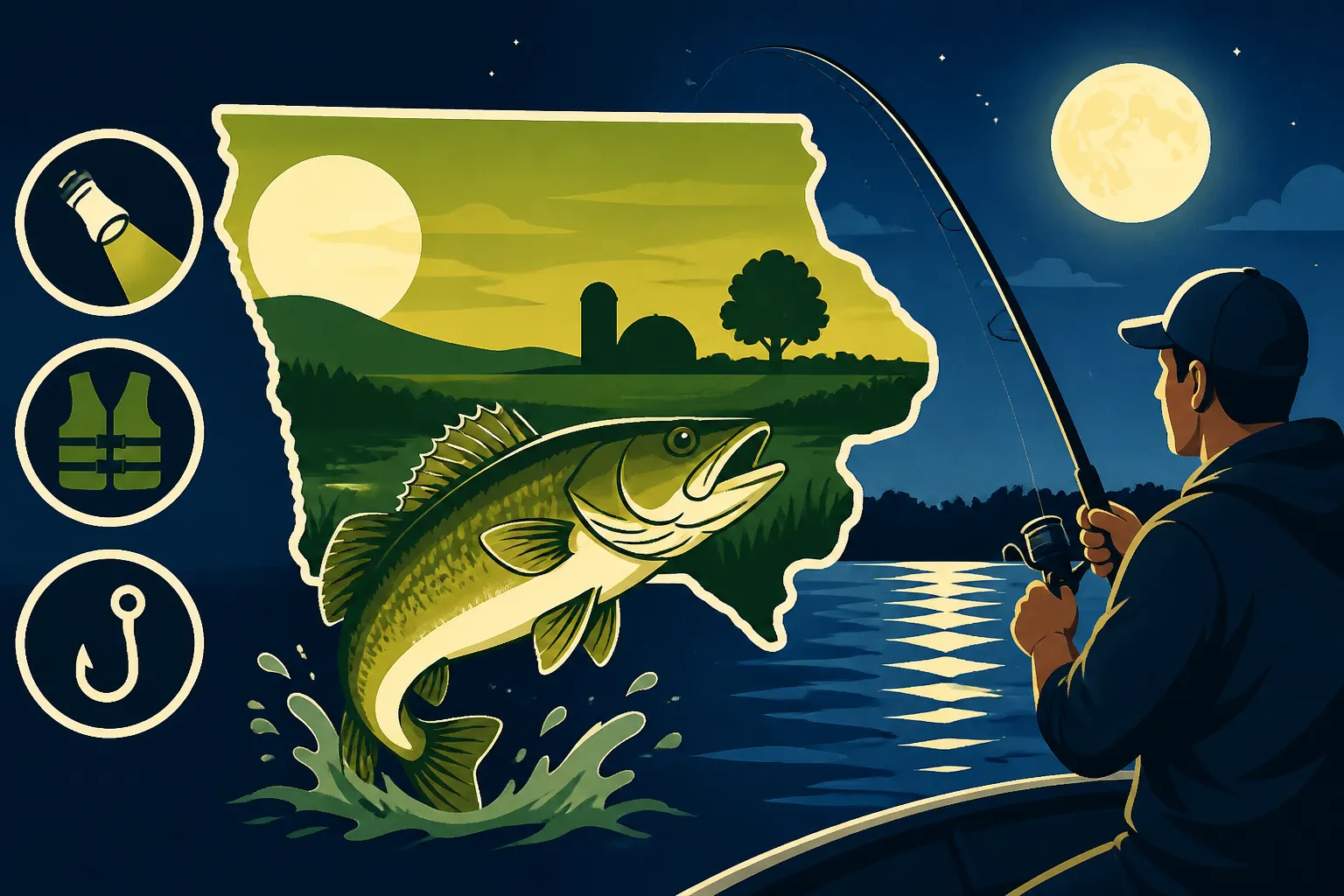
Night Fishing Rules for Anglers
The sun dips below the horizon, painting the Iowa sky in hues of orange and purple, and for many anglers, that's when the real magic begins. Yet, the idea of night fishing in Iowa can feel like navigating a maze of unwritten rules and unspoken expectations. It’s frustrating when you just want to enjoy a peaceful evening on the water but aren't sure if you’re even allowed to cast a line. This comprehensive guide is here to clear up the confusion, lay out the official rules, and offer practical tips to make your nocturnal angling adventures safe, respectful, and successful across the Hawkeye State.
Understanding Iowa's General Night Fishing Regulations
When it comes to fishing after dark in Iowa, the biggest misconception is often that it's universally prohibited. Thankfully, that's not quite the case. Unlike some states or specific wildlife areas that have strict sunset-to-sunrise fishing bans, Iowa's statewide fishing regulations are generally quite accommodating for night owls. However, this doesn't mean it's a free-for-all everywhere you go. The devil, as they say, is in the details, and those details often come down to local jurisdiction and specific property rules.
Statewide Stance on Night Fishing
For the vast majority of Iowa's public lakes and rivers, the Iowa Department of Natural Resources (DNR) does not impose a blanket ban on night fishing. This means if you're out on a large reservoir like Saylorville, Rathbun, or Coralville, or on the mighty Mississippi River, you're generally welcome to fish around the clock. The allure of cooler temperatures, fewer crowds, and the chance to target nocturnal predators like catfish and walleye makes night fishing a popular pursuit in these larger, more open bodies of water. Remember, though, that all other regulations, such as those outlined in the Iowa Fishing Regulations Explained and your Iowa Fishing License Guide, remain firmly in place. This includes adhering to Iowa Fishing Daily Bag Limits Guide and Iowa Fishing Season Dates and Limits for specific species, no matter the hour.
Local Ordinances and Restricted Areas
Here's where things can get a little tricky for anglers in Iowa. While the state DNR generally permits night fishing, many smaller lakes, urban ponds, county parks, and especially Iowa State Parks, operate under local ordinances or specific park hours. It's incredibly common for city parks or state recreation areas to have gates that close at sunset or signs explicitly stating that access is only permitted during daylight hours. This is usually for public safety, noise control, and to prevent littering or other disturbances in residential areas.
Imagine planning a peaceful night trip to a local community pond only to arrive and find a "Park Closes at Dusk" sign. It's a common frustration! These rules effectively prohibit fishing after dark, even if there isn't a specific "no night fishing" rule. Always, and I mean always, check with the specific park office, county conservation board, or city website for the area you plan to fish. A quick call can save you a wasted trip and potential fines. This is particularly important for those staying in temporary accommodations, as Iowa Fishing License Requirements for RV Park Anglers might also have to consider local campground rules.
Species-Specific Considerations After Dark
While the time of day doesn't change the regulations for individual fish species, understanding their nocturnal habits can greatly influence your success and, therefore, your enjoyment. Certain species become much more active after dark, making night fishing highly productive.
For instance, channel catfish and flathead catfish are renowned for their nighttime feeding frenzies, often moving into shallower waters to forage. Walleye, too, are ambush predators that utilize low light conditions to their advantage, making them a prime target for night anglers, particularly during their active periods. You'll want to be familiar with Iowa Walleye Season Dates to ensure you're within legal windows. Other species like crappie and even some bass can be caught at night, especially around artificial lights that attract baitfish. Knowing which fish are likely to bite in the dark can help you choose the right spots and baits, maximizing your chances of a memorable catch.
Navigating Specific Water Bodies After Dark
Iowa boasts a diverse range of fishing environments, and the rules and practicalities of night fishing can vary significantly depending on whether you're on a vast river, a sprawling reservoir, or a cozy local pond. Understanding these nuances is key to a smooth and legal night outing.
Rivers and Large Lakes: The Open-Access Havens
The good news is that Iowa's major river systems, like the Mississippi and Missouri Rivers, along with large federal reservoirs such as Saylorville, Rathbun, and Coralville, are generally your go-to spots for unrestricted night fishing. These expansive waters typically don't have hard closing times, allowing anglers the freedom to fish from sunset to sunrise.
However, "open access" doesn't mean "no rules." When fishing these larger bodies of water from a boat at night, navigation lights are absolutely non-negotiable. Iowa boating laws require proper navigation lights (red/green bow lights and a white stern light) from sunset to sunrise. Not only is it the law, but it's crucial for your safety and the safety of others. Navigating in the dark, especially on unfamiliar water, can be disorienting and dangerous. Currents, submerged hazards, and other boats become much harder to spot. If you're drifting the Mississippi River for catfish or trolling for walleye on Clear Lake, ensuring your boat is fully compliant with Boat Safety Equipment for Iowa Waters is paramount. Shore anglers on these larger bodies of water typically have more leeway, but still need to be mindful of personal safety and visibility.
Community Ponds and State Park Lakes: Often Off-Limits
This is where the dream of a peaceful night fishing trip can quickly hit a snag. Most community ponds, urban fishing lakes, and almost all state park lakes and county parks in Iowa have restricted hours. While the Iowa DNR manages the fish and wildlife, the land and access points are often managed by local park systems or state parks, which enforce their own operating hours.
These areas are frequently enclosed, have gates, or clearly posted signs indicating that the park is closed from dusk till dawn. The reasons are valid: minimizing disturbances to nearby residents, preventing vandalism, and ensuring public safety in areas that aren't typically patrolled after dark. It's a disappointment for many anglers, especially those living in urban areas who might look for convenient evening spots. Even if you're just fishing from the bank, being present in a closed park after hours can lead to a trespass citation or other penalties. Always assume these smaller, managed waters are off-limits for night fishing unless you explicitly confirm otherwise with the local authorities.
Private Ponds and Property: Landowner's Discretion
Fishing on private property, including farm ponds, is a different ball game entirely. The rules here are dictated solely by the landowner. If you have permission to fish a private pond, then whether you fish day or night is typically up to you and the property owner.
This can be a fantastic opportunity for night fishing, as many private ponds hold excellent populations of bass and panfish, which can be active after dark. However, the golden rule of private property is always obtain permission first. Fishing without permission, regardless of the time of day, is trespassing and can lead to serious legal consequences. Even if you've fished there during the day, confirm that night access is also acceptable. Respecting the landowner's wishes is key to maintaining access to these valuable fishing resources. This is also important if you are considering bringing younger anglers, as Iowa Fishing License Rules for Kids Under 16 might not apply to the private property rule if the landowner charges a fee or if there's no direct permission.
Safety and Courtesy for the Night Angler
Night fishing offers a unique tranquility, but it also introduces unique challenges and responsibilities. Your safety, and the respect you show to others and the environment, are even more critical when fishing under the cloak of darkness.
Essential Safety Precautions After Dark
Visibility is your biggest enemy when night fishing. Even on a clear, moonlit night, uneven terrain, slippery banks, and unseen obstacles become hazards. A reliable light source is non-negotiable.
Here’s a quick checklist of safety items:
- Headlamp: This is your best friend. A good quality headlamp allows you to keep both hands free for baiting hooks, tying knots, and handling fish. Look for one with adjustable brightness and a red light option to preserve your night vision. You can find excellent options on Amazon, some offering wide beams and long battery life. Consider something with at least 200-300 lumens for adequate illumination. For detailed advice on selecting the right one, check out our guide on Best Headlamp Brightness for Night Fishing.
- Backup Light Source: Batteries die, headlamps get dropped. Always have a spare flashlight or another headlamp.
- Communication: Always tell someone where you're going, when you expect to be back, and have a fully charged cell phone.
- Footwear: Sturdy, waterproof boots with good grip are crucial, especially on wet or muddy banks.
- First-Aid Kit: Minor cuts and scrapes are more common and harder to tend to in the dark.
- Familiarity: Fish waters you know well. Trying a new spot at night significantly increases risk.
It's also a good idea to bring a warm layer, even on mild evenings, as temperatures can drop quickly after sunset in Iowa.
Being a Respectful Angler Under the Stars
Just because it's dark doesn't mean your actions go unnoticed or don't impact others. Courtesy is paramount, especially if you're fishing near residential areas or campgrounds.
- Noise Levels: Keep voices low, avoid loud music, and be mindful of your overall noise footprint. Sound travels differently over water at night.
- Light Discipline: While your headlamp is essential for safety, avoid shining it directly into other people's camps, homes, or at other anglers. Use the lowest setting necessary or the red light option to avoid disturbing others and to maintain your own night vision.
- Leave No Trace: Pack out everything you pack in. This includes bait containers, fishing line scraps, and any food wrappers. Night fishing spots can be particularly prone to litter if anglers aren't diligent. The phrase "take only pictures, leave only footprints" is even more important after dark.
- Respect Wildlife: Be aware that nocturnal animals are more active. Give them space and avoid disturbing their natural behaviors.
Boat-Specific Safety Considerations
Night fishing from a boat adds another layer of complexity to safety. Beyond the legal requirement for navigation lights, several other practices are vital:
- Life Jackets: While always recommended, wearing a life jacket at night is a non-negotiable safety measure. If you fall overboard, finding you in the dark is incredibly difficult, even with a spotlight. Make sure everyone on board has a properly fitting life jacket.
- Speed: Reduce your speed significantly. Obstacles, shorelines, and other boats are harder to see, and reacting to sudden situations becomes much slower.
- GPS/Charts: If you're on a large lake or river, a GPS unit with up-to-date mapping can be invaluable for navigation, especially if fog or cloud cover reduces visibility.
- Anchor Light: If anchored, ensure your all-around white anchor light is illuminated.
- Weather: Pay extra close attention to weather forecasts. Sudden storms are dangerous enough during the day, but at night they can become life-threatening.
- Check Boat Safety Equipment for Iowa Waters to ensure you're compliant with all state-mandated safety gear, which is especially critical during nighttime operations.
Gearing Up for the Dark
Successful and safe night fishing isn't just about knowing the rules; it's also about having the right tools for the job. Your gear setup can make or break your experience, transforming a potentially frustrating night into an exciting and productive one.
Lighting Solutions Beyond the Headlamp
While a headlamp is king for hands-free operations, other light sources serve different purposes and enhance safety and convenience.
- Area Lighting: A small, battery-powered lantern can be invaluable for illuminating your immediate fishing area, making it easier to see your tackle box, bait, and clean any fish you might catch. Look for lanterns with a warm light or red light setting to be less harsh on your night vision and less disruptive to others. Many anglers use LED lanterns that are compact and offer long battery life. You can find a wide range of portable lanterns suitable for fishing on Amazon.
- Float Lights/Bobber Lights: If you're using bobbers, consider investing in bobber lights or glow sticks that attach to them. This allows you to easily see when a fish takes your bait.
- Blacklights: For those using fluorescent fishing line (often yellow or green), a UV blacklight flashlight or headlamp attachment can make your line glow brightly, helping you detect subtle bites. This is a popular technique for walleye and crappie anglers.
Rods, Reels, and Baits for Nocturnal Hunters
When the lights go out, certain tackle and bait choices shine.
- Glow-in-the-Dark Lures: Many artificial lures, particularly jigs, crankbaits, and soft plastics, come in glow-in-the-dark or UV-reactive varieties. These can be particularly effective for attracting curious fish in low-light conditions. Recharge them with a quick blast from your headlamp or a dedicated UV light. For specific recommendations, check out our guide on Best Lures for Night Fishing.
- Live Bait: For species like catfish, live bait often reigns supreme at night. Worms, cut bait, and stink baits are all excellent choices. For walleye, live minnows are often a top producer. Using a lighted bobber with live bait can be a deadly combination.
- Heavier Line/Gear: Depending on your target species and the water body, you might consider slightly heavier line or sturdier rods. The reduced visibility at night can make it harder to maneuver fish around snags, and heavier gear provides a bit more insurance against break-offs.
- Keep it Simple: In the dark, complicated rigs become a nightmare. Stick to simpler setups you can easily manage by feel. Premade rigs are your friend.
Comfort and Convenience Items
Don't underestimate the importance of creature comforts when you're out past bedtime.
- Warm Clothing: Even on what feels like a warm day, temperatures plummet after dark. Layers are your best bet, allowing you to adjust as needed. A good waterproof and windproof outer shell is also smart.
- Bug Spray: Mosquitoes and other biting insects often come out in force at night. A strong insect repellent is a must-have to keep you from becoming a midnight snack.
- Snacks and Hydration: Bring plenty of water and some easy-to-eat snacks. Night fishing can be a long haul, and staying fueled and hydrated keeps your focus sharp.
- Cooler for Catch: If you're planning to keep fish, a well-insulated cooler with plenty of ice is essential. You don't want your hard-earned catch to spoil before you get home. For tips on selection, read Best Cooler for Keeping Fish Fresh. Many reliable coolers can be purchased through Amazon, offering various sizes and insulation properties to suit any trip.
- Portable Seat: A comfortable folding chair can make a long night of waiting much more enjoyable, especially for bank anglers.
By combining a thorough understanding of Iowa's night fishing rules with a commitment to safety and smart gear choices, you'll be well on your way to experiencing the unique thrill and peaceful solitude that only fishing under the stars can provide. Always remember to check specific local regulations and prioritize safety above all else.
Disclaimer
Please note that fishing regulations can change. While every effort has been made to provide accurate and up-to-date information, it is the angler's responsibility to consult the official Iowa Department of Natural Resources (DNR) regulations annually and adhere to all local ordinances before fishing. This guide is for informational purposes only and should not be considered legal advice.