Best Lure Color for Muddy Water
We've all been there: you're planning a fantastic day out on your favorite Iowa lake or river, picturing crystal-clear water and hungry fish, only to arrive and find the water looks like a muddy chocolate shake after a heavy rain. It’s incredibly frustrating, making you wonder if it's even worth casting a line. But don't despair! Fishing in muddy water is a unique challenge, and understanding the best lure colors and tactics can turn a potentially wasted trip into a surprisingly productive one, especially here in the Hawkeye State. This guide will walk you through the science, the strategies, and the specific lure colors that actually work when the water's murky.
Understanding Why Water Gets Muddy in Iowa
Before we dive into what colors to tie on, let's chat a bit about why our beautiful Iowa waters sometimes get so dingy. It's not just "mud," it's often a complex mix of factors that reduce clarity, and knowing these helps us predict when and where we'll encounter it.
Common Causes of Turbidity
Iowa's landscape, with its rich agricultural land and numerous rivers and reservoirs, is particularly susceptible to water turbidity.
- Heavy Rainfall and Runoff: This is the big one. After a significant rain event, especially in spring or fall, runoff from farm fields and urban areas carries sediment, soil, and organic matter into creeks, rivers, and lakes. Think about how the Des Moines River or the Iowa River can transform overnight after a good storm – that's runoff in action. Reservoirs like Saylorville Reservoir and Coralville Reservoir are also heavily impacted by inflow from muddy rivers.
- Erosion: Riverbanks, particularly those lacking vegetation, can erode during high water flows, contributing more sediment. This is a common sight on many of our larger river systems, including stretches of the Mississippi River.
- Boat Traffic: Believe it or not, heavy boat traffic, especially in shallow areas, can stir up the bottom sediment, temporarily clouding the water. This is more noticeable in shallower lakes or backwater areas.
- Wind and Waves: Strong winds can churn up shallow lake bottoms, particularly in our shallower natural lakes like Clear Lake, making the water stained even without recent rain.
- Seasonal Turnover: In deeper lakes, the natural process of "turnover" in spring and fall can bring sediments and organic material from the bottom to the surface, causing temporary murkiness.
Understanding these causes can help you anticipate when to expect muddy water conditions. For instance, planning a trip to a smaller, clear lake might be a better bet immediately after a widespread rain event that has turned the larger river systems into chocolate milk.
How Muddy Water Impacts Fish Behavior
When water clarity drops, fish don't just throw in the towel and stop eating. They adapt, but their primary sense of sight becomes severely limited. Imagine trying to hunt for food in a dark, foggy room – you'd rely on hearing and smell, right? Fish do too.
- Reduced Visibility: This is the most obvious impact. Fish can't see your lure from as far away, and they might have trouble distinguishing it from natural debris. This means you need to present your lure closer to them and make it stand out.
- Increased Reliance on Other Senses: Fish possess an incredible lateral line system, which detects vibrations and pressure changes in the water. They also have a keen sense of smell. In murky conditions, they use these senses much more to locate prey.
- Changes in Feeding Patterns: Some species, like catfish, are naturally adept at feeding in low visibility. Others, like walleye, might become more active in stained water during daylight hours, as the dimness mimics their preferred low-light conditions. Bass, being ambush predators, might tuck tighter into cover, waiting for vibrations to signal a meal passing by. Your approach to How to Catch Walleye in Iowa or How to Catch Catfish in Iowa will definitely shift.
This adaptation is key to our strategy. We need to appeal to those heightened senses that aren't sight-dependent, and for the visual aspect, we need to choose colors that maximize what little light penetration there is.
The Science Behind Lure Color in Murky Conditions
It's not just about picking a "bright" color; there's a bit of physics involved in why certain hues perform better than others when the water is stained or muddy.
Light Penetration and Wavelengths
Light is made up of different colors, or wavelengths. When sunlight hits water, especially turbid water, these wavelengths are absorbed and scattered at different rates.
- The Disappearing Act: Red light has the longest wavelength and is the first to be absorbed by water, disappearing quickly. This means a red lure looks brown or black only a few feet under the surface, even in relatively clear water, and even faster in muddy conditions. Next to go are orange, then yellow. Green and blue light penetrate deeper.
- Muddy Water's Filter: When water is muddy, it contains countless suspended particles. These particles scatter and absorb light much more aggressively than clear water. The result? Very little light penetrates, and what does is often shifted towards the greenish-yellow spectrum because those are the wavelengths that scatter least.
- UV Light: This is a bit of a wildcard. Ultraviolet light penetrates water more effectively than visible light. Some lures are "UV reactive," meaning they glow or reflect UV light, which fish may be able to detect even when visible light is scarce.
So, a lure that might look vibrant red above water will quickly lose its color underwater, appearing dull or even black. We need colors that either resist this "disappearing act" or create a strong, visible contrast.
Visibility, Contrast, and Silhouette
Given the challenges of light penetration, we rely on two main visual principles in muddy water:
- Contrast: The goal is to make your lure stand out against the background of the muddy water. This means using colors that offer a strong visual difference from the surrounding murk. Think about how a dark object stands out against a dim background.
- Silhouette: When there's very little light, fish perceive objects as silhouettes. A dark lure creates a strong, defined silhouette against any faint light coming from above, making it easier for a fish to detect its shape and movement. Conversely, a very bright or opaque lure can create a "halo" effect in extremely dim light, appearing as a more prominent presence.
The key is that you're not trying to perfectly mimic a baitfish in color; you're trying to create enough visual disturbance to grab a fish's attention that's already relying heavily on its non-visual senses.
Top Lure Colors for Muddy Water Fishing in Iowa
Alright, enough with the science, let's talk about what colors you should actually be tying on when the water's looking like coffee with too much cream. Based on countless hours on Iowa waters, these are the colors that consistently produce.
Chartreuse and Fluorescent Green
These are arguably the kings of muddy water. Why? They're highly visible because they fall into the green-yellow spectrum, which penetrates stained water better than reds or blues. Plus, many chartreuse and fluorescent green lures are also UV reactive, giving them an extra "pop" that fish can detect.
- When to Use Them: Almost always in muddy water. They are excellent for bass, walleye, and even crappie.
- Lure Examples:
- Spinnerbaits: The bright blades flash and vibrate, combining visual and sensory appeal. Brands like Booyah and Strike King make excellent chartreuse spinnerbaits that you can easily find on Amazon.
- Crankbaits: Rattling crankbaits in chartreuse or fluorescent green are fantastic for covering water and creating a lot of vibration. Try shallow divers for muddy flats or deeper divers for river channels.
- Jigs: Chartreuse jig heads paired with dark trailers or solid chartreuse soft plastic jigs are deadly for Crappie Fishing in Iowa or even pitching for bass in heavy cover.
- Soft Plastics: Worms, creature baits, or swimbaits in these vibrant colors can work well, especially when Texas-rigged or Carolina-rigged to get right into the strike zone.
Orange and Fire Tiger Patterns
Orange is another phenomenal color for turbid water. It offers excellent contrast and, while it fades faster than green, it retains some visibility in stained conditions. Fire Tiger is a combination of chartreuse, orange, and black stripes – a super-effective pattern that combines the best of all worlds for visibility and contrast.
- When to Use Them: Great for bass, walleye, and pike in murky lakes and rivers.
- Lure Examples:
- Crankbaits: A fire tiger crankbait is a classic for a reason. Its distinct pattern creates a very noticeable profile and a lot of contrast.
- Jigs: Orange jig heads or skirts can be very effective, especially for walleye.
- Spinnerbaits: While less common than chartreuse, some anglers swear by orange-bladed spinnerbaits for a different look.
- Lipless Crankbaits: These vibrating baits in fire tiger are fantastic for ripping through grass or along drop-offs in murky water, attracting fish with both sound and color.
Black and Darker Hues
This might seem counterintuitive, but black is a fantastic muddy water color. Remember the concept of silhouette? A black lure creates the strongest possible silhouette against the dim, diffused light filtering through the muddy water from above. Fish see a distinct shape moving, rather than a camouflaged blur. Dark purple and blue can also work on the same principle, offering a strong contrast.
- When to Use Them: Excellent for bass, catfish, and even walleye in extremely dark or deep muddy water.
- Lure Examples:
- Jigs and Soft Plastics: Black or dark blue jigs, worms, and creature baits (like those from Zoom or Strike King, often available on Amazon) are go-to choices for bass in heavy cover or for bottom-bouncing for catfish.
- Spinnerbaits: A black skirted spinnerbait with a dark or polished blade can be incredibly effective, especially when fished slowly.
- Buzzbaits and Topwater Frogs: In extremely dirty water, if fish are looking up, a black topwater lure creates a very bold silhouette against the sky, coupled with a lot of noise.
White and Pearl
White and pearl colors offer a different kind of visibility. They are very opaque and can appear bright and distinct in murky water, especially if there's any ambient light. They often mimic shad or other baitfish that might be present.
- When to Use Them: Good for bass, walleye, and pike when you need a bright, distinct baitfish profile.
- Lure Examples:
- Spinnerbaits: White spinnerbaits are classic for a reason and perform well in stained water.
- Swimbaits: White or pearl soft plastic swimbaits are incredibly versatile for enticing bass and walleye.
- Grubs and Jigs: White grubs or pearl-colored trailers on jigs can be very effective, especially for Walleye Fishing in Iowa in areas with a shad forage base.
Here's a quick summary table to help you decide:
| Lure Color | Why it Works in Muddy Water | Primary Fish Species | Lure Types (Examples) |
|---|---|---|---|
| Chartreuse/Fluorescent Green | Highly visible, UV reactive, strong in green-yellow spectrum | Bass, Walleye, Crappie | Spinnerbaits, Crankbaits, Jigs, Soft Plastics |
| Orange/Fire Tiger | Strong contrast, distinctive pattern, retains visibility | Bass, Walleye, Pike | Crankbaits, Jigs, Lipless Crankbaits, Spinnerbaits |
| Black/Dark Purple | Creates strong silhouette against dim light, high contrast | Bass, Catfish, Walleye | Jigs, Soft Plastics (worms/creatures), Spinnerbaits, Buzzbaits |
| White/Pearl | Opaque, bright profile, mimics baitfish, good visibility | Bass, Walleye, Pike | Spinnerbaits, Swimbaits, Grubs, Jigs |
Beyond Color: Other Factors for Muddy Water Success
While color is important, it's just one piece of the puzzle. When fish can't see well, you need to engage their other senses. This is where your Iowa Fishing Techniques Guide really comes into play.
Vibration and Sound
This is huge. If a fish can't see your lure, it needs to feel or hear it.
- Rattles: Many crankbaits and some soft plastic baits come equipped with internal rattles. These create distinct sound waves that fish can pick up with their lateral line. Look for baits with loud, deep rattles for maximum effect.
- Thumping Blades: Spinnerbaits, especially those with larger Colorado or Indiana blades, create a powerful thumping vibration as they move through the water. This is a massive attractant in low visibility. The vibration helps fish pinpoint the lure.
- Water Displacement: Lures with a larger profile or those that move a lot of water (like a bladed jig or a wide-wobbling crankbait) create strong pressure waves that fish can detect from a distance. Topwater lures like buzzbaits or poppers create a lot of surface commotion, which can be irresistible to bass even when the water is muddy.
Consider adding vibration to your retrieve. A stop-and-go retrieve with a crankbait, or a subtle lift-and-drop with a jig, can send out varying signals that fish are more likely to notice.
Scent and Taste
When sight and vibration aren't enough, scent can be the ultimate convincer. Fish have an incredibly well-developed sense of smell.
- Scented Lures: Many soft plastic lures come pre-scented (e.g., Berkley Gulp!, PowerBait). These can be incredibly effective, particularly for species like catfish or even lethargic bass.
- Scent Additives: You can buy liquid or gel scent additives (like those from Pro-Cure or Fishbites) and apply them to any lure. This is a common tactic for enhancing jigs, soft plastics, or even crankbaits. A quick squirt of garlic or shad scent can make all the difference, and you can stock up on various options on Amazon.
- Natural Bait: Don't forget the power of actual bait! Live minnows, nightcrawlers, or cut bait (especially for catfish) are natural scent factories. If you're struggling with artificials, switching to live or cut bait, as detailed in our Catfish Bait Guide for Iowa Anglers, can often turn the bite on.
Presentation and Retrieval Speed
Your technique matters just as much as your lure choice in muddy water.
- Slow Down: Fish are less aggressive and have a smaller strike window in murky water. A slower retrieve allows them more time to detect, track, and ultimately commit to your lure. This is especially true when using techniques like Jigging Techniques for River Walleye.
- Stay in the Strike Zone Longer: Whether you're bouncing a jig along the bottom or slowly reeling a crankbait, try to keep your lure in the most probable strike zone for as long as possible. Bottom-hugging fish won't chase a lure that passes quickly overhead.
- Target Cover: Fish often relate tighter to cover (logs, rocks, weeds) in muddy water. They use these structures as ambush points. Precise casting that puts your lure right next to or even into the cover is essential. This often means getting very close to shore or structure if you're Fishing the Mississippi River in Iowa.
Lure Size and Profile
When visibility is low, a larger lure can be easier for a fish to detect.
- Larger Profile: Don't be afraid to go up a size in your soft plastics, jigs, or even crankbaits. A bigger profile moves more water and creates a stronger silhouette, making it easier for fish to find.
- Bulky Baits: Baits that are thicker or have appendages (like creature baits or large worms) also create more water displacement, sending out stronger vibrations.
- Heavy Lines and Gear: While not directly related to color, sometimes in muddy water, you can get away with heavier line and slightly heavier gear because the fish can't see it as well. This can be an advantage when trying to wrestle fish out of heavy cover. You'll want to review your Best Tackle for Iowa Fishing to ensure your gear is appropriate.
Iowa Species and Muddy Water Strategies
Different fish react to muddy water differently. Tailoring your approach to the species you're targeting in Iowa can greatly improve your success.
Catfish in Murky Rivers
Catfish are the mud-water champions. They are incredibly well-adapted to low visibility, relying heavily on their barbels (whiskers) to taste and smell, and their lateral line to detect vibrations.
- Color: While scent and vibration are paramount, dark colors (black, dark purple) or even bright chartreuse jigs can provide some visual cue if they happen to stumble upon it.
- Bait of Choice: Cut bait (shad, carp, skipjack), stink baits, chicken livers, and nightcrawlers are top choices. The stronger the scent, the better.
- Technique: Bottom fishing is key. Use a slip sinker rig to present your bait directly on the bottom where catfish often feed. Look for deeper holes, current breaks, and log jams in rivers like the Des Moines River or the Missouri River border. Drifting cut bait can also be very effective in river currents. Remember, you can typically use How Many Fishing Poles You Can Use in Iowa, which allows for multiple lines to cover more ground.
Walleye in Stained Lakes and Rivers
Walleye are often thought of as clear-water fish, but they can be caught in surprisingly murky conditions, especially in rivers or stained lakes. They are sensitive to light, so muddy water can sometimes make them more active during daylight hours by dimming the sun.
- Color: Chartreuse, fire tiger, and even dark purples are top choices. A chartreuse jig tipped with a minnow or a nightcrawler can be deadly.
- Technique: Focus on edges, current breaks, and structure. In rivers, current seams and wing dams on the Mississippi River are prime spots. In lakes, look for distinct drops, points, and humps. Slow presentations are crucial. Trolling crankbaits in chartreuse or fire tiger can be very effective for covering water and letting the fish find the vibration. Remember to check specific Iowa Fishing Season Dates and Limits for walleye before heading out.
Bass in Turbid Ponds
Both largemouth and smallmouth bass can be caught in muddy water, though they often become more structure-oriented and less willing to chase a fast-moving lure. Smallmouth bass typically prefer clearer water, but they will adapt.
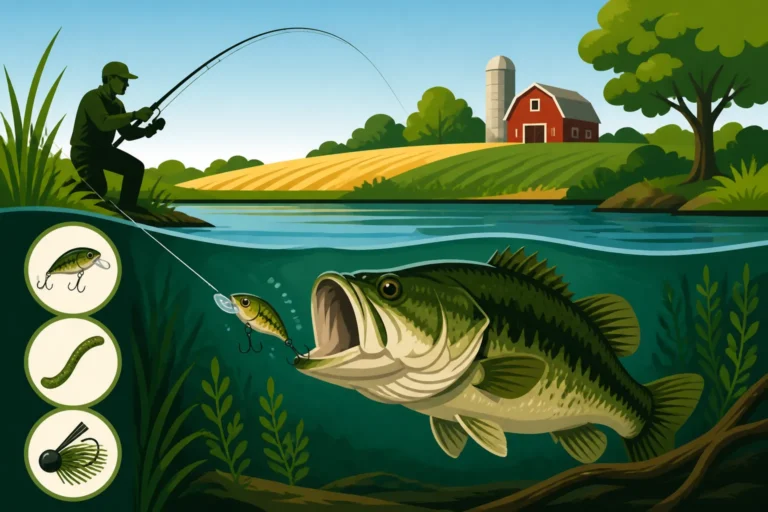
- Color: Black and blue, chartreuse, and white are excellent. A black and blue jig with a matching trailer or a chartreuse spinnerbait are classic muddy water bass baits.
- Technique: Focus on heavy cover – log piles, thick weed lines (if they're not completely matted with mud), and docks. Pitching and flipping techniques that get your lure right into the cover are effective. Slow-roll a spinnerbait or buzzbait, ensuring it creates a lot of vibration. For Largemouth Bass Fishing in Iowa in a farm pond, try fan-casting around any visible structure. A good resource for understanding bass behavior is the Bass Season and Size Limits guide.
Panfish
Even panfish like crappie and bluegill will bite in muddy water, though it can be trickier. They often move shallower, particularly crappie, to find warmer, less turbid water near the surface.
- Color: Small chartreuse or white jigs are often the best bet.
- Technique: Scale down your presentation but keep the vibration and visibility. Tipping a small jig with a live minnow or a piece of Gulp! bait can add scent appeal. Look for brush piles, fallen trees, and docks. Slow jigging or suspending a bait under a bobber are good tactics. While panfish are not the main target in muddy water, if you are looking for Best Lures for Panfish in clearer conditions, the colors will differ.
No matter the species, fishing in muddy water requires patience, a willingness to experiment with lure colors and techniques, and a belief that the fish are still in there, waiting for the right offering. Don't let a little mud deter you from a great day of Iowa Fishing!
Disclaimer
Fishing regulations and conditions can change. Always consult the latest Iowa Department of Natural Resources (DNR) fishing regulations before heading out. This guide is for informational purposes only and does not constitute legal advice.