Shore Fishing Techniques for Beginners
There’s nothing quite like the peace and anticipation of casting a line into Iowa’s beautiful waters, but for folks new to fishing, especially from shore, it can feel a bit daunting. Where do you even start? What gear do you need? And perhaps most importantly, how do you actually catch something when you’re not out on a boat? This comprehensive guide is here to strip away the confusion and give you the confidence to enjoy productive shore fishing, even if you’re just starting out.
Understanding the Shoreline: Where the Fish Are Hiding
Many new anglers make the mistake of thinking fish are just randomly scattered throughout a lake or river. While that can sometimes be true, fish are creatures of habit and survival, always looking for food, cover from predators, and comfortable water conditions. Understanding where they naturally congregate is your first big step to success from the bank.
Reading the Water for Structure
When you look out at the water, don't just see a vast expanse. Train your eyes to spot the subtle (and sometimes not-so-subtle) clues that indicate underwater structure. Structure acts like a fish magnet, providing shelter, ambush points, and foraging grounds. These could be obvious things like fallen trees, visible rock piles, or dense aquatic vegetation. Take note of any areas where the bottom changes color or where ripples suggest a depth change; these often point to drop-offs. Drop-offs are fantastic because they offer fish quick access to both shallow feeding grounds and deep, cooler water for refuge.
Consider a local spot like Big Creek Lake near Polk City. If you're walking the shoreline, look for areas where points of land extend out into the water, or where old timber has fallen in. These are prime locations. Similarly, on a river like the Des Moines River, look for current breaks created by large rocks or bridge abutments. Fish will tuck into these calmer spots, waiting for food to drift by. Even something as simple as a shaded bank on a hot sunny day can be a piece of "structure" that attracts fish seeking cooler temperatures.
Identifying Productive Access Points
Not every stretch of shoreline is created equal for fishing. Some areas are simply easier to access, safer, or naturally draw in more fish due to available structure or depth. Public fishing piers are fantastic starting points for beginners because they often extend into deeper water, giving you access to fish that might otherwise be out of casting range from the bank. Many Iowa State Parks offer excellent fishing piers, like those found at Lake Macbride or Lake Anita. These piers are often built over or near known fish habitats.
Beyond piers, look for natural points, jetties, or causeways. These areas allow you to cast into different depths and cover more water than a straight bank. River banks with slower currents or eddies are also excellent spots, especially for species like catfish or carp. Bridge abutments, as mentioned, offer great current breaks for various species. Always prioritize safety: avoid slippery banks, steep drop-offs, and private property unless you have explicit permission. You can find many great public access points by checking out resources like the Iowa Fishing Atlas Access Points online, which details specific locations across the state.
Essential Gear for the Shore Angler
You don't need a boatload of expensive equipment to get started with shore fishing. In fact, one of its greatest appeals is the relatively low barrier to entry. However, having the right basic gear will make your experience much more enjoyable and, ultimately, more successful.
Rod, Reel, and Line Selection
For beginners, a medium-light to medium power spinning combo is your best friend. This setup is incredibly versatile, capable of handling a wide range of species from panfish to decent-sized bass and even smaller catfish. A rod length between 6 and 7.5 feet is usually ideal; a shorter rod is easier to manage in tight casting spaces, while a longer rod provides better casting distance and leverage for fighting fish. Brands like Ugly Stik or Shakespeare offer durable, affordable combos that are perfect for someone just getting their feet wet. You can often find fantastic starter combos on Amazon that won't break the bank.
Pair your rod with a spinning reel in the 2000-3000 size range. This size offers a good balance of line capacity and retrieve speed for general purpose fishing. For line, a monofilament line in the 6-10 pound test range is a solid choice. It's affordable, easy to tie knots with, and has a bit of stretch, which can be forgiving for new anglers. If you prefer something with less stretch and more sensitivity, a braided line of similar diameter (e.g., 10-15 lb test) can be a great option, but it usually requires a fluorocarbon or monofilament leader. For a deeper dive into choices, our Iowa Fishing Gear Guide has even more detail.
Basic Tackle Box Essentials
Your tackle box doesn't need to be overflowing, but it should contain a few key items that will cover most shore fishing scenarios. Think of these as your core building blocks for different rigs:
- Hooks: A variety of sizes (e.g., #8 for panfish, #4 for bass, 1/0-3/0 for catfish) will ensure you're ready for different baits and target species. Aberdeen hooks are thin and great for worms, while circle hooks are excellent for catfish as they reduce gut hooking.
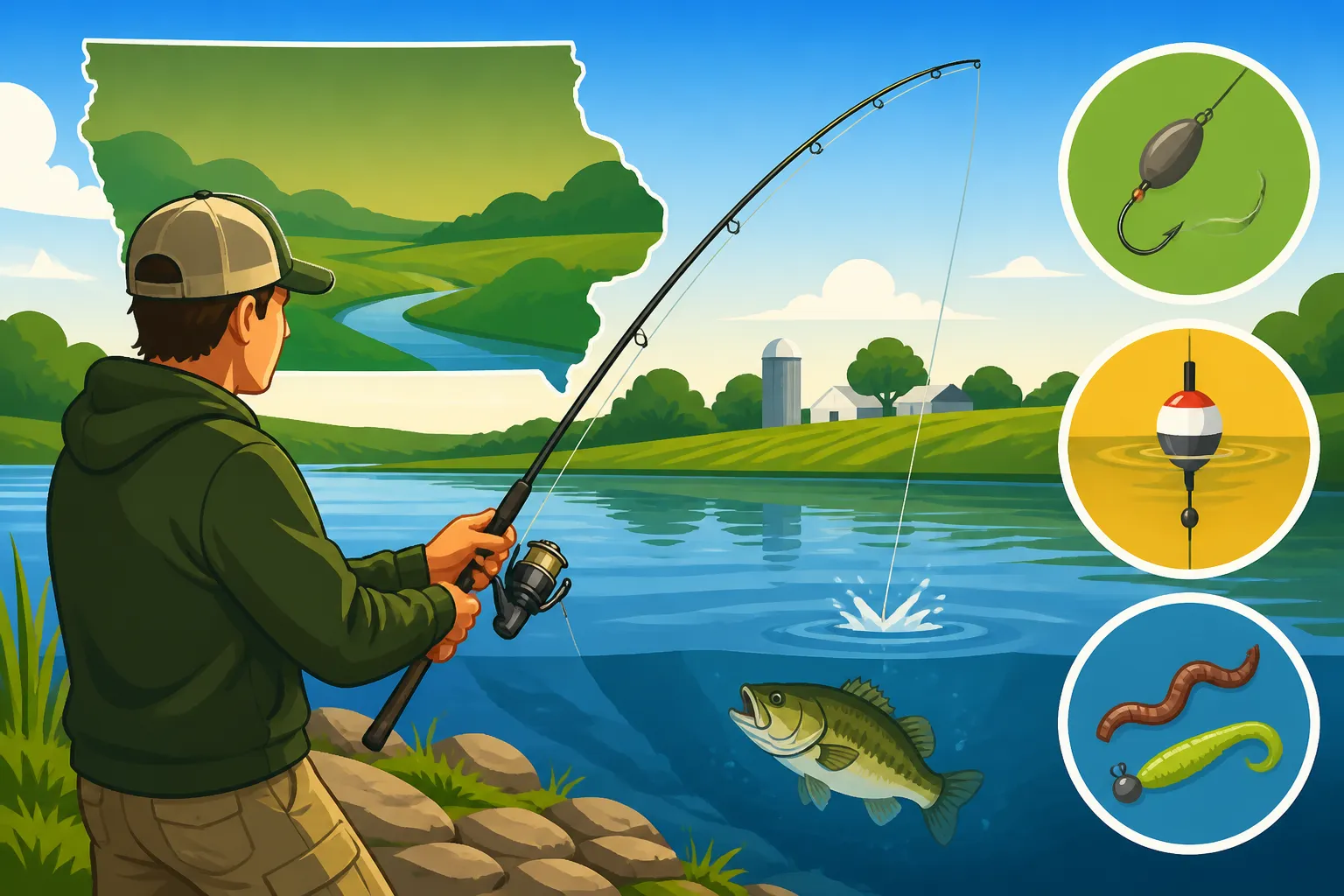
- Sinkers: Split shot sinkers are perfect for adding small amounts of weight to keep your bait down or to balance a bobber. Egg sinkers (1/4 oz to 1 oz) or bell sinkers are used for bottom fishing rigs.
- Bobbers: Both fixed bobbers (the classic red and white kind) and slip bobbers are useful. Fixed bobbers are great for shallower water, while slip bobbers allow you to fish deeper without having to cast a long leader.
- Swivels: Barrel swivels help prevent line twist, especially when using spinning lures. A small assortment of snap swivels is also handy for quickly changing lures.
- Basic Lures: Even with live bait, having a few artificial lures on hand can be beneficial. Small jigs (1/16 oz to 1/8 oz) with grub tails are deadly for crappie and bluegill. A few small inline spinners can attract bass and northern pike. You can often find beginner tackle kits on Amazon that bundle many of these essentials into one convenient package. For more specifics, check out our guide on Best Tackle for Iowa Fishing.
Must-Have Accessories for Comfort and Safety
Beyond your rod and reel, a few key accessories will significantly enhance your shore fishing experience. Comfort is key, especially if you plan to spend a few hours by the water. A lightweight, portable folding chair can make a world of difference. A cooler packed with drinks and snacks is essential, especially on warm Iowa days. You'll also need a pair of pliers (needle-nose are great for hook removal), a small tackle bag or backpack for your essentials, and a fishing net for landing bigger fish safely.
Safety is paramount, too. Always carry a valid Iowa Fishing License Guide and be familiar with the local Iowa Fishing Regulations Explained. Sunscreen and insect repellent are non-negotiable, especially during the summer months when biting bugs can quickly ruin a peaceful outing. A small first-aid kit, kept in your car or tackle bag, is also a smart idea for minor cuts or scrapes.
Common Baits and Lures for Iowa Shore Fishing
One of the beautiful things about fishing in Iowa is the sheer variety of species you can target from shore, and each often has its preferred menu. Knowing what to put on your hook is half the battle won.
Live Bait Mainstays
When in doubt, start with live bait. It's natural, it moves, and fish often find it irresistible.
- Worms: The undisputed champion of live baits. Nightcrawlers and redworms are readily available at most bait shops (and often in your own backyard after a rain). They work for almost everything: bluegill, crappie, bass, catfish, and even hungry walleye. Thread a worm onto a hook, leaving a bit dangling for enticing movement, and you're good to go. For panfish, a smaller piece of worm is often more effective.
- Minnows: Another fantastic all-around bait, particularly effective for predatory fish like crappie, walleye, bass, and northern pike. Hook them lightly through the lip or just behind the dorsal fin, being careful not to hit their spine, to keep them lively. You can fish them under a bobber or on a bottom rig. Minnows are especially popular for those targeting Walleye Fishing in Iowa.
- Leeches: Often overlooked, leeches are a phenomenal bait for walleye, smallmouth bass, and even panfish. They're incredibly hardy and stay active on the hook for a long time. Hook them through the suction cup on the tail end.
- Cut Bait: For serious catfishing, cut bait is hard to beat. Pieces of shad, carp, or even chicken liver soaked in a smelly concoction can attract distant catfish. This is a go-to for many anglers targeting Channel Catfish Fishing in Iowa from riverbanks or reservoir shores. The stronger the scent, the better for drawing in those whiskered fighters.
Artificial Lures for Different Species
While live bait is often foolproof, artificial lures offer the advantage of covering more water quickly and can be incredibly effective when you learn how to work them.
- Jigs: Arguably the most versatile lure. Small jig heads (1/32 oz to 1/8 oz) tipped with tiny plastic grubs, tubes, or even a piece of worm, are deadly for panfish like bluegill and crappie. Larger jigs (1/4 oz to 1/2 oz) with soft plastic trailers or bucktails can entice bass, walleye, and even pike. For Crappie Fishing in Iowa, a tiny jig under a bobber is a classic and effective setup.
- Spinners: Inline spinners (like Mepps or Rooster Tail) are fantastic for covering water and attracting a wide range of species. The spinning blade creates flash and vibration that fish can't resist. Smaller sizes work for panfish, while larger ones are excellent for bass, pike, and even trout in stocked streams.
- Soft Plastics: Worms, creature baits, and swimbaits made of soft plastic are incredibly versatile for bass fishing. Texas rigging or Carolina rigging a plastic worm allows you to fish through weeds and cover without snagging. They come in an endless array of colors and shapes, mimicking natural prey. You can find a wide variety of effective soft plastics and other lure assortments on Amazon.
- Spoons: Metal spoons are simple yet effective, especially for northern pike and walleye. Their wobbling action mimics an injured baitfish. Casting and retrieving spoons with a stop-and-go action can be very productive.
Tried-and-True Shore Fishing Techniques
Once you've got your gear and bait, it's time to put it all together and learn how to present your offering to those fish. Don't worry, these techniques are straightforward and highly effective for beginners.
The Bobber Rig: Simple and Effective
The bobber rig is often the first setup a new angler learns, and for good reason: it’s incredibly simple and visual. A bobber acts as a strike indicator, plunging underwater when a fish bites, and it also suspends your bait at a desired depth.
- Fixed Bobbers: These are the traditional clip-on bobbers. They're perfect for fishing in shallower water (usually less than 8-10 feet) where you can easily cast the entire rig. To set it up, simply clip the bobber onto your line a few feet above your hook. Add a small split shot sinker or two about 6-12 inches above your hook to get your bait down. This is an excellent method for targeting panfish like bluegill and crappie in shallower areas, especially around weed beds or docks. Imagine fishing at a pond in a local park like Water Works Park in Des Moines; a fixed bobber rig with a small worm would be ideal.
- Slip Bobbers: For deeper water, a slip bobber is the way to go. Instead of clipping to the line, a slip bobber slides freely up and down the line. You tie a small "bobber stop" knot onto your main line, which stops the bobber at your desired depth. This allows you to reel the bobber down to your weight for easy casting, and then it "slips" up the line to the pre-set depth once in the water. This technique is fantastic for reaching deeper fish from shore, giving you more versatility than a fixed bobber, especially in lakes like Clear Lake or Rathbun Lake where fish might be holding in 15-20 feet of water just off a drop-off.
Bottom Rigs for Catfish and Walleye
When fish are holding on the bottom, or you're targeting species that prefer to feed there, bottom rigs are your go-to. These rigs are designed to keep your bait near the bottom while allowing the fish to take the bait without feeling too much resistance.
- Slip Sinker Rig (Carolina Rig Style): This is a staple for catfish, walleye, and even bass. To set it up, thread an egg sinker (or similar bottom-dwelling weight) onto your main line first. Then, tie on a barrel swivel. To the other end of the swivel, tie a leader line (usually 1-3 feet long) of slightly lighter test. Finally, tie your hook to the end of the leader. The egg sinker slides freely on your main line until it hits the swivel, allowing a biting fish to pull the bait without immediately feeling the weight of the sinker. This means they're less likely to drop the bait. This rig is particularly effective when you want to learn How to Catch Catfish From the Bank on larger river systems like the Mississippi or Missouri rivers.
- Weight-Forward Rigs: Similar in principle, these rigs have the weight directly above or molded into the lure, ensuring it sinks quickly to the bottom. For shore anglers, this often translates to using jig heads with soft plastics or lead-head jigs, which you can cast out and slowly retrieve, bumping them along the bottom. This method is excellent for enticing walleye or smallmouth bass that are hugging structure. Many anglers use this technique effectively for walleye in the lower sections of the Cedar or Iowa rivers, or even on the rocky points of the Iowa Great Lakes.
Casting and Retrieving Lures
Learning to cast accurately and retrieve your lure effectively are fundamental skills for any angler, especially when relying on artificial baits.
- Basic Casting: With a spinning rod, open the bail, grab your line with your index finger, and bring the rod tip back over your shoulder. Then, with a smooth, forward motion, release the line as your rod comes forward. Practice makes perfect! Aim for open areas and try to land your lure near any visible structure or suspected fish-holding areas. Remember, you don't need to cast to the middle of the lake; often, the fish are closer to shore than you think.
- Retrieval Techniques: Different lures require different retrieves.
- Jigging: For jigs, cast it out, let it sink to the bottom, then lift your rod tip a foot or two, letting the jig fall back down on a slack line. This mimics a wounded baitfish or crawfish. Vary the speed and height of your lifts.
- Steady Retrieve: Many spinners and crankbaits simply require a steady retrieve. Experiment with speed – sometimes faster works, sometimes slower is better.
- Stop-and-Go: This retrieve is excellent for soft plastics and some crankbaits. Reel for a few seconds, then pause, letting the lure sink or suspend, then reel again. Many strikes occur during the pause.
- Twitching: Small twitches of the rod tip can impart subtle action to soft plastics or stick baits, making them look more lifelike.
Varying your retrieve until you find what the fish want is a key part of the learning process. It requires patience and observation, but the payoff is incredibly rewarding.
Maximizing Your Shore Fishing Success in Iowa
Fishing isn't just about the gear; it's about understanding the environment and approaching your outing with the right mindset. A few strategic considerations can drastically improve your chances of success from the bank.
Best Times and Conditions
Fish behavior is heavily influenced by the time of day, weather, and seasonal changes. Paying attention to these factors can give you a significant advantage.
- Dawn and Dusk: These "golden hours" are often the most productive times to fish. Many species, especially predatory ones like bass and walleye, are most active during low-light conditions when they can ambush prey more easily. The air and water temperatures are also typically cooler and more comfortable for fish.
- Overcast Days: A cloudy day can extend those prime low-light conditions throughout the day. The diffused light makes fish feel less exposed, encouraging them to move into shallower feeding areas where they're more accessible to shore anglers.
- Post-Rain: After a good rain, especially in rivers or areas with runoff, fishing can pick up. The rain washes insects and nutrients into the water, creating feeding opportunities. However, avoid fishing immediately after heavy downpours that might churn up the water too much or create dangerous currents.
- Seasonal Patterns: Fish behavior changes dramatically with the seasons. In spring, fish move to shallower waters for spawning, making them very accessible. Summer sees them often retreating to deeper, cooler water during the day, but active at dawn and dusk. Fall fishing can be fantastic as fish feed heavily before winter. For specific seasonal insights, delve into our guide on Iowa Fishing Seasons Explained. Understanding when Iowa Walleye Season Opening Day and other species' peak times occur can be highly beneficial.
Practicing Patience and Observation
Fishing, especially for beginners, often requires a healthy dose of patience. You won't always catch fish on every cast, or even every outing. That's part of the challenge and the charm. Instead of getting discouraged, use the time to observe.
Watch the water for any signs of fish activity – splashes, jumping baitfish, or even subtle ripples. Pay attention to how the wind affects the water, or how the current flows. If one spot isn't producing after a reasonable amount of time (say, 20-30 minutes), don't be afraid to move down the bank. Even moving just 50 feet can put you in front of a whole new group of fish. Try different baits, different retrieves, or adjust your depth. The most successful anglers are often those who are willing to experiment and adapt to what the fish are telling them. It’s a bit like a puzzle, and solving it is incredibly satisfying.
Respecting the Environment and Regulations
As stewards of Iowa's natural resources, it's crucial for all anglers to practice responsible fishing habits. This not only ensures healthy fish populations for future generations but also keeps our beautiful fishing spots pristine.
- Catch and Release: If you're not planning to eat your catch, or if the fish is undersized, handle it gently and release it quickly. Wet your hands before touching the fish to protect its slime coat, and use pliers to remove hooks carefully.
- Proper Waste Disposal: Always pack out everything you pack in. Fishing line, bait containers, and food wrappers can be deadly to wildlife and pollute our waters. Carry a small trash bag with you and leave your fishing spot cleaner than you found it.
- Know the Rules: Before heading out, make sure your Iowa Fishing License Guide is current and you're familiar with the specific Iowa Fishing Regulations Explained for the body of water you're visiting. This includes daily bag limits, size restrictions, and any special regulations. For instance, knowing the Walleye Season and Size Limits or Bass Season and Size Limits is critical to avoid violations. Ignorance of the rules isn't an excuse, and violating them can lead to fines and a diminished reputation for anglers.
By combining good gear, smart techniques, environmental awareness, and a dash of patience, you'll be well on your way to becoming a successful and responsible shore angler in Iowa.
Common Shore Fishing Targets and Strategies
To help you get started, here's a quick overview of some popular fish species you can catch from shore in Iowa, along with common baits and ideal locations.
| Fish Species | Common Baits | Ideal Shore Locations | Best Time of Day |
|---|---|---|---|
| Bluegill/Sunfish | Worms, small jigs, corn | Piers, weed edges, shallow coves | All day |
| Crappie | Minnows, small jigs, worms | Near brush piles, fallen trees, pier pilings, deep edges | Dawn/Dusk |
| Largemouth Bass | Worms, plastic worms, spinnerbaits, crankbaits | Weed lines, lily pads, submerged timber, shaded banks | Dawn/Dusk |
| Channel Catfish | Cut bait, worms, chicken liver, stink bait | River bends, deep holes, bridge abutments, muddy banks | Evening/Night |
| Walleye | Minnows, leeches, jigs with soft plastics, crawler harnesses | Drop-offs, rocky points, current seams, dam outflows | Dawn/Dusk, Night |
| Northern Pike | Large minnows, spoons, spinnerbaits | Weed edges, shallow bays with cover, river mouths | All day, cooler |
Disclaimer
Please remember that fishing regulations in Iowa can change. Always consult the latest official Iowa Department of Natural Resources (DNR) fishing regulations booklet or their website before you head out. This guide is for informational purposes only and should not replace official regulations.