How to Catch Catfish From the Bank
There’s nothing quite like the feeling of watching your rod tip twitch and then bend over hard, knowing there’s a strong catfish on the other end, pulling like a freight train. But let's be honest, not everyone has a boat, and sometimes, the most peaceful fishing happens right from the bank. If you've ever felt frustrated trying to figure out the best way to land those whiskered warriors without leaving dry land, you're in the right place. This guide is all about equipping you with the knowledge and techniques to successfully catch catfish from the bank here in Iowa, making your next outing a memorable one.
Understanding Catfish Habits Near the Bank
Catfish aren't always in the deepest part of the river or lake; they often cruise closer to shore, especially when searching for food. Knowing why and when they do this is your first step to success. These opportunistic feeders are constantly on the move, following scent trails and looking for easy meals.
Where Catfish Prefer to Hang Out
When you're fishing from the bank, you need to think like a catfish. What would make them come close to shore? Structure, current breaks, and food sources are key. Look for areas where the main current slows down, creating eddies or slack water. These spots are perfect for catfish to rest out of the main flow while still being close enough to ambush prey that drifts by. Think about downed trees, submerged logs, rock piles, or even bridge pilings. These provide cover and act as ambush points. On larger rivers like the Mississippi River, you'll find them lurking around wing dams, rip-rap banks, and in the slower waters of side channels. In our Iowa lakes, points, creek channels, and even just slightly deeper cuts along the shoreline can hold hungry catfish. Often, the best spots are those where there's a quick depth change or a drop-off close to the bank. You might not see it, but a fish finder on a friend's boat would reveal these hidden contours.
Another prime location is near mouths of tributaries or smaller creeks, especially after a rain. The influx of fresh water often washes in insects, worms, and other delectable morsels, creating a buffet for catfish. They’ll congregate in these areas, making them ideal targets for bank anglers. Don't overlook urban settings either; city parks with accessible ponds and rivers often hold surprisingly good populations of channel catfish, which are the most common species you'll encounter here. If you're focusing specifically on these whiskered beauties, our comprehensive guide on Channel Catfish Fishing in Iowa offers even more insights.
Best Times to Target Catfish from Shore
Catfish are notoriously active during low-light conditions, making dawn, dusk, and nighttime prime fishing hours. This is especially true during the warmer months of summer when the sun can drive them to deeper, cooler waters during the day. As the sun dips below the horizon, they become bolder, moving into shallower areas to feed. Many experienced Iowa anglers swear by night fishing for catfish, and for good reason! If you're brave enough to venture out after dark, you'll often be rewarded with bigger and more aggressive bites. We delve deeper into this in our Night Fishing Techniques for Catfish article.
However, don't rule out daytime fishing entirely, especially during spring and fall when water temperatures are more moderate. On overcast days or after a good rain, catfish can be active throughout the day. In the spring, as the water warms up, they'll move into shallower areas to spawn, making them more accessible from the bank. Always keep an eye on weather patterns; a rising barometer before a storm can often trigger a feeding frenzy, while a sudden cold front might shut them down temporarily. Checking local fishing reports or talking to bait shop owners can provide valuable, up-to-date information on current feeding patterns.
Essential Gear for Successful Bank Catfishing
You don't need a boatload of expensive equipment to catch catfish from the bank, but having the right tools for the job will significantly improve your chances and make the experience much more enjoyable. Think robust, reliable, and functional.
Rods, Reels, and Line That Can Handle a Fight
When it comes to rods, you're looking for something with a medium-heavy to heavy action and a length of 7 to 9 feet. This longer length helps with casting heavier baits further out from the bank and provides better leverage when fighting larger fish, especially if you need to steer them around obstacles. A strong backbone is essential to handle the powerful runs of a big channel cat or even a flathead. For specific recommendations, our guide on the Best Rod for Catfish Fishing dives into more detail.
Pair that rod with a sturdy spinning reel or a baitcasting reel designed for heavy-duty use. Look for a reel with a smooth drag system, as this is crucial for tiring out strong fish without breaking your line. A 3000 to 5000 series spinning reel or a baitcaster with good line capacity (200+ yards of 20-pound test) will serve you well. As for line, monofilament in the 15-25 pound test range is a popular choice for its stretch and abrasion resistance, which is handy when fishing around snags. However, many anglers prefer braided line (30-50 pound test) for its incredible strength, zero stretch, and sensitivity, allowing them to feel even the lightest taps. If you opt for braid, consider adding a monofilament or fluorocarbon leader to provide a bit of shock absorption and make your presentation less visible to the fish. You can find excellent options for all these components on platforms like Amazon.
Essential Terminal Tackle and Tools
Your terminal tackle is where the rubber meets the road, or rather, where the bait meets the fish. For catfish, you'll need a variety of hooks, sinkers, and swivels.
Hooks: Circle hooks are a game-changer for catfishing, especially if you practice catch and release, or want to minimize gut hooking. They are designed to hook fish in the corner of the mouth, making for easier release and often a more secure hold during the fight. Sizes 4/0 to 8/0 are good starting points, depending on your bait size and target species. J-hooks are also viable, particularly for specific rigs, but require a more immediate hook-set.
Sinkers: Since you're fishing from the bank, you'll likely need enough weight to cast your bait a good distance and hold it in place against current. Egg sinkers, pyramid sinkers, or no-roll sinkers in weights from 1/2 ounce to 3 ounces are common choices. The specific weight will depend on the strength of the current and how far you need to cast.
Swivels: Barrel swivels or snap swivels (size 2/0 to 4/0) are useful for preventing line twist, especially when using cut bait or fishing in current. They also make it easy to change rigs quickly.
Beyond these, don't forget a sharp fillet knife (if you plan on keeping fish), a pair of long-nosed pliers or a hook remover, and a sturdy landing net with a wide hoop. Catfish have sharp spines, and a net makes landing them much safer for both you and the fish. A headlamp is also crucial for those prime low-light hours. You can put together a basic kit with various tackle items by browsing fishing supplies on Amazon. Remember, you'll also need to ensure you have an Iowa Fishing License Guide before casting your line!
The Art of Baiting and Rigging for Bank Catfish
The right bait and a well-tied rig are paramount for enticing catfish from the bank. Catfish are primarily scent feeders, so choosing baits that release a strong odor is often the key to success.
Top Catfish Baits for Shore Anglers
When it comes to catfish bait, the stinkier, the better often holds true, but there's more to it than just scent. Different catfish species might prefer different offerings, and even within the same species, preferences can change with water temperature or time of year. For channel catfish, which are the most common species targeted from the bank in Iowa, some classic baits are unbeatable.
Cut Bait: This is a fantastic option. Small, oily fish like shad, bluegill, or even small pieces of carp cut into chunks are incredibly effective. The blood and oils released into the water create a potent scent trail that catfish can't resist. You can often catch your own baitfish or purchase them from local bait shops.
Prepared Stink Baits: These are specially formulated baits designed to attract catfish with their strong, often pungent aromas. Brands like Sonny's Super Sticky or Catfish Charlie offer various dough-like or dip baits that can be molded onto a hook or soaked into a sponge bait. They are super convenient for bank fishing and require no special preparation.
Live or Dead Worms: Good old nightcrawlers or red wigglers are universally appealing. While not as "stinky" as cut bait, their wiggling action (if live) or natural scent is often enough to grab a catfish's attention. A big wad of worms can be particularly effective.
Other "Oddball" Baits: Don't be afraid to experiment! Chicken livers, shrimp, hot dogs, or even pieces of cheese can sometimes entice a bite. For flathead catfish, live bait fish are often preferred, but channel cats aren't usually picky. Just make sure to check the Iowa Fishing Regulations Explained to ensure you're using legal bait. If you're looking for more details on specific options, our Catfish Bait Guide for Iowa Anglers provides a comprehensive rundown.
Effective Rigs for Bank Fishing
The type of rig you use will depend on the current, depth, and snags in the area you're fishing. Here are a couple of go-to setups that work great from the bank:
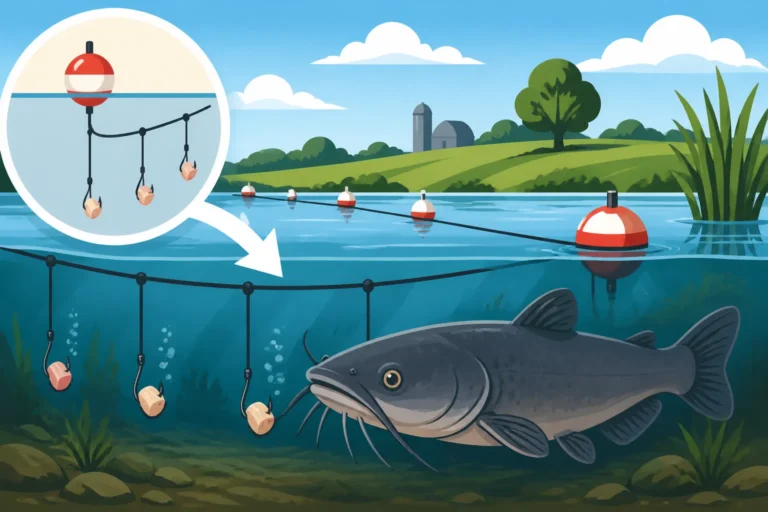
The Carolina Rig (Sliding Sinker Rig): This is arguably the most popular and versatile rig for catfishing. It consists of a sliding sinker (like an egg sinker or no-roll sinker) on your main line, followed by a bead (to protect the knot), and then a swivel. Off the swivel, you tie a leader (typically 12-24 inches of monofilament or fluorocarbon) to your hook. The sliding sinker allows the fish to pick up the bait and move off without immediately feeling the resistance of the weight, leading to more confident bites. This rig is excellent for fishing on the bottom, allowing your bait to drift naturally with the current a bit, mimicking a free-floating meal. It's especially good for casting into areas where you suspect catfish are holding in deeper pockets or near structure.
The Three-Way Swivel Rig: This rig is fantastic for situations where you want to keep your bait elevated off the bottom, or when fishing in areas with heavy current or snags. You tie your main line to one eye of a three-way swivel. To a second eye, you attach a dropper line (a shorter piece of line, usually 6-12 inches) with your sinker. To the third eye, you tie a leader (18-36 inches) with your hook and bait. This keeps your bait suspended just above the bottom, making it more visible and less likely to get snagged. It's particularly useful on rocky bottoms or when fishing over weeds.
When using any rig, remember to properly set your drag to prevent snapped lines on strong runs. It's better to let the fish run a little than to lose it due to excessive tension. And always be mindful of how many fishing poles you can use in Iowa – usually two per angler, but confirm current regulations.
Tactics for Maximizing Your Bank Fishing Success
Catching catfish from the bank isn't just about throwing out a line and waiting; it involves a bit of strategy, patience, and knowing how to interpret what the fish are telling you.
Casting and Presentation Techniques
When fishing from the bank, your casting technique is critical for reaching prime spots. A strong, overhead cast can get your bait out to those deeper channels or current breaks that might be just out of reach with a weaker toss. Aim for areas where you see visible structure, or where you've noticed activity. If you're fishing a river, try casting slightly upstream and letting the current carry your bait naturally into a likely holding spot, such as a deep hole or a seam where fast and slow water meet. You can learn more about finding these productive areas in our guide on How to Find Deep Holes for Catfish.
Once your bait is in the water, resist the urge to constantly reel it in. Catfish are often slow to approach and investigate bait, relying heavily on their sense of smell. Let your bait sit for 15-30 minutes, giving the scent time to disperse and attract fish. If you haven't had a bite, it’s worth reeling in and recasting to a slightly different spot, or refreshing your bait. Sometimes, a subtle lift and drop of your rod can stir up the bottom and release more scent, attracting curious catfish.
Reading the Water and Identifying Hotspots
The ability to "read the water" is a skill that comes with practice, but there are definite visual cues you can look for. On rivers, observe the current. Where does it slow down? Are there eddies behind obstacles? These are often resting and feeding zones. Look for "seams" where fast water meets slower water – catfish will sit in the slower current, waiting for food to be carried past in the faster flow.
On lakes and larger reservoirs, look for points that extend into the water, creek channels, or areas with submerged timber. Even small changes in the shoreline, like a rocky outcropping or a patch of lily pads, can attract baitfish and, consequently, catfish. Pay attention to other anglers; if someone is consistently catching fish from a particular spot, there's likely a good reason why. Don't be afraid to politely ask what they're using or if they have any tips for the area. Remember that catfish often have specific daily bag limits, so familiarize yourself with the Iowa Fishing Daily Bag Limits Guide before your trip.
| Catfish Bank Fishing Essentials | Why it's Important | Notes for Iowa Anglers |
|---|---|---|
| Medium-Heavy Rod (7-9 ft) | Provides casting distance and power to fight big fish. | Longer rods help clear bank obstructions. |
| Sturdy Spinning/Baitcasting Reel | Smooth drag is crucial for powerful runs; good line capacity. | Match reel size (3000-5000) to target fish size. |
| 15-25 lb Mono / 30-50 lb Braid | Abrasion resistance for snags (mono) or sensitivity/strength (braid). | Leader recommended for braid. |
| Circle Hooks (4/0-8/0) | Prevents gut hooking, makes for secure lip sets. | Check hook sizes for different baits. |
| Sliding or Pyramid Sinkers | Essential for casting distance and holding bait in current. | Match weight to current strength; 1/2 oz – 3 oz common. |
| Swivels (2/0-4/0) | Prevents line twist, allows quick rig changes. | Important for active baits like cut bait. |
| Cut Bait / Stink Bait / Worms | Catfish are scent feeders; strong odors attract them. | Fresh cut bait (shad, bluegill) often best. |
| Landing Net | Safe handling of fish, especially for spiny catfish. | Wide hoop and long handle for bank reach. |
| Headlamp | Essential for low-light and night fishing. | Allows for hands-free operation in the dark. |
| Pliers/Hook Remover | Safely remove hooks from fish and for rigging. | Always have these on hand! |
Patience and Persistence
Perhaps the most important tactic for any angler, especially when bank fishing for catfish, is patience. Catfishing isn't always about constant action; it's often about setting up in a good spot, presenting your bait effectively, and waiting for the fish to find it. Don't get discouraged if you don't get a bite right away. Catfish move, and sometimes it just takes a bit longer for them to cruise into your zone.
Bring a comfortable chair, some snacks, and enjoy the peace and quiet of being by the water. If one spot isn't producing after a decent amount of time (say, an hour or two), don't be afraid to pack up and try a new location along the bank. Sometimes, just a short walk downriver or around a bend can put you onto active fish. Persistence, combined with the right knowledge, will eventually lead to success.
Disclaimer
Fishing conditions and regulations in Iowa can change. Always consult the latest Iowa Department of Natural Resources (DNR) fishing regulations before heading out. This guide is for informational purposes only and does not supersede official regulations.