Lake Sturgeon Protection in Iowa
The majestic lake sturgeon, a true relic from prehistoric times, faces significant challenges in Iowa's waters. While encountering one of these ancient giants can be a thrilling experience for any angler, it also comes with a crucial responsibility. This guide aims to thoroughly explain why Lake Sturgeon are protected in Iowa, how to identify them, what regulations are in place to ensure their survival, and what you, as an angler, can do to help conserve this incredible fish.
Why Lake Sturgeon are Protected in Iowa's Waters
Imagine a fish that has witnessed millennia of change, swimming in our rivers since the dinosaurs roamed. That's the lake sturgeon for you. These incredible creatures are living fossils, but sadly, their populations in Iowa have faced severe decline, necessitating strict protective measures. It's not just about saving a species; it's about preserving a vital part of our natural heritage and the ecological balance of our waterways.
Historical Decline and Contributing Factors
The story of the lake sturgeon's decline in Iowa is a stark reminder of humanity's impact on nature. Historically, Iowa's major rivers, particularly the Mississippi and its larger tributaries, were home to thriving populations of lake sturgeon. They were a significant component of the aquatic ecosystem. However, several factors conspired over the last century and a half to decimate their numbers.
One of the biggest culprits was overharvesting. In the late 19th and early 20th centuries, commercial fishing was widespread, and lake sturgeon were highly prized for their meat and, especially, their roe (caviar). Their slow growth rate and late maturity meant they couldn't reproduce fast enough to keep up with the intense fishing pressure. A female lake sturgeon might not even be ready to spawn until she's 20-25 years old, and then only every few years. This makes them incredibly vulnerable to overfishing. Simultaneously, pollution from burgeoning industries and agricultural runoff degraded their habitats, impacting water quality and the food sources they relied upon.
Perhaps the most significant long-term impact came from habitat fragmentation and alteration, primarily due to dam construction. Dams, built for navigation, flood control, and power generation, effectively blocked sturgeon migration routes to their traditional spawning grounds upstream. These fish need to move freely between deep river channels, spawning areas, and feeding grounds. When these pathways are cut off, entire life cycles are disrupted. The alteration of natural river flows and the creation of silty, uniform river bottoms behind dams also destroyed the clean, rocky habitats essential for sturgeon spawning and juvenile survival. It was a perfect storm of environmental pressures that pushed these ancient fish to the brink.
Ecological Importance in Iowa's Rivers
Despite their diminished numbers, lake sturgeon still play a unique and vital role in the health of Iowa's river ecosystems. As bottom-dwellers, they act like natural vacuum cleaners, sifting through the riverbed for insects, larvae, worms, and small crustaceans. This feeding behavior helps to aerate sediments and process organic matter, contributing to the overall cleanliness and productivity of the river bottom. Think of them as the unsung heroes of the riverbed, constantly working to maintain balance.
Furthermore, their very presence is an indicator of a healthy, complex river system. Lake sturgeon require specific conditions – clean water, diverse bottom substrates, and interconnected habitats – to thrive. When sturgeon populations begin to recover, it's often a sign that broader conservation efforts are succeeding, benefiting a multitude of other fish species and aquatic life. They are a keystone species in their own right, and their long life span means they can influence the ecosystem over many decades. Protecting them isn't just about protecting one species; it's about safeguarding the intricate web of life that makes our rivers vibrant and resilient.
Identifying Lake Sturgeon in Iowa Waters
Okay, so you've heard about these ancient fish and why they're so important. But how do you actually know if you've hooked a lake sturgeon? It's crucial to be able to identify them correctly because their protection status means very specific handling is required. Trust me, mistaking a protected lake sturgeon for another species could lead to some real headaches – and potential fines!
Unique Physical Characteristics
Lake sturgeon are truly unmistakable once you know what to look for. They don't look like any other fish you're likely to catch in Iowa. First and foremost, they have an elongated, torpedo-shaped body that's covered not in scales, but in five rows of bony plates called scutes. These scutes are particularly prominent along their back and sides, giving them an armored, prehistoric appearance. They feel rough to the touch, like sandpaper or even bone, rather than slimy.
Their mouth is another key identifier: it's located underneath their snout, which is somewhat rounded and short compared to other sturgeon species. They have four barbels (whisker-like sensory organs) hanging in front of their mouth, which they use to forage along the river bottom. These barbels are smooth and un-fringed, a detail that can help distinguish them from other sturgeon types. Their tail fin is heterocercal, meaning the upper lobe is longer than the lower lobe, much like a shark's tail, though less pronounced. Coloration can vary, but they're generally olive green to grayish-brown on their back and sides, fading to a whitish belly. When you see one, it's like looking back in time. You might even want to check out an Iowa Fish Species Guide to see photos and compare.
Distinguishing from Shovelnose Sturgeon and Paddlefish
While lake sturgeon are quite distinct, Iowa's waters are also home to shovelnose sturgeon and paddlefish, which sometimes leads to confusion. Knowing the differences is vital for compliance with Iowa Fishing Regulations Explained.
Let's start with the shovelnose sturgeon, which is much more common in Iowa and has different regulations (though they also have size and bag limits). The most obvious difference is their snout. As the name suggests, the shovelnose has a long, flattened, shovel-like snout. Unlike the lake sturgeon's rounded snout, the shovelnose's barbels are fringed or frilly, not smooth, and are located closer to the tip of the snout. Shovelnose sturgeon are also generally smaller than lake sturgeon, rarely exceeding 30 inches in length, whereas lake sturgeon can grow to be several feet long and weigh over 100 pounds. Their bony scutes are also more pronounced and sharper on the shovelnose. Remember, if you catch a sturgeon with a long, flat snout and fringed barbels, it's likely a shovelnose, not a protected lake sturgeon. You can learn more about Shovelnose Sturgeon Season and Limits.
Then there's the paddlefish, which, despite its similar ancient lineage and large size, is very different. Paddlefish are characterized by their extremely long, paddle-shaped rostrum (snout), which can make up a third of their total body length. They are filter feeders, not bottom-sifters, and lack the bony scutes of sturgeon, having smooth, shark-like skin. Their mouth is large and gaping, perfect for filtering plankton. There's really no mistaking a paddlefish for a lake sturgeon once you see that massive paddle. If you're looking for a good field guide to help you identify these species, many excellent options are available on Amazon that you can keep in your tackle box.
Here's a quick comparison table:
| Feature | Lake Sturgeon | Shovelnose Sturgeon | Paddlefish |
|---|---|---|---|
| Snout Shape | Short, rounded | Long, flattened, shovel-like | Extremely long, paddle-shaped rostrum |
| Barbels | Four, smooth, un-fringed | Four, fringed, closer to snout tip | Absent (small sensory pores instead) |
| Body Covering | Five rows of prominent bony scutes | Five rows of sharp bony scutes | Smooth, scale-less skin (shark-like) |
| Mouth Position | Underslung (ventral) | Underslung (ventral) | Large, terminal, wide-gaping |
| Typical Size | Large (3-6+ feet, 50-200+ lbs) | Smaller (1-3 feet, 1-6 lbs) | Very large (4-7 feet, 20-100+ lbs) |
| Feeding | Bottom feeder (insects, larvae) | Bottom feeder (insects, larvae) | Filter feeder (plankton) |
Lake Sturgeon Habitat in Iowa's Major River Systems
Understanding where lake sturgeon live in Iowa is key to both knowing where you might encounter one and appreciating the specific challenges of their conservation. These fish are creatures of specific environments, and their habitat preferences tell us a lot about their life cycle.
Preferred River Systems and Bottom Types
In Iowa, lake sturgeon are primarily found in the Mississippi River and the lower reaches of its major tributaries, such as the Cedar and Iowa Rivers, particularly in areas near the Mississippi confluence. They are less common in the Missouri River system within Iowa's borders, but historical records indicate their presence there as well. These are large, powerful river systems with varied depths and currents.
Lake sturgeon are true bottom-dwellers, and they have very distinct preferences for their underwater real estate. They thrive in areas with deep channels and strong currents, often seeking out deeper pools and scour holes during different times of the year. The type of river bottom is extremely important to them. They prefer firm substrates like gravel, rubble, and bedrock, as opposed to soft, silty mud. These harder bottoms provide crucial habitat for the invertebrates they feed on and offer suitable conditions for spawning. During summer months, they often retreat to cooler, deeper sections of the river. In winter, they might congregate in deep holes, becoming less active but still needing access to flowing water. It's truly incredible how these fish navigate and rely on the nuances of these vast river environments.
Spawning Requirements and Critical Areas
The reproductive cycle of lake sturgeon is fascinating and highlights their vulnerability. Unlike many fish that spawn annually, female lake sturgeon only spawn every 3 to 5 years, and males every 1 to 3 years. When they do decide it's time, they undertake significant migrations upstream from their overwintering and feeding grounds to specific spawning sites.
These spawning sites are incredibly specific: they require clean, gravel or rocky shoals, often in shallow, fast-moving water, sometimes below natural rapids or man-made structures like wing dams. The current over these rocky areas helps to keep their sticky eggs oxygenated and free from smothering silt. After hatching, the tiny larval sturgeon drift downstream, eventually settling into slow-moving, food-rich backwater areas or shallow river edges where they can find protection and ample food. The reliance on these very particular, undisturbed spawning grounds is why habitat fragmentation from dams has been so devastating to their populations. If they can't reach these ancestral spawning grounds, or if the grounds themselves are degraded, successful reproduction simply can't happen. Many conservation efforts focus heavily on restoring access to and quality of these critical spawning habitats.
Current Regulations and What Anglers Need to Know
Given their endangered status and historical decline, lake sturgeon are afforded strict protection under Iowa law. As an angler, you have a crucial role to play in their recovery by understanding and adhering to these regulations. This isn't just a suggestion; it's a legal obligation designed to give these magnificent fish a fighting chance.
Catch and Release Requirements
The most important regulation concerning lake sturgeon in Iowa is that they are a fully protected species. This means if you accidentally catch a lake sturgeon, you absolutely cannot keep it. It must be immediately released unharmed back into the water. This isn't like other fish where there might be a slot limit or a bag limit; with lake sturgeon, the limit is always zero. This is a critical point that every angler on Iowa's major rivers needs to commit to memory.
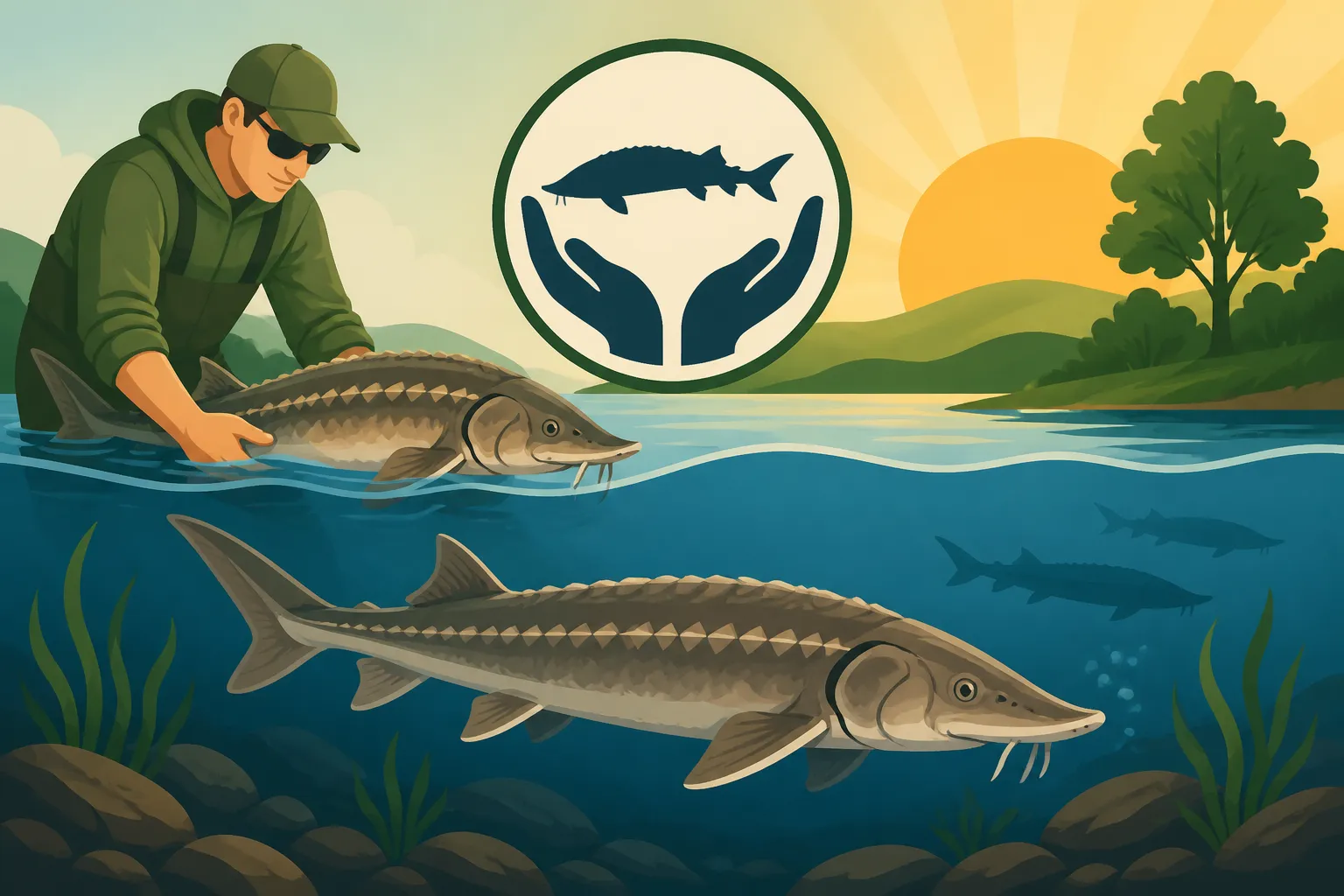
When you do hook a lake sturgeon, it's essential to handle it with the utmost care to maximize its chances of survival. Try to land the fish as quickly as possible to minimize stress. Keep the fish in the water as much as you can. If you need to bring it closer for hook removal, use a large, knotless rubberized net, or even cradle it in the water. Avoid dragging it onto sharp banks or rough boat floors. Remove the hook gently using needle-nose pliers or a de-hooking tool. If the hook is deeply ingested, cut the line as close to the hook as possible rather than trying to rip it out. These fish are tough, but improper handling can still cause serious injury or even death, undermining all the conservation efforts. For useful tools for careful handling, like de-hooking tools or large nets, you can find many options on Amazon.
Reporting Accidental Catches and Violations
Iowa fishing regulations often require reporting of certain protected species, and while formal mandatory reporting for every incidental lake sturgeon catch might vary by specific district or year, it's always a good practice to be proactive. If you catch a lake sturgeon, especially in a new or unexpected location, consider contacting the Iowa Department of Natural Resources (DNR). Providing them with details such as the location, date, estimated size, and a photo (if taken quickly and carefully, without undue stress to the fish) can be incredibly valuable for their research and monitoring efforts. This information helps biologists understand sturgeon distribution and population trends.
Beyond accidental catches, if you ever witness someone illegally harvesting a lake sturgeon, or any other serious fishing violation, it's important to report it. There are specific avenues for Reporting a Fishing Violation in Iowa. The Iowa DNR has a dedicated hotline or online system for reporting poaching or other illegal activities. By being the eyes and ears on the water, you become a crucial part of the enforcement and conservation network. Remember, responsible angling includes protecting our shared natural resources. You can also learn about How to Report Someone Fishing Without a License, as this ethos extends to all illegal fishing activities.
Potential Penalties for Non-Compliance
Let's be very clear: violating lake sturgeon protection laws in Iowa is a serious matter, and the penalties can be substantial. Fishing for or possessing a protected species like the lake sturgeon is not just a minor infraction; it falls under more severe categories of wildlife violations. The specific fine amount for Fine Amount for Fishing Without a License in Iowa gives you an idea of the kind of penalties associated with fishing infractions, but possessing a protected species can be even more severe.
Penalties can include significant monetary fines, which can range from hundreds to thousands of dollars depending on the severity of the offense and whether it's a first-time or repeat violation. In addition to fines, individuals can face forfeiture of their fishing gear, including boats, rods, and reels. Furthermore, fishing privileges can be revoked for a considerable period, meaning you could lose your ability to legally fish in Iowa for years. In some egregious cases, particularly those involving commercial poaching or repeat offenses, jail time can even be a possibility. These aren't just theoretical punishments; they are enforced to deter illegal activity and underscore the critical importance of protecting these vulnerable fish. It’s always best to be informed on Sturgeon Fishing Rules on Iowa Waters to avoid any issues.
Conservation Efforts and Future Outlook for Lake Sturgeon
The good news amidst the historical decline is that dedicated individuals and organizations are working tirelessly to bring lake sturgeon back to Iowa's rivers. These conservation efforts are multi-faceted, ranging from direct intervention like stocking to long-term strategies like habitat restoration and public education. It's a challenging road, but there's a real sense of hope for these ancient fish.
Stocking Programs and Reintroduction Efforts
One of the most direct and impactful conservation strategies for lake sturgeon in Iowa has been focused stocking programs. Since the early 2000s, the Iowa Department of Natural Resources (DNR), often in partnership with other state and federal agencies and conservation groups, has undertaken ambitious reintroduction efforts. This involves raising young lake sturgeon in hatcheries from eggs collected from healthy wild populations in other parts of the Mississippi River basin. Once they reach a certain size, typically several inches long, these juvenile sturgeon are then released into specific stretches of Iowa's rivers that have suitable habitat, with a particular focus on the Mississippi River itself and its larger tributaries.
The goal of these stocking programs isn't just to dump fish into the river; it's a carefully planned process aimed at establishing self-sustaining populations. Biologists choose release sites that offer the best chances for survival and growth, and they often tag the stocked fish with small microchips (PIT tags) to monitor their movements, growth, and survival rates over time. These reintroduction efforts are long-term investments, as it takes many years for stocked fish to reach reproductive maturity. However, the early returns have been promising, with increasing reports of anglers encountering these magnificent fish, giving us hope that future generations will see thriving lake sturgeon populations once again.
Research and Monitoring Initiatives
Beyond stocking, a significant amount of scientific research and monitoring is continuously underway to better understand lake sturgeon in Iowa. Biologists are constantly studying various aspects of their life history, including migration patterns, spawning habits, diet, growth rates, and overall population dynamics. This research is crucial because lake sturgeon are long-lived and complex animals; the more we understand about them, the more effectively we can protect them.
Monitoring efforts often involve tracking tagged fish, conducting electrofishing surveys, or using underwater cameras to observe their behavior in specific habitats. By collecting data on where sturgeon are found, how they're growing, and if they're reproducing naturally, scientists can assess the success of stocking programs and identify critical habitats that need additional protection or restoration. This includes researching the impact of water quality, river flow, and climate change on sturgeon health. Partnerships with universities and other research institutions ensure that the latest scientific methods are applied to address the complex challenges of sturgeon recovery. All this information is vital for adaptive management, allowing the DNR to adjust its strategies as new data emerges.
Partnerships and Public Awareness
The conservation of a species as iconic and vulnerable as the lake sturgeon is truly a team effort. No single agency or group can do it alone. In Iowa, the DNR works closely with federal partners like the U.S. Fish and Wildlife Service, neighboring state agencies along the Mississippi River, and a host of local conservation organizations. These partnerships are essential for coordinating efforts across state lines, sharing resources, and pooling expertise to tackle issues that affect large river systems.
Public awareness and education are equally vital components of these conservation efforts. Many programs aim to inform anglers, boaters, and the general public about the importance of lake sturgeon, how to identify them, and the regulations surrounding their protection. This includes educational materials distributed at fishing license vendors, online resources, and outreach events. Engaged citizens and informed anglers are the first line of defense in protecting these fish. When people understand why lake sturgeon are protected, they are far more likely to comply with regulations and become advocates for their conservation. Every angler who learns to identify and properly release a lake sturgeon becomes an active participant in their survival.
The Role of Anglers in Lake Sturgeon Protection
As anglers, we spend countless hours on the water, witnessing the beauty and challenges of Iowa's aquatic environments firsthand. This unique perspective places us in a critical position to contribute meaningfully to the protection of lake sturgeon. Our actions, both individually and collectively, can make a real difference for these magnificent fish.
Best Practices for Catch and Release
Since lake sturgeon must be immediately released, mastering proper catch and release techniques is paramount. This goes beyond simply letting the fish go; it's about ensuring its survival after the encounter. Firstly, use appropriate tackle for the species you are targeting to avoid overly long fight times that exhaust the sturgeon. If you're fishing for species like Channel Catfish Fishing in Iowa in areas where sturgeon might be present, stronger gear can help land fish quicker.
When a sturgeon is hooked, bring it in as quickly as possible without "horsing" it. Once alongside your boat or on the bank, avoid lifting large sturgeon completely out of the water, especially by the tail or head. Their internal organs are not designed to support their body weight without the buoyancy of water, and improper lifting can cause severe internal damage. If you absolutely must take a quick photo, keep the fish as low to the water as possible, supporting its full body length with two hands (one under the head, one under the tail) or by carefully cradling it. Use specialized landing nets, perhaps a large rubberized net you might find on Amazon, that minimizes slime removal and fin damage. Remove hooks carefully with pliers, and if deeply hooked, cut the line. Allow the fish time to recover in the water, holding it gently upright until it swims away under its own power. These seemingly small actions collectively contribute to the survival rates of released fish.
Participating in Citizen Science and Reporting
Anglers are often the first to notice changes in fish populations or encounter rare species. This makes us valuable citizen scientists! If you catch a lake sturgeon, especially in a location where they are not commonly reported, or if you notice a cluster of sightings, share that information with the Iowa DNR. Even accidental catches, when properly documented (with a quick, safe photo and location data), can provide vital intelligence to biologists. This data helps them understand movement patterns, habitat use, and the overall health of the recovering population. Remember, these records are invaluable for tracking the long-term success of reintroduction programs.
Beyond just reporting catches, keep an eye out for any signs of illegal activity. Seeing someone actively try to harvest a lake sturgeon or observing suspicious behavior could be grounds for contacting the DNR's law enforcement division. You are the frontline observers, and your vigilance is a critical layer of protection for all of Iowa's fish species, including the elusive sturgeon. Becoming familiar with how to report Penalties for Exceeding the Daily Bag Limit can also help you understand the gravity of these conservation efforts.
Advocacy and Responsible Angling
Finally, being a responsible angler means being an advocate for the resources we cherish. This includes spreading awareness about lake sturgeon protection among your fellow anglers, friends, and family. Educate others on proper identification and safe catch-and-release techniques. Encourage everyone to respect Iowa Fishing Daily Bag Limits Guide and all other regulations.
Support conservation organizations that work on river health and sturgeon recovery. This could involve volunteering your time, donating to projects, or simply staying informed about local conservation initiatives. By championing responsible angling practices and promoting a conservation mindset, we contribute to a culture that values and protects our unique aquatic treasures. The future of the lake sturgeon in Iowa's waters truly depends on every one of us who enjoys fishing in these incredible river systems.
Disclaimer
This article is for general informational purposes only and does not constitute professional advice. Laws, prices and regulations vary by location and change over time. Consult a qualified professional for guidance on your specific situation.