Penalties for Exceeding the Daily Bag Limit
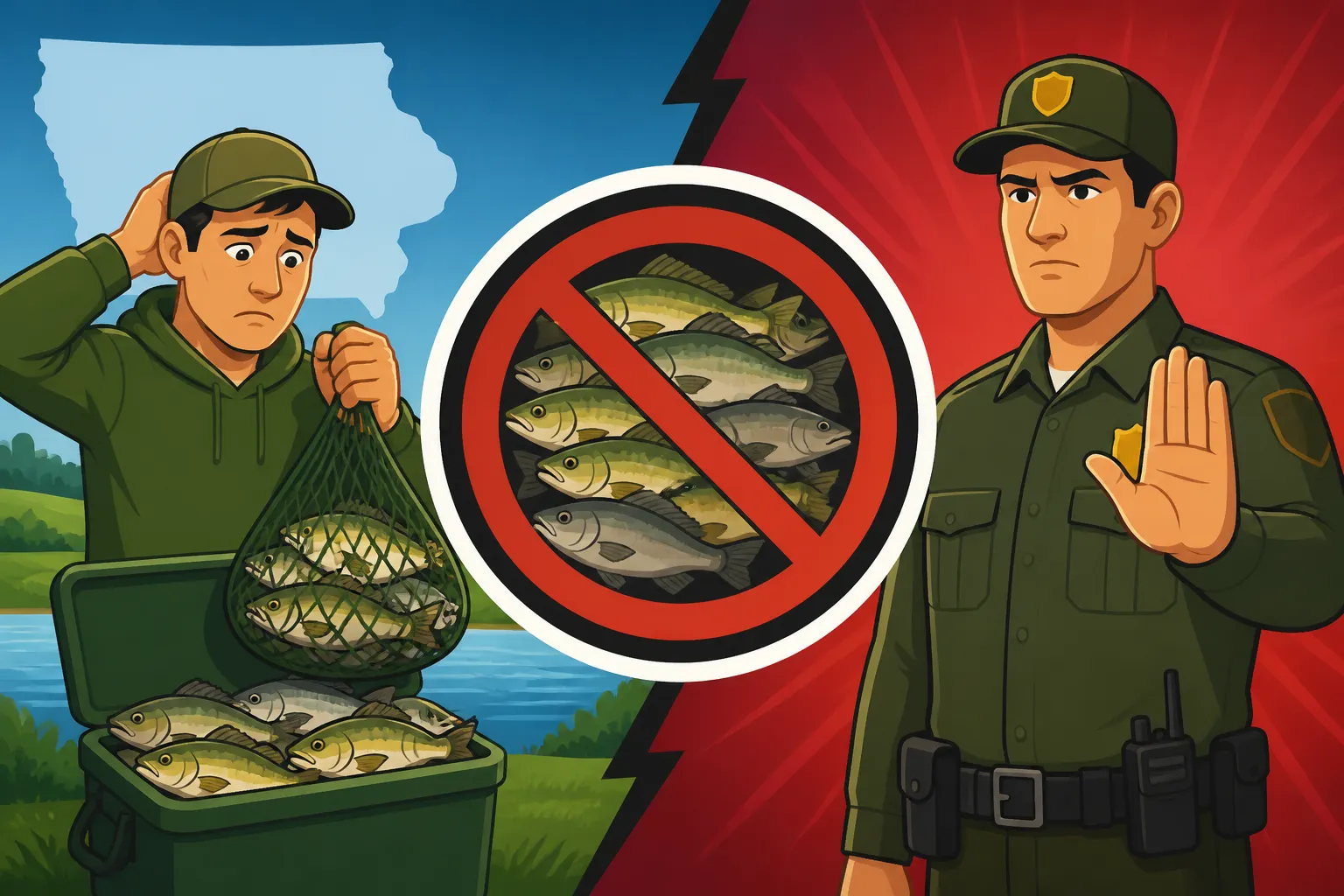
It’s easy to get lost in the moment when you’re out on the water, reeling in fish after fish. That rush of excitement, the thrill of a good bite—it can make you forget all about the rules. Before you know it, you might find your livewell looking a little fuller than allowed, and then suddenly, the joy of a successful fishing trip turns into a knot of anxiety about legal trouble. This guide is here to walk you through the serious penalties for exceeding Iowa’s daily bag limits, and more importantly, how to avoid that stressful situation altogether.
Understanding Iowa's Daily Bag Limits for Anglers
Let's start by clarifying what a daily bag limit actually is, because it's a cornerstone of responsible fishing here in Iowa. Simply put, a daily bag limit is the maximum number of fish of a particular species, or combination of species, that you can legally keep within a 24-hour period. This isn't just a random number; it's a carefully determined regulation set by the Iowa Department of Natural Resources (DNR) to ensure the health and sustainability of our fish populations. Without these limits, it wouldn't take long for popular species to be overfished, leading to fewer fish for everyone in the long run.
The challenge, and where many anglers can accidentally get into trouble, is that these limits aren't one-size-fits-all. They vary significantly depending on the specific fish species you're targeting, and sometimes even by the particular body of water you're fishing. For instance, the daily limit for walleye might be different on the Mississippi River than it is on one of our inland lakes. The same goes for panfish like crappie and bluegill; while often having generous limits, there can be specific regulations for certain lakes. It's crucial to consult the official Iowa Fishing Daily Bag Limits Guide before every outing, because regulations can, and sometimes do, change. Ignoring these rules, even unknowingly, can lead to some pretty unwelcome consequences.
These limits are designed to protect fish during vulnerable times, like spawning, or to help populations recover. They ensure that enough fish are left to reproduce and grow, maintaining a healthy ecosystem for generations of anglers to come. For instance, certain larger species like muskellunge often have very restrictive limits, sometimes even catch-and-release only in specific areas, because they take a long time to mature and contribute to the fishery. It's all about balancing angler enjoyment with ecological responsibility, and as passionate anglers, it's our duty to uphold that balance.
The Immediate Financial Consequences of Over-Limit Fish
When a conservation officer finds you with more fish than the law allows, the first thing you'll likely face is a hefty fine. This isn't just a slap on the wrist; these penalties are designed to be a deterrent and can quickly add up, turning a great day of fishing into a very expensive lesson. Fishing violations in Iowa are typically classified as scheduled violations, similar to a traffic ticket. However, don't let that common comparison fool you—the financial impact can be far more significant.
The base fine for exceeding a daily bag limit can vary, but generally, you're looking at a penalty of at least $100 for the initial offense, plus court costs and surcharges. But here’s where it gets really painful: the fine often increases dramatically for each individual fish you possess over the legal limit. Imagine the scenario: the walleye limit is five, and you, caught up in the excitement, have seven in your cooler. You're not just getting a fine for "exceeding the limit"; you're getting a fine for the violation, plus an additional fine for each of those two extra walleye. If you've got a cooler full of crappie and the limit is 25, but you've accidentally kept 35, those ten extra fish will each incur their own penalty. This layered system ensures that the more egregious the violation, the steeper the financial consequence.
Conservation officers with the Iowa DNR are highly trained and have the authority to enforce these regulations diligently. They patrol our lakes and rivers, often conducting checks at boat ramps, popular fishing spots, and even during random encounters on the water. Their job is not to ruin your day, but to protect Iowa's natural resources. When they find an angler in violation, they are simply doing their job, and you can expect a professional, albeit firm, handling of the situation. It’s a moment that can make your stomach drop, knowing that a simple oversight or moment of carelessness is about to hit your wallet hard.
Beyond Fines: Other Serious Repercussions of Violations
While fines are often the most immediate consequence, exceeding Iowa's daily bag limits can lead to much more severe repercussions that impact your ability to enjoy fishing in the future. These can include the loss of your fishing privileges and even potential criminal charges in extreme cases.
License Suspension and Revocation
One of the most devastating penalties for a passionate angler is the suspension or outright revocation of your fishing license. The Iowa DNR has the authority to suspend your fishing privileges for a set period, which could range from several months to several years, depending on the severity of the violation and whether you're a repeat offender. Imagine being unable to fish during prime walleye season or missing out on the Spring Walleye Run Techniques in Iowa because of a mistake you made months ago. For some, this loss of access to their favorite pastime feels worse than any monetary fine.
In more serious cases, especially for repeat offenders or those who grossly disregard regulations, your fishing license could be revoked entirely. This means you might be barred from purchasing any fishing license in Iowa for an extended period, or even permanently. This punitive measure underscores the state's commitment to conservation and sends a clear message that disrespecting bag limits comes with significant consequences. Your past violations are typically linked to your state ID, making it difficult to evade these suspensions.
Confiscation of Gear and Potential Criminal Charges
In addition to fines and license suspensions, conservation officers can, and often will, confiscate any fish caught illegally. This means those extra fish you worked so hard for won't be going home with you to the dinner table. In some severe instances, especially those involving commercial poaching or particularly egregious violations, fishing equipment—including rods, reels, nets, and even boats or vehicles used in the commission of the crime—can be seized. While this is less common for a simple over-limit violation by a recreational angler, it’s a possibility that highlights the seriousness of breaking these laws.
Furthermore, while most over-limit violations are handled as scheduled violations, repeated offenses or extremely large over-limits can escalate to more serious legal proceedings. You might find yourself required to appear in court, potentially facing misdemeanor charges. These charges can result in even higher fines, community service, and, in rare instances, even jail time. A criminal record, even for a misdemeanor, can have long-lasting impacts on employment, travel, and other aspects of your life. It's a sobering reminder that fishing regulations aren't just suggestions; they are laws, and breaking them has real-world legal ramifications. The repercussions can also extend to other states through interstate compacts, meaning a license suspension in Iowa could potentially impact your ability to purchase a fishing license in neighboring states like Minnesota or Wisconsin.
A Quick Look at Iowa Fishing Violation Penalties
To give you a clearer picture, here's a general overview of how penalties might stack up for fishing violations in Iowa. Keep in mind that these are typical ranges and actual penalties can vary based on specific circumstances, judicial discretion, and updates to the law. Always consult the most current Iowa DNR regulations or legal counsel for precise information.
| Violation Type | Typical Initial Fine Range (Excluding Surcharges) | Potential Additional Penalties |
|---|---|---|
| Exceeding Daily Bag Limit (per fish) | $50 – $100 per over-limit fish | Confiscation of illegally caught fish, license suspension |
| Fishing Without a License | $100 – $150 | Confiscation of fish, mandatory license purchase, potential license suspension |
| Fishing in Closed Season | $100 – $200 | Confiscation of fish, license suspension |
| Violation of Length Limits | $50 – $100 per undersized/oversized fish | Confiscation of fish, license suspension |
| Use of Illegal Fishing Gear | $150 – $300 | Confiscation of illegal gear, license suspension |
| Repeated/Egregious Violations | Significantly Higher, Court-Determined | Extended license revocation, confiscation of boat/vehicle, criminal charges (misdemeanor) |
Note: This table provides general information. Specific fines and penalties are subject to Iowa state law and DNR regulations, which can change.
Practical Strategies to Avoid Exceeding Bag Limits
The good news is that avoiding these penalties is entirely within your control. It comes down to preparation, awareness, and a commitment to responsible angling. Nobody wants to deal with fines or lose their fishing privileges, so let's talk about some solid strategies to ensure you stay on the right side of the law.
Know Before You Go: Research is Your Best Friend
This is the golden rule: always check the current regulations before you cast a line. Don't rely on what you remember from last year or what your buddy told you. Regulations can change, and what applies to one lake might not apply to another. The Iowa DNR publishes an annual fishing regulations booklet, which is an invaluable resource. You can often pick one up at any place that sells fishing licenses, like a local bait shop or even some sporting goods stores. Better yet, you can easily access the most up-to-date information online. Make it a habit to How to Check Current Iowa Fishing Regulations Online directly from the DNR's website. They usually have a clear, searchable database or PDF document that details all Iowa Fishing Regulations Explained, including specific limits for species like Walleye Season and Size Limits, Catfish Possession Limits, and Crappie and Sunfish Limits in Iowa.
Take a few minutes the night before your trip to review the limits for the specific species you plan to target and the specific body of water. If you're fishing a border water like the Mississippi River, remember that reciprocal agreements can be complex, so pay extra attention to those rules.
Keeping Meticulous Track While Fishing
Once you're on the water, it's easy to lose count, especially when the bite is hot. Develop a system for keeping track of your catch.
- Designated Stringer/Livewell Sections: If you're fishing for multiple species with different limits, consider using separate stringers or clearly partitioned sections of your livewell.
- Clicker Counters: Simple, handheld clicker counters are a fantastic tool. Each time you keep a fish, give it a click. It’s a physical reminder and helps prevent accidental over-counting. You can find these inexpensive tools on sites like Amazon.
- Waterproof Notebook and Pen: Keep a small, waterproof notebook and pen handy. Jot down each fish as you keep it, noting the species. This is also great for tracking patterns and what's working!
- Measure and Identify Carefully: Sometimes, anglers accidentally keep fish that are undersized or misidentify a species with a more restrictive limit. Invest in a good, rigid measuring board (many are available on Amazon) and use it every time. Be confident in your fish identification skills. If you’re not sure, it’s always better to release the fish.
When in Doubt, Release it!
This is perhaps the simplest and most ethical strategy. If you've reached your limit, or if you're even unsure if you've reached it, or if a fish looks stressed, release it carefully. A fish successfully released ensures it can be caught another day, and it guarantees you won't face any penalties. There’s no shame in releasing fish; in fact, it’s a mark of a truly conservation-minded angler.
Remember, conservation officers aren't looking to trick you; they're looking to protect our resources. Being transparent, cooperative, and showing that you've made an honest effort to follow the rules can sometimes help, but ultimately, the responsibility for knowing and adhering to the limits rests squarely on your shoulders. If you ever witness someone deliberately violating bag limits or other regulations, it's important to know How to Report Someone Fishing Without a License or other infractions to the DNR. It helps protect the resource for everyone.
Staying informed, being diligent, and practicing good sportsmanship will not only keep you out of trouble but also ensure that Iowa's fishing traditions remain vibrant and healthy for years to come.
Disclaimer
The information provided in this article is for general guidance and informational purposes only, and does not constitute legal advice. Fishing regulations in Iowa are subject to change, and it is the responsibility of each angler to consult the official Iowa Department of Natural Resources (DNR) regulations prior to fishing. Always verify current laws and bag limits through official DNR channels to ensure compliance.