Paddlefish in Iowa Waters
It's easy to spend years fishing the diverse waters of Iowa, casting for walleye, bass, or catfish, and still feel like there's always something new to discover. One of the most unique and often misunderstood residents beneath our waters is the paddlefish, a true living fossil that can leave many anglers scratching their heads about what exactly they've seen or if they're even allowed to fish for it. This comprehensive guide will pull back the curtain on paddlefish in Iowa, helping you understand these incredible creatures, their protected status, and how you can be a responsible steward of our aquatic heritage.
The Enigma of Iowa's Paddlefish
Imagine a fish that's been swimming our planet's waters for millions of years, practically unchanged since the age of dinosaurs. That's the American paddlefish for you! They truly are an enigma, a living fossil with a distinctive appearance that sets them apart from every other fish you might encounter in Iowa's rivers. Many anglers might go their entire lives without seeing one, and even fewer understand their critical ecological role or the strict rules surrounding them.
What Makes Paddlefish So Special?
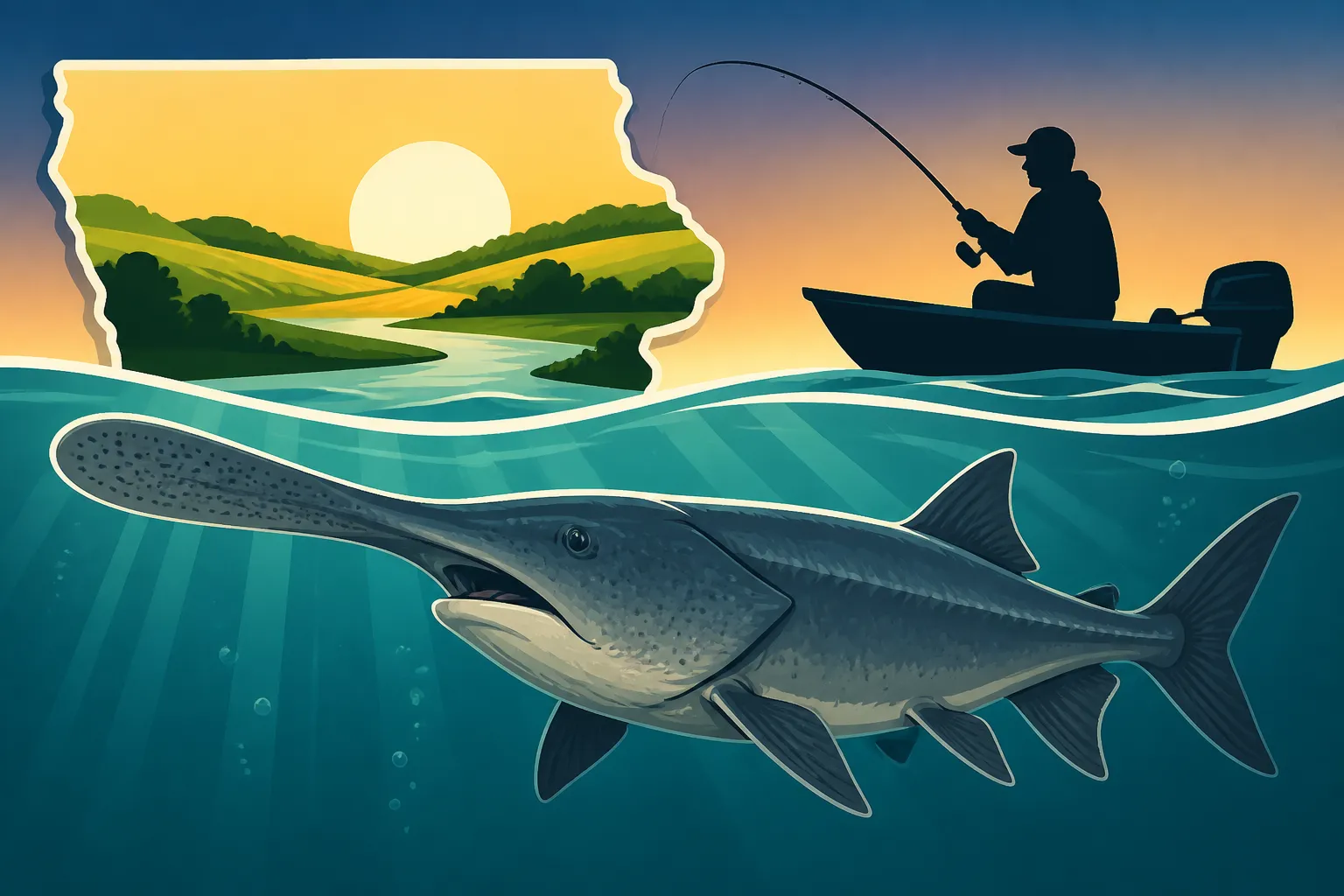
Paddlefish are immediately recognizable by their long, paddle-like snout, which can make up a significant portion of their body length. This "paddle" isn't for digging or defense, though; it's a highly sensitive organ, covered in thousands of pores that detect weak electrical fields, helping them find their primary food source: plankton. Think of it as a built-in, highly advanced sonar system! Unlike most game fish that hunt with sight or scent, paddlefish are filter feeders, swimming with their mouths open to strain microscopic organisms from the water. This unique feeding strategy, coupled with their ancient lineage, makes them a true marvel of evolution. Their cartilaginous skeleton, similar to sharks, also sets them apart from most bony fish, contributing to their prehistoric appearance.
Beyond their physical traits, paddlefish are remarkable for their size and longevity. They can grow to impressive lengths, often exceeding five feet, and can live for decades. These large, slow-growing fish represent a vital link in the food web and are sensitive indicators of water quality. Their presence in our rivers speaks volumes about the health of those ecosystems. Understanding these giants helps us appreciate the intricate balance of Iowa's waterways.
Where Do Paddlefish Call Home in Iowa?
While you won't find paddlefish in every lake or pond, they are primarily residents of Iowa's larger river systems, particularly the Mississippi River and its major tributaries, including the Missouri River. These expansive, nutrient-rich waterways provide the vast stretches of open water and abundant plankton necessary to sustain their unique filter-feeding lifestyle. You're most likely to encounter them in areas with slow-moving currents, deep pools, and backwater areas where plankton concentrations are higher.
Historically, paddlefish had a broader distribution across Iowa, but habitat changes, dam construction, and overfishing in the past have impacted their populations. Today, conservation efforts are focused on maintaining and restoring these populations, especially in the larger river systems. Anglers fishing the Mississippi River Pool 9 Fishing, Mississippi River Pool 10 Fishing, or Mississippi River Pool 12 Fishing are more likely to encounter these gentle giants than those on smaller inland waters. They are truly a fish of the big rivers, and their continued presence is a testament to the ongoing work to protect these magnificent aquatic environments.
Spotting a Paddlefish: Identification Guide
Imagine you're out on the water, maybe enjoying a quiet morning, when suddenly you hook into something that feels…different. Or perhaps you see a large, dark shape near the surface with an unmistakable elongated snout. Knowing how to correctly identify a paddlefish is crucial, not just for curiosity, but also for adhering to Iowa Fishing Regulations Explained. Misidentifying one could lead to accidental harm or legal issues.
Distinctive Features and Why They Matter
The most striking feature of a paddlefish is, without a doubt, its long, flattened, paddle-like snout, or rostrum. This isn't a bill like a gar; it's a broad, almost shovel-like extension that can be as long as one-third of the fish's entire body length. Their body itself is smooth and scaleless, a grayish-blue to olive color on top, fading to white on the belly, which gives them a somewhat shark-like appearance from a distance, especially given their large size. They have a deeply forked tail, much like a shark or a tuna, indicative of a fast-swimming, open-water fish. Their eyes are small and set far back on the head, relative to the enormous paddle.
These features are vital for their survival. The lack of scales reduces drag, helping them move efficiently through water, while their unique snout acts as an electroreceptor, allowing them to navigate and locate plankton in turbid river environments where visibility is often low. Imagine trying to find microscopic food in murky water without sight; that "paddle" is their secret weapon. If you ever hook into something that feels powerful, smooth-skinned, and has a truly alien-looking snout, you've likely found a paddlefish. Recognizing these traits immediately is key to handling them properly and ensuring their well-being.
Paddlefish vs. Other River Giants
While their appearance is quite distinct, sometimes in a moment of surprise or low light, an angler might momentarily confuse a paddlefish with other large river inhabitants. The most common comparison might be to a sturgeon, given their ancient look and large size. However, the differences are stark. Sturgeon, like the protected Lake Sturgeon Protection in Iowa or the more common shovelnose sturgeon, have bony plates (scutes) covering their bodies and barbels near their mouths used for bottom feeding. Sturgeon also have an elongated snout, but it's typically more conical or pointed, not the broad, flattened paddle of a paddlefish. For instance, comparing the body of a paddlefish to what you might learn about Shovelnose Sturgeon Season and Limits will quickly highlight the differences in their skin and mouth structure.
Another less likely, but still possible, confusion could be with a longnose gar, especially given their elongated jaws. However, gars are covered in hard, diamond-shaped ganoid scales and have sharp teeth for preying on other fish, a stark contrast to the smooth, toothless, plankton-feeding paddlefish. The sheer uniqueness of the paddlefish's snout truly sets it apart from anything else swimming in Iowa's freshwaters. When you see that distinct, oversized paddle, there's no mistaking it.
Paddlefish Protection and the Law in Iowa
Because of their unique biology, slow reproductive rates, and past population declines, paddlefish are a species of special concern in many states, including Iowa. Anglers need to be acutely aware of the specific regulations surrounding these fish, as treating them like any other game fish can lead to significant penalties and harm to a vulnerable population. This isn't just about following rules; it's about respecting a living piece of natural history.
Understanding Catch and Release Mandates
In Iowa, paddlefish are generally not a species you can target and keep. The rules are very strict, and for most anglers, encountering a paddlefish means an immediate and careful release. This is often different from other large species that might have specific bag and size limits, like the Iowa Fishing Daily Bag Limits Guide for common game fish. While some states have limited, highly regulated snagging seasons for paddlefish, Iowa's approach is primarily conservation-focused, emphasizing the protection of the existing population.
If you accidentally hook a paddlefish while fishing for other species, the law requires you to release it immediately and unharmed. This means handling the fish with extreme care. Avoid lifting it by its paddle or tail, as these structures are vital and can be easily damaged. It's best to keep the fish in the water as much as possible, removing the hook quickly and gently. Using barbless hooks for all your fishing, especially in areas where paddlefish are known to reside, can greatly facilitate an easy release. Always check the very latest version of the Iowa Fishing Regulations Explained before heading out, as rules can occasionally change to reflect the current conservation needs of the species.
The Importance of Paddlefish Conservation
The rigorous protection of paddlefish isn't just about preserving a single species; it's about maintaining the health and biodiversity of our entire river ecosystem. Paddlefish are often referred to as an "indicator species" because their population health reflects the overall ecological well-being of the large river systems they inhabit. Factors like water quality, habitat availability, and pollution directly impact their ability to thrive. Their status tells us a lot about the health of the Mississippi and Missouri Rivers.
Conservation efforts for paddlefish in Iowa, and across the Midwest, involve habitat restoration, research into their migratory patterns and reproductive success, and strict fishing regulations. Dams, for example, can block their spawning migrations, and pollution can harm the plankton they depend on. By protecting paddlefish, we are inherently protecting the vast and complex environments they call home. Every angler plays a role in this by understanding and respecting the rules, ensuring these ancient fish continue to grace Iowa's waters for generations to come.
The Fascinating Life of an Iowa Paddlefish
The life of a paddlefish is a journey of epic proportions, from tiny plankton-eating fry to massive, long-lived adults that roam hundreds of miles of river. Their unique feeding strategy and migratory patterns make their biology truly captivating and highlight their integral role in the aquatic ecosystem. Understanding their life cycle helps us appreciate the delicate balance required for their survival.
From Plankton Feeder to River Wanderer
Paddlefish begin their lives much like other fish, hatching from eggs, but quickly develop their distinctive paddle and transition to a filter-feeding lifestyle. Their diet consists almost exclusively of zooplankton and phytoplankton, which they strain from the water using specialized gill rakers. Imagine trying to eat something you can barely see! This makes them truly unique among the larger fish in Iowa's rivers. They are constantly on the move, following concentrations of plankton, making them true river wanderers.
As they grow, they continue this filter-feeding behavior, growing larger and larger, capable of filtering vast quantities of water each day. This process helps to keep the water column clean, as they effectively "graze" on the microscopic organisms. Their movements are often tied to river flows and plankton blooms, sometimes traveling long distances between feeding and spawning grounds. This constant migration underscores the need for interconnected river systems and highlights why barriers like dams can be so detrimental to their populations. If you want to learn more about the intricate movements of river fish, you might find articles about How to Read Water for Structure Fishing interesting, even though paddlefish don't necessarily relate to structure in the same way.
Spawning Rituals and Early Life
The reproductive cycle of paddlefish is as fascinating as it is complex, contributing to their vulnerability. Unlike many fish that spawn annually, paddlefish are not always annual spawners, especially the females, which may only spawn every two to three years. They are broadcast spawners, migrating upstream to specific gravel bars or shallow rock riffles in the spring when water temperatures and river flows are just right. These conditions are critical; if the conditions aren't met, they might not spawn at all, or their spawning might be unsuccessful.
After the eggs are laid and fertilized, the tiny paddlefish larvae drift downstream, developing rapidly. Their early survival is precarious, dependent on abundant food sources and favorable river conditions. It can take many years for paddlefish to reach sexual maturity – sometimes up to 7-10 years for males and even longer, 10-15 years, for females. This slow maturation rate, combined with specific spawning requirements, means that population recovery can be a long and challenging process. Conservation efforts often focus on protecting these critical spawning habitats and ensuring unimpeded access to them.
Encountering Paddlefish: What Anglers Need to Know
For the average Iowa angler, intentionally targeting paddlefish is not typically allowed, but accidentally encountering one is a real possibility, especially when fishing the Mississippi or Missouri rivers. Knowing how to react in such a situation, and understanding the role you play in their continued existence, is incredibly important. Being prepared means you can ensure the well-being of these remarkable fish.
Accidental Catches and Proper Handling
So, what happens if you're fishing for catfish on the Mississippi, perhaps with some robust gear you found on Amazon, and suddenly your line goes taut with something much larger and smoother than you expected? If it's a paddlefish, your priority shifts immediately to safe release. As mentioned earlier, it's illegal to harvest paddlefish in Iowa, so ethical and quick handling is paramount. Avoid bringing the fish completely out of the water if possible. Large paddlefish can be heavy and unwieldy, and gravity can cause internal damage if they are held improperly.
If you must bring it near the boat or shore, use a large, soft-mesh net to support its entire body. Never grab it by the gill plates or by its rostrum. Handle the fish gently, and with wet hands if you need to touch its body to remove the hook. If the hook is deeply set, it might be best to cut the line as close to the hook as possible rather than risk further injury by trying to extract it. Quick release minimizes stress and increases the fish's chances of survival. Always ensure you are not fishing with an excessive number of lines; understanding rules like How Many Fishing Poles You Can Use in Iowa is important, as more lines can increase the chance of accidental snags.
Supporting Paddlefish Research and Habitat
Even if you're not directly involved in scientific research, every angler can contribute to paddlefish conservation simply by being observant and reporting unusual sightings. If you see a paddlefish in distress, or notice any suspicious activity that might violate Iowa Fishing Regulations Explained, don't hesitate to contact the Iowa Department of Natural Resources (DNR). Your eyes on the water are a valuable resource for conservation agencies. You can even find resources on platforms like Amazon for fish identification guides that might help you learn more about native species.
Beyond reporting, advocating for healthy rivers and responsible land use also indirectly supports paddlefish. This includes being mindful of what you dispose of, preventing pollution, and supporting organizations that work on river habitat restoration. Their unique feeding mechanism means that issues like sediment runoff and water quality directly impact their food source. By understanding that everything in the ecosystem is connected, from the smallest plankton to the largest paddlefish, we can all contribute to a healthier future for Iowa's aquatic inhabitants. Always consider the environmental impact of your choices, from the type of bait you use (such as being careful with Can You Use Live Bait Fish? and their potential for introducing invasive species) to how you dispose of fishing line and garbage.
Disclaimer
This article is for general informational purposes only and does not constitute professional advice. Laws, prices and regulations vary by location and change over time. Consult a qualified professional for guidance on your specific situation.