Best Tackle Bag for Bank Fishing
If you've ever found yourself trudging along an Iowa riverbank or the shoreline of a favorite lake, juggling a clunky tackle box, extra rods, a water bottle, and who knows what else, you know the struggle is real. Bank fishing should be relaxing, not a feat of endurance and precarious balancing acts. This comprehensive guide will help you discover the ideal tackle bag that makes your next shore-bound fishing adventure organized, comfortable, and truly enjoyable.
Why Your Current Carrying Solution Isn't Cutting It for Bank Fishing
Let's be honest, many of us start out with a simple plastic tackle box. It works fine on a boat, or even when you're just sitting on a dock. But the moment you need to cover some ground, moving from one promising fishing spot to another along the bank, that rigid box becomes a pain. It's awkward to carry, it often lacks the versatility for extra gear, and it's certainly not designed for long hauls. You might try carrying a backpack, but unless it's designed with fishing in mind, you're fumbling around, losing precious time and potentially missing bites while searching for that one specific lure.
The Frustration of Disorganization and Inconvenience
Imagine you're at a promising bend in the Des Moines River Catfish Spots, the bite is hot, and you need to switch from a worm to a chunk of cut bait quickly. If your bait is buried at the bottom of a general-purpose backpack, or your bait knife is in a separate pocket you can't reach without setting everything down, you're already behind. Bank fishing often means limited space to spread out your gear. A poorly organized bag leads to tangled lines, lost tools, and wasted time. It interrupts the flow of your fishing, turning what should be a peaceful pursuit into a series of mini-frustrations.
Protecting Your Gear from the Elements
Iowa's weather can be unpredictable. One minute it's sunny, the next a light drizzle starts, or you're setting your bag down on damp grass or muddy banks. A standard backpack or basic tackle box might offer little protection against moisture. Water seeping into your bag can rust hooks, ruin soft plastics, and damage sensitive electronics or even your lunch. A dedicated tackle bag for bank fishing takes these realities into account, offering features that keep your valuable gear safe and dry, no matter what Mother Nature throws your way. It's not just about comfort; it's about preserving your investment in your fishing passion.
Key Features to Look For in a Bank Fishing Tackle Bag
Choosing the right tackle bag isn't just about picking one that looks good. It's about selecting a tool that enhances your fishing experience by offering practical features tailored to the demands of bank fishing. Think about what you carry, how you move, and the conditions you often face.
Portability and Carrying Comfort
Since you'll be on the move, how the bag feels on your body is paramount. This isn't a boat where you simply set your gear down.
Look for padded shoulder straps, a padded back panel, and even a waist belt if you plan on covering significant distances. A chest strap can also help distribute weight evenly, preventing shoulder and back fatigue during long walks to those hidden fishing holes. When you're carrying a full load of tackle, water, and perhaps a rain jacket, every bit of ergonomic design makes a difference. This is especially true if you're hiking into more remote areas like some of the Trout Streams in Northeast Iowa or secluded spots along the Mississippi.
Smart Storage and Accessibility
The hallmark of a great bank fishing tackle bag is its ability to organize your gear efficiently while keeping frequently used items within easy reach.
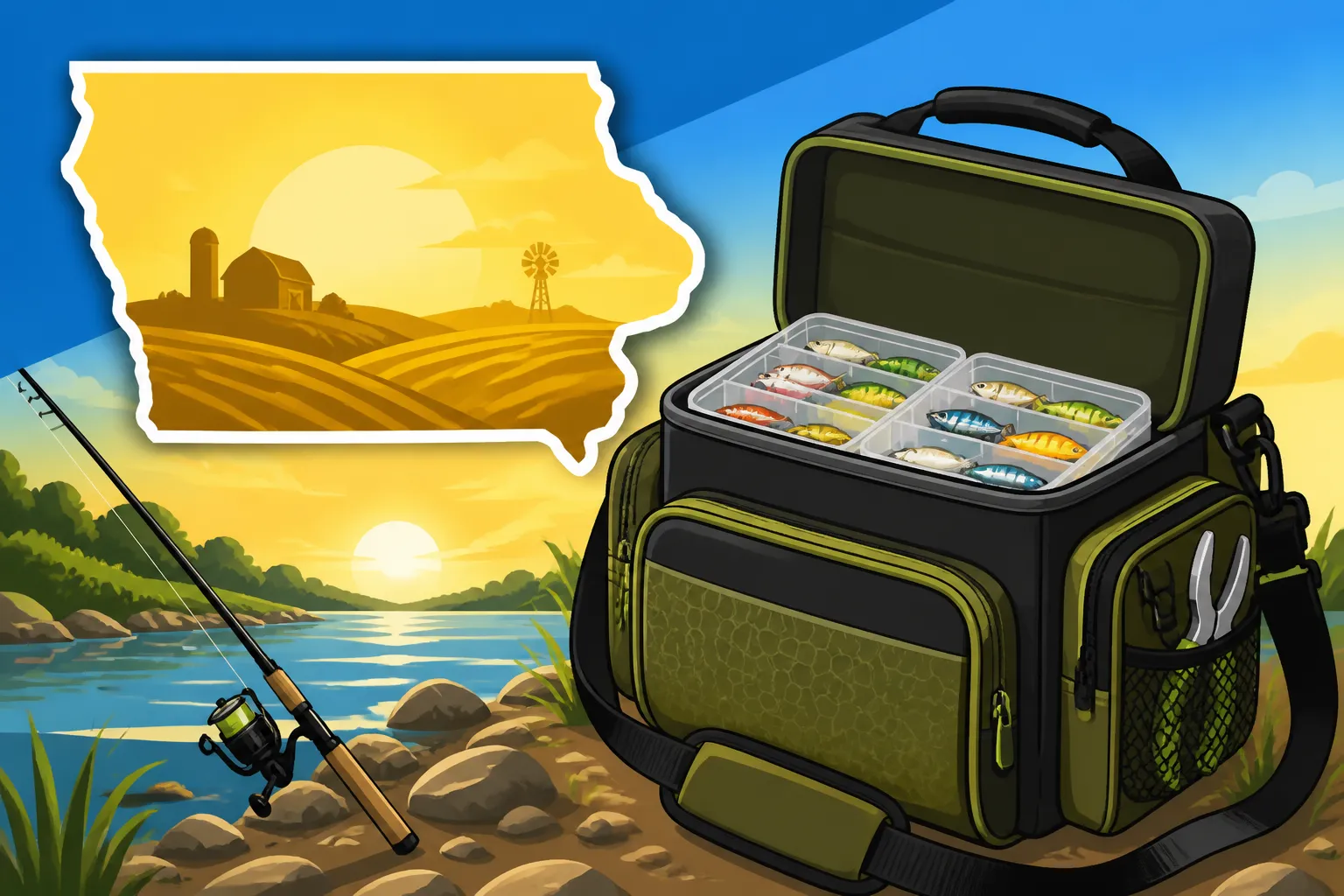
Multiple compartments and external pockets are your best friends here. You want a main compartment that can comfortably fit a few utility boxes (often included with dedicated fishing bags) for lures and terminal tackle. External pockets are perfect for pliers, line cutters, a small first-aid kit, a headlamp for Night Fishing Rules for Anglers, or even your car keys and phone. Some bags feature specific tool holders or D-rings for attaching accessories like a Best Net for Landing Trout. Quick access to these essentials means less fumbling and more fishing.
Durability and Weather Resistance
Your tackle bag will face the elements, from abrasive rocks and thorny bushes to sudden rain showers and damp ground.
Materials like heavy-duty nylon or polyester with a water-resistant coating are excellent. A reinforced, waterproof bottom is a must-have feature, as it allows you to set your bag down on wet grass, mud, or even a puddle without soaking the contents. Quality zippers, preferably corrosion-resistant, are also crucial, as they're often the first component to fail on cheaper bags. Think about the rough and tumble nature of bank fishing – your bag needs to be as tough as you are. You might even want to consider some of the robust options available through retailers like Bass Pro Shops, known for their durable outdoor gear.
Size and Capacity Considerations
How much gear do you really need for a day of bank fishing? It's a delicate balance.
A larger bag might offer more space, but it also means more weight and bulk to carry. A smaller bag might be more portable but could force you to leave essential items behind. Consider the type of fishing you typically do. Are you targeting panfish with a few jigs and bobbers, or are you chasing walleye and bass with a wider array of lures? Aim for a bag that can comfortably hold your core tackle, a bottle of water, a snack, and perhaps a small camera, without being overly cumbersome. If you often bring along a lightweight rain jacket or a small tackle organizer, make sure there's enough room without jamming everything in.
Types of Tackle Bags Perfect for Shoreline Success
The world of tackle bags offers a variety of styles, each with its own advantages for the bank angler. Understanding these differences can help you pick the perfect companion for your Iowa fishing escapades.
Traditional Soft-Sided Tackle Bags
These are perhaps the most common type of dedicated fishing bags. They often resemble a messenger bag or a small duffel, specifically designed to carry multiple plastic utility boxes (often called 3600 or 3700 series boxes).
Pros:
- Excellent Organization: Designed around standard utility boxes, making it easy to swap out lure selections for different species or conditions. You can have specific boxes for Crappie Jig Fishing Techniques, Best Lures for Panfish, or bass topwaters.
- Good Capacity: Can hold a substantial amount of tackle without being excessively bulky.
- Easy Access: The main compartment usually opens wide, allowing quick retrieval of boxes. External pockets provide quick access to tools and essentials.
- Versatility: Many come with adjustable shoulder straps and top handles, offering multiple carrying options.
Cons:
- Can be Bulky: While good for capacity, some models can still feel a bit unwieldy if you're scrambling over rocks or through dense brush.
- Weight Distribution: A single shoulder strap can become uncomfortable over long distances if the bag is heavy.
Ideal for: Anglers who carry a moderate to large amount of tackle, fish from relatively stable banks, and appreciate highly organized, interchangeable lure storage. Think fishing from a pier, a wide-open park bank, or when you have a short walk to your spot.
Sling Packs
Sling packs are designed to be worn across your back, but with a clever twist: they can be swung around to your front in a flash, giving you instant access to your gear without taking the bag off your shoulder.
Pros:
- Unrivaled Accessibility: This is their standout feature. Need a new lure? Just swing it around, grab what you need, and swing it back. No more setting your bag down.
- Freedom of Movement: Keeps your hands free and doesn't interfere with casting or walking.
- Compact Design: Generally smaller, encouraging you to pack only the essentials, which is great for lighter travel.
- Comfort: Typically feature a padded shoulder strap that can be adjusted for left or right-handed carry.
Cons:
- Limited Capacity: Due to their compact nature, they usually can't hold as much tackle as a full backpack or a larger soft-sided bag.
- Weight Concentration: All the weight is on one shoulder, which can become tiring on extended trips with heavier loads.
Ideal for: Anglers who prioritize mobility and quick access, especially those who like to move frequently between spots or fish smaller waters. Perfect for wading a stream or exploring Shore Fishing Access Near Des Moines where you need to be nimble.
Backpack-Style Tackle Bags
These bags combine the carrying comfort of a traditional backpack with dedicated fishing organization. They are worn on both shoulders, distributing weight effectively.
Pros:
- Superior Comfort for Long Hauls: Padded shoulder straps and often a hip belt mean you can carry more gear over longer distances with less fatigue. Ideal for serious bank anglers who trek to remote areas.
- Maximized Capacity: Can often hold more utility boxes, extra clothing, water, snacks, and even a compact Best Fishing Backpack for Hiking to Remote Spots for day trips.
- Excellent Weight Distribution: Spreads the load across both shoulders and your hips, making heavier loads feel lighter.
- Rod Holders: Many models feature external straps or pockets specifically designed to hold a fishing rod, freeing up your hands.
Cons:
- Less Instant Access: You generally have to take the backpack off to access the main compartments, which can interrupt your fishing flow compared to a sling pack.
- Bulkier Profile: Can be a bit cumbersome in tight spots or when casting in confined areas.
Ideal for: The serious bank angler who covers a lot of ground, carries a wide variety of tackle, and values comfort above all else for extended trips. Think of those long walks to find secluded spots on Saylorville Reservoir Fishing Spots or exploring riverbanks for miles.
| Tackle Bag Type | Primary Advantage | Capacity (General) | Access Speed (General) | Comfort for Long Walks | Best For |
|---|---|---|---|---|---|
| Soft-Sided Tackle Bag | Highly Organized Storage | Medium-High | Good | Medium | Stable banks, piers, moderate gear needs, short walks |
| Sling Pack | Instant, Hands-Free Access | Low-Medium | Excellent | Medium-Low | Mobile anglers, wading, light gear, frequent lure changes |
| Backpack-Style | Max Comfort, High Capacity | High | Moderate | Excellent | Long hikes, heavy gear loads, all-day trips, multiple species |
Packing Your Tackle Bag Smartly for Bank Fishing
Having the right tackle bag is only half the battle; knowing how to pack it efficiently for a day on the bank is crucial. A well-packed bag maximizes your fishing time and minimizes frustration.
The Essentials: What to Always Carry
Before you even think about lures, let's cover the non-negotiables. These are the items that make your trip safe, comfortable, and productive, regardless of what you're trying to catch.
Safety and Comfort First:
- First-Aid Kit: Even a small one with bandages, antiseptic wipes, and pain relievers can save a trip. Hook punctures and minor cuts happen.
- Water Bottle: Stay hydrated! Especially on those hot Iowa summer days.
- Sunscreen and Insect Repellent: Protect yourself from the elements.
- Small Towel: For wiping hands, drying fish, or general cleanup.
- Pliers/Forceps: Absolutely essential for removing hooks safely and quickly. Many sling packs or backpack-style bags have specific external pockets for these, making them easily accessible.
- Line Cutters/Scissors: For quick re-tying.
- Headlamp or Small Flashlight: If there's any chance you'll be out around dawn or dusk, or for Night Fishing Techniques for Catfish.
- Multi-tool: Always handy for unexpected needs.
Fishing Fundamentals:
- Extra Line: Spools of your preferred monofilament, fluorocarbon, or braided line. You never know when you'll get a nasty bird's nest or cut your line on a snag.
- Hooks: A variety of sizes to match your bait and target species.
- Weights/Sinkers: Different sizes to adapt to current conditions or desired depth. Consider a small selection for How Deep to Fish for Walleye in Spring or keeping bait on the bottom for catfish.
- Bobbers/Floats: Assorted sizes, especially if you're fishing for panfish or using live bait.
- Swivels/Snaps: To prevent line twist and make lure changes faster.
- License: Make sure your Iowa Fishing License Guide is always with you, easily accessible, whether it's a physical copy or on your phone.
Organizing Lures and Terminal Tackle by Species or Type
This is where the utility boxes shine. Instead of a jumbled mess, organize your lures and terminal tackle into dedicated boxes.
Categorization Strategies:
- By Species: Have one box for bass lures (crankbaits, soft plastics, spinnerbaits), one for walleye (jigs, stickbaits, Best Crawler Harness Colors for Iowa Walleye), another for crappie and panfish (small jigs, bobbers, tiny spoons). This makes it easy to grab the right box for your target fish.
- By Lure Type: Dedicate boxes to jigs, crankbaits, soft plastics, topwater, etc. This is great if you're targeting multiple species but prefer to organize by lure action.
- By Color/Size: For soft plastics, having small clear containers or Ziploc bags within a larger utility box, sorted by color and size, can save you a lot of time.
Keep your most frequently used boxes in the easiest-to-access compartments of your tackle bag. Many backpack-style tackle bags have a front-loading compartment specifically designed for stacking utility boxes. If you're using a sling pack, pick a few versatile boxes that cover your main fishing objectives for the day. You can find a huge selection of these utility boxes and tackle bags whether you're browsing online at Amazon or walking the aisles of a Bass Pro Shops.
External Storage for Rods and Longer Items
One of the biggest challenges for bank anglers is carrying multiple rods without them becoming a tangled mess or an obstacle course.
Rod Holders and Straps:
- Many backpack-style tackle bags feature external straps or pockets designed to secure a fishing rod. These are fantastic for keeping your hands free while hiking. Some even have two, allowing for a primary rod and a secondary or spare.
- For rods without their own dedicated space, consider reusable Velcro wraps to bundle them together securely, preventing them from flopping around. Remember the How Many Fishing Poles You Can Use in Iowa regulations regarding the number of lines.
- If your bag doesn't have rod holders, a simple bungee cord can sometimes work in a pinch to secure a rod to the side or top of your bag, but dedicated features are always better for security and convenience.
Other External Attachments:
- Net: A collapsible landing net can often be tucked into side pockets or strapped to the outside of a backpack-style bag.
- Rod Holder for the Bank: If you use a spike or ground rod holder, look for external loops or compression straps on your tackle bag that can accommodate it. This keeps it separate from your delicate gear and prevents it from poking holes in your bag. A Best Rod Holder for Bank Fishing on Iowa Rivers can be a game changer for hands-free fishing.
By choosing the right tackle bag and packing it intelligently, your bank fishing trips in Iowa will be far more enjoyable, productive, and comfortable. Happy angling!
Disclaimer
This article is for general informational purposes only and does not constitute professional advice. Laws, prices and regulations vary by location and change over time. Consult a qualified professional for guidance on your specific situation.