Do You Need a Wading Staff for Iowa Trout Streams?
Let's be honest, those beautiful Iowa trout streams, especially in our beloved Northeast Iowa, can be deceptively tricky. You're out there, focused on that perfect drift or searching for a hidden pool, and suddenly your foot slips on a mossy rock you didn't see. The question of whether you really need a wading staff often crosses an angler's mind, particularly if you're new to stream fishing or just eyeing an upcoming trip. This guide is here to walk you through the practical realities of wading in Iowa's trout waters, helping you understand when a wading staff is not just a good idea, but potentially a trip-saver, and how to choose and use one effectively.
Navigating Iowa's Trout Streams: The Real Risks Underfoot
Picture this: you've geared up, you're excited, and you step into the chilly waters of a picturesque trout stream. Immediately, you notice the current pulling a bit harder than you expected, or the bottom feels far more irregular than it looked from the bank. Iowa's trout streams, while undeniably beautiful and productive for species like Rainbow Trout Fishing in Iowa and even some Brown Trout in Iowa Streams, are natural environments, meaning they come with their fair share of hidden challenges beneath the surface.
The bottom of these streams isn't paved; it's a dynamic mix of smooth, water-worn rocks, jagged stones, slick algae-covered boulders, and shifting gravel beds. Water levels can change, currents can accelerate unexpectedly around bends or through narrower sections, and visibility into the water isn't always crystal clear, especially after a rain. It's a recipe for an unexpected dip if you're not careful, and let's face it, nobody wants to end up soaked, bruised, or worse, losing gear or getting injured, when they're supposed to be enjoying a peaceful day of Fly Fishing for Trout in Iowa Streams.
The frustration often comes from the sheer unpredictability. One moment you're confidently striding, the next you're bracing yourself against a swift eddy, trying desperately to regain your footing on a slime-coated rock. It's not just about avoiding a fall; it's about conserving energy, reducing fatigue, and maintaining focus on your fishing, rather than constantly worrying about where your next step will land. A simple slip can turn a fantastic day into a miserable one, or even cut your trip short.
When a Wading Staff Becomes Your Best Friend on the Water
While some might see a wading staff as an extra piece of gear to carry, its benefits often far outweigh the perceived inconvenience, especially in certain situations common to Iowa's trout streams. Think of it as your third leg, providing crucial stability and confidence.
High Water and Strong Currents
This is perhaps the most obvious scenario where a wading staff isn't just helpful, but almost essential. If you're fishing after heavy rains, during spring runoff, or in the larger, swifter sections of rivers, the increased current can be formidable. Even seemingly shallow water can become dangerous if the flow is strong enough to push against your legs. A wading staff allows you to brace against the current, maintain your balance, and probe the bottom ahead of you before committing your weight. It can literally be the difference between standing firm and being swept downstream, which is a terrifying thought in cold water. Having that anchor point can give you the leverage you need to cross deeper runs or navigate around powerful eddies.
Navigating Unfamiliar Waters and Poor Visibility
Exploring new sections of streams, or fishing waters you haven to visited in a while, always comes with an element of the unknown. You don't know where the deep holes are, where the slippery boulder fields lie, or where the soft, mucky spots might trap your Best Wading Boots for Rocky Streams. A wading staff acts like a sensor, allowing you to feel out the contours and composition of the stream bed ahead of you. It's like having a sonar system for your feet! This is particularly useful in murky water, during low light conditions like dawn or dusk, or when your polarized sunglasses just aren't cutting through the glare well enough to see the bottom clearly. Knowing what's coming before your foot lands can prevent countless stumbles and falls.
For Anglers with Mobility Concerns or Injuries
Let's be realistic: not everyone has the balance of a tightrope walker, especially as we get a little older, or if we're carrying a past injury. For anglers with knee issues, bad ankles, or simply those who feel a bit less steady on their feet, a wading staff is a game-changer. It provides that extra point of contact and support, significantly reducing the strain on your joints and the risk of re-injury. It instills confidence, allowing you to focus on the fishing experience rather than constantly worrying about your stability. Don't let a fear of falling keep you from enjoying Trout Streams Near Decorah or other great spots; a staff can make all the difference.
When Carrying Extra Gear or Fish
When you're out trout fishing, it's rare that you're just carrying a rod. You might have a tackle bag, a net, a camera, perhaps a small cooler for drinks, or even a stringer of fish you've decided to keep for dinner. Trying to balance all that while carefully wading across a rocky stream can feel like a circus act. A wading staff frees up a hand to manage your gear, making it much easier to keep everything secure and prevent it from ending up in the drink. Imagine reeling in a nice trout, then having to navigate back to the bank with a flopping fish and slippery rocks without any extra stability – it's a recipe for disaster. The staff helps you carry your burden, quite literally, with more ease and less risk.
Choosing the Right Wading Staff for Your Iowa Adventures
Once you've decided a wading staff is a wise investment (and I truly think it is for many of us), the next step is picking one that suits your needs. There are a few key features to consider to ensure it's a help, not a hindrance.
Folding vs. Telescopic Wading Staffs
The primary distinction you'll find is how the staff collapses for storage.
- Folding Staffs: These typically break down into several shorter sections that are held together by an internal elastic cord, much like tent poles. They are incredibly compact when folded, making them easy to stow in a vest pocket, a backpack, or clipped to your waders with a retractor. They deploy very quickly, often with a flick of the wrist. Many anglers find these convenient because they stay out of the way until needed, then snap into action.
- Telescopic Staffs: These staffs slide into themselves, similar to an old-school antenna or a trekking pole. They often offer more adjustability in length than folding staffs. While generally less compact when fully collapsed, they can sometimes be more robust as they have fewer connection points. Some anglers prefer them for their simplicity and ease of adjusting length on the fly.
Both types are great, but consider how you'll carry it and how quickly you need it deployed. If space is tight, a folding staff might be better. You can find both options readily available at sporting goods stores like Bass Pro Shops or online retailers like Amazon.
Material, Grip, and Foot Design
The materials used in a wading staff impact its weight, durability, and cost.
- Materials: Most staffs are made from aluminum or carbon fiber. Aluminum staffs are generally more affordable and quite durable, while carbon fiber models are lighter and often stronger for their weight, though they come with a higher price tag. Consider a lightweight option if you'll be carrying it for extended periods.
- Grip: A comfortable, non-slip grip is crucial, especially when your hands are wet or cold. Cork, foam, or rubberized handles are common. Some staffs also feature a wrist lanyard or a strong retractor system to keep it attached to you, preventing accidental loss in the current. This is a small but mighty feature!
- Foot Design: The business end of your staff needs to provide excellent traction on various surfaces. Look for a durable carbide tip for gripping rocks, often combined with a wider rubber cap that can be slipped over the carbide for quieter wading or use on softer bottoms. Some even have a small, replaceable basket to prevent it from sinking too deep into mud.
Markdown Table: Comparing Wading Staff Types
| Feature | Folding Wading Staff | Telescopic Wading Staff |
|---|---|---|
| Portability | Very compact, fits in vest pocket/small pack | Less compact, may protrude from vest/pack |
| Deployment | Rapid (snaps open) | Quick (slides open/clamps) |
| Adjustability | Fixed length when deployed, less adjustable | Often more adjustable in length |
| Durability | Good, but multiple connection points can be weak spots | Very good, often fewer weak points |
| Weight | Varies, often lightweight in carbon fiber | Varies, can be slightly heavier in aluminum |
| Price Range | Often higher for comparable quality | Generally more affordable for basic models |
| Best For | Anglers needing ultra-compact storage & quick access | Anglers preferring length flexibility & robust design |
Beyond the Staff: Best Practices for Safe Wading
A wading staff is a fantastic tool, but it's part of a larger strategy for staying safe and comfortable on the water. No matter if you're tackling Trout Fishing Techniques for Iowa Streams or exploring new areas, good habits matter.
Wading Techniques with a Staff
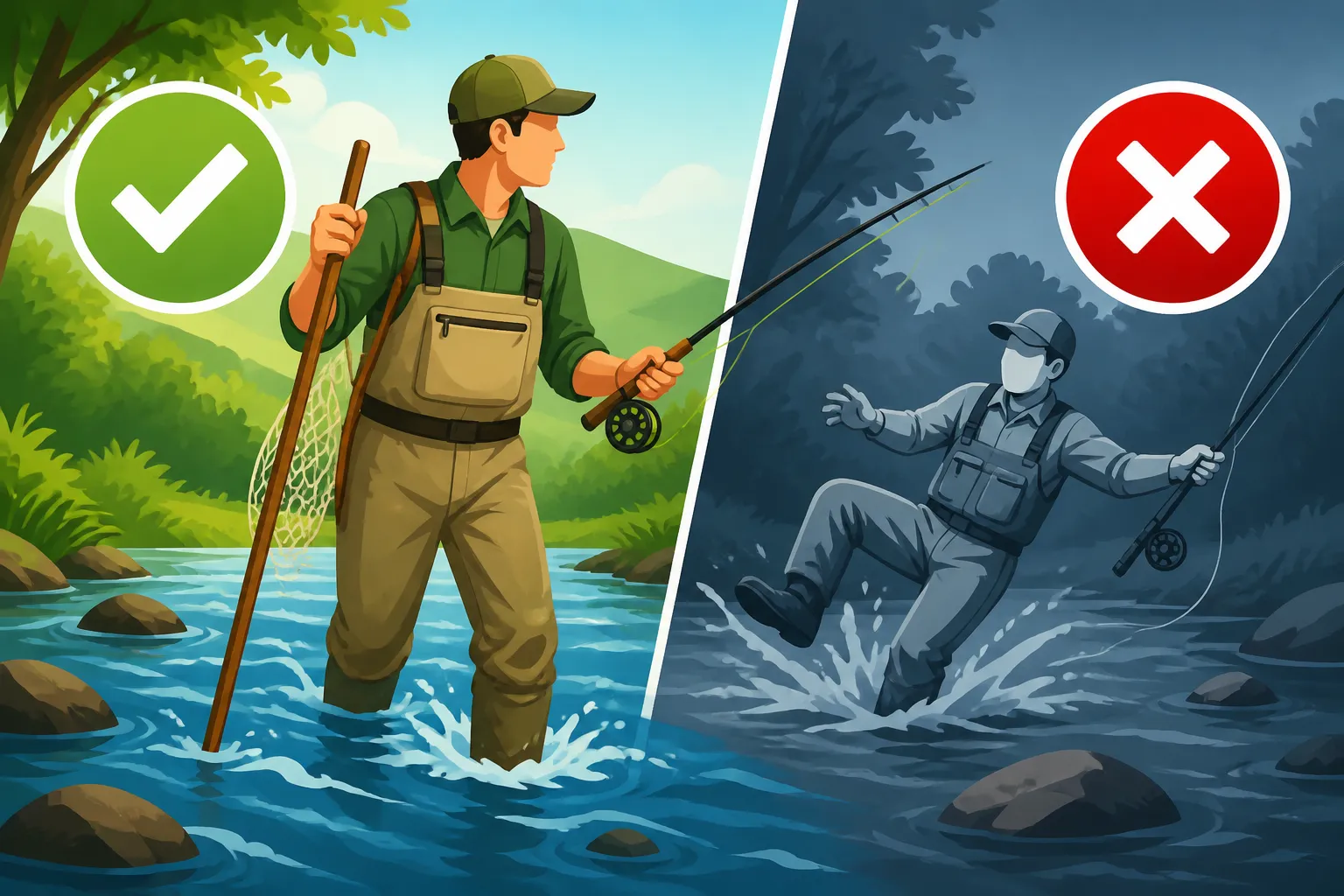
Using a wading staff isn't just about poking around. There's a technique to it that maximizes its effectiveness and your safety. When crossing a stream, use the staff to probe the bottom ahead and slightly upstream of you. This allows you to feel for slippery rocks or sudden drop-offs before you commit your foot. Move slowly, always keeping two points of contact with the stream bed (two feet, or one foot and the staff). When moving against the current, lean slightly into the staff. When moving downstream, keep it slightly ahead of you. It's a dance, and with practice, it becomes second nature. And remember, sometimes the safest move is to simply not wade into a dangerous section, but rather walk around it on the bank.
Other Essential Wading Safety Gear
Your wading staff is one piece of the puzzle. Consider these other items for a safer, more enjoyable experience:
- Waders and Wading Boots: Make sure your waders fit well and are appropriate for the conditions. Best Waders for Iowa Trout Stream Fishing means choosing breathable waders for warm weather and insulated ones for colder temps. Your wading boots should have good ankle support and felt or rubber soles with studs for superior grip. This is where you really want to invest!
- Wading Belt: Always wear your wading belt snugly. In the event of a fall, it can prevent your waders from filling completely with water, making it easier to regain control or get back to shore.
- Life Vest: In deeper, faster water, especially if you're not a strong swimmer or if conditions are particularly challenging, a lightweight, low-profile inflatable life vest can offer peace of mind without hindering your casting.
- Layered Clothing: Dress in layers so you can adjust to changing temperatures. Even on a warm day, cold water can quickly drop your body temperature if you fall in. Wool or synthetic base layers are key, and a good waterproof outer shell is always smart.
The "Better Safe Than Sorry" Mentality
Ultimately, the decision to carry a wading staff is a personal one. However, after countless hours on the water, my advice leans heavily towards "better safe than sorry." Even on seemingly calm days or in familiar spots, a forgotten rock, a stronger-than-expected current, or just a momentary lapse in concentration can lead to an unfortunate incident. For the minimal weight and cost, a wading staff offers a huge boost in confidence, stability, and safety. It frees you to concentrate on what you came to do: enjoy the peace of the stream and, hopefully, catch some beautiful Iowa trout. So, for your next adventure to one of Iowa's stunning coldwater fisheries, whether it's the famed streams of Decorah or a lesser-known gem, consider making a wading staff a permanent part of your Iowa Fishing Gear Guide.
Disclaimer
This article is for general informational purposes only and does not constitute professional advice. Laws, prices and regulations vary by location and change over time. Consult a qualified professional for guidance on your specific situation.