Best Kayak Paddle Length
There’s nothing quite like the peace of gliding across an Iowa lake or drifting down a calm river in your fishing kayak. It’s you, the water, and the promise of a good catch. But that peaceful experience can quickly turn into a frustrating, shoulder-aching nightmare if you're battling with the wrong paddle. This guide is here to help you navigate the often-confusing world of kayak paddle lengths, ensuring your next Iowa fishing adventure is smooth, efficient, and comfortable.
Why Paddle Length Matters More Than You Think for Iowa Kayak Fishing
When you’re out on the water, whether it’s the expansive Fishing the Iowa Great Lakes or a winding section of the Des Moines River, your paddle is your engine. It’s what connects you to the water, allowing you to maneuver, position yourself, and get to those prime fishing spots. An ill-fitting paddle isn’t just an inconvenience; it can genuinely hinder your entire fishing experience.
The Frustration of an Ill-Fitting Paddle
Imagine this: you've launched your kayak on a promising morning, eager to try out some new Iowa Fishing Techniques Guide for bass. You start paddling, and immediately feel like you’re doing something wrong. Your paddle is too short, forcing you to lean precariously, hitting the sides of your wider fishing kayak with every stroke, and splashing water all over your gear and yourself. Or maybe it’s too long, causing you to constantly overreach, clumsily dipping the blade and feeling awkward with every pull.
This isn't just about getting wet or looking a bit silly. It translates directly to discomfort, fatigue, and even potential injury. Your shoulders start burning, your back aches, and you're spending more energy just moving the kayak than actually focusing on fishing. This kind of experience can quickly turn a fun day into a miserable chore, making you question why you even bothered.
Impact on Efficiency and Endurance
A paddle that's the correct length for you and your kayak will allow for a much more efficient stroke. You'll be able to get the paddle blade fully into the water without unnecessary strain or awkward angles. This means more power with less effort, propelling your kayak forward smoothly and consistently. You won't be fighting the water or your equipment; you'll be working with it.
This efficiency directly impacts your endurance. When you’re not wasting energy on every stroke, you can paddle longer, cover more water, and spend more time fishing without feeling completely exhausted. This is particularly crucial for those longer days on the water, or when you need to cover significant distances to reach those honey holes. It’s the difference between a quick, tiring trip and a full day of productive and enjoyable angling.
Adapting to Iowa's Diverse Waters
Iowa's fishing landscape is incredibly varied, from massive reservoirs like Fishing Rathbun Lake in Iowa and Fishing Saylorville Reservoir in Iowa to smaller, intimate ponds and the meandering currents of our rivers. Each of these environments can subtly influence your paddling needs, and thus your paddle length. A paddle that works great for a calm, narrow stream might feel cumbersome on a windy, open lake.
For wider, more stable fishing kayaks, which are popular on Iowa's larger lakes and reservoirs, you'll generally need a longer paddle to comfortably reach the water over the broad hull. When tackling the currents of the Mississippi or Des Moines rivers, an efficient stroke from a well-sized paddle can make all the difference in maintaining control and positioning. Understanding how paddle length contributes to your overall experience is key to successful Kayak Fishing Gear Guide for Iowa Rivers.
Key Factors in Determining Your Ideal Kayak Paddle Length
Choosing the right paddle isn't just a shot in the dark; it's a combination of understanding a few key measurements and your personal paddling style. These factors work together to pinpoint the ideal length that will give you the most comfort and efficiency on the water.
Your Height and Kayak Width: The Primary Equation
This is the absolute core of determining your paddle length. The wider your kayak and the taller you are, the longer your paddle generally needs to be. Think about it: a wide kayak means you need more length to reach past the gunwales and get a full stroke in the water. If you're tall, your arms are longer, and you'll naturally be sitting higher, further accentuating the need for a longer paddle to maintain a comfortable angle.
Most fishing kayaks are designed for stability, which means they tend to be wider than recreational or touring kayaks. This width is fantastic for standing up to cast or moving around to access gear, but it definitely impacts your paddle choice. Sitting in a sit-on-top kayak also positions you higher than a sit-inside, which usually necessitates a longer paddle to compensate for the higher seating position and the greater distance to the water. Don't forget, even if you're not paddling, a longer paddle can be helpful for pushing off shallow bottoms or maneuvering in tight spots where a trolling motor might be overkill, or if you're wondering Do You Need a Trolling Motor for a Small Pond?.
Seat Height and Paddling Style
Beyond just the kayak's width, how high your seat sits in the kayak is a crucial factor. Many modern fishing kayaks feature adjustable high/low seats, or elevated framed seats that put you in a more comfortable, chair-like position. While this is great for comfort during long fishing sessions, it raises your center of gravity and, more importantly for paddle length, increases the distance from your body to the water. A higher seat will almost always require a longer paddle than if you were sitting directly on the kayak deck.
Your paddling style also plays a role, albeit a slightly less dominant one for most kayak anglers. Generally, there are two main styles:
- Low Angle Paddling: This is the most common style for recreational and fishing kayakers. The paddle shaft is held at a lower angle relative to the water, allowing for a more relaxed and less strenuous stroke. If you prefer a low angle, you'll typically need a slightly longer paddle to ensure the full blade enters the water with each stroke.
- High Angle Paddling: In this style, the paddle shaft is held more vertically, closer to your body. This often results in a more powerful, aggressive stroke and is common in performance or touring kayaks. A high-angle paddler might get away with a slightly shorter paddle, but it’s less common for fishing kayaks where stability and relaxed movement are prioritized.
The Type of Kayak and Its Stability
As we touched on, the design of your kayak heavily influences paddle length. Fishing kayaks are often purpose-built for stability, gear storage, and comfort. This design ethos usually leads to wider hulls, sometimes 30-40 inches or more. A wider, more stable fishing platform, while fantastic for sight fishing or standing up to cast for Largemouth Bass Fishing in Iowa, demands a paddle long enough to clear the sides effectively and allow for a clean, full stroke.
If you happen to be using a narrower, faster touring kayak for fishing, you might opt for a slightly shorter paddle. However, for the vast majority of dedicated fishing kayaks available from brands like Hobie, Old Town, or Perception, you'll find yourself needing a longer paddle in the 230-260 cm range. It’s all about finding that sweet spot where you're not hitting the boat, not overreaching, and getting maximum propulsion with minimal effort. This optimal setup will also complement your choice of other gear, such as the Best Rod for Kayak Fishing.
Practical Advice for Choosing and Testing Your Paddle
Now that we understand the factors at play, let's get down to the brass tacks of actually selecting a paddle. While there are general guidelines, remember that personal comfort is paramount.
General Guidelines and Measurement Chart
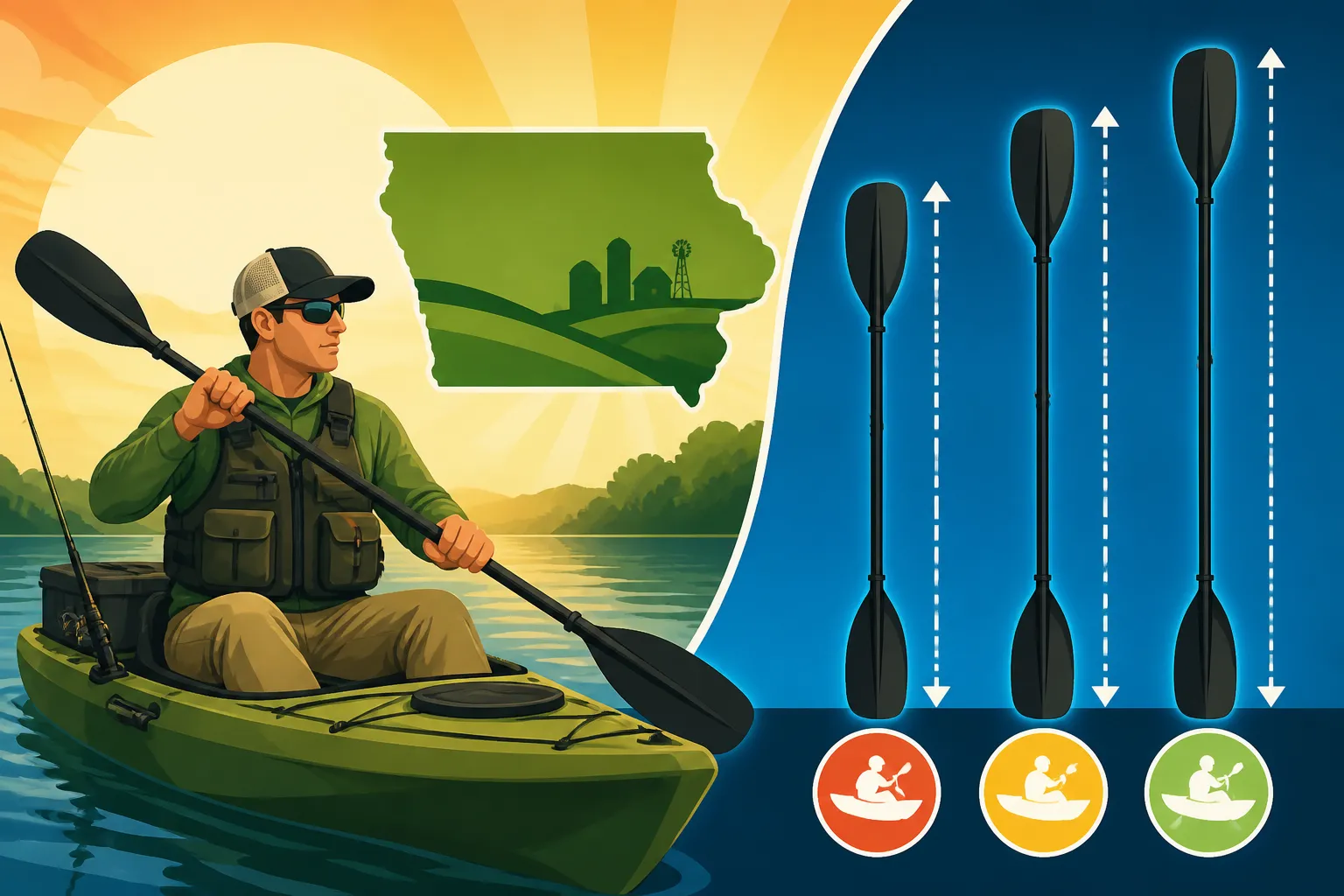
To give you a solid starting point, here's a general guideline for choosing your kayak paddle length based on your height and your kayak's width. This table is a great reference, but always remember to adjust based on your specific kayak's seat height and your personal comfort.
| Kayak Width (inches) | Paddler Height: Under 5'5" | Paddler Height: 5'5" to 5'11" | Paddler Height: 6'0" to 6'3" | Paddler Height: 6'4" and Taller |
|---|---|---|---|---|
| 23-28 (Narrow/Touring) | 210-220 cm | 220-230 cm | 230-240 cm | 240-250 cm |
| 29-33 (Recreational) | 220-230 cm | 230-240 cm | 240-250 cm | 250-260 cm |
| 34-38+ (Fishing/Wide) | 230-240 cm | 240-250 cm | 250-260 cm | 260-270+ cm |
Note: These are general recommendations. High-backed seats or specific paddling styles may necessitate going up one size.
This chart provides a good initial estimate. Most fishing kayaks will fall into that "34-38+ inches" category, meaning most anglers will be looking at paddles in the 230-270 cm range. Don't be shy about going for a longer paddle if your kayak is particularly wide or has a very high seat.
Adjustable Paddles: The Angler's Friend
If you're still feeling unsure, or if you fish from different kayaks, or even if you just like to experiment with your paddling style, an adjustable-length paddle can be a fantastic investment. Many modern paddles offer several centimeters of adjustability, often through a simple push-button or lever-lock system. This allows you to fine-tune the length on the fly, which can be a game-changer.
Think about it: on a calm day on Clear Lake, you might prefer a slightly longer paddle for relaxed cruising. But if you’re trying to quickly reposition yourself in the current of a river while trying to How to Anchor a Kayak in Current, you might want to shorten it slightly for a more aggressive, vertical stroke. Being able to adapt can significantly improve your experience. You can find a great selection of adjustable paddles at sporting goods retailers like Bass Pro Shops, or browse a wide variety online through Amazon. Having this versatility means you can truly dial in your comfort.
Testing Your Paddle Before You Commit
Ideally, you'd be able to "test drive" a paddle before buying it. Some specialty kayak shops allow this, or perhaps you have a friend with a similar setup you can try. If that's not possible, mimic the paddling motion at home. Sit in your kayak (or a chair of similar height) and hold the paddle.
Look for:
- Comfortable Grip: Your hands should be comfortably spaced on the shaft, not too wide or too narrow, and your wrists should feel natural, not strained.
- Clearance: When holding the paddle as if you were mid-stroke, ensure the blades clear the sides of your kayak without bumping.
- Efficient Water Catch: Imagine the blade entering the water. Can you get the full blade submerged without leaning too far over or stretching uncomfortably?
- Shoulder and Back Strain: Does the motion feel fluid, or does it feel like you're putting undue stress on your upper body?
Taking the time to visualize or actually test a paddle can prevent a lot of headaches later on. If you're serious about your kayak fishing, you might even consider carrying a spare paddle, especially if you venture into remote areas. It's a small price to pay for peace of mind, just like considering all your options for Best Boats for Iowa Fishing before making a purchase. The peace of mind of having a backup can save your day, especially on some of Iowa's larger water bodies.
Avoiding Common Paddle Pitfalls and Maximizing Your Experience
Choosing the right paddle goes beyond just length. There are a few other considerations that can really enhance your time on the water, preventing frustration and ensuring durability.
Don't Go Too Short (or Too Long!)
While the chart above gives great guidelines, it’s worth reiterating the specific problems that arise from a poorly matched paddle length:
- Too Short: This is arguably the more common mistake for fishing kayaks. You’ll constantly be hitting the sides of your boat, splashing water into your lap or tackle box, and straining your shoulders and back by having to lean over excessively to get a decent stroke. It makes every paddle stroke feel like a battle, leading to quick fatigue and a generally unpleasant experience.
- Too Long: A paddle that’s too long can also be a nuisance. It can feel clumsy and unwieldy, making it difficult to control. You might find yourself overreaching, struggling to get a clean entry and exit from the water, or causing the paddle to hit the water at an inefficient, too-high angle. This also wastes energy and can be tiring over time.
The goal is that Goldilocks zone – not too short, not too long, but just right. This perfect fit will allow for smooth, powerful strokes that conserve your energy for the fight with that Iowa State Record Walleye Weight!
Material Matters for Weight and Durability
The material of your paddle significantly impacts its weight, durability, and cost. When you’re spending hours on the water, even a few ounces of paddle weight can make a huge difference in reducing fatigue.
- Aluminum: Often the most affordable option, aluminum paddles are durable but can be heavier and colder to the touch in cool weather. They're a good starter option but can lead to more fatigue on longer trips.
- Fiberglass: A step up from aluminum, fiberglass paddles are lighter, stiffer, and generally warmer to the touch. They offer a great balance of performance and price, making them a popular choice for many anglers.
- Carbon Fiber: The lightest and stiffest option, carbon fiber paddles are also the most expensive. They provide excellent performance and minimal fatigue, making them ideal for serious anglers who spend a lot of time on the water.
Given the potential for long days fishing, especially if you're exploring Best Fishing Spots in Iowa, investing in a lighter paddle material like fiberglass or carbon fiber can be a wise decision.
Protecting Your Investment and Comfort
Beyond the paddle itself, a few accessories can make a big difference in your overall experience:
- Paddle Leash: A simple leash that connects your paddle to your kayak is a lifesaver. It prevents your paddle from drifting away if you set it down to net a fish or manage your tackle. Losing a paddle, especially on a larger lake or river, can quickly turn into a dangerous situation.
- Paddle Grips: For those sensitive hands, neoprene or foam paddle grips can add comfort, prevent blisters, and provide a warmer surface to hold in cooler weather.
- Life Jacket: And of course, never forget your personal flotation device. Even the most experienced kayakers can have an unexpected tumble. Make sure you have a comfortable and properly fitting life vest, and understand the Best Life Jacket Type for Kayak Fishing for your needs.
You can often find these essential accessories at your local outdoor retailers like Bass Pro Shops, or with the vast selection available on Amazon. Taking these steps ensures not only a more comfortable fishing trip but also a safer one, allowing you to focus on the Kayak Fishing Techniques in Iowa and the fish, not on paddle woes.
Disclaimer
This article is for general informational purposes only and does not constitute professional advice. Laws, prices and regulations vary by location and change over time. Consult a qualified professional for guidance on your specific situation.