Best Stringer for Keeping Fish
There’s nothing quite as frustrating as reeling in a beautiful Iowa walleye or a hard-fighting channel catfish, only to realize you don't have a good way to keep your catch fresh and alive until you're ready to head home. Many anglers face this dilemma, struggling with flimsy stringers or simply not knowing the best methods to preserve their harvest. This comprehensive guide is here to walk you through everything you need to know about choosing and using the best stringer for keeping your fish in top condition, ensuring your efforts on the water are rewarded with delicious, fresh fillets.
Why a Good Stringer Matters for Your Iowa Catch
When you’re out on the water, whether it's one of Iowa's beautiful lakes or a winding river, the goal isn't just to catch fish – it's often to bring home a meal. And for that meal to be its best, the fish need to be kept alive and as stress-free as possible until it's time to process them. A reliable stringer is more than just a piece of rope or chain; it's a critical tool in ensuring the quality of your catch and, frankly, it makes the whole experience much more rewarding.
Keeping Your Fish Fresh and Flavorful
Imagine this: you've spent all morning jigging for crappie or patiently waiting for a catfish bite, and you've got a nice mess of fish to show for it. If those fish are left to flop around in a bucket, or worse, on the bank in the sun, their quality diminishes rapidly. Stress, lack of oxygen, and high temperatures all contribute to a breakdown in muscle tissue, leading to a "fishy" taste and a softer texture. A good stringer, used correctly, allows your fish to stay in their natural environment – the water – keeping them alive, cool, and much less stressed. This translates directly into firmer flesh and a cleaner, fresher taste on your dinner plate. It's the difference between a good meal and a truly excellent one, and honestly, after all that hard work, you deserve the latter!
The Ethics of Live Release and Retention
Beyond just flavor, there's an ethical consideration to how we handle our catch. Many anglers practice catch and release, but for those fish destined for the frying pan, we owe it to them to ensure their final moments are as humane as possible. A proper stringer, especially one that allows for good water flow through the gills and avoids unnecessary injury, is key. It's about respecting the fish and the resource. We want to enjoy our sport, but we also want to be responsible stewards of Iowa's aquatic environments. Plus, keeping fish alive on a stringer gives you the flexibility to reconsider. Maybe you caught a real trophy walleye that you decide you'd rather release after all. If it’s still healthy and lively on the stringer, that's an option. Otherwise, if it's already perished, that choice is gone. Always keep an eye on the local Iowa Fishing Regulations Explained to ensure you're compliant with all retention rules.
Understanding Different Types of Fishing Stringers
When you start looking at stringers, you'll quickly see there isn't just one type. Each design has its own strengths and weaknesses, making some better suited for certain situations or species than others. Knowing the differences can save you a headache and ensure you have the right tool for the job.
Classic Rope Stringers: Simple and Lightweight
Rope stringers are probably what most people picture when they think of a fish stringer. They are simple, lightweight, and often the most affordable option. Typically, they consist of a long piece of sturdy rope with a metal needle or pointed stick at one end to pass through the fish's gill plate and out its mouth, and a loop or clip at the other end to secure to a dock, boat, or bank.
The beauty of a rope stringer lies in its simplicity and portability. You can easily roll one up and stick it in a small tackle box or even a pocket. They're great for casual outings, especially when you're targeting panfish like bluegill or crappie, or even smaller bass and catfish. Brands like Bass Pro Shops offer a variety of these basic stringers. However, they do have their downsides. The rope can tangle easily, and if not handled carefully, the abrasive nature of some ropes can cause more damage to the fish's mouth or gills over time, leading to higher stress or mortality. Also, sharp teeth from species like northern pike can fray the rope pretty quickly, making it unreliable. For instance, when going for a Crappie Fishing in Iowa trip, a rope stringer might be perfectly adequate, but for larger, more aggressive fish, you might want to level up.
Durable Chain Stringers: Built for Bigger Catches
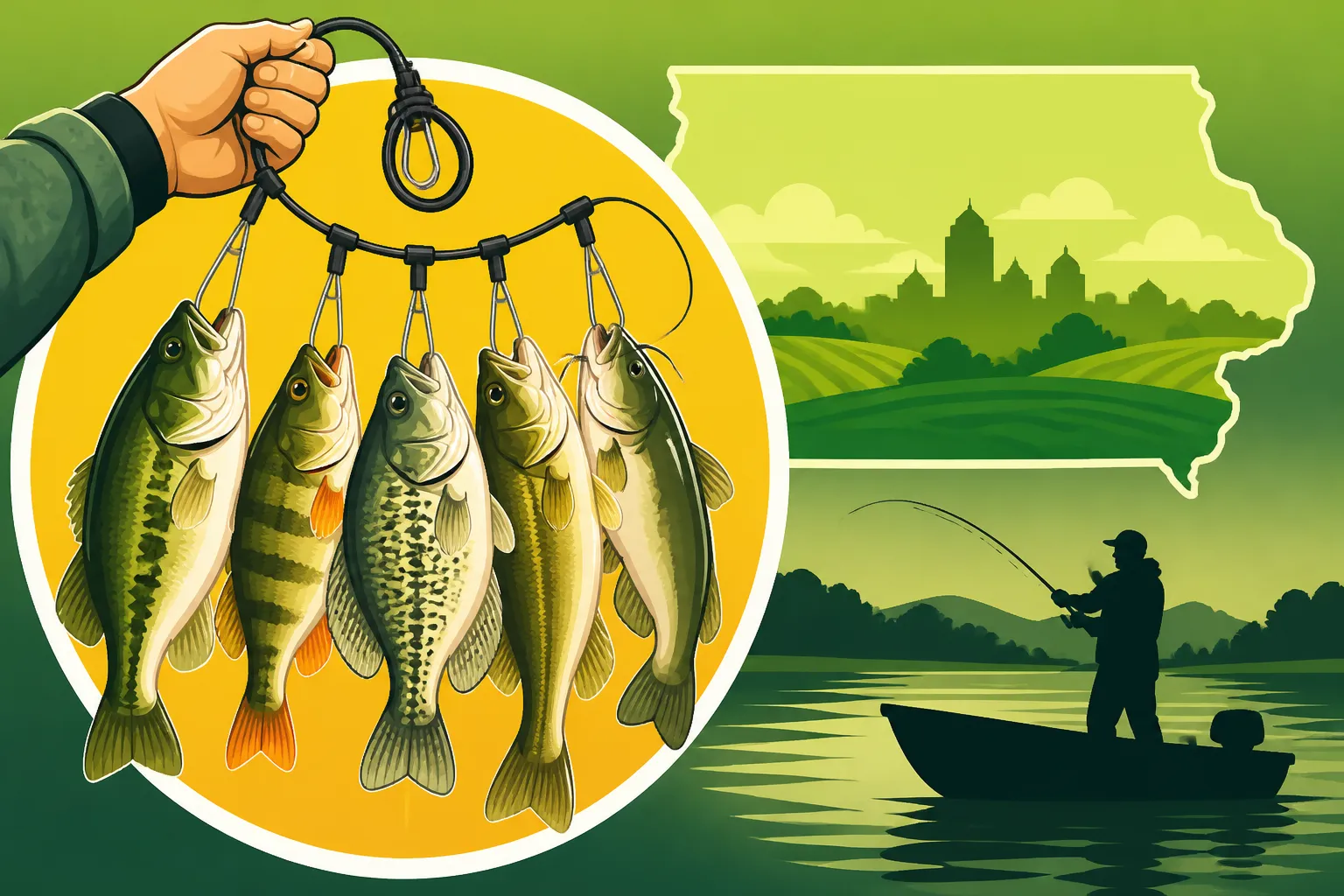
For anglers who regularly pursue larger, heavier, or toothier fish, chain stringers are often the preferred choice. These stringers are constructed from metal chains, usually with individual snaps or clips that you can attach to the fish's lower jaw or gill plate. This design provides several advantages over rope stringers.
First and foremost, chain stringers are significantly more durable. They won't get cut by sharp teeth, and they can handle the weight and struggle of a larger fish without fear of breaking. Each fish gets its own clip, which allows for better spacing and often less stress between fish, as they aren't all threaded through a single line. This is particularly important if you're targeting multiple large channel catfish or a few hefty walleye. When you're aiming for your Channel Catfish Daily Limit in Iowa, a chain stringer can be a real game-changer. The individual clips also make it easier to add or remove fish without disturbing the others. The main drawbacks? They are heavier and bulkier than rope stringers, can be a bit noisier, and sometimes the individual clips can be a bit fiddly, especially with cold hands. But for serious anglers, the trade-off in durability and fish health is often worth it. You can find robust chain stringers readily available on sites like Amazon or at your local Bass Pro Shops.
Hybrid and Specialty Stringers: Best of Both Worlds
Beyond the basic rope and chain, some manufacturers have developed hybrid or specialty stringers that try to combine the best features of both, or address specific needs. You might find stringers with a sturdy chain main line but with plastic-coated clips to be gentler on fish, or designs that incorporate a flotation device to keep the stringer from sinking too deep or getting lost. Some even have a built-in handle for easier carrying.
These innovative designs often offer a balance of durability, ease of use, and fish care. For example, a hybrid stringer might have a strong steel cable at its core but be coated in a fish-friendly material to prevent abrasions. Others might feature extra-long clips to accommodate thick-lipped fish or quick-release mechanisms for faster handling. While these can sometimes be a bit pricier, they can offer significant advantages for anglers looking for specific improvements. They’re worth exploring if you find yourself frequently wishing your current stringer did just a little bit more to make your fishing trip smoother.
Choosing the Right Stringer for Your Iowa Fishing Adventure
Selecting the perfect stringer isn't a one-size-fits-all decision. What works for a day of panfish might not be ideal for a trophy catfish hunt. Consider your typical fishing scenario and the species you're most often targeting.
Consider Your Target Species and Size
This is perhaps the most crucial factor. Are you primarily chasing small, delicate fish like bluegill and crappie, or are you hoping to land some hefty walleye, bass, or catfish?
- Panfish (Bluegill, Crappie, Perch): For these smaller, typically less aggressive fish, a simple rope stringer is often perfectly adequate. Their mouths aren't huge, and they don't have super sharp teeth that will easily cut through rope. The lightweight nature is also a plus for light tackle setups. Just make sure the rope is thick enough not to cut into their delicate mouths.
- Bass (Largemouth, Smallmouth): Bass are a bit more robust. While a sturdy rope stringer can work, many anglers prefer a chain stringer with individual clips. This allows for better spacing and reduces the risk of the fish getting tangled or stressed. Bass can struggle quite a bit, so the added security of a chain is beneficial. For tips on catching these, check out Bass Fishing Techniques for Iowa Farm Ponds.
- Catfish (Channel, Flathead): If you're targeting big channel cats or flatheads, a heavy-duty chain stringer is almost a necessity. These fish are strong, can be quite large, and have powerful jaws. A flimsy rope stringer won't stand a chance, and you risk losing your catch. The individual clips on a chain stringer are great for keeping several large catfish secure and separated. Learn more about going after them with Catfish Fishing in Iowa.
- Walleye, Northern Pike, Muskie: These species, especially pike and muskie, have incredibly sharp teeth. A chain stringer is your best bet to prevent the stringer from being bitten through. For walleye, while their teeth aren't quite as formidable as pike, a chain still offers superior durability and reduces stress. Given the typical size of a healthy Iowa walleye, a chain stringer also provides the necessary strength. You'll want to be familiar with Iowa Walleye Season Dates before you head out.
Think About Your Fishing Location and Conditions
Where you fish also plays a role in stringer selection. Are you casting from the bank, wading in a stream, or fishing from a boat?
- Bank Fishing/Dock Fishing: If you're fishing from shore or a dock, you'll need a stringer long enough to reach consistently cool, oxygenated water, and strong enough to tie securely. A longer rope stringer can work well here, allowing you to reach deeper water away from the immediate bank. Just be mindful of snags or vegetation where your fish might get caught.
- Boat Fishing: From a boat, both rope and chain stringers are viable. You'll typically tie the stringer off the side of the boat, ensuring the fish are in the water. Considerations here include how much space the stringer takes up in your boat, and if it's prone to tangling with other gear. If you have a larger vessel, you might even have a livewell as an option, which often surpasses a stringer in terms of fish care. For more info on choosing the right craft, see Best Boats for Iowa Fishing.
- Wading/Kayak Fishing: When wading or kayak fishing, portability is key. A lightweight rope stringer or a compact chain stringer that can be easily attached to your person or kayak is essential. You don't want anything bulky dragging you down or getting in the way.
Material, Length, and Portability
Beyond just rope or chain, consider the specific materials and design features:
- Material Quality: Look for corrosion-resistant metals for chain stringers, especially if you fish in different water types. For rope stringers, a strong, rot-resistant synthetic material is best.
- Length: A longer stringer (say, 8-12 feet) gives you more flexibility to find good, deep, cool water for your fish, which is especially important on hot days. A shorter stringer might be fine if you know you'll always be in shallow, stable water.
- Portability: If you hike to remote spots or have limited space, a compact, lightweight option is crucial. A simple coiled rope stringer is hard to beat for this. If you're carrying a lot of gear, a heavier chain stringer might be less of an issue.
- Number of Clips/Pins: How many fish do you anticipate catching that you'll keep? A stringer with more clips or pins allows you to keep more fish without overcrowding. Remember to check local regulations for Iowa Fishing Daily Bag Limits Guide to know how many fish you can legally keep.
| Stringer Type | Pros | Cons | Best For |
|---|---|---|---|
| Rope Stringer | Lightweight, portable, inexpensive, simple | Can tangle, less durable, less secure for large fish, can damage fish mouths | Panfish, smaller bass, casual bank fishing |
| Chain Stringer | Durable, secure, good for larger/toothy fish, individual clips | Heavier, bulkier, can be noisy, clips can be fiddly | Catfish, walleye, pike, muskie, boat fishing |
| Hybrid Stringer | Combines features, gentler on fish, good durability | Can be more expensive, might still be bulkier than rope | Anglers wanting improved fish care and durability |
Best Practices for Using a Stringer Humanely and Effectively
Just owning a stringer isn't enough; knowing how to use it properly is what makes all the difference in keeping your fish healthy until you're ready to head home. The goal is to minimize stress and maximize their chances of survival.
Proper Stringing Technique to Minimize Stress
The way you string a fish is critical. Incorrect technique can injure the fish, leading to faster mortality and compromised meat quality.
- Thread Through the Gill Plate: The most common and effective method for rope stringers is to thread the pin through the lower jaw and then through the gill plate. Carefully open the fish's mouth, pass the pin up through the lower jaw, then out through one of the gill plates. This allows the fish to keep its mouth open for respiration while keeping it securely attached. Never thread it through the gills themselves, as this will damage vital organs and kill the fish quickly.
- Use Jaw Clips for Chain Stringers: For chain stringers, the individual clips are usually designed to be attached to the fish's lower jaw. Simply open the clip, attach it through the soft tissue of the lower jaw, and ensure it’s securely closed. This method allows the fish to move its gills freely and keeps the mouth unobstructed for breathing.
- Handle with Care: Always handle the fish as little as possible and with wet hands to protect its slime coat. Get it onto the stringer and back into the water quickly. The less time it spends out of the water, the better its chances.
- Avoid Overcrowding: Don't try to cram too many fish onto a single stringer, especially if using a rope stringer. Overcrowding increases stress, limits oxygen, and can cause physical damage as fish rub against each other. Give each fish ample space to breathe and move slightly.
Ideal Placement and Environment for Strung Fish
Where you place your strung fish is almost as important as how you string them.
- Cool, Oxygenated Water: Always place your stringer in the coolest, most oxygenated water available. This usually means deeper water, or areas with some current or shade. Avoid stagnant, warm, or shallow water, which can quickly deplete oxygen and stress your fish.
- Away from Obstacles: Ensure the stringer is clear of snags, submerged brush, or other obstacles where the fish could get tangled, injure themselves, or attract predators. If fishing from shore, tie it to a sturdy branch or stake that keeps the fish in open water.
- Security: Tie your stringer securely to your boat, kayak, or a solid object on shore. You don't want to lose your hard-earned catch because a knot came loose or the stringer wasn't anchored properly. Double-check your knots!
- Monitor Your Fish: Periodically check on your strung fish. Are they upright and gently finning, or are they listing or struggling? If they seem distressed, try moving them to a different spot or consider releasing them if they’re borderline.
When to Use a Stringer vs. a Livewell or Cooler
Stringers are fantastic, but they aren't the only option, nor are they always the best option. Knowing when to use a stringer versus a livewell or a cooler can further improve the quality of your catch.
- Stringer: Best for short to moderate fishing trips (a few hours), when you want to keep fish alive and fresh in their natural environment. Ideal for bank anglers, waders, and kayak anglers where a livewell isn't practical. Also great for species that don't overcrowd easily.
- Livewell: If you have a boat equipped with a livewell, this is often the superior choice for keeping fish alive for extended periods. Livewells have aeration systems that continually pump fresh water, keeping fish healthy and stress-free. They are particularly good for tournament fishing or if you plan to keep your fish alive for a very long time before cleaning. Learn more about boat setups in our Iowa Fishing Gear Guide.
- Cooler with Ice: For very long trips, or if you're concerned about a fish's health on a stringer (e.g., if water temperatures are very high), a cooler full of ice is a reliable alternative. Place fish directly on ice immediately after catching them. This rapidly chills them, preventing spoilage and ensuring peak freshness. It’s also the go-to method if you decide to dispatch a fish immediately after catching it. For a deeper dive, check out Best Cooler for Keeping Fish Fresh or How to Keep Fish Fresh Without a Livewell.
Ultimately, the choice depends on your specific circumstances, the duration of your trip, and your personal preference for handling your catch. Many anglers use a combination, starting with a stringer and then transferring fish to a cooler for the journey home.
Maintaining Your Stringer for Longevity and Hygiene
Just like any other piece of fishing gear, your stringer needs a little love and care to last longer and stay sanitary. Neglecting it can lead to foul odors, bacterial growth, and faster wear and tear.
Cleaning and Sanitizing After Each Use
This is probably the most overlooked aspect of stringer care. Fish slime, blood, and bacteria can accumulate quickly, and if left unchecked, your stringer will become a smelly, potentially unsanitary mess.
- Rinse Thoroughly: As soon as you're done fishing, rinse your stringer thoroughly with fresh water. Use a strong spray from a hose to remove any visible slime, blood, or debris. Make sure to get into all the nooks and crannies, especially on chain stringers where gunk can hide.
- Wash with Soap (Optional but Recommended): Every few trips, or if your stringer is particularly dirty or smelly, wash it with a mild soap. A small amount of dish soap can do wonders. Scrub rope stringers with a brush and ensure all the metal clips on chain stringers are cleaned.
- Sanitize (Important for Preventing Disease): After washing, a light sanitizing solution can be beneficial, especially if you plan on using your stringer for different bodies of water. A diluted bleach solution (about one part bleach to ten parts water) or a commercial fishing gear sanitizer can kill lingering bacteria and prevent the spread of aquatic invasive species or diseases. Always rinse thoroughly with fresh water after sanitizing to remove any chemical residue.
- Dry Completely: This step is crucial for both rope and chain stringers. Hang your stringer in a well-ventilated area to air dry completely before storing it. Moisture can lead to mildew on rope and rust on metal components.
Inspecting for Wear and Tear
Regular inspection will ensure your stringer remains reliable and safe for both your fish and you.
- Rope Stringers: Check the rope for fraying, cuts, or weak spots, especially near the pin and where it's tied. Over time, UV exposure can weaken synthetic ropes, and sharp objects can nick them. Replace the stringer if you notice significant damage that could compromise its strength.
- Chain Stringers: Examine the chain links for rust, bending, or cracks. Check each individual clip or snap to ensure it opens and closes smoothly and securely. A stiff or corroded clip might not hold a fish effectively. If any part of the metal shows significant corrosion or structural weakness, it’s time for a replacement. A quick spray of a silicone-based lubricant on the clips can keep them working smoothly.
- Pins and Loops: For all stringers, check the integrity of the main pin (on rope stringers) and the attachment loops or handles. These are often high-stress points and need to be in top condition.
By taking a few minutes to clean and inspect your stringer after each outing, you'll extend its life, keep your catch fresher, and prevent any unpleasant surprises on your next fishing adventure. It's a small effort that yields big returns in terms of efficiency and enjoyment on the water. Just like knowing How Many Fishing Poles You Can Use in Iowa or studying the Iowa Fishing Techniques Guide, proper gear maintenance is a fundamental part of being a prepared and successful angler.
Disclaimer
This article is for general informational purposes only and does not constitute professional advice. Laws, prices and regulations vary by location and change over time. Consult a qualified professional for guidance on your specific situation.