Best Kayak for Iowa River Fishing
Struggling to navigate Iowa's beautiful, yet sometimes challenging, rivers in a traditional boat or feeling limited by shore fishing? Many anglers dream of accessing those untouched honey holes, drifting quietly through serene backwaters, or stealthily approaching wary fish, but finding the perfect craft that balances portability, stability, and fishability for diverse river conditions can feel like a riddle. This comprehensive guide will break down everything you need to know to choose the best kayak for chasing your favorite catches across Iowa's varied river systems, helping you confidently paddle into your next angling adventure.
Why Kayak Fishing in Iowa Rivers is a Game-Changer (and a Challenge)
Kayak fishing has absolutely exploded in popularity, and for good reason! There's a certain magic to being so close to the water, feeling the current, and silently slipping into spots that bigger boats just can't reach. But let's be real, river fishing in a kayak, especially here in Iowa, comes with its own unique set of considerations.
The Appeal of Paddling Iowa's Waterways
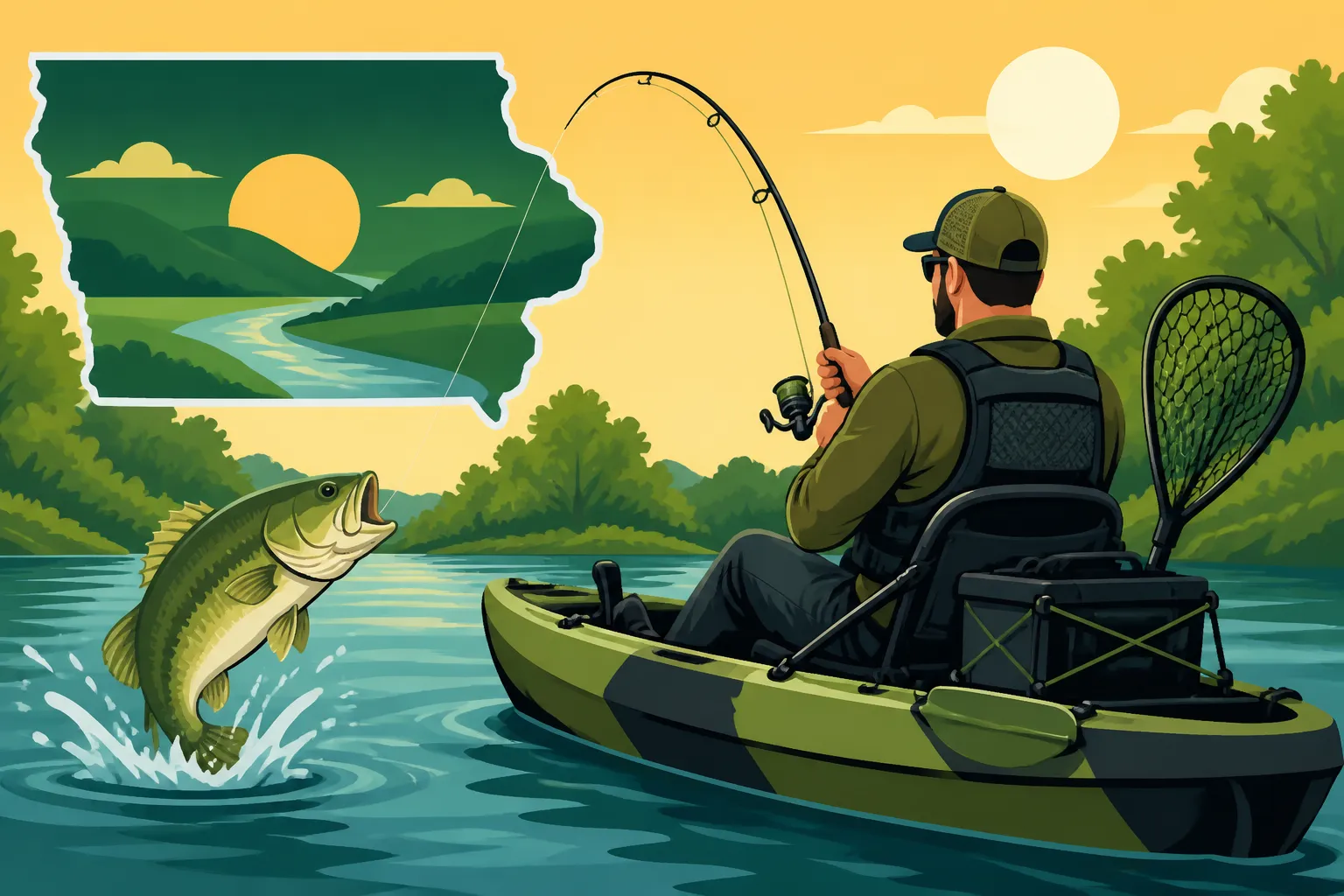
Think about it: those secluded stretches of the Des Moines River, the quiet backwaters of the Mississippi, or even the smaller, winding tributaries you’ve always wanted to explore. A fishing kayak opens up a whole new world of access. You can sneak into shallow areas where big bass hide, drift silently over catfish holes without spooking them, or simply enjoy the peace and quiet away from crowded boat ramps. It's an incredibly intimate way to experience the outdoors, and the portability means you can launch from places that aren't formal ramps, giving you a huge advantage in finding untouched fishing grounds. Plus, the exercise is a bonus, right? It's a full-body workout that lets you immerse yourself in nature while doing what you love. For more on maximizing your paddle time, check out our Kayak Fishing Gear Guide for Iowa Rivers.
You're not just fishing; you're exploring. Many anglers find that kayak fishing forces them to slow down, read the water more carefully, and truly understand the river's ecosystem. You learn the nuances of currents, eddies, and structure in a way you never would from the bank or a fast-moving motorboat. This deeper connection often leads to more thoughtful and ultimately more successful fishing outings. The ability to quickly turn around, stop, and hold your position with an anchor in specific spots is also a huge advantage when you find a productive stretch of water.
Unique Challenges of River Kayak Fishing
Now, let's be realistic. River fishing in a kayak isn't always a picnic. Rivers have currents, and those currents can be strong, unpredictable, and sometimes dangerous. Navigating tight bends, dodging submerged logs, and dealing with swift water requires a different skill set and, crucially, the right kind of kayak. You'll need a boat that's maneuverable, stable enough to cast and reel in a big fish without tipping, and durable enough to handle bumping into rocks or logs. Transporting your kayak to and from often less-developed launch points can also be a logistical challenge, especially if you're going solo.
Another big factor is safety. Rivers, particularly larger ones like the Mississippi or the Des Moines after heavy rains, can be unforgiving. You're dealing with commercial traffic, hidden obstacles, and rapidly changing conditions. You need to be aware of your surroundings, understand river dynamics, and always, always wear a PFD. Beyond that, the type of fish you're targeting might influence your kayak choice; fighting a large flathead catfish in a tiny, unstable kayak is a very different experience than pulling in bluegill. The balance between stability for fighting fish and maneuverability for navigating current is a constant consideration.
Understanding Different Kayak Types for River Anglers
Stepping into the world of fishing kayaks can feel a bit overwhelming because there are so many options out there. It's not just "a kayak"; it's a specialized tool, and choosing the right one for Iowa's rivers means understanding the core differences.
Sit-on-Top SOT vs. Sit-Inside SINK Kayaks
This is often the first big decision. Sit-on-Top (SOT) kayaks are by far the most popular choice for fishing, especially on rivers. Why? Stability. You sit on the deck, not inside a cockpit, which makes them feel much less restrictive. They're easier to get in and out of (a huge plus if you need to portage or wade), and if you happen to flip, they're much simpler to re-enter in the water. Plus, SOTs are usually self-bailing, meaning water drains right out through scupper holes, so you don't have to worry about bailing water if you take a wave or a splash from a big fish. They also offer more open deck space for rigging accessories like rod holders, fish finders, and tackle boxes. You can often find a great selection of SOT fishing kayaks at retailers like Bass Pro Shops, which often have staff who can walk you through the pros and cons in person.
Sit-Inside (SINK) kayaks, while excellent for touring or whitewater, are generally less preferred for river fishing. While they keep you drier and offer more protection from the elements, they can be harder to get out of quickly, especially if you're in a tricky situation like a strong current or snagged on a submerged log. The confined cockpit can also make casting and maneuvering awkward, particularly if you're a larger angler or plan to carry a lot of gear. Re-entry after a capsize is also significantly more challenging and requires specific self-rescue techniques, which isn't ideal in a fast-moving river. However, some anglers who prioritize speed and warmth in colder weather might still opt for a SINK, especially for quieter sections of larger rivers. For a deeper dive into this choice, see our guide on Sit-In vs Sit-On-Top Kayak for Fishing.
Recreational vs. Fishing-Specific Kayaks
While you can fish from almost any kayak, a dedicated fishing kayak is designed from the ground up with the angler in mind. Recreational kayaks are typically shorter, wider, and lighter, great for casual paddling on calm lakes, but they often lack the features serious river anglers need. They usually have minimal storage, no dedicated mounting points for accessories, and often aren't as stable for standing or casting. You might save some money upfront, but you'll quickly run into limitations.
Fishing-specific kayaks, on the other hand, come with a suite of features that make your life on the water much easier. Think about integrated rod holders, gear tracks for attaching fish finders or camera mounts, large storage hatches, comfortable seating that can be raised for better visibility, and often reinforced hulls for durability. Many even have transducer scuppers for easy fish finder installation. These purpose-built vessels are designed to be mobile fishing platforms, allowing you to focus on the fish, not on struggling with your gear. Brands on platforms like Amazon offer a wide range of fishing kayaks, from entry-level models to highly specialized rigs, complete with all these angler-friendly features.
Pedal vs. Paddle Kayaks: What's Right for You?
This is a hot debate among kayak anglers! Traditional paddle kayaks rely on, well, paddling. They are generally lighter, simpler, and less expensive. They require more upper body effort, which can be great for exercise, but it also means one hand is always on the paddle, making simultaneous casting or holding your rod a bit tricky. For navigating shallow, obstacle-ridden rivers, a paddle kayak can be advantageous because you can lift your paddle over snags more easily than a pedal drive. They're excellent for quiet approaches and can get into very skinny water.
Pedal kayaks, often seen as the Cadillac of fishing kayaks, use foot-powered drives (like a bicycle) to propel the boat. This frees up your hands for fishing, casting, or managing your tackle, which is a huge advantage for many anglers. They can also be faster and more efficient over long distances, making them ideal for covering more water on larger rivers like the Mississippi. However, they are significantly heavier, more expensive, and the pedal drive system can sometimes get snagged in shallow or weedy areas. If you plan to fish a lot of deep, wide-open sections of river or want to maximize your fishing time with hands-free operation, a pedal drive might be worth the investment. Think about the types of Iowa rivers you'll fish most often; if it's mostly shallow, tight creeks, a paddle might be better, but if it's broad river channels, pedal power could be king.
Key Features to Look for in an Iowa River Fishing Kayak
When you're out on an Iowa river, your kayak needs to be more than just a boat; it needs to be an extension of your fishing prowess. Certain features are absolutely critical for safety, comfort, and, most importantly, success.
Stability is Your Best Friend
On a river, stability isn't just a comfort; it's a safety feature. The current, submerged obstacles, and the sheer unpredictability of a river mean you need a kayak that feels solid underfoot (or seat). Wide, flat hulls generally offer the best initial stability, allowing you to feel confident casting, retrieving, and even standing to sight fish those wary bass or walleye. A stable platform reduces the risk of capsizing when you hook into a big fish that makes a sudden run or if you shift your weight unexpectedly.
Look for kayaks with a beam (width) of 32 inches or more. Pontoon-style hulls or those with a "catamaran" design can also offer exceptional stability, making them almost impossible to tip accidentally. While some kayaks are so stable you can stand and cast comfortably, even if you prefer to sit, a stable kayak will make your entire fishing experience less stressful and more enjoyable. It allows you to focus on the fishing rather than constantly balancing, which is especially important when you're dealing with current or a strong fighter on the end of your line.
Maneuverability and Tracking for River Currents
Iowa rivers are rarely straight or calm. You'll encounter bends, eddies, snags, and varying current speeds. This means your kayak needs to be agile enough to turn quickly to avoid obstacles but also track well (go straight) when you want to cover distance or maintain a precise drift. Shorter kayaks (under 12 feet) are generally more maneuverable, excellent for tight turns in smaller creeks or navigating around structure. Longer kayaks, while faster and better at tracking in a straight line, can be a handful in very winding or swift sections.
The hull design plays a huge role here. A kayak with a moderate rocker (the curve from bow to stern) will turn more easily, while a flatter hull with a defined keel line will track better. You'll need to find a balance. For most Iowa river fishing, a kayak in the 10-13 foot range often hits the sweet spot between maneuverability and tracking. Consider the specific rivers you'll be fishing most often. If it's mostly smaller, twisting streams, lean towards maneuverability. If it's wider, straighter sections of larger rivers, better tracking will save you a lot of effort. For tips on navigating, check out our How to Anchor a Kayak in Current guide.
Storage and Rigging Options for Gear
Fishing means gear, and river fishing often means more gear, given the potential for diverse conditions and species. Your kayak needs ample, accessible storage. Look for large bow and stern hatches, often sealed, to keep dry bags, extra clothing, and safety equipment secure. Open tankwells with bungee cords are perfect for tackle crates, coolers, and bait buckets. Many fishing kayaks also feature gear tracks (often called "accessory rails") that allow you to easily mount rod holders, fish finders, GPS units, and other accessories without drilling permanent holes in your boat.
Consider how you like to organize your tackle. Do you prefer a large milk crate in the stern? Or do you need integrated tackle storage compartments within arm's reach? Think about where you'll put your rods when paddling, fighting a fish, or portaging. Flush-mount rod holders behind the seat are great for storage, while adjustable rod holders mounted on tracks are essential for trolling or hands-free fishing. The more built-in, versatile storage and rigging options your kayak has, the less time you'll spend fumbling with gear and the more time you'll spend fishing.
Durability and Construction Materials
Iowa rivers aren't always gentle. You'll encounter shallow rocky sections, logjams, and bank eddies. Your kayak needs to be tough enough to take a beating without falling apart. The vast majority of fishing kayaks are made from polyethylene, a durable and impact-resistant plastic. This material is excellent for sliding over rocks or bumping into shore. However, not all polyethylene is created equal; thicker, higher-quality rotomolded polyethylene will stand up to abuse better than thinner, thermoformed plastics.
Some kayaks are made from lighter, stiffer materials like ABS or composite blends. These can be faster and lighter, but they are often more expensive and more prone to damage from impacts against rocks or logs. For the rough-and-tumble nature of Iowa river fishing, rotomolded polyethylene is usually the preferred choice, offering the best balance of durability, repairability, and cost-effectiveness. Remember, you're not just buying a boat; you're investing in a rugged tool that needs to withstand the elements and the rigors of river travel.
Sizing Up Your Kayak: Length, Width, and Capacity
Choosing the right size kayak isn't just about personal preference; it's about matching the boat to your body, your gear, and the specific rivers you plan to conquer. Getting this wrong can lead to a frustrating experience on the water.
How Kayak Length Affects Performance
The length of your kayak is a critical factor influencing speed, tracking, and maneuverability. Generally speaking, longer kayaks are faster and track straighter. They have more waterline, which reduces drag, making them more efficient for covering long distances, especially on wider rivers like sections of the Mississippi or the Des Moines River. If you plan on doing a lot of trolling or want to cover many miles in a day, a longer kayak (13 feet and up) might be beneficial. However, longer kayaks are also heavier, harder to transport, and less maneuverable in tight spots like small creek bends or congested backwaters.
Shorter kayaks (typically 10-12 feet) are slower but excel in maneuverability. They are easier to turn, lighter to portage around obstacles, and can navigate very tight spaces that longer boats simply can't. If your primary goal is to fish small, winding Iowa rivers and creeks, or you anticipate a lot of tight turns and quick directional changes, a shorter kayak will be a much more user-friendly option. For many Iowa river anglers, a kayak in the 11-12.5 foot range often provides a good compromise, offering a balance between decent speed, tracking, and the agility needed to handle various river conditions.
The Importance of Kayak Width for Stability
Kayak width, or beam, directly correlates with stability. A wider kayak (typically 32 inches or more for fishing models) will feel more stable, allowing you to cast, stand, and fight fish with greater confidence. This increased stability is paramount on rivers where currents can be unpredictable and where you might need to quickly shift your weight. Initial stability, which is how stable the kayak feels when you first sit in it, and secondary stability, which is how resistant it is to tipping when leaned, are both enhanced by a wider design.
The trade-off for increased width is usually reduced speed and tracking efficiency. A wider boat will create more drag, meaning you'll have to work harder to paddle it, and it won't glide as smoothly in a straight line. For serious river fishing, however, many anglers are willing to sacrifice a little speed for the confidence and functionality that a stable platform provides. Imagine hooking into a trophy walleye on the Des Moines River; you'll want a stable boat that allows you to wrestle it in without the fear of an unplanned swim. Your comfort and safety are worth the slight speed reduction.
Understanding Weight Capacity and Why It Matters
Never overlook weight capacity! This isn't just about how much you weigh; it's about the total weight of everything you put in the kayak: you, your fishing gear (rods, reels, tackle boxes, bait), your cooler, your PFD, safety equipment, and any other accessories like a fish finder or anchor. Exceeding a kayak's weight capacity will compromise its performance, stability, and safety. The boat will sit lower in the water, become sluggish, be harder to paddle, and dramatically increase the risk of capsizing.
Always choose a kayak with a weight capacity well above your estimated total load. If you weigh 200 pounds and plan to bring 50 pounds of gear, look for a kayak with a capacity of at least 300-350 pounds. This gives you a safe buffer and ensures the kayak performs as intended. If you frequently bring a lot of gear, a larger cooler, or even a small child or pet, factor that into your calculations. Remember, manufacturers often list maximum capacities, but for optimal performance and safety, aim to stay well below that maximum. Think of it as leaving some gas in the tank – you don't want to run on empty.
| Kayak Type Feature | Best for Iowa River Fishing | Considerations for Rivers |
|---|---|---|
| Sit-on-Top (SOT) | Yes | Easy re-entry, self-bailing, open deck for gear. |
| Length (10-12 ft) | Yes | Great maneuverability for winding rivers and creeks. |
| Length (13+ ft) | Sometimes | Better tracking for larger, straighter river sections; less maneuverable. |
| Width (32+ inches) | Yes | Excellent stability for casting, standing, and fighting fish in current. |
| Pedal Drive | Depends | Hands-free fishing on larger rivers, but heavier and prone to snags in shallow areas. |
| Paddle | Yes | Lighter, simpler, better for shallow water and tight spaces, requires arm effort. |
| Polyethylene Construction | Yes | Durable and impact-resistant for bumping rocks/logs; good value. |
| High Weight Capacity | Essential | Accommodates angler + gear + safety margin for stability and performance. |
| Dedicated Fishing Features | Yes | Rod holders, gear tracks, comfortable seating enhance the fishing experience. |
Top Considerations for Iowa's Diverse Rivers
Iowa's rivers aren't all cut from the same cloth. From the mighty Mississippi to smaller, intimate creeks, the landscape demands different things from your fishing kayak. Understanding these regional differences is key to making the best choice.
Navigating Shallow Creeks and Small Rivers
If your angling adventures primarily involve exploring Iowa's smaller, shallower creeks and rivers, your kayak choice should lean towards portability and minimal draft. Here, speed often takes a backseat to the ability to navigate tight bends, slide over shallow riffles, and easily portage around logjams or low-head dams. Lighter, shorter paddle kayaks (around 10-11 feet) are often ideal for these environments. Their reduced weight makes them easier to load onto a vehicle, carry to unofficial launch spots, and drag over obstructions.
You'll want a hull design that doesn't draw much water, minimizing the risk of getting stuck. While stability is still important, extreme width might be less critical than maneuverability. A streamlined, yet stable, design will allow you to quickly change direction to avoid submerged timber or rock gardens. Think about how often you'll be getting in and out of the kayak to wade or pull it over obstacles; an easily accessible SOT design is crucial here. These smaller waterways offer fantastic opportunities for bass and panfish, often providing a serene, secluded fishing experience far from motorboat traffic. Consider the Des Moines River Catfish Spots or Iowa River Catfish Spots for these smaller river systems.
Tackling Larger Rivers and Stronger Currents
When you're looking to fish the expansive waters of the Mississippi River, the lower Des Moines River, or other larger Iowa waterways, your kayak needs to be built for covering distance and handling more formidable currents. Here, longer kayaks (12-14+ feet) that track well and can maintain speed are a significant advantage. A pedal-drive kayak, if your budget allows, can be a game-changer on these bigger rivers, allowing you to fight current and move efficiently while keeping your hands free for fishing.
Stability remains paramount, especially with larger boats passing by, creating wakes, and the potential for stronger winds. You'll also need a robust anchoring system – a simple drag anchor often won't hold in strong currents. Look into a Best Kayak Anchor System that can securely hold your position against the flow. While maneuverability is still a factor, the ability to paddle or pedal efficiently against or across a wide river becomes more important. These larger rivers often hold bigger fish like walleye, sauger, and massive catfish, so your kayak needs to be a stable platform for battling these heavyweights. For instance, Fishing the Mississippi River in Iowa can present quite a challenge and requires a capable vessel.
Portability and Transporting Your Kayak
Let's face it, getting your kayak to the water can sometimes be as challenging as the fishing itself. The "best" kayak is useless if you can't easily transport it. Consider the weight of the kayak (empty) and how you'll load and unload it. Do you have a roof rack for your car? A truck bed? Are you strong enough to lift it solo, or will you always have a fishing buddy? Longer, wider, and pedal-drive kayaks are inherently heavier and more cumbersome to move around.
If you plan on doing a lot of solo trips or frequenting remote launch points that require a bit of a haul, a lighter, more compact kayak might be a better fit, even if it means sacrificing some on-water performance. Inflatable fishing kayaks have also come a long way in terms of durability and performance, offering incredible portability for those with limited storage or transport options, though they may not offer the same rigidity and stability as a hardshell. Think about how much effort you're willing to put into the "pre-fishing" and "post-fishing" logistics; a kayak that's easy to transport means you'll use it more often.
Essential Kayak Fishing Accessories for Iowa (Beyond the Kayak Itself)
Having the right kayak is only half the battle. To truly excel at river fishing in Iowa, you need a collection of essential accessories that enhance safety, comfort, and your overall angling success. Don't skimp on these crucial items!
Paddles, Anchors, and PFDs
Let's start with the absolute non-negotiables.
- Paddles: Even if you have a pedal-drive kayak, you need a good paddle as a backup or for navigating extremely shallow water where pedals might get hung up. Choose a paddle that's the correct length for your height and kayak width; a Best Kayak Paddle Length guide can help you dial this in. Lighter, carbon fiber paddles reduce fatigue, especially on longer trips.
- Anchors: A quality anchor system is vital for river fishing. It allows you to hold your position in current to thoroughly work a stretch of water or stay put in a prime fishing hole. A small grapnel anchor or a drift sock (sea anchor) are popular choices, often combined with a quick-release anchor trolley system for easy deployment and retrieval from any point on your kayak. For a comprehensive guide, check out our Best Kayak Anchor System article.
- Personal Flotation Devices (PFDs): This isn't optional; it's the law and common sense. Always wear a PFD, especially on a river. Modern fishing PFDs are comfortable, lightweight, and often include pockets and attachment points for gear, making them functional as well as lifesaving. There are different types available; explore our Best Life Jacket Type for Kayak Fishing for more details.
These three items are your foundational safety and mobility tools. Without them, you're not just ill-equipped; you're potentially putting yourself at risk on Iowa's waterways. Investing in quality versions of these basics will pay dividends in safety and enjoyment.
Rod Holders, Storage, and Electronics
Once you have your core safety and mobility items, it's time to deck out your kayak for actual fishing.
- Rod Holders: You'll want at least a couple of rod holders. Flush-mount holders are great for transporting rods securely, while adjustable, RAM-mount style rod holders allow you to position your rod for trolling or hands-free bait fishing. The ability to quickly stow a rod when paddling or landing a fish is a huge convenience.
- Storage Solutions: Beyond the built-in storage, many anglers add a milk crate or a specialized kayak tackle management system to their stern tankwell. These can be customized with PVC tubes for additional rod storage, gear boxes, and other essentials. Dry bags are also crucial for protecting electronics, spare clothes, and your wallet from splashes or an accidental dip.
- Fish Finders and Electronics: While not strictly necessary for every outing, a fish finder can dramatically improve your success, especially on larger rivers or when targeting specific structure. Compact, portable fish finders with small transducer mounts are perfect for kayaks. They help you identify depth, bottom structure, and even locate schools of fish. Check out Do You Need a Fish Finder for River Fishing? for more information. A waterproof phone case for navigation apps or emergencies is also a smart addition.
- Net and Other Tools: A long-handled landing net is indispensable for safely landing fish, especially larger species, without putting yourself or the kayak at risk. Other useful tools include a pair of pliers for hook removal, line cutters, and a measuring board to ensure you're adhering to Iowa Fishing Daily Bag Limits Guide and size regulations.
Equipping your kayak with these accessories turns it from a simple boat into a fully functional, highly efficient fishing machine. Many of these items, from PFDs to fish finders, are readily available on online marketplaces like Amazon, allowing you to compare options and build your ideal setup. For an even broader look at gear, read our Best Kayak Setup for River Fishing.
Disclaimer
This article is for general informational purposes only and does not constitute professional advice. Laws, prices and regulations vary by location and change over time. Consult a qualified professional for guidance on your specific situation.