Best Kayak Anchor System
There's nothing quite as frustrating as finally paddling out to that perfect fishing spot on an Iowa lake or river, only to have the wind or current relentlessly push you away just as you're about to cast. We've all been there, constantly paddling, drifting past prime structure, and spending more time repositioning than actual fishing. This guide is all about helping you conquer that problem, diving deep into the world of kayak anchor systems so you can effectively hold your ground and make the most of your time on Iowa's diverse waterways.
Why Kayak Anchoring is Crucial for Iowa Anglers
For kayak anglers, the ability to anchor securely is a game-changer. It transforms a constant battle against the elements into focused, productive fishing. Imagine finally pinpointing that submerged brush pile where the crappie are holding, or drifting along a riverbank only to find a seam in the current that's holding a big walleye. Without an anchor, you're at the mercy of the water, and those prime opportunities can slip away in seconds.
Battling Current and Wind in Iowa Waters
Iowa's fishing landscape offers a fantastic variety, from the broad expanse of the Mississippi River to the smaller, intimate trout streams of Northeast Iowa, and of course, the ever-popular Iowa Great Lakes. Each of these environments presents its own set of challenges when it comes to staying put. On a large reservoir like Saylorville, a strong gust of wind can send your lightweight kayak sailing across the water, making precise casting nearly impossible. Similarly, fishing a moving river like the Des Moines River means constantly adjusting for the current, which can quickly pull your bait out of the strike zone. An effective anchor system allows you to counteract these forces, providing a stable platform to present your lures or bait. It lets you focus on the fish, not on fighting the elements.
Think about those days when a gentle breeze turns into a sustained crosswind, forcing you to paddle against it just to stay near that promising weed line. Or when you're working a river eddy, and the current subtly shifts, pulling your kayak into the main channel. Without an anchor, you're in a perpetual state of correction, which drains your energy and patience. A well-chosen anchor system liberates you from this struggle, enabling you to sit comfortably, observe the water, and strategically present your offerings, which is often the key to consistent success.
Staying Put for Productive Fishing Spots
The true value of an anchor system really shines when you find that sweet spot. Maybe it's a rocky point known for Smallmouth Bass Fishing in Iowa, or a drop-off where you've marked a school of Walleye Fishing in Iowa. These aren't spots you want to drift through once; you want to work them thoroughly. An anchor allows you to do just that. You can cast from multiple angles, experiment with different lures, and really dissect the area without having to constantly adjust your position. This focused approach often leads to more hook-ups and a better understanding of how fish are relating to the structure.
Furthermore, an anchor isn't just about holding still in one place. With the right setup, like an anchor trolley, you can effectively position your kayak to fish a wide arc around a specific piece of structure, or even hold yourself perpendicular to a current seam, allowing your bait to drift naturally. This strategic positioning is paramount for many effective fishing techniques, whether you're jigging for crappie in a brush pile or soaking stink bait for channel catfish on a river bottom. It gives you control, turning your kayak into a portable, stable fishing platform rather than just a vessel for getting from point A to point B.
Understanding Different Types of Kayak Anchors
When it comes to kayak anchors, there's no one-size-fits-all solution, largely because kayaks are lightweight and used in such a variety of environments. The ideal anchor depends heavily on the type of water you're fishing and the bottom composition. Understanding the pros and cons of each type will help you make the best choice for your Iowa fishing adventures.
The Classic Grapple Anchor
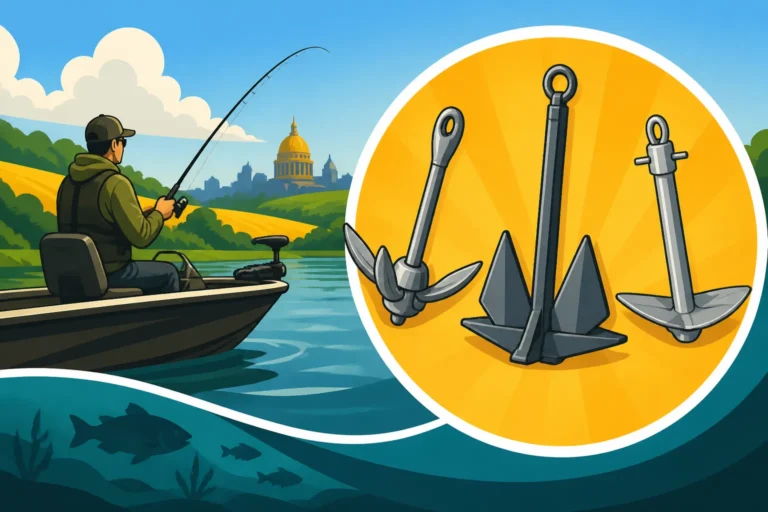
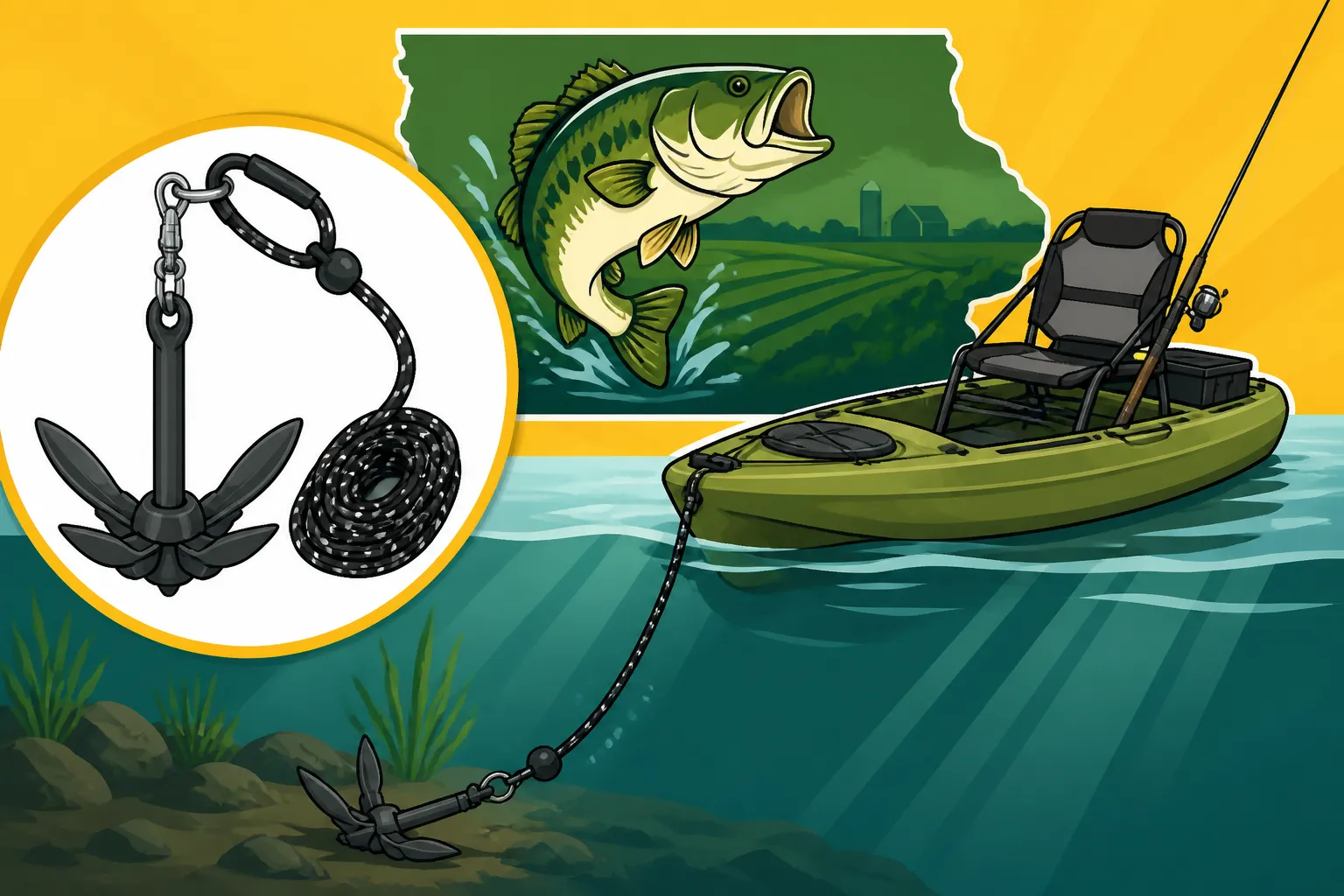
The grapple anchor, also known as a folding anchor or mushroom anchor, is arguably the most common and recognizable type of kayak anchor. It features four folding "flukes" or arms that splay out when deployed, designed to grab onto various types of bottom structure such as rocks, weeds, or even muddy bottoms. Their folding design is a huge advantage for kayak anglers, as it makes them compact and easy to store in a small hatch or bungee-strapped to the deck. They are typically made from galvanized steel, offering good corrosion resistance, which is important for longevity in wet environments.
While grapple anchors are popular for their versatility, they aren't without their quirks. In very soft mud or loose sand, the flukes might not get enough purchase, leading to frustrating dragging. Conversely, if they get too good a hold on rocky bottoms or submerged timber, they can be notoriously difficult to retrieve, sometimes leading to lost anchors. Kayak anglers often choose grapple anchors weighing between 1.5 to 3 pounds for general use, though larger kayaks or strong currents might necessitate a heavier option. These can be easily found at retailers like Bass Pro Shops or through online platforms like Amazon.
The Versatile Drag Chain and Anchor Pouch
Sometimes, you don't need to stop dead in your tracks; you just need to slow your drift. That's where a drag chain, often used in conjunction with an anchor pouch, comes into play. A drag chain isn't really an anchor in the traditional sense; it's a heavy length of chain that you deploy to create drag on the bottom. It allows your kayak to drift at a much slower, more controlled pace, which can be absolutely deadly for covering productive flats or slowly working a contour line, especially when targeting Crappie Fishing in Iowa or Bluegill Fishing in Iowa.
The beauty of a drag chain is its simplicity and effectiveness in slowing rather than stopping. It's less likely to get snagged than a grapple anchor and is generally much easier to retrieve. The anchor pouch system typically involves a small, weighted bag filled with sand, gravel, or even lead shot that performs a similar function to the drag chain, offering adjustable weight. Some anglers even use a small, heavy chain simply dropped to the bottom, allowing it to "walk" along and provide resistance. This method is particularly effective in areas with soft bottoms where a grapple anchor might not bite, or when you want to continue moving slowly while maintaining control, perhaps while Trolling for Crappie in Iowa.
Specialized Stick Anchors and Poles
For those fishing in shallower waters or with very specific needs, specialized stick anchors and anchor poles offer excellent alternatives. A stick anchor, often called a shallow water anchor, is essentially a long, sturdy pole that you manually push into the bottom sediment to hold your kayak in place. These are incredibly popular in skinny water, such as shallow bays, backwater sloughs, or when working the edges of weed beds in lakes. They are silent, easy to deploy and retrieve, and cause minimal disturbance to the fishing area.
Power-Pole and Minn Kota Talon are two well-known brands that offer motorized versions of shallow water anchors, though these are more common on larger fishing kayaks or jon boats due to their size and power requirements. For the average kayak angler, a simple, manually deployed anchor pole made from fiberglass or aluminum is a fantastic tool. They come in various lengths, typically 6 to 10 feet, and are ideal for holding position in up to the same depth of water. For Iowa's numerous smaller lakes, shallow rivers, and backwater areas, a stick anchor provides precise control and quick, quiet deployment, perfect for sneaking up on wary fish or holding tight against a slight breeze without the fuss of ropes and lines. Just be mindful of areas with hard, rocky bottoms where they won't penetrate.
Essential Components of a Complete Kayak Anchor System
A kayak anchor isn't just a piece of metal on a rope. To be truly effective and safe, it requires a complete system of components working together. Understanding each part is key to building a setup that meets your specific needs and ensures you can deploy and retrieve your anchor with ease and confidence.
Anchor Line Selection: Rope, Chain, and Paracord
The anchor line is your direct connection to the anchor itself, and its choice greatly impacts performance. Most kayak anglers opt for a braided nylon or polyester rope, typically 3/16-inch to 1/4-inch in diameter. These materials offer good strength, abrasion resistance, and are less prone to tangling than some other options. Nylon has some stretch, which can act as a shock absorber in choppy conditions, reducing sudden tugs on your kayak. Polyester has less stretch but is very durable. The length of your anchor line is critical; a good rule of thumb is to have at least three to seven times the maximum depth of water you plan to fish (the "scope"). So, if you're fishing in 10 feet of water, you'd want 30-70 feet of line to ensure the anchor lies flat and digs in properly.
Another crucial component, especially for grapple anchors, is a short length of chain (about 3-6 feet) attached directly to the anchor before the rope. This chain serves multiple purposes: it adds weight to help the anchor set faster and dig deeper, it helps the anchor lie flat on the bottom, and its abrasion resistance protects your rope from rubbing against sharp rocks or debris. Some kayak anglers also use paracord for lighter anchors or drag chains, valuing its strength-to-weight ratio and compact nature. However, paracord can be harder on the hands and less durable than dedicated anchor rope, so consider gloves if you go this route.
Retrieval Systems: Anchor Trolleys and Quick Releases
These components are where kayak anchoring gets truly refined. An anchor trolley is, for many kayak anglers, non-negotiable. It's a simple system of a ring, usually made of stainless steel or durable plastic, that runs along a line of paracord or bungee cord, installed on both sides of your kayak from bow to stern. Your anchor line clips into this ring. The magic of the trolley is that it allows you to easily move your anchor attachment point from the bow to the stern (or anywhere in between) without having to un-tie and re-tie your anchor. This means you can hold your kayak facing into the wind, or broadside to a current, for optimal casting angles, without ever leaving your seat. It's a fantastic tool for Kayak Fishing Techniques in Iowa on larger bodies of water.
A quick-release system, often just a carabiner or a specialized quick-release clip, allows you to instantly detach your anchor line from your kayak in an emergency. Imagine getting an anchor snagged in a strong current, or needing to quickly move to chase a big fish. Being able to release your anchor instantly is a critical safety feature. Some quick-release setups incorporate a float that's attached to the end of the anchor line, so if you do release it, you can easily retrieve your anchor later. Many anchor trolley kits available from retailers like Bass Pro Shops or on Amazon will include these components, making it easier for beginners to get started with a complete system.
Floats, Clips, and Line Management
Beyond the main line and retrieval system, several smaller items significantly improve the functionality and safety of your anchor setup. A small, bright float, often called a "bouy ball" or "anchor caddy," is attached to the loose end of your anchor line. This float is essential for two reasons: if you need to quickly release your anchor (using your quick-release), the float marks its location, making it easy to come back and retrieve it later. It also helps prevent your anchor line from sinking and potentially tangling with your paddle or propeller if you're using a pedal drive kayak.
Various clips and carabiners are used to connect your anchor to the trolley, or to secure excess line. Stainless steel or marine-grade plastic options are best for corrosion resistance. For line management, having a cleat or an anchor reel installed on your kayak is incredibly helpful. A cleat provides a secure point to tie off your anchor line, while an anchor reel, similar to a fishing reel but designed for anchor rope, allows for quick and tidy deployment and retrieval of your line. Without good line management, your anchor rope can become a tangled mess, posing a tripping hazard and making quick adjustments difficult. Keeping your deck clear of excess line is not just about convenience; it's a safety measure, preventing accidental wraps around your legs or equipment.
Setting Up Your Kayak Anchor System Safely and Effectively
Once you've gathered your chosen anchor and its components, the next step is to properly set it up on your kayak. This isn't just about functionality; it's also about safety. A poorly rigged or improperly used anchor system can create hazards, especially in strong currents or busy waterways. Taking the time to learn the correct techniques will make your fishing trips much more enjoyable and secure.
Deploying and Retrieving Your Anchor
Deploying your anchor seems straightforward, but there's a technique to it that minimizes tangles and ensures a good set. First, make sure you have enough line out for the water depth (remember that 3:1 to 7:1 scope rule). It's best to deploy your anchor from the bow or stern, not the side, to maintain stability. If you're using an anchor trolley, position the trolley ring at the bow or stern first. Gently drop the anchor into the water, allowing the rope to feed out smoothly. Don't just heave it overboard; a controlled descent helps prevent the anchor line from tangling on itself or around your kayak. As the anchor hits the bottom and begins to set, give it a little tension to help the flukes or chain dig in. You should feel your kayak slow and hold firm.
Retrieving the anchor also benefits from a methodical approach. Paddle directly over the anchor, pulling the line vertically. This helps to break the anchor's hold on the bottom. If it's snagged, try pulling from different angles, or giving the line some slack and then a sharp tug. For stubborn grapple anchors, some anglers include a "zip tie break-away" on their anchor chain – a weak link that can be broken by a strong pull, allowing you to retrieve your main line and anchor from the other end if it's really stuck. Once the anchor is free, retrieve the line slowly and neatly, coiling it into a bucket or a designated spot to prevent tangles for your next deployment. Kayak Fishing Gear Guide for Iowa Rivers goes into more detail on how to set up your kayak for river fishing.
Best Practices for Anchoring in Various Iowa Environments
The "best" way to anchor often depends on where in Iowa you're fishing. On the slow-moving rivers or larger lakes such as Fishing Coralville Reservoir in Iowa, where wind might be your primary concern, an anchor trolley is invaluable. It allows you to orient your kayak into the wind, presenting the smallest profile and minimizing sway, or position yourself broadside to allow for long drifts while slowly working the bottom. In these environments, a grapple anchor with a chain section works well on most bottom types.
When fishing the faster sections of the Mississippi River or certain larger streams, a drag chain or even a heavier river anchor (like a pyramid or box anchor) might be more effective for slowing your drift or holding against stronger currents. Always anchor upstream of where you want to fish and let out plenty of scope. For the small, shallow Trout Fishing Streams in Northeast Iowa, a stick anchor or anchor pole is often superior due to its quiet, precise deployment and minimal environmental disturbance. It allows you to hold your position in a specific run or pool without the added bulk of rope and traditional anchors.
Safety Considerations and Emergency Procedures
Safety is paramount, especially when anchoring from a kayak. Always wear your life jacket – it's not just a good idea, it's often legally required for Boater Education Requirements for Young Anglers and anyone aboard. Never tie your anchor line directly to your kayak with a permanent knot; always use a quick-release knot or system (like a quick-release clip on your anchor trolley). This is crucial because if your anchor gets snagged in strong current, or if a large fish takes off with your anchor line, being able to quickly detach yourself can prevent your kayak from being pulled under or capsizing.
It's also vital to be aware of your surroundings. Avoid anchoring in busy navigation channels or directly in the path of other boats. Check weather forecasts for strong winds or storms, and consider the bottom conditions before deploying your anchor. If you're fishing in a river, be mindful of changing water levels or increased current after heavy rains. Having a sharp knife readily accessible to cut your anchor line in an extreme emergency, though a last resort, is also a wise precaution. Remember, your anchor system is meant to enhance your fishing experience, not create new hazards.
| Anchor Type | Ideal Environment | Pros | Cons | Best For |
|---|---|---|---|---|
| Grapple Anchor | Lakes, slow rivers, mixed bottoms | Compact, versatile, good hold on varied terrain | Can snag, might drag on soft bottoms | General purpose, holding position |
| Drag Chain/Pouch | Moderate current, soft bottoms | Reduces drift, less snagging, easy retrieve | Doesn't stop kayak completely | Controlled drifts, slowing down |
| Stick Anchor/Pole | Shallow water, soft to firm bottoms | Silent, precise, quick deploy/retrieve | Limited to shallow water, won't hold on rock | Shallow water stealth, precise positioning |
Choosing the Right Anchor System for Your Iowa Fishing Style
Selecting the perfect kayak anchor system isn't a one-and-done decision. It involves considering various factors that directly impact your fishing success and safety. The unique blend of Iowa's waterways means that what works brilliantly on one lake might be a hindrance on a fast-flowing river. Tailoring your anchor setup to your specific needs will ensure you're always prepared.
Factors to Consider: Water Type, Target Species, and Kayak Type
The water type you primarily fish is perhaps the biggest determinant. If you spend most of your time on expansive lakes like West Okoboji Lake or Spirit Lake, dealing with wind and open water drifts, a robust grapple anchor with an anchor trolley is likely your best bet. This combination offers the versatility to hold position against wind and waves while allowing you to adjust your boat's orientation. On the other hand, if you're exploring smaller, shallower rivers or backwater areas of the Mississippi River, a stick anchor provides the stealth and precision needed for those environments. Rivers with stronger currents, such as sections of the Des Moines River, might call for a heavier river-specific anchor or a drag chain to maintain a controlled drift.
Your target species can also influence your anchor choice. If you're Catfish Fishing in Iowa, especially on a big river, you'll often want to hold precisely over a deep hole or current seam, which demands a solid, non-drifting anchor. Conversely, if you're pursuing panfish in a large weed flat, a drag chain that allows a slow, controlled drift might be more effective for covering water and locating scattered schools. For trout fishing in those clear, rocky streams, minimal disturbance is key, making a quiet stick anchor ideal. The type of kayak you own, whether it's a sit-on-top, sit-in, or pedal-drive model, will also play a role. Larger, heavier kayaks can often handle a heavier anchor and more elaborate trolley systems. Pedal-drive kayaks, like those from Hobie or Old Town, may have more space for permanent anchor installations or quick-release mechanisms, whereas smaller recreational kayaks might need simpler, more portable solutions.
Budget-Friendly Options vs. Premium Setups
Let's be real: fishing gear can get expensive, and anchor systems are no exception. Fortunately, you don't need to break the bank to get a functional and safe setup. A basic, budget-friendly kayak anchor system might consist of a 1.5-pound folding grapple anchor, 50 feet of sturdy rope, and a few carabiners. You can even create a DIY anchor by filling a small mesh bag with rocks or sand, providing an inexpensive drag anchor. These simple setups, often available for under a certain price point at places like Amazon, are a great starting point for beginners or those who only anchor occasionally.
However, if you're a serious kayak angler who spends a lot of time on the water, investing in a premium setup can significantly enhance your experience. This might include a higher-quality galvanized or stainless steel grapple anchor with a dedicated anchor chain, a fully rigged anchor trolley system with marine-grade hardware, and even a specialized anchor reel for efficient line management. Brands like Yak-Gear, Scotty, or RAILBLAZA offer excellent modular systems that allow you to customize your setup precisely. While these premium options can certainly cost more, they often offer increased durability, smoother operation, and advanced features that can be invaluable for frequent or challenging fishing conditions. Think about how often you anchor, the conditions you face, and how much convenience and control you desire. Sometimes, paying a little extra upfront saves you frustration and potential lost gear down the line. For more advanced setups, checking out a specialist like Bass Pro Shops might yield some great options.
Maintenance and Storage for Longevity
You've invested time and thought into choosing and setting up your ideal kayak anchor system. Now, to ensure it serves you well for years to come, proper maintenance and storage are absolutely critical. Just like your fishing reels and rods, your anchor system benefits from a little TLC after each outing. Neglecting it can lead to corrosion, weakened lines, and frustrating malfunctions right when you need it most.
Regular Cleaning and Inspection
After every fishing trip, especially if you've been in muddy or sandy water, take a few minutes to clean your anchor system. Rinse your anchor, chain, and anchor line thoroughly with fresh water. This removes grit, salt (if you've been in brackish water, though rare in Iowa, it's a good habit), and any organic matter that could promote corrosion or rot. Pay close attention to the folding mechanisms of grapple anchors; dirt and sand can get lodged in the joints, making them stiff or difficult to deploy.
While cleaning, perform a quick inspection. Check your anchor line for any signs of fraying, cuts, or excessive wear. Even small nicks can compromise the line's strength, and a snapped anchor line means a lost anchor and potentially a dangerous situation. Inspect all metal components – carabiners, quick-release clips, anchor trolley rings, and the anchor itself – for rust or corrosion. If you spot any minor rust, it can often be cleaned off with a wire brush and then protected with a marine-grade lubricant or rust inhibitor. Make sure any moving parts, like the pulleys on your anchor trolley, are still spinning freely. Addressing these small issues proactively can prevent bigger problems and extend the life of your gear.
Proper Storage to Prevent Damage
How you store your anchor system when not in use is just as important as how you maintain it. Always ensure your anchor line is completely dry before coiling or storing it. Storing a wet rope in a dark, enclosed space is an open invitation for mold, mildew, and rot, which will quickly degrade its strength and integrity. Once dry, neatly coil your anchor line and secure it with a bungee cord or Velcro strap to prevent tangles. Some anglers use a dedicated anchor bag or bucket to keep the rope organized and prevent it from getting snagged on other gear.
Store your anchor system in a cool, dry place away from direct sunlight and extreme temperatures. UV rays can weaken synthetic ropes and plastics over time, making them brittle. If your kayak is stored outdoors, consider bringing your anchor system inside to protect it from the elements. For folding grapple anchors, ensure the flukes are properly folded and secured to prevent them from accidentally opening and snagging on other items. If you have a stick anchor, store it where it won't be bent or damaged, perhaps secured along the inside of your garage wall or on your kayak's deck with appropriate clips. Proper storage not only prolongs the life of your anchor system but also makes it ready for action the moment you hit the water for your next Iowa Fishing Trip.
Disclaimer
This article is for general informational purposes only and does not constitute professional advice. Laws, prices and regulations vary by location and change over time. Consult a qualified professional for guidance on your specific situation.