Where Walleye Live in Iowa Rivers
For many anglers, the thought of fishing for walleye conjures images of vast, clear lakes. But here in Iowa, our rivers offer some truly fantastic walleye opportunities – though finding these elusive fish in flowing water can feel like a whole different ballgame. The currents, the ever-changing bottom, and the sheer size of some of our river systems can be intimidating. This guide is dedicated to pulling back the curtain on where walleye live in Iowa's rivers, helping you understand their preferred habitats and increasing your chances of a successful day on the water.
Understanding the River Walleye's Preferred Habitat
River walleye are fascinating creatures. Unlike their lake-dwelling cousins who might roam vast open waters, river walleye are incredibly tuned into current, structure, and the nuances of their dynamic environment. Knowing what makes a particular spot attractive to them is the first step in unlocking the river's walleye secrets.
Current, Structure, and Bottom Composition
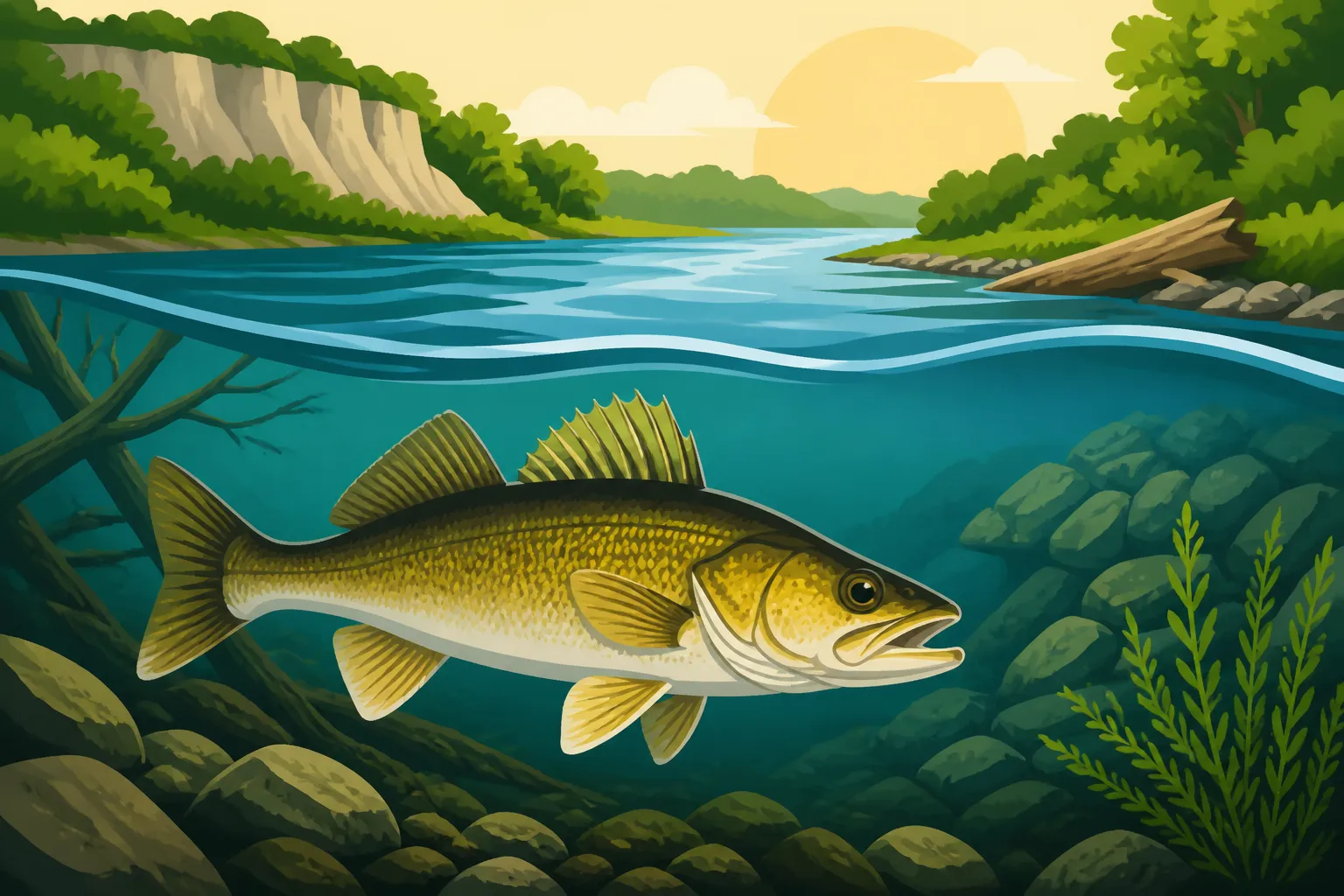
Walleye in rivers are almost always associated with some kind of current break or structure. They are ambush predators, and they use these features to conserve energy and wait for baitfish to be swept past them. Think of it like a buffet line in the river – they want to be close enough to grab a meal without fighting the main current all day long. This often means finding areas where the main current slows down, creates an eddy, or is deflected by an obstacle. Examples include the downstream side of wing dams, bridge pilings, submerged rock piles, logs, or even sharp bends in the river.
The bottom composition also plays a crucial role. Walleye generally prefer a hard bottom – gravel, rock, or even firm sand – over soft, silty areas. These harder bottoms often hold more invertebrates, which in turn attract baitfish, and they also provide better spawning grounds. If you're drifting or trolling, paying attention to what your weight or lure is hitting on the bottom can give you valuable clues about whether you're in a walleye zone. Over time, you'll start to recognize that distinct "tick-tick-tick" as you drag over a rocky bottom, a sound that spells opportunity.
Water Depth, Clarity, and Temperature
Depth is another critical factor for river walleye. While they can be found in relatively shallow water, especially during low light conditions or spawning, they often relate to deeper holes, channel edges, and drop-offs. These deeper areas provide sanctuary from strong currents, offer thermal refuge during extreme temperatures, and provide security from overhead predators. A gradual tapering bank might hold fish, but a sharp drop-off into deeper water is often a prime hunting ground.
Water clarity is a classic walleye preference. They have excellent low-light vision, which gives them an advantage over their prey in murky or stained water. While clearer rivers can hold walleye, they tend to be more active and easier to catch when the water has a slight stain to it. Extremely muddy or turbid water after a heavy rain can shut down the bite, as it impacts their ability to see and hunt. However, a slight tea stain can be ideal, allowing them to ambush prey without being easily seen themselves.
Lastly, water temperature dictates much of a walleye's behavior, including where they hold in a river. In colder water, they tend to seek deeper, more stable temperatures. As the water warms, they become more active and might move into shallower, faster-moving water to feed. Understanding the seasonal temperature changes and how they influence fish behavior is paramount. How Water Temperature Affects the Walleye Bite dives deeper into this crucial aspect.
Prime Walleye Rivers in Iowa and Their Characteristics
Iowa is blessed with a fantastic network of rivers, and several stand out as premier destinations for walleye anglers. Each river system has its own unique characteristics, offering different challenges and rewards. Understanding these differences can help you plan your next river walleye adventure.
The Mighty Mississippi River's Diverse Walleye Haunts
When we talk about river walleye in Iowa, the Mississippi River immediately comes to mind. This colossal waterway forms Iowa's eastern border and is a walleye factory. The sheer scale and diversity of habitat it offers are incredible. You'll find everything from vast main channel borders with strong currents to calmer backwaters, sloughs, and intricate systems of wing dams and rock structures. Walleye here often relate to these wing dams, especially on their downstream side where current breaks are formed. The eddies and current seams created by these structures are prime ambush points.
Beyond the wing dams, look for walleye in the main channel, particularly along the edges of the navigation channel where the current often slows slightly, offering a break for fish. Deep holes, especially those scoured out by current around bends or below dam structures, can hold significant numbers of walleye, particularly in colder months. The Mississippi also features numerous tributary mouths and industrial discharges that can create localized current breaks or warmer water pockets, drawing in baitfish and, consequently, walleye. Exploring different pools along the river, like Mississippi River Pool 10 Fishing or Mississippi River Pool 12 Fishing, will reveal unique opportunities.
Navigating the Des Moines River for Walleye
The Des Moines River is another excellent walleye fishery that flows right through the heart of Iowa. While perhaps not as vast as the Mississippi, it offers fantastic angling, especially in its lower sections before it meets the Mississippi. Walleye in the Des Moines River often relate to deeper pools, rocky stretches, and man-made structures like bridge pilings and rip-rap. The river's varying flow rates throughout the year significantly impact where the fish hold. During periods of lower flow, walleye will congregate in deeper holes and channel bends. As flow increases, they'll tuck into more protected areas out of the strongest currents.
Specific areas to target include bends where the outside curve often has deeper, scoured-out pockets. Anywhere you find a significant change in current speed, depth, or bottom composition, you're likely in a potential walleye zone. The stretches near bigger cities can sometimes offer surprisingly good fishing, as infrastructure often provides the kind of current breaks and hard bottom that walleye love. For those looking for precise spots, our guide on Des Moines River Catfish Spots can often hint at areas that also hold walleye, as many deep holes appeal to both species.
Exploring Other Key Iowa Rivers for Walleye Opportunities
Beyond the big two, several other Iowa rivers offer excellent walleye fishing, each with its own character. The Cedar River and the Iowa River are both notable, especially in their lower and middle stretches. These rivers tend to be a bit smaller, making them more manageable for anglers in smaller boats or even shore fishing in certain accessible areas. Walleye in these rivers will follow similar patterns, seeking out current breaks, deeper holes, and any form of hard structure.
| River Feature | Walleye Behavior | Ideal Conditions for Angling |
|---|---|---|
| Wing Dams | Hold on downstream side, in eddies; ambush baitfish moving over the structure. | Moderate flow, slight water stain. |
| Bridge Pilings | Tuck close to pilings to avoid current; ambush passing prey. | Moderate current, pilings creating distinct current breaks. |
| Deep Holes/Channels | Seek refuge from current, cooler water in summer, stable temps in winter. | Low flow conditions, extreme temperatures (hot or cold). |
| Rock Piles/Rip-Rap | Use as cover and ambush points; forage for crawfish and baitfish. | Moderate current, natural or man-made rocky shoreline. |
| Current Seams/Eddies | Energy conservation, prime ambush points where fast and slow water meet. | Visible seams in the water, often downstream of obstacles. |
| Woody Debris/Laydowns | Use as cover, especially when other hard structure is scarce. | Lower flow, wood not too dense to allow lure presentation. |
Don't overlook the potential in some of the smaller tributaries or sections of these rivers either. Sometimes, less pressured stretches can hold resident walleye populations. The key is always to look for those foundational elements: current breaks, structure, and depth changes. Iowa Walleye Season Opening Day and Iowa Walleye Season Closing Date are good references to plan your river trips around, as seasonal changes significantly influence fish location.
Seasonal Migration and Positioning of River Walleye
River walleye are constantly on the move, driven by instinct, water conditions, and the pursuit of food. Understanding their seasonal migrations and how they position themselves in the river during different times of the year is crucial for consistent success. It’s like they have a yearly planner, and if you know their schedule, you’re halfway there.
Spring Spawning Runs and Post-Spawn Recovery
Spring is an exciting time for river walleye fishing, largely due to the spawning run. As ice melts and water temperatures rise into the 40s and 50s (Fahrenheit), walleye begin their upstream migration to traditional spawning grounds. These locations are often rocky bottoms in rivers, below dams, or in areas with moderate current that provides good oxygenation for their eggs. Anglers frequently target these fish during the pre-spawn period, when they are actively feeding to build energy for the spawn. This is a time when they are often concentrated, making them easier to locate.
After the spawn, which typically happens when water temperatures are in the mid-40s to low 50s, walleye enter a post-spawn recovery phase. The females, especially, can be lethargic and less interested in feeding immediately after expending so much energy. They often drop back downstream from spawning areas, seeking out deeper, calmer water to rest and recuperate. The males, however, might hang around the spawning areas for a bit longer. As they recover, both sexes will begin to spread out, moving into more diverse habitats and starting to feed more aggressively as water temperatures continue to rise. This recovery period is a great time to focus on slower presentations in slightly deeper water.
Summer Patterns: Feeding in Current and Seeking Cooler Water
As summer heats up, river walleye generally settle into their summer patterns. This typically means they will relate strongly to current breaks and deeper, cooler water. They become more active feeders, but they also want to conserve energy, so they’ll often be found just out of the main current, waiting for an easy meal. Look for them in the washouts behind wing dams, on the edges of the main river channel, or in the deeper holes that offer thermal refuge. During the day, especially on bright, sunny days, they’ll often be tight to the bottom in these deeper, darker areas.
Early mornings, late evenings, and overcast days can see walleye moving into shallower feeding flats or current seams to actively hunt. When water levels drop and the current slows, walleye might move into main channel holes or areas with submerged timber. Conversely, during high water, they'll seek refuge in calmer backwaters or closer to the riverbanks where the current isn't as strong. Understanding Summer Catfish Techniques on the Mississippi River can also be helpful, as catfish and walleye often share similar summer holding patterns in deep current breaks.
Fall Aggregation and Wintering Hole Strategies
Fall is another fantastic time for river walleye. As water temperatures begin to drop, walleye sense the approaching winter and start to feed heavily, packing on reserves. They often become more aggressive and will school up in larger numbers, making them easier to target once you find them. During the fall, they'll still relate to structure and current breaks, but their movements might become more predictable as they begin to stage for winter. Look for them around deeper points, channel swings, and areas where baitfish are abundant.
As winter truly sets in and water temperatures drop into the 30s, river walleye move to their wintering holes. These are typically the deepest, slowest-current areas of the river. Think about those pronounced bends, deep scour holes below dams, or the deepest parts of the main channel. They will congregate in these areas, often becoming lethargic, but can still be caught with slow, vertical presentations. Ice fishing for walleye on rivers that freeze over is a popular activity, but always exercise extreme caution around river ice, as currents can create unsafe conditions. During this time, the walleye are conserving energy, so a subtle approach is key. Winter Walleye Techniques Near Dubuque offers great insights into cold-water tactics.
Decoding the River: Finding Walleye Holding Zones
Successfully finding walleye in a river isn't just about knowing which river to fish, but how to read the water itself. Rivers are constantly changing, but certain features consistently attract walleye. Learning to identify these "walleye holding zones" will dramatically improve your success.
Interpreting Current Breaks, Eddies, and Seams
The number one rule for river walleye is to find the current break. Walleye don't like to fight strong currents all day; it expends too much energy. Instead, they position themselves just out of the main flow, in a "cushion" of slower water, where they can dart out to ambush food as it drifts by.
- Current Breaks: These are areas where the main flow is interrupted by an obstacle like a rock, a log, a wing dam, or a bridge piling. The water directly behind or to the side of this obstacle will be slower. Walleye will often sit right in that slower water, facing upstream.
- Eddies: An eddy is a circular current of water, often found downstream of a prominent structure. The water within an eddy moves slower or even in the opposite direction of the main current. Walleye love the edges of eddies, known as "seams," where the slow water meets the fast water. This seam is a conveyor belt for baitfish and nutrients, and walleye will lie in wait along it.
- Seams: Whether at the edge of an eddy, or simply where two different current speeds meet, seams are critical. They are often visible as distinct lines on the water's surface, sometimes with foam or debris accumulating along them. This is where walleye expect their food to pass, making them prime targets. Understanding How to Fish a Wing Dam for Walleye provides excellent practical advice on these features.
Locating Deep Water, Channels, and Submerged Features
While current breaks are vital, their effectiveness is often amplified when combined with changes in depth or submerged features.
- Deep Water: Rivers are rarely uniform in depth. They have deeper scour holes, defined channels, and gradual drop-offs. Walleye will use deep water for security, thermal regulation, and as a highway to move between feeding areas. Look for sharp drops into deeper water along the main channel, or pronounced holes created by strong currents around bends or below dams.
- Channels: The main navigation channel, or even a less defined natural channel, provides walleye with a consistent path of deeper water. Walleye often patrol the edges of these channels, especially where the channel meets a shallower flat or a structural element. Fish finders are invaluable here, helping you identify these changes in depth and map out the channel edges. Do You Need a Fish Finder for River Fishing? explores the benefits of this technology.
- Submerged Features: These are the hidden gems. This could be anything from a rock pile that’s completely underwater, a sunken tree (often called a "laydown" or "brush pile"), or even old bridge debris. These features provide cover, ambush points, and often attract baitfish. Using a good fish finder to scan these areas is crucial, especially in unfamiliar water. Slowly drifting over potential areas and paying close attention to your electronics can reveal these hidden treasures.
Identifying Natural and Man-Made Structure
Structure is anything in the water that differs from the surrounding bottom or water column. It can be natural or man-made, and walleye will use it extensively.
- Natural Structure: This includes rock formations, gravel beds, logs, stumps, and even natural changes in the river bottom contour. Rocky areas are particularly important as they offer excellent cover and often hold crawfish, a favorite walleye meal. Points that jut out into the river, creating current breaks on their downstream side, are also prime natural structures.
- Man-Made Structure: Humans have left plenty of fishing-friendly structures in our rivers. Wing dams (rock jetties built to direct current), bridge pilings, rip-rap along banks, old sunken barges, and even discarded machinery can all hold walleye. These features create exactly the kind of current breaks and ambush points that walleye seek. On the Mississippi, wing dams are legendary walleye producers. On smaller rivers, a single bridge piling can hold a significant number of fish. Remember that many of these structures are also accessible from shore in certain areas, providing opportunities for anglers without boats.
Essential Tactics and Gear for Successful River Walleye Angling
Catching walleye in Iowa's rivers requires a blend of the right gear and effective tactics. The constantly moving water demands slightly different approaches than lake fishing. Having the proper setup can make all the difference, transforming a frustrating day into a memorable one.
Rods, Reels, and Line Choices for River Conditions
When it comes to rods, a medium-light to medium power rod, typically 6'6" to 7'6" in length, is a good starting point for most river walleye applications. A faster action tip is beneficial for detecting subtle bites, especially when fishing current, while enough backbone is needed to handle strong fighting fish and moderate weights. For jigging, a slightly shorter rod offers more control, while a longer rod is excellent for casting or trolling.
For reels, a spinning reel in the 2500-3000 size is a versatile choice, offering smooth drag and good line capacity. Many river anglers also swear by baitcasting setups, particularly for heavier jigging or pulling crankbaits in strong current. The increased power and control can be advantageous.
Line choice is critical in rivers. Braided line, in the 10-20 lb test range, is highly popular due to its lack of stretch, which provides excellent sensitivity for feeling subtle bites and keeping contact with your lure in current. Its thin diameter also helps cut through current, reducing drag on your line. However, always use a fluorocarbon leader (6-12 lb test) of 2-4 feet. Fluorocarbon is nearly invisible underwater and is more abrasion-resistant, which is crucial around rocky river bottoms and submerged snags. For those just starting, grabbing a combo kit from a reliable online retailer like Amazon can be a great way to get a good quality rod and reel without breaking the bank. Best Rod Length for Iowa River Walleye Fishing offers more specific advice on rod selection.
Effective Lures, Baits, and Presentation Methods
The "best" lure or bait for river walleye changes constantly with conditions, but some staples consistently produce.
- Jigs: Jigs are arguably the most versatile river walleye lure. From simple lead-head jigs dressed with a plastic grub or soft plastic paddle tail, to hair jigs or stand-up jigs, they can be tipped with live bait (minnows or crawlers) or fished bare. Jigging involves either vertical jigging directly below the boat or pitching jigs upstream and letting them drift back while maintaining bottom contact. Jigging Techniques for River Walleye delves into this in detail.
- Live Bait Rigs: A classic setup involves a slip sinker rig, often called a Lindy rig or an Iowa river rig. This consists of a sinker (pencil, walking, or egg sinker) that slides freely on the main line, a swivel, and a leader with a hook. This rig allows your bait to drift naturally near the bottom. Minnows, nightcrawlers, and leeches are all effective live baits.
- Crankbaits: Trolling or casting crankbaits can be deadly, especially when walleye are actively feeding. Choose crankbaits that dive to the desired depth and have a tight wobbling action. Colors can vary, but natural baitfish patterns, chartreuse, and firetiger are often good starting points.
- Three-Way Rigs: This rig is excellent for fishing in current. It involves a three-way swivel, with one eye tied to the main line, one to a dropper line with a sinker, and one to a leader with a lure or live bait. This allows the bait to be presented just off the bottom without constantly snagging.
- Blade Baits: These vibrating lures are fantastic for jigging in deeper holes or tight to structure. Their strong vibration attracts fish, and their flash can trigger strikes.
Remember, presentation is key. Whether you're vertical jigging, casting, or How to Drift Fish a River for Walleye, always try to present your bait naturally with the current, mimicking an injured or helpless baitfish.
Utilizing Electronics and Strategic Boat Control
In river fishing, electronics are not just a luxury; they're often a necessity. A good fish finder can help you identify depth changes, locate channels, mark submerged structure, and even spot individual fish or schools of baitfish. Side imaging or down imaging capabilities can be particularly useful for scanning wide areas for hidden features that hold walleye. Learning How to Read a Fish Finder for Walleye can significantly shorten the learning curve.
Strategic boat control is equally important. Whether you're using an outboard, a bow-mount trolling motor, or simply drifting, maintaining control of your boat's position relative to the current and structure is paramount.
- Drifting: Often involves using the current to your advantage, deploying a drift sock or two to slow your drift and keep your boat oriented correctly. This allows you to cover water efficiently while presenting baits.
- Anchoring: Sometimes, the most effective tactic is to anchor precisely upstream of a prime piece of structure (like a wing dam or a deep hole) and cast your baits downstream into the current break. A sturdy anchor system is a must, especially in strong currents.
- Trolling Motors: Electric trolling motors, especially those with GPS spot-lock features, are invaluable for holding position in current, slowly back-trolling, or making precise passes over structure. This level of control allows for meticulous bait presentation. You can find excellent options for trolling motors and other boating accessories on Amazon.
Disclaimer
This article is for general informational purposes only and does not constitute professional advice. Laws, prices and regulations vary by location and change over time. Consult a qualified professional for guidance on your specific situation.