How to Fish a Wing Dam for Walleye
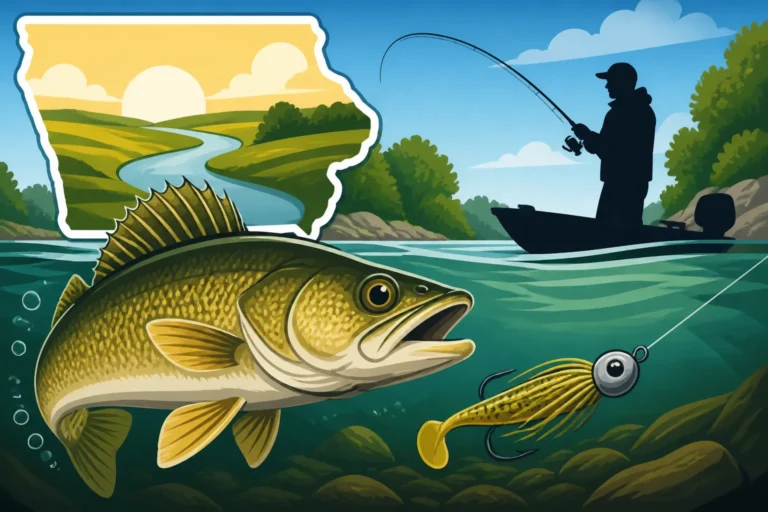
One of the most exciting challenges for any Iowa angler is figuring out how to consistently catch walleye, especially when they're playing hard to get. If you've spent any time on our larger rivers, like the mighty Mississippi, you've likely encountered those man-made rock structures known as wing dams, and you've probably heard they hold walleye. But actually fishing them effectively can feel like cracking a secret code. This guide is here to demystify wing dam fishing, breaking down everything you need to know to target those elusive walleye successfully.
Understanding Wing Dams and Their Walleye Appeal
Wing dams are fascinating structures, a true testament to human engineering impacting a natural waterway. But beyond their construction, understanding why they attract walleye is key to unlocking their potential as fishing hotspots.
What Exactly is a Wing Dam?
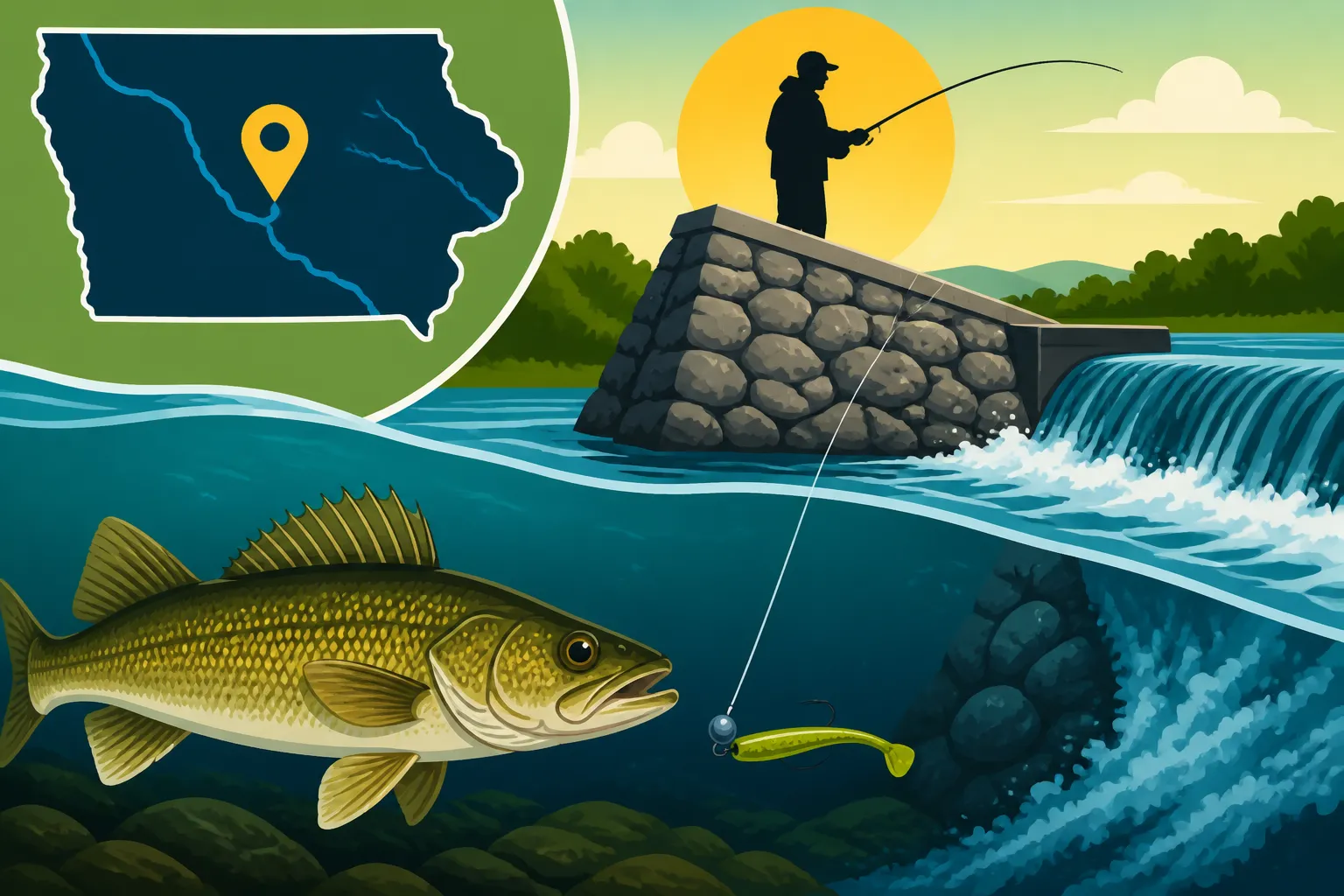
Picture a long, low wall of rocks, extending out from the riverbank, often at an angle, into the main current. That's a wing dam. These aren't natural formations; they were built, primarily in the late 19th and early 20th centuries, to channel the river's flow, deepening the navigation channel for commercial barges. You'll find them extensively on the Mississippi River, which forms Iowa's eastern border, particularly in sections like Mississippi River Pool 9 Fishing or Mississippi River Pool 12 Fishing. They essentially "wing" the current away from the shore, concentrating it in the middle.
Because of this design, wing dams create a whole host of varying current speeds, depths, and bottom compositions. On the upstream side, the current often flows over the dam, creating a wash. Below the dam, a calm eddy forms, often with slower currents or even reverse flows, especially close to the bank. The tip of the wing dam, where it meets the main channel, is usually the deepest part and where the current is most powerful. The rock structure itself provides cover and a substrate for aquatic insects and small baitfish, creating a complete ecosystem in miniature.
Why Walleye Love Wing Dams
Walleye are opportunistic predators that absolutely thrive in current, but they're also smart. They don't want to expend excessive energy fighting the main flow all day long. This is precisely why wing dams are so appealing to them. These structures offer a buffet of ideal conditions:
- Current Breaks: The most critical feature. Walleye will position themselves just out of the main current, in the eddies or behind the rocks, waiting for unsuspecting baitfish to be swept past. They can dart out, grab a meal, and then retreat to conserve energy. Think of it like a diner with a revolving buffet belt – they just have to wait for the food to come to them.
- Ambush Points: The jagged rock structure provides excellent cover for walleye to hide, making them nearly invisible to their prey and to keen-eyed birds from above. They can sit camouflaged, then burst out for a quick strike. This makes them prime locations for Walleye Fishing in Iowa.
- Food Source Concentration: The varying currents around a wing dam tend to wash baitfish, insects, and other forage right to them. Small shad, minnows, and even crawfish will use the rocks for shelter, only to become an easy target for hungry walleye.
- Depth and Structure: Wing dams often plunge into deeper water at their tips, providing essential depth variation. Walleye are sensitive to light, so having deeper, darker water nearby allows them to move up and down the water column as light conditions change throughout the day.
- Oxygenated Water: Moving water is usually well-oxygenated, which is crucial for active fish. Even in warm summer months, the current around a wing dam keeps the water fresh and comfortable for walleye.
It's this combination of factors that makes wing dams such consistent producers. But remember, not all wing dams are created equal, and knowing how to approach them is where technique comes in.
Essential Gear and Rigging for Wing Dam Walleye
Fishing wing dams demands specific gear to handle the current, the rocky snags, and the hard-fighting walleye. Trying to use your ultralight panfish setup here would be a recipe for disaster and frustration.
Rod, Reel, and Line Choices
You need a setup with enough backbone to haul fish out of current and enough sensitivity to detect subtle bites.
- Rods: Look for medium-heavy to heavy power spinning or baitcasting rods, generally in the 6'6" to 7'6" range. A fast or extra-fast action tip is ideal because it gives you the sensitivity to feel light bites and the quick hook-setting power needed in current. A rod with good backbone allows you to control a fish that tries to run back into the current or wrap you around the rocks. Brands like St. Croix or Fenwick offer excellent options that blend sensitivity with the necessary power.
- Reels: For spinning setups, a 2500 to 3000 series reel is typically sufficient, offering a good balance of line capacity and drag strength. For baitcasting, a medium-heavy baitcaster with a smooth drag system is perfect for precision casting and jigging. The key is a reliable drag that won't seize up when a big walleye makes a run.
- Line: This is where things get critical on wing dams.
- Main Line (Braid): I highly recommend 10-20 lb braided line for your main line. Braid has almost no stretch, which gives you incredible sensitivity to feel those light "thunks" or "ticks" of a walleye bite, especially in deeper water or strong current. It also has superior strength for its diameter, allowing you to use lighter weights and still muscle fish out of snags. The lack of stretch also means more efficient hook sets.
- Leader (Fluorocarbon): Due to braid's visibility, it's wise to tie on a 2-4 foot fluorocarbon leader with a knot like a blood knot or an FG knot. Fluorocarbon is nearly invisible underwater, extremely abrasion-resistant (a must around rocks!), and provides a bit of shock absorption that braid lacks. A 10-15 lb fluorocarbon leader is a good starting point. You can learn more about specific line choices in articles like Best Line Weight for River Walleye.
Effective Lure and Bait Setups
The current and structure dictate your lure and bait choices. You need presentations that can get down to the fish quickly and stay in the strike zone.
- Jigs: Jigs are arguably the most versatile and effective lure for wing dams.
- Weight: You'll need a variety of weights, from 1/4 ounce in lighter currents to 1 ounce or even heavier in raging flows. The goal is to use the lightest jig you can get away with that still maintains bottom contact.
- Style: Traditional ball head jigs, stand-up jigs (which help prevent snags), or even current-cutting jigs are all good choices.
- Trailers: Dress your jigs with soft plastics like grubs, paddle tails (e.g., 3-4 inch Berkley Gulp! Alive! minnows or shad), or live bait like minnows or nightcrawlers. The combination of a vibrant plastic and the scent of live bait can be deadly.
- Three-Way Rigs: This setup is a classic for river walleye, especially when using live bait. It involves a main line, a dropper line to a sinker, and a leader line to your bait. This allows your bait to float or drift naturally just above the bottom, where walleye are often hugging the structure. A 1-2 ounce pyramid or bell sinker on a 6-12 inch dropper, and a 2-4 foot leader to a bare hook (size 1-4) with a large minnow or crawler, is a go-to.
- Crankbaits: Trolling or casting crankbaits can be highly effective, especially around the tips of wing dams or in the slower water behind them.
- Diving Depth: Choose crankbaits that dive to the depth of the wing dam top or just below it. Rapala Shad Raps, Berkley Flicker Shads, or Salmo Hornets are popular choices that mimic baitfish and have excellent wobbling actions.
- Color: Natural baitfish patterns, chartreuse, firetiger, or perch colors are often productive depending on water clarity and forage.
- Blade Baits: Lures like the Heddon Sonar or Johnson ThinFisher are excellent for vertical jigging on wing dams. Their erratic vibrating action on the lift and flutter on the fall can trigger aggressive reaction strikes from walleye holding tight to the rocks.
- Crawler Harnesses: While often associated with lakes, a weighted crawler harness can be effective if you can keep it just above the bottom. This is usually done with a bottom bouncer or a three-way rig. Learn How to Rig a Crawler Harness for Walleye for optimal presentation.
When it comes to bait, don't underestimate the power of live bait. Large shiner or fathead minnows, leeches, and nightcrawlers are all walleye favorites. You can find excellent live bait options at many local bait shops or through trusted online retailers like Amazon for things like bait buckets and aerators.
Mastering Techniques for Fishing Iowa Wing Dams
Fishing wing dams effectively is all about understanding the current and presenting your bait or lure in a way that appeals to a walleye's natural instincts. This isn't just about casting and reeling; it's about strategy and precision.
Positioning Your Boat or Shore Casting
Your approach to the wing dam is critical. Walleye will position themselves in specific zones, and you need to put your offering in front of them without spooking them.
-
Boat Fishing:
- Upstream Approach: Many anglers prefer to approach a wing dam from upstream, letting the current carry their boat alongside or just past the structure. This allows you to present your lure naturally as it drifts downstream towards waiting walleye. You can then use your trolling motor to subtly adjust your speed and position.
- Anchoring: If you find a particularly productive spot, consider anchoring. However, anchoring in current near rocky structures can be tricky and potentially dangerous. Always use two anchors (one off the bow, one off the stern) to maintain a stable position, and ensure your anchor line is securely cleated. Never anchor directly above the dam, as a lost anchor is almost a certainty. Instead, anchor upstream of the dam and cast down, allowing your lure to drift. Be mindful of safety; always have required Boat Safety Equipment for Iowa Waters.
- Drifting/Trolling: For those on the Mississippi or other large rivers, Drift Fishing the Mississippi River can be highly effective around wing dams. You can drift jigs, three-way rigs, or even troll crankbaits along the edges of the structure or through the wash. Use your trolling motor to control your drift speed, keeping it slightly slower than the current to maintain better lure control.
- Key Zones: Focus your efforts on the current breaks just downstream of the dam, the wash areas where the current spills over the dam (especially if it's shallow), and the very tip of the wing dam where it drops into deeper water. These are classic walleye holding areas.
-
Shore Fishing:
- Shore access to wing dams is often limited, but not impossible. If you can find a safe spot, casting from shore requires a different strategy.
- Long Casts: You'll need to make long casts, often upstream and across the current, letting your lure or bait swing down and across the face of the dam.
- Heavy Gear: Shore anglers often need slightly heavier weights to compensate for the inability to position the boat directly over the fish.
- Working the Edges: Focus on the edges of the wing dam closest to shore, and any slower current pockets you can reach. The fish might be holding closer to the bank than you expect, especially in lower light conditions.
Presentation Strategies: Jigging, Trolling, and Casting
How you present your lure makes all the difference. Walleye can be finicky, and sometimes a slight change in presentation is all it takes to trigger a bite.
- Vertical Jigging: This is a classic wing dam technique, especially from a boat. Position your boat directly upstream of the wing dam or along its face, using your fish finder to locate the structure and any fish holding on it. Let your jig or blade bait drop straight down to the bottom. Once it hits, lift it sharply 6-12 inches, then let it fall back on a semi-slack line. Most bites happen on the fall, so pay close attention! When you feel that subtle "tick" or "thunk," set the hook immediately. Check out Jigging Techniques for River Walleye for more in-depth advice.
- Dragging/Bouncing Jigs: Instead of vertical jigging, you can also "drag" or "bounce" jigs downstream along the face of the wing dam. Cast upstream, let your jig sink to the bottom, and then slowly reel just enough to maintain bottom contact as your boat or the current carries the jig downstream. The jig should be occasionally ticking or bouncing off the rocks. This works well with a lighter jig that struggles to stay on the bottom, allowing it to "walk" over the structure.
- Three-Way Rigging (Live Bait): This is excellent for slower presentations. If you're using a three-way rig, you want your sinker to occasionally tick the bottom while your live bait (a minnow or nightcrawler) drifts enticingly just above the rocks. Slowly troll or drift this rig parallel to the wing dam, focusing on the current seams and eddies. Keep a close eye on your rod tip for subtle bites.
- Crankbait Trolling/Casting:
- Trolling: For those with a boat, trolling crankbaits parallel to the wing dam, especially along the deeper edge or the slower current side, can be highly effective. Adjust your speed until the crankbait is running at the right depth and has its maximum action.
- Casting: From either boat or shore, cast crankbaits upstream and retrieve them to dive down to the dam. A "stop-and-go" retrieve, or even a slow, steady retrieve that allows the bait to occasionally deflect off the rocks, can entice strikes.
- Reading Your Rod Tip: This can't be stressed enough. Walleye bites, especially in current, are often very light. It's rarely a hard smash. It might be a slight "mushy" feeling, a sudden increase in weight, or just a tiny "tick." If anything feels different, set the hook! Many experienced walleye anglers will tell you they set the hook on anything that isn't a rock.
Reading the Conditions and Advanced Tips
Becoming a true wing dam walleye whisperer means understanding how external factors influence fish behavior and applying some advanced strategies.
Current, Water Levels, and Time of Day
These environmental factors play a huge role in where walleye position themselves on a wing dam and how aggressively they feed.
- Current Strength:
- High Current: When the river is really flowing, walleye will tuck into the calmest eddies directly behind the dam or in deeper pockets where the current is less intense. They'll be looking for easy meals that get swept into their refuge. Use heavier jigs and sinkers to maintain bottom contact.
- Moderate Current: This is often ideal. Walleye will be more spread out, and actively feeding in the current breaks and even the wash areas. Your presentations can be a bit lighter and more versatile.
- Low Current: During periods of very low current (which can happen, though less common on the Mississippi), walleye might move more freely over the top of the dam or out into the main channel. They might also be more spread out, making them harder to pinpoint. This might be a good time to experiment with casting crankbaits or even spinnerbaits.
- Water Levels:
- Rising Water: Rising water often brings debris, muddy water, and can push fish shallower or make them more active due to increased forage. Walleye might be found closer to the bank or in newly flooded areas near the wing dam.
- Falling Water: Falling water levels tend to pull fish away from the banks and back towards established deeper channels and structures like wing dams. They might become more concentrated and predictable.
- Time of Day: Walleye are known for being crepuscular, meaning they are most active during dawn and dusk. These low-light periods give them an advantage over their prey, as their excellent low-light vision helps them hunt. Night fishing can also be incredibly productive for wing dam walleye, especially during warmer months. During bright midday, they'll often retreat to the deepest, darkest parts of the dam or hug the bottom tight.
Seasonal Considerations and Safety First
Walleye patterns around wing dams will shift throughout the year, so staying flexible is key.
- Spring: After the ice melts and water temperatures are still cold, walleye begin to move upstream for their spawning run. Wing dams near spawning grounds can be excellent. Fish will often hold on the deeper, current-protected sides of the dams before and after spawning. Post-spawn, they are often hungry and aggressive.
- Summer: As water temperatures rise, walleye become more active at night or in low light. During the day, they'll often hold tight to the deepest, coolest parts of the wing dam, seeking refuge from the sun. Vertical jigging or three-way rigging with live bait are top choices.
- Fall: This is a fantastic time for trophy walleye. As water cools, walleye feed heavily in preparation for winter. They can be found in a variety of spots around the wing dam, often transitioning between the top of the dam and the deeper holes nearby. Trolling crankbaits or dragging jigs can be very productive.
- Winter (Ice Fishing): While most wing dams on major rivers aren't accessible for ice fishing, some backwater areas that contain remnants of old wing dams might offer opportunities if conditions are safe. However, extreme caution is advised for ice fishing on rivers due to unpredictable currents.
Safety First: Fishing on rivers, especially near current-altering structures like wing dams, requires a strong emphasis on safety.
- Life Jackets: Always wear a life jacket, especially if you're in a boat or near strong currents.
- Know the River: Understand the river's characteristics, potential hazards, and how current affects your boat. Use maps like the Iowa Fishing Atlas to identify access points and features.
- Weather: Keep an eye on the weather. Sudden storms can make river conditions dangerous quickly.
- Regulations: Always adhere to Iowa Fishing Regulations Explained, including daily bag limits and size restrictions for walleye. Ignorance of the law is no excuse, and wardens patrol these busy areas.
- Snags are Inevitable: You will get snagged on wing dams. It's part of the game. Bring plenty of extra jigs, weights, and leaders. It's better to lose a cheap jig than to put yourself in a risky situation trying to retrieve it. Having a good lure retriever can save you some tackle, which you can often find on Amazon.
Ultimately, fishing wing dams for walleye in Iowa is a rewarding challenge. It takes patience, a bit of trial and error, and a willingness to adapt to the conditions. But when you feel that solid thump of a walleye on the end of your line, pulled from the current-swept rocks, you'll know it was all worth it. Good luck out there, and tight lines!
Disclaimer
The information provided in this guide is for general informational purposes only. Fishing regulations, conditions, and fish behavior can change. Always consult the official Iowa Department of Natural Resources (DNR) website or their current fishing regulations booklet for the most up-to-date and accurate rules and safety guidelines before heading out on the water. Fishing inherently carries risks; always prioritize your safety and fish responsibly.