Winter Walleye Techniques Near Dubuque
The frozen expanse near Dubuque can feel like a formidable challenge when you're craving that thrilling winter walleye bite. It's easy to get discouraged when the thermometer dips, and the fish seem to vanish, leaving you wondering if you're even in the right spot or using the right setup. This guide aims to cut through that frustration, offering a comprehensive look at the tactics, gear, and wisdom needed to confidently target and catch walleye through the ice in the unique waters surrounding Dubuque, Iowa.
Understanding Winter Walleye Behavior Near Dubuque
Walleye in winter are not the same aggressive predators you chase in the warmer months. Their world slows down dramatically, and understanding these fundamental changes is crucial to putting fish on the ice. The cold water, often covered by a thick layer of ice, drastically alters their metabolism, feeding patterns, and preferred hangouts. You're essentially playing a different game, and the rules are written by Mother Nature herself.
How Walleye React to Cold Water and Ice
When water temperatures plummet, a walleye's metabolism grinds down to a much slower pace. Think of it like a car idling in neutral instead of zooming down the highway. This means they don't need to eat as often, and when they do, they're looking for an easy meal that doesn't require a lot of energy to chase. Their movements become more lethargic, and they tend to congregate in specific areas where they can conserve energy and find readily available food. The ice cover itself brings stability to the water column, but also limits light penetration, pushing fish deeper or into areas with subtle light changes, like along edges or under deeper snow cover. It's a critical adjustment for us anglers to make – slowing down our presentations and being patient. For a deeper dive into fishing in the cold, check out our guide on Ice Fishing in Iowa.
Key Winter Forage and Feeding Habits
While their activity level drops, walleye still need to eat, and their diet shifts to whatever is most abundant and easiest to catch. In the Mississippi River system near Dubuque, this often means smaller baitfish like shad, shiners, or even juvenile panfish. They'll also opportunistically feed on invertebrates. What's important to remember is that their feeding windows can be short and intense. Often, these windows coincide with low-light periods – dawn, dusk, or even through the night. Instead of actively hunting, they become ambush predators, positioning themselves near structure or cover where baitfish might pass by. Your job is to present a tempting, easy-to-snag meal right in front of them during these brief bursts of activity.
Prime Dubuque-Area Winter Walleye Habitat
The Mississippi River is a dynamic environment, even under ice. Walleye seek out areas that offer both current breaks and access to deeper water or structure where they can hold without expending too much energy. This often means focusing on wing dams, deep holes, channel edges, current seams, and backwaters with sufficient depth. Areas where the main channel current slows down or creates eddies are particularly attractive. Look for places where baitfish might be pushed by the current or find refuge. Submerged timber, rock piles, and distinct depth changes become crucial holding areas. Understanding these specific structural elements will give you a significant advantage, helping you narrow down your search in the vastness of the river.
Essential Ice Fishing Gear for Dubuque Walleye
Just like any specialized form of fishing, ice fishing for walleye near Dubuque requires the right tools for the job. You wouldn't bring a hammer to cut wood, and you certainly wouldn't bring a summer spinning rod to tackle thick ice and lethargic winter walleye. Investing in reliable, purpose-built gear not only makes the experience more enjoyable but significantly increases your chances of success. For a general overview, our Ice Fishing Gear Basics for Beginners provides a great starting point.
Rods, Reels, and Line for Hardwater Walleye
When it comes to ice rods for walleye, you'll want something with a sensitive tip to detect subtle bites, but enough backbone to handle a feisty walleye in tight quarters. A medium-light to medium action rod, typically 28 to 36 inches long, is a good all-around choice. Paired with a small spinning reel (size 1000-2500) spooled with 4-8 pound test fluorocarbon or monofilament line, you'll have a versatile setup. Fluorocarbon is excellent for its low visibility and minimal stretch, which can be key for detecting those light winter bites. Some anglers even use braided line with a fluorocarbon leader for added sensitivity and strength. Consider picking up a quality ice fishing combo on Amazon for convenience.
Augers and Ice Shelters for Comfort and Safety
Drilling holes is a fundamental part of ice fishing, and a good auger is indispensable. For Dubuque walleye, where you might be drilling many holes to locate active fish or punch through thicker ice, a power auger (gas, propane, or electric) is a game-changer. Brands like Eskimo and ION offer reliable options. As for comfort, an ice shelter is almost a necessity, especially when battling the biting Iowa winter winds. Portable pop-up shelters or flip-over shanties provide warmth, shelter from the elements, and allow you to focus on fishing rather than shivering. Many popular models, from brands like Clam and Frabill, can be easily purchased and delivered from Amazon, making your setup process smooth.
Electronics for Locating Fish and Structure
In the murky, current-laden waters of the Mississippi near Dubuque, electronics are not just a luxury; they're almost essential. A good flasher or a portable fish finder can make all the difference. These devices allow you to see your lure, monitor depth, identify fish arches, and even detect bottom structure in real-time. Brands like Vexilar, Marcum, and Humminbird offer excellent options for ice fishing. Being able to see how fish are reacting to your presentation, or if there are even fish below you, helps you adjust your strategy quickly. This instant feedback loop dramatically cuts down on wasted time and increases efficiency, especially when targeting fish that may only hold in very specific locations. Learning to interpret the signals from your device is a skill that pays dividends, as highlighted in our guide on How to Read a Fish Finder for Walleye.
Proven Ice Fishing Techniques for Dubuque Walleye
Once you've got your gear dialed in, it's time to talk tactics. Winter walleye fishing is often about patience and subtle presentations. What works one day might not work the next, so being adaptable and having a few tricks up your sleeve is crucial, particularly when fishing the dynamic currents of the Mississippi River.
Jigging Strategies and Lure Choices
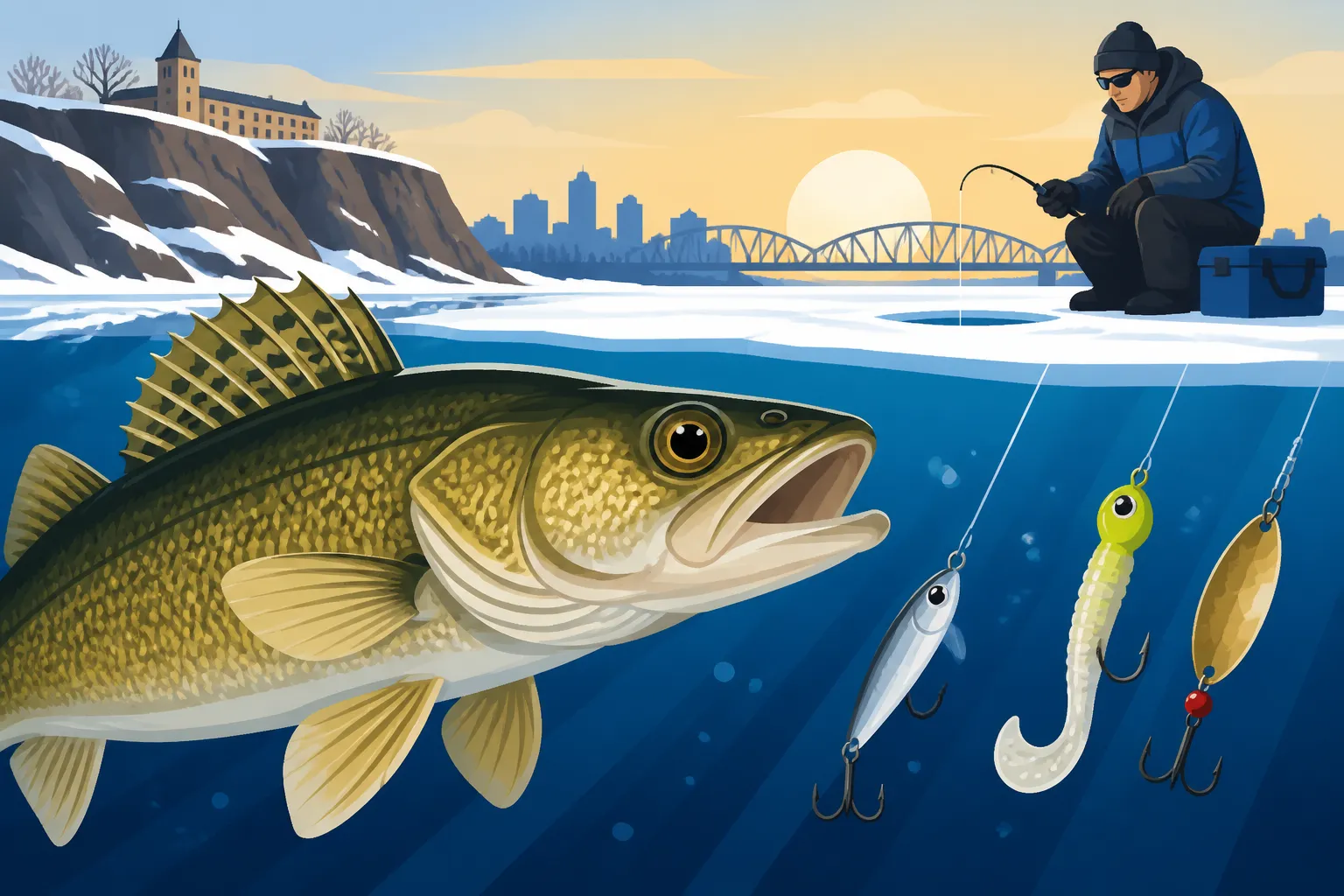
Jigging is arguably the most common and effective technique for winter walleye. The key is to impart just enough action to entice a lethargic fish without spooking it. Small, heavy jigs, jigging spoons, and lipless crankbaits are go-to choices.
- Jigging Spoons: Lures like the Rapala Jigging Rap, Northland Buck-Shot Rattle Spoon, or Acme Kastmaster are excellent. Vary your jigging retrieve: lift and drop, subtle shakes, or dead-sticking it motionless for several seconds. Often, the bite comes on the pause. Experiment with different colors, especially natural patterns or glow-in-the-dark options for deeper, darker water.
- Lipless Crankbaits: Smaller lipless cranks like a Rapala Rippin' Rap or a Vibe-E from Custom Jigs & Spins can be deadly, especially in areas with moderate current. The vibrations can attract fish from a distance, and their erratic fall can trigger strikes.
- Plastic/Live Bait Combos: Tipping your jig with a small piece of minnow head, a wax worm, or a soft plastic grub can significantly increase its appeal. The natural scent and subtle movement can be the final trigger for a hesitant walleye.
Remember, walleye in winter are not going to chase far. Your presentation needs to be right in their strike zone. Our article on How to Jig for Winter Walleye Near Dubuque offers more granular details on these techniques.
Deadsticking and Tip-Up Tactics
Sometimes, the most active presentation is no presentation at all. Deadsticking involves setting up a second rod, often with a live minnow, just above the bottom, and leaving it perfectly still. The subtle wiggles of the live bait are often enough to draw in a walleye that might ignore a more aggressive jigging motion. This passive approach can be incredibly effective, especially during slow periods or when fish are particularly finicky.
Tip-ups are another excellent "set it and forget it" option. They allow you to cover a wider area, presenting a live minnow (shiners, fatheads, or rainbow chubs are popular choices) at a specific depth. When a fish takes the bait, a flag pops up, signaling a bite. This is a fantastic way to target walleye that might be cruising a flat or suspended over a deep hole. Setting multiple tip-ups can dramatically increase your chances, but always be mindful of Iowa Fishing Regulations Explained regarding the number of lines allowed.
Power Fishing vs. Finesse Approaches
The Mississippi River near Dubuque often dictates whether you can employ a "power fishing" or "finesse" approach.
- Power Fishing: In areas with moderate current or when fish are more active, larger, heavier spoons or lipless cranks can be effectively jigged to cover the water column and draw attention. The idea is to find aggressive fish quickly. This is often more successful during peak feeding windows or slightly warmer winter days.
- Finesse Fishing: More often, especially in extremely cold conditions or when fish are lethargic, a finesse approach is necessary. This means smaller jigs, lighter lines, and very subtle movements. A small tungsten jig tipped with a micro-plastic or a single maggot, presented on a light-action rod, can be incredibly effective. The goal is to tempt fish that are barely willing to move. Sometimes, a completely motionless presentation, letting the minnow do all the work, is the ticket. Being able to switch between these two approaches based on fish activity and environmental conditions is a hallmark of a successful winter walleye angler.
Safety and Practical Considerations on Dubuque Ice
Ice fishing, especially on a large river like the Mississippi, carries inherent risks. Your safety and preparedness are paramount. The unpredictable nature of river ice, combined with the often-extreme cold, means you need to be constantly vigilant. Never take shortcuts when it comes to personal safety. We cover this extensively in our guide on Ice Fishing Safety on Iowa Lakes, but river ice adds another layer of complexity.
Ice Safety Protocols and Awareness
Before you even step foot on the ice, assessing its safety is critical. River ice is notoriously inconsistent due to varying currents, depths, and underwater structures. What might be safe in one spot could be dangerously thin just yards away. Always check ice thickness regularly with an auger or spud bar as you move. A general rule of thumb for safe ice is 4 inches for ice fishing on foot, but this is a minimum and should be treated with extreme caution on rivers. Double that for snowmobiles and ATVs. Always inform someone of your plans, carry safety equipment like ice picks, a throw rope, and a whistle, and never fish alone. Pay particular attention to areas near current, inlets, outlets, and bridge pilings, as these are often hot spots for thinner ice. For more specific guidelines, review Best Ice Thickness for Safe Ice Fishing.
Dressing for Success in Frigid Conditions
Hypothermia is a serious threat in cold weather. Layering is the key to staying warm and dry on the ice near Dubuque. Start with a moisture-wicking base layer to draw sweat away from your skin. Add an insulating mid-layer, such as fleece or down, to trap body heat. Your outer layer should be waterproof and windproof, protecting you from snow, sleet, and the relentless Iowa wind. Insulated boots, warm gloves or mittens, a hat that covers your ears, and a neck gaiter are non-negotiables. Investing in a high-quality ice fishing suit (bibs and jacket) from brands like Striker Ice or Clam can provide incredible warmth, buoyancy, and often have built-in safety features. Don't forget hand warmers and toe warmers, which you can find easily on Amazon, to provide extra comfort on those brutally cold days. Our article What to Wear Ice Fishing in Iowa has more great tips on bundling up correctly.
Navigating Regulations and Best Practices
Fishing in Iowa, particularly on the Mississippi River, comes with its own set of rules. Before heading out, always consult the current Iowa Department of Natural Resources (DNR) fishing regulations. Pay close attention to walleye size limits and daily bag limits, which can sometimes vary depending on the specific pool of the river or even change season to season. For instance, understanding Walleye Season and Size Limits is fundamental. Be aware of the number of lines you're allowed to fish, as this is strictly enforced. It's also good practice to have your valid Iowa fishing license on hand. When transporting fish, keep them separate by species and ensure they meet size requirements. Respect private property, practice catch-and-release when appropriate, and always pack out everything you pack in to keep our beautiful Iowa waters clean for everyone.
Specific Dubuque-Area Walleye Hotspots
The Mississippi River near Dubuque offers a wealth of potential walleye waters, but knowing where to start can feel overwhelming. This stretch of river is characterized by numerous pools, wing dams, backwaters, and varying current speeds, all of which influence where walleye will hold during the winter months. It's a dynamic fishery that rewards local knowledge and diligent scouting.
Mississippi River Pools Near Dubuque
The area around Dubuque largely falls within Mississippi River Pool 11 and extends into the northern reaches of Pool 12. These pools are renowned for their walleye populations, and the winter months can offer exceptional fishing if you know where to look.
- Pool 10: While technically north of Dubuque, many anglers from the area venture into Pool 10, particularly near Guttenberg and McGregor, for its diverse structure and excellent walleye fishing. This pool features numerous wing dams and deep holes that concentrate fish. Our guide to Mississippi River Pool 10 Fishing offers more detailed insights into this productive area.
- Pool 11 (Dubuque Area): Right outside Dubuque, Pool 11 is characterized by significant current and numerous wing dams. Walleye often stack up in the scour holes just downstream of these rock structures, or along current seams where slower water meets faster flow. Backwater areas with sufficient depth and oxygen can also hold good numbers of walleye, particularly during periods of strong current in the main channel. Look for areas where the current breaks or where baitfish are abundant.
- Pool 12: South of Dubuque, Pool 12 also presents excellent opportunities. Similar to Pool 11, focus on wing dams and the associated current breaks. Areas around navigation markers and river bends can create natural funnels for baitfish, in turn attracting walleye. Deeper holes in secondary channels or backwaters can also be winter holding grounds.
Other Productive Local Waters
While the Mississippi River is the main attraction, don't overlook other nearby options, especially if river conditions are challenging or if you prefer a different fishing experience.
- Small Lakes and Ponds: Some smaller, deeper lakes and public ponds within an hour or two's drive of Dubuque might offer walleye, though these are less common than panfish or bass fisheries. If a lake near you is known to have a walleye population (check DNR stocking reports), it could be a calmer, safer ice fishing option, especially for beginners. These smaller bodies of water often have more stable ice conditions earlier in the season.
- Inland Rivers: Smaller rivers flowing into the Mississippi can also hold winter walleye, particularly in deeper pools or below dams. Always exercise extreme caution on river ice, as conditions can change rapidly and be highly localized. Access might be more limited, but the rewards can be great if you find an untouched spot.
Understanding Current and Structure in Winter
On the Mississippi River, current is king, even under the ice. Walleye will position themselves out of the main current flow to conserve energy, yet close enough to ambush prey swept downstream.
- Wing Dams: These rock structures extending from the bank into the river are prime walleye magnets. Fish will often sit in the slack water downstream (the scour hole) or slightly to the side of the current break. Experiment with different depths and distances from the dam. Our How to Fish a Wing Dam for Walleye guide provides excellent strategies for these structures.
- Channel Edges and Drop-offs: Walleye frequently relate to distinct depth changes. Look for the edges of the main navigation channel, or humps and holes in shallower backwater areas. These transitions provide both cover and ambush points.
- Backwaters: Deeper backwater sloughs and bays can be excellent, especially when heavy ice forms over the main river. These areas often have less current, stable depths, and can hold good numbers of baitfish. Look for subtle depressions, old creek channels, or submerged timber within these backwaters. Use your electronics to scan for these features and any signs of baitfish or walleye.
| Technique/Lure Type | Best Conditions | Presentation Tips | Target Depth Range | Pros | Cons |
|---|---|---|---|---|---|
| Jigging Spoon | Active bite, moderate current | Aggressive lifts, then long pauses; tip with minnow. | 10-30+ feet | Covers water, creates flash & vibration. | Can be too aggressive for lethargic fish. |
| Lipless Crankbait | Active fish, moderate current | Rip and fall; subtle snaps; let it settle. | 10-25 feet | Strong vibration attracts fish, good search lure. | Can snag easily in heavy cover. |
| Deadstick (Minnow) | Finicky bite, slow periods | Suspend live minnow just off bottom or above fish. | Varies with fish depth | Natural presentation, minimal effort. | Passive, requires patience. |
| Tip-Up (Live Bait) | Covering area, targeting cruising fish | Set minnow at desired depth, check often. | Varies with fish depth | Covers multiple spots, good for scouting. | Requires multiple holes, less interactive. |
| Tungsten Jig w/ Plastic | Finesse bite, clear water, deep fish | Slow, subtle jigging; tiny shakes; light line. | 5-40 feet | Very sensitive, good for light biters. | Less flashy, requires precise presentation. |
Disclaimer
The information provided in this guide is for general informational purposes only and is not a substitute for official regulations or professional advice. Fishing regulations, ice conditions, and fish behavior can change rapidly. Always consult the latest Iowa Department of Natural Resources regulations before fishing and prioritize safety. The author and publisher are not responsible for any accidents, injuries, or legal issues that may arise from using this information. Fish responsibly and safely.