Muskie Fishing Techniques for Iowa Waters
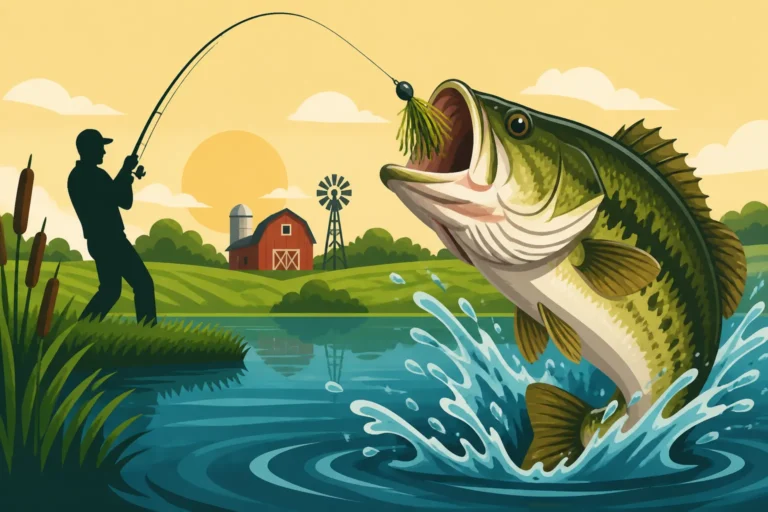
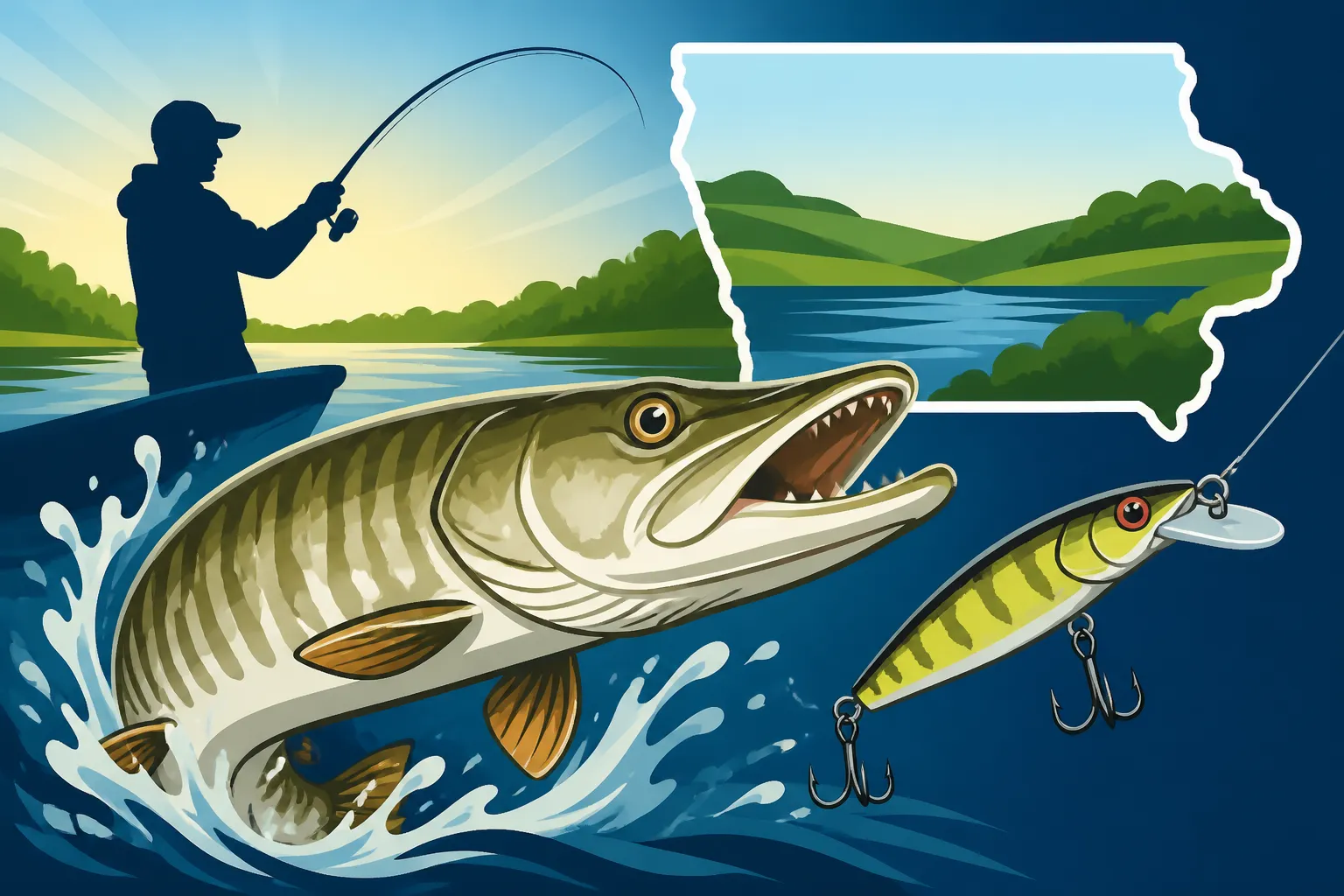
Muskie fishing in Iowa isn't just a casual pastime; it's a dedicated pursuit that tests patience, skill, and sheer perseverance. Often called the "fish of a thousand casts," muskellunge are elusive, powerful predators that demand respect and specialized tactics. If you've spent countless hours on the water without a hook-up, or you're simply looking to elevate your game, you know the frustration. This guide is designed to cut through the guesswork, offering practical, in-depth techniques and strategies specifically for targeting these magnificent fish in Iowa's diverse waters.
Understanding Iowa's Muskie Hotspots and Habits
Iowa might not be the first state that comes to mind for muskie fishing, but we actually have some fantastic fisheries producing impressive fish. To consistently find and catch these elusive creatures, you first need to understand where they live and how they behave in our local environments. It’s not enough to just cast a big lure; you need to understand the fish's world.
Key Muskie Lakes and Rivers in Iowa
Iowa offers a surprising variety of muskie waters, from natural glacial lakes to large reservoirs and even sections of the Mississippi River. Each of these environments presents unique challenges and opportunities, and knowing their characteristics is crucial. You can't approach Clear Lake the same way you would the Des Moines River.
When it comes to top-tier muskie fishing, the Iowa Great Lakes region, specifically West Okoboji Lake and East Okoboji Lake, along with Spirit Lake, are legendary. These deep, clear, natural lakes hold thriving populations of both purebred muskie and tiger muskie. Fish here can grow to trophy sizes, and the challenge is real. Anglers often spend days just trying to get one strike. Beyond the lakes, Big Creek Lake near Polk City is another fantastic muskie fishery known for its consistent stockings and good growth rates. Further south, Rathbun Lake also offers opportunities, though it's more known for other species.
Don't overlook Iowa's major river systems either. The Mississippi River, particularly the pool areas, holds a strong population of muskie and can be incredibly productive, especially around current breaks and backwater areas. While not as widely known for muskie, even some segments of the Des Moines River can surprise anglers, though they tend to be more isolated populations. Fishing these rivers requires a different approach than the lakes, often focusing on current seams, submerged timber, and deep holes. Always check the current Iowa Fishing Regulations Explained before heading out, as rules can vary between water bodies.
Muskie Habitat and Structure Preferences
Muskies are ambush predators, meaning they love to hide and wait for unsuspecting prey to swim by. This means they are almost always associated with some form of structure or cover. Learning to "read the water" and identify these prime ambush points is paramount to success. It's like finding a needle in a haystack, but knowing where the haystacks are drastically improves your odds.
In natural lakes like those in the Fishing the Iowa Great Lakes region or Clear Lake, you'll want to focus on distinct weed lines, especially those with deeper edges that drop into open water. Cabbage beds, coontail, and even sparse patches of emergent weeds can hold muskie. Rock piles, submerged timber, transition areas between different bottom compositions (like sand to gravel), and main lake points are also high-percentage spots. Pay close attention to prominent depth changes, or "breaklines," as muskies often cruise these areas looking for baitfish moving between shallow and deep water.
For river systems, the game changes slightly. Current is king in rivers, so muskies will position themselves in areas where they can expend minimal energy while still having access to passing food. Look for current seams, eddies, fallen trees and log jams, rip-rap banks, and the calmer water behind wing dams on the Mississippi River. These locations offer a break from the main current and concentrate baitfish. Deeper holes or depressions in the riverbed can also hold muskie, especially during colder periods. Understanding Muskie Habitat in Iowa Waters is a fundamental step to becoming a successful muskie angler.
Essential Gear for Iowa Muskie Anglers
Muskie fishing isn't for the faint of heart, and neither is the gear required. These are big, powerful fish that will test your equipment to its limits. Trying to land a 40-inch muskie on a bass rod is a recipe for heartbreak and a lost fish. Investing in proper, heavy-duty tackle isn't just about catching more fish; it's about doing it safely and ethically, minimizing harm to these magnificent creatures during the fight and release.
Heavy-Duty Rods and Reels
When selecting a rod for muskie fishing in Iowa, think power and length. You'll want a heavy or extra-heavy power rod, typically between 8 to 9.5 feet long. Shorter rods make it difficult to cast large lures, manage line, and effectively perform a figure-eight at the boat. The extra length also provides better leverage for fighting strong fish and absorbing powerful runs. Look for rods with a fast to moderate-fast action, which gives you the backbone to set hooks and control the fish while still having enough tip flexibility to cast big baits. Brands like St. Croix, Shimano, and Abu Garcia offer excellent muskie-specific rods that can withstand the abuse these fish dish out.
For reels, a robust baitcasting reel is non-negotiable. You need a reel with a high line capacity, a strong drag system, and durable gears to handle the relentless pressure of casting heavy lures all day and battling large fish. Gear ratios typically range from 5.1:1 to 6.4:1, providing a good balance of power for retrieving big baits and speed for burning bucktails. Many anglers prefer models specifically designed for muskie or saltwater use due to their enhanced durability. Ensuring your reel has a smooth, consistent drag is crucial for preventing line breaks and reducing fatigue during long fights.
Line, Leaders, and Terminal Tackle
Your main line needs to be incredibly strong and abrasion-resistant. Braided line is the overwhelming choice for muskie fishing. It offers superior strength-to-diameter ratio, no stretch for solid hook sets, and excellent sensitivity. You'll want to spool up with 80 to 100-pound test braided line. This might seem like overkill, but it's essential when dealing with large, heavy lures, unexpected snags, and the sheer power of a muskie. You'll find a wide selection of braided lines available on platforms like Amazon. When choosing your line, consider the Best Line Weight for Muskie Fishing to match your specific conditions and target fish.
Connected to your main line, you absolutely need a heavy-duty leader. Muskies have incredibly sharp teeth that can easily slice through standard fishing line. Leaders are typically made from heavy fluorocarbon (100-200 lb test) or multi-strand wire. Fluorocarbon leaders are less visible in clear water and offer good abrasion resistance, while wire leaders provide maximum bite protection. Leaders should be at least 12-18 inches long to prevent the muskie from biting through your main line. Attach your leader to your main line using a strong knot like a FG knot or an Albright knot, and then use heavy-duty snap swivels (rated for at least 150-200 lbs) to connect your lures. Cheap snaps will fail when you hook a trophy fish.
Lure Selection for Iowa Muskie
Muskie lures are notorious for their size and variety, and having a diverse selection is key. Different lures excel in different conditions and elicit strikes based on muskie mood and forage preference. You’ll want a tackle box stocked with several categories of baits.
Bucktails are perhaps the most iconic muskie lure, known for their flash and vibration. These come in various blade configurations (single, double inline, double-bladed, triple-bladed) and sizes. They are excellent for covering water quickly and often trigger aggressive strikes. Colors vary, but black, chartreuse, white, and combinations of these are popular choices. Learning How to Retrieve a Bucktail for Muskie is a fundamental skill, often involving a fast retrieve with occasional pauses or pulls.
Crankbaits are versatile lures that can be cast or trolled. They come in shallow, medium, and deep-diving versions, allowing you to target different depths. Large lipped crankbaits, often 8-12 inches long, imitate baitfish and displace a lot of water. Jointed versions offer a more erratic swimming action. Select colors that match the local forage, like perch, walleye, or sucker patterns, but also have some bright, gaudy colors for stained water or aggressive fish.
Jerkbaits and glide baits are fantastic for eliciting strikes from reluctant fish. Jerkbaits are typically retrieved with a "rip-pause" retrieve, making them dart erratically. Glide baits have a side-to-side swimming action on a steady retrieve but can be made to "walk the dog" underwater with subtle rod twitches. These lures can be more labor-intensive to fish but often trigger strikes when other baits fail, especially in clear water or when muskies are following but not committing. Don't forget soft plastic swimbaits, which offer a natural profile and can be fished at various depths. Having a good variety of these larger lures is essential, and you can always browse for specialized muskie tackle on Amazon if your local bait shop doesn't have what you need.
Proven Techniques for Iowa Muskie
Catching a muskie isn't just about having the right gear; it's about how you use it. There's a certain art and science to presenting your lure in a way that triggers these apex predators. Whether you're casting shoreline structure or trolling open water, precision and persistence are your best allies.
Precision Casting and Retrieve
Casting for muskie requires endurance and accuracy. You’ll be slinging heavy baits repeatedly, so a smooth, powerful casting stroke is essential to prevent fatigue. Focus your casts on high-percentage areas: along weed lines, over submerged structure, near drop-offs, and into pockets within cover. Don't just cast aimlessly; visualize where a muskie might be hiding and try to place your lure there with minimal splash.
The retrieve is where much of the magic happens. Speed and cadence are critical. For bucktails, a fast, steady retrieve is often effective, allowing the blades to spin rapidly and create a strong vibration. Experiment with short pauses or sudden accelerations to trigger a chase. When fishing jerkbaits or glide baits, a more erratic, "stop-and-go" retrieve mimics a wounded baitfish, which can be irresistible to a muskie. Always vary your retrieve until you find what the fish are responding to on a given day. Don’t be afraid to experiment with different speeds, depths, and actions.
The most crucial part of any muskie retrieve, however, happens at the boat. The "figure-eight" is a non-negotiable technique. When your lure approaches the boat, instead of simply reeling it in, plunge your rod tip into the water and trace a large figure-eight pattern with your lure directly alongside the boat. Many muskies will follow a lure right to the boat, only striking when they feel it's about to escape. A proper Figure-Eight Technique for Muskie at the Boat can turn a follow into a catch, often saving what would have been another "fish of a thousand casts" story.
Effective Trolling Strategies
Trolling can be an incredibly effective method for covering large expanses of water and targeting muskies that are suspended in open water or cruising deeper structure. It's particularly useful on larger bodies of water like the Iowa Great Lakes or large reservoirs like Big Creek Lake, where fish might not be holding tightly to specific cover. Trolling allows you to present multiple lures at once, covering different depths and lure profiles.
When trolling, pay close attention to your boat speed. Typically, speeds between 3 to 6 miles per hour are effective, but muskies can be finicky, so experiment until you find the sweet spot. Use your fish finder and GPS to stay on course and identify submerged structure, baitfish schools, and depth changes. Troll over points, along deep weed edges, across flats adjacent to deep water, and over known humps or rock piles. Different lures will dive to different depths, so use diving lips, weights, or planer boards to get your baits into the strike zone. Consider lures with reflective finishes or bright colors, as they are more visible when trolled at higher speeds.
Don't just run in straight lines. Make S-turns and vary your speed occasionally; these changes in action can often trigger strikes. When a turn causes an inside lure to slow down and an outside lure to speed up, that sudden change can be the trigger. Keep a close eye on your rod tips for any unusual movements that might indicate a strike or a muskie following the lure. While trolling is often perceived as less active, it demands constant attention to detail and adjustments to be truly effective.
Reading the Water and Fish Behavior
Muskie fishing is as much about observation as it is about casting. Learning to "read the water" means understanding the subtle cues that indicate muskie presence or favorable conditions. This involves more than just looking at a fish finder; it's about connecting patterns.
Pay attention to environmental factors like wind direction and intensity. A consistent wind can push baitfish into certain areas, concentrating muskie. Overcast skies and periods of stable or rising barometric pressure are often considered prime muskie conditions, as they tend to be more active. Look for signs of baitfish activity—shiners or perch jumping, or flocks of diving birds—as these are clear indicators of a food source that muskies will likely be near.
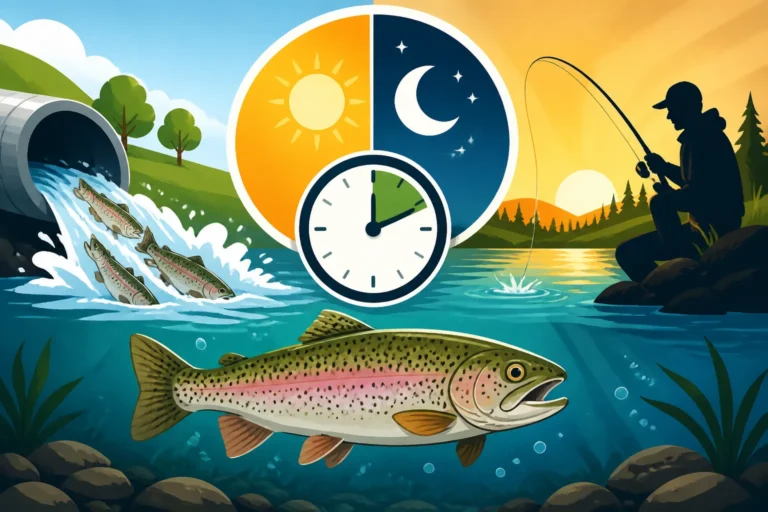
Understanding muskie behavior throughout the day and season is also crucial. Muskies often have peak feeding windows, typically during low-light periods at dawn and dusk, or during periods of major and minor moon phases. They can be finicky, following a lure multiple times before striking, or not striking at all. Don’t get discouraged by follows; they are often a sign that you are in the right area and using the right lure. It might just require a slight change in retrieve, color, or a more aggressive figure-eight to seal the deal. Remember, every follow is a learning opportunity.
Seasonal Strategies for Muskie Fishing in Iowa
Muskie fishing in Iowa isn't a one-size-fits-all endeavor. The changing seasons dramatically influence muskie behavior, their location, and what techniques are most effective. Adapting your approach with the calendar is key to consistent success. Knowing the Best Time of Year for Muskie Fishing in Iowa can significantly boost your odds.
Spring Awakening and Post-Spawn Tactics
As ice leaves Iowa's lakes and rivers, typically in April and May, muskies begin to stir. Early spring, shortly after ice-out, sees muskies often holding in deeper basins or on main lake points, slowly becoming more active as water temperatures rise into the 40s. The major event in spring is the spawn. Muskies usually spawn when water temperatures hit the mid-40s to low 50s, typically in shallower, vegetated areas. It's important to respect this time, as muskies can be vulnerable and stressed. Remember to check Iowa Muskie Season Dates before planning your early season trips.
Post-spawn, usually from late May into June, is often a fantastic time to target muskies. They are recovering from the rigors of spawning and beginning to feed aggressively to regain lost energy. During this period, you'll find them in shallower bays, along new weed growth, and near protected areas where baitfish are abundant. Slower retrieves with smaller bucktails, glide baits, or soft plastics can be very effective as they target fish that might still be a bit sluggish. Focus on sunny days when shallow water warms up first, drawing in both bait and predators. Don’t be afraid to fish smaller presentations than you might later in the year, as muskies can be opportunistic.
Summer Heat Tactics and Deep Water Holds
Iowa summers can be brutal, and the heat significantly impacts muskie behavior. As water temperatures rise into the 70s and 80s, muskies will often seek cooler, deeper water. This means moving away from the shallow bays and focusing on main lake basins, deep weed lines (especially coontail), rock reefs, and submerged timber on deep breaklines. They might still move shallow during low-light hours (dawn, dusk, or under heavy cloud cover) to feed, but during the bright midday sun, they'll often be found suspended over deeper water or tight to deep structure.
During the summer, faster retrieves with larger baits can be effective as muskies become more active metabolically. Trolling large crankbaits over deep structure or suspended over open water can be highly productive, especially during midday. Casting large bucktails, deep-diving crankbaits, or heavy soft plastics along deep weed edges is also a go-to. Night fishing for muskie can also be surprisingly effective during the summer, as the cooler water and reduced light intensity make them more comfortable to move and feed in shallower areas. Using dark-colored bucktails or noisy topwater lures can produce explosive strikes in the dark.
Fall Feeding Frenzy and Winter Considerations
Fall is arguably the most exciting time for muskie fishing in Iowa. As water temperatures begin to drop, muskies enter a pre-winter feeding frenzy. They know winter is coming and will pack on as much weight as possible, making them incredibly aggressive. This is often the time when trophy-sized fish are caught. From September through November, as water temps fall from the 60s into the 40s, muskies will actively chase large baits.
During this period, focus on large-profile baits: big bucktails, massive crankbaits, oversized jerkbaits, and huge soft plastics. Muskies are looking for substantial meals, so don't be shy with your lure size. Concentrate on traditional fall patterns: main lake points, deep breaks, humps, and the remaining healthy weed growth. As the water cools further and lakes begin to turn over, muskies might suspend over deeper water or hold tight to prominent structure. The bite can be incredible, but it can also be short-lived, so maximizing your time on the water during this window is crucial.
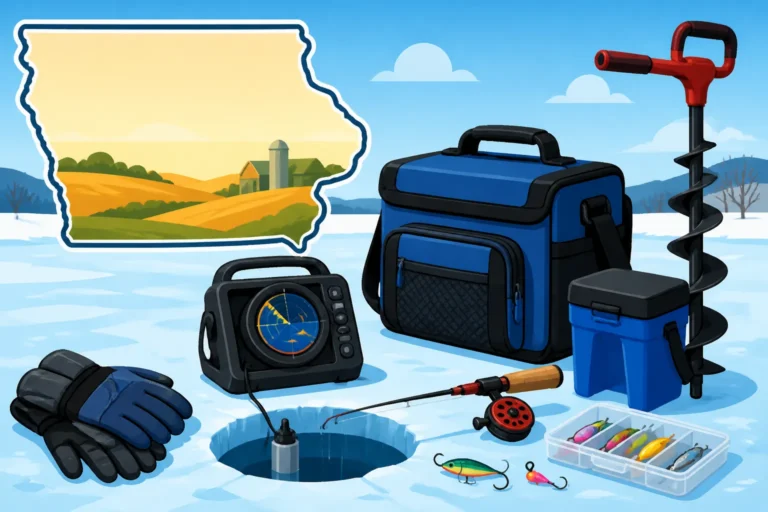
Winter muskie fishing in Iowa is generally not a targeted pursuit. While a muskie might be incidentally caught through the ice while targeting walleye or pike, the season for actively fishing muskie is typically closed or extremely challenging. Most muskie anglers hang up their heavy gear once hard water forms, turning their attention to Ice Fishing in Iowa for other species.
Safety and Conservation for Muskie Anglers
Muskie fishing isn't just about the thrill of the catch; it's also about responsible angling. These magnificent fish are slow-growing and represent a significant investment by the Iowa Department of Natural Resources (DNR) through stocking programs. Practicing proper handling and understanding regulations ensures that these fish can continue to thrive for future generations of anglers.
Proper Muskie Handling and Release
Muskies are incredibly resilient, but their health is directly tied to how they are handled. The most crucial aspect of muskie fishing is the safe release, as Muskie Fishing in Iowa is Catch and Release Only. You should be prepared before you even hook a fish. Have a large, rubberized landing net specifically designed for muskie. These nets are knotless and minimize damage to the fish's slime coat and fins. A net with a large hoop and deep basket is essential for securing the fish quickly and safely.
Once the fish is in the net, keep it in the water as much as possible. This minimizes stress and supports its body weight. Have long-nose pliers, a jaw spreader (if hooks are deep), and heavy-duty bolt cutters readily accessible. The bolt cutters are for quickly cutting hooks if they are deeply embedded or too difficult to remove, prioritizing the fish's well-being over retrieving a lure. Never "boat flip" a muskie, and avoid putting your fingers in its gills. Use a specialized tool like a "muskie glove" if you must handle the fish by hand, but ideally, keep your hands on its back and belly for support while removing hooks in the net.
For quick photos, ensure the fish is out of the water for the absolute minimum time, typically no more than 10-15 seconds. Support its entire body horizontally to prevent internal damage. Get it back into the water quickly and hold it gently by the tail and under the belly until it revives and swims away strongly. Sometimes, a tired muskie will need a few minutes of revival before it's ready to swim off. Taking these steps ensures that the fish has the best chance of survival and can be caught again someday.
Understanding Iowa Muskie Regulations
Before every muskie fishing trip in Iowa, it is absolutely essential to familiarize yourself with the latest regulations. The Iowa DNR regularly updates rules, and what was legal last year might not be this year. Regulations often include specific length limits, bag limits (which for muskie are typically very restrictive, often catch-and-release only or single fish limits), and season dates. For instance, knowing the Muskie Daily Bag Limit on Border Waters is critical if you're fishing the Mississippi River.
Muskie length limits in Iowa are often quite substantial, ensuring that fish have a chance to mature and reproduce. For example, some lakes may have a 40-inch minimum length limit. Knowing if Is There a Size Limit for Muskie?, and what that limit is, is paramount. These regulations are in place to protect the muskie population and maintain healthy fisheries. Penalties for violating fishing regulations can be severe, including fines and license suspension. Ignorance of the law is not an excuse.
You can find the most current regulations on the Iowa DNR website, or by picking up a copy of the Iowa Fishing Regulations booklet wherever licenses are sold. Always double-check regulations for the specific body of water you plan to fish, as some lakes or river sections might have special rules. Staying informed helps protect the resource and keeps you out of trouble.
Boating Safety and Awareness
Muskie fishing often involves navigating large bodies of water, either in a dedicated fishing boat or a sturdy utility boat. Safety on the water should always be your top priority, especially when chasing these elusive fish that can lead you into diverse and sometimes challenging environments. This is particularly true when fishing the expansive Fishing the Iowa Great Lakes or the mighty Mississippi River.
Always ensure your boat is equipped with all required safety gear, including properly fitting life jackets for everyone on board, a fire extinguisher, a sound-producing device (like a horn or whistle), navigation lights if fishing after dark, and a throw cushion. Check weather forecasts before heading out and be prepared for sudden changes, which are common in Iowa. High winds can quickly turn a calm lake into a dangerous one. If you're fishing on the Mississippi River, understanding current, barge traffic, and wing dams is critical for safe navigation.
Operating a boat safely also includes being aware of other boaters, swimmers, and anglers. Maintain a safe distance, especially when casting large lures, and be mindful of your wake. If you're bringing young anglers along, remember that Boater Education Requirements for Young Anglers exist in Iowa to ensure they understand safe boating practices. Respect for the water, the fish, and fellow users ensures a positive experience for everyone.
Muskie Lure Comparison Table for Iowa Anglers
To help you choose the right lure for the situation, here's a quick comparison of some popular muskie baits used in Iowa. Remember, experimentation is key, but this table can provide a good starting point for your tackle selection.
| Lure Type | Common Sizes (inches) | Primary Action | Best Conditions | Retrieve Speed | Notes |
|---|---|---|---|---|---|
| Bucktail | 6-12+ | Flash, Vibration, Spin | All-around, great for covering water, aggressive fish | Fast to Medium | Classic muskie lure, excellent for triggering reaction strikes. |
| Crankbait | 6-14+ | Diving, Wobbling, Rattling | Trolling, deep water, imitating baitfish | Medium to Fast | Versatile for casting/trolling, choose depth based on conditions. |
| Jerkbait | 6-12+ | Erratic Darting | Clear water, calm conditions, neutral fish | Stop-and-Go | Requires active rod work, often triggers follow-ups to strikes. |
| Glide Bait | 6-12+ | Side-to-Side Glide | Finesse presentation, following fish, calmer water | Slow to Medium | Subtler action, can be effective when fish are pressured or slow. |
| Soft Plastic Swimbait | 8-15+ | Natural Swimming Action | All depths, imitating large forage fish | Slow to Medium | Very versatile, can be jigged, cast, or trolled, realistic profile. |
Disclaimer
Fishing regulations, seasons, and licensing requirements can change. Always consult the official Iowa Department of Natural Resources (DNR) website or the current Iowa Fishing Regulations booklet for the most up-to-date and accurate information before planning your fishing trip. This guide is for informational purposes only and should not be considered a substitute for official regulations.